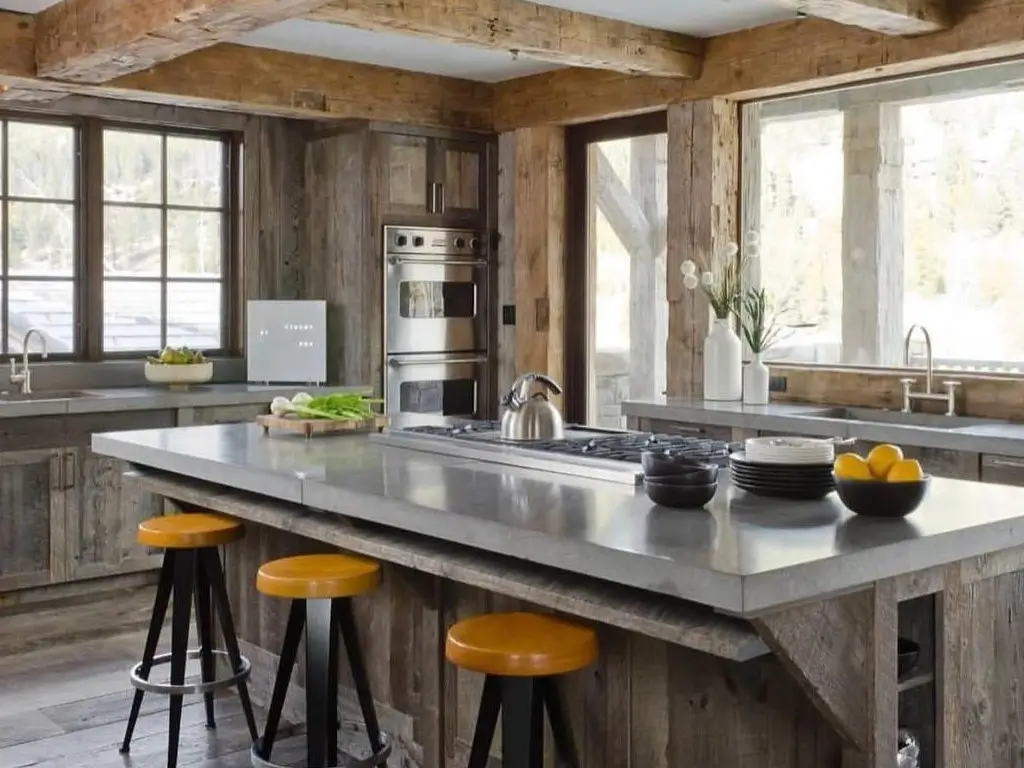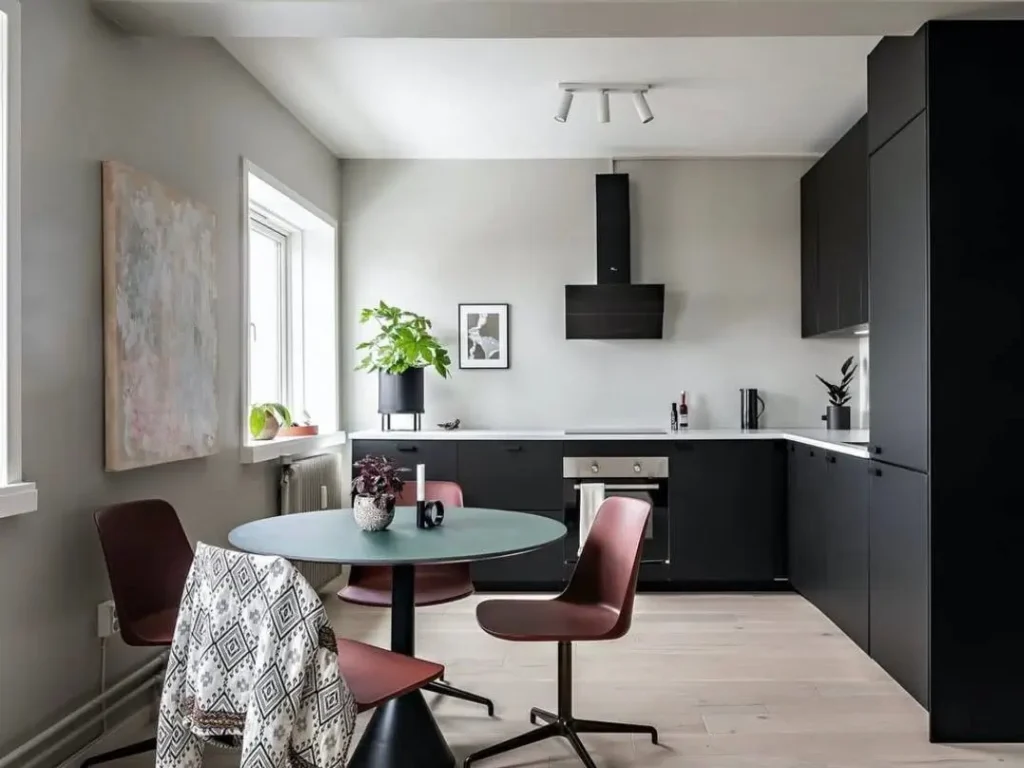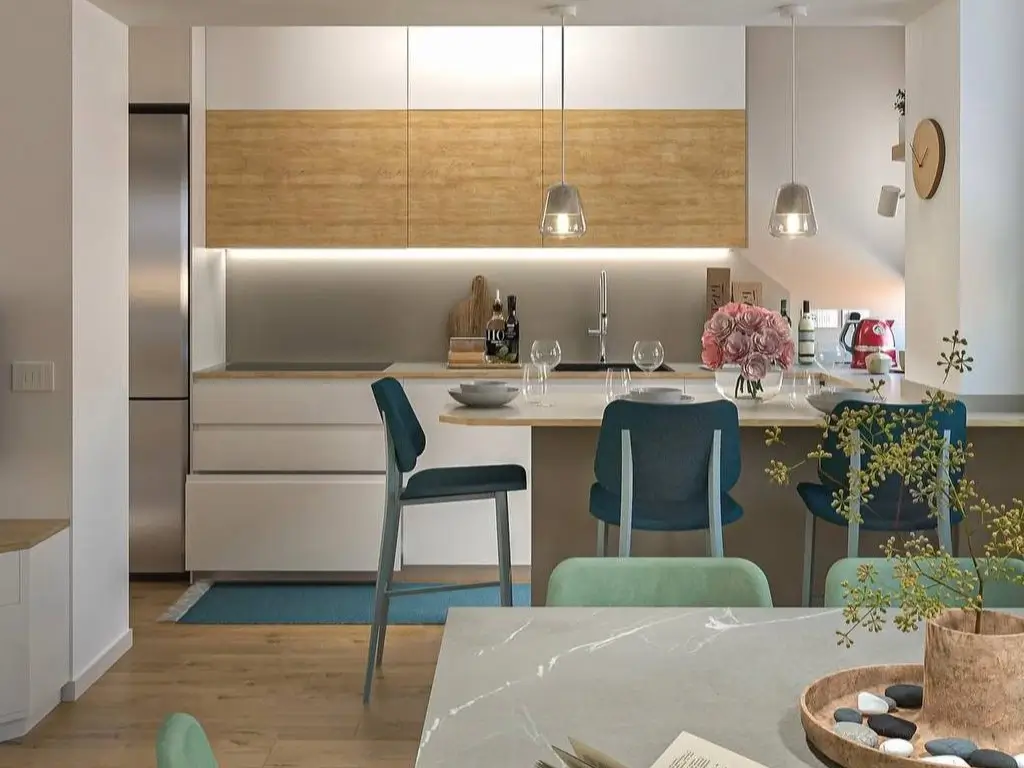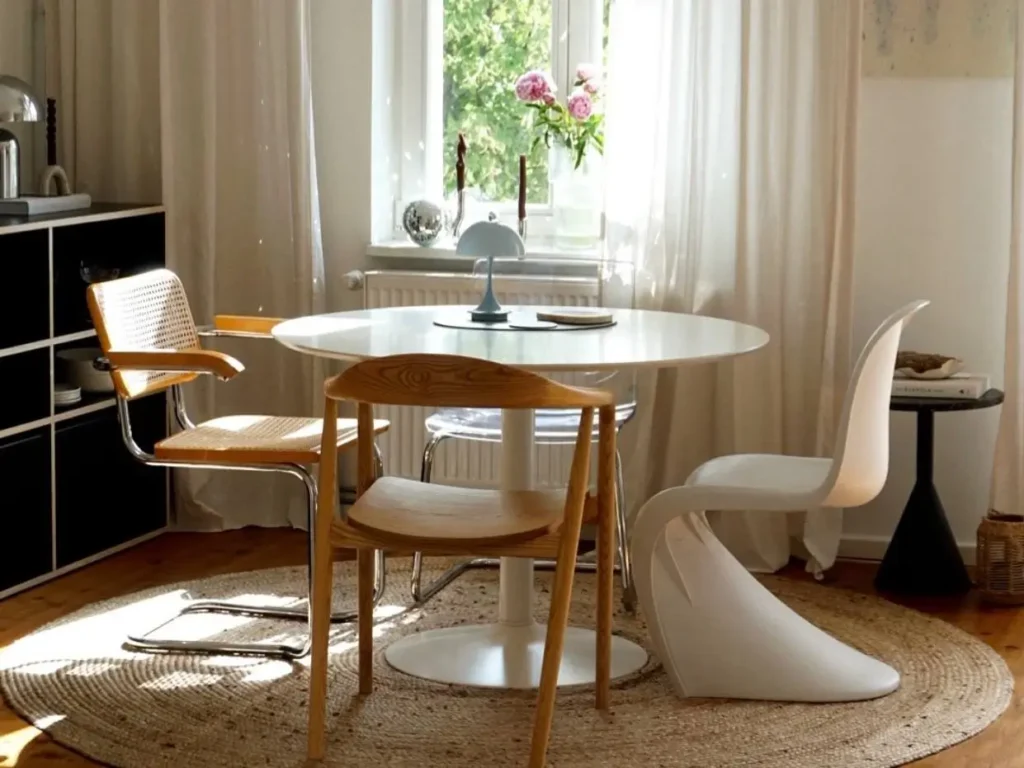

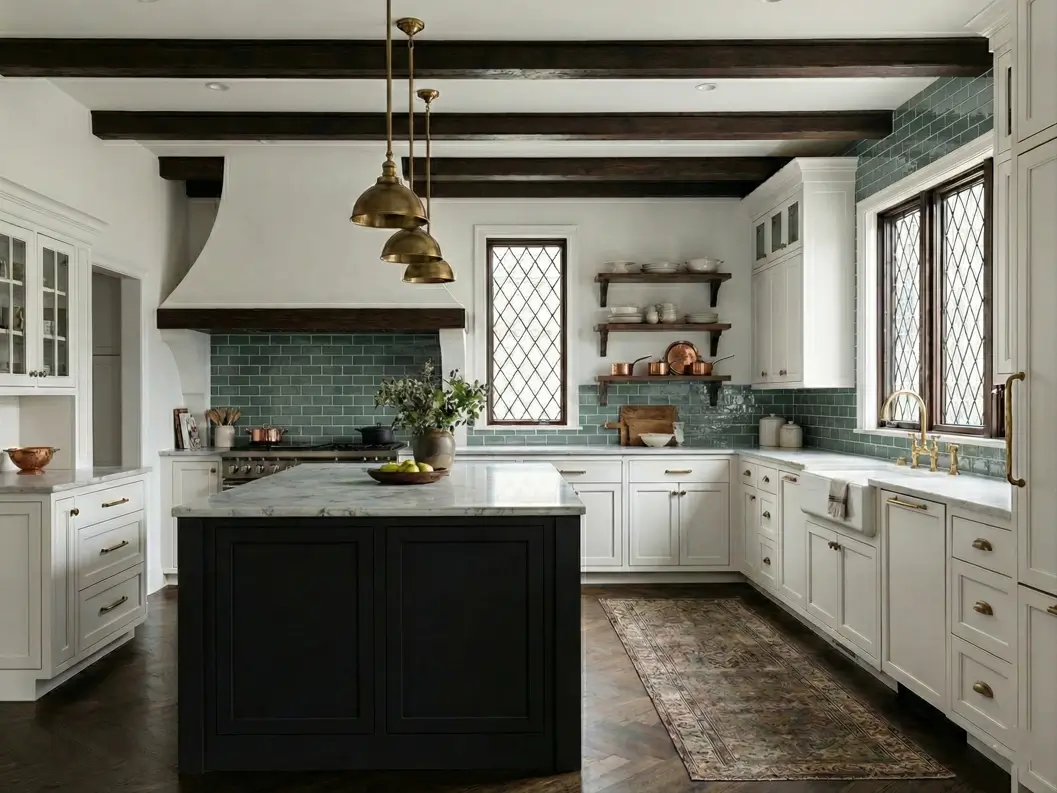
Dramatic archways, intricate woodwork, and a sense of permanence define this enduring aesthetic. While traditional iterations can sometimes feel dimly lit or heavy, the modern Tudor kitchen reimagines the style for today, prioritizing light, airy atmospheres while preserving that quintessential storybook charm.
Merging rough-hewn textures with sleek marble or polished brass hardware creates a dynamic tension central to modern Tudor interior design, making these spaces feel expertly curated yet deeply lived-in. This transitional approach allows homeowners to honor the craftsmanship of the era—often dating back to the Revival period of the 1920s—without sacrificing the brightness and functionality demanded by twenty-first-century living.
Whether you are undertaking a full renovation of a historic home or simply seeking specific Tudor kitchen design elements to add character to a new build, balancing heritage architecture with contemporary convenience is key. We have gathered a comprehensive collection of practical insights and Tudor kitchen ideas to help you achieve this high-contrast, texturally rich look in your own home.
Key Takeaways
- Balance & Light: The modern Tudor kitchen moves away from dark, heavy interiors, balancing storybook architecture with contemporary lightness and airiness.
- Essential Elements: Key features include pairing rustic timber beams with polished marble, utilizing soft arches to frame cooking zones, and embracing a curated, “unfitted” aesthetic.
- Timeless Style: This guide explores 34 specific ways to achieve this high-contrast look in 2025, from unlacquered brass hardware to nature-inspired color palettes.
Defining the Look: Key Pillars of the Style
To truly master this aesthetic, focus on incorporating these three foundational elements that bridge the gap between history and modern living:
- Architectural Arches: From doorways to recessed cooking niches, the soft curve of a Tudor arch instantly softens the hard lines of modern cabinetry, adding a romantic touch that feels both historic and welcoming.
- Mixed Metals: Unlacquered brass, matte black, and polished nickel hardware prevent the room from looking too “new,” adding a layer of patina and age that mimics generations of use.
- Tactile Materials: Prioritize surfaces with depth—think fluted woods, honed stones, and handmade zellige tiles that reflect light unevenly. These materials hide fingerprints effectively and wear beautifully over time, making them practical for busy households.
34 Tudor Kitchen Ideas to Inspire Your Renovation
1. Contrasting Woodwork
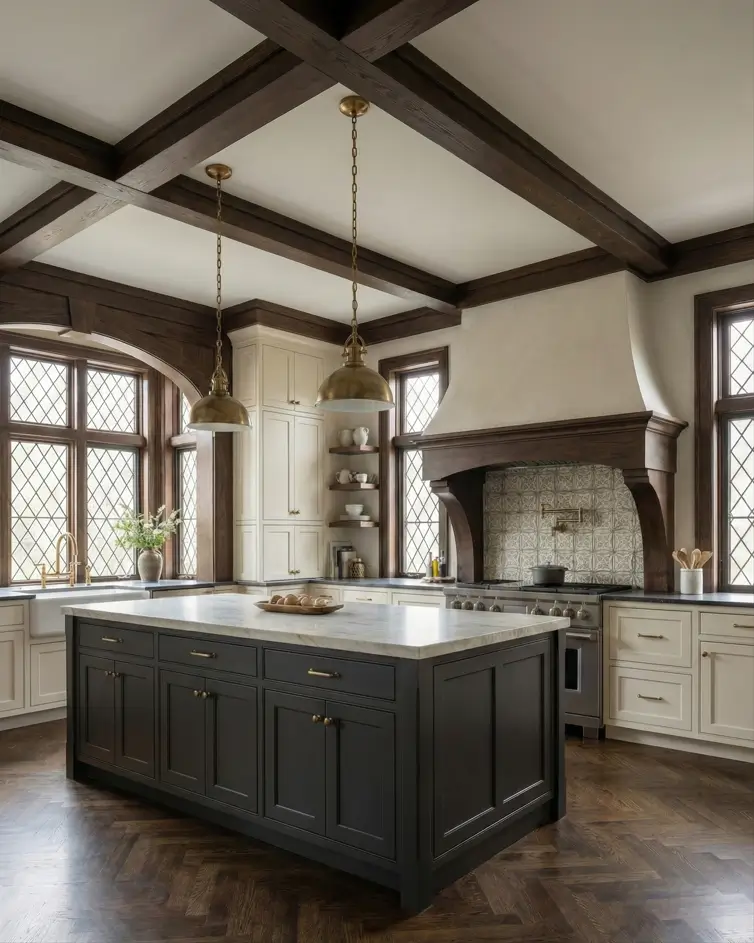
Dark stained ceiling beams grounding the airy white perimeter cabinetry create an instant focal point. This interplay between deep, rich reclaimed timber tones and bright surfaces defines the modern Tudor kitchen aesthetic, offering a balanced, sophisticated atmosphere perfect for culinary creativity.
2. Vaulted Ceiling Drama
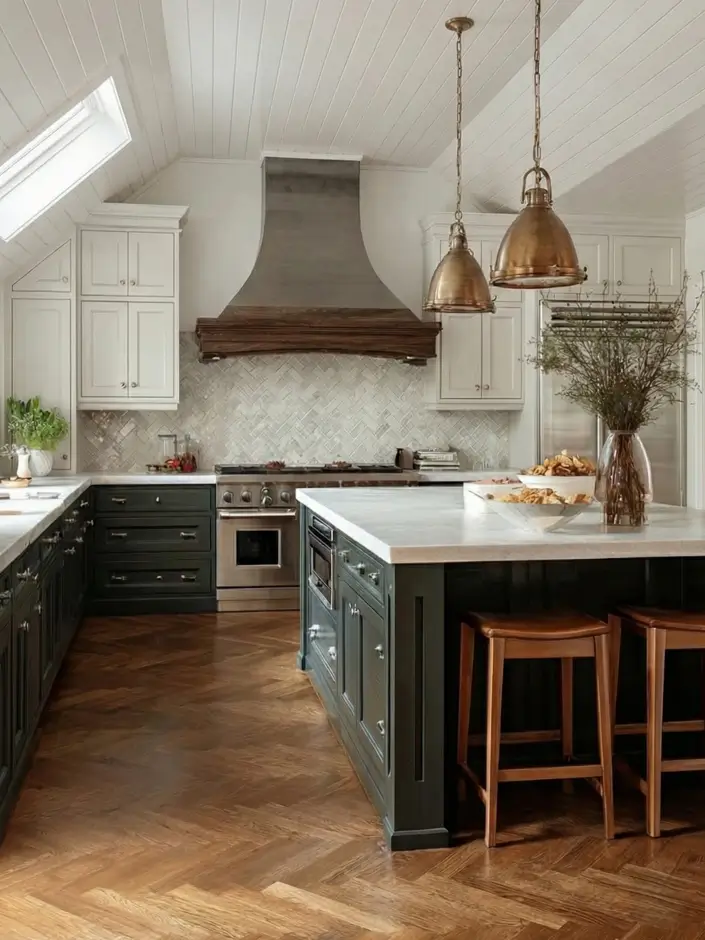
Maximize vertical space by incorporating skylights and white paneled ceilings to counterbalance dark wood flooring. Oversized brass dome pendants act as statement jewelry in this Tudor kitchen design, bridging the gap between rustic textures and the crisp, clean lines of the walls.
3. Statement Diamond Windows
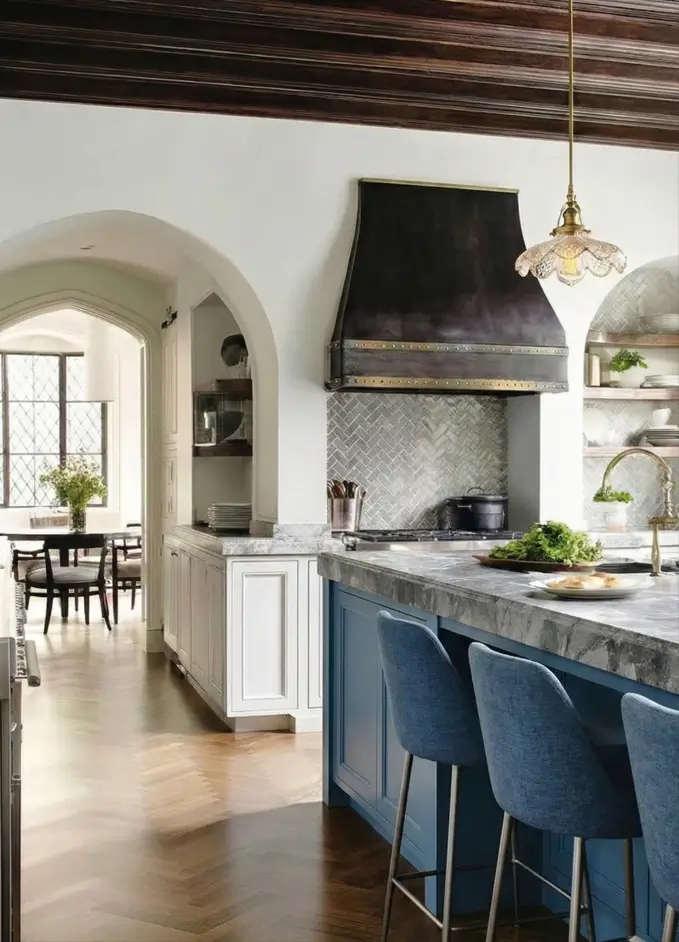
Leaded diamond-pane windows immediately establish a historical narrative, flooding the workspace with natural light. Balancing this intricate glazing with sleek marble countertops and simple perimeter cabinetry prevents the space from feeling overly ornate or heavy.
4. Brass Lantern Accents
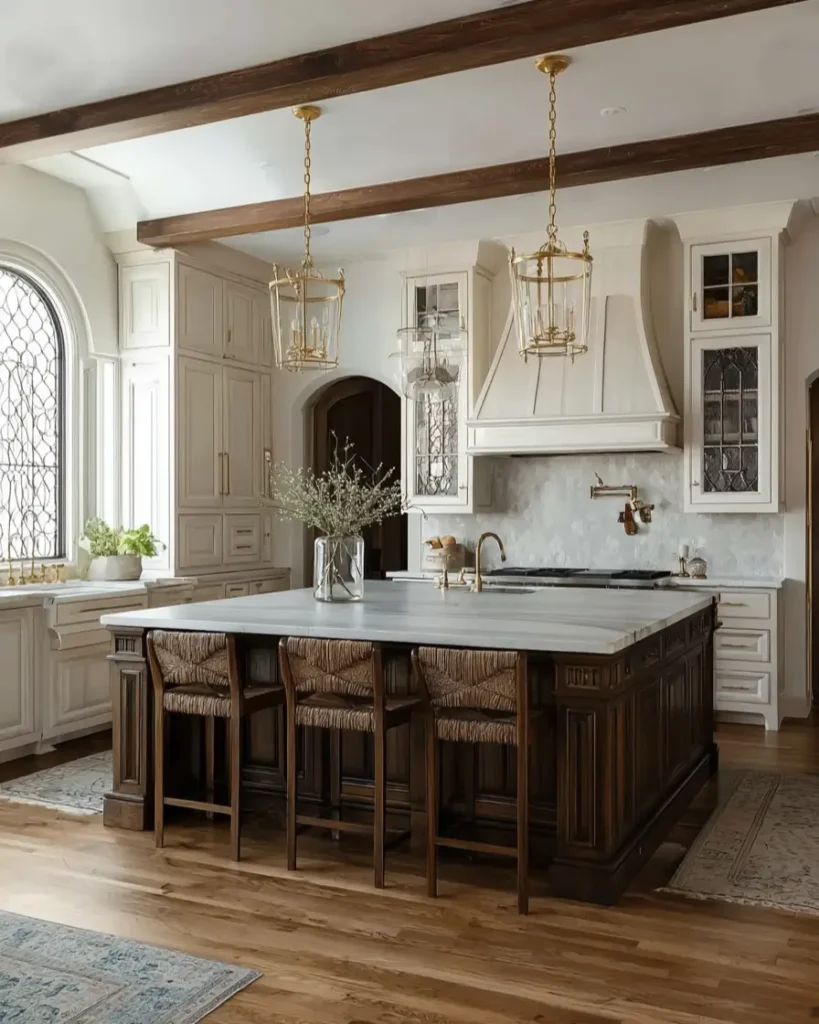
Oversized gold lanterns act as radiant focal points, drawing the eye upward to reclaimed wood beams. Pairing these sleek metallic elements with organic woven seating creates a dynamic visual tension that keeps the room feeling fresh yet historically grounded.
5. Carved Hood Details
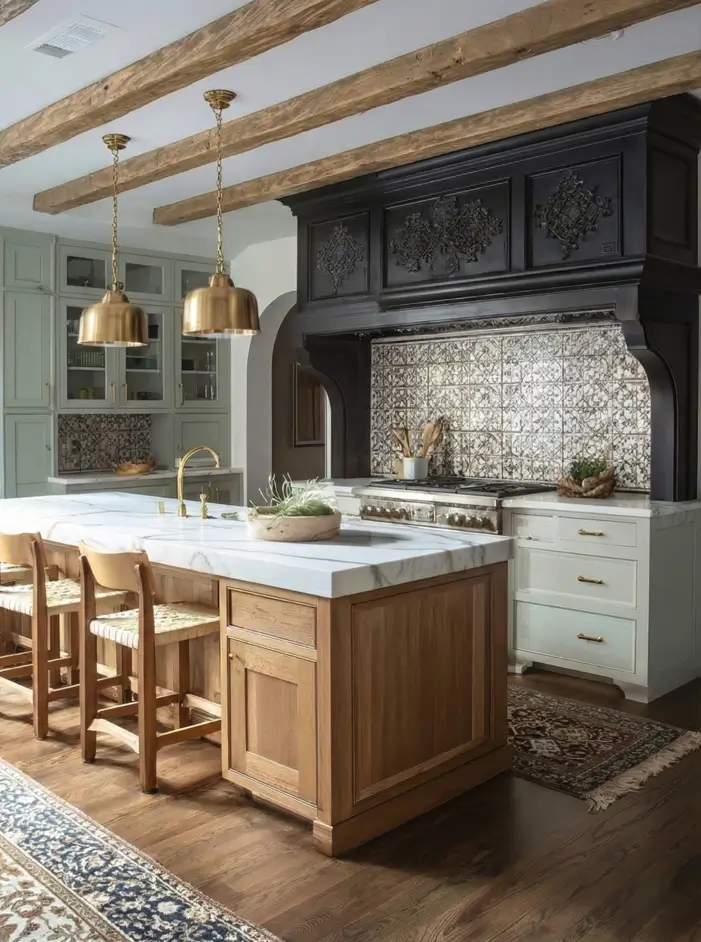
Intricate relief carvings on a massive, dark-stained range hood anchor the room with Old-World craftsmanship. Pairing this heavy architectural element with delicate patterned backsplash tiles and brass lighting creates a sophisticated balance essential to any Tudor kitchen design, preventing the space from feeling too austere.
6. Authentic Stone Flooring
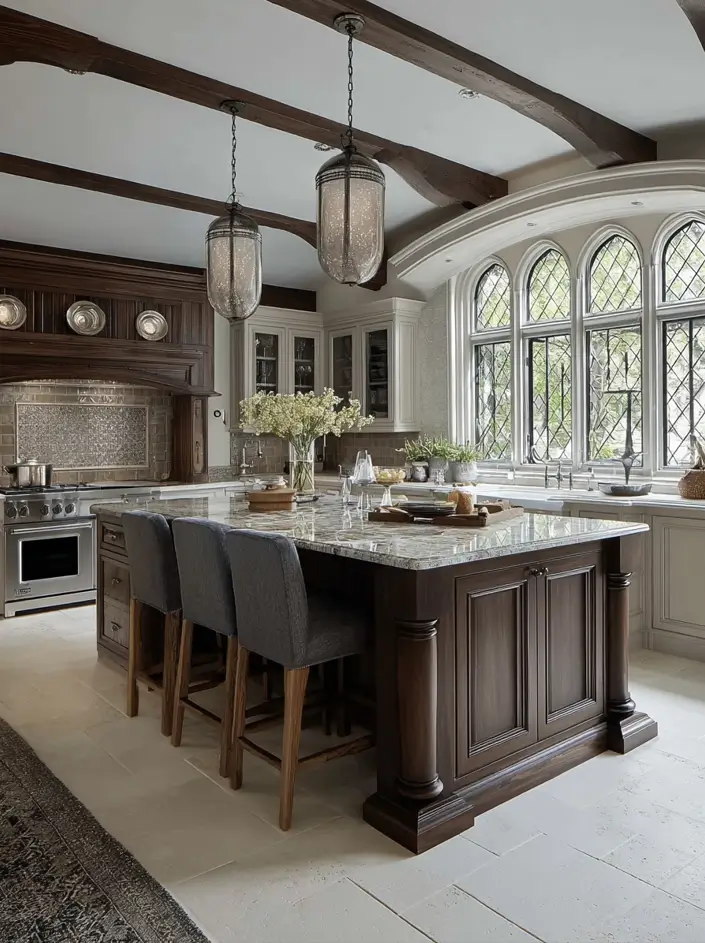
Large-format limestone tiles ground the space with organic texture, echoing the durability found in rustic kitchen design ideas, while offering a cool counterpoint to the rich, dark cabinetry. This timeless flooring choice anchors the modern Tudor kitchen, providing a durable, historic foundation that feels sophisticated rather than purely rustic.
7. Chevron Wood Accents
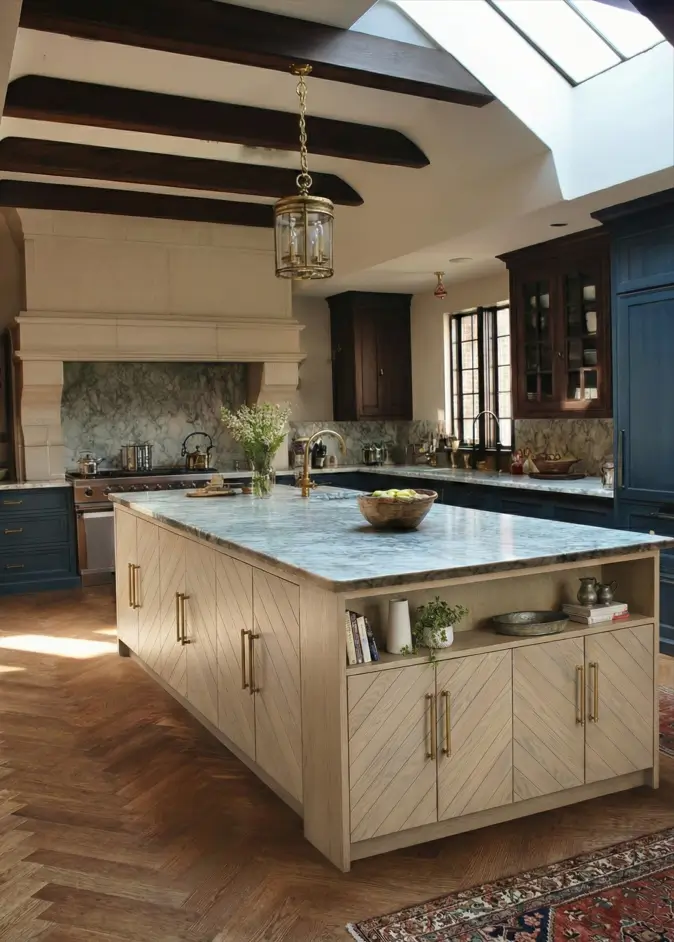
Diagonal wood grain detailing on the island cabinetry adds movement and a modern geometric twist to traditional carpentry. This lighter wood tone softens the dark perimeter cabinets and heavy ceiling beams, creating a balanced, inviting layout that feels airy and refined.
8. Arched Window Focal
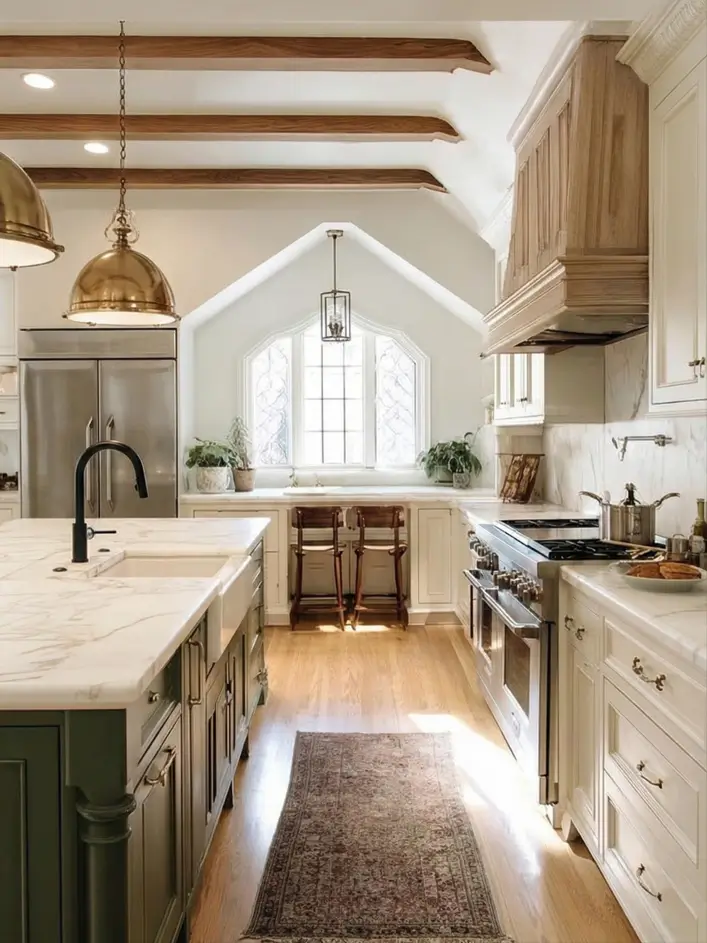
Diamond-pane glazing within a central arched frame instantly establishes historic character without overpowering the space. Complementing this feature with simple shaker cabinetry and a vintage runner rug adds layers of warmth, making this specific Tudor kitchen idea feel inviting rather than museum-like.
9. Dramatic Gothic Arches
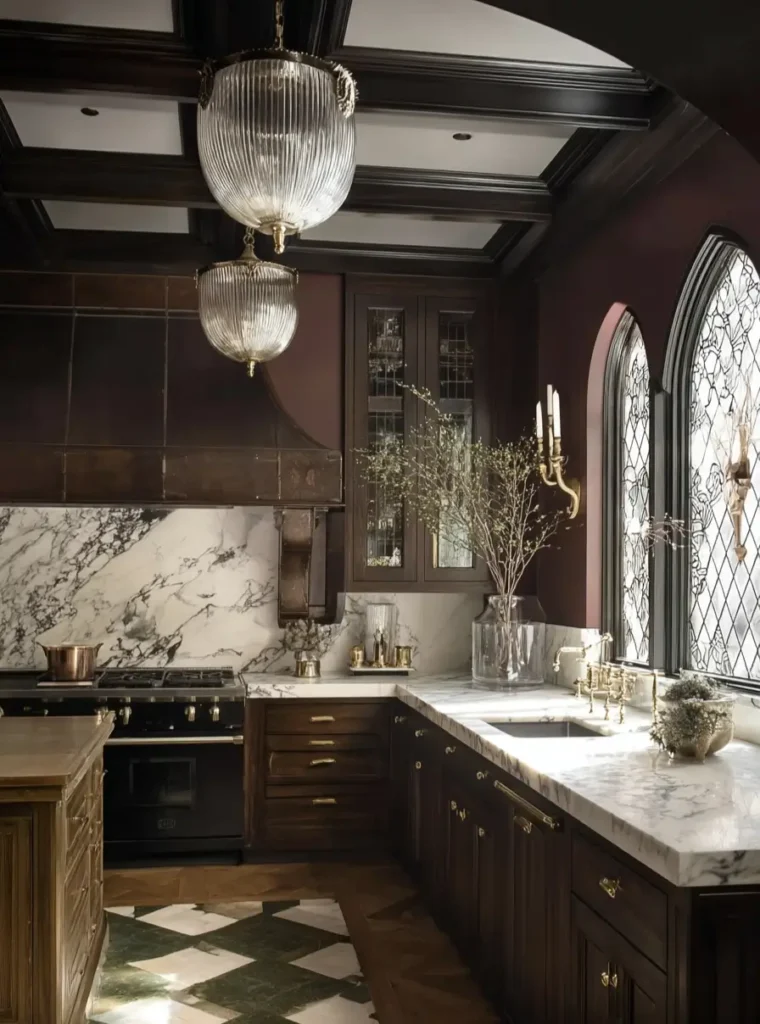
Deep burgundy walls and towering Gothic arched windows create an immersive, moody atmosphere rarely seen in standard culinary spaces. Pairing these dramatic architectural features with polished marble surfaces and brass fixtures ensures the room feels luxurious and functional, rather than purely theatrical.
10. Moody Contemporary Contrast
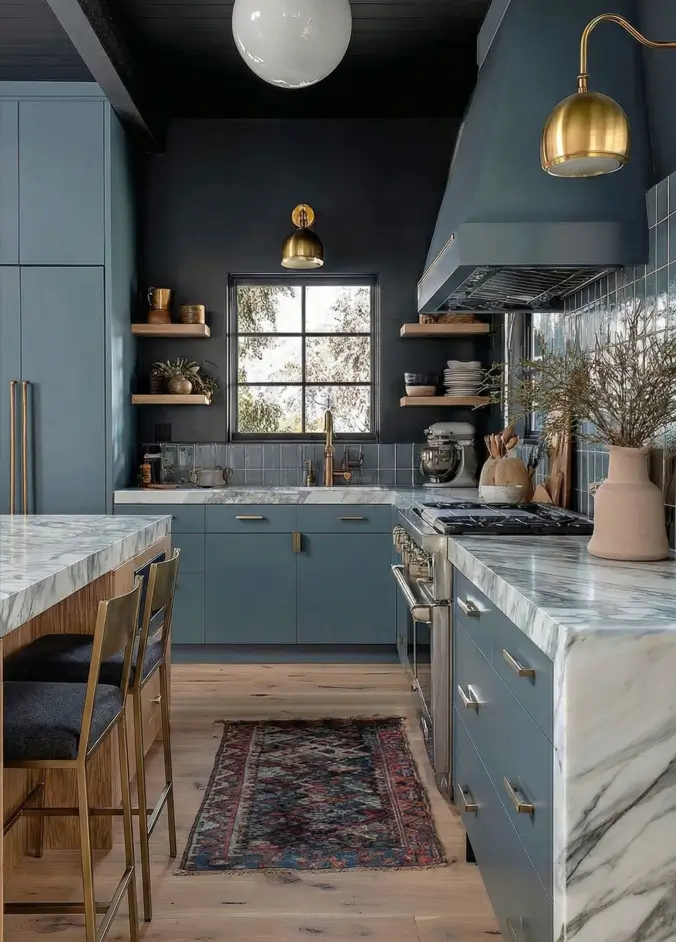
Matte charcoal walls paired with slate blue cabinetry establish a cozy, enveloping atmosphere reminiscent of historic sculleries. Introducing a modern spherical pendant light creates a surprising focal point, proving that modern Tudor kitchen interiors can successfully blend moody heritage vibes with sleek, contemporary silhouettes.
11. Historic Archways
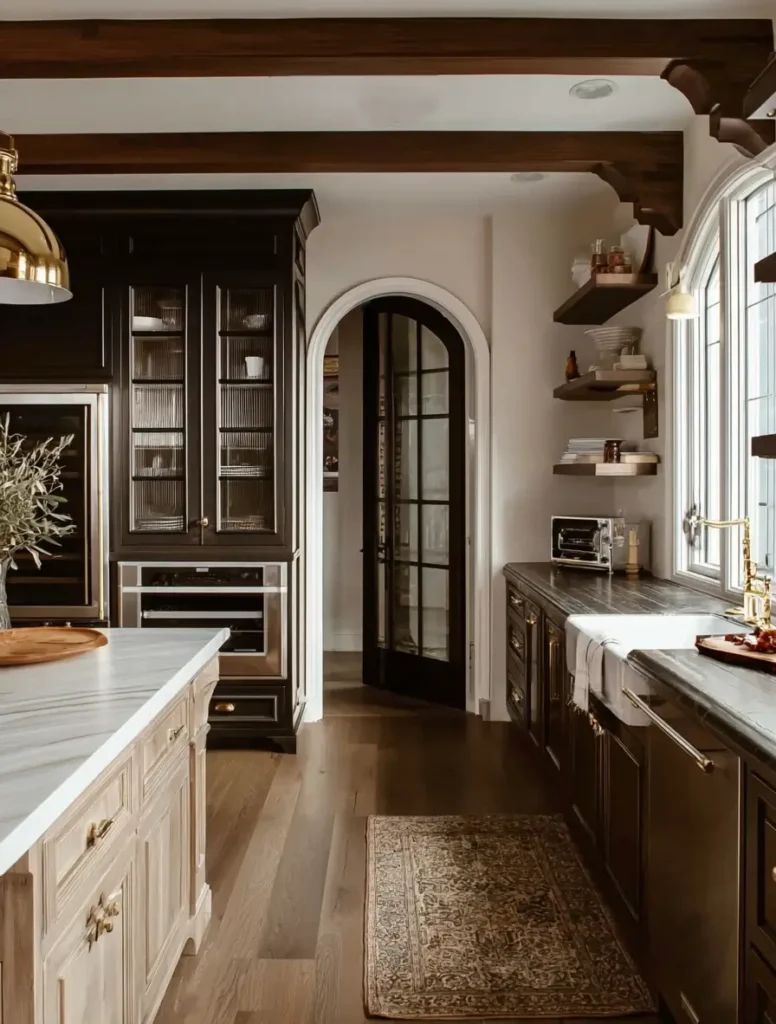
Interior arched doorways featuring glass panels serve as architectural anchors, seamlessly connecting the pantry or scullery to the main cooking zone. Pairing these historic forms with dark stained perimeter cabinetry and a contrasting light wood island adds depth, ensuring the design feels layered and timeless.
12. Stained Glass Statement
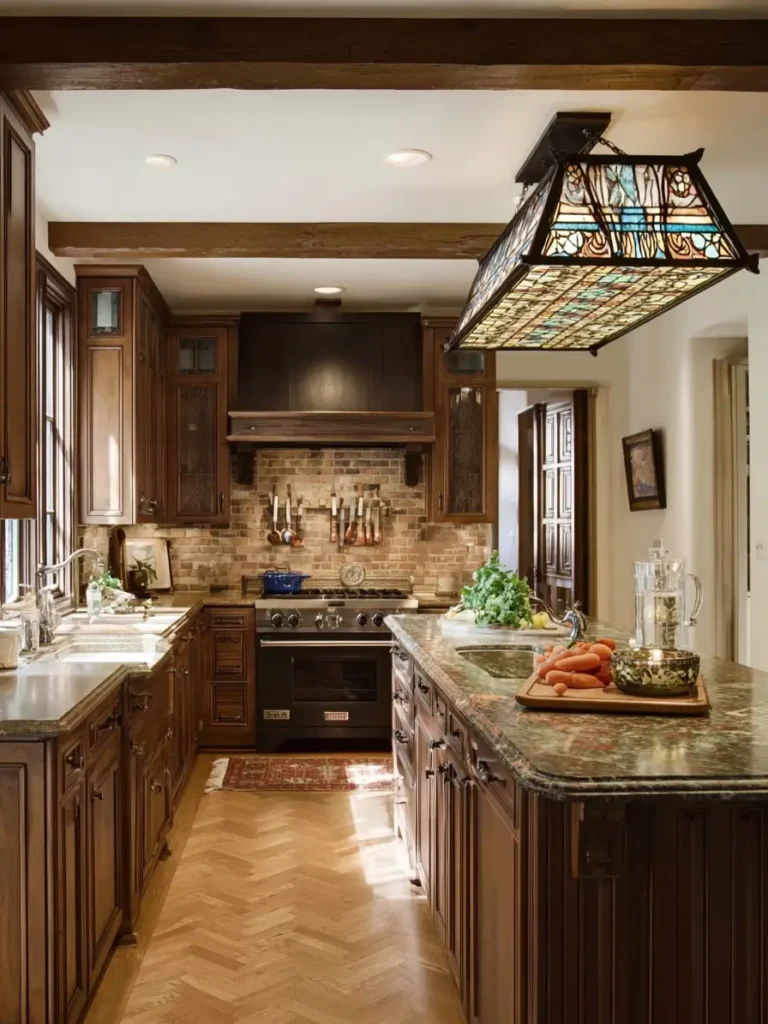
Vibrant stained glass lighting suspended above the island injects artistic character and color into the room. Complementing this unique fixture with an exposed brick backsplash and rich timber cabinetry creates a cozy, textured layout that feels historically rooted yet distinct.
13. Organic Green Palettes
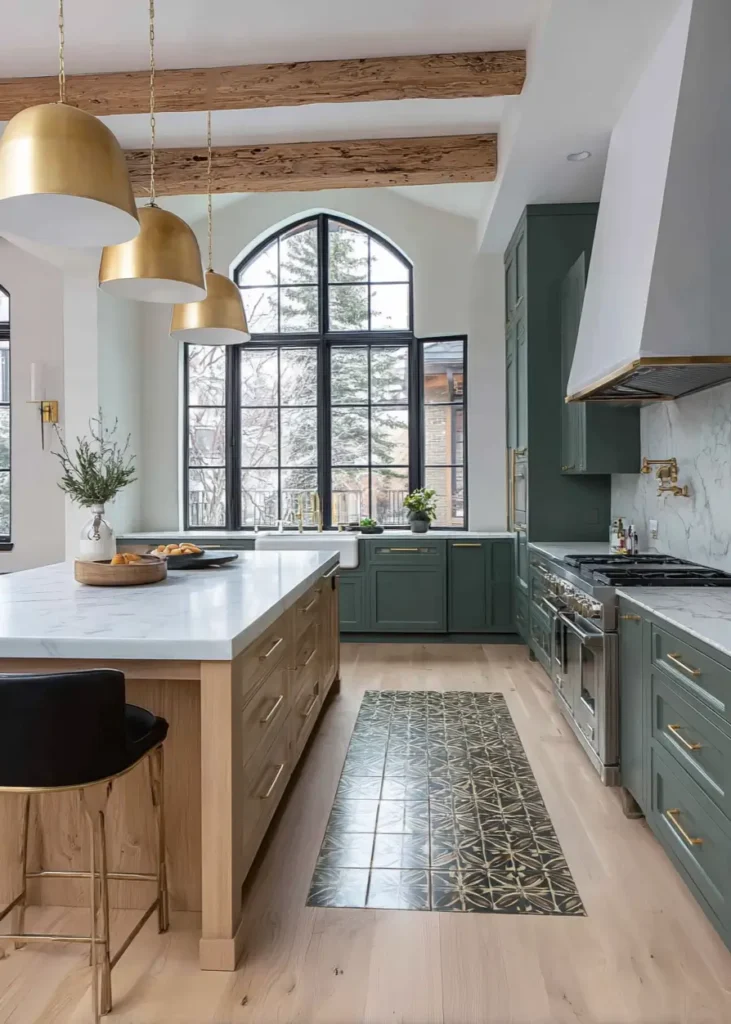
Sage green cabinetry anchors the room in nature, harmonizing beautifully with light oak islands and rustic overhead beams. This earthy color choice softens the architectural rigidity of black-framed arched windows, creating a space that feels fresh, inviting, and effortlessly elegant.
14. Vibrant Tile Walls
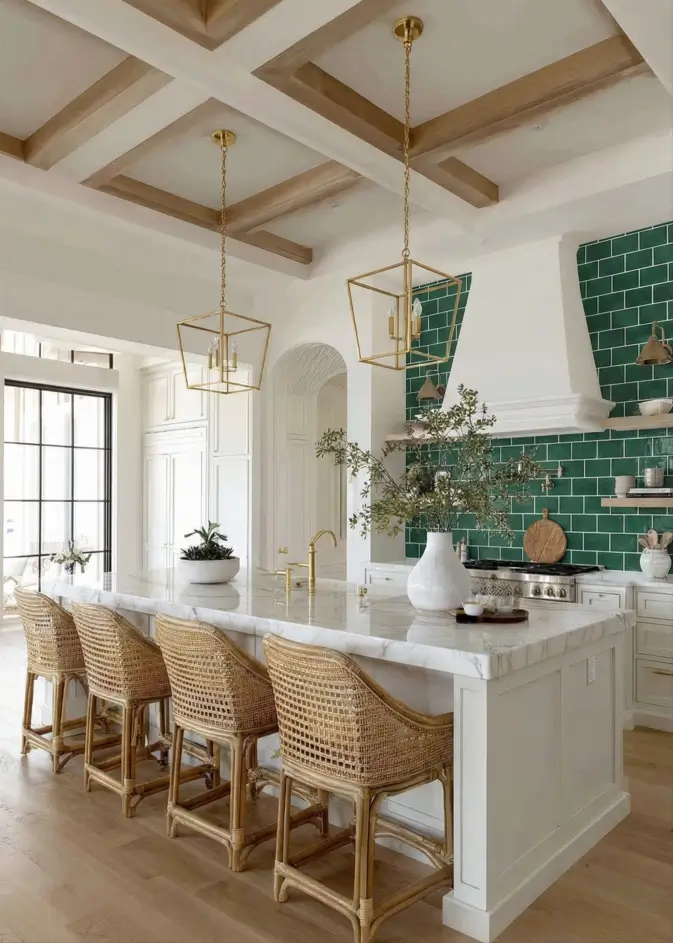
Deep emerald subway tiles extending to the ceiling create a striking backdrop, instantly revitalizing the traditional white cabinetry. Pairing this bold color choice with warm wood coffered ceilings and organic rattan seating ensures the modern Tudor kitchen feels lively and grounded rather than sterile.
15. Herringbone Wet Bar
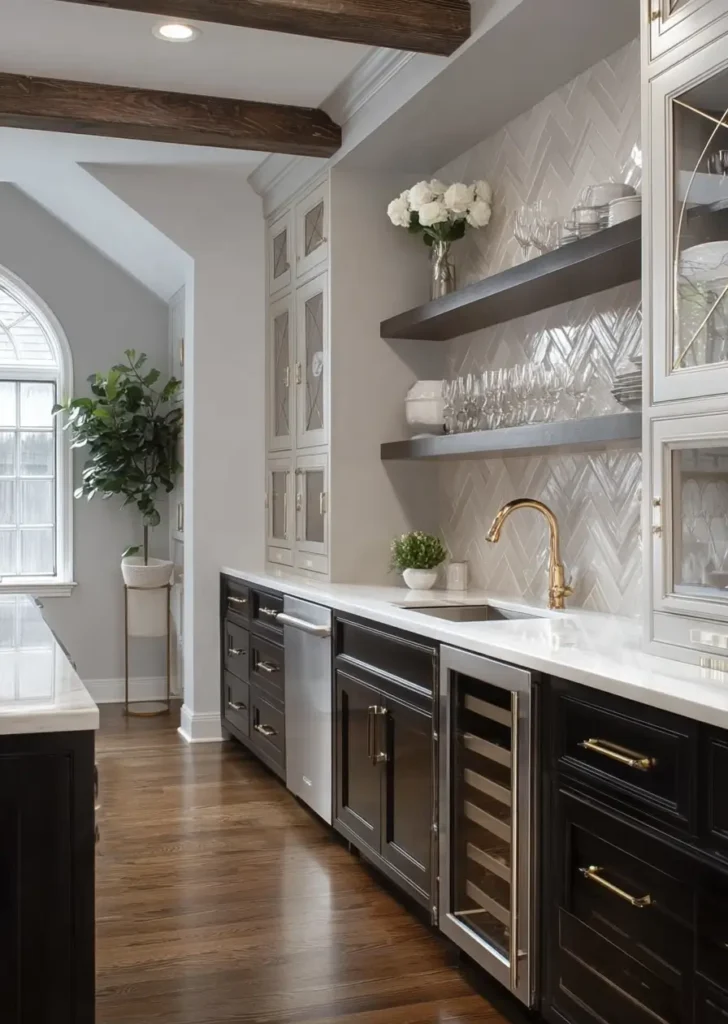
Glossy herringbone tiles reflect light, adding a layer of subtle movement behind dark floating shelves. Glass-front cabinetry featuring traditional X-mullions bridges the gap between classic display storage and contemporary convenience, making this functional nook a standout feature of the home.
16. Fluted Cabinet Texture
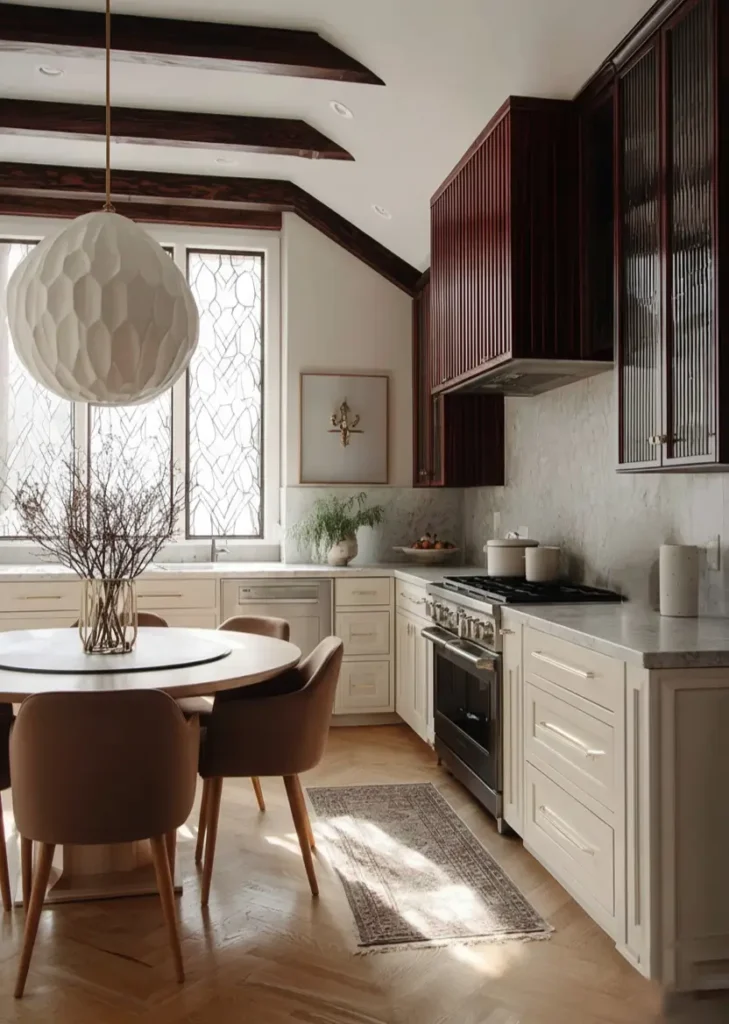
Vertical reeded detailing on dark walnut cabinetry introduces tactile sophistication, breaking up flat surfaces while honoring the bespoke millwork central to this style. Contrasting these rich textures with a sculptural white pendant infuses the room with a contemporary artistic edge suitable for any heritage-inspired renovation.
17. Gothic Stained Glass
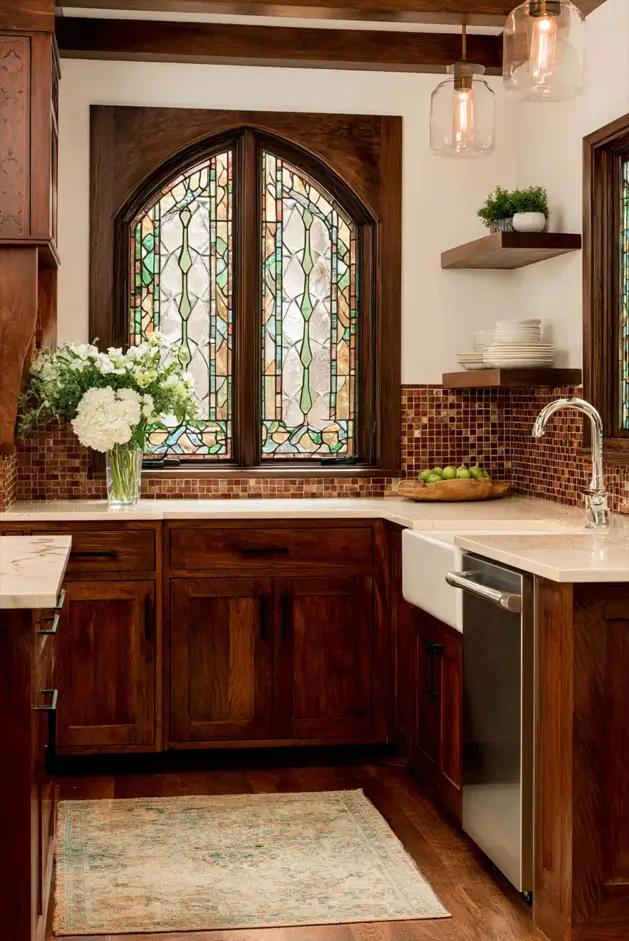
Multi-colored glass panes set within a pointed Gothic arch immediately transform a simple washing station into an architectural masterpiece. Framing this vibrant feature with dark wood trim and earthy mosaic tiles creates a warm, intricate focal point that defines the space’s character.
18. Velvet Color Pop
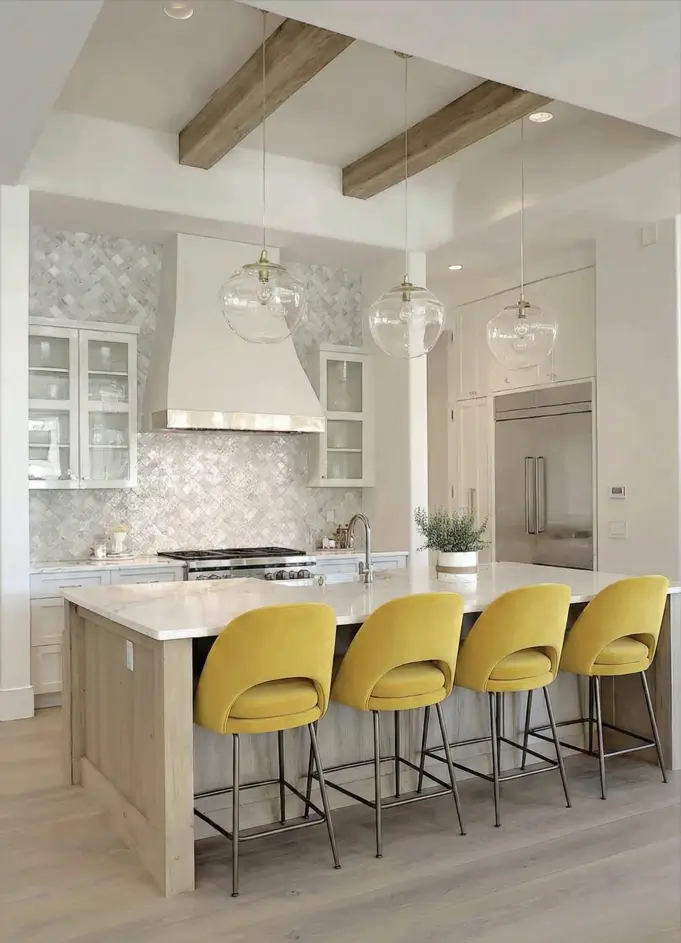
Mustard yellow velvet stools inject unexpected warmth and vibrancy into a neutral palette, proving that historical styles can embrace bold color. Paired with textured artisan tiles and glass globe pendants, this choice keeps the Tudor kitchen design feeling playful and curated.
19. Dark Herringbone Foundations
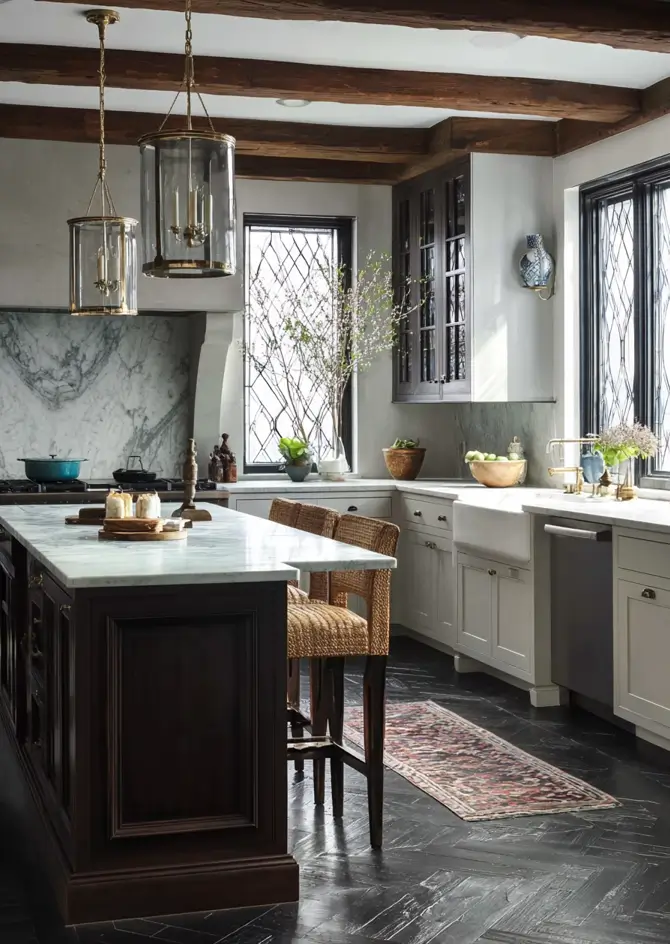
Slate-colored herringbone flooring creates an immediate sense of permanence and drama, grounding the airy white cabinetry above. This dark, rhythmic foundation amplifies the brightness of the marble surfaces, establishing a high-contrast palette that feels both historic and refreshingly current.
20. Soft Arched Niches
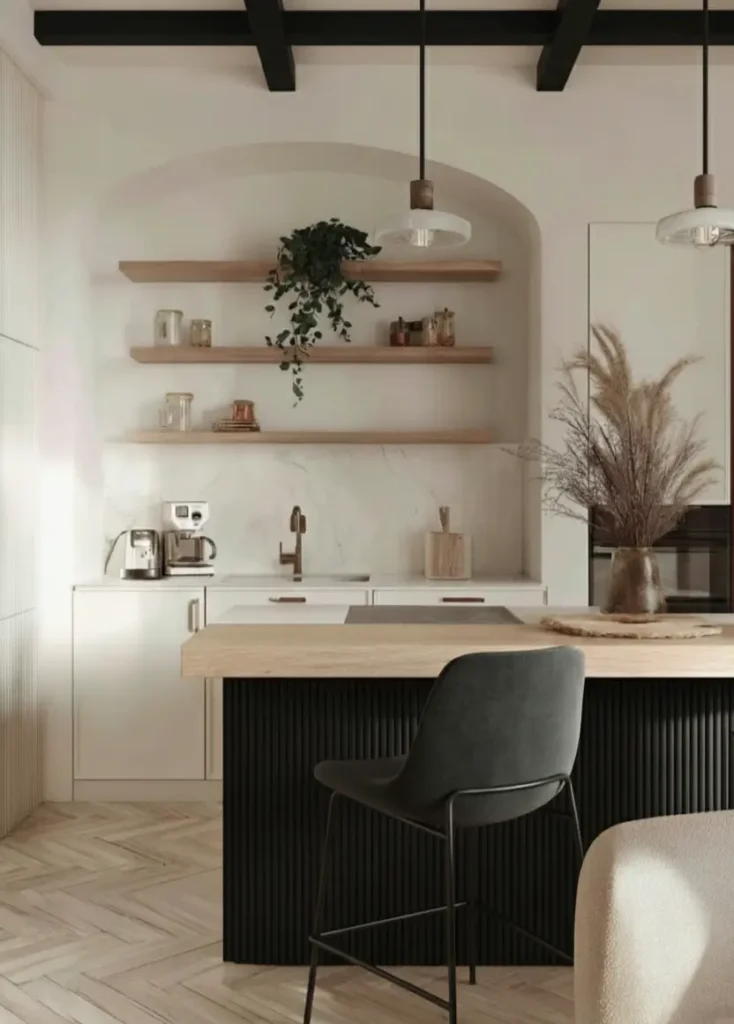
Recessed shelving framed by a smooth plaster arch creates a gentle focal point, softening the room’s architectural lines. Pairing the matte black fluted island with light herringbone floors establishes a refined monochromatic balance that feels effortlessly current and sophisticated.
21. Crystal Lighting Contrast
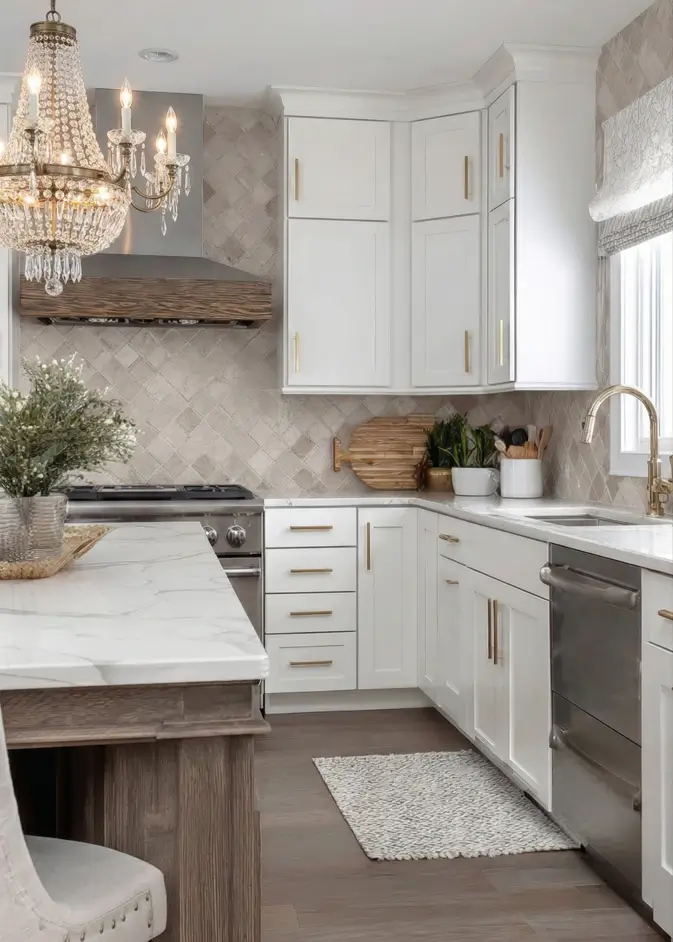
Opulent crystal chandeliers introduce unexpected glamour, contrasting beautifully with the matte finish of a diamond-patterned stone backsplash. This juxtaposition of high-shine luxury and earthy, geometric textures adds depth, ensuring the room feels sophisticated and curated rather than purely utilitarian.
22. Dark Timber Ceilings
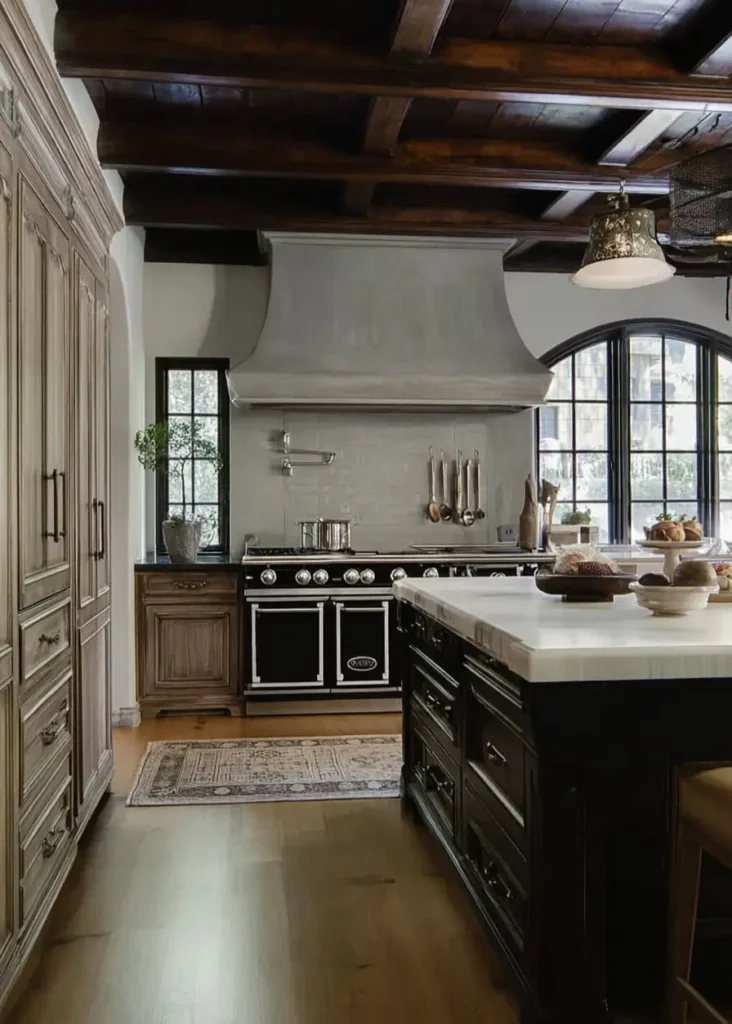
Rich, dark stained wood paneling on the ceiling instantly establishes a sense of history and grandeur, drawing the eye upward. Balancing this heavy architectural feature with a soft grey plaster range hood and light cabinetry keeps the interior from feeling oppressive, resulting in a space that is both dramatic and welcoming.
23. Artisan Tile Backsplash
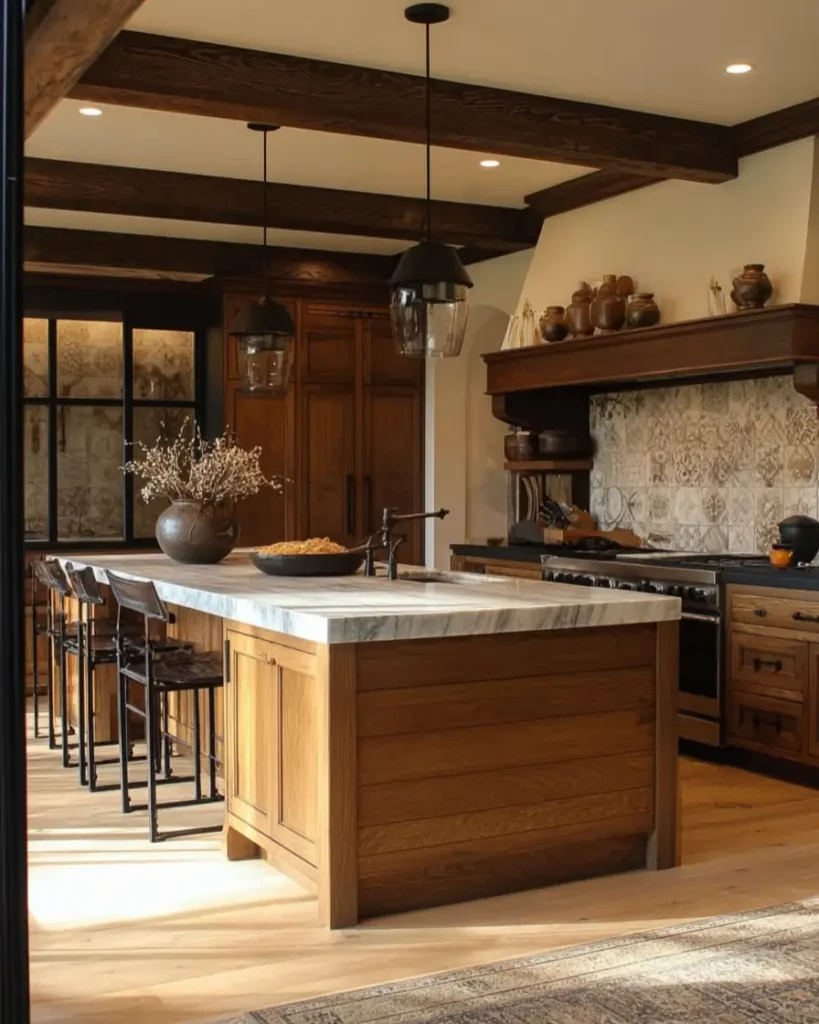
Intricate patterned tiles create a stunning, textured focal point behind the range, instantly infusing the cooking area with artisanal warmth. Balancing these decorative surfaces with a clean-lined oak island and heavy timber beams results in a sophisticated mix of rustic and refined elements that feels timelessly grounded.
24. Two-Tone Sophistication
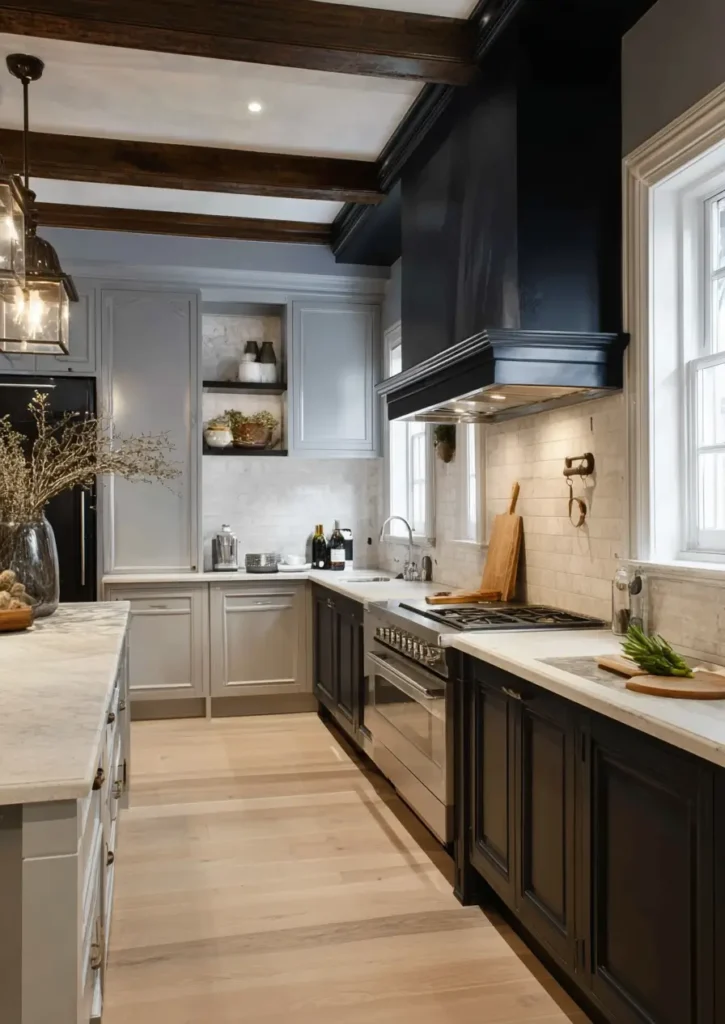
Charcoal base cabinetry anchors the culinary zone with dramatic visual weight, allowing the lighter upper walls and shelving to feel airy and expansive. Repeating this dark finish on the custom range hood and ceiling beams creates a cohesive vertical rhythm, proving that this aesthetic shines brightest when embracing a bold, high-contrast palette.
25. Structural Ceiling Grids
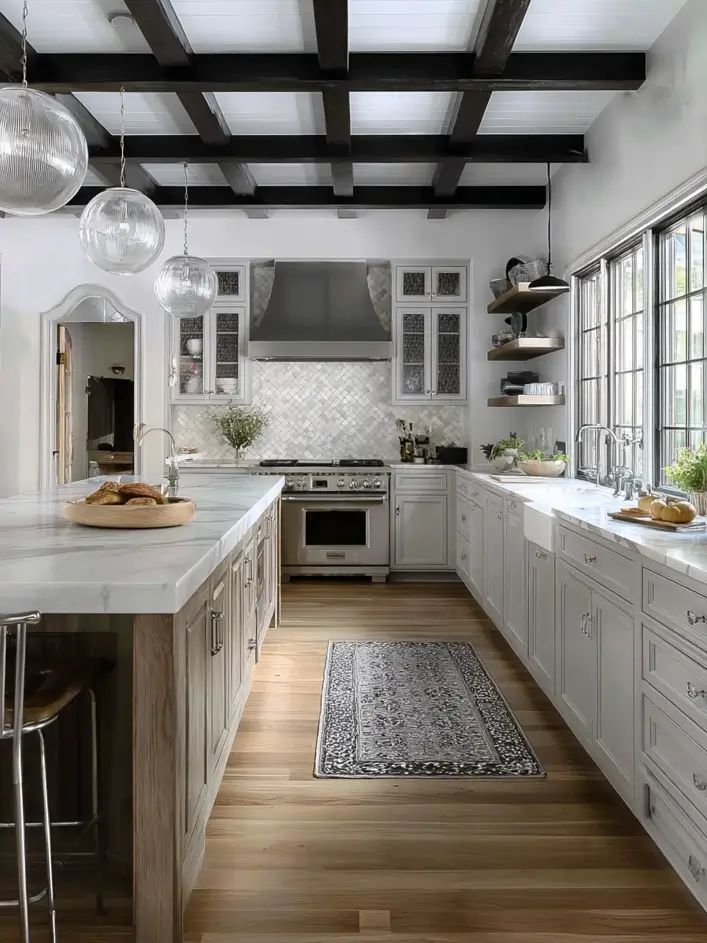
Dark wood beams crossing in a precise grid pattern add distinct architectural rhythm to the ceiling, preventing the expansive white space from feeling washed out. Complementing this bold overhead feature with a soft grey island and intricate mosaic tilework ensures the interior remains visually engaging and rich with texture.
26. Linear Dining Nook
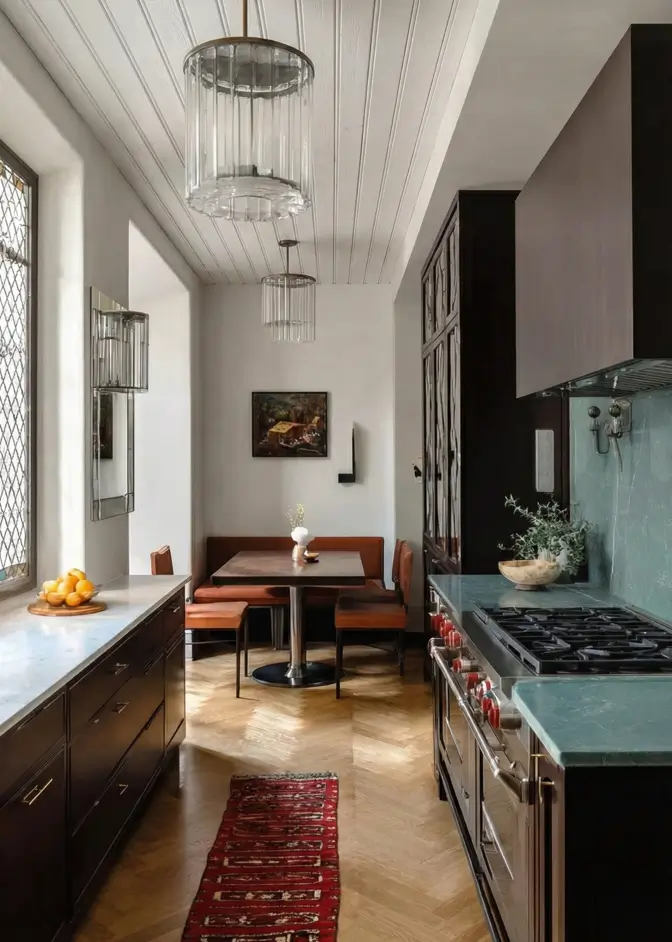
White tongue-and-groove ceiling planks elongate the room visually, drawing the eye toward the cozy banquette seating at the far end. Pairing this efficient layout with dark stained cabinetry and intricate leaded glass windows balances practical modern living with the heavy architectural details often found in this modern Tudor kitchen.
27. Artistic Blush Tones
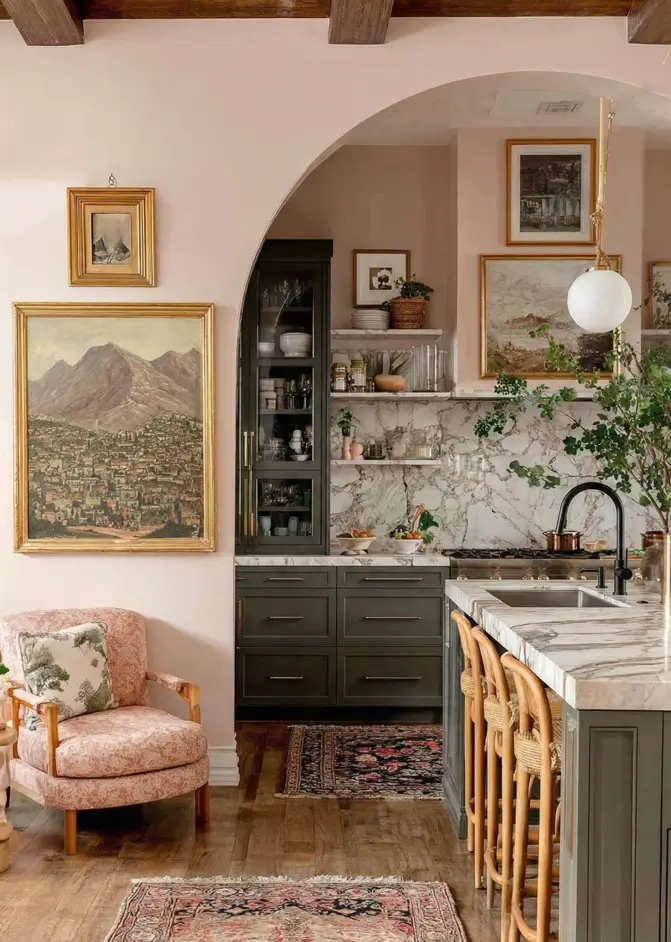
Pale pink walls introduce a surprising layer of warmth, softening the transition into the moody, dark pantry beyond the arch. Integrating vintage oil paintings and natural woven textures transforms this interior into a curated gallery, proving that traditional architecture can effortlessly host playful, romantic color palettes.
28. High-Contrast Textures
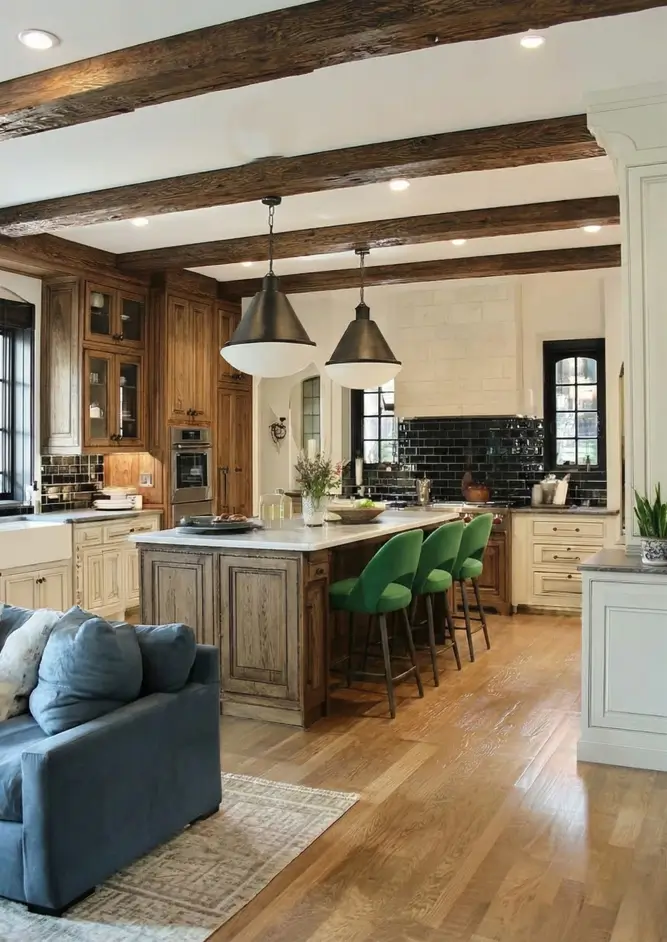
Glossy black subway tiles serve as a dramatic counterpoint to the soft, limestone-finished range hood, creating an instant focal point. Introducing emerald velvet seating adds a layer of sophisticated comfort, while heavy timber beams ensure the open-plan layout retains its cozy, historic charm without feeling dated.
29. Translucent Tile Texture
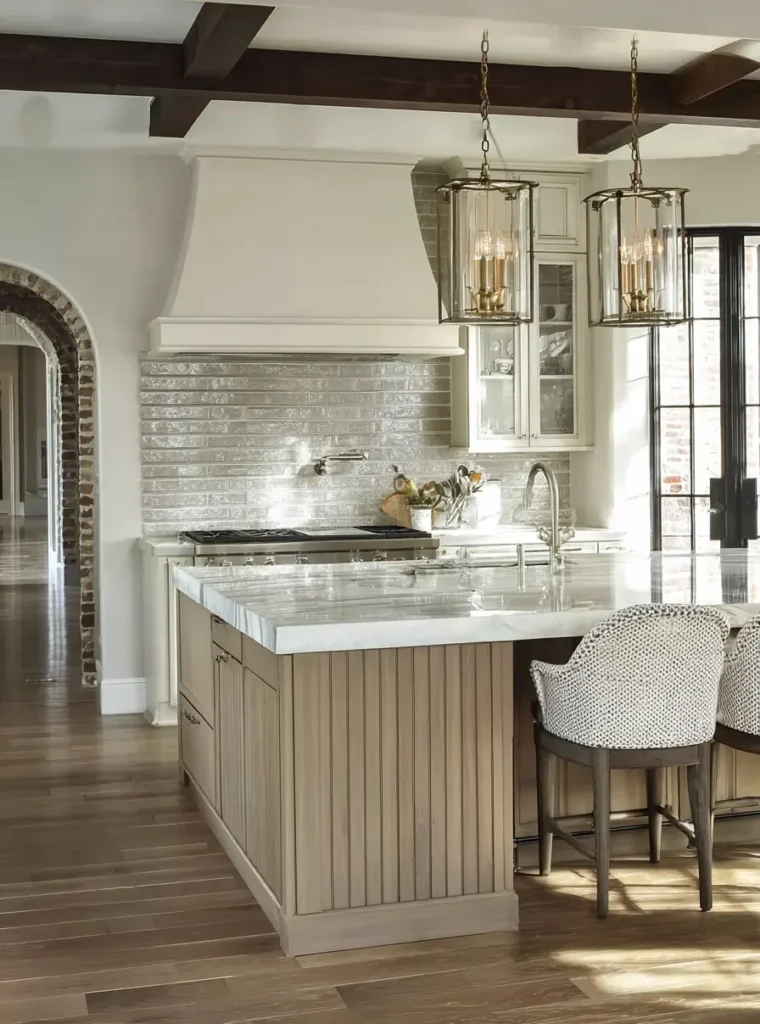
Shimmering, hand-glazed tiles extend across the range wall, reflecting light to create a sense of expansive openness. Pairing this ethereal surface with a grounded, slatted wood island and robust iron lanterns strikes a perfect equilibrium, blending airy sophistication with the solid craftsmanship defining this timeless style.
30. Rustic Checkerboard Floors
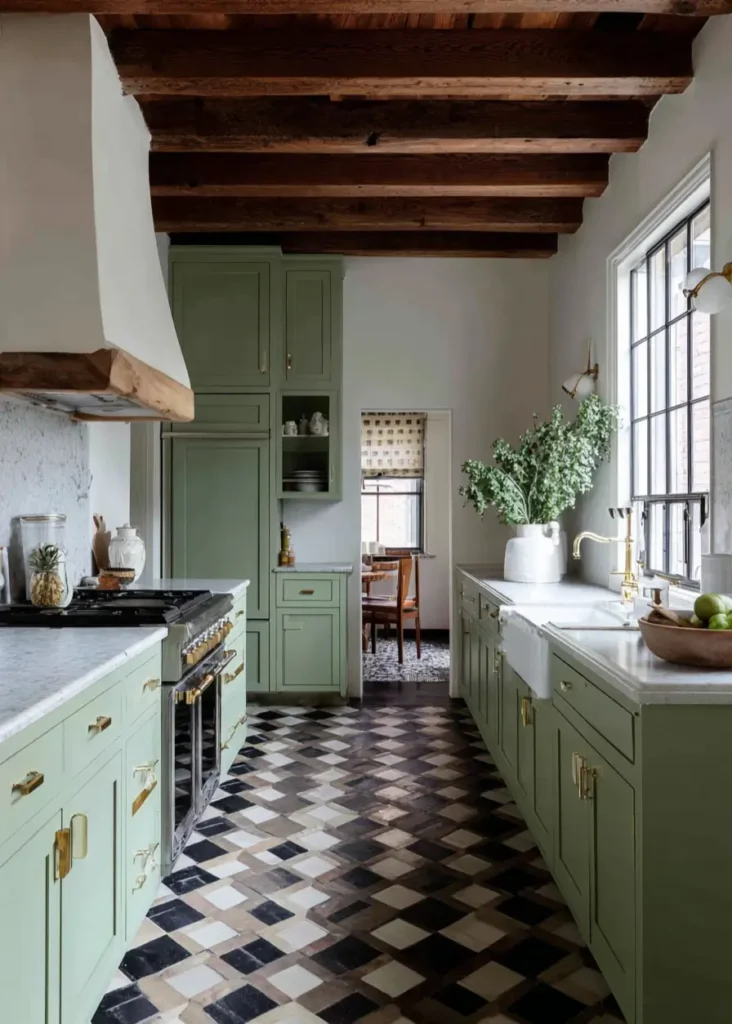
Hand-cut stone tiles laid in a classic checkerboard pattern ground the room in history, contrasting beautifully with the fresh sage green cabinetry. Rustic ceiling beams and unlacquered brass hardware enhance the warm, lived-in atmosphere, ensuring this heritage-inspired space feels perfectly tailored for contemporary family life.
31. Industrial Arch Accents
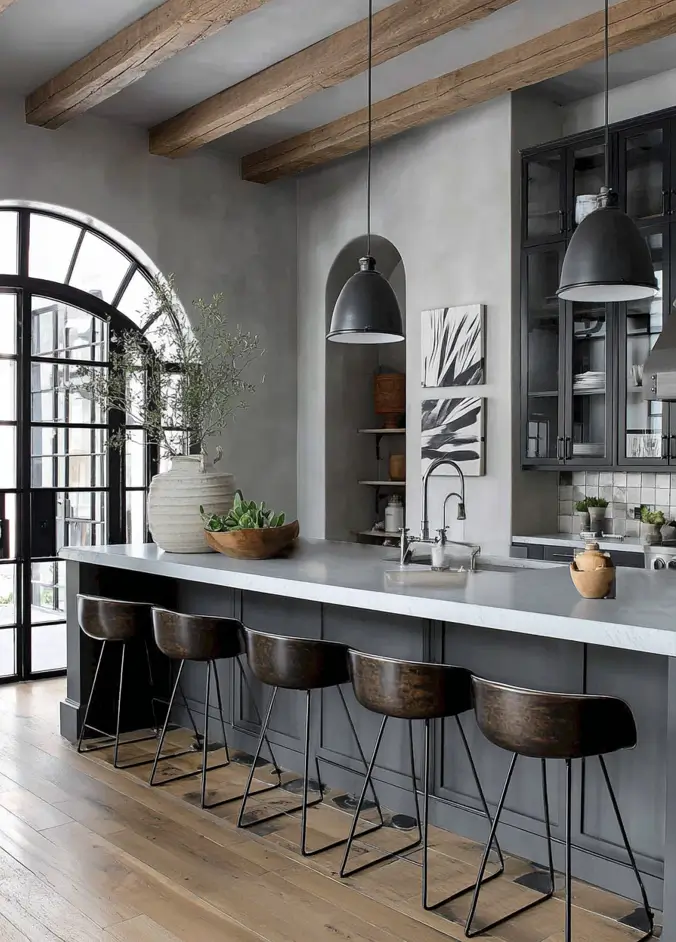
Massive steel-framed arched doors flood the space with light, marrying industrial precision with the romantic curves of the original architecture. Pairing cool grey millwork and concrete surfaces with warm, metallic bucket stools creates a chic, urban interpretation that feels both edgy and deeply grounded.
32. Scenic Arched Windows
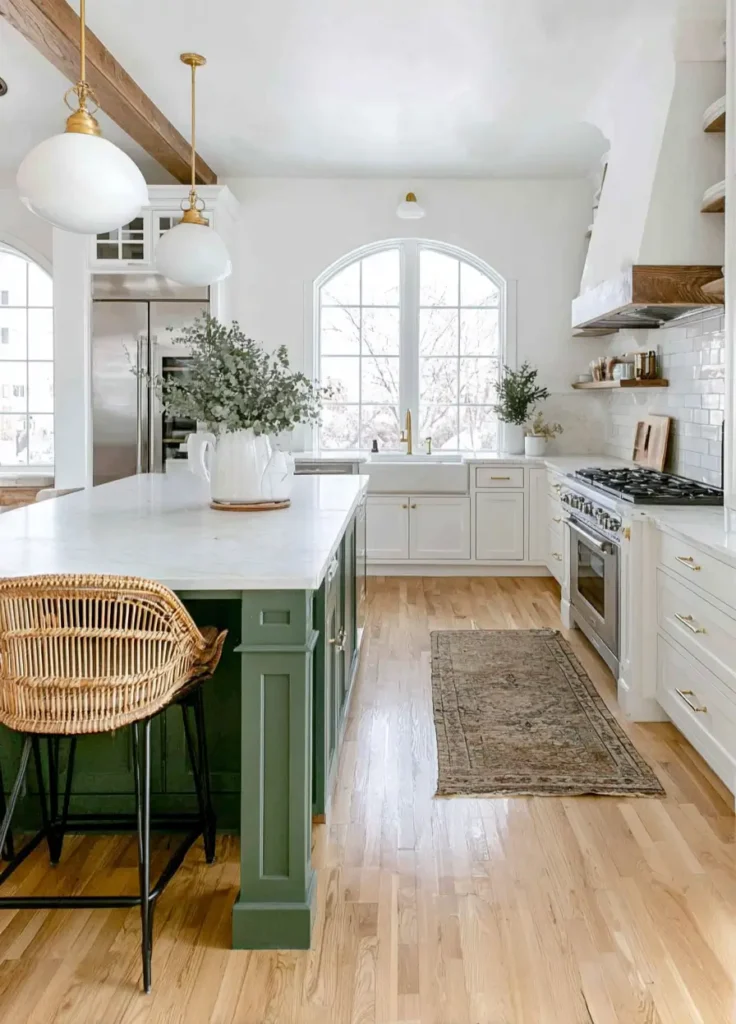
Expansive arched windows frame the snowy landscape, turning the view into a living work of art. Grounding the bright, airy room with a sage green island and rustic timber beams adds necessary warmth, striking a balance between contemporary freshness and historic character.
33. Leaded Glass Display
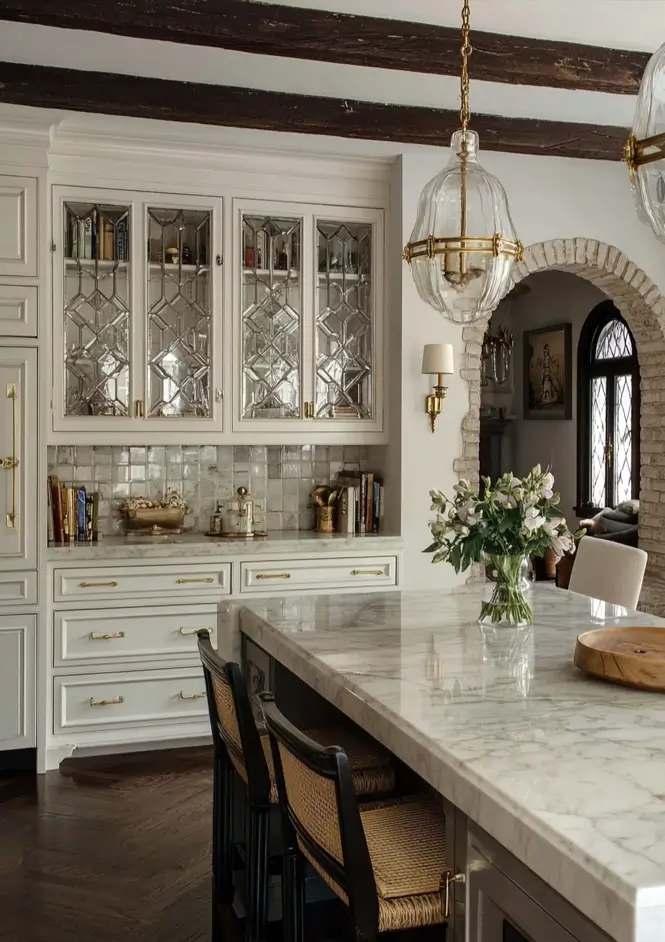
Diamond-paned cabinet fronts serve as the crown jewel of the room, turning storage into an elegant architectural feature that catches the light. Balancing this delicate glasswork with a rugged stone archway and solid marble countertops anchors the space, ensuring the atmosphere feels substantial and enduring.
34. Geometric Wood Ceilings
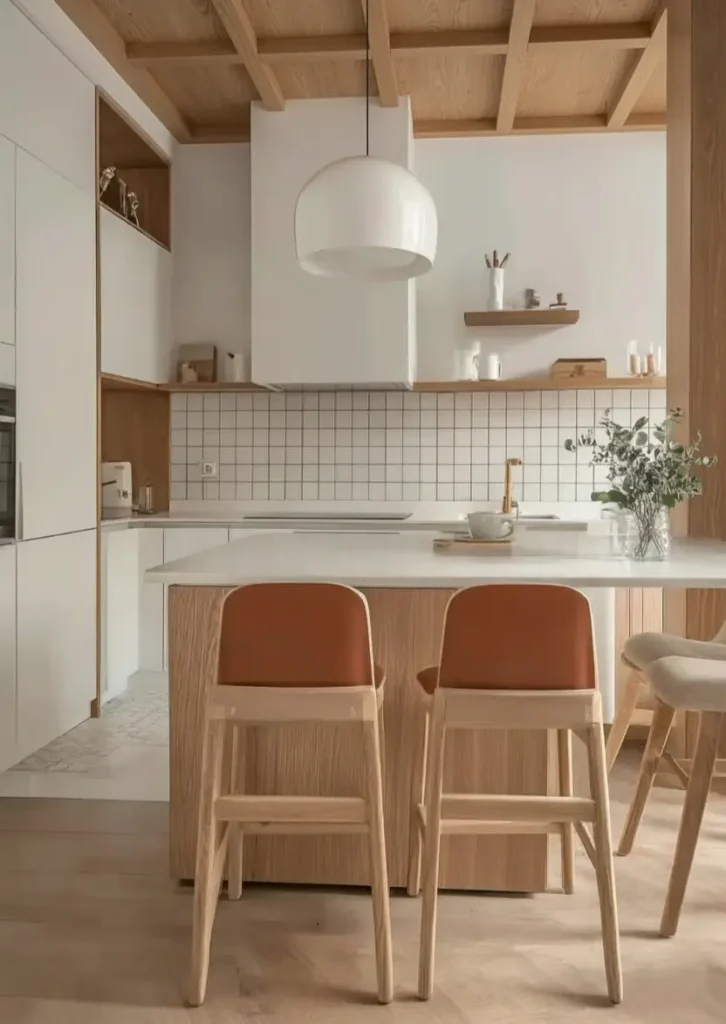
Light oak beams arranged in a clean grid pattern draw the eye upward, adding structural interest while maintaining an airy atmosphere. Contrasting this warm woodwork with a crisp white grid backsplash and smooth modern surfaces results in a refined, minimalist take on traditional architectural framing.
Budgeting for Your Modern Tudor Renovation
Creating a high-end, bespoke look doesn’t always require an unlimited budget, but understanding where to invest is crucial. A modern Tudor kitchen relies heavily on architectural details and quality materials.
- Cabinetry: Expect to allocate 30-40% of your budget here. Custom or semi-custom cabinetry is often necessary to achieve specific details like reeded fronts or arched niches.
- Beams & Millwork: Authentic-looking faux beams can save significantly over structural timber, costing roughly $1,500-$3,000 installed depending on room size.
- Countertops & Stone: Natural stone like soapstone or marble is traditional but pricey. Quartz composites offer a similar look for 20-30% less and offer better durability.
2025 Tudor Color Palette
While traditional Tudor homes favored dark, heavy woods, the modern interpretation is all about balance.
- Creamy Whites: “Swiss Coffee” (Benjamin Moore) or “Alabaster” (Sherwin Williams) for walls to offset dark beams.
- Moody Greens: “Green Smoke” (Farrow & Ball) or “Pewter Green” (Sherwin Williams) for cabinetry to ground the space.
- Deep Charcoal: “Iron Ore” (Sherwin Williams) for window trim or islands to add a contemporary edge without the harshness of pure black.
FAQs
How do I modernize a Tudor kitchen without losing character?
- Preserve the Bones: Keep original ceiling beams, leaded windows, and arched doorways whenever possible as they are the soul of the home.
- Update the “Skin”: Swap dark, heavy cabinetry for lighter woods or moody greens, and replace dated hardware with unlacquered brass.
- Layer Lighting: Move away from single overhead fixtures to a layered scheme with sconces and pendants to brighten the space.
What flooring works best in a modern Tudor kitchen?
- Large-Format Stone: Limestone or slate tiles in varied sizes offer an authentic, grounded feel that hides wear.
- Herringbone Wood: A classic pattern that adds movement and elegance, working beautifully in lighter oak tones.
- Luxury Vinyl Tile (LVT): High-quality LVT can mimic stone or wood realistically, offering a durable and budget-friendly alternative.
Is a Tudor kitchen renovation expensive?
- It Depends: The custom millwork (beams, cabinetry details) often drives costs higher than a standard remodel.
- Save Strategically: Use high-quality faux wood beams and quartz countertops instead of marble to reduce costs without sacrificing the look.
- Prioritize Impact: Splurge on a focal point like a custom range hood or unlacquered brass faucet, and save on less visible elements.
What backsplash pairs well with dark Tudor cabinets?
- Reflective Surfaces: Antique mirror tiles or glossy zellige tiles are excellent for bouncing light around a room with dark cabinetry.
- Light Stone Slabs: A solid slab of marble or light quartz creates a clean, luxurious contrast that brightens the workspace.
- Handmade Tile: Look for tiles with irregular edges and glazing to add texture and “age” that complements the historic vibe.
Final Thoughts on Achieving the Style
Embracing the modern Tudor kitchen is about celebrating imperfection and permanence. It is not about creating a flawless showroom, but rather a space that feels rooted in history while supporting the flow of contemporary life.
By layering authentic materials like stone, brass, and timber against a backdrop of airy neutrals, you create a home that feels both grand and incredibly welcoming. Whether you adopt just one Tudor kitchen idea or commit to a full remodel, the result is always timeless.
Related: 47 Small Tudor-Style House Ideas With Timeless Appeal