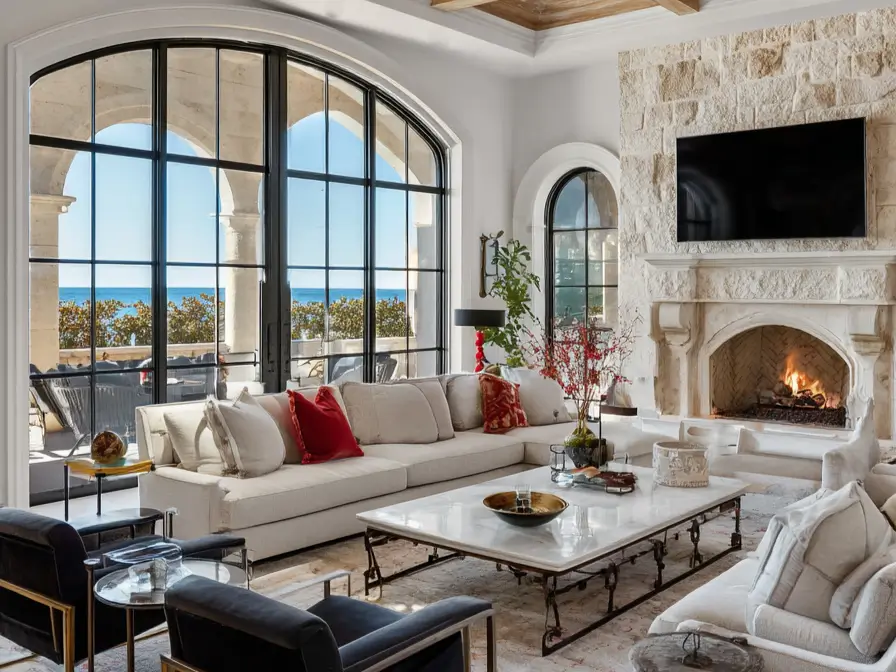

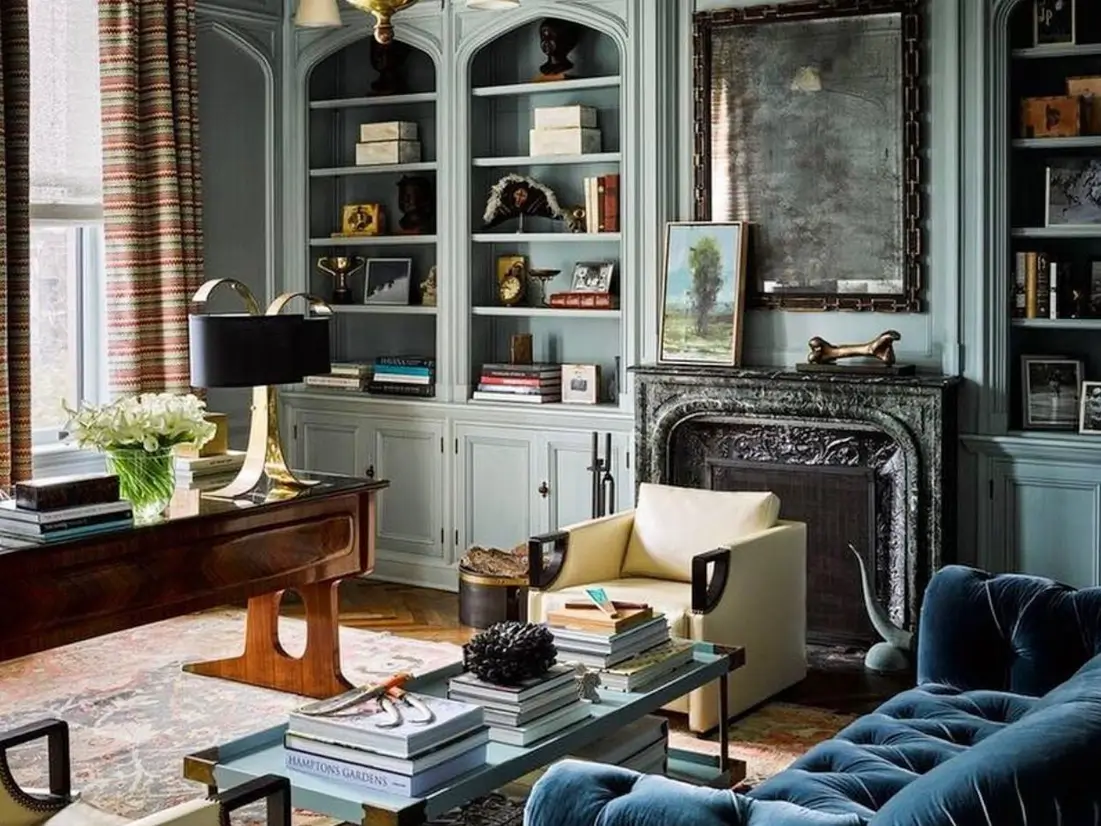
Finding the sweet spot between historic character and modern comfort often makes a room feel deeply personal. In a modern Victorian living room, you’ll usually see original details like heavy molding or fireplaces paired with clean-lined furniture that stands up to daily use. It’s a look that feels grounded and substantial, yet completely ready for real life.
Instead of feeling stiff or museum-like, modern Victorian decor tends to look curated over time. It is common to find moody paint colors softening elaborate woodwork, while contemporary lighting adds a sharp, fresh edge to traditional layouts. This approach helps a contemporary Victorian living room feel warm and evolved, rather than stuck in a specific era.
If you are gathering Victorian living room ideas, the focus is often on texture and atmosphere rather than strict historical accuracy. Whether you have a period home or just love the aesthetic, blending old-world warmth with new-world practicality helps transform any modern Victorian style space into a haven of sophistication.
Key Characteristics of Modern Victorian Style
Before looking at specific layouts, it helps to understand what separates this look from a traditional period restoration.
- The Contrast: Traditional Victorian rooms often feel heavy with dark woods, cluttered surfaces, and stiff fabrics. The modern approach keeps the “bones” (molding, fireplaces) but swaps the clutter for breathing room and the stiff fabrics for usable linens and velvets.
- Rich Colors: Deep greens, navies, and plums often ground the space, but they are frequently used in color-drenching techniques (painting walls and trim the same color) to calm the visual noise.
- Statement Lighting: A modern chandelier is often the easiest way to bridge the gap between old architecture and new energy, provided it hangs low enough to suit the high ceilings.
Quick Glance: Traditional vs. Modern Victorian
| Feature | Traditional Victorian | Modern Victorian |
|---|---|---|
| Woodwork | Dark, heavy mahogany or walnut | Painted, matte, or natural oak |
| Walls | Busy, wall-to-wall wallpaper | Color-drenching or feature panels |
| Fabrics | Stiff brocade, heavy lace | Slouchy velvet, linen, bouclé |
| Lighting | Gas lamps, heavy crystal | Sputnik, brass, architectural |
| Vibe | Formal, museum-like | Curated, lived-in, airy |
25 Modern Victorian Living Room Ideas
From moody paint colors to eclectic gallery walls, here is how to interpret the aesthetic for today’s homes.
1. Jewel Tone Seating
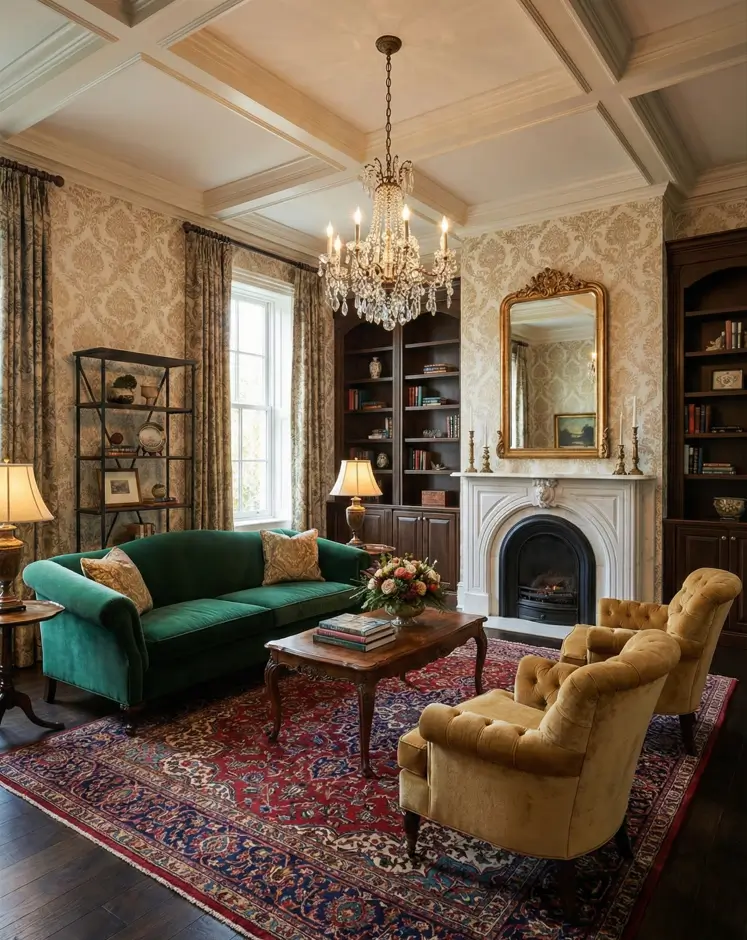
Deep jewel tones are a signature of a modern Victorian living room, particularly when mixing a green velvet sofa with mustard armchairs. You’ll usually see this pairing against intricate damask wallpaper and dark built-ins. It creates a quintessential Victorian sofa living room arrangement where guests tend to linger long after dinner ends.
2. Moody Monochromatic Walls
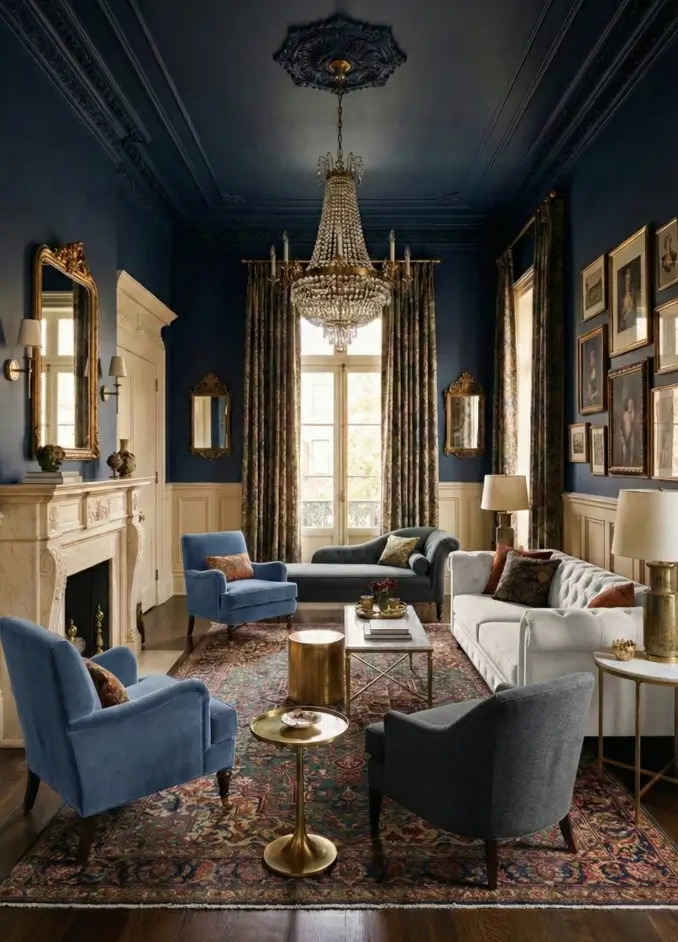
Drenching a room in a single deep color updates traditional architecture instantly. In this modern Victorian living room, navy blue spans from the baseboards to the ceiling medallion, letting the marble fireplace stand out. Dark walls have a way of making large, drafty Victorian rooms feel instantly warmer.
3. Soft Grey Layers
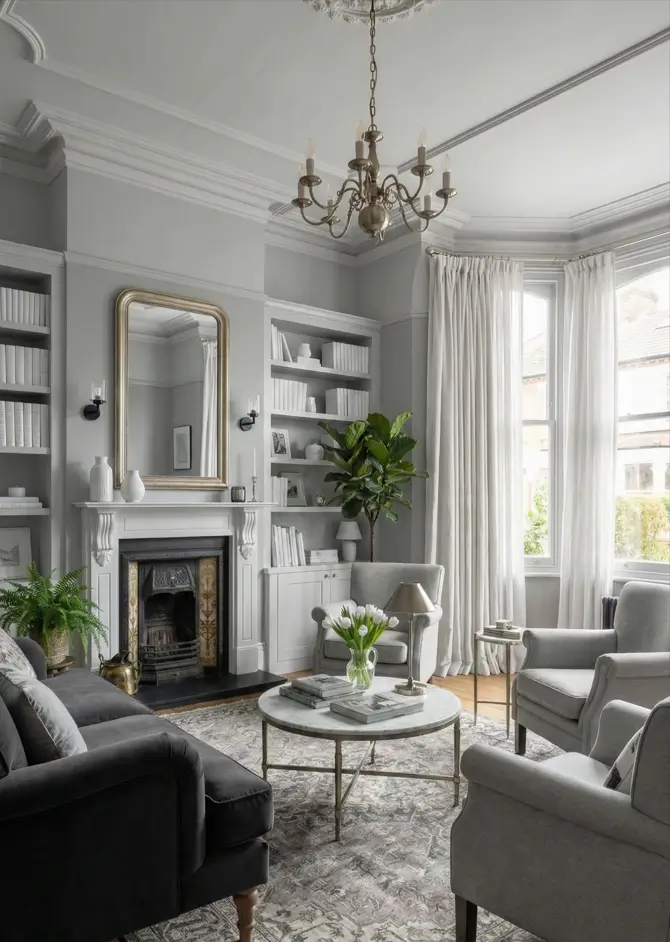
Soft greys instantly modernize elaborate crown molding and traditional fireplaces. The monochrome palette quiets the ornate details in this space, using textured limewash paint to allow the bay window and marble coffee table to shine. It feels fresh without losing character.
4. Bold Green Paneling
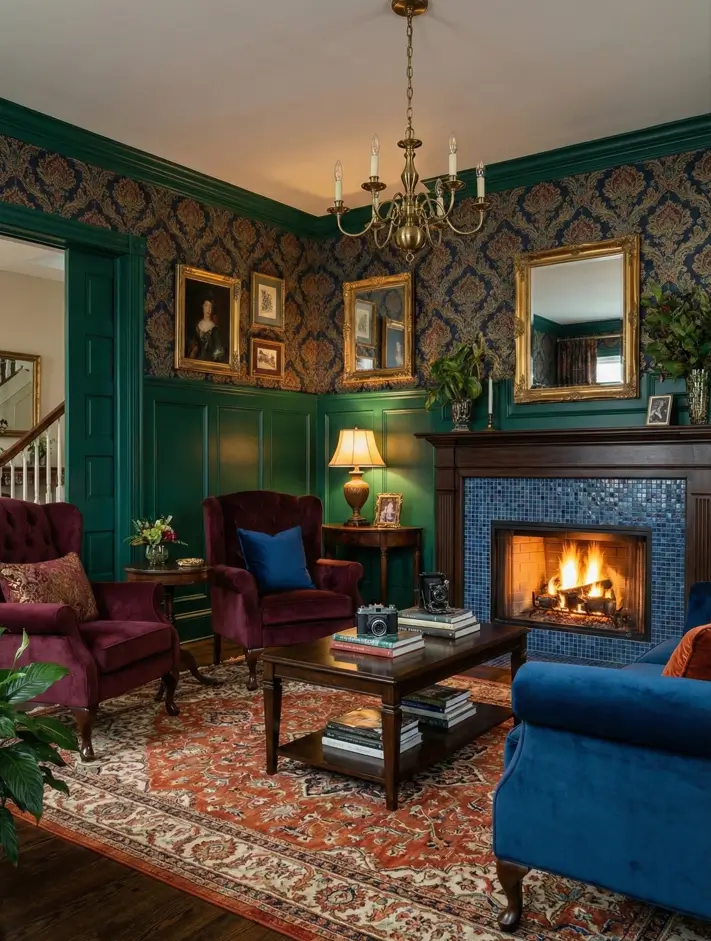
Painting woodwork in dark hues instantly adds depth to traditional spaces. Emerald green wainscoting grounds the busy wallpaper and contrasting velvet furniture, creating a moody, cocooning feel. It makes the room feel intimate and wrapped in color.
5. High-Contrast Moldings
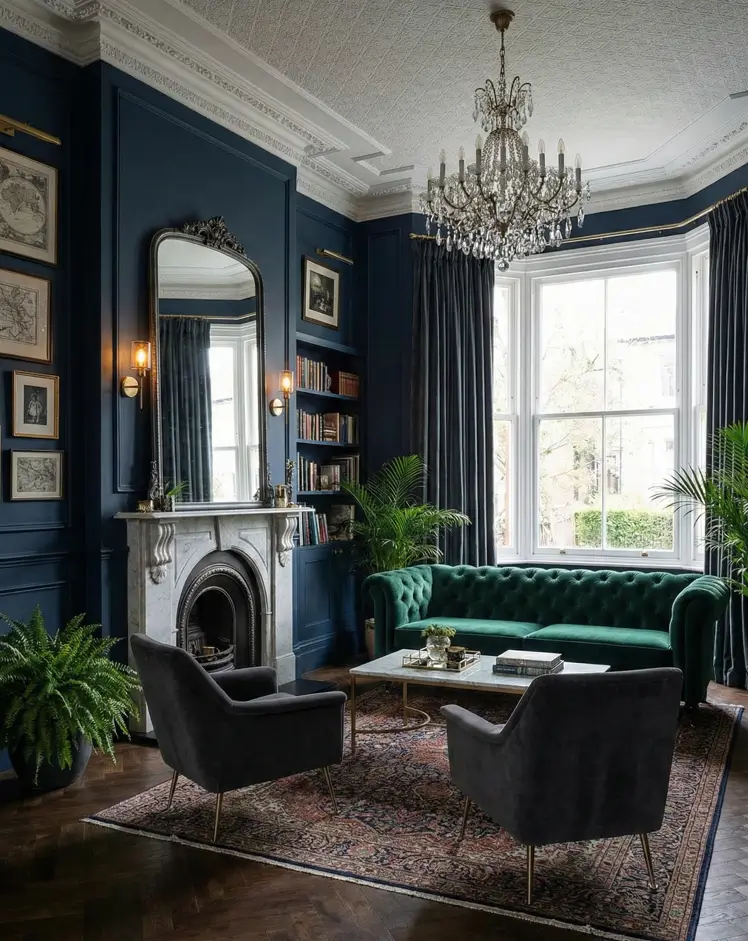
High contrast helps historical molding stand out. Deep navy walls frame the intricate white ceiling, letting the plasterwork shine. The plastered walls and ornate ceiling create a perfect backdrop for the green velvet sofa, making the room feel dramatic but cozy. White paint on the molding draws your eye straight to the plasterwork, a staple of modern Victorian decor.
6. Deep Burgundy Warmth
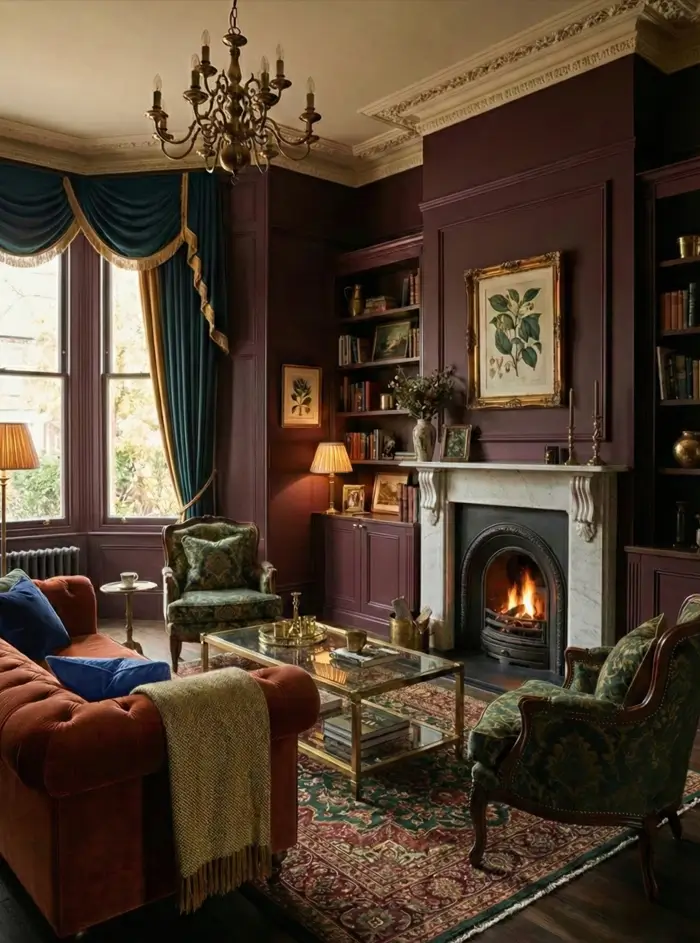
Rich, saturated colors create the most memorable spaces. In this home, burgundy walls with deep chocolate brown undertones wrap the built-ins and trim, creating a cozy backdrop for the rust velvet sofa. This visual opulence feels like a warm embrace on a cold evening.
7. Charcoal Bay Window
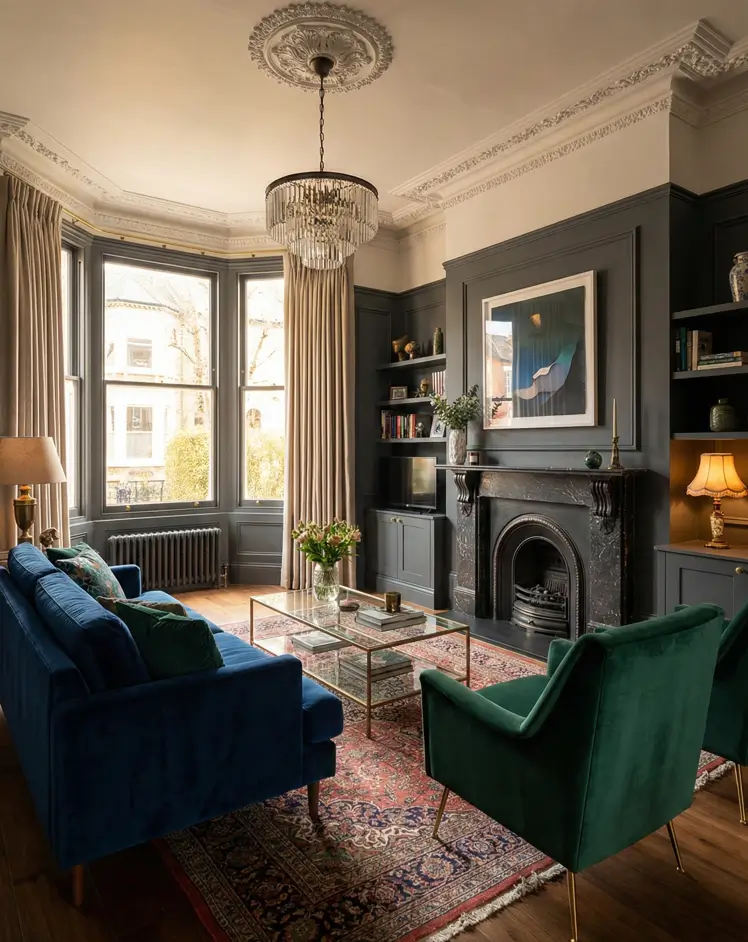
Charcoal paint brings drama while letting natural light take center stage. The dark walls contrast sharply with the bright bay window and white cornice work in this layout. It’s a smart way to place emphasis on good bones.
8. Earthy Green Tones
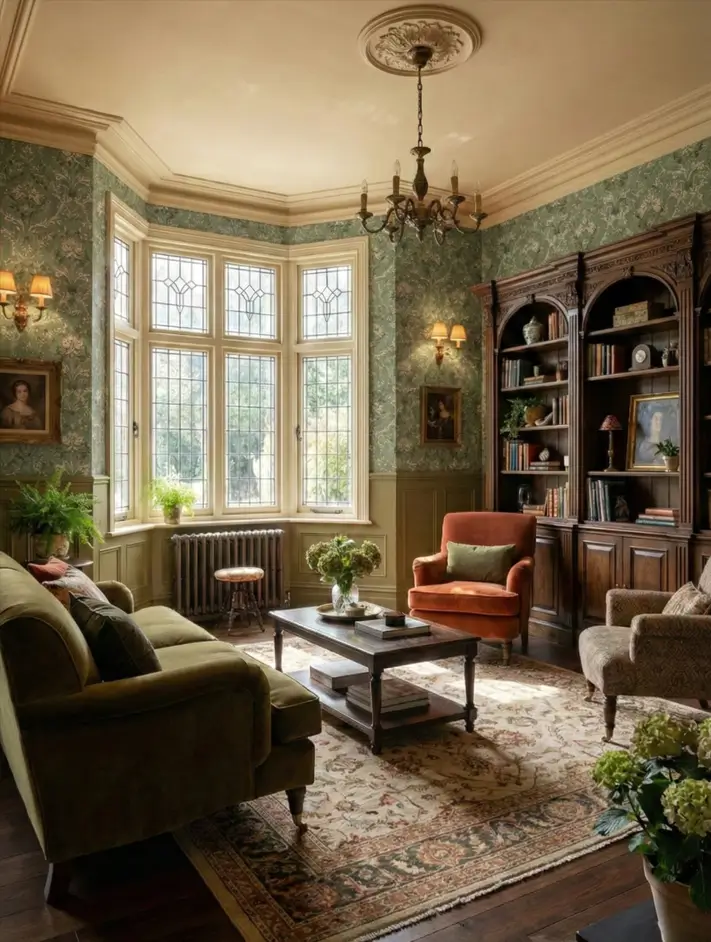
Earthy palettes make large rooms feel intimate and grounded. Paired with reclaimed oak built-ins, the sage green wallpaper and velvet seating create a cozy, library-like atmosphere near the leaded bay window. It feels perfectly suited for a relaxed modern Victorian living room.
9. Mixed Pattern Layers
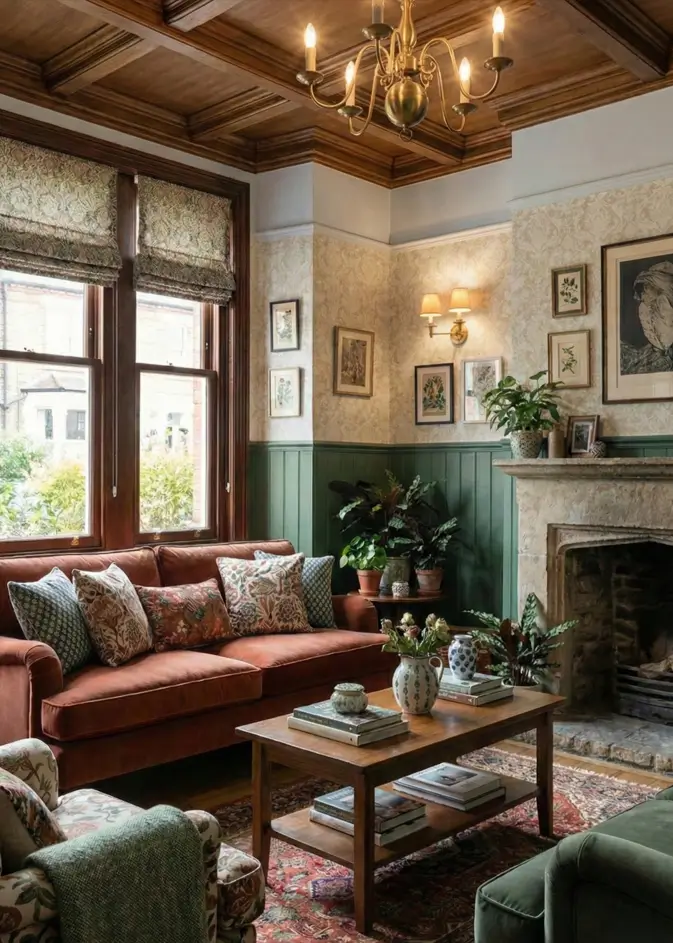
Layering distinct patterns creates a sense of history without feeling cluttered. In this room, floral Roman shades and wallpaper sit comfortably above green beadboard, grounded by the dark wood ceiling. The mix of patterns makes a room feel curated and collected over years, where every little detail tells a story!
10. Warm Mustard Tones
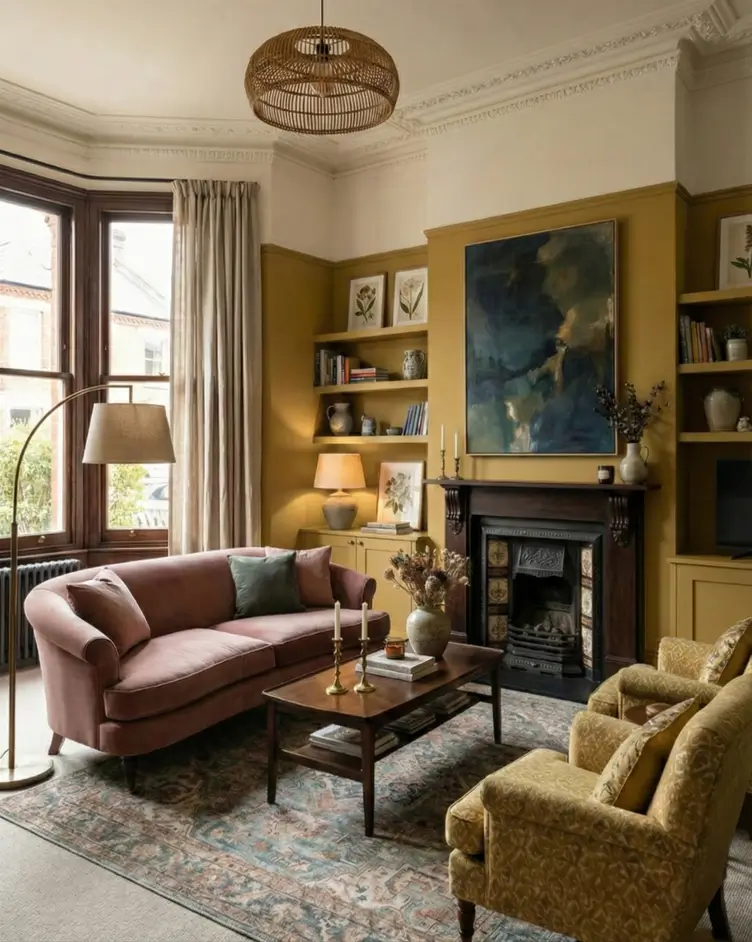
Unexpected color combinations breathe new life into classic Victorian living room ideas. This space pairs mustard yellow wainscoting with a soft pink velvet sofa, balancing the traditional fireplace tiles. It feels playful yet grounded, perfect for a relaxed family room.
11. Dark Botanical Drama
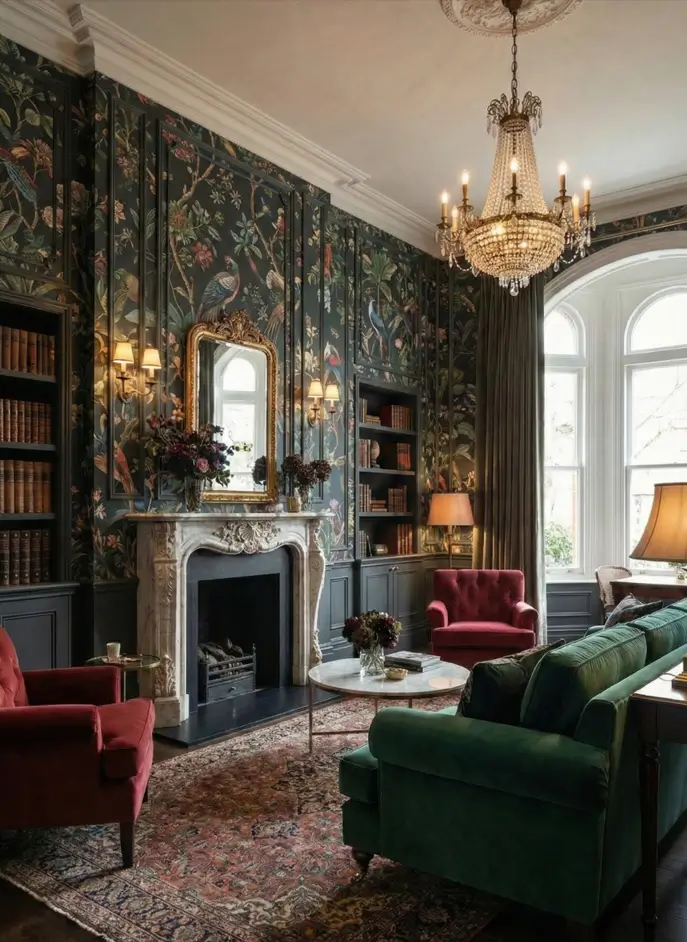
Detailed wallpaper acts as art on its own. Here, dark botanical prints pair well with the deep green velvet sofa and red armchairs, making extra wall decor feel unnecessary. This look feels incredibly rich and sophisticated.
12. Grand Wood Paneling
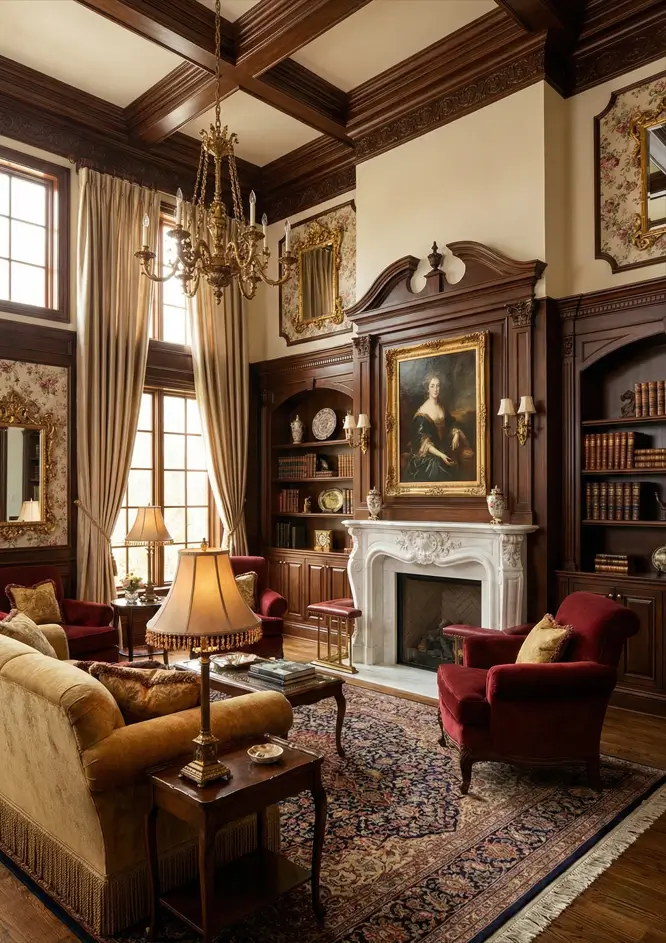
Dark wood paneling can dominate a space, but high ceilings help balance the visual weight. Rich mahogany built-ins frame a white marble fireplace, creating a stunning focal point. It feels regal yet surprisingly welcoming for gathering.
13. Contrast Wood Trim
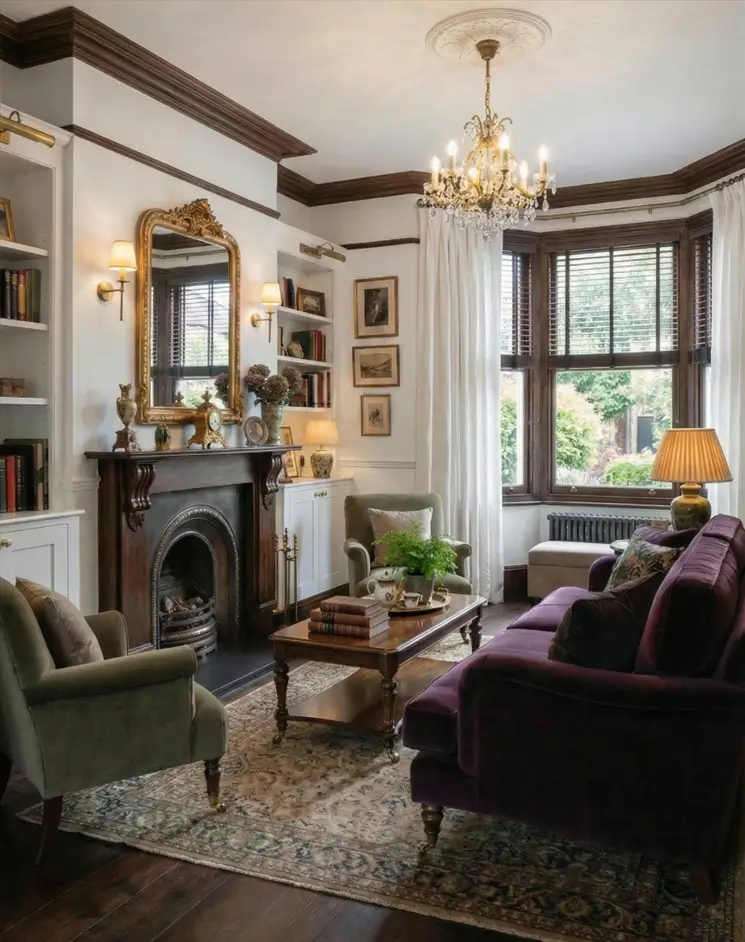
Contrasting dark trim with light walls highlights architectural bones instantly, nodding to modern Craftsman detailing. In rooms with contrasting wood trim, mahogany molding can frame seating areas and bay windows, giving the space a crisp, defined border. It creates a structured look that still feels inviting.
14. Earthy Two-Tone Walls
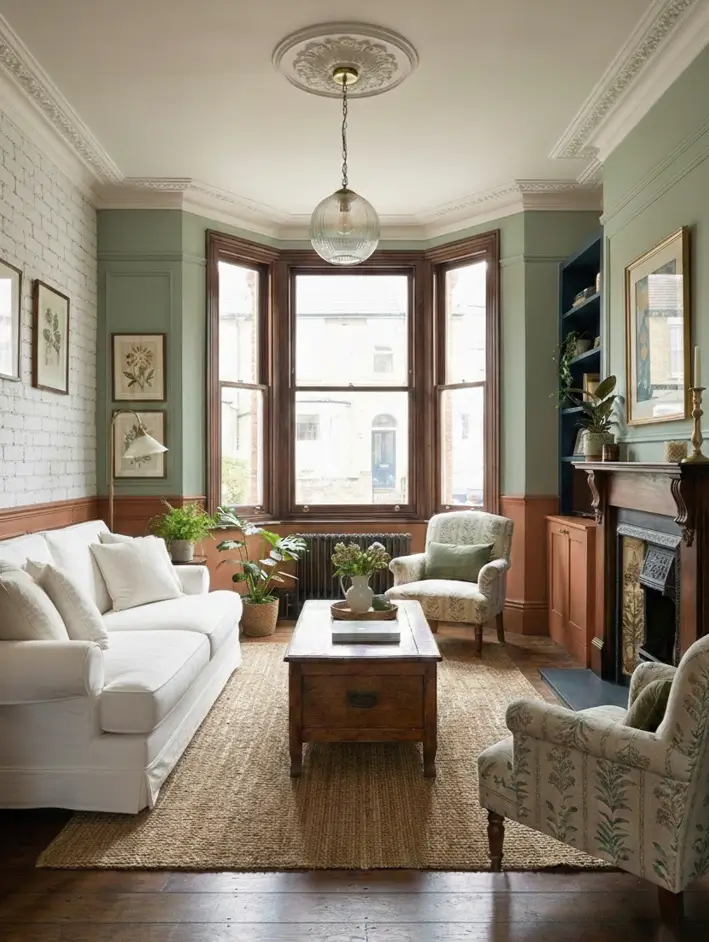
Split wall colors make high ceilings feel more manageable. In rooms with high ceilings, soft sage green pairs well with warm terracotta wainscoting, while painted white brick adds unexpected texture. It creates a relaxed, layered look that feels very welcoming in a modern Victorian living room.
15. Sunny Gold Accents
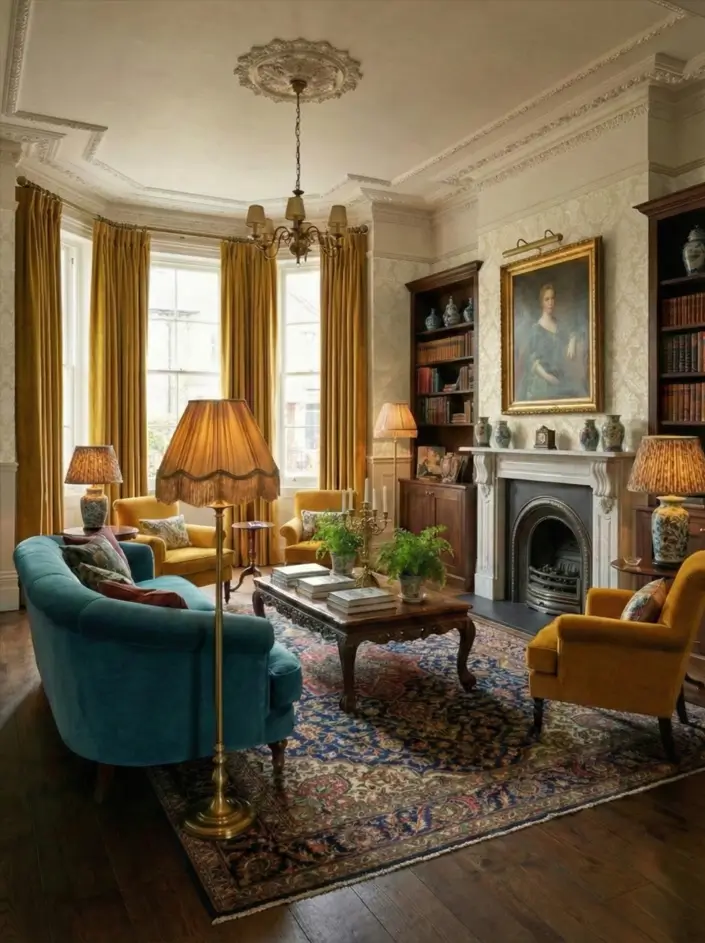
Gold curtains bring instant warmth to high-ceilinged spaces. The floor-to-ceiling drapes pair well with the blue velvet sofa, creating a vibrant, cheerful contrast against the dark wood fireplace. This look feels sunny and sophisticated.
16. Moody Contrast Walls
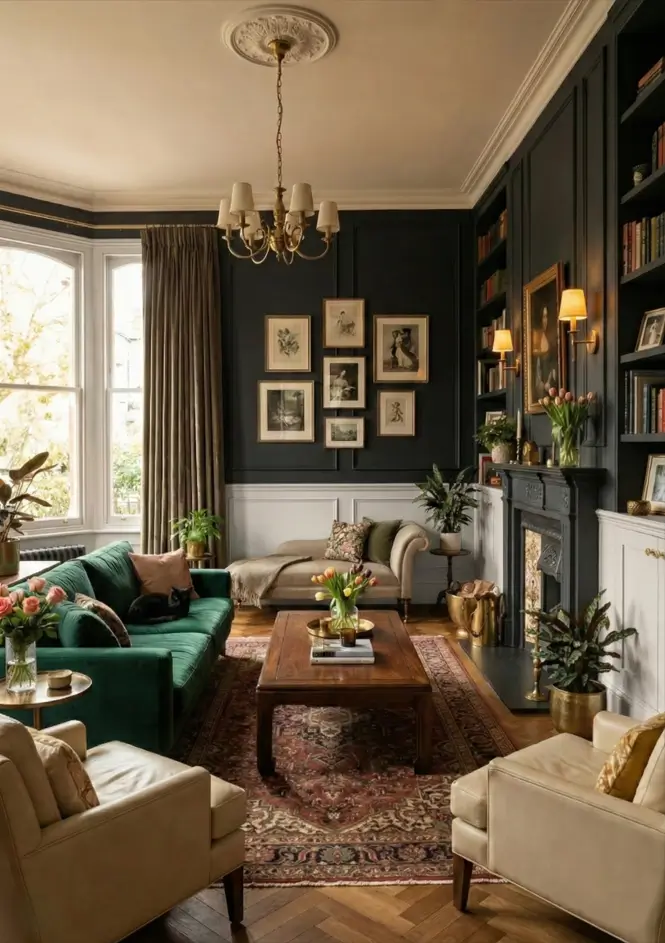
Dark upper walls paired with bright wainscoting tend to make a room feel sharper and more defined. In this room, charcoal paint contrasts sharply with white paneling, framing the gallery wall and green velvet sofa beautifully. It feels curated and elegant without being stuffy.
17. Vibrant Teal Paneling
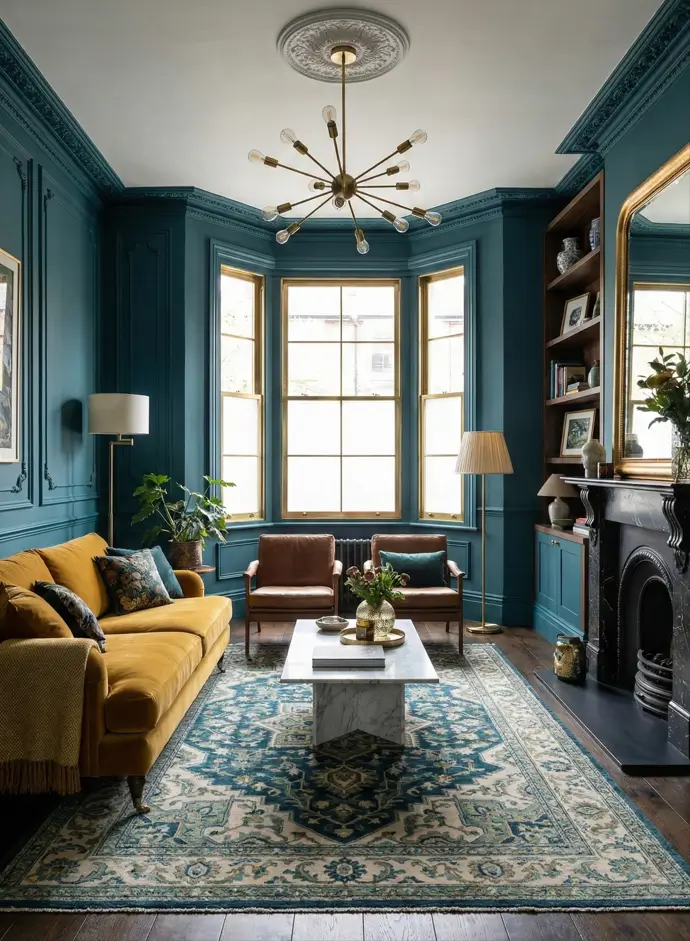
Modern lighting serves as a bridge between different eras. Here, a brass sputnik chandelier hangs above a mustard velvet sofa, contrasting sharply with the traditional teal paneling. It adds a hint of undeniable modernity to the space.
18. Moody Plum Walls
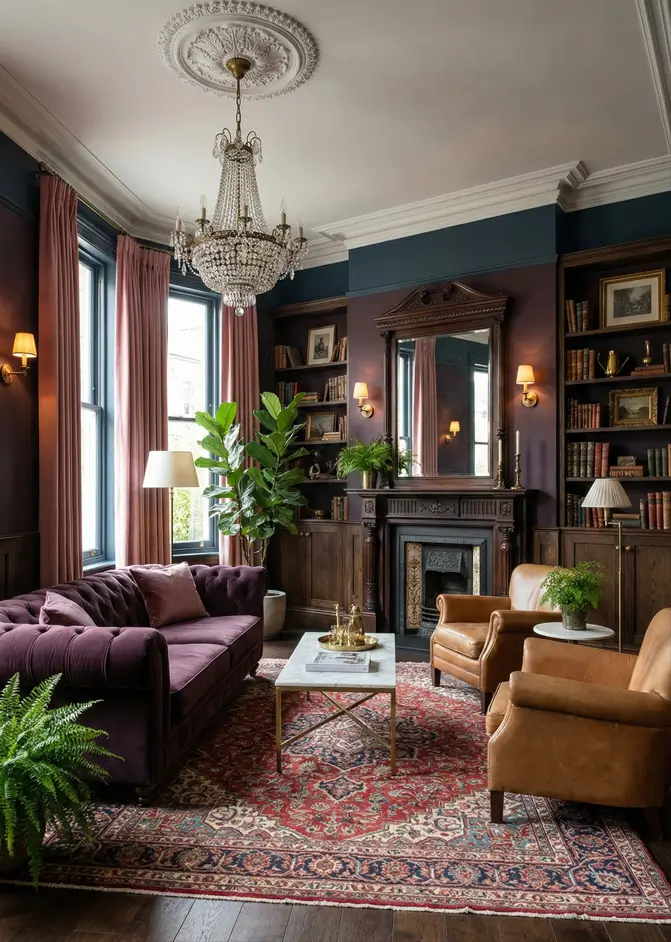
Moody paint colors make traditional woodwork feel fresh. Deep plum walls surround dark built-ins, creating a rich backdrop for the leather chairs and velvet sofa. This mix feels sophisticated yet incredibly cozy.
19. Eclectic Gallery Wall
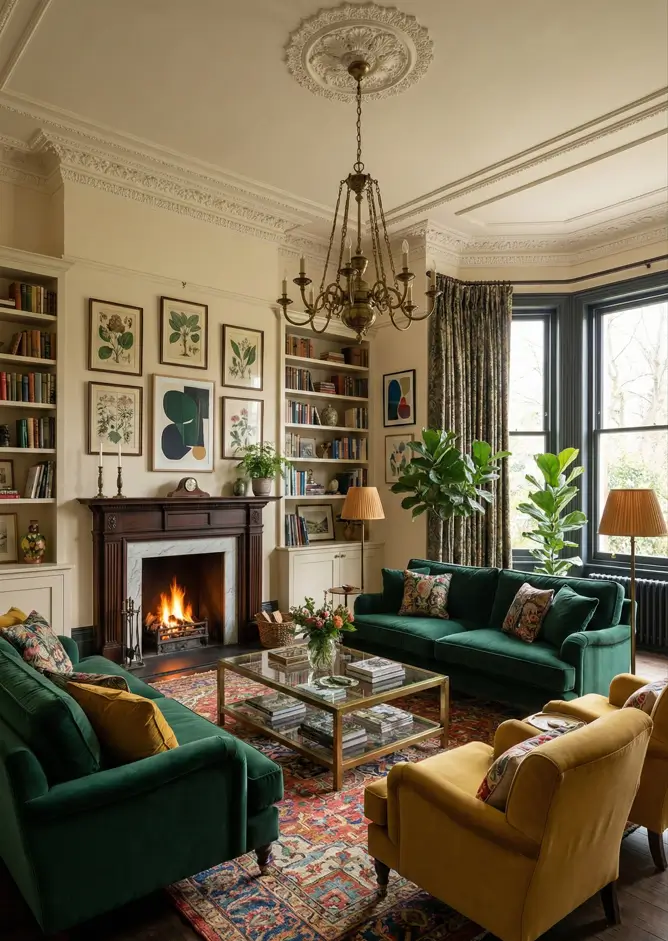
Mixing art styles makes a room feel evolved rather than just decorated. Across the main seating wall, modern abstract shapes in matte black frames can hang alongside traditional botanical prints, echoing the playful mix of green velvet and mustard upholstery. It’s a smart way to add personality to modern Victorian decor.
20. Glossy Tiled Fireplace
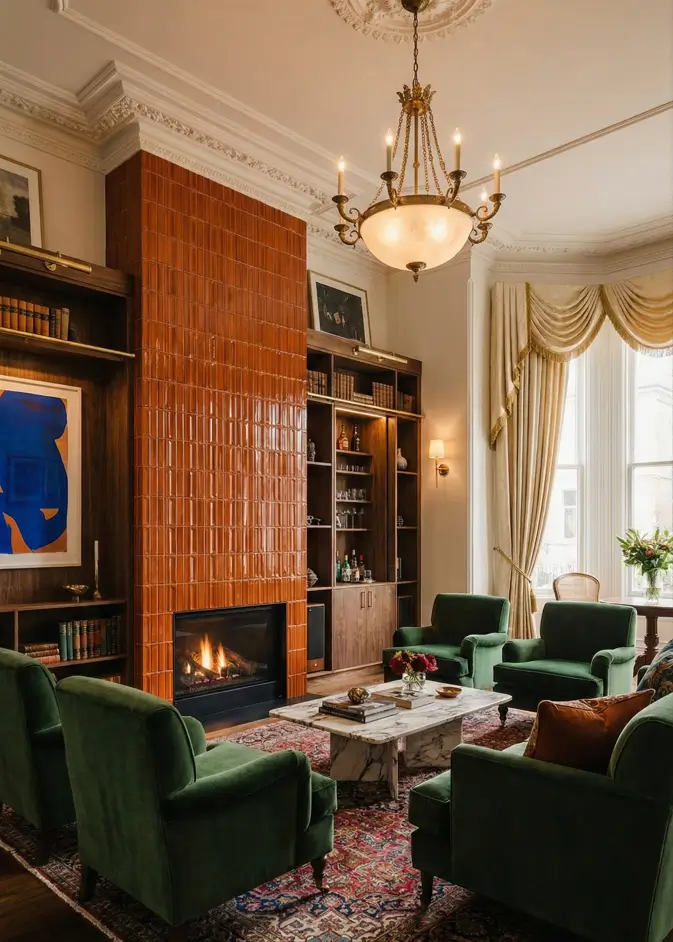
Glossy tiles introduce a contemporary edge to historic rooms. On the focal wall, the floor-to-ceiling orange fireplace breast acts as a vibrant centerpiece against classic white cornicing and green velvet chairs. This bold choice feels refreshing and unique.
21. Wallpapered Wall Panels
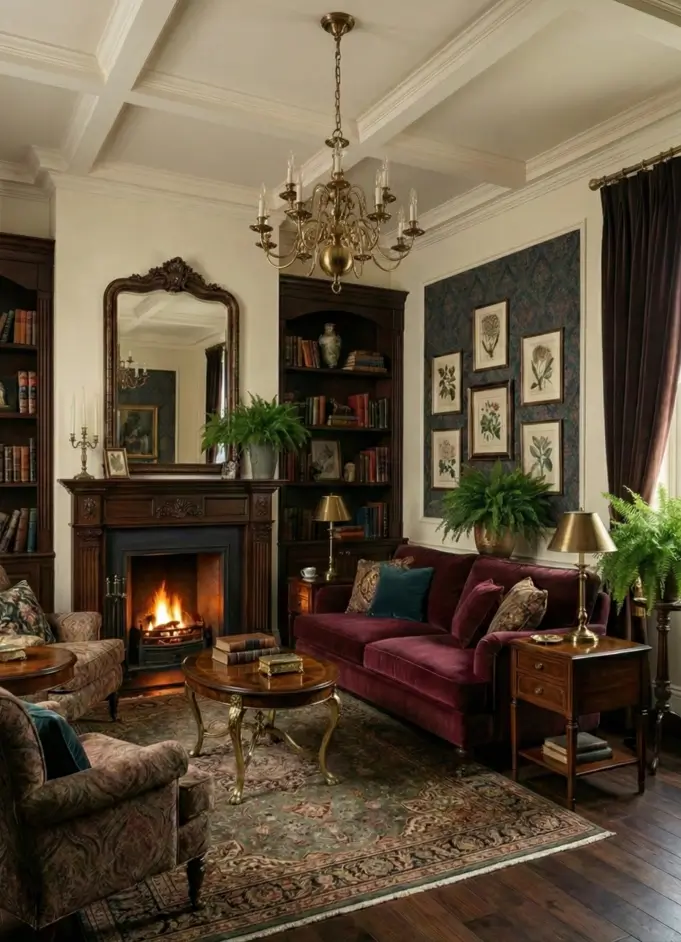
Using wallpaper inside picture molding creates instant art. Within picture-frame wall molding, a dark botanical print can fill the panels behind the sofa, adding depth to burgundy velvet upholstery and dark wood built-ins. It feels rich and layered without looking cluttered.
22. Emerald Wood Pairing
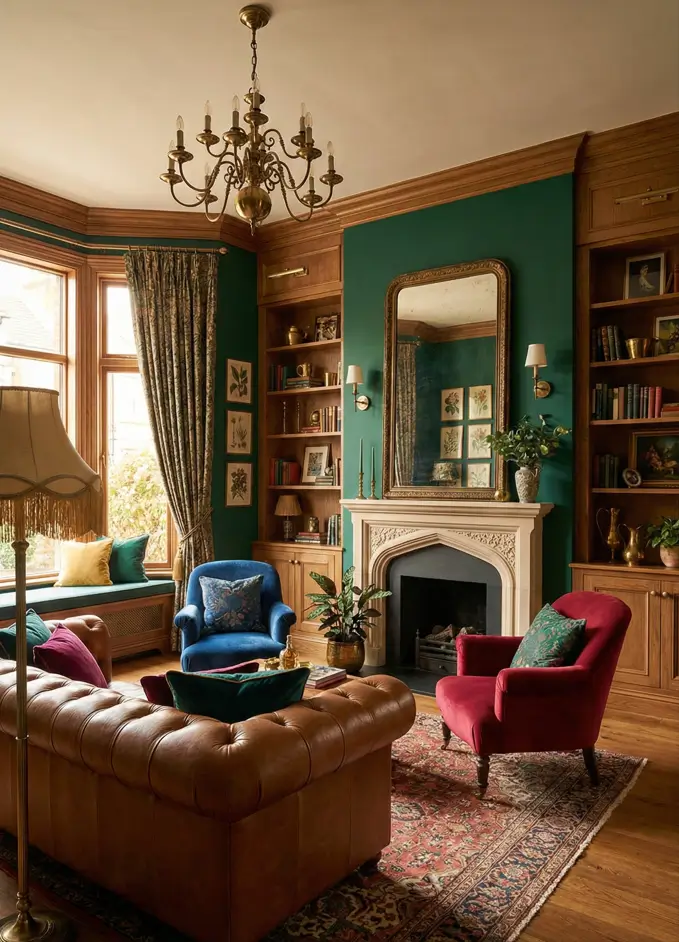
Natural wood tends to stand out comfortably against bold colors. Along the fireplace wall, emerald green paint creates a vibrant backdrop for a limestone mantel and brown leather sofa. It creates a cozy, library-like atmosphere.
23. Playful Pastel Palette
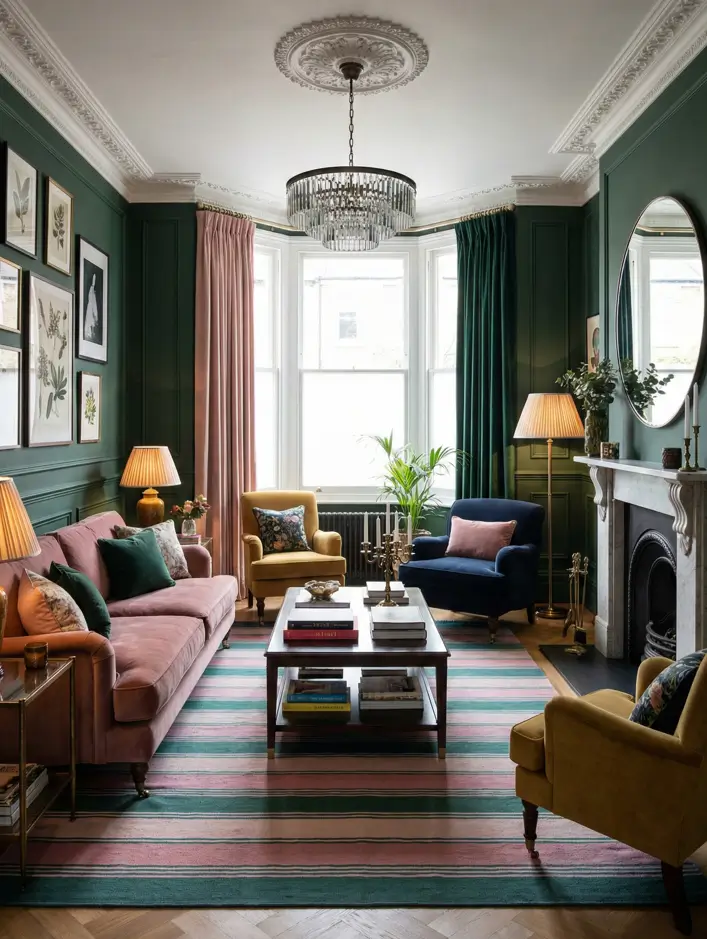
Mixing pastels with deep jewel tones creates a vibrant, youthful energy. In this space, a striped rug anchors the pink sofa, while nubby bouclé fabric on the mustard chairs softens the look against dark green walls. The result feels playful, surprisingly cohesive, and slightly Bohemian.
24. Soft Pastel Blocking
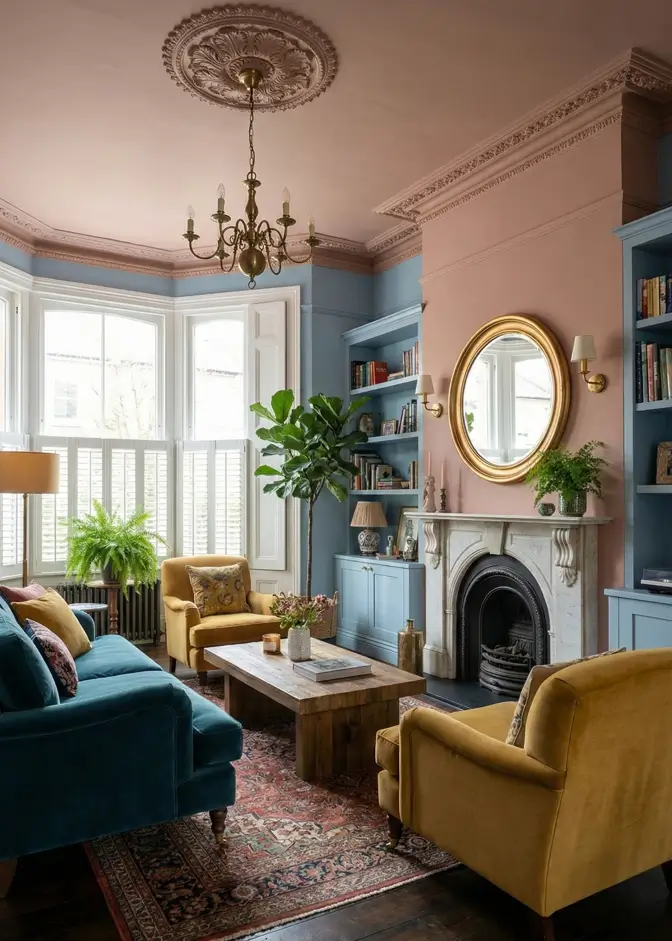
Soft color blocking can completely reinvent a traditional space. In Victorian living rooms with painted built-ins, soft pink walls can pair well with baby blue cabinetry, creating a fresh backdrop for a teal sofa. It feels cheerful and light, bringing a Scandinavian touch that brightens up the historic layout.
25. Textured Damask Walls
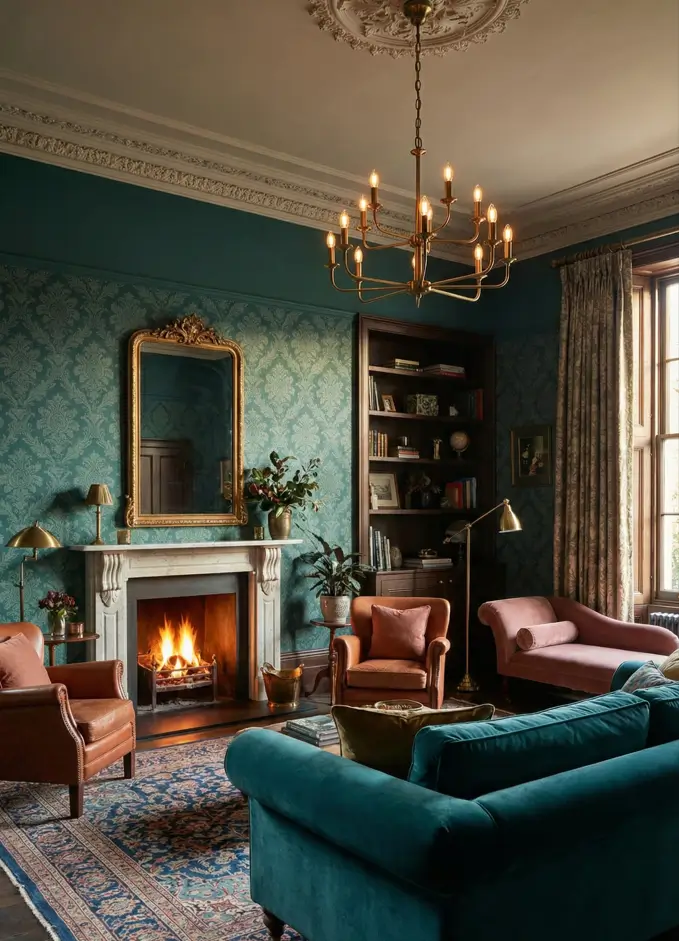
Damask prints bring instant character to large rooms. Here, teal damask wallpaper wraps the walls, creating a moody backdrop for the velvet seating and marble fireplace. The result feels luxurious, giving the room immense texture and depth.
Laying the Groundwork: Floors & Window Treatments
Getting the base right often sets the tone for the whole room. In terms of Victorian living room flooring, original floorboards… might be worth salvaging if they are in good condition, though many homeowners now opt for sustainable materials like reclaimed wood, or choose high-quality herringbone LVT to handle high traffic while maintaining the aesthetic.
For windows, the choice typically lands between solid shutters for light control or plush, velvety fabric for the drapes to add softness. You’ll also frequently see biophilic accents, like large indoor trees placed in sunny bay windows, bridging the gap between indoors and out.
Mastering the Mix: The 80/20 Styling Rule
Creating a look that feels curated rather than chaotic usually comes down to balance. A common approach follows the “80/20 rule”: if your room has strong architectural bones (the 80%), keeping the furniture clean and modern (the 20%) prevents the space from feeling like a period set.
This is where you can juxtapose scales—pairing oversized modern art with intricate Victorian molding—to create tension and interest. Conversely, in a plain boxy room, adding 80% vintage furniture brings that necessary character.
This balance is often what defines a successful modern vintage living room. It’s worth noting that this collected look usually happens over time, rather than in a single weekend.
Real-Life Practicality: Drafts, Dust & Scale
Living with period features adds character, but it also comes with quirks that modern Victorian living room design can help solve.
- Handling Drafts: Victorian rooms are notorious for being drafty due to single-pane windows. Heavy velvet drapes aren’t just an aesthetic choice here; they do a great job of blocking chills in the winter.
- The Dust Factor: Intricate plasterwork and ceiling medallions look stunning, but they are dust magnets. You’ll likely need a dedicated dusting routine with a long-handled microfiber wand to keep them looking crisp.
- Furniture Scale: Victorian rooms often have narrow entryways but high ceilings. Getting low, modular sofas into these rooms is usually easier than maneuvering high-backed traditional pieces through tight hallways, though lower pieces may need taller lamps nearby to balance the room’s height.
- Renter-Friendly Updates: You don’t always need to renovate to get the look. Peel-and-stick wallpaper inside picture frame molding or leaning oversized ornate mirrors against walls adds instant grandeur without damaging the plaster.
Related:
- Victorian Style Bedroom: 30 Ideas for Romance Without the Heaviness
- Victorian Kitchen Design: 40 Ideas a Designer Actually Loves
FAQs
What defines a modern Victorian living room?
A modern Victorian living room blends original architectural bones—like ornate moldings and fireplaces—with clean-lined contemporary furniture. The defining feature is the balance between historic character and modern livability, often achieved through moody color palettes and texture-rich textiles rather than period-correct museum pieces.
Can this style work in a small apartment?
Yes, it actually works quite well in small spaces. Victorian design emphasizes verticality, so using floor-to-ceiling curtains or hanging artwork high on the wall draws the eye up, making a cramped footprint feel grander. You can mimic the architectural character with add-on wall molding or a ceiling medallion, even in a rental.
Is modern Victorian decor high maintenance?
It can be, depending on your choices. While velvet is durable, it attracts pet hair. The main maintenance challenge comes from the architectural details—elaborate baseboards and ceiling roses trap dust and need regular attention. Keeping surfaces relatively clear of knick-knacks (unlike the traditional Victorian style) helps keep the cleaning manageable.
How do you make a Victorian room look modern?
Paint is often the simplest tool. Using a monochrome palette or painting woodwork in dark, moody tones can instantly update the feel of the space. Swapping out heavy drapes for lighter fabrics and adding modern lighting fixtures also helps bridge the gap between old and new.