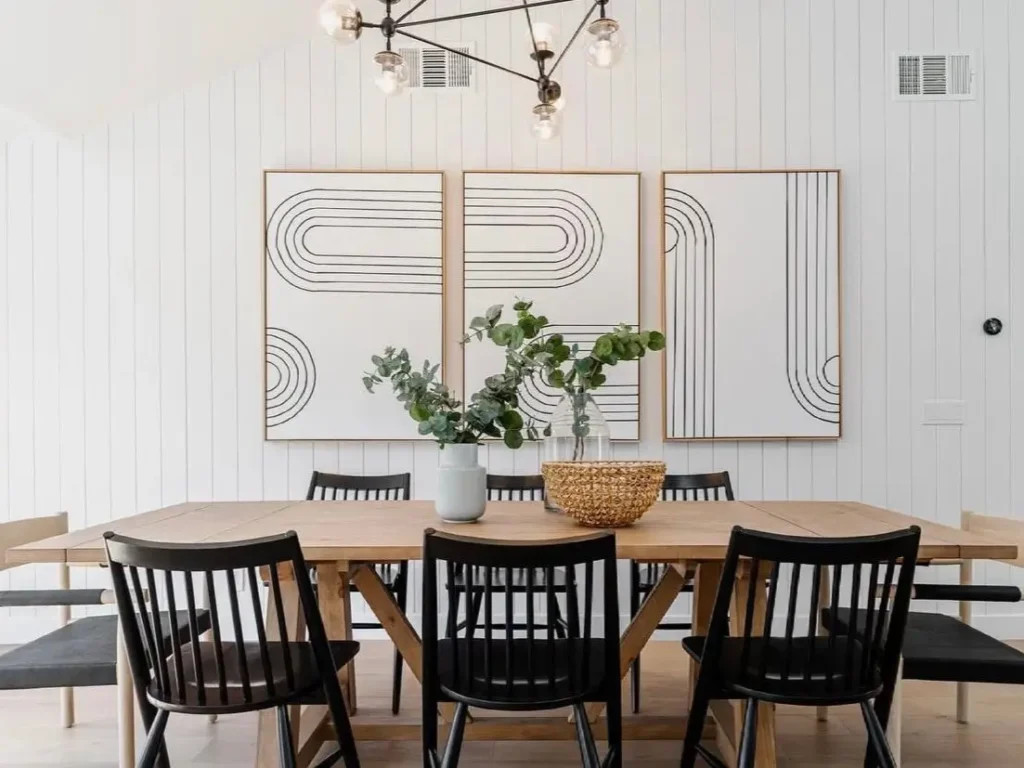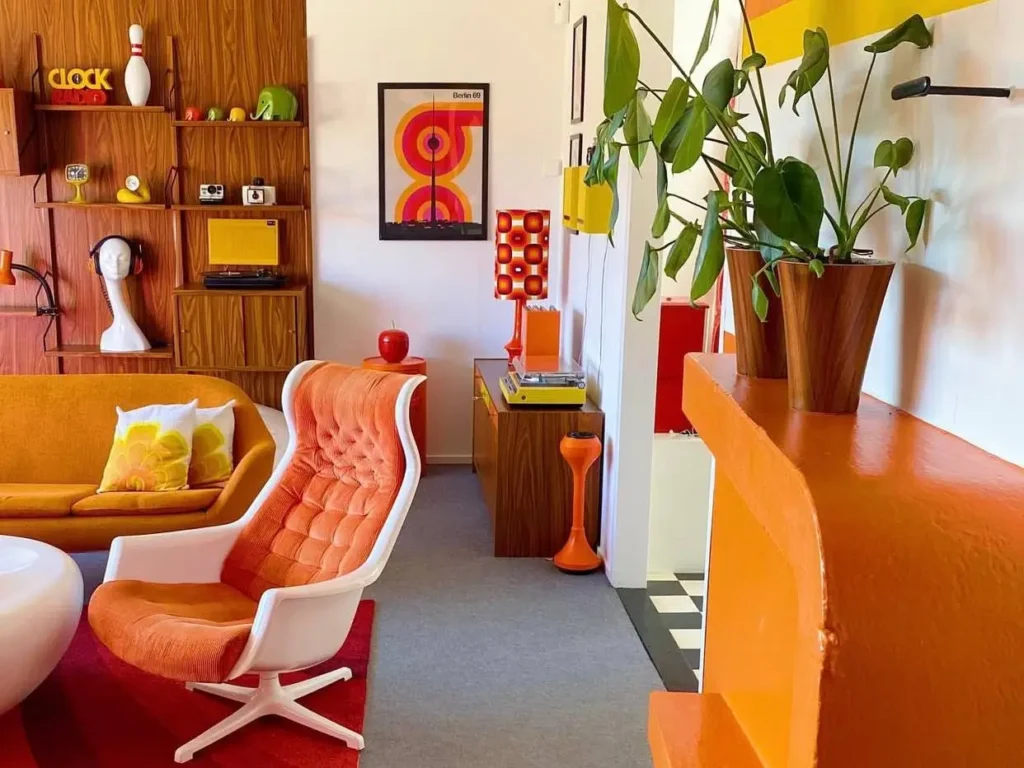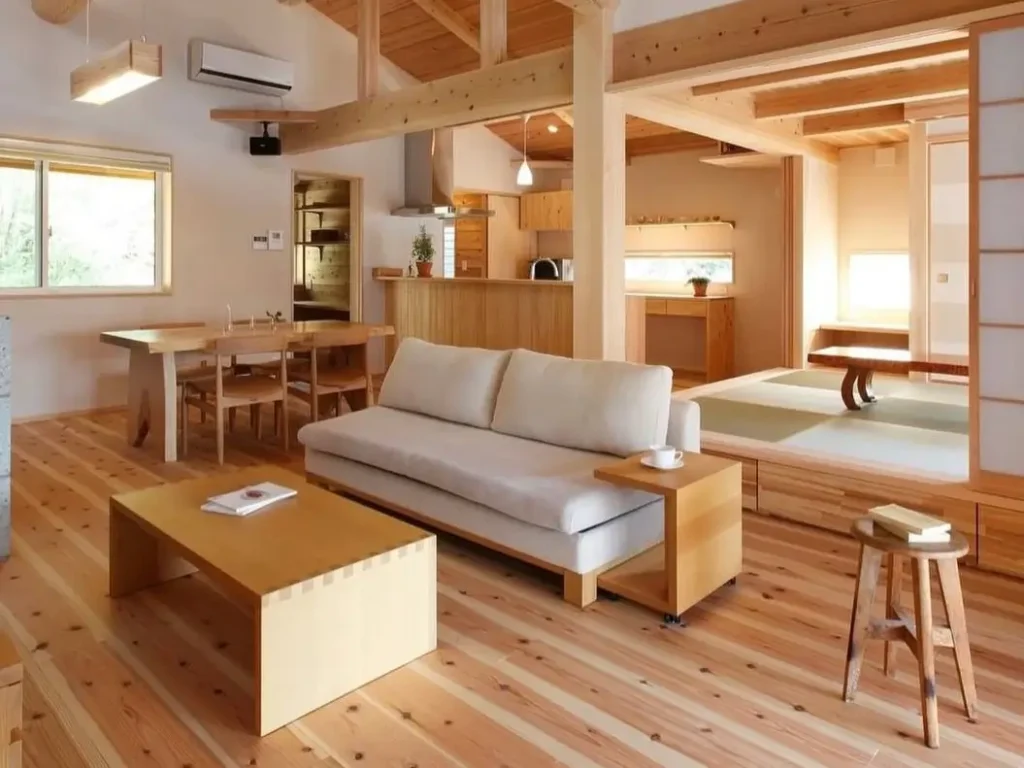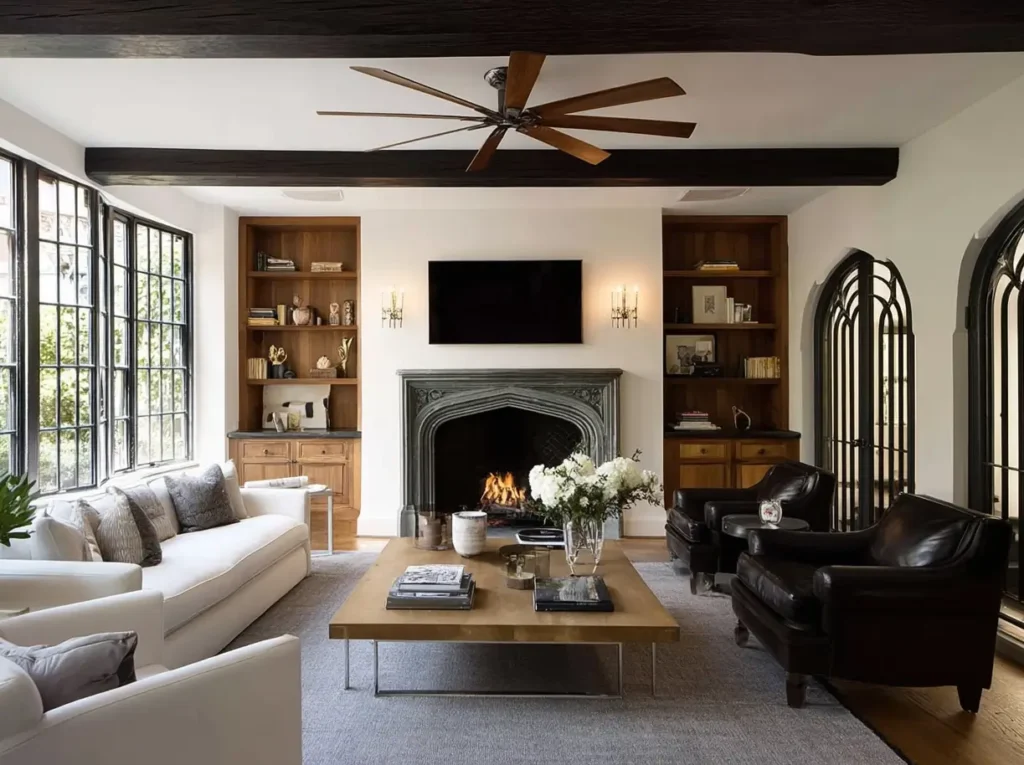

Lighting makes a bigger difference than most people realize. Getting it right is a vital step toward making a home feel more inviting and comfortable to use, especially once the sun goes down.
This is something I explain to clients all the time: a room can look great and still not feel good. When that happens, it’s usually not the furniture. It’s the lighting.
Learning how to layer lighting helps boost functionality and elevate the mood of every room, from the kitchen to the living room, bathroom, and even cozy bedroom spaces—and these layered lighting principles are widely used by lighting experts for a reason.
Keep reading and I’ll break down the three different kinds of lighting and how they work together.
Quick Takeaway (If You’re in a Hurry)
- Main lights (ambient) give you overall brightness, but they rarely feel cozy on their own.
- Task lighting helps you do things like read, cook, and work without straining your eyes.
- Accent lighting adds warmth and mood (this is where the cozy vibe comes from).
- Layered lighting = main + task + accent working together, instead of relying on one big light.
- For most homes, aim for 2700K–3000K bulbs for a warmer look.
Main Lights (Ambient Lighting)

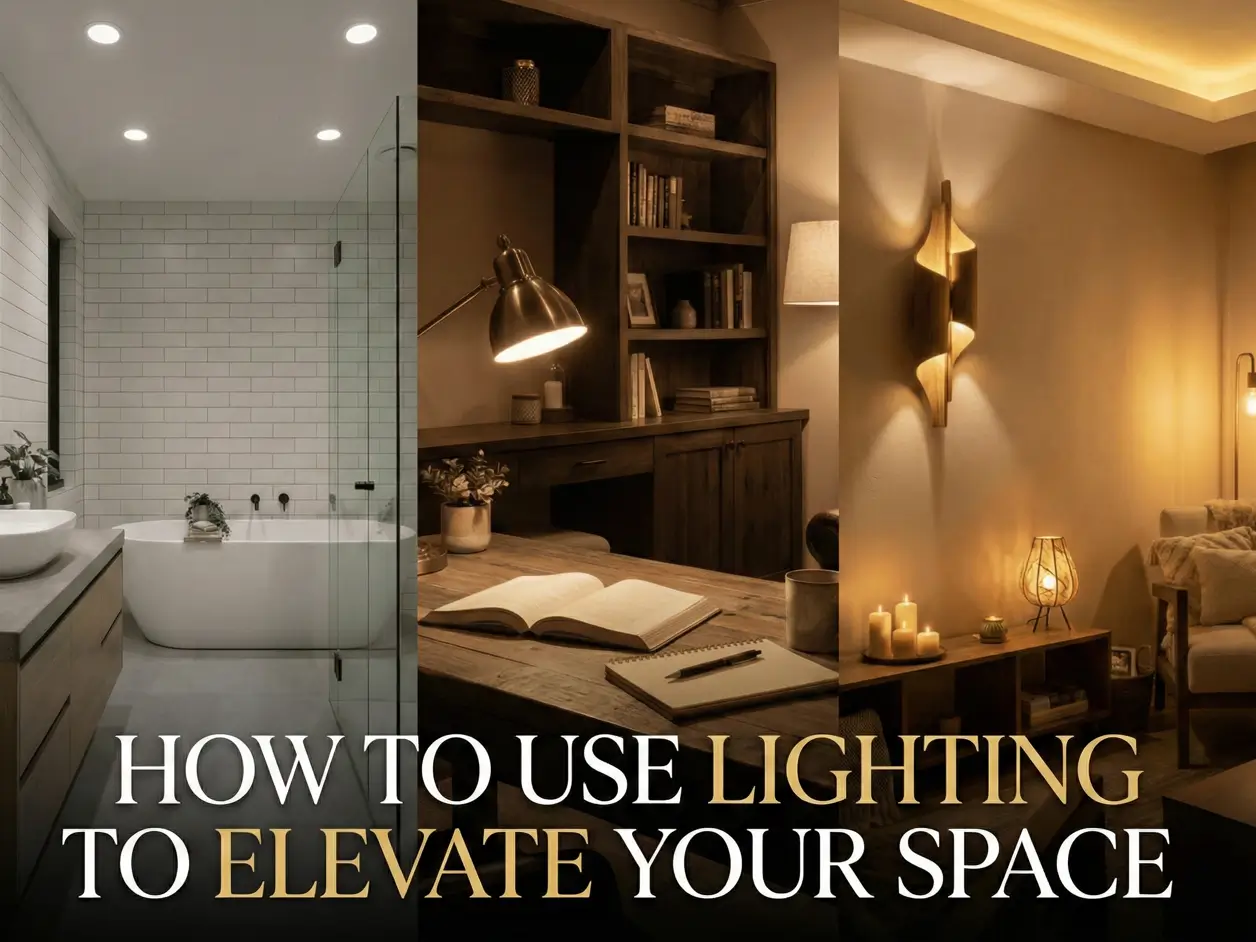
Main lights are your ceiling lights. Some people call them downlights, can lights, or pot lights. This is the main ambient lighting in the room.
You definitely need this type of lighting, but here’s the thing—even if a room is really beautiful, when these lights are on their own late at night, it usually doesn’t feel very cozy. Everything can feel a bit flat and can take the warmth and soul out of a room.
Think of main lights as your base. They’re important, but they’re not meant to be the only source of light in the space.
Task Lighting

Task lighting is another layer of lighting. It’s pretty much exactly what it sounds like—lighting that helps you do things.
If you’re reading a book, cooking, or doing anything that needs focused light, this is where task lighting comes in. This could be a floor lamp, a table lamp, a desk lamp, or lighting under kitchen cabinets.
This layer makes the space more functional, but it also makes it feel better because the light is closer to you instead of all coming from the ceiling. It can be a clever solution for a tricky space.
Accent Lighting
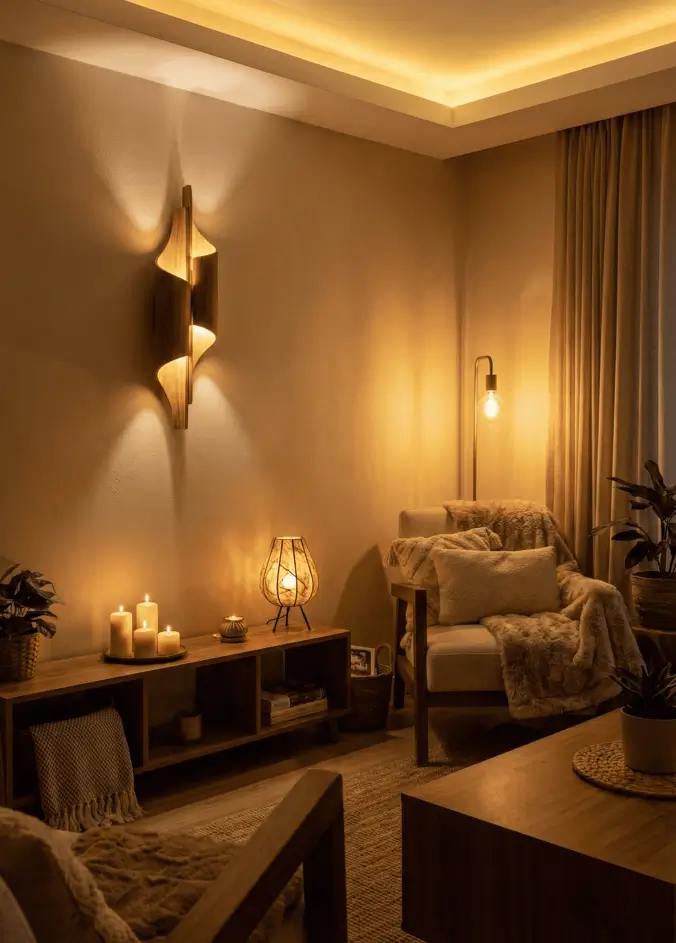
Accent lighting is the third layer, and this is where the cozy vibe really starts to happen. This is where you start to see personality, soul, and a bit of flair come through.
This can be wall sconces, decorative lamps, LED strips (often used as cove lighting), or even candles. Accent lighting isn’t really about function—it’s more about mood, which is why it plays such a big role in Japandi and Scandinavian interiors.
When you start adding task lighting together with accent lighting, the space instantly feels warmer and more inviting. It not only looks more intimate, it feels better to live in. It’s just something fun to think about in your house if you’re trying to get that cozy feeling.
Why Layering Lighting Matters
Layered lighting simply means using main lights, task lighting, and accent lighting together so the room feels comfortable instead of flat or harsh. What does that actually mean? It means the lighting works together instead of fighting each other.
When you put all of these layers together, you’re not relying on one big light to do everything. If a room ever feels cold or like something is off, lighting is usually the reason—especially in small apartments and compact homes.
Room-by-Room Examples
Here’s how this usually looks in real homes. Think through these examples and notice how the lighting is doing different jobs.
Living Room
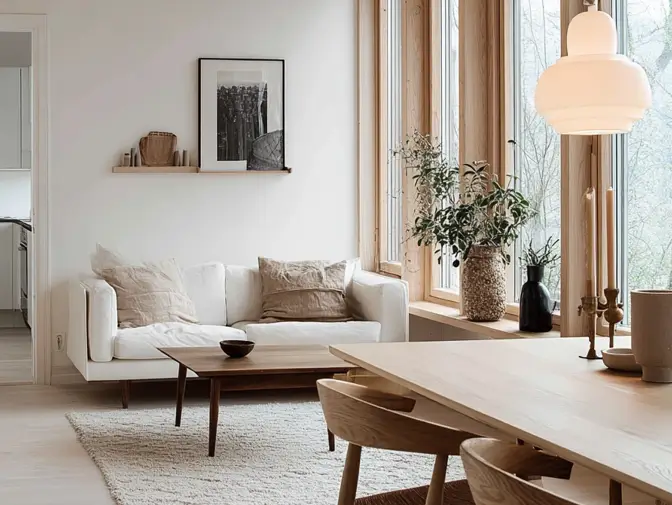
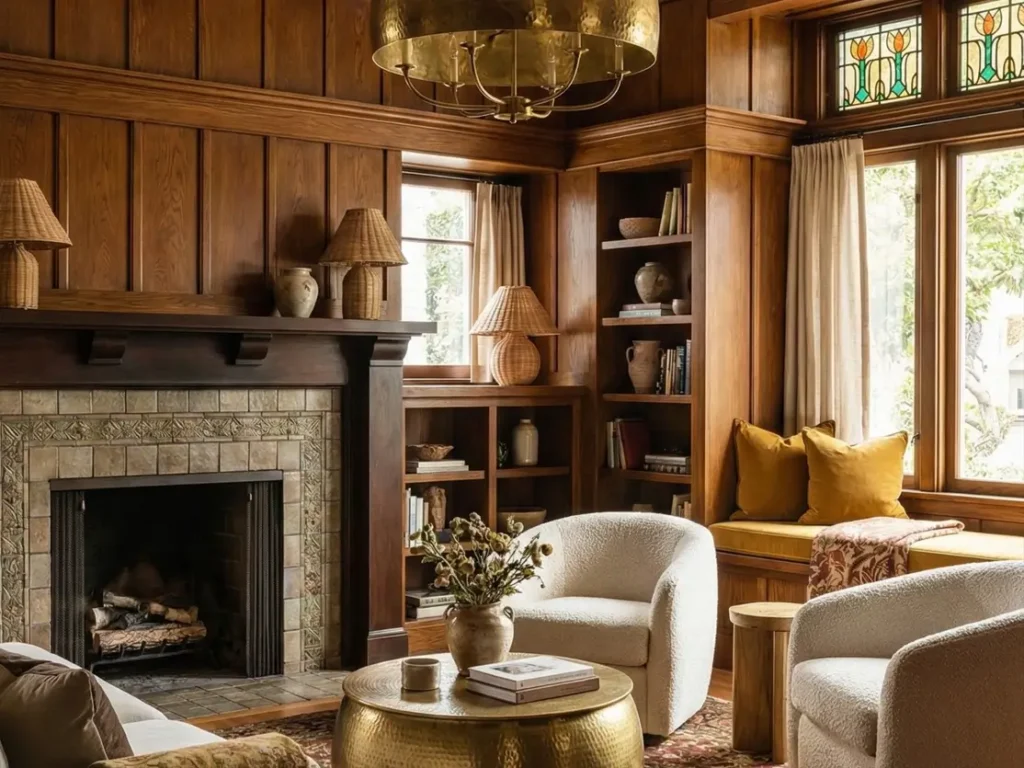
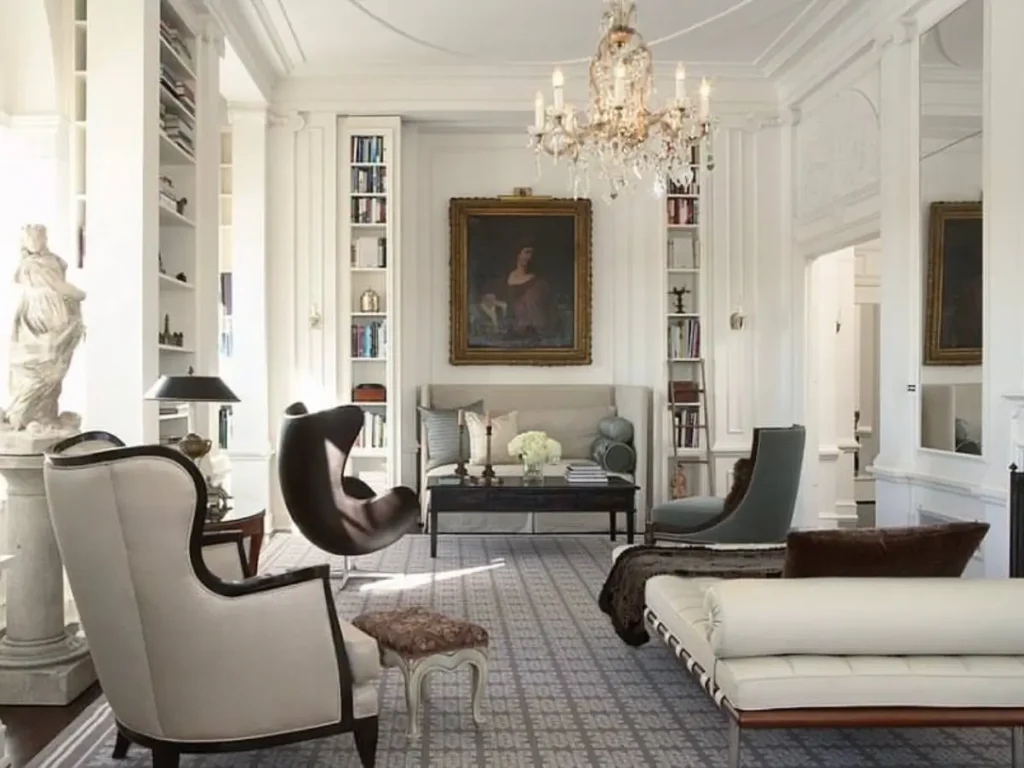
I like to start with the ceiling light on a dimmer, then add at least one floor or table lamp near the sofa, especially in a warm, layered living room. An accent light—like a small lamp, wall sconce, or even a candle—helps soften the space at night, which works especially well in bohemian-style living rooms.
Bedroom
The main light is mostly for getting dressed or cleaning. For everyday use, bedside lamps and one soft accent light make the room feel calmer and more relaxed.
Kitchen
Ceiling lights give you general brightness, but task lighting under cabinets is what actually makes the space comfortable to work in, especially in modern open kitchens. Warmer bulbs help the kitchen feel less harsh in the evenings.
Common Mistakes I See
One thing I see all the time—and this is the most common pitfall—is people relying on one big ceiling light to do everything, instead of understanding the difference between accent, ambient, and task lighting. On paper, there’s enough light, but the room still doesn’t feel good because there’s no layering.
Another really common mistake is using bulbs that are too cool. Bear in mind, cooler light can be energizing, but it’s usually not what you want at home. Even with nice fixtures, the wrong color temperature can make a space feel white and sterile. A lot of people think something is wrong with the design, when it’s actually just the lighting.
When a space doesn’t feel right, lighting is usually the first thing I look at before changing anything else.
Additional Tips: Dimmers & Color Temperature
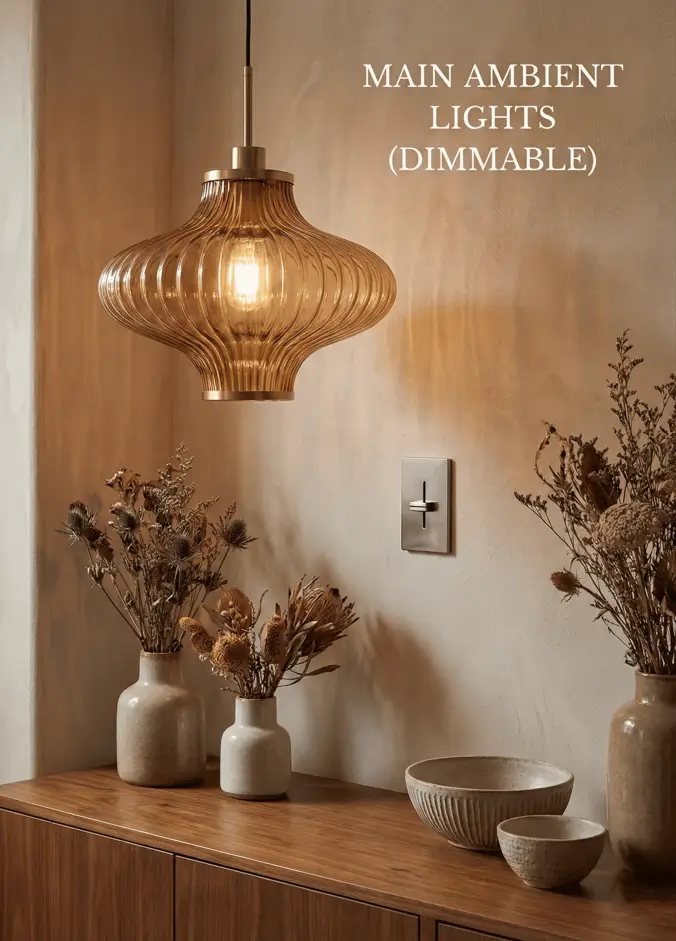
Two small details make a big difference: dimmers and bulb temperature.
Adding a dimmer to your main or ceiling lights gives you instant control, especially at night. Being able to bring the lighting down can completely change how a space feels. Just make sure your bulbs are dimmable and compatible with LED dimmers if you’re using LEDs.
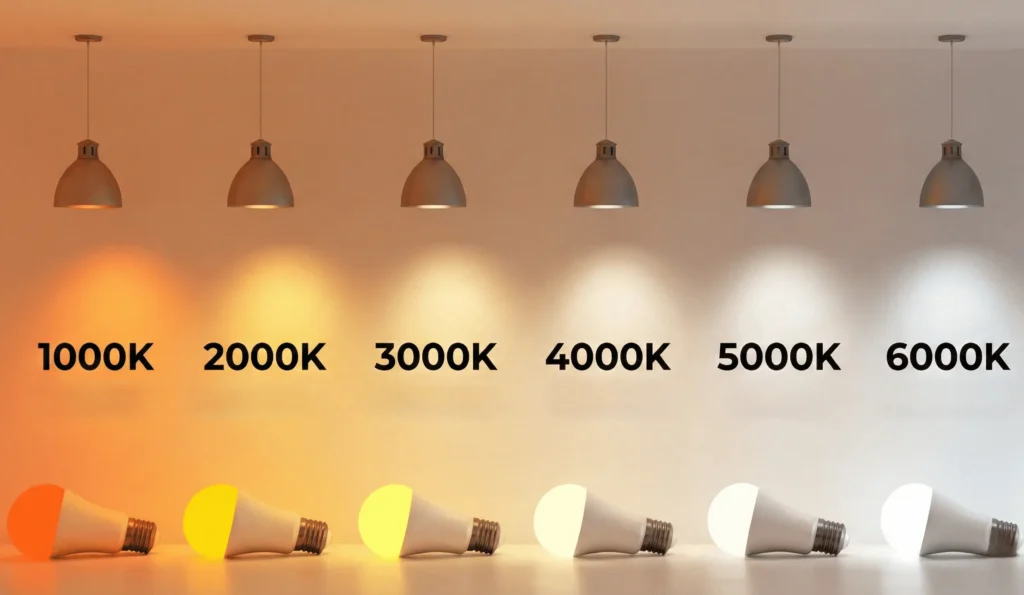
The other key detail is color temperature. Light temperature is measured in Kelvins (the “K” on the box). Kelvin is color, lumens are brightness. For most homes, 2700K–3000K is the sweet spot for a warm, comfortable look. Labels like Soft White usually fall in this range, while Daylight bulbs are much cooler (often 5000K–6500K).
One thing to bear in mind: test bulbs at night before committing. You can layer all the lights in the world, but if you’re up around 6000K, the light can start to feel white and a bit sterile in a home—especially in tiny houses and small interiors.
Quick Lighting Checklist
If you want your space to feel cozy (without overthinking it), here’s a simple checklist:
- Do you have at least two light sources in the room besides the ceiling light?
- Do you have a task light where you read, work, or cook?
- Do you have an accent light for mood (sconce, small lamp, candle, LED strip)?
- Are your bulbs mostly 2700K–3000K?
- Do you have dimmers on your main lights (or at least multiple lamps you can turn on separately)?
FAQs
What Kelvin light bulbs are best for a cozy home?
For most homes, 2700K to 3000K is the best range if you want a warm, cozy look. 2700K is warmer and softer, and 3000K is a little cleaner but still comfortable.
Why do recessed ceiling lights feel harsh?
Because the light is coming from above, and with recessed lights you often get a lot of light from one direction. It’s great for general brightness, but it can feel flat—and sometimes a bit glary—especially if the room doesn’t have other, softer light sources. That’s why layering with lamps and accent lighting makes such a difference.
How many lamps should a living room have?
There’s no exact number, but I usually like to see at least two lamps in a living room, especially if the ceiling light is recessed. One near the sofa and one in another corner is a good place to start.
Can I mix 2700K and 3000K in the same room?
Yes—you can. I just try to keep it consistent within the same zone, like using the same temperature for all the lamps in the living room, so the light doesn’t look mismatched.
Final Thoughts
Lighting doesn’t have to be complicated. Once you understand the three types of lighting and how to layer them, your space will automatically feel warmer and more comfortable.
Hopefully this was helpful, and let me know if you have any questions.