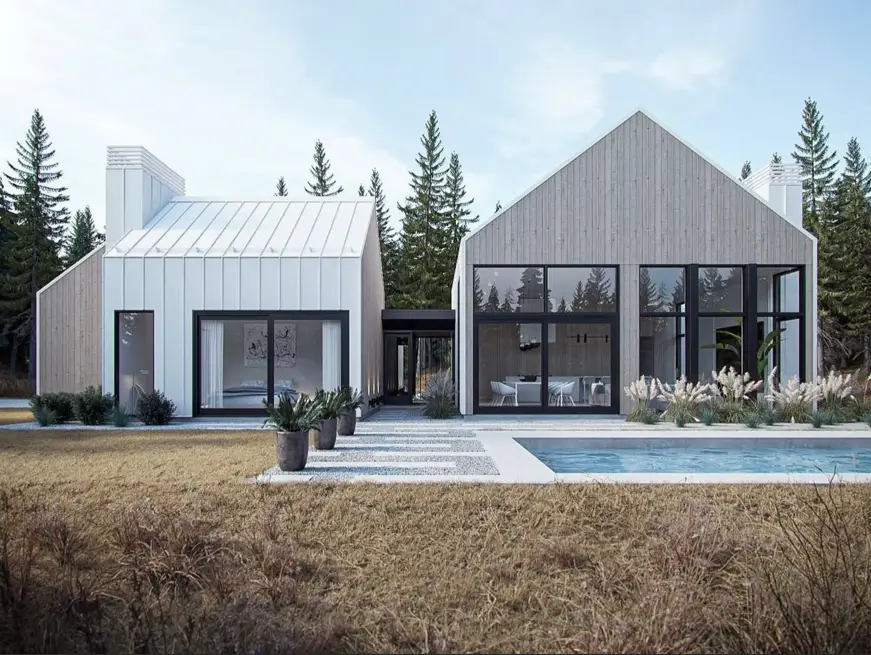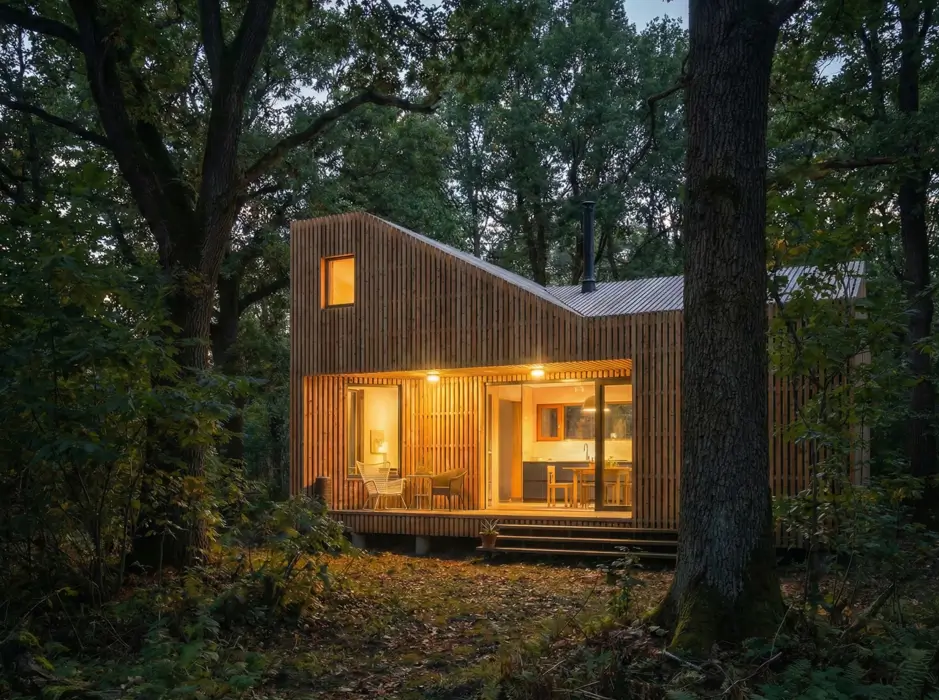


There is a distinct quietude found in Nordic architecture that speaks directly to the soul. Scandinavian cabin design is not merely about aesthetics; it is a philosophy of living that prioritizes a deep connection to nature, functional minimalism, and an unmistakable sense of warmth. Years of refining these spaces reveal that the secret lies in balancing raw, organic materials with purposeful simplicity to create a sanctuary that feels both grounded and ethereal.
Whether renovating a classic A-frame in the woods or looking to infuse a modern Scandinavian cabin vibe into a small guest house, the principles remain the same: maximizing natural light, celebrating unadorned wood, and curating textures that invite touch. A true Scandinavian-style cabin acts as a shelter against the elements while visually inviting the outdoors in.
Below are 18 specific design moments and expert insights that capture the essence of this timeless aesthetic to inspire your own getaway.
Key Takeaways
- Light as a Material: Nordic interiors prioritize natural light to combat long winters, often using large glazing and pale surfaces to bounce illumination.
- Connection to Nature: The boundary between indoors and outdoors is dissolved through panoramic windows, timber cladding, and natural stone features. This embodies the Nordic concept of ‘friluftsliv’—a life spent in the open air.
- Hygge Factor: Warmth is engineered into the design through wood stoves, tactile textiles, and intimate nooks, essential for mental well-being.
- Functional Minimalism: Every object and architectural line serves a purpose; clutter is removed to allow the architecture—and the inhabitants—to breathe. This balance is the essence of ‘Lagom’—not too little, not too much.
2025 Design Forecast: The Shift to “Warm Minimalism”
The stark, clinical whites of the past decade are receding. For 2025, the focus is shifting toward “Warm Minimalism”—a richer, more tactile approach to Nordic design.
- Earthy Palettes: Think creamy oatmeals, soft terracottas, and sage greens that mirror the forest floor.
- Raw Imperfection: We are seeing a move toward “wabi-sabi” influences often seen in Japandi style homes, celebrating knotty pine and hand-troweled plaster over perfect drywall.
- Biophilic Immersion: It is no longer just about a view; it is about green roofs, indoor atrium gardens, and materials that breathe.
18 Inspiring Scandinavian Cabin Design Ideas
1. Modern Scandinavian Cabin Facade
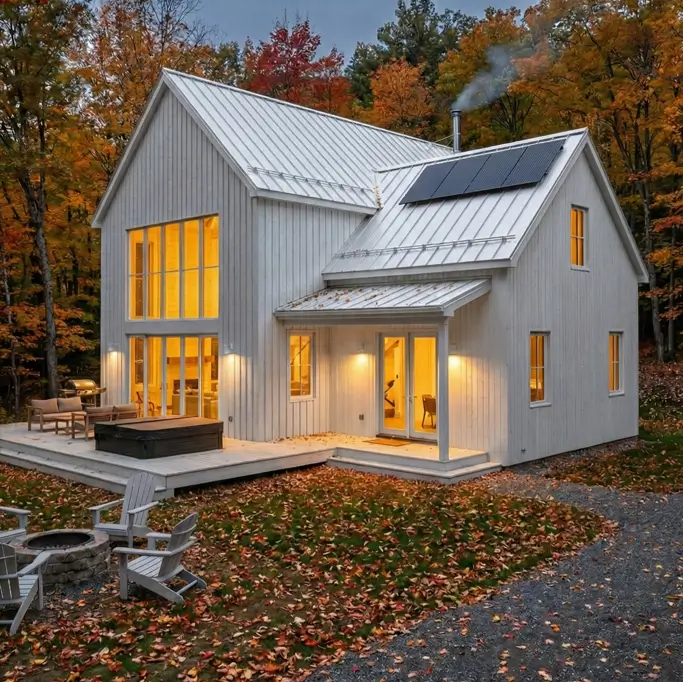
High-contrast exteriors define contemporary Nordic architecture, where crisp lines meet organic surroundings. This white vertical siding pairs elegantly with a standing-seam metal roof and solar panels, creating a striking silhouette that exemplifies quintessential Scandinavian cabin design. Such clean simplicity feels incredibly refreshing and grounding.
2. Weathered Timber Cladding
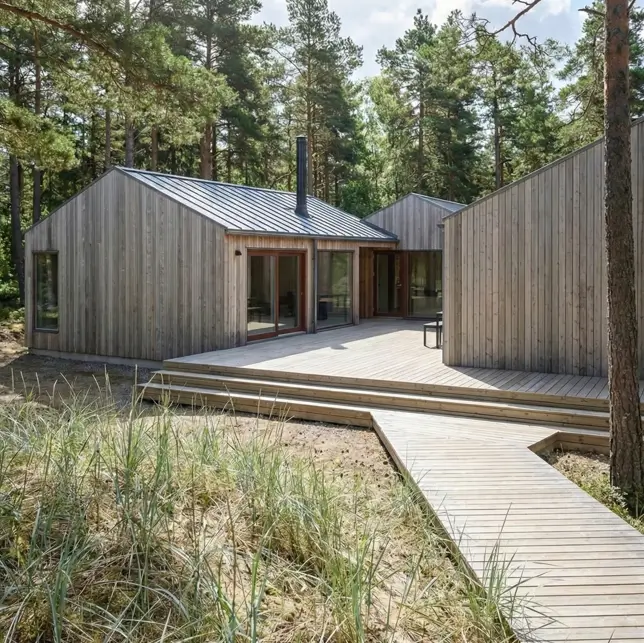
Unfinished wood allows architecture to age gracefully, eventually matching the surrounding forest tones. Distinct from the stacked construction of traditional log cabin house design, this approach typifies the sustainable ethos of the region, linking separate living volumes with a sprawling timber deck. It feels remarkably grounded and cohesive within the landscape.
3. Snowy Winter Retreat
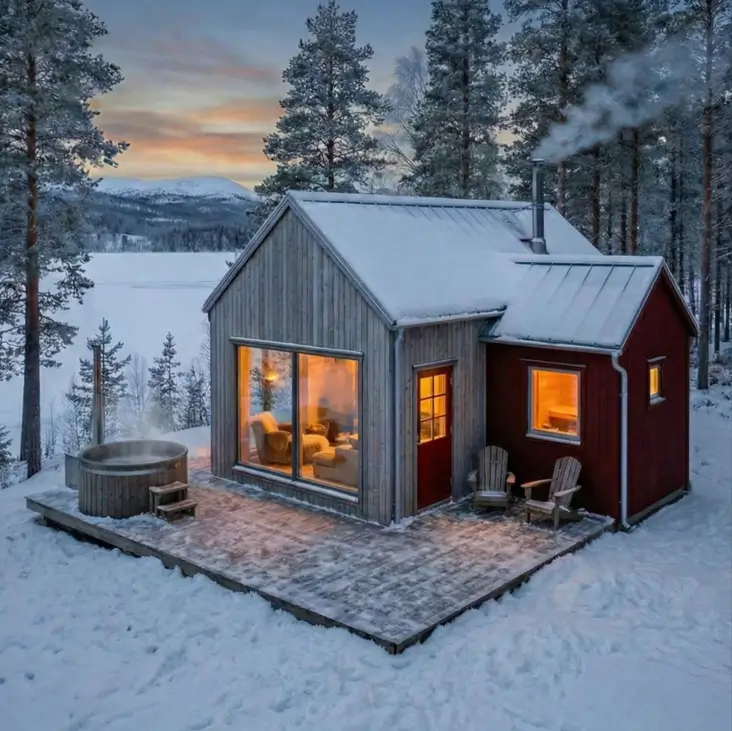
Winter landscapes demand architecture that offers immediate visual warmth. This Scandinavian style cabin combines natural timber with a traditional Falun red annex, creating a striking duality against the snow. The wood-fired hot tub on the frost-dusted deck is the ultimate definition of hygge.
4. Modern Scandinavian Cabin
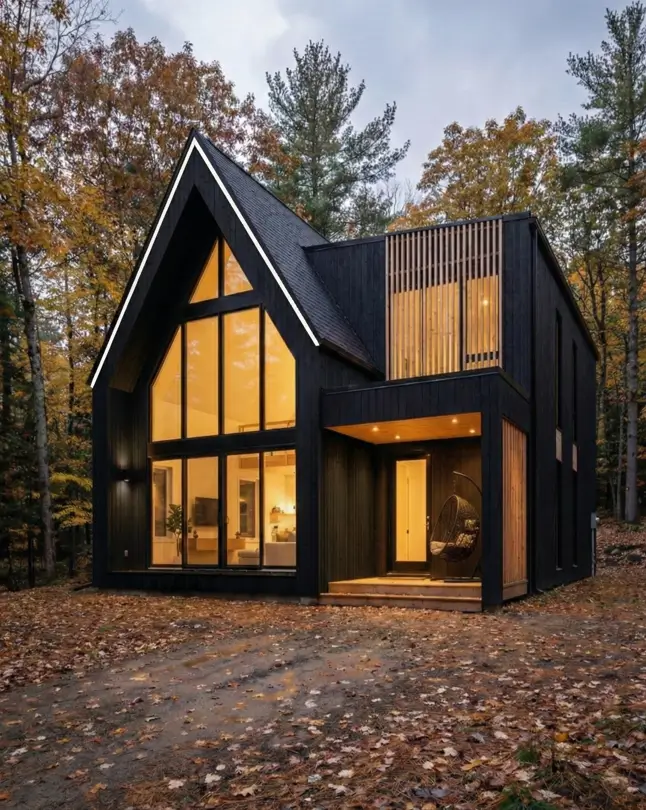
Black timber cladding offers a bold contrast against vibrant autumn foliage, allowing the structure to recede visually into the shadows. Defining the modern Scandinavian cabin aesthetic, this design pairs a steep pitched roof with a linear addition. It strikes a perfect balance between avant-garde aesthetics and cozy living.
5. Geometric Timber Facade
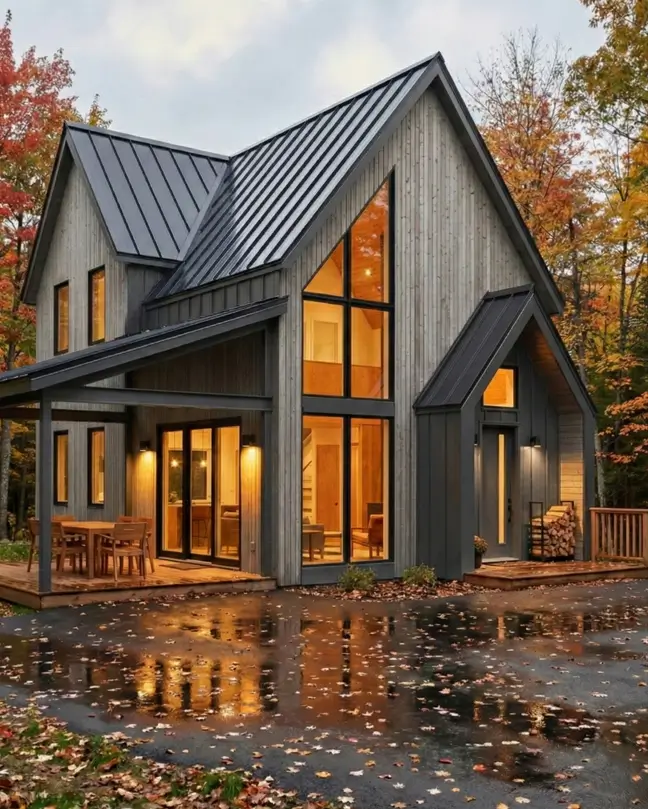
Complex rooflines can transform a simple retreat into a piece of livable sculpture. This architectural gem features intersecting gables and vertical grey siding, offering a contemporary twist on traditional forms. Covered outdoor dining areas like this make alfresco meals possible even during a light drizzle.
6. Classic Falun Red Cottage
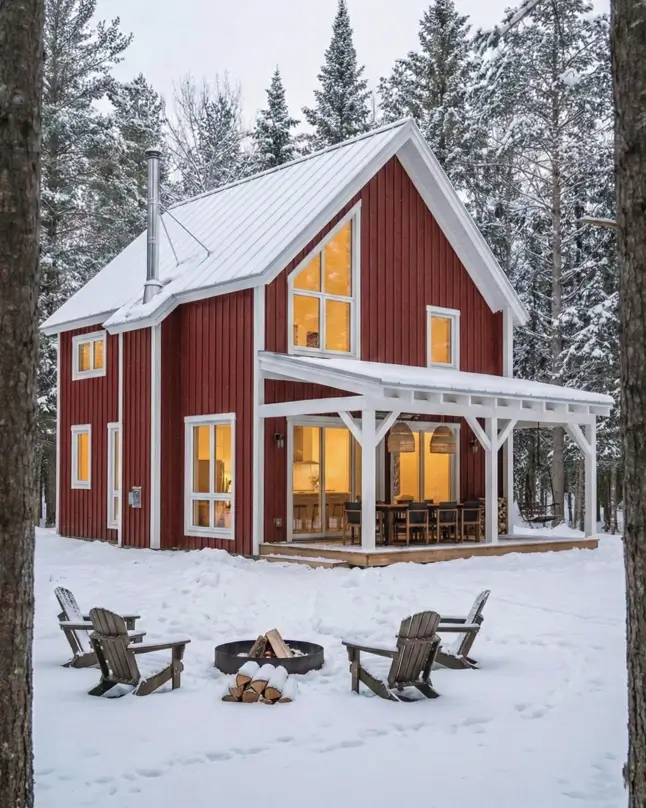
Bold hues serve a practical purpose in white winter landscapes, acting as visual anchors. This Scandinavian style cabin showcases traditional Falun red siding contrasted by crisp white trim and a durable metal roof. Warm interior glows against the snowy backdrop prove utterly enchanting.
7. Compact Minimalist Studio
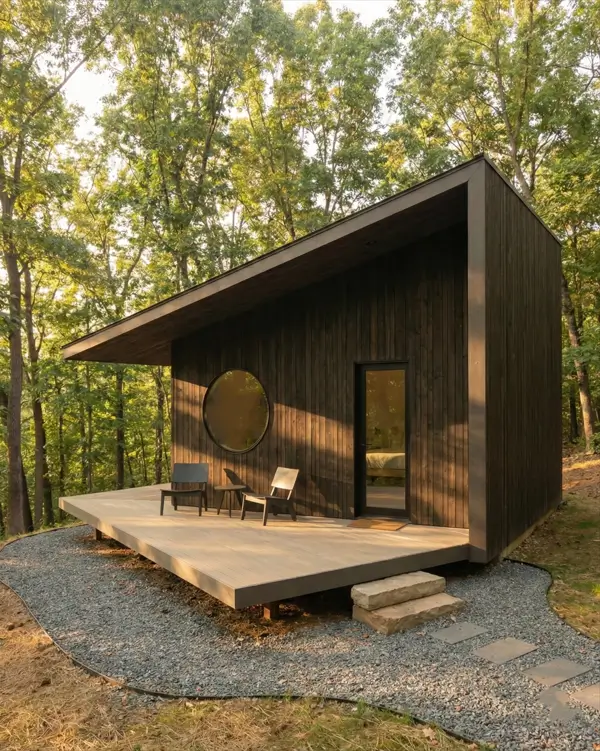
Dark exteriors allow architecture to recede quietly into the treeline, focusing attention on nature. This compact minimalist studio utilizes a sharp shed roof and a playful round window to break the geometric severity.
While differing in aesthetic from tiny log cabin homes, the structure reads like a habitable piece of modern sculpture dropped into the woods.
Related: 33 Small Scandinavian House Ideas That Prove Less Is More
8. Connected Living Volumes
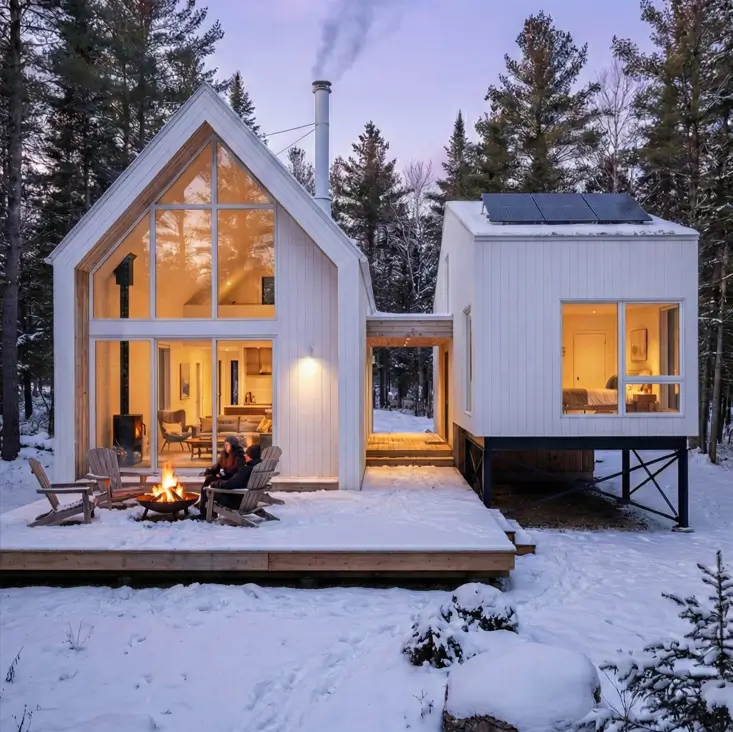
Zoning functional areas into separate volumes enhances privacy while managing thermal efficiency. This contemporary dwelling links a gabled living space to a sleeping module via a sheltered breezeway. Strategically placed fire pits create a magical gathering spot that effectively defies freezing temperatures.
9. Panoramic Glazed Retreat
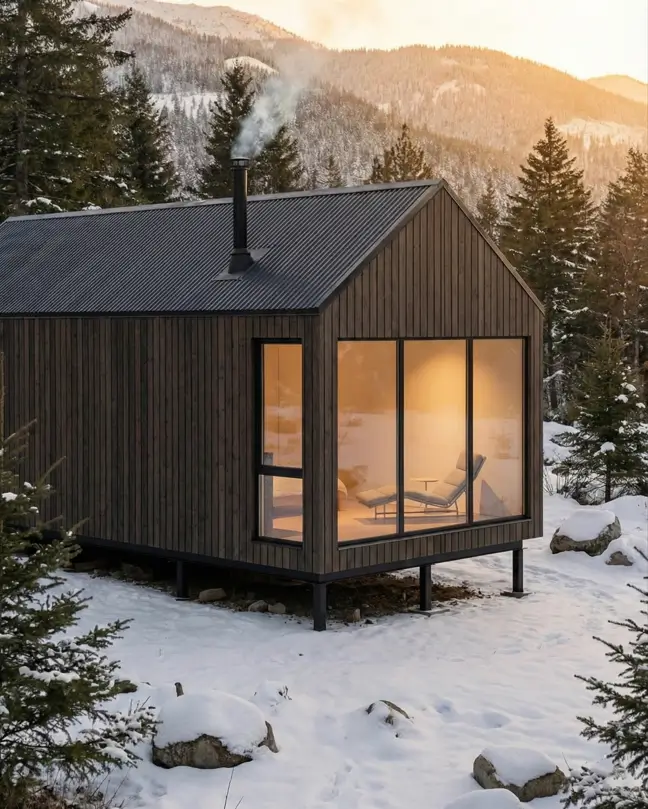
Expansive glazing transforms a compact footprint into an immersive observatory. This Nordic architectural retreat utilizes a full-height glass wall to frame the distant mountains, contrasting dark timber siding against the white snow. Such transparency remains essential for truly connecting with the landscape.
10. Hybrid A-Frame Design
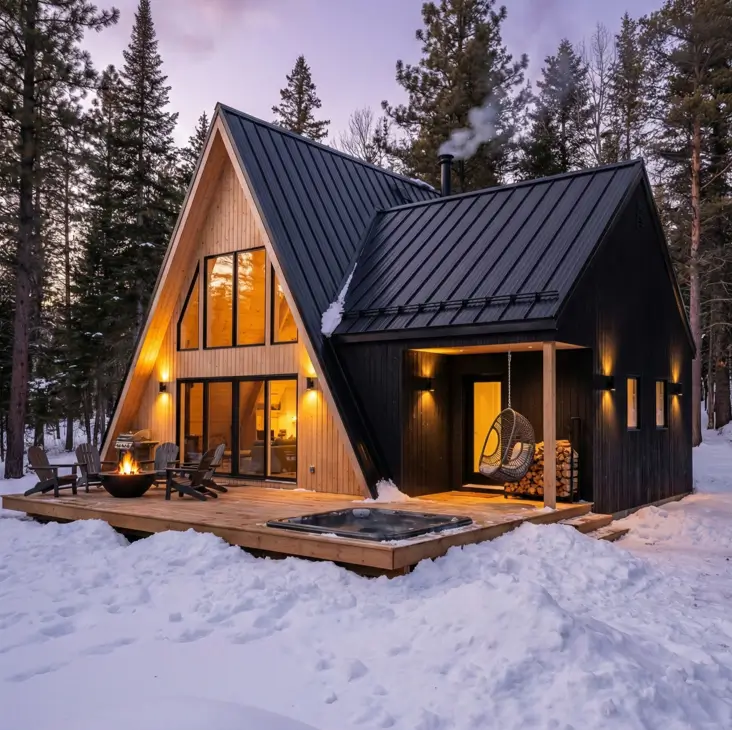
Hybridizing architectural forms adds functional versatility to a modern Scandinavian cabin. This design merges a light timber A-frame with a dark, boxy annex, providing both soaring ceilings and practical headroom. The sunken hot tub effectively anchors the snowy deck.
11. Transparent Lakeside Retreat
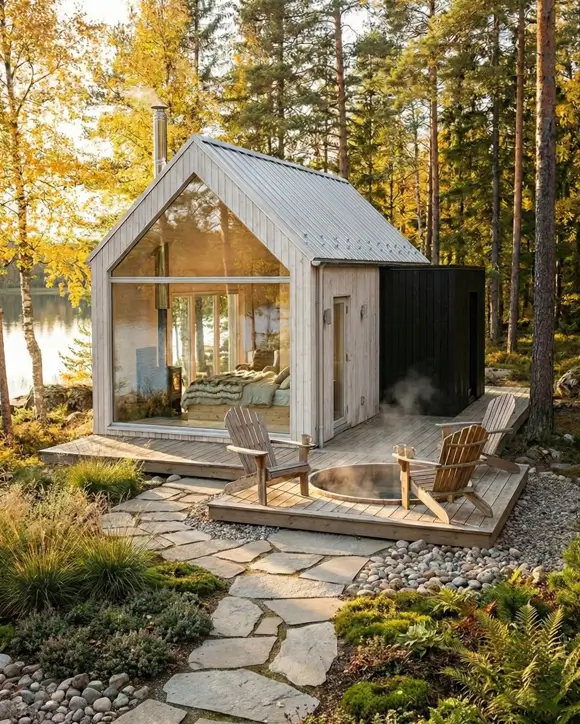
Direct connection to water defines the ultimate Nordic escape. This Scandinavian cabin design features a full glass facade framing the lake, complemented by a sunken deck tub and organic stone pathway. It effectively dissolves the barrier between sleeping and nature.
12. Charred Timber Hideaway

Darker facades allow architecture to disappear into the forest shadows, amplifying the feeling of seclusion. This compact dwelling features charred timber siding (Shou Sugi Ban) and a corner window that reveals a glowing wood stove. This arrangement fosters deep intimacy and protection from the elements.
13. Two-Tone Lakeside Retreat
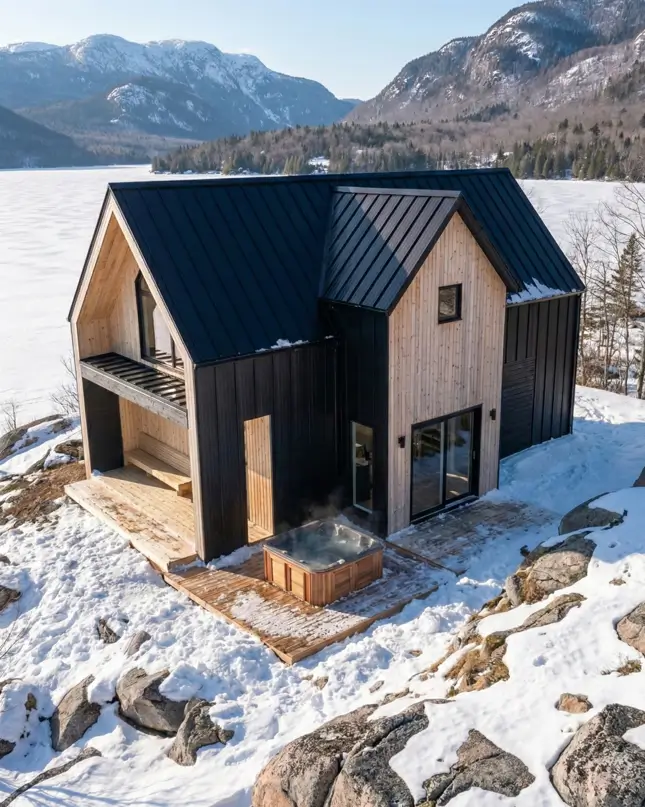
Stark contrasts define modern Nordic architecture, distinguishing it visually from the white snow. This lakeside dwelling pairs durable black metal cladding with warm timber insets to soften the industrial edge. Recessed balconies act as brilliant, wind-protected spots to admire the frozen expanse.
14. Cantilevered Modern Retreat
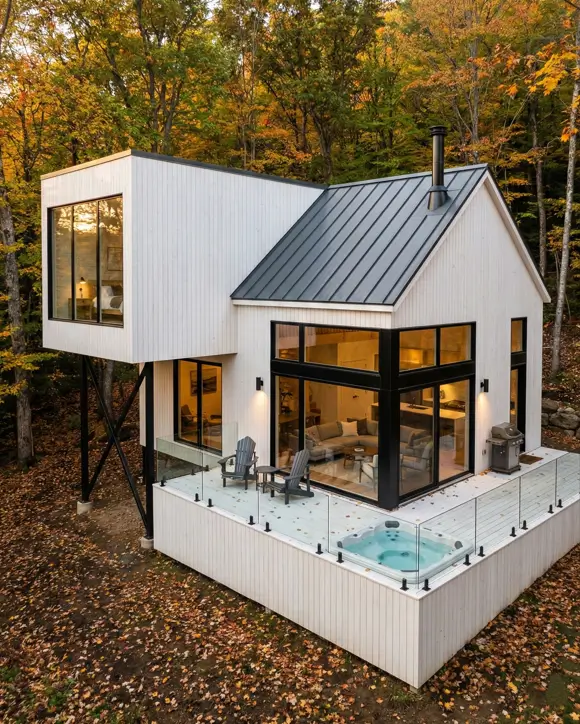
Structural overhangs allow rooms to float among the trees, minimizing ground impact. This design features a cantilevered bedroom module supported by black steel struts, contrasting with the traditional gabled living space. Glass-railed decks and sunken spas create an incredible sense of weightlessness within the autumn canopy.
15. Raw Timber Minimalist
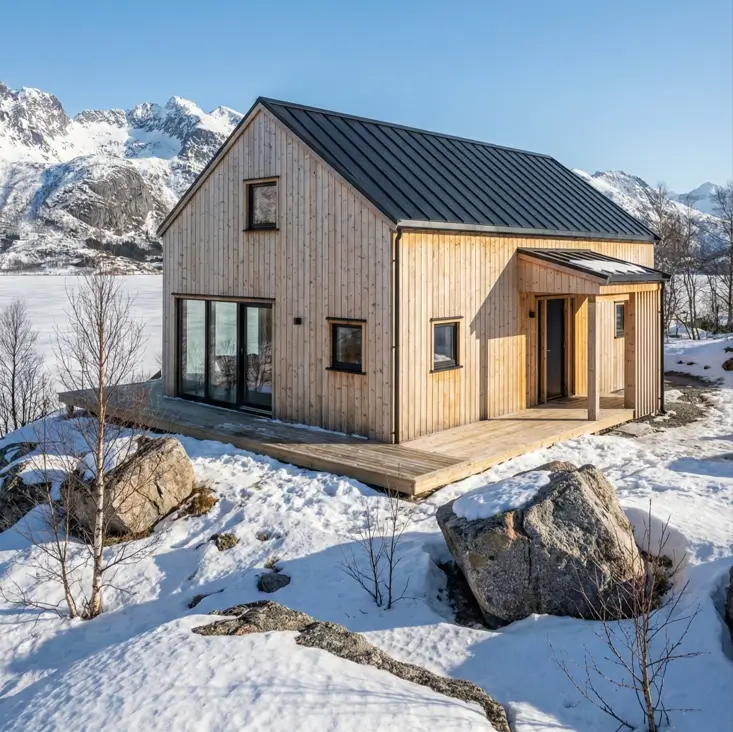
Raw materials are pivotal for creating a visual dialogue with rugged terrains. This dwelling utilizes untreated vertical timber, likely Cross Laminated Timber (CLT), that mimics the surrounding boulders. Notice how the structure sits lightly on the frozen earth, feeling both sturdy and organic.
16. Contemporary Two-Tone Facade
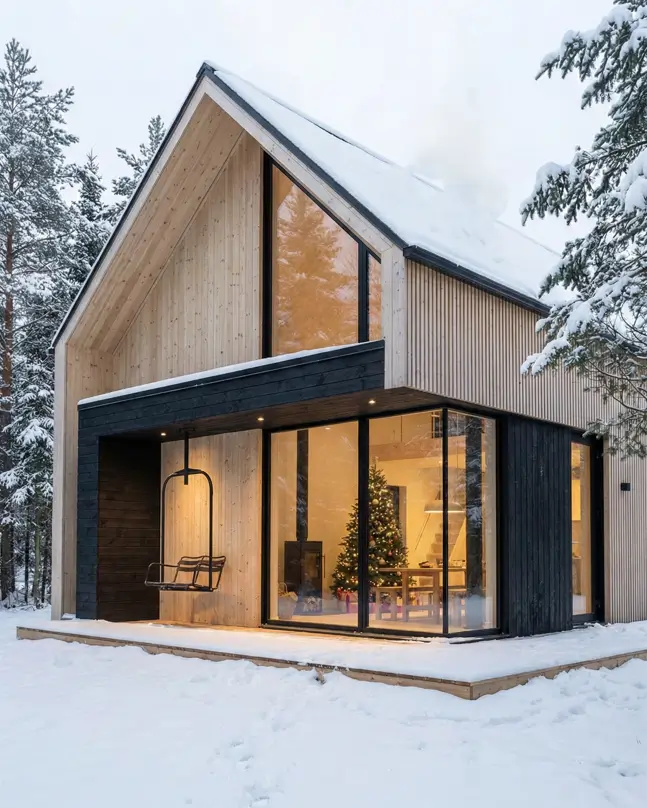
Contrasting timber stains create visual hierarchy in snowy environments, preventing the architecture from feeling flat. This Scandinavian style cabin pairs light vertical siding with a dark, grounded entrance module, featuring a playful industrial swing on the porch. Corner glazing perfectly frames the holiday warmth inside.
17. Rustic Timber Dwelling
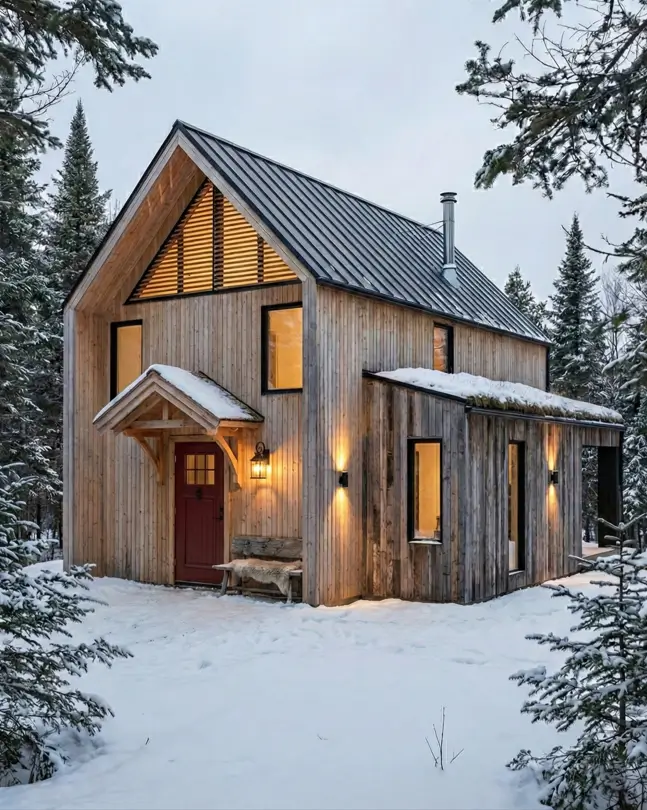
Vertical wood siding provides excellent insulation while blending seamlessly with the forest textures. This design incorporates a charming green roof on the annex and a welcoming red door, creating a focal point amidst the white snow. Soft exterior lighting effectively balances the rugged facade.
18. Contrasting Timber Retreat
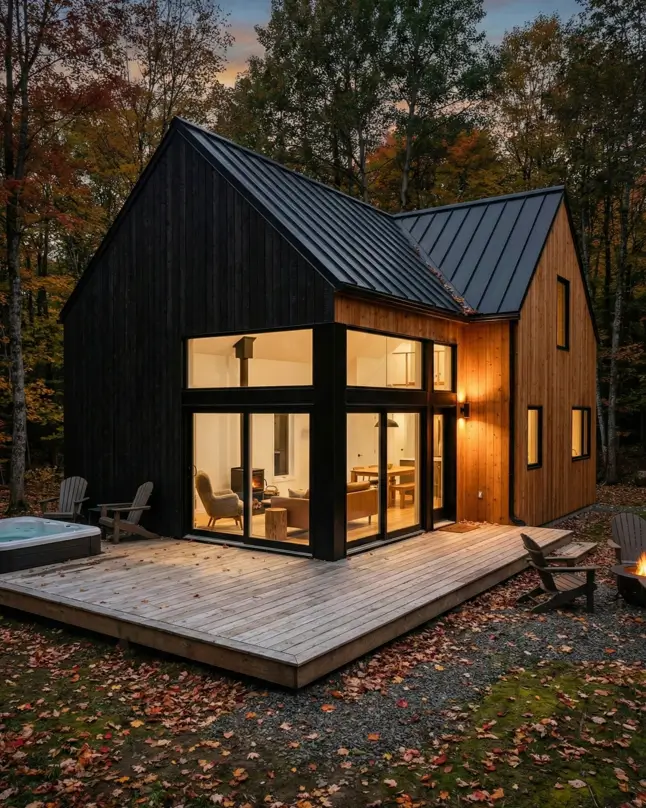
Mixing timber treatments adds depth to simple gabled forms, preventing the architecture from feeling monolithic. This retreat pairs matte black vertical cladding with warm natural wood, anchored by expansive corner glazing. Wrap-around decks are essential for fully enjoying the changing seasons.
The Essential Material Palette
To achieve this aesthetic authentically, avoid synthetic substitutes. The charm lies in the patina of real materials.
- Exterior: Shou Sugi Ban (charred cedar), untreated Larch (silvers over time), or corrugated matte metal.
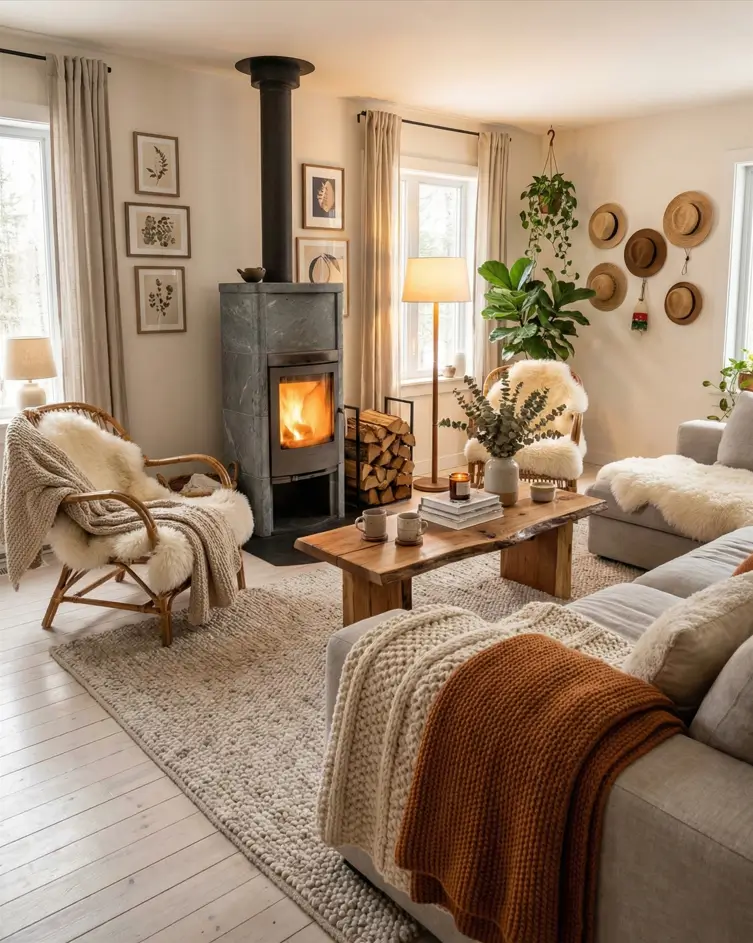
- Interior: Whitewashed spruce or Douglas Fir floors, wool felt textiles, and soapstone fireplaces which retain heat exceptionally well.
The Nordic Lighting Strategy: Mastering the Glow
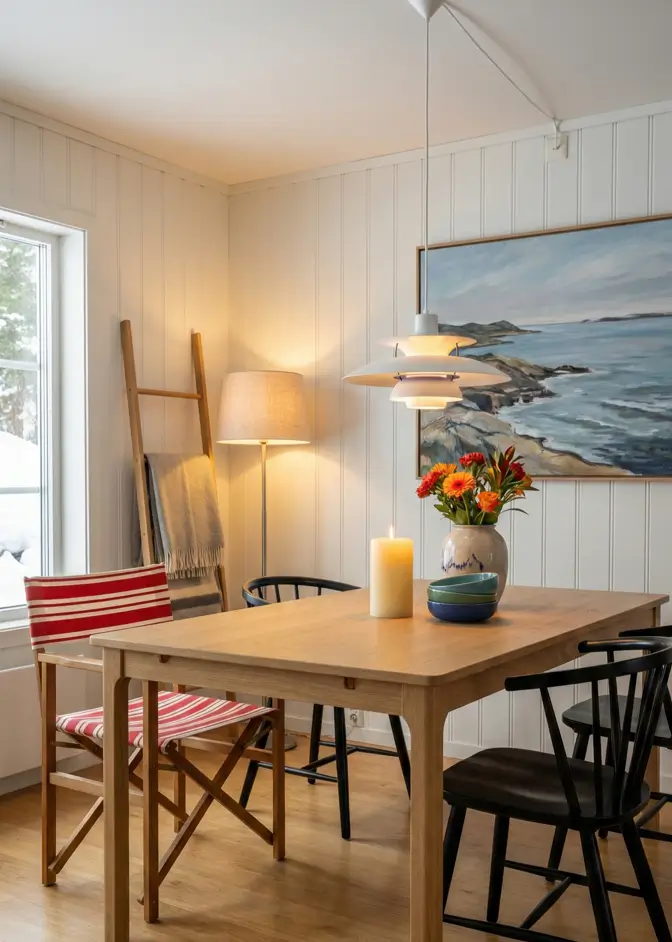
The long Nordic winter necessitates a mastery of artificial light. Relying on a single overhead source flattens a room; instead, employ the ‘3-Point Rule‘ by layering ambient, task, and accent lighting.
Select bulbs with a temperature of 2700K to mimic the warmth of candlelight, and consider iconic fixtures like the PH5 pendant to diffuse glare and create a soft, inviting glow.
2025 Color Card: Beyond White
While white remains a staple, 2025 embraces depth. Forest Floor introduces deep greens and raw umber to ground the space. Winter Morning utilizes cool greys and soft blues to reflect the exterior light. Spiced Earth brings warmth through terracotta and oatmeal tones, perfect for creating a cozy, enveloping atmosphere.
Textiles & Texture: The Hygge Layer
Rigid architectural lines find their balance in soft, tactile imperfection. Layering is key; drape sheepskins over hard timber chairs and pile chunky knit wool throws onto sofas. Opt for washed linens that wrinkle naturally, adding a lived-in quality that feels authentically ‘hygge‘ rather than staged.
Related: 35 Scandinavian Living Room Ideas for a Cozy, Minimalist Home
Outdoor Living: The Sauna & Fire Pit
Friluftsliv dictates that the living space extends beyond the walls. A wood-fired sauna acts as the heart of the outdoor experience, offering a ritualistic contrast to the cold.
Anchor the deck with a fire pit and surround it with hardy, native plants to create a seamless transition between the built environment and the wild.
Build vs. Buy: The Prefab Kit Question
A common question in today’s market is whether to build custom or buy a “Scandinavian Kit.”
- The Kit Advantage: Speed and cost-certainty. Many companies now offer high-end, architecturally sound prefab modules that can be assembled on-site in days.
- The Architect’s View: While kits are excellent for tight budgets, they often lack site-specific orientation. If you go this route, ensure you orient the glazing South/South-West to maximize passive solar gain—a non-negotiable in Nordic design.
Budgeting for Authenticity
Achieving a high-end look requires strategic allocation of funds.
| Investment | Item | Why It Matters |
|---|---|---|
| Splurge | Triple-Glazed Windows | Essential for thermal comfort and energy efficiency in harsh climates. |
| Splurge | Statement Fireplace | Provides critical thermal mass and acts as the visual heart of the home. |
| Save | Softwood Flooring | Simple pine or spruce boards treated with lye offer authentic Nordic character for less. |
| Save | Flat-Pack Joinery | Customize standard units with high-quality hardware for a bespoke look on a budget. |
Related:
- 50 Modern Scandinavian Kitchen Ideas We Love for 2025
- 47 Scandinavian Bedroom Interior Design Ideas for a Serene Retreat
- 46 Scandinavian Bathroom Design Ideas for a Serene Sanctuary
FAQs
What defines the “New Nordic” style for cabins?
New Nordic style merges modern Scandinavian cabin aesthetics with eco-conscious functionality. Expect floor-to-ceiling glazing, clutter-free joinery, and sustainable materials that maintain warmth without the visual noise of traditional rustic styles.
Is maintenance difficult for timber cladding in snow?
No, provided you choose rot-resistant species like Cedar or Larch which require zero chemical treatment. For painted exteriors, traditional “Falu Röd” (linseed oil paint) allows the wood to breathe, preventing the peeling common with synthetic finishes.
How expensive is it to build a Scandinavian cabin?
While the cost per square foot is higher because quality insulation to meet the Passive House standard can increase upfront material costs, the efficient, smaller footprint typically makes the total project cost lower than a standard American vacation home.
Final Thoughts
Creating a true Nordic retreat is less about following a strict set of rules and more about embracing a specific mindset. It is about stripping away the unnecessary to reveal the beauty of the essential.
Whether you are drawn to the stark contrast of a black timber facade against the snow or the warmth of a sun-drenched pine interior, Scandinavian cabin design offers a timeless blueprint for living well.
These ideas serve to inspire not just a structure, but a sanctuary that honors the landscape it sits within. Which of these 18 ideas speaks to your version of sanctuary? Share your thoughts in the comments below.