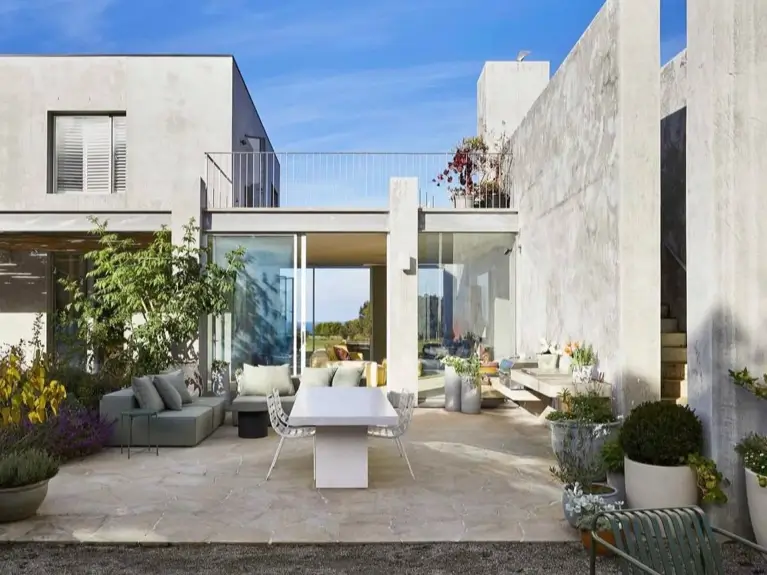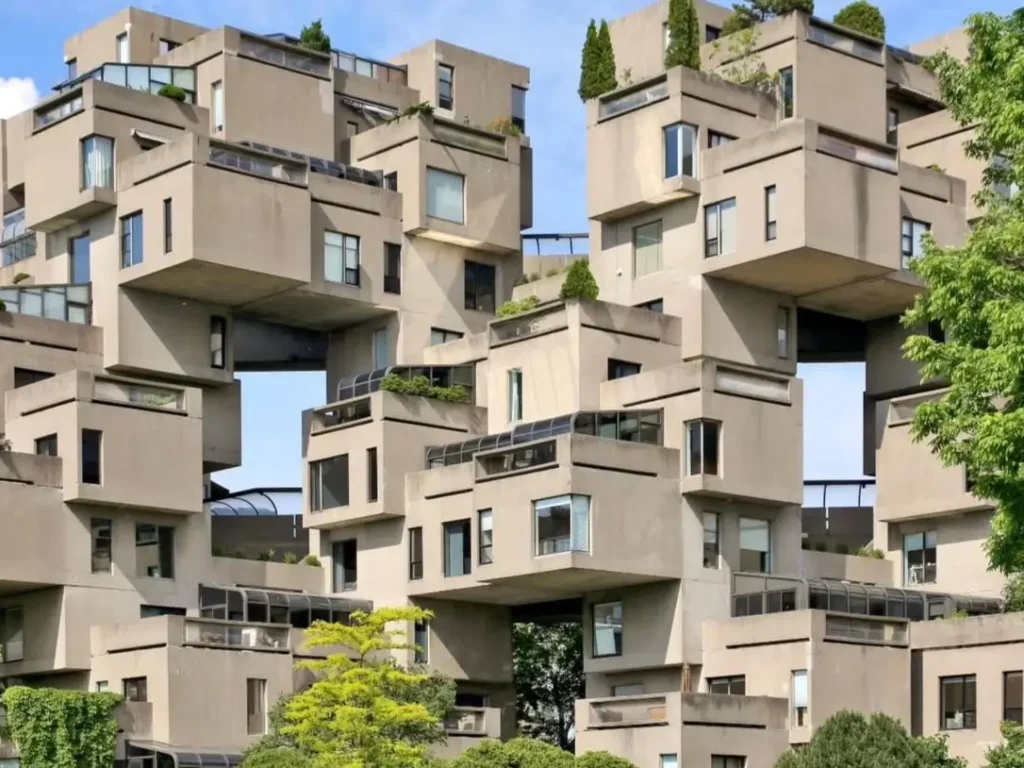

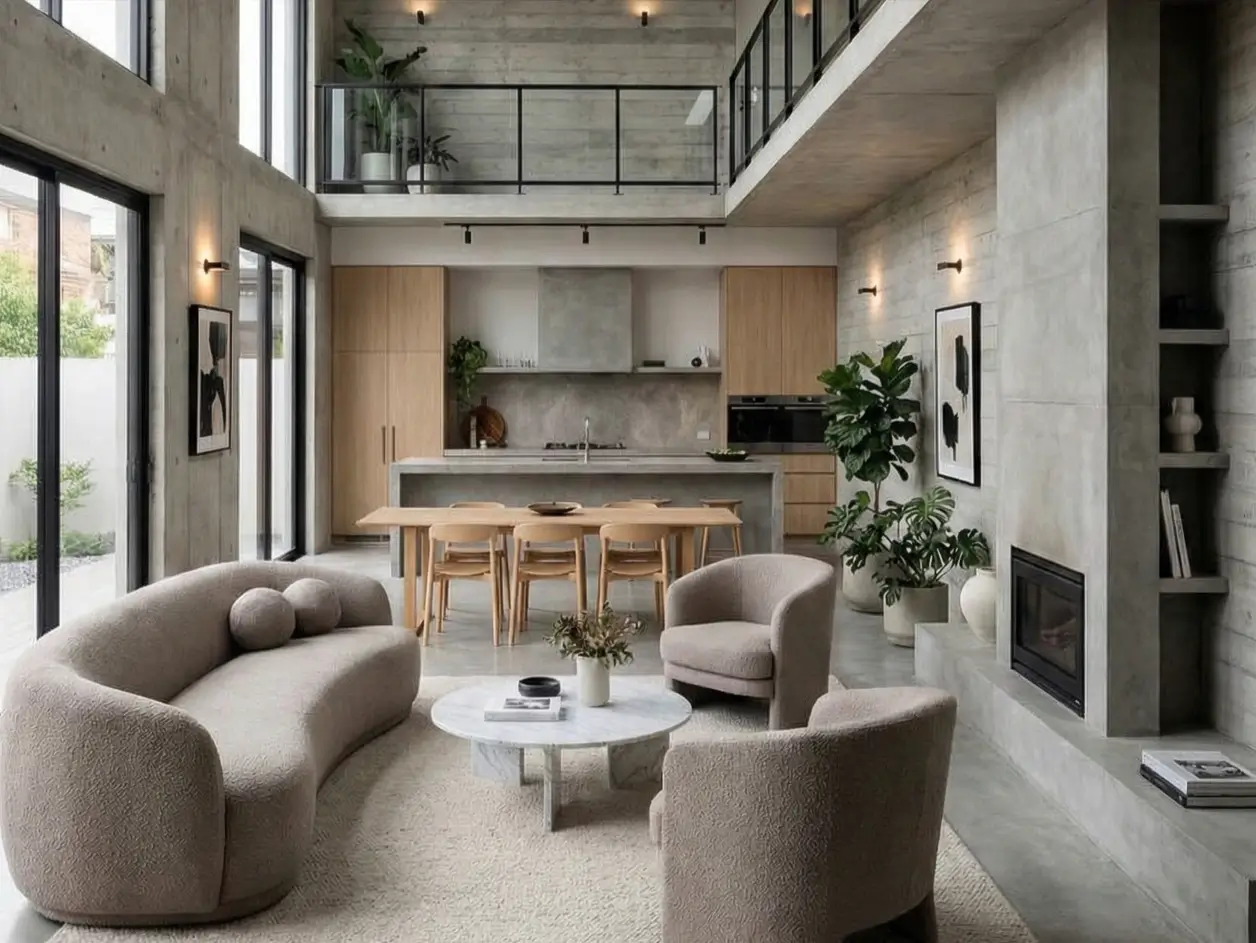
Raw concrete and exposed structural elements often conjure images of cold, imposing fortresses, yet bringing Brutalist interior design into a contemporary home reveals a surprisingly grounded aesthetic. Born from the modernist philosophy of béton brut, this style isn’t merely about harsh lines; it is a celebration of architectural honesty, stripping away the unnecessary to expose the raw, unpolished beauty of the structure itself.
In my 12 years of translating technical blueprints into tactile living spaces, I have found that the true luxury of this aesthetic lies not in its weight, but in its haptic texture. The contrast of cool, board-formed concrete against warm timber or soft textiles is the essence of the emerging “Soft Brutalism” trend for 2026. This tactile depth turns what could be a cold bunker into a sanctuary of permanence and calm.
Whether you aim to introduce modern Brutalist interior design through a single statement piece or completely reimagine a room with textured masonry, the goal is always authenticity. Below, we define the essential Brutalist interior design characteristics and present 38 curated ideas to help you balance this bold, monolithic look with essential everyday comfort.
Key Takeaways
- Architectural Honesty: This style celebrates the raw beauty of structural elements like board-formed concrete and exposed steel.
- “Soft Brutalism” Trend: The 2026 evolution balances heavy visual weight with biophilic elements, warm lighting, and tactile textiles.
- Livable Sanctuary: Success lies in prioritizing haptic texture and acoustic dampening to create a grounded, comfortable home.
What is Brutalist Interior Design?
Originating from the French term béton brut (raw concrete), Brutalism emerged in the 1950s and became a staple of 70s interior design styles as a reaction against the lightness of mid-century design. It is a philosophy of architectural honesty.
In a residential context, this means celebrating the building’s “skeleton”—exposed beams, unfinished blockwork, and electrical conduits—rather than concealing them behind drywall or paint.
Today, the style has evolved into “Eco-Brutalism” or “Soft Brutalism,” where the starkness of masonry is balanced with living plants, sustainable woods, and ample natural light.
Key Brutalist Interior Design Characteristics
To achieve this look authentically, focus on these defining elements that separate true Brutalism from generic industrial decor:
- Material Honesty: Similar to the aesthetic found in modern concrete house designs, concrete, steel, brick, and glass are left in their raw, untreated state to highlight their texture and natural patina.
- Structural Visibility: Columns, beams, and waffle slabs are celebrated features, not hidden defects.
- Monochromatic Palette: Tones are derived from the materials themselves—slate greys, warm timber browns, and metallic blacks.
- Geometric Repetition: Strong, blocky forms and heavy visual weight replace intricate ornamentation.
- Scale and Volume: Furniture and architectural details tend to be oversized, monolithic, and sculptural.
38 Modern Brutalist Interior Design Ideas for 2026
1. Biophilic Concrete Atrium
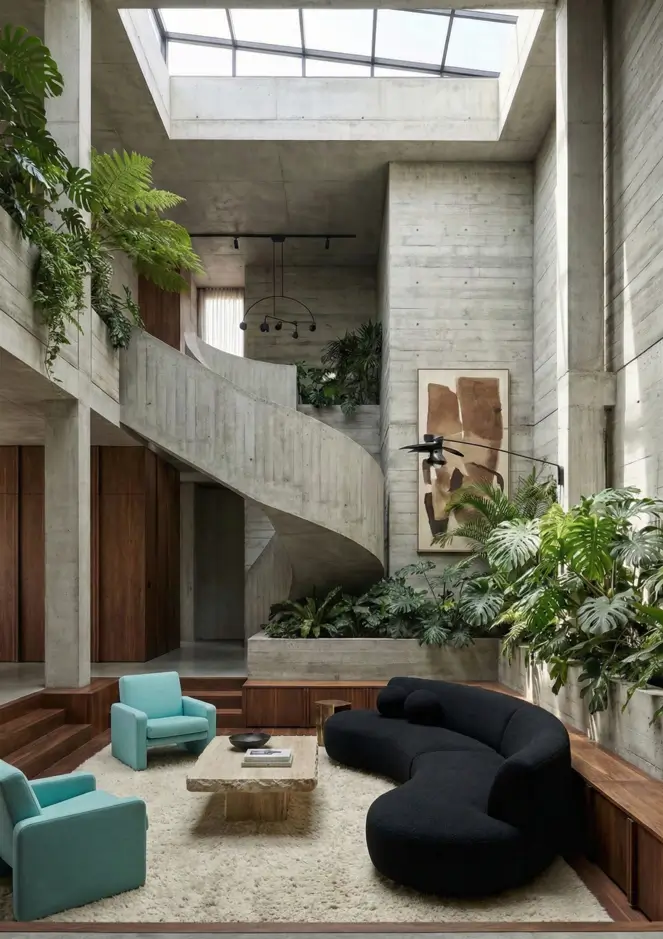
Defining Brutalist interior design characteristics, this atrium utilizes raw concrete to frame natural light rather than exclude it. The space softens rigid board-formed walls with cascading ferns and a sculptural spiral staircase. Lush greenery breathes life into the austere gray palette, creating a vibrant contrast.
2. Sculptural Concrete Curves
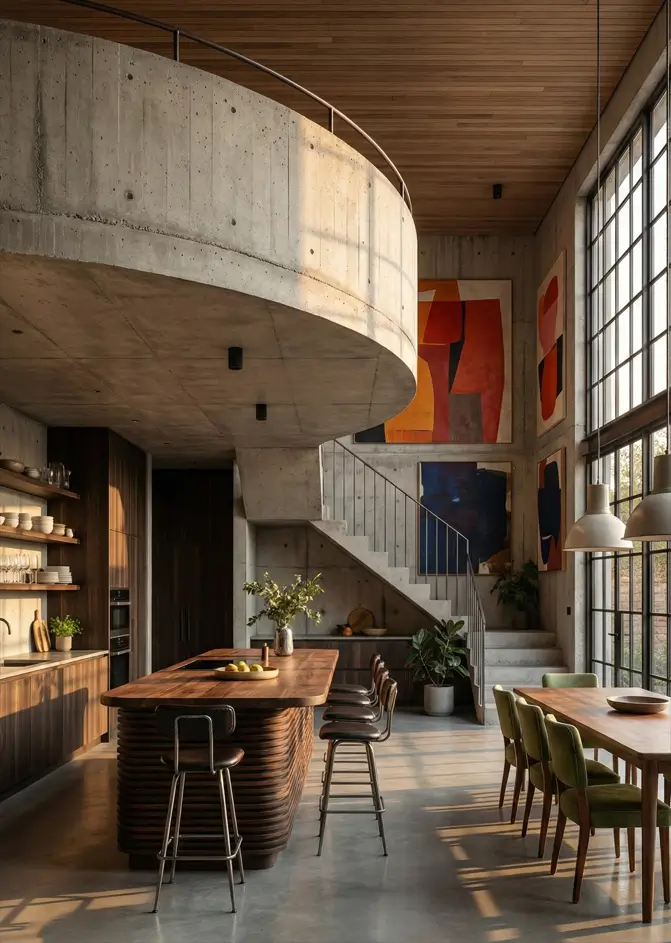
Introducing curves is a powerful way to evolve this architectural style beyond boxy shapes. This kitchen features a sweeping concrete mezzanine that hovers above a warm, ribbed walnut island. The juxtaposition of heavy stone and rich wood proves incredibly inviting.
3. Defined Concrete Entryway
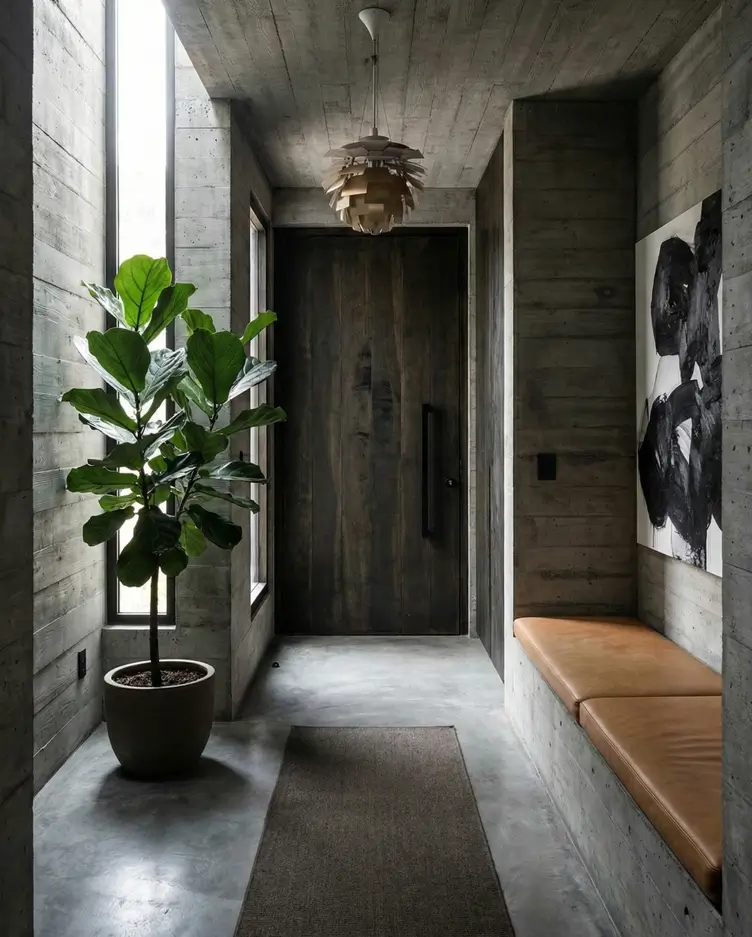
Circulatory spaces in modern Brutalist interior design often prioritize structural honesty and raw material expression over ornamentation. This foyer features board-formed concrete walls that flank a sleek, floating tan leather bench and a commanding dark wood door. The iconic pendant light softens the industrial shell, proving that concrete can feel surprisingly welcoming.
4. Refined Industrial Contrast
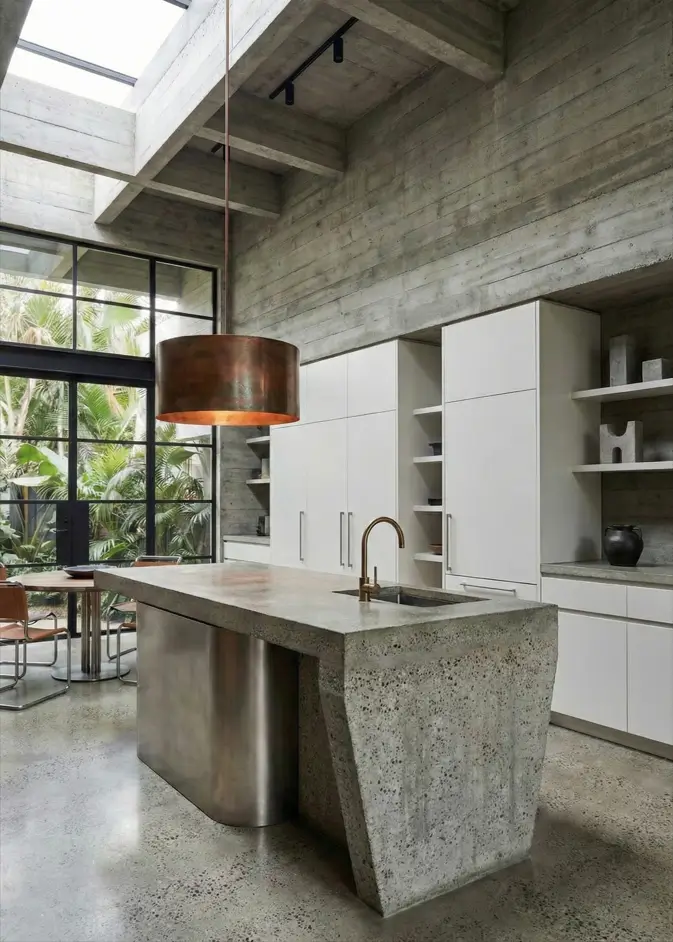
Integrating metallic elements is a sophisticated way to elevate the nature of modern concrete interiors. This kitchen features a striking, tapered concrete island illuminated by an oversized, warm copper pendant light. Polished metal contrasts with the matte stone, adding a touch of luxury to the industrial form.
5. Softened Concrete Sanctuary
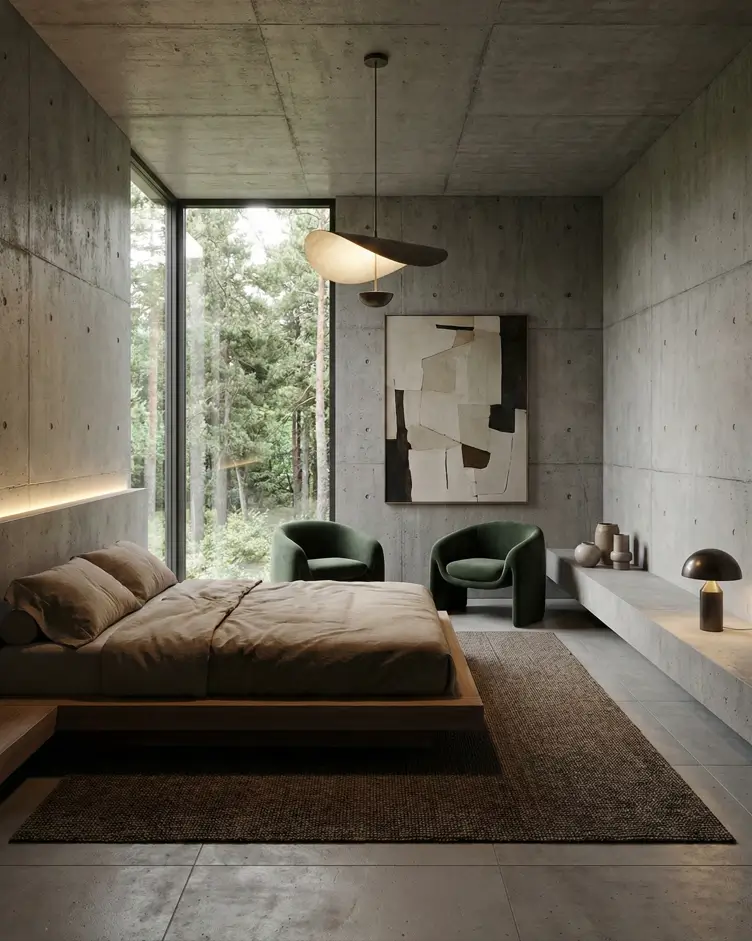
Sleeping quarters in monolithic homes must balance industrial weight with essential warmth. This bedroom softens rigid concrete paneling with a low-slung timber bed and curved, forest-green velvet armchairs. Floor-to-ceiling windows invite nature inside, instantly calming the room’s raw architectural shell.
6. Skylit Concrete Warmth
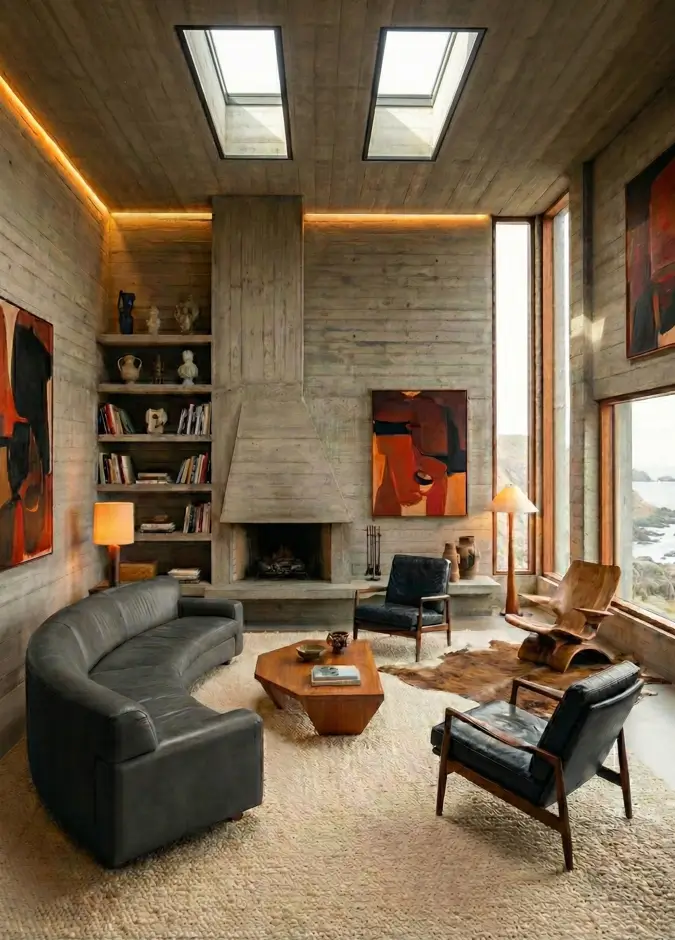
Overhead illumination is essential for revealing the tactile quality of heavy masonry in this modern Brutalist interior design living room. It features deep skylights casting shadows on board-formed concrete walls and a tapered masonry fireplace. Here, the curved charcoal sofa and amber cove lighting introduce a layer of necessary softness.
7. Elemental Material Contrast
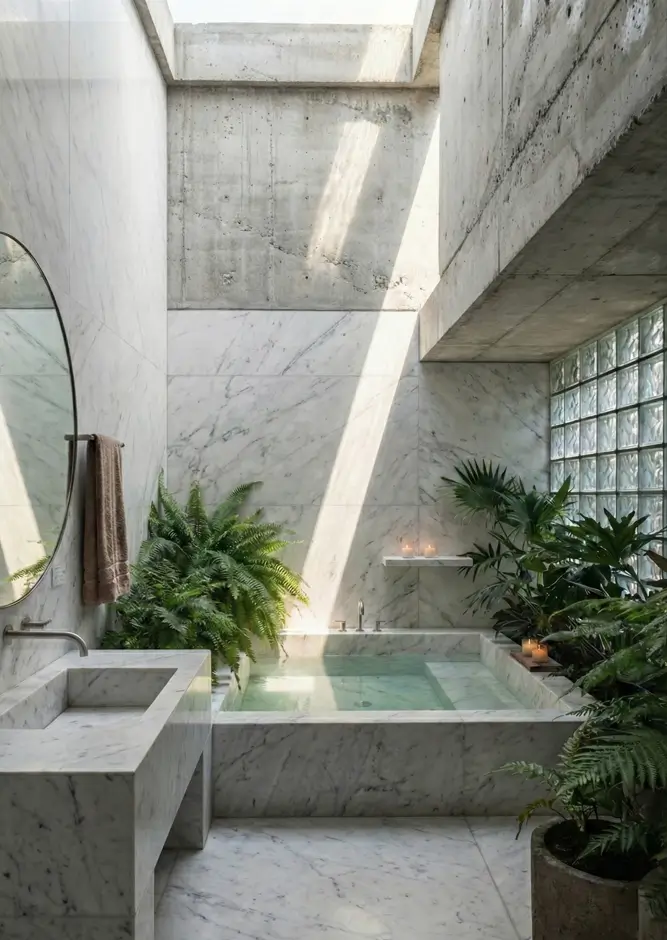
Modern Brutalist interior design frequently juxtaposes raw structural elements with refined natural stones to create depth. This spa-like bathroom pairs heavy concrete overhead beams with a sleek, veined marble tub and glass blocks. The interplay of rough and polished textures feels incredibly soothing.
8. Structural Wood Warmth
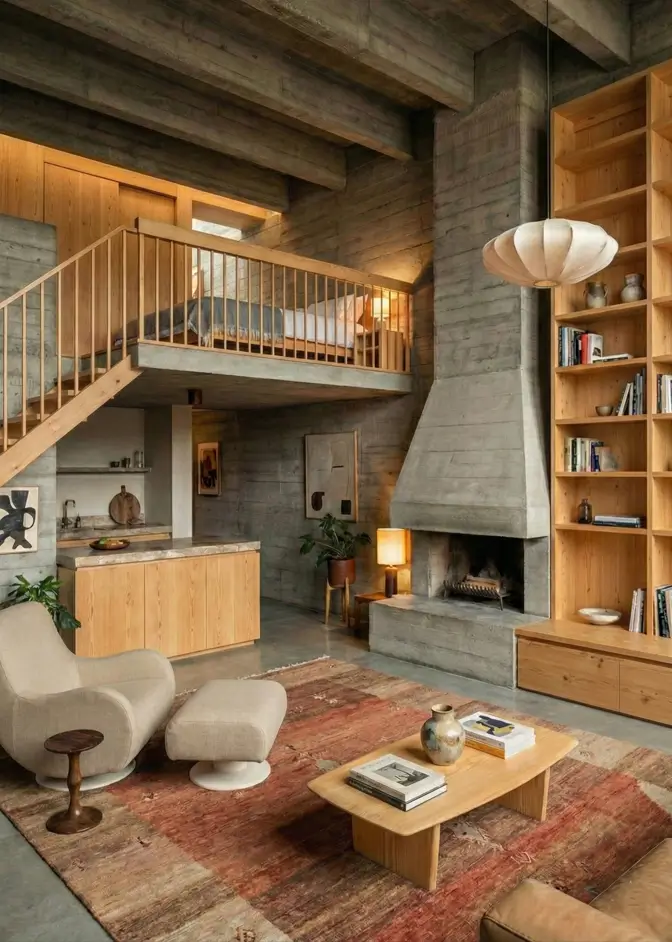
Balancing the visual weight of concrete requires introducing organic materials that share its structural integrity. This double-height living space offsets a massive concrete fireplace with floor-to-ceiling timber bookshelves and a cozy mezzanine sleeping loft.
Honey-toned wood creates a library-like atmosphere, borrowing warmth similar to modern farmhouse decor ideas to prove that the béton brut aesthetic can feel incredibly intimate.
9. Refined Industrial Layering
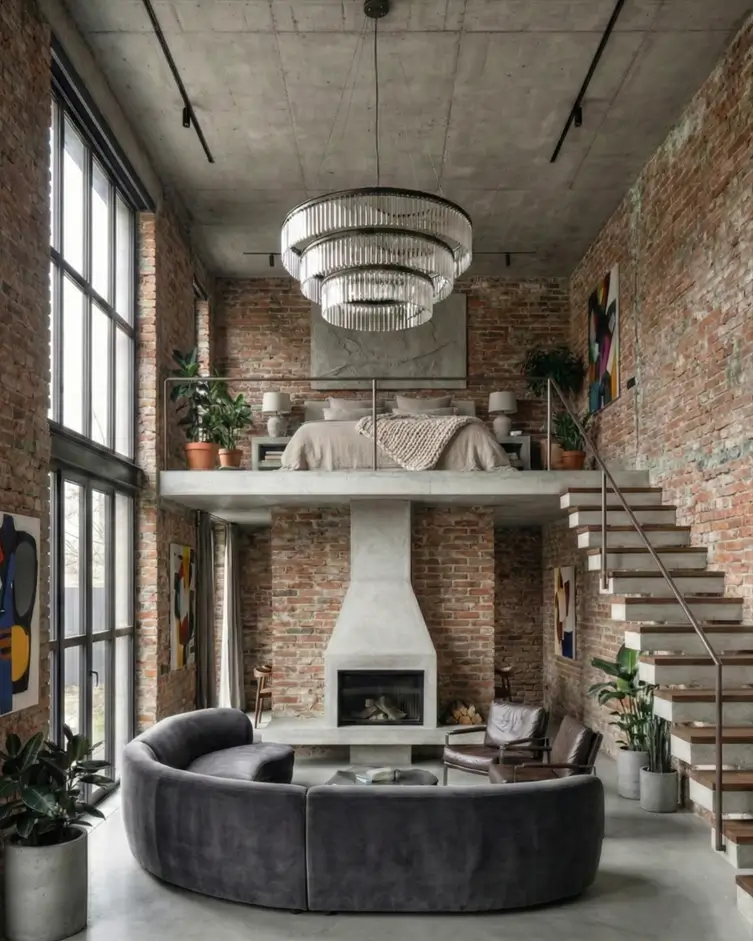
Blending historical textures is a hallmark of evolving contemporary structural design. This loft merges a raw concrete ceiling and fireplace with weathered brick walls and a glamorous tiered chandelier. This daring mix of grit and luxury proves industrial spaces can feel incredibly sophisticated.
10. Vertical Concrete Transitions
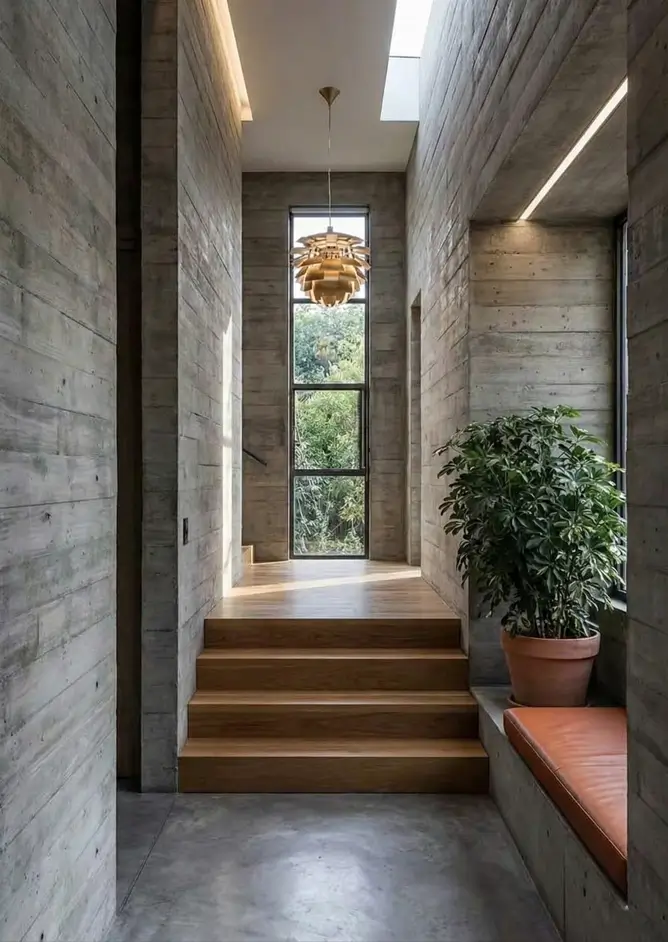
Verticality is central to this design language, creating drama in narrow spaces. This hallway features board-formed concrete walls flanking warm wooden steps and a built-in leather bench. A skylight guides the eye upward, celebrating the raw structural form.
11. Geometric Ceiling Grids
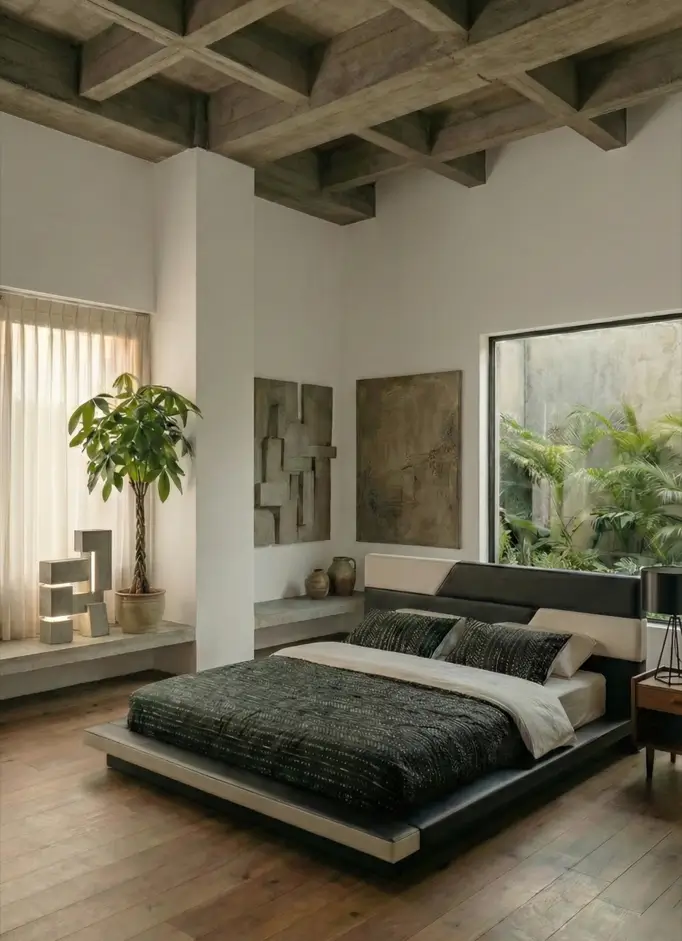
Ceiling planes in modern Brutalist interior design often utilize waffle slabs to introduce powerful geometric rhythm. This bedroom juxtaposes a heavy, coffered concrete ceiling with airy white walls and a low-profile platform bed. The structural grid provides intense visual interest while keeping the atmosphere calm and grounded.
12. Warm Color Infusions
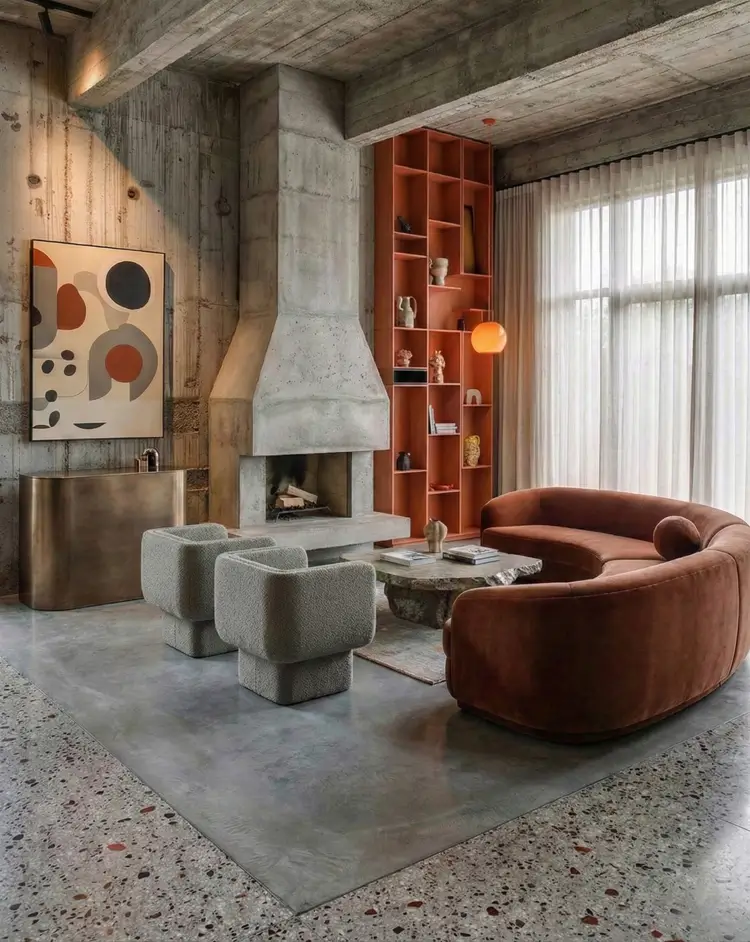
Integrating bold saturated hues is a sophisticated way to enliven neutral industrial palettes. This living room offsets heavy grey concrete beams and a fireplace with a striking floor-to-ceiling terracotta bookshelf and a rust velvet sofa. Warm, earthy tones vibrate against the cool stone background.
Related: 20 Neutral Living Room Decor Ideas for a Serene, Timeless Space
13. Structural Waffle Grids
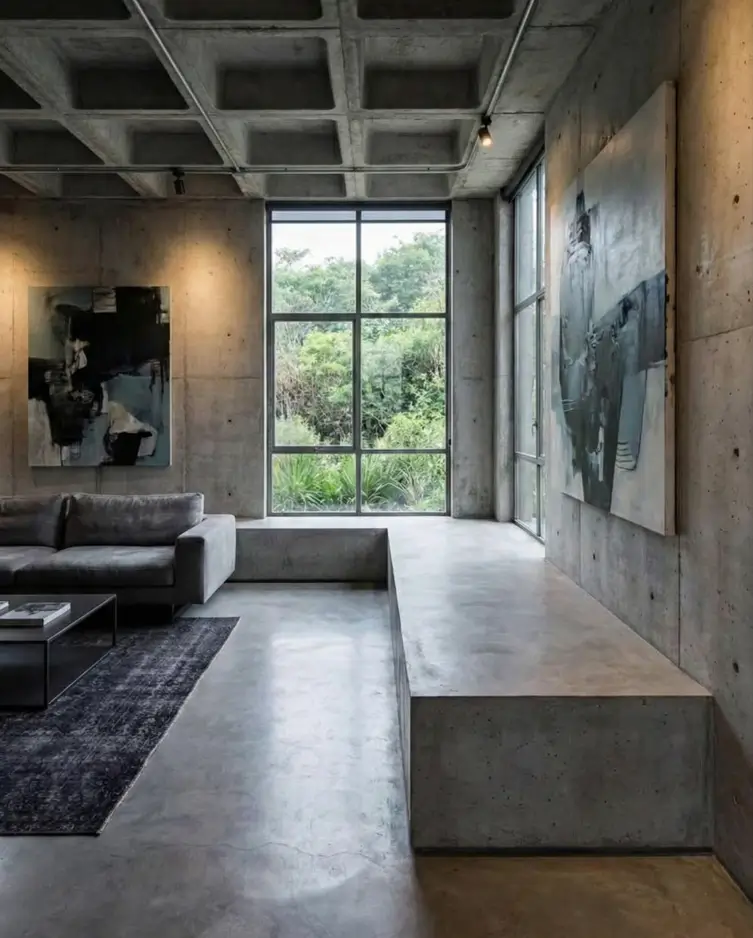
Structural repetition defines architectural honesty, often achieved through exposed waffle slabs. This lounge showcases a heavy coffered ceiling contrasting with expansive windows and a sleek concrete bench. A rigid overhead grid frames the organic view outside, creating a meditative atmosphere.
14. Nature-Infused Concrete Living
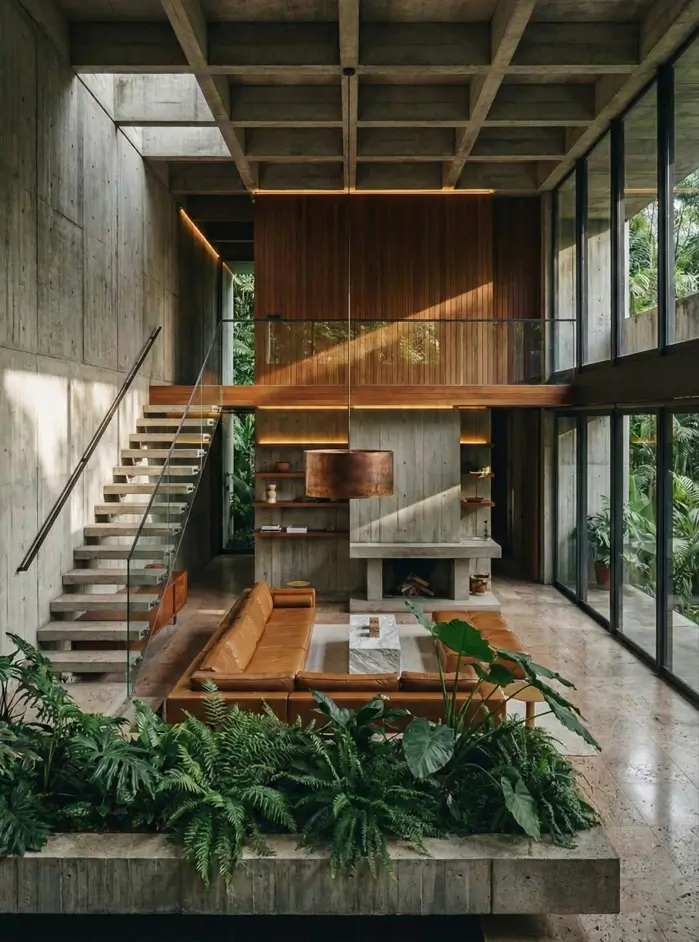
Expansive glazing is essential for softening the visual weight of raw concrete structures. This residence balances a rigorous waffle ceiling with warm timber paneling and floor-to-ceiling windows. Natural light is key to the Soft Brutalism trend, dissolving the boundary between the rugged interior and the forest.
15. Mixed Material Brutalist Kitchens
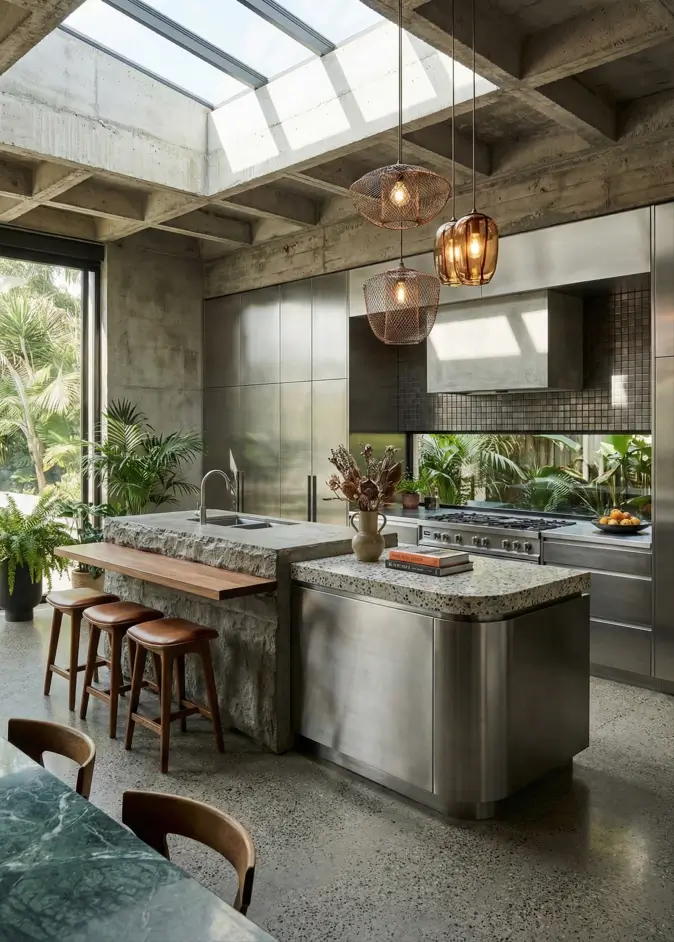
Honest material expression is central to Brutalist kitchen ideas. This space pairs a raw concrete waffle ceiling with stainless steel cabinets and a rugged stone island. Amber mesh pendants add necessary warmth to the industrial palette.
Related: 29 Rustic Kitchen Design Ideas for a Warm, Inviting Home
16. Atmospheric Concrete Bath
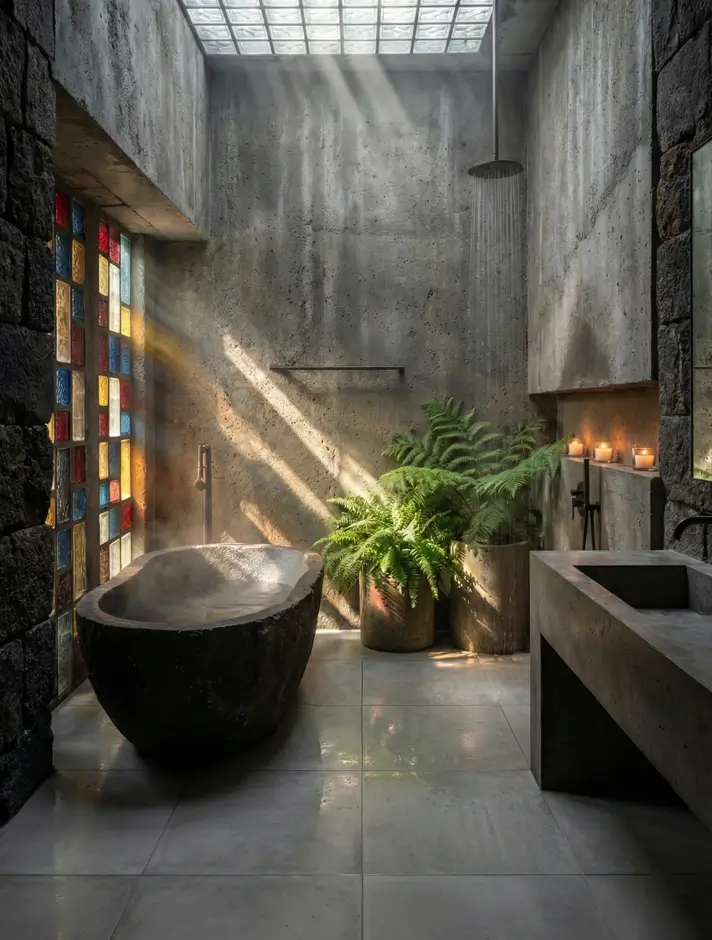
Light is essential to balance the density of raw stone features. This bathroom washes raw concrete walls and a boulder-style tub in soft rays from a stained-glass window. A colorful glow transforms the cold industrial space into a spiritual sanctuary.
17. Defined Vertical Zoning
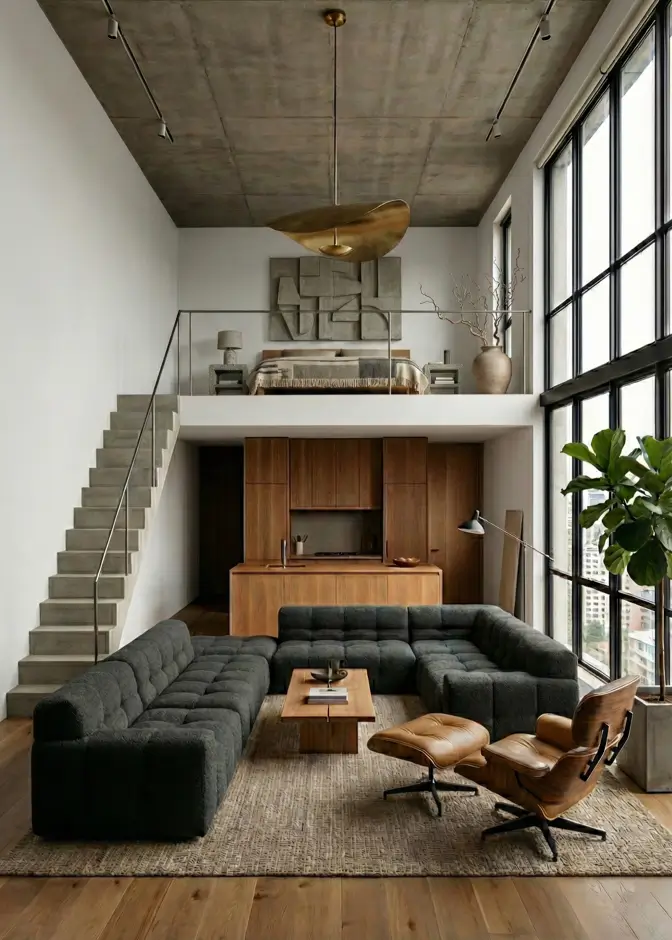
Double-height spaces allow structural interiors to truly breathe. This loft pairs a raw concrete ceiling with a warm wood kitchen volume and a cozy charcoal sectional. The brass pendant connects the mezzanine to the lounge below.
18. Subterranean Sanctuary Vibes
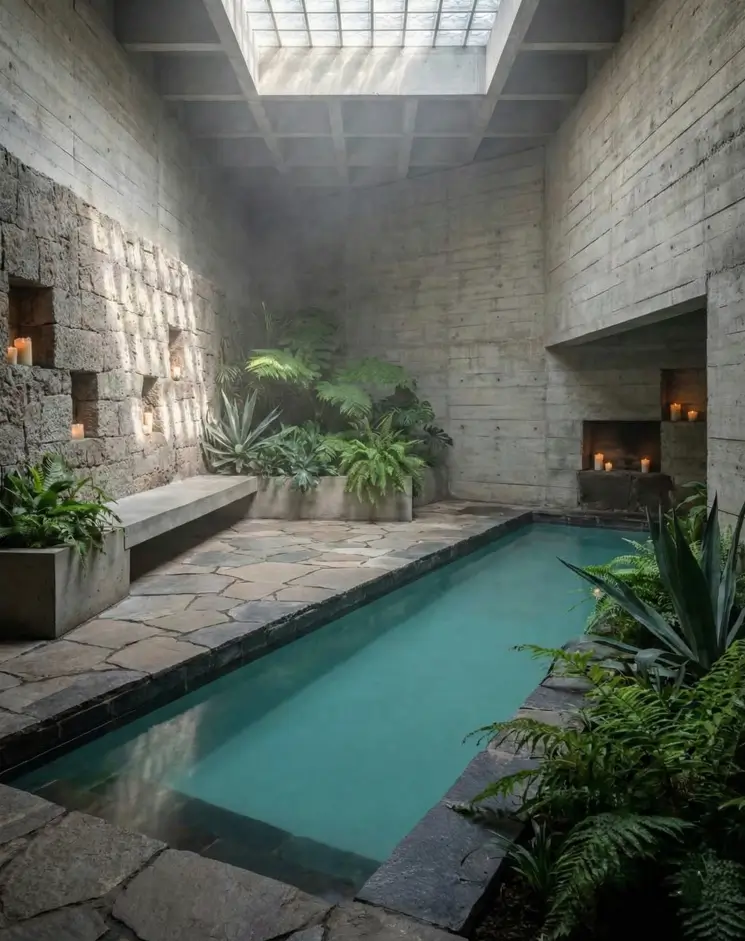
Water features in concrete architecture often utilize heavy masonry to create a cavernous, protective atmosphere. This indoor pool area features a dramatic waffle skylight illuminating rough stone walls and a turquoise basin. Filtered light creates an ancient, temple-like serenity.
19. Sunken Concrete Lounge
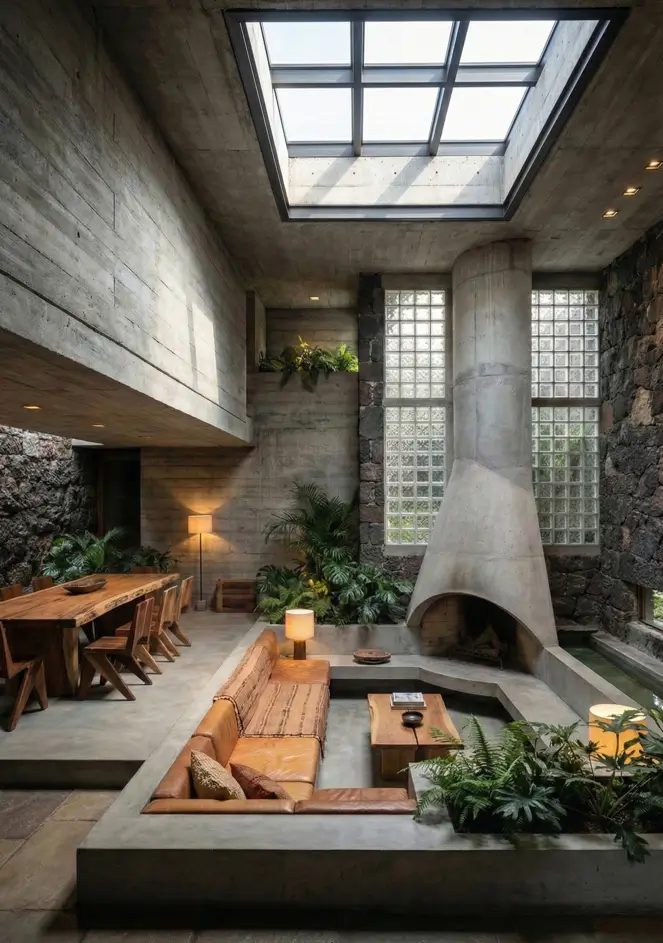
Sunken lounges emphasize the grounding, social nature of Brutalist interior design. This space centers on a sculptural concrete fireplace and a leather conversation pit flanked by rough stone walls. This depth creates an intimate, protected nest within the expansive volume.
20. Integrated Concrete Shelving
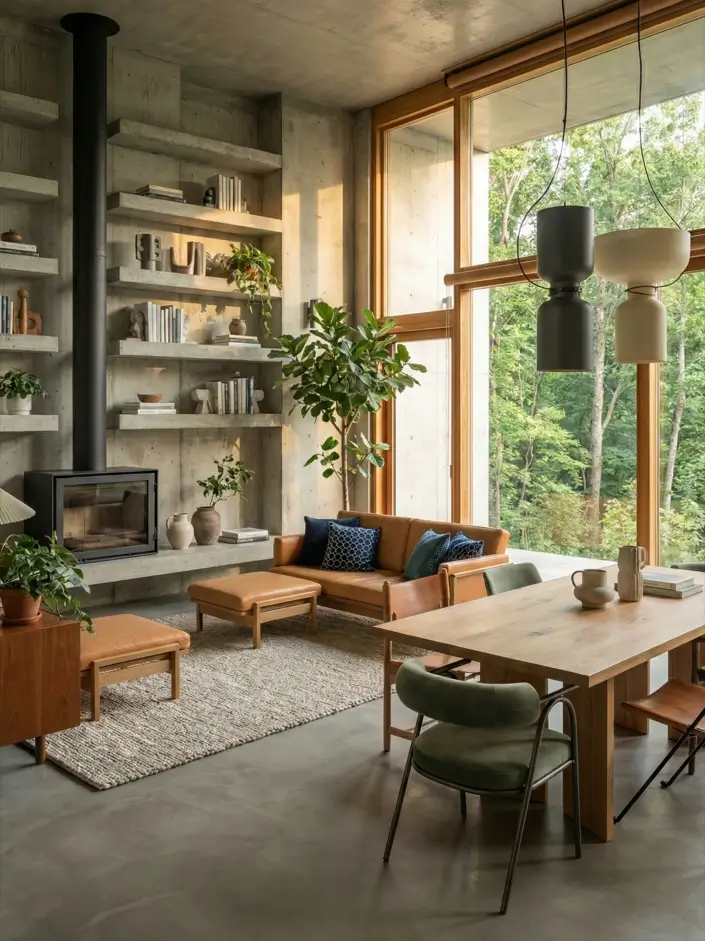
Built-in joinery is a staple of modern industrial design, merging storage directly with the architectural shell. This living space features floating concrete shelves that seamlessly extend from the wall, flanking a black wood stove and warm timber windows. Wood accents frame the forest view, softening the industrial gray backdrop.
21. Sculptural Brutalist Forms
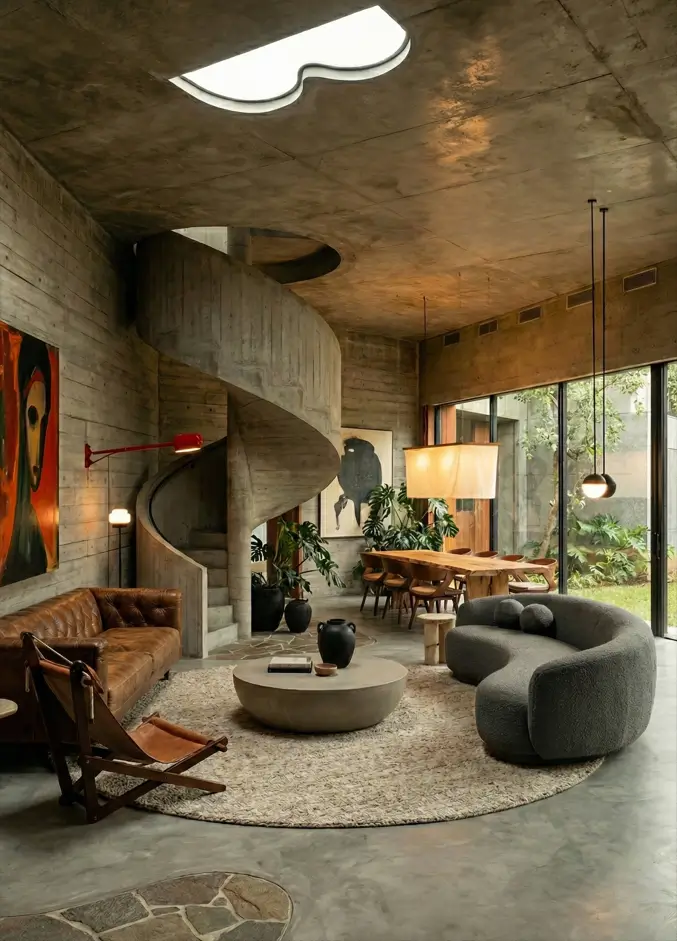
Sculptural fluidity is a surprising facet of Brutalist interior design characteristics, as concrete captures any form. This living area centers on a dramatic concrete spiral staircase illuminated by a whimsical skylight. A leather Chesterfield adds timeless warmth to the avant-garde shell.
22. Layered Vertical Living
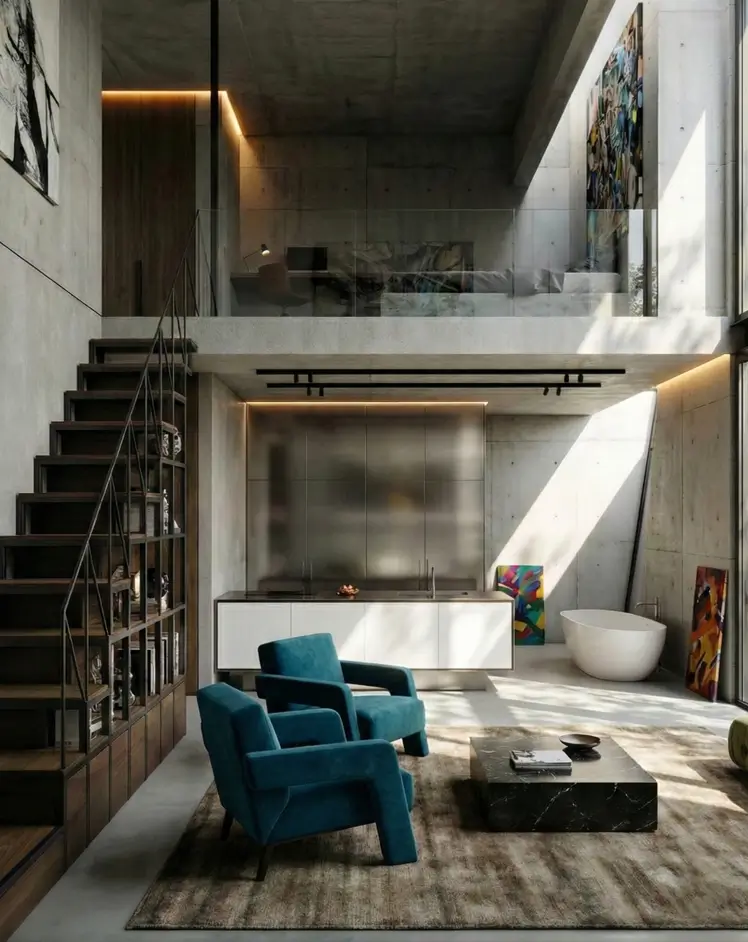
Maximizing vertical volume is a key strategy in urban lofts. This residence features a concrete mezzanine bedroom hovering above a sleek kitchen and bold teal velvet armchairs. Glass balustrades preserve the open sightlines, allowing the raw architectural shell to remain the hero.
23. Fluid Structural Concrete
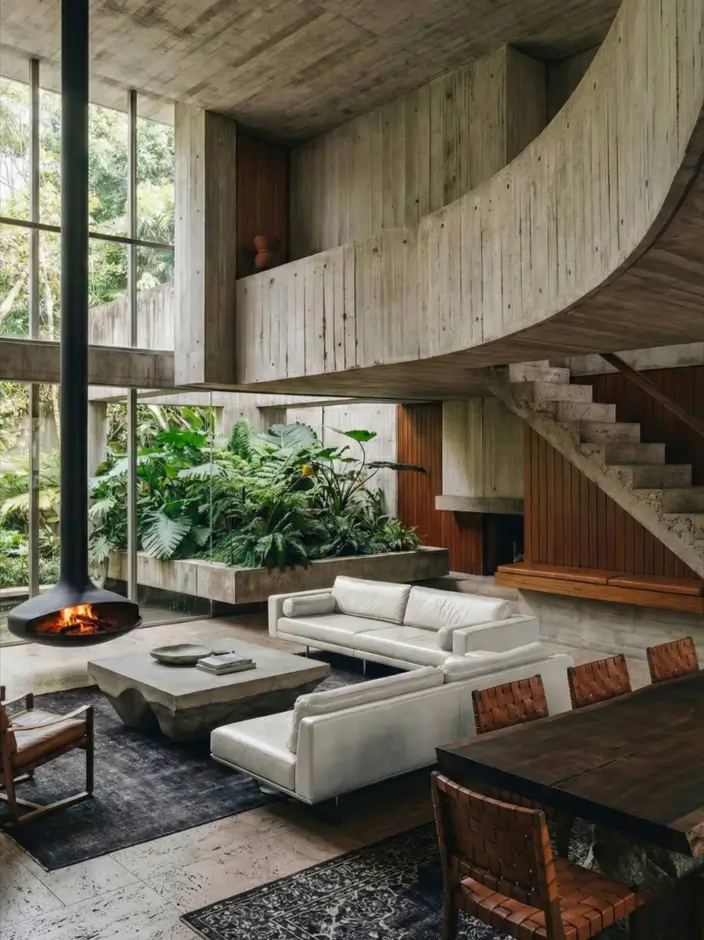
Fluid structural forms evolve the rigid stereotype often associated with concrete construction. This residence showcases a sweeping concrete mezzanine floating above a suspended black fireplace and sunken lounge. The crisp white leather sectional provides a bright, soft counterpoint to the heavy grey masonry.
24. Monumental Cylindrical Forms
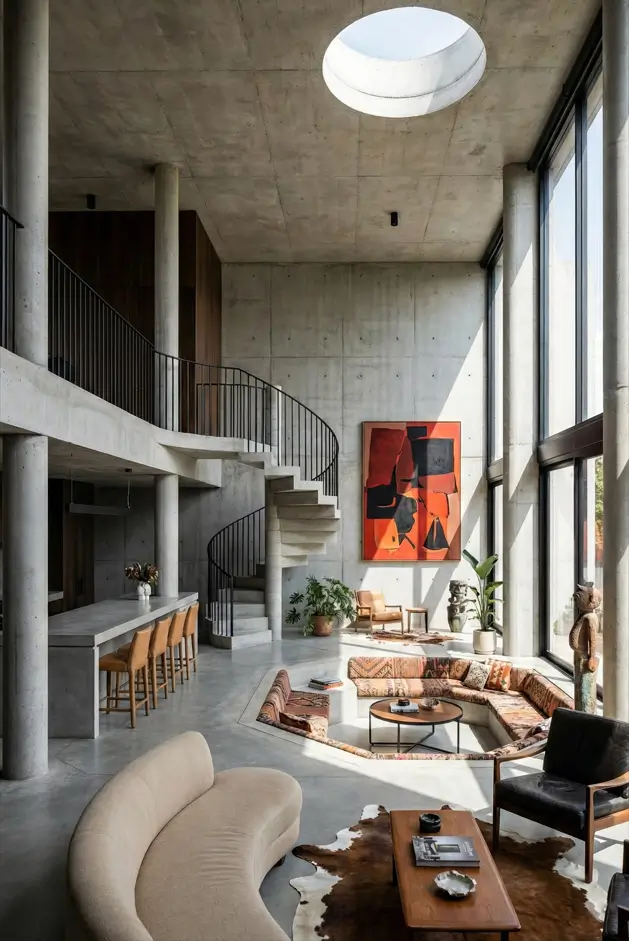
Cylindrical forms soften the rigidity often found in modern masonry. This atrium features soaring concrete columns and a spiral stair illuminated by a dramatic circular skylight. A sunken conversation pit adds cozy warmth to the monumental scale.
25. Cinematic Light and Shadow
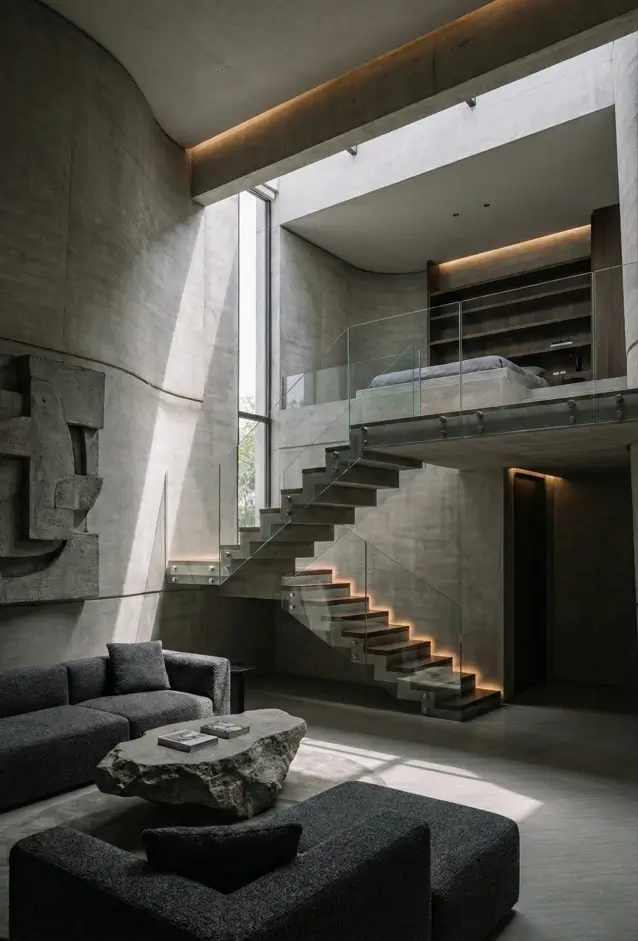
Lighting in this aesthetic acts as a dynamic architectural material, carving space out of shadow. This residence features sweeping curved concrete walls and a floating staircase illuminated by integrated tread lighting and a high slit window. The interplay of light and heavy masonry creates a moody, almost cinematic sense of drama.
26. Warm Timber Ceilings
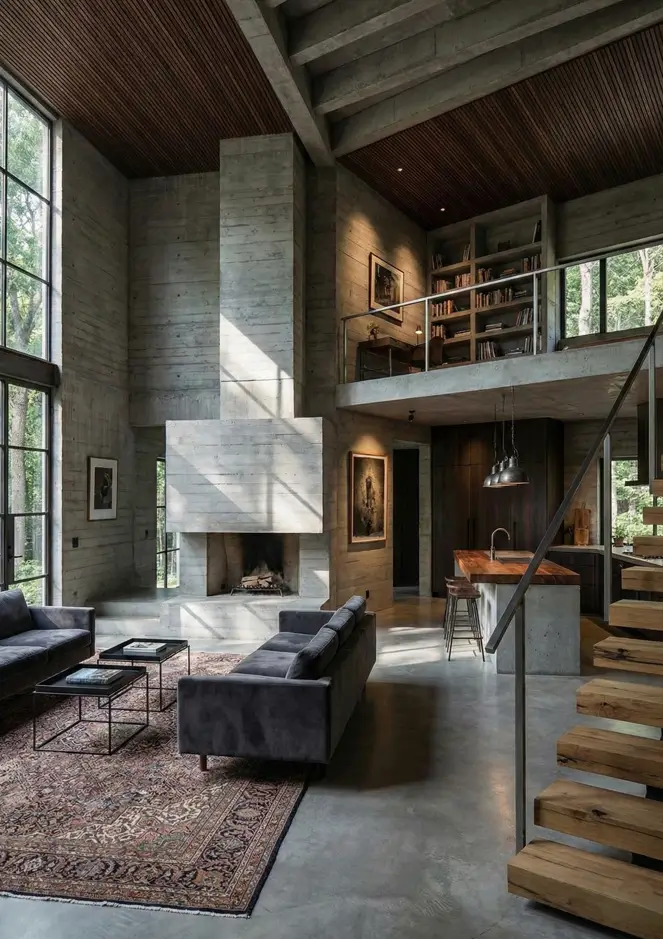
Material warmth is crucial to prevent stone interiors from feeling sterile. This double-height residence offsets a towering board-formed concrete fireplace with a rich, dark wood slatted ceiling and a cozy mezzanine library. Wooden textures embrace the raw stone, creating a space that feels both monumental and deeply homelike.
27. Chromatic Light Play
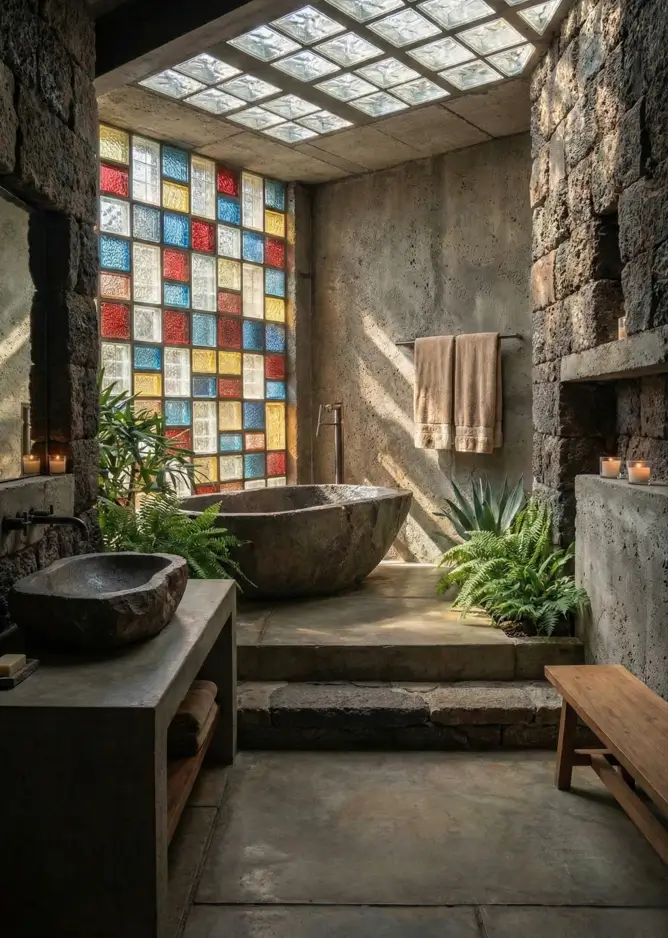
Introducing colored glass adds a playful, artistic dimension to the serious nature of raw architecture. This bathroom features a vibrant wall of multi-colored glass blocks casting rainbow hues onto rough lava rock walls and a raw stone tub. Colorful light dances across the primitive textures, creating a space that feels distinctively soulful.
28. Monumental Structural Framing
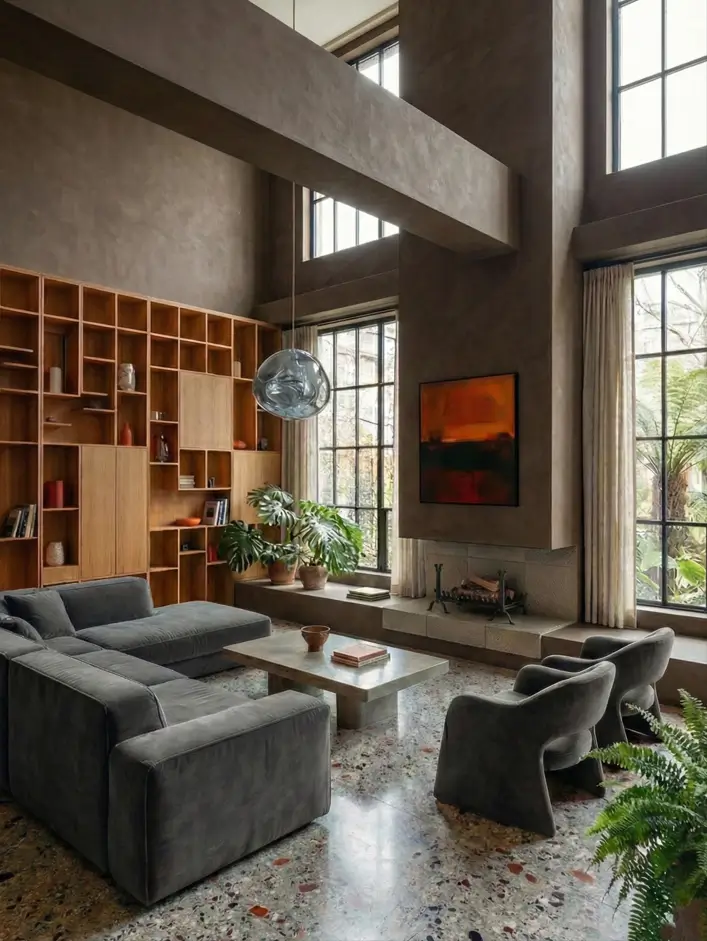
Structural drama defines modern structural design. This living room features a massive concrete beam crossing the double-height volume, grounding the floor-to-ceiling timber bookshelves. The moody grey palette makes this monumental space feel surprisingly intimate.
29. Sunlit Concrete Living
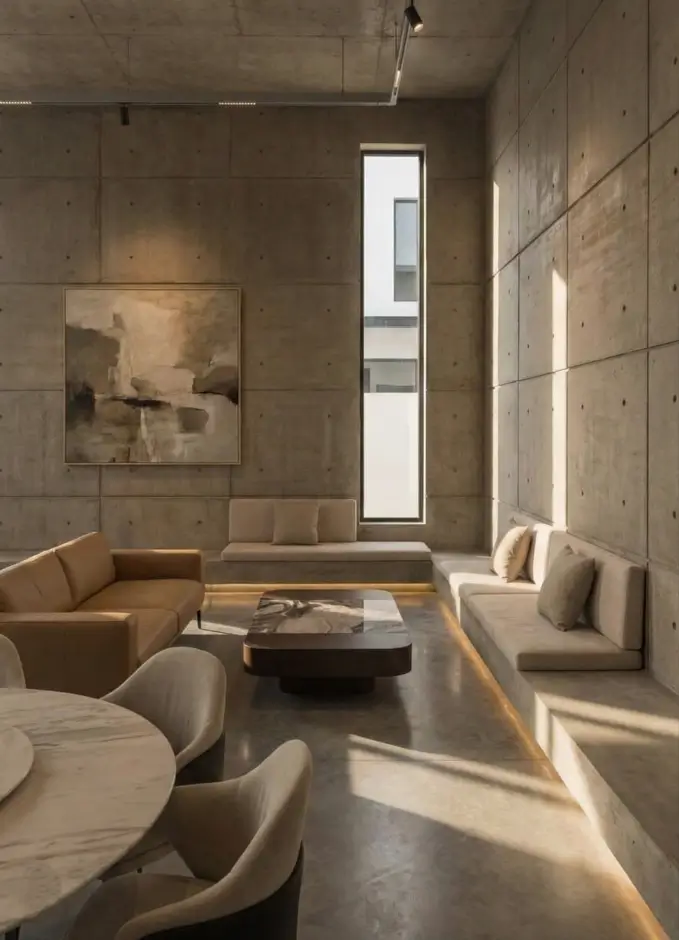
Exposed concrete walls find a delicate balance through custom built-in seating and sophisticated neutral tones. Daylight streams through a narrow vertical window, illuminating sculptural furniture to highlight modern Brutalist interior design. This curated approach effectively transforms heavy architecture into a calm, livable sanctuary.
30. Serene Concrete Sanctuary
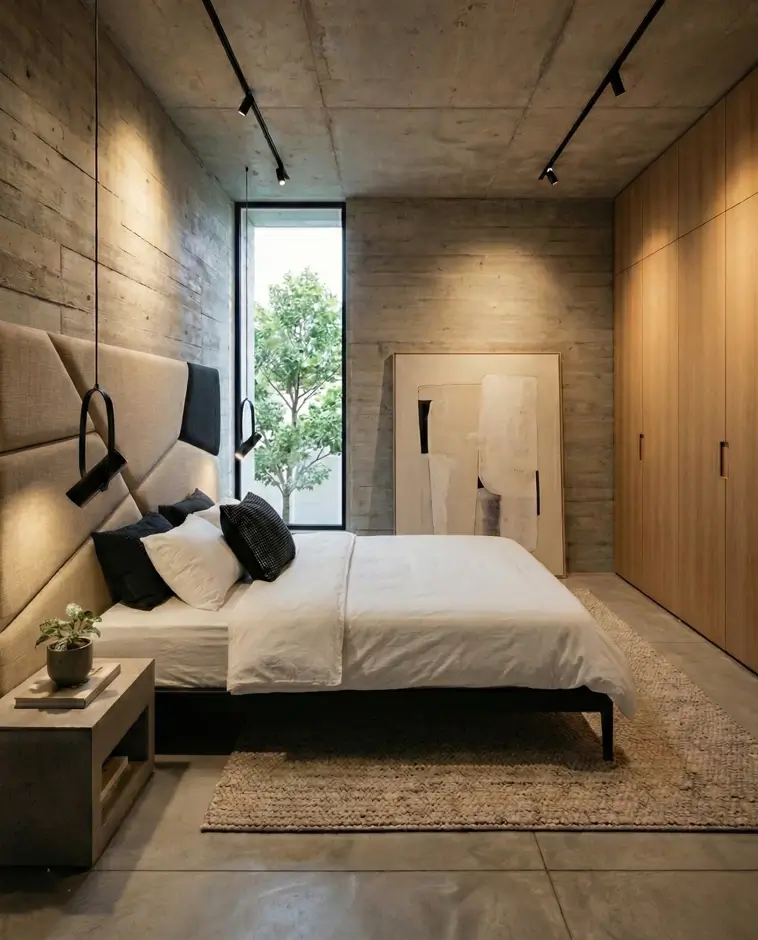
Minimalism in industrial bedrooms creates a distraction-free environment essential for rest. This sleeping quarter features sleek concrete wall panels that frame a low-profile platform bed and warm timber joinery.
Aligning with minimalist house design ideas, the absence of clutter allows the raw beauty of the materials to take center stage.
31. Monastic Concrete Bath
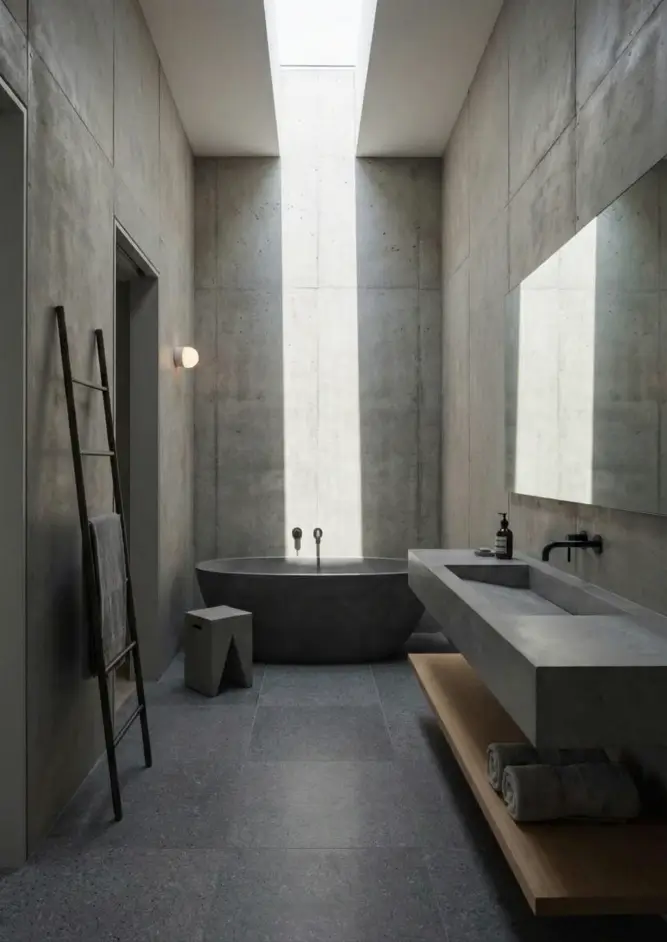
Light is the most critical tool in minimalist bathrooms, transforming confined spaces into spiritual sanctuaries. This narrow washroom features a dramatic slit skylight that casts a single beam over the freestanding concrete tub and floating vanity. Stark, purposeful lighting creates a meditative atmosphere, turning a daily routine into a ritual.
32. Organic Concrete Living
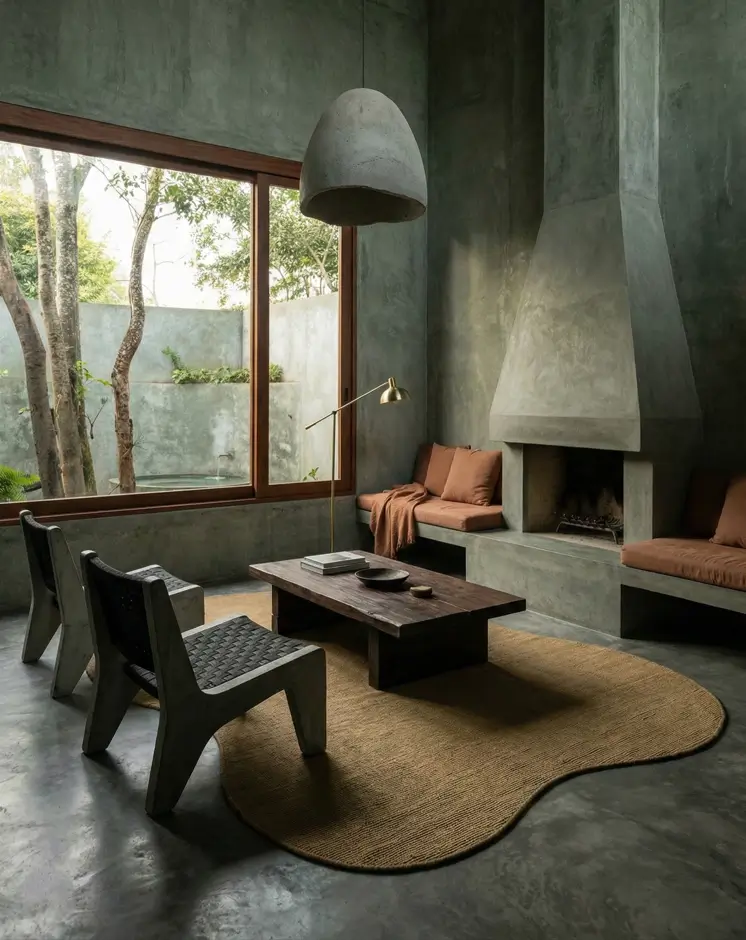
Organic textures can soften the inherent harshness of exposed structural design, creating a cave-like warmth. This lounge features textured green-grey concrete walls and a tapered fireplace grounded by a curvaceous jute rug and rust-toned bench cushions. The oversized pendant light and large window connect the raw interior directly to the garden’s tranquility.
33. Monolithic Brutalist Living
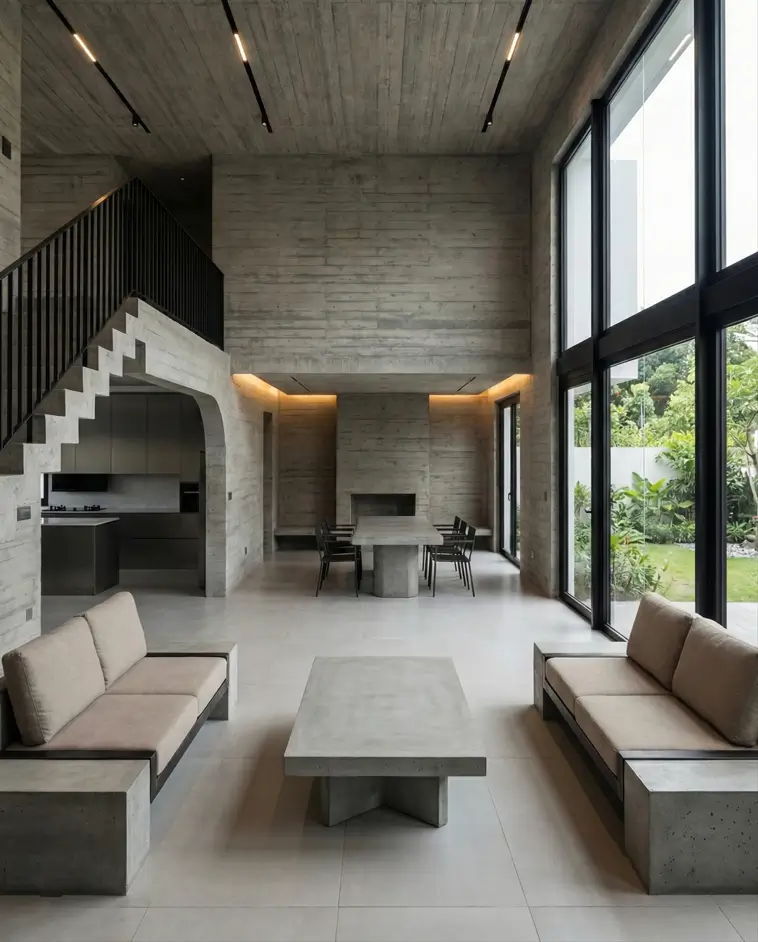
Integrated furniture defines modern Brutalist interior design, often merging decor seamlessly with the structure. This home showcases cast-in-place concrete sofas and a dining table set against textured board-formed walls. Lush garden views soften the monolithic grey uniformity, creating a serene atmosphere.
Related: 30 Inspiring Zen Garden Design Ideas (And How to Create Your Own)
34. Softened Concrete Sleeping
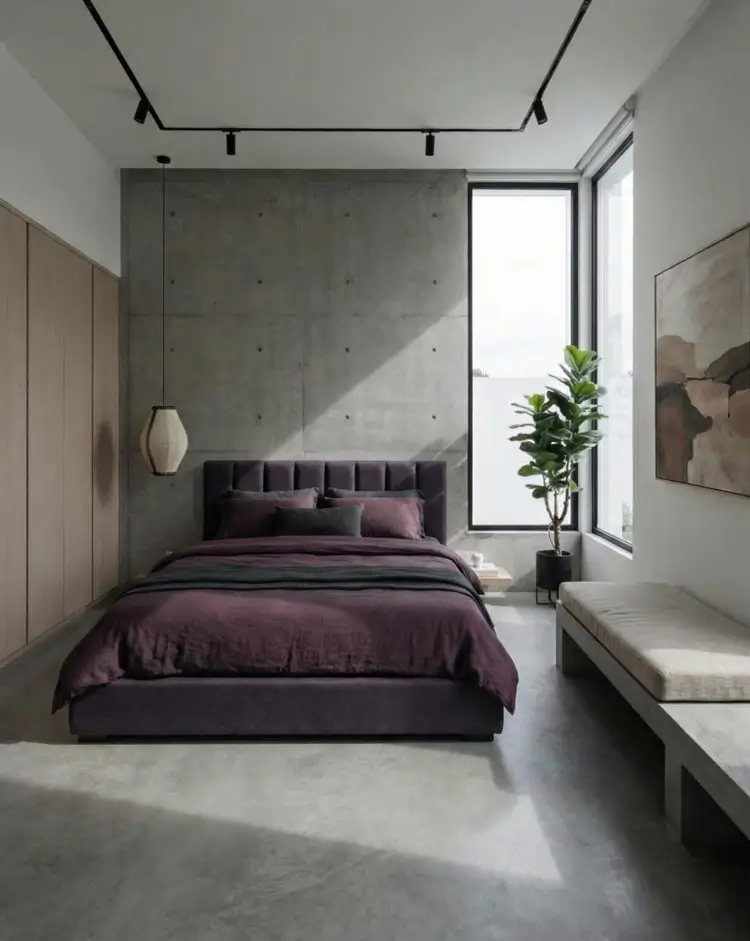
Soft textiles are crucial for balancing the inherent coldness of concrete-clad bedrooms. This suite pairs a raw concrete feature wall with a rich plum velvet headboard, a bold choice among headboard design ideas, and warm timber joinery. Deep purple hues add regal sophistication to the industrial shell.
Related: 27 Small Cozy Bedroom Ideas to Create Your Personal Sanctuary
35. Soaring Industrial Heights
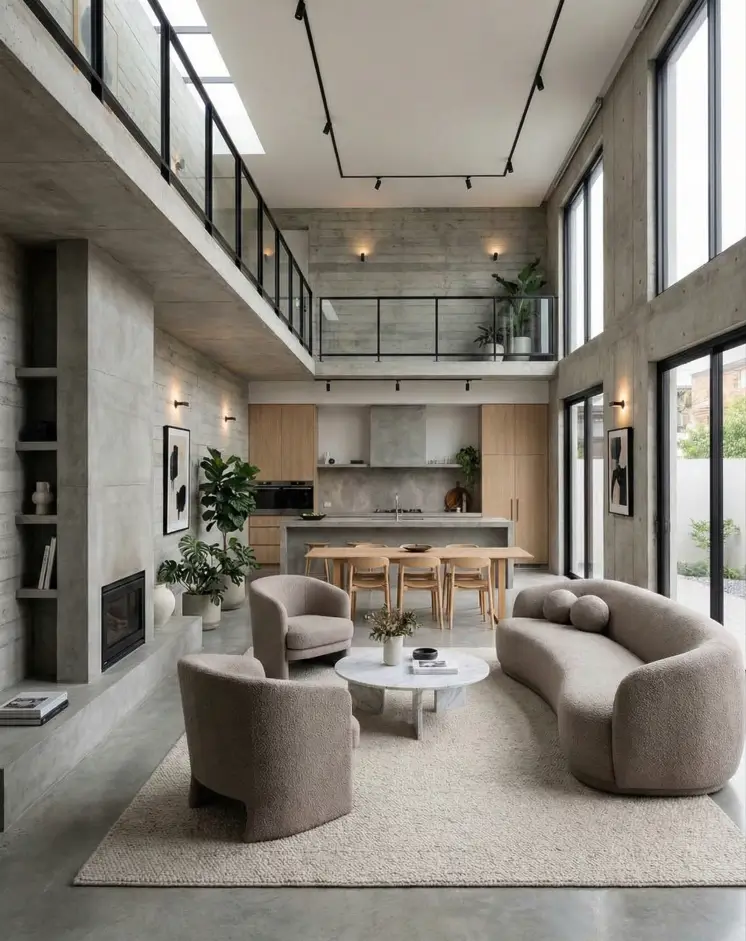
Maximizing verticality is a powerful way to balance the density of heavy architecture. This double-height living space features a concrete mezzanine walkway floating above a curved boucle sofa and warm wood kitchen. Graphic black track lighting frames the volume, adding sharp definition to the airy void.
36. Minimalist Vertical Volume
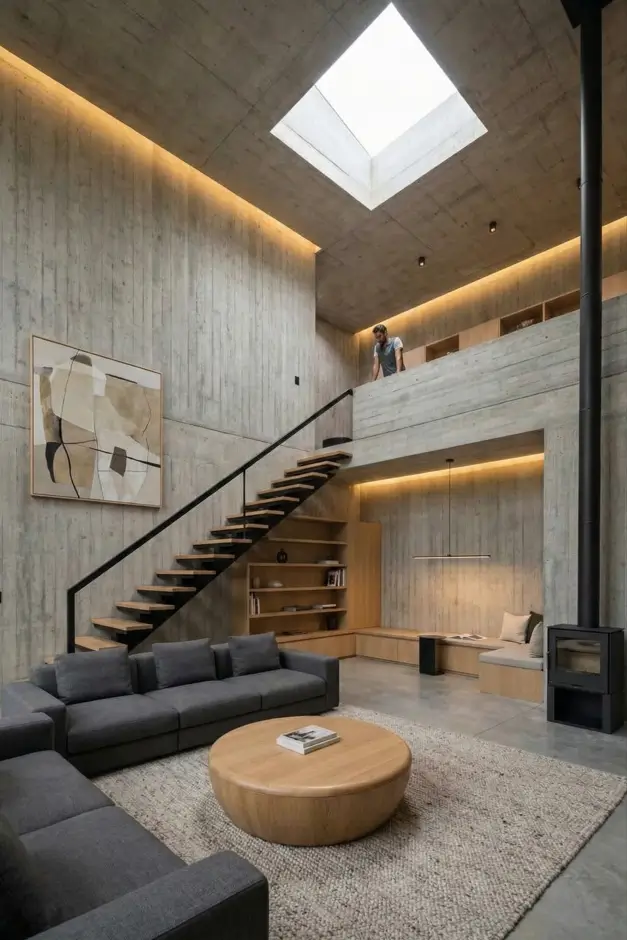
Soaring verticality is a hallmark of this style, creating a sense of architectural awe. This double-height lounge features a raw concrete shell illuminated by a precise square skylight, highlighting the floating staircase and black wood stove. Warm oak joinery and round table soften the monumental grey scale.
37. Zen Industrial Bath
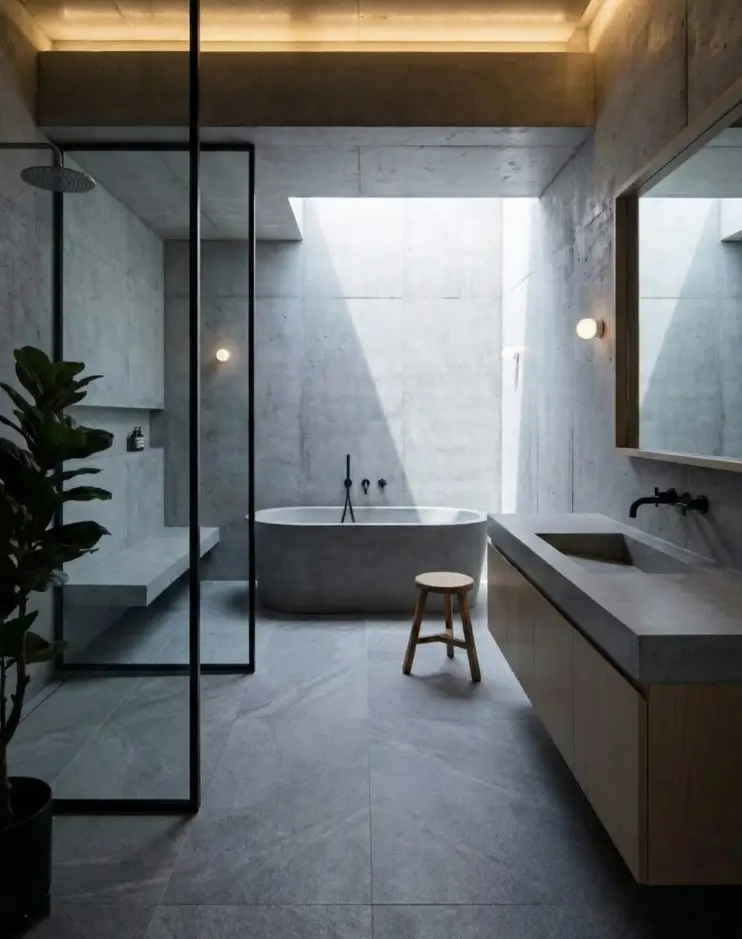
Illumination turns utility into sanctuary in modern Brutalist interior design bathrooms. This space positions a deep concrete tub beneath a skylight, balanced by a floating vanity with warm wood storage. Sleek black framing and soft cove lighting create a sophisticated, spa-like retreat.
38. Sculptural Light and Volume
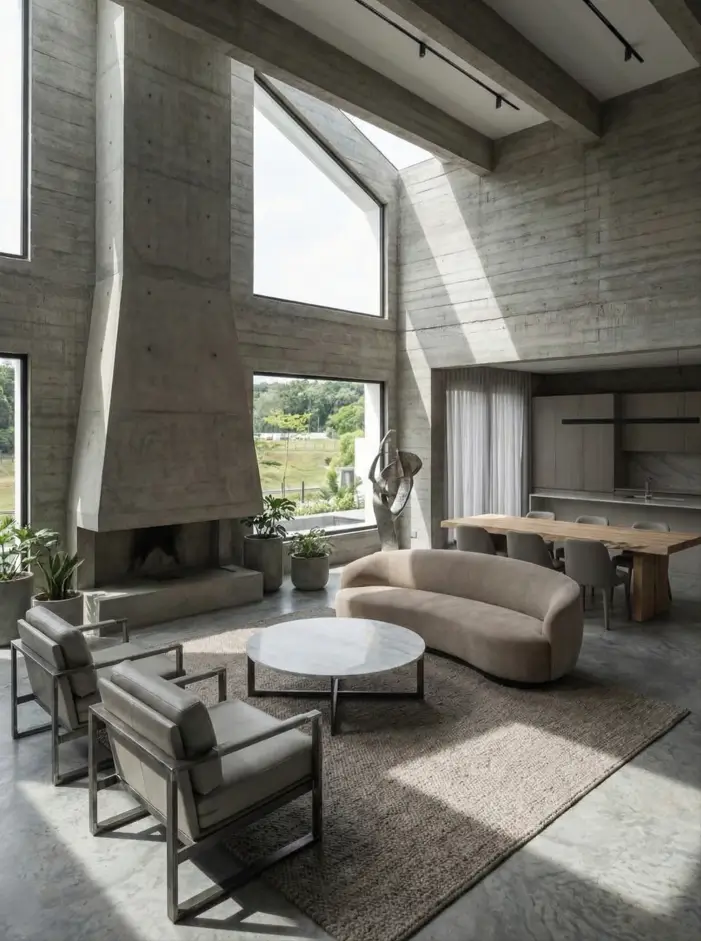
Clerestory windows are essential for softening the heavy presence of Brutalist interior design. This expansive living area features a towering concrete fireplace washed in sun. The curved beige sofa and wool rug introduce a layer of softness, balancing the monumental architectural scale.
Defining the Palette: Beyond Just Grey
While the cliché suggests a strictly monochromatic grey world, Brutalist interior design in 2026 is embracing the “Soft Brutalism” palette. This evolution moves away from sterility toward warmth, utilizing colors that exist naturally within raw materials.
- Mocha Mousse & Deep Umber: To offset the coolness of concrete, deep chocolate browns and espresso tones are essential. They ground the space and provide a “root” system for the lighter grey elements.
- Warm Terracotta & Rust: These hues echo the color of fired brick and Corten steel. Using a burnt orange velvet sofa or a clay vase against a grey wall creates a vibrating contrast that feels ancient yet modern.
- Olive & Sage: Biophilic greens are non-negotiable in modern Brutalist interior design. They act as the “lungs” of the room, softening the hard edges with organic vitality.
- Moon Grey vs. Charcoal: Layering multiple shades of grey is key. Combine pale, light-reflecting “Moon Grey” with deep, light-absorbing charcoal to create visual depth rather than a flat, concrete box.
Curating the Look: Furniture & Decor
Selecting the right pieces is critical; fragile or ornate furniture will get swallowed whole by the architecture. To master Brutalist interior design characteristics, your furniture must have enough visual mass to hold its own against the weight of the building.
- Low Profiles & Chunky Silhouettes: Look for sofas that sit low to the ground with wide, blocky arms. The “toad” sofa style or modular sectionals with deep seats work perfectly because they mimic the horizontal lines of concrete slabs.
- Tactile Fabrics: Because the walls are often smooth and cold, your upholstery must be the opposite. Boucle, high-pile wool, and heavy linen provide the necessary “soft” counterpoint.
- Sculptural Lighting: Lighting fixtures should be treated as art installations. In 2026, we are seeing a shift toward “industrial jewelry”—oversized brass pendants or cast-concrete lamps that look good even when turned off. Crucially, strictly use 2700K (Warm White) bulbs. Cool white light on grey concrete turns a home into a parking garage; warm light turns it into a sanctuary.
The Practical Reality: Acoustics & Comfort
The most overlooked challenge in Brutalist interior design is acoustics. Hard surfaces reflect sound, creating echoes that can make a home feel hollow and uninviting. As a designer, I prioritize “invisible” acoustic solutions to ensure the space sounds as good as it looks.
- Acoustic Dampening: High-pile rugs are mandatory, not optional. They absorb sound waves that would otherwise bounce off concrete floors. For walls, consider large-scale tapestry art or felt acoustic panels that can be color-matched to your concrete to disappear visually.
- Drapery as Walls: Heavy, floor-to-ceiling velvet or wool drapes do double duty: they soften the vertical lines and act as powerful sound absorbers.
- The Comfort Balance: Brutalism is high-maintenance in its rigidity but low-maintenance in its durability. The trade-off for modern Brutalist interior design is that while you never have to paint a wall, you must be intentional about warmth. Similar to the philosophy behind Japanese style house design, it is a style for those who find peace in permanence and quietude in solidity.
Related:
FAQs
What are the key characteristics of Brutalist interior design?
Core characteristics include the use of raw, unfinished materials like concrete, brick, and steel. You will often see structural elements left exposed, emphasizing their functional role rather than hiding them. The aesthetic favors heavy, block-like forms, monochromatic color palettes, and geometric lines, although modern interpretations often soften these with wood and light.
Is Brutalist interior design expensive to achieve?
It depends on the approach. Authentic architectural Brutalism—such as pouring custom board-formed concrete walls—is labor-intensive and expensive. However, you can achieve the “look” of modern Brutalist interior design more affordably by using concrete-effect paints, micro-cement overlays, and investing in substantial, sculptural furniture pieces that mimic the style’s weight.
How do I make a Brutalist room feel cozy?
The secret to livability lies in contrast. To prevent a space from feeling like a bunker, layer in warmth through organic textures like wool rugs, velvet upholstery, and warm-toned timber joinery. Lighting is also critical; aim for soft, warm-temperature ambient lighting (2700K) to wash the textured walls, creating an inviting glow.