

Drive past one and you’ll know it without thinking. A low cottage, a steep roof, a chimney rising from the middle, and windows lined up evenly on each side of the front door. Cape Cod homes have been part of American neighborhoods since the 1600s, and the shape hasn’t changed much since.
A symmetrical facade, cedar shake or clapboard siding, multi-paned windows, and often a row of dormer windows tucked into the steep roofline — that’s the silhouette people picture. Cape Cod style home exterior choices can lean weathered and coastal, freshly painted and crisp, or quietly modern, but the bones stay the same.
Before you scroll, here’s what you’ll usually see on a true Cape: a side-gabled roof (the gable ends face left and right rather than the street), a centered front door, balanced windows, and dormers — the small windowed projections that pop out from the roof slope. Once you spot those, the rest is variation.
The 27 ideas ahead show how Cape Cods come together in different settings, from historic shingle cottages to modern updates inland.
1. Five-Dormer Symmetry
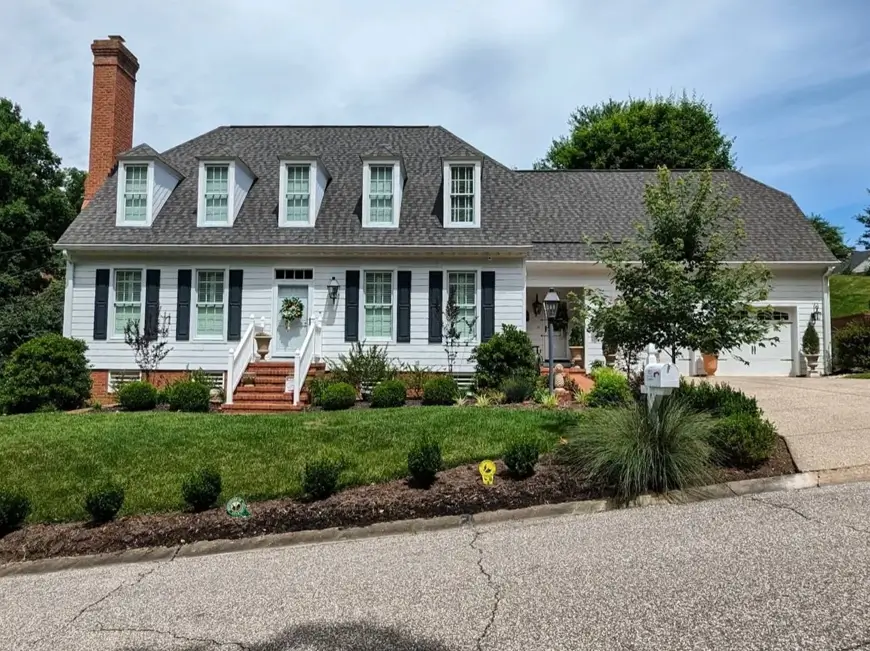
Long, low rooflines with multiple matching dormers are one of the clearest signals of Cape Cod style. On this facade, five evenly spaced gabled dormers stretch across the front, paired with black shutters and a soft gray roof. There’s a quiet rhythm to the spacing that holds the whole front together.
2. Weathered Shingle Cottage
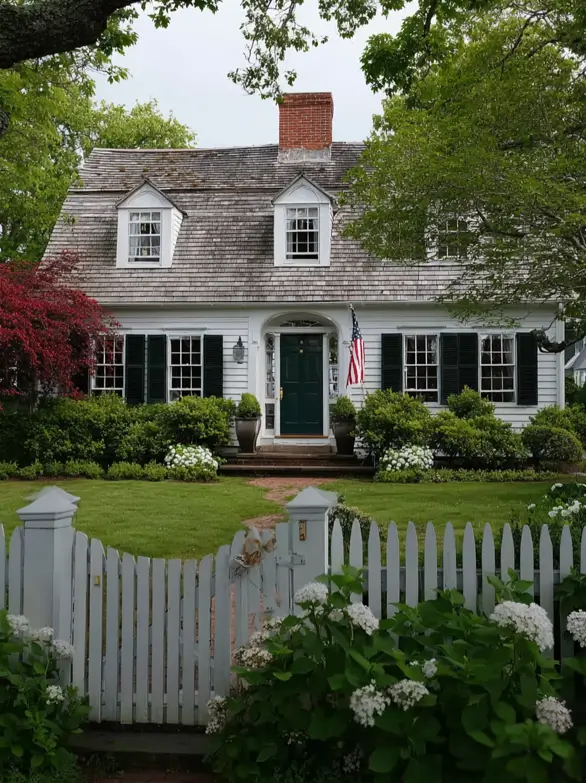
Aged cedar shingles give a home that quiet, settled-in feel you can’t fake with new materials. Here, a soft gray shake roof, twin dormers, and dark green shutters frame a deep teal door behind a white picket fence. You’ll usually notice the south-facing side silvers faster than the rest — part of what makes a weathered cottage exterior so hard to replicate.
3. Layered Shingle Addition
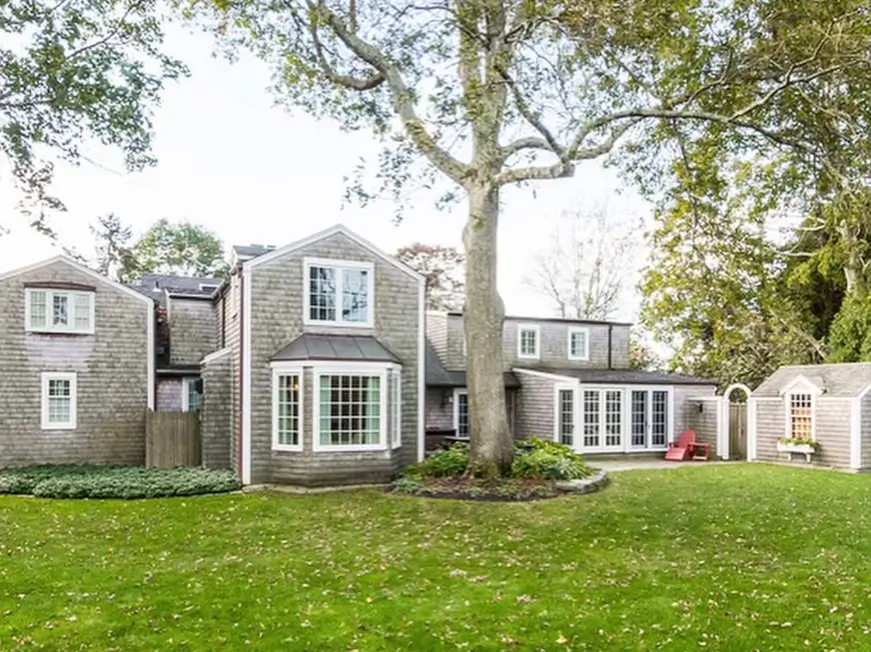
Older homes often grow over time, picking up wings and bay windows that add character without losing the original feel. On this expanded home, gray cedar shingles wrap a multi-section layout with a tall bay window, French doors, and a small garden shed. Worth borrowing for any expanded cottage.
4. Mint Board Shutters
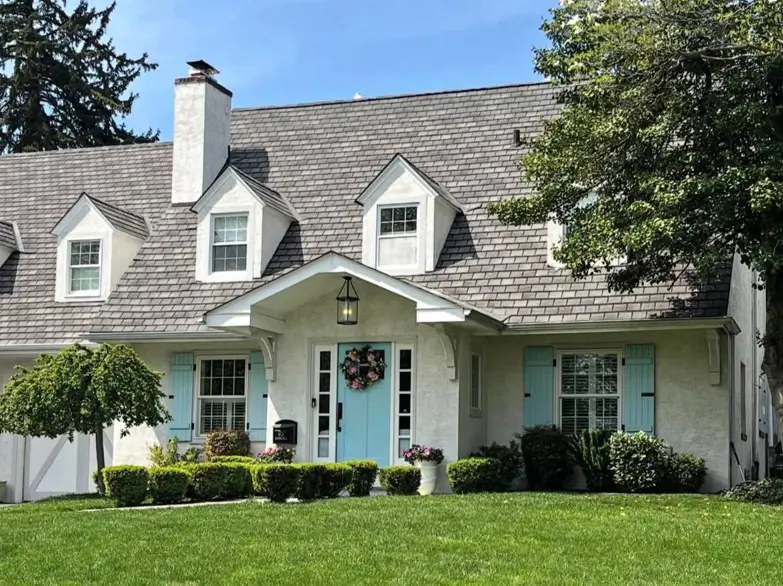
Soft accent colors can lift a neutral facade without overwhelming it. On the exterior, cream stucco walls pair with mint board-and-batten shutters, a matching front door, and a small bracketed entry hood beneath three pedimented dormers. Works especially well on shaded lots where stronger colors would read flat.
5. Plum Door Cottage
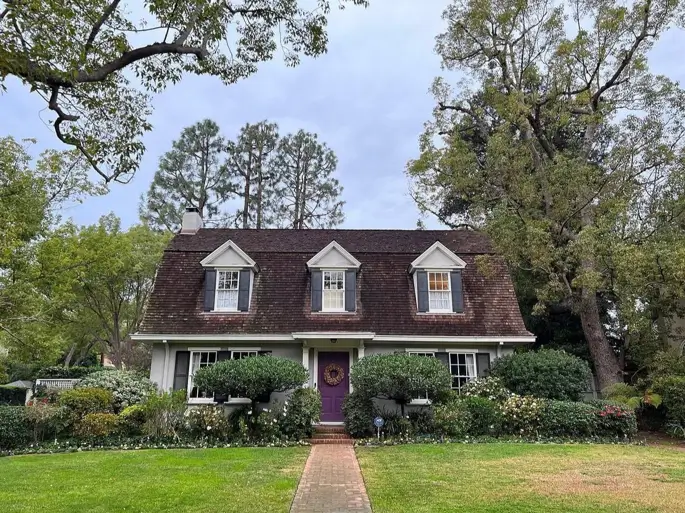
Unexpected door colors can give a quiet facade a real personality lift. In this home, soft gray clapboard, dark gray-blue shutters, and a moss-covered shake roof set the stage for a glossy plum front door framed by neat topiaries. There’s nothing fussy about it, and that’s the appeal.
6. Sky Blue Door
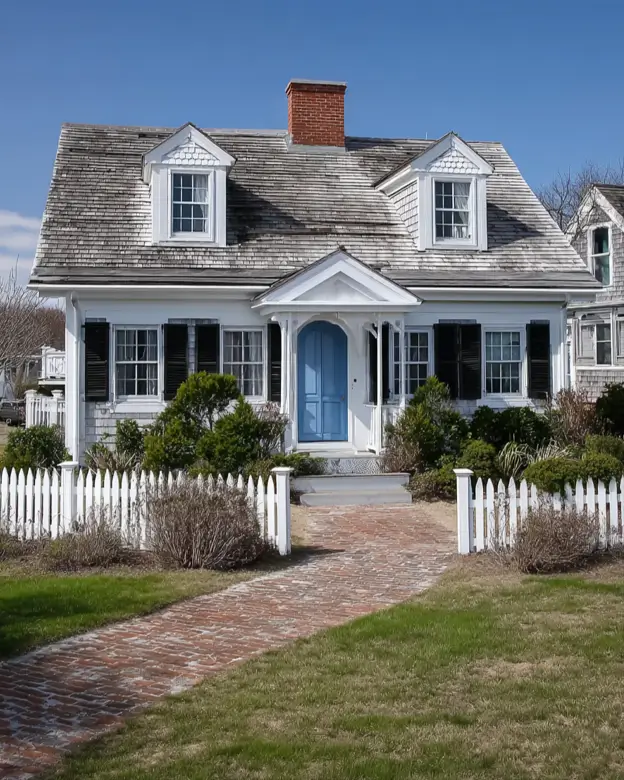
Soft pops of color near the entry can warm up an otherwise classic palette. Paired with silvered shake siding, twin gabled dormers, and black louvered shutters, a powder-blue door sits beneath a small pedimented hood above a brick walkway. Easy to live with year-round.
7. Carved Bracket Entry
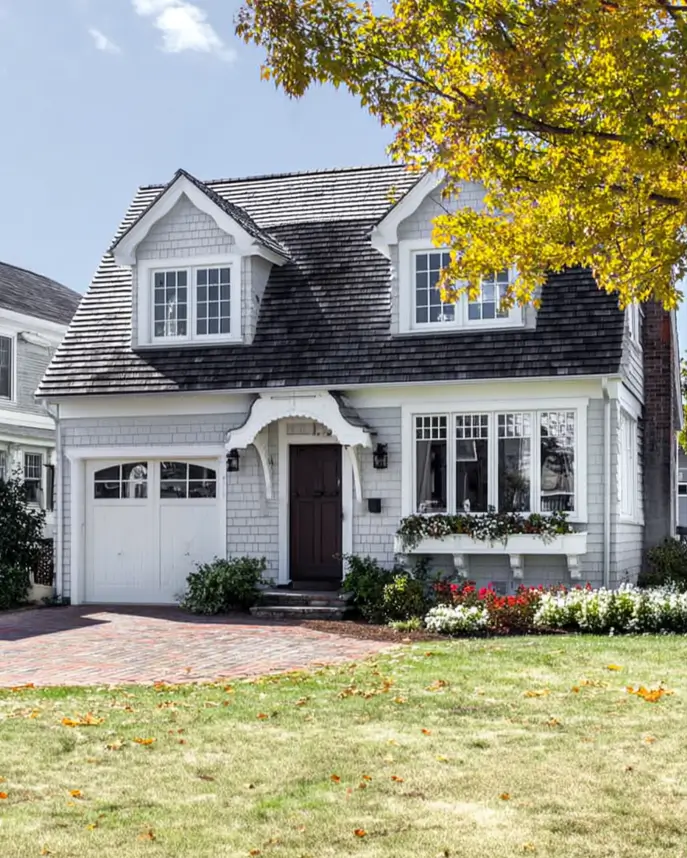
Hand-carved details near the entry can give a compact home a real sense of craftsmanship. Here, decorative wooden brackets support a small entry hood between an arched garage door and a deep mauve front door, all set against bright white shingles. A good fit for narrow lots — and a small detail that pairs naturally with the texture-rich Craftsman exterior tradition.
8. Hydrangea Hedge Frame
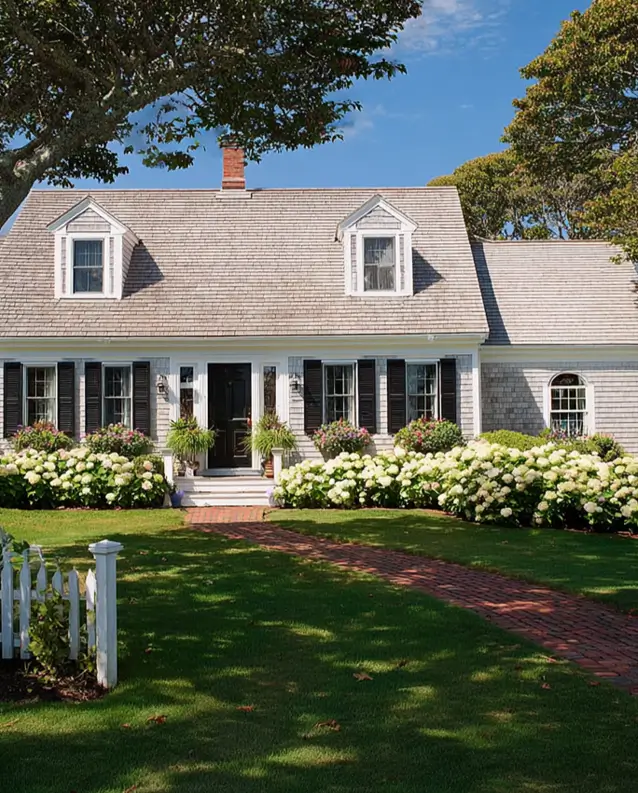
Layered hedges of white hydrangeas can soften a low cottage and frame the entry beautifully. Instead of open lawn beds, this home pairs creamy clapboard, black shutters, and twin gable dormers with a dense hydrangea border along a herringbone brick path. You’ll see them everywhere on the Cape itself — they handle salt air better than almost any other shrub.
9. Arched Pediment Entry
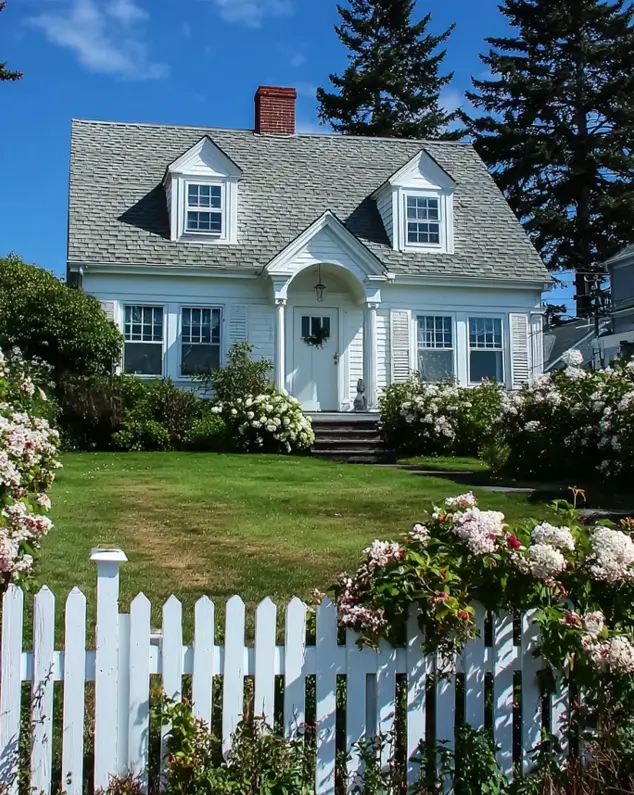
Curved pediments above a doorway can soften an otherwise straight-edged facade. In this home, an arched white pediment frames the entry between two slim columns, set against bright white clapboard, twin gable dormers, and a brick chimney rising from the steep gray roof. A simple move that lifts the whole front.
10. Stone Chimney Cottage
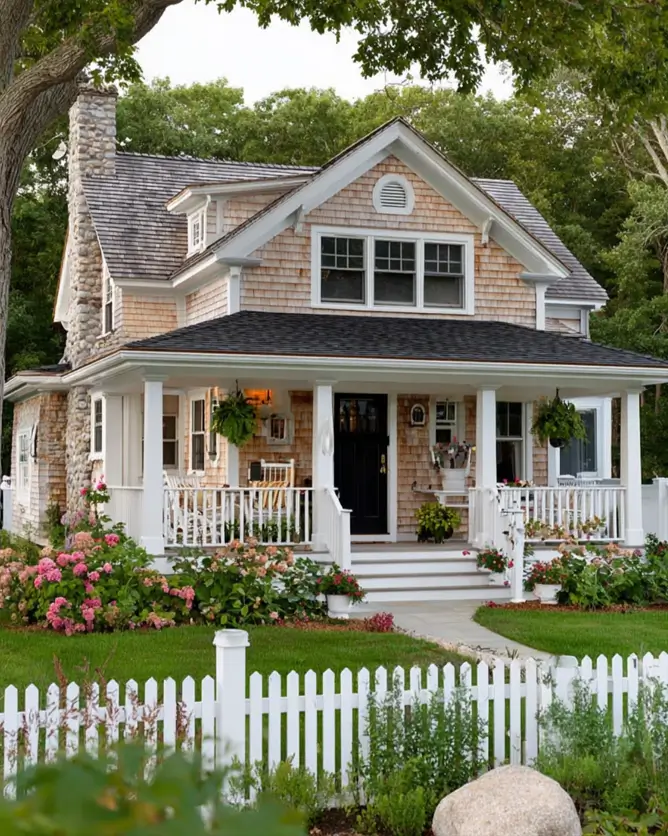
Natural stone chimneys give a smaller home real visual weight against lighter siding. On the exterior, fresh cedar shingles and a black asphalt roof meet a tall fieldstone chimney, a deep covered porch, and a gable dormer with a small round vent. In homes that still have the original chimney, you’ll usually feel the difference walking past it in winter — the stone holds heat well into the night.
Related: White Farmhouse With Black Trim: 34 Ideas for a Timeless Exterior
11. Navy Shutter Charm
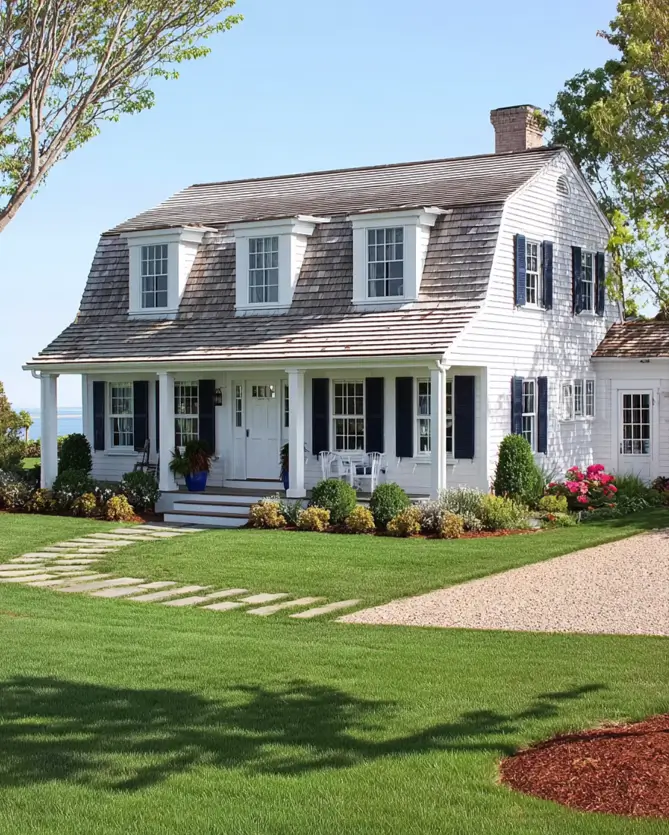
Deep navy shutters bring a confident contrast against bright white siding without feeling heavy. Paired with three gabled dormers, a covered front porch, and a brick chimney, this seaside home features clapboard walls and stepping-stone paths leading to a gravel drive. A reliable choice for shoreline lots.
12. Bowed Roof Silhouette
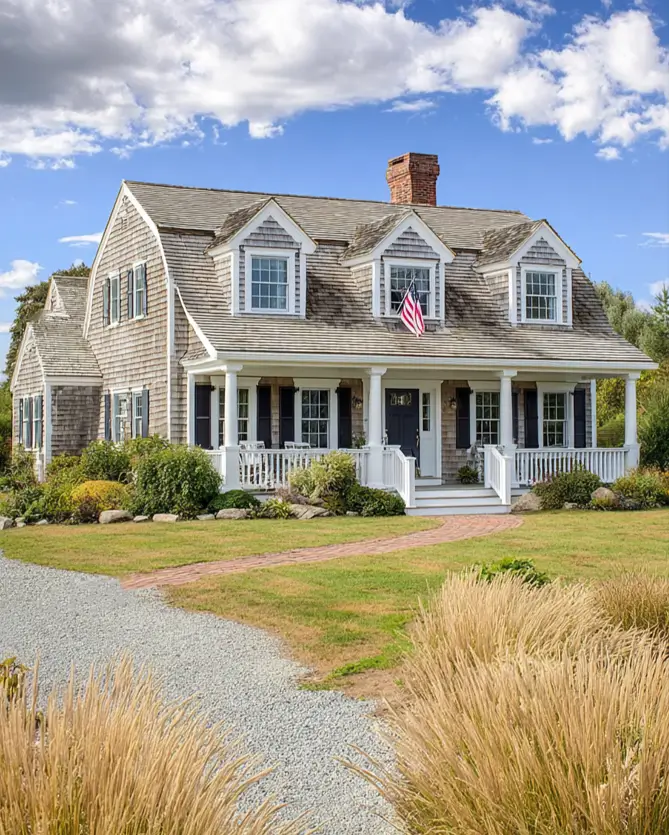
Subtly bowed rooflines bring a distinct shipbuilder’s curve to a wider facade. The gentle sag of weathered shake siding meets three gabled dormers, navy shutters, a deep covered porch, and meadow grasses spilling along a gravel path. The kind of detail you don’t notice at first, then can’t unsee.
13. Catslide Roof Cottage
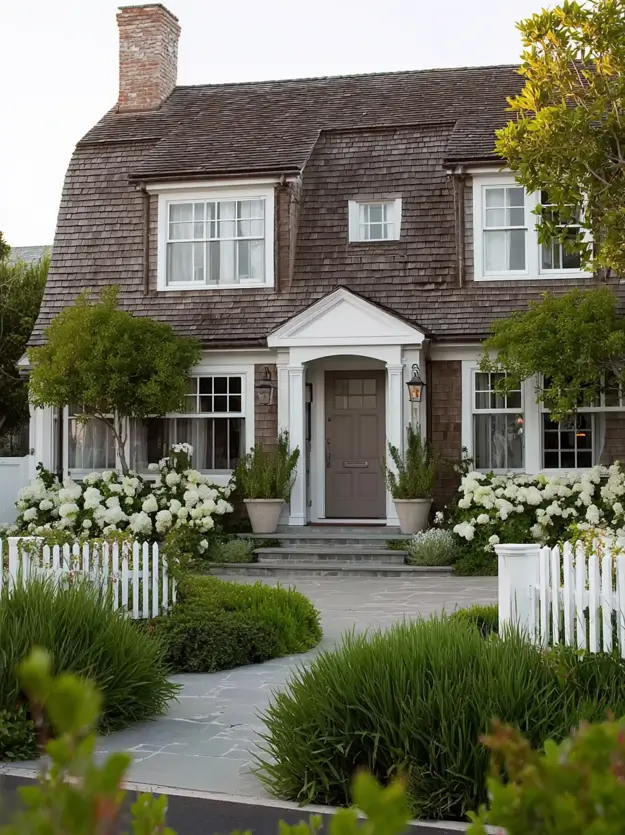
Long sweeping rooflines that pull down toward the ground borrow from older saltbox traditions. In this home, brown shake shingles flow over a wide catslide roof, framing a small pedimented portico, mauve front door, and lush hydrangeas behind a low picket fence. Reads like a storybook without trying to.
Related: 45 Charming English Cottage House Design Ideas
14. Soft Gray Symmetry
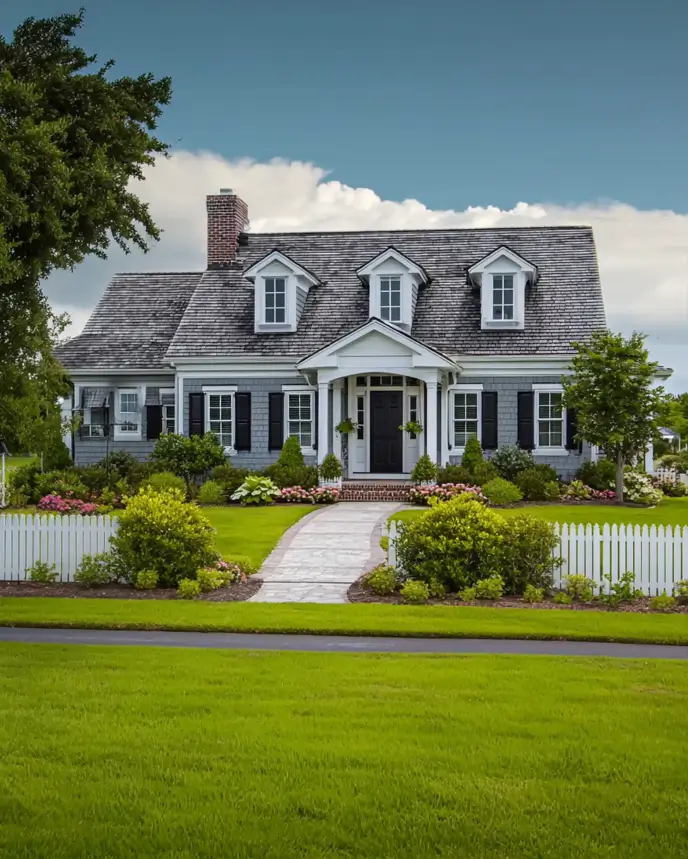
Pale gray exteriors offer a quieter alternative to the usual white-with-black palette. In many homes, light gray shake siding pairs with crisp white trim, three matching dormers, black shutters, and a pedimented portico over a dark front door. Easy on the eyes in any season.
15. Striped Window Awning
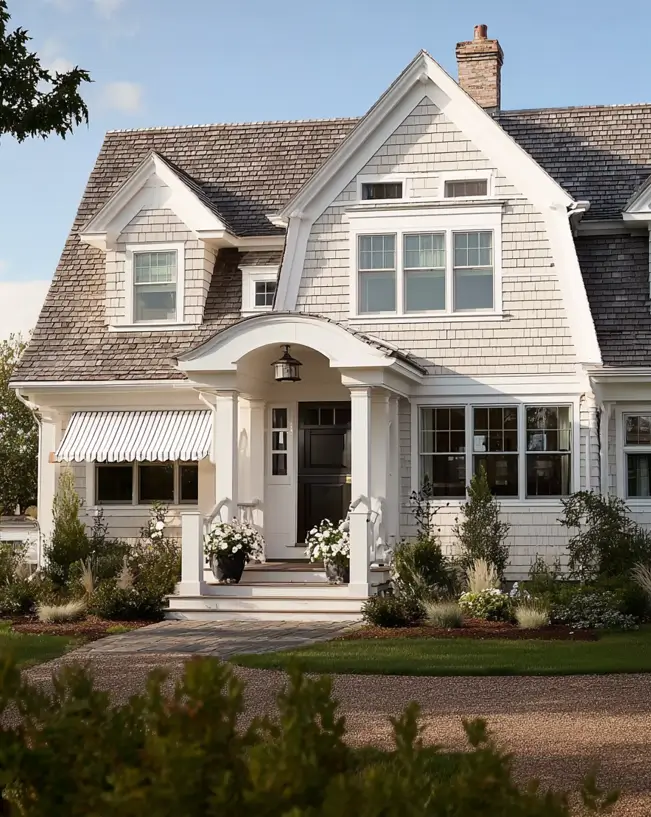
Small striped awnings can bring an unexpected layer of color and texture to a quiet facade. Here, a black-and-cream awning sits below soft white shake siding, a curved arched portico, twin gables, and a glossy black front door framed by white planters. Charmingly European without leaving New England behind.
16. Powder Blue Storybook
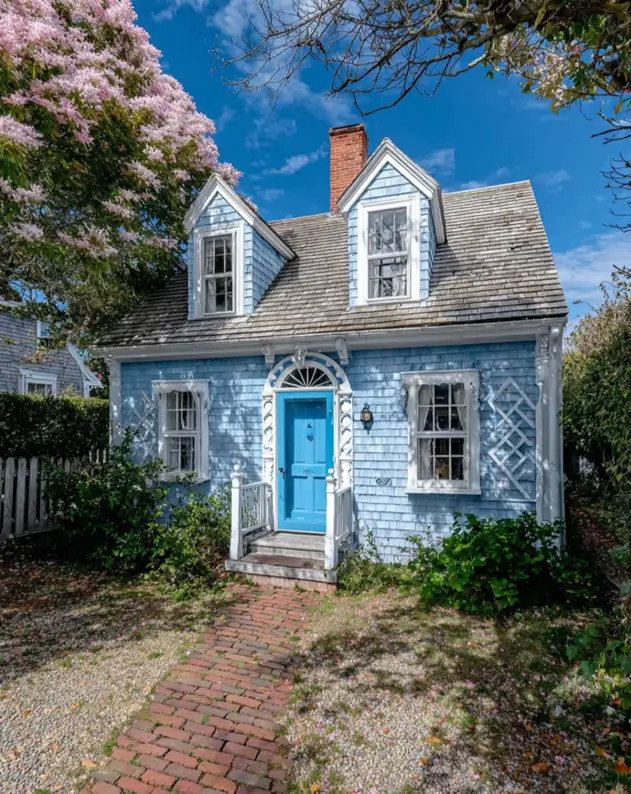
Bright pastel siding can turn even the smallest cottage into a true neighborhood standout. In this home, powder-blue clapboard meets a matching front door beneath a carved fan transom, white lattice window screens, and twin gable dormers under a weathered shake roof. The kind of front porch that gets photographed on every walk past.
17. Crushed Shell Path
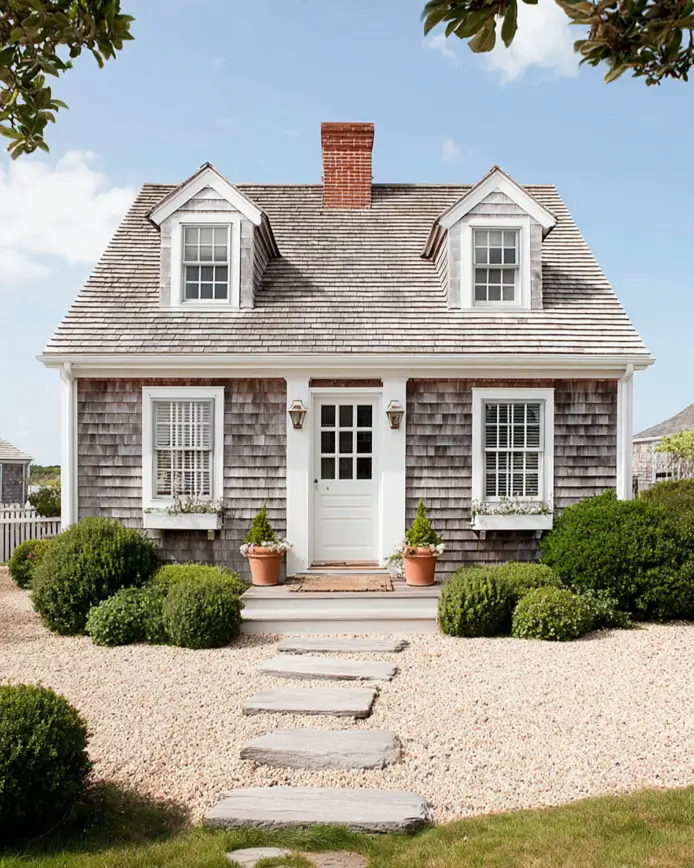
Crushed shell or pea gravel grounds replace lawn in many island settings, giving the entry a low-maintenance coastal feel. Here, weathered shake siding, two clean white dormers, lattice window screens, and bluestone stepping stones lead to a paneled white door. Effortlessly Nantucket without trying.
18. Teal Shutter Garden
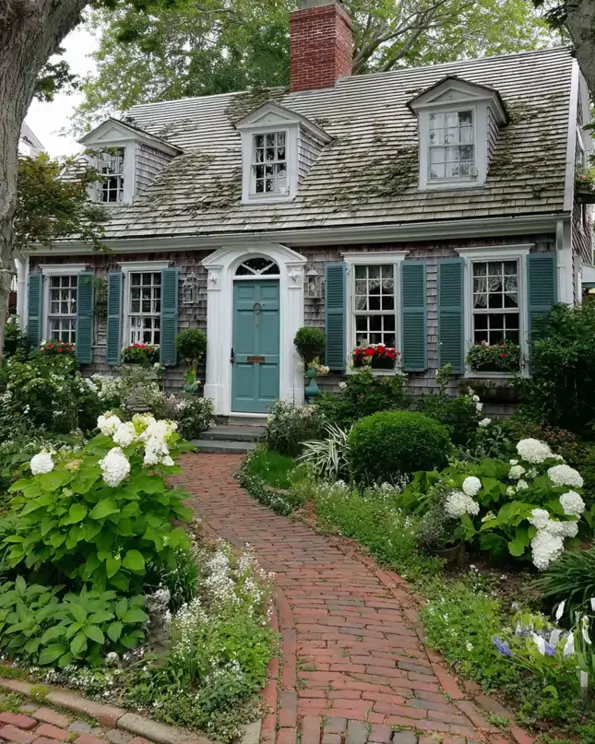
Layered cottage gardens around a small home blur the line between architecture and landscape. In this home, weathered shake siding, teal louvered shutters, three pedimented dormers, and a matching teal door sit behind a brick path winding through hydrangeas, geraniums, and trailing groundcover. A good fit when you want softness without losing crispness.
19. Mustard Door Accent
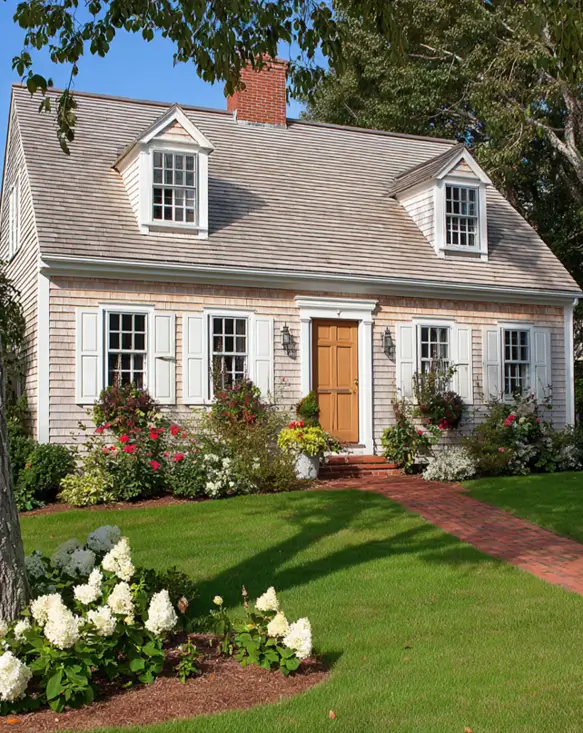
Warm earthy door colors can lift a quiet shake facade without feeling loud. Paired with creamy white shutters, two pedimented dormers, and rose-filled garden beds, this small home features a soft mustard-yellow front door at the center of a herringbone brick path. The kind of color choice that reads warmer the longer you look at it.
20. Inky Black Clapboard
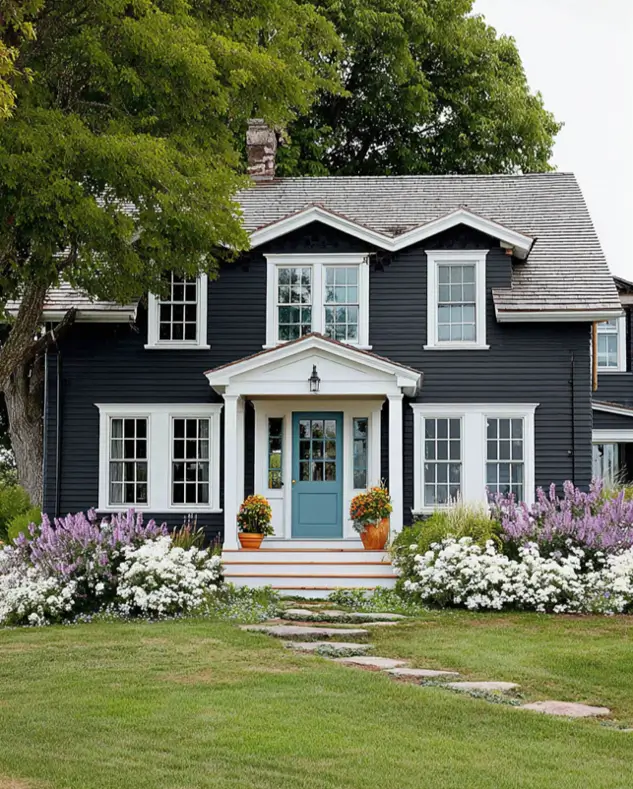
Deep near-black siding gives a familiar silhouette a confident, modern edge. In place of the usual white, this home features inky clapboard, crisp white trim, twin gables with bay windows, and a chalky blue front door surrounded by lavender, white phlox, and potted marigolds. Boldly current without abandoning the bones.
Related: Sage Green House With Black Trim
21. Slate Roof Cottage
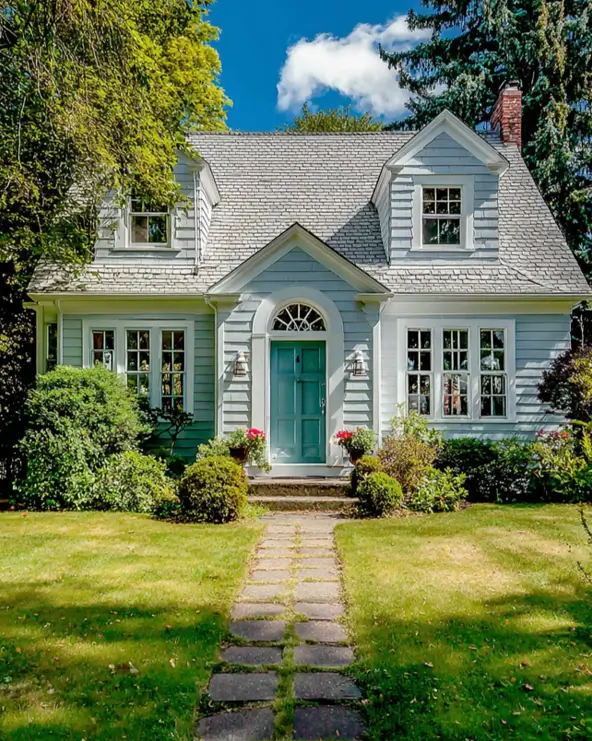
Real slate rooftops give a smaller home a sense of permanence that asphalt shingle never quite matches. In this home, light sage clapboard meets a textured slate roof, two pedimented dormers, an arched fanlight above the entry, and a soft seafoam front door. Worth the investment if you plan to stay.
22. Forest Green Shutters
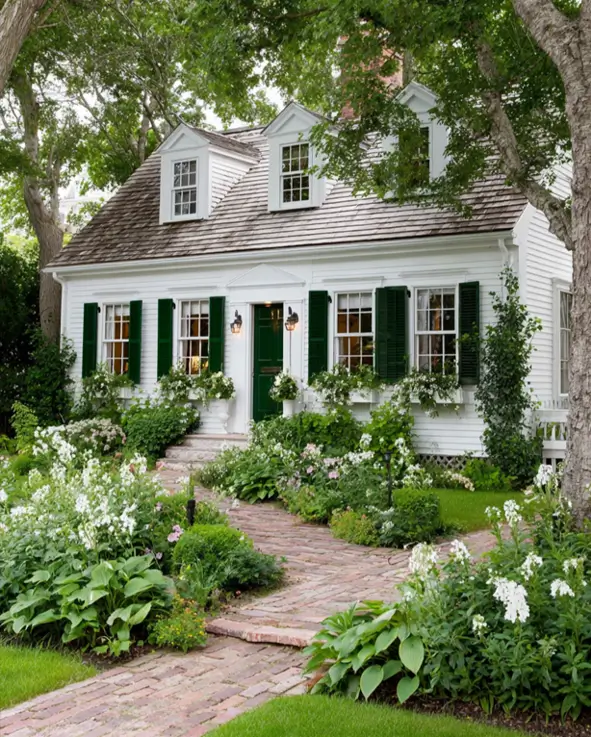
Rich green shutters bring a quiet, woodsy depth to a crisp white facade. Paired with three pedimented dormers, a small entry hood, and overflowing window boxes, this home features cottage-style brick paths winding through layered perennial beds. Romantic without leaning sweet.
23. Yellow Arched Door
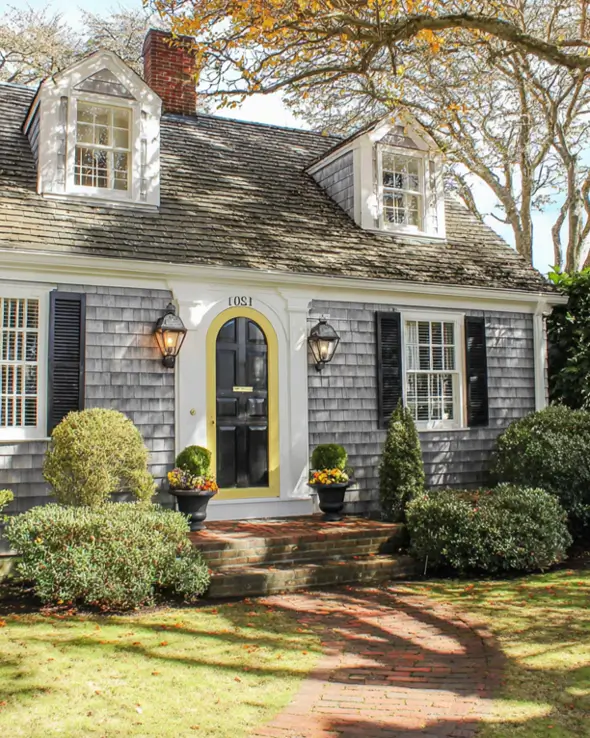
Arched doorways with bright trim turn a small entry into the focal point of the entire facade. On this cottage, gray shake siding, two pedimented dormers, and black shutters frame a tall arched black door surrounded by glossy yellow molding above brick steps and autumn-filled urns. The kind of cheerful contrast that earns a second glance.
24. Greige Modern Cottage
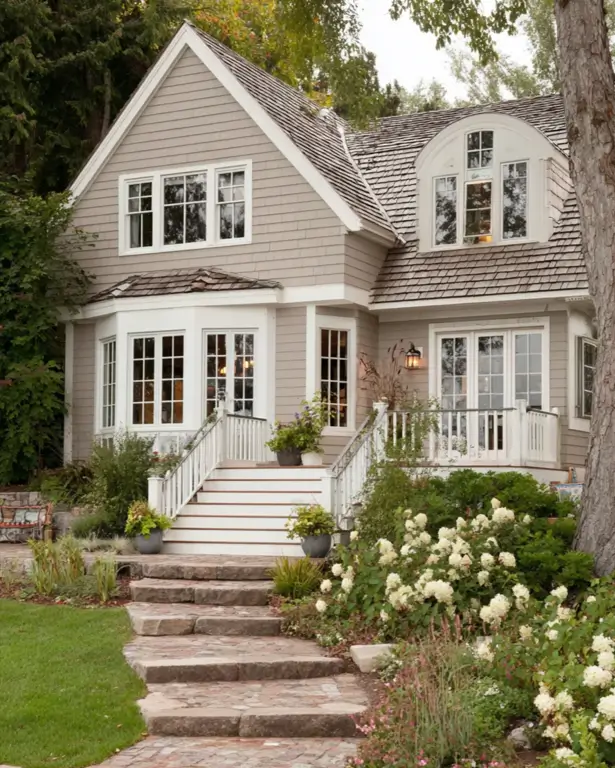
Warm greige tones bridge cool gray and earthy taupe, giving a renovated facade a soft, modern feel. Instead of a flat front, this home features layered gables, a curved barrel dormer, bay windows, white deck railings, and stone steps tucked into a hydrangea garden. Quietly elevated.
25. Buttery Yellow Facade
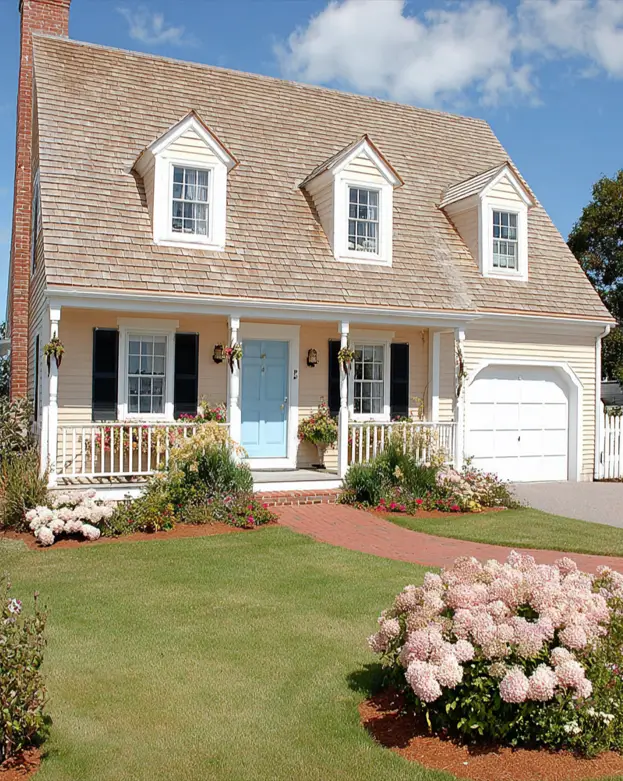
Soft buttery yellow gives a small home a sunny lift without ever feeling loud. In this home, pale yellow clapboard meets three pedimented dormers, black shutters, a sky-blue front door, and a small attached garage tied together by climbing roses and pink hydrangea beds. Cheerful in the best, easiest way.
26. Steep Front Gable
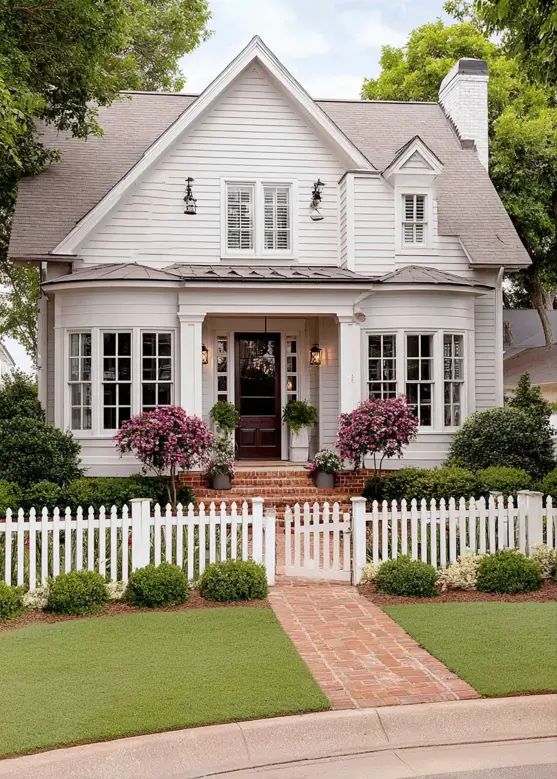
Tall front-facing gables can give a smaller home real architectural presence from the street. In many homes, this kind of pitched silhouette pairs with bay windows, a small standing-seam metal portico, and pink crepe myrtle planters framing a dark wood door behind a white picket gate. Adds vertical drama without adding scale.
27. Wisteria Arched Entry
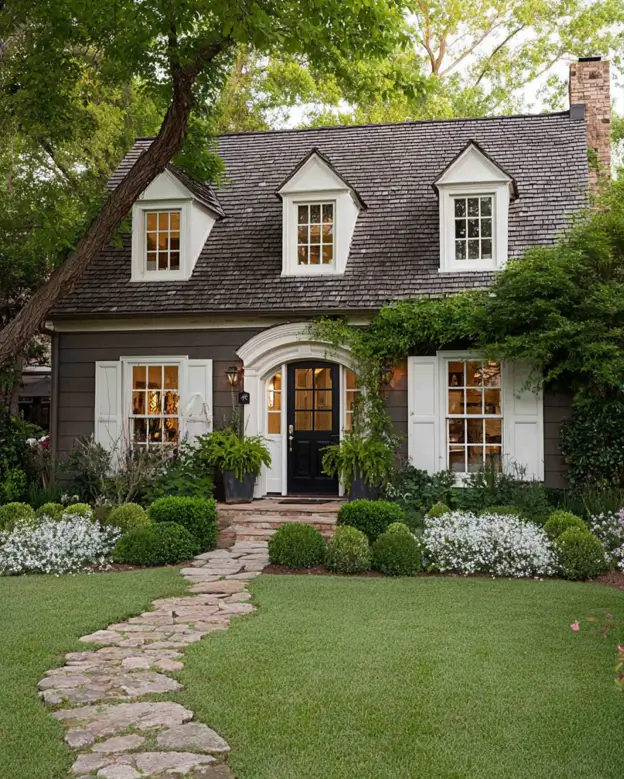
Climbing wisteria around an arched entry can soften even the moodiest exterior into something romantic. On this entry, deep taupe siding meets three pedimented dormers, white shutters, and an arched-top black door framed by tumbling vines, fern planters, and white candytuft along a flagstone path. Hard not to slow down for.
What Defines a Cape Cod Style House
A Cape Cod style house is a one or one-and-a-half story home with a steep side-gabled roof, a centered front door, and a symmetrical facade. The style comes from 17th-century New England, built to handle harsh coastal weather — many of the earliest examples are still documented in the Library of Congress archives. Cedar shake or clapboard siding, a central brick chimney, and multi-paned shuttered windows are the most common features.
Trim is usually white, with shutters in black, dark green, or navy. Many homes have gabled, shed, or eyebrow dormers tucked into the front roof slope — though early colonial Capes didn’t have them at all. In older homes, you’ll often notice the shutters are slightly off-square; they were hand-built, and that imperfection is part of the charm.
Cape Cod Style Variations
Capes come in three main sizes, and the names are still in everyday use today.
Half Cape. The smallest version. Two windows on one side of the front door, with the door pushed off to the other side. Originally built first and added onto later as families grew.
Three-quarter Cape. One window on one side of the door and two on the other. Slightly asymmetrical, often the most charming of the three.
Full Cape. Two windows on each side of a centered door. The most balanced and what most people picture when they imagine a Cape Cod home.
You’ll usually find half and three-quarter Capes in older New England towns and full Capes in postwar suburbs across the country, where the symmetry suited new construction.
Cape Cod vs Colonial House
Cape Cods are technically a kind of Colonial, but they’re shorter, simpler, and have steeper roofs.
A Cape Cod is usually one or one-and-a-half stories with a low, wide footprint. A Colonial is typically two full stories — taller, more formal, with the upstairs rooms tucked behind a less steep roof. Cape Cods feel cottage-like; Colonials feel grander.
Detail is the other clue. Colonials often have pediments, columns, dentil molding, and fanlights over the front door — much like the Tudor and Victorian traditions. Cape Cods are spare by comparison — a paneled door, plain trim, and shuttered windows are usually the only ornament.
If the upstairs rooms tuck under a sloping ceiling, it’s a Cape. If they’re full-height with their own windows, it’s a Colonial.
Modern Cape Cod House Design
Modern Cape Cod house design keeps the front faithful and lets the back do the modernizing. The traditional silhouette stays in place, while larger windows, glass doors, and contemporary additions open up the rear without changing curb appeal.
Inside, walls have come down. Original Capes had small rooms around the central chimney; today’s renovations open the kitchen, dining, and living spaces into one connected layout. Knocking down interior walls often reveals the chimney is structural — worth knowing before plans get drawn.
Materials have shifted too. Cedar shake is still common, but fiber cement shingle is a popular alternative for its longer-lasting finish. Black-framed windows, standing-seam metal accents, and open floor plans are the details you’ll often see on a current Cape renovation — design moves the style now shares with modern Scandinavian and Mid-Century updates.
What to Know Before Choosing a Cape Cod Style
Cape Cods work well in many regions, but a few practical things are worth thinking through.
Climate matters. The steep roof handles snow and rain well, which is part of why the style is so common in New England. In hotter climates, the same shape can feel out of place.
Size shapes the layout. Half and three-quarter Capes work well on smaller lots. Full Capes need a wider footprint to keep the symmetry, and upstairs rooms tend to feel tighter than a true two-story home.
Materials affect maintenance. Cedar shake silvers slowly and looks better the older it gets, though the trim usually needs touching up. Painted clapboard holds its color longer between coats. Fiber cement looks similar to either and asks less of you over the years. In coastal areas, salt air shortens the life of any painted finish — many homeowners eventually let the shake silver naturally.
Dormers add cost. Built into new construction, they’re easier and cheaper. Added later, they often involve roof and structural work — and the cost of installing dormer windows varies widely depending on scope.
Garage placement is tricky. A side-set or detached garage usually works better than one flush with the main facade.
Common Cape Cod Design Mistakes
A few things tend to come up when homeowners renovate or build Cape Cod homes.
Shutters that are too small. Cape shutters look right when they’re sized as if they could close over the window. Half-width shutters tend to look off — most people can’t say why, but they feel it.
Oversized dormers. Dormers that sit too tall or too wide for the home look like they’re sitting on top of the roof rather than belonging to it. Smaller, evenly spaced ones feel more balanced.
Mismatched window grilles. Plain replacement windows next to the original divided panes tend to make a renovation look dated faster than it should. Matching the grille pattern across the facade keeps the look cohesive.
Painting an original brick chimney. Hard to undo — most homeowners who’ve done it say they’d leave it raw if they could go back.
Front-facing garages. A three-car garage flush with the front of a Cape often breaks the proportions. Setting it back, turning it sideways, or detaching it usually keeps the symmetry intact.
Heavy front landscaping. Capes look best with simple front yards. A picket fence, some hydrangeas, and a clear walkway feel more right than dense, layered planting.
Cape Cod Style House FAQs
What is a Cape Cod style house?
A Cape Cod style house is a one or one-and-a-half story home with a steep gable roof, a centered front door, and a symmetrical facade. The style comes from 17th-century New England. Cedar shake or clapboard siding, a central brick chimney, and multi-paned shuttered windows are the most common features.
What’s the difference between a Cape Cod and a Colonial house?
A Cape Cod is a smaller, lower-profile cousin of the Colonial. Cape Cods are usually one or one-and-a-half stories with a steep roof and minimal ornament. Colonials are typically two full stories with more decorative trim, columns, and pediments.
What’s the difference between a half Cape and a full Cape?
A half Cape has two windows on one side of the front door. A three-quarter Cape has one window on one side and two on the other. A full Cape has two windows on each side of a centered door — the most symmetrical and most common version of the style today.
How much does a Cape Cod renovation cost?
Renovation costs vary widely depending on scope and the home’s age. Cosmetic updates — paint, shutters, landscaping, a refreshed front door — usually sit at the lower end. The bigger line items tend to be dormer additions, chimney repointing or repair, roof replacement, and updates to original electrical or plumbing systems in older Capes.
Can a Cape Cod house feel modern?
Yes. Modern Cape Cod house design often keeps the front traditional and updates the back with larger windows and glass doors. Black-framed windows, charcoal shingle, and open interior layouts are common updates that feel current without changing the home’s silhouette.

