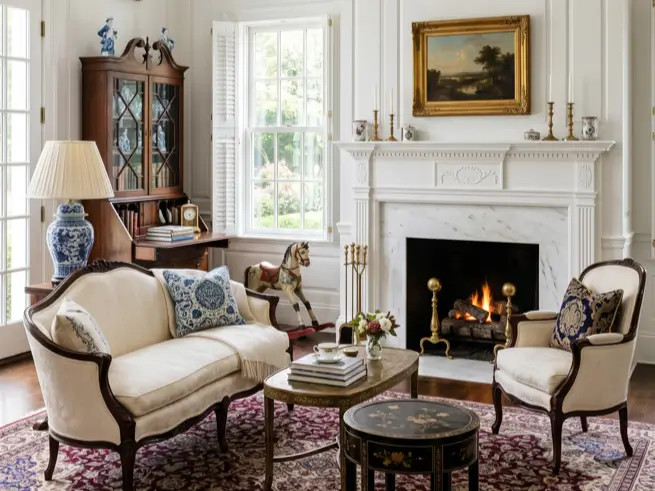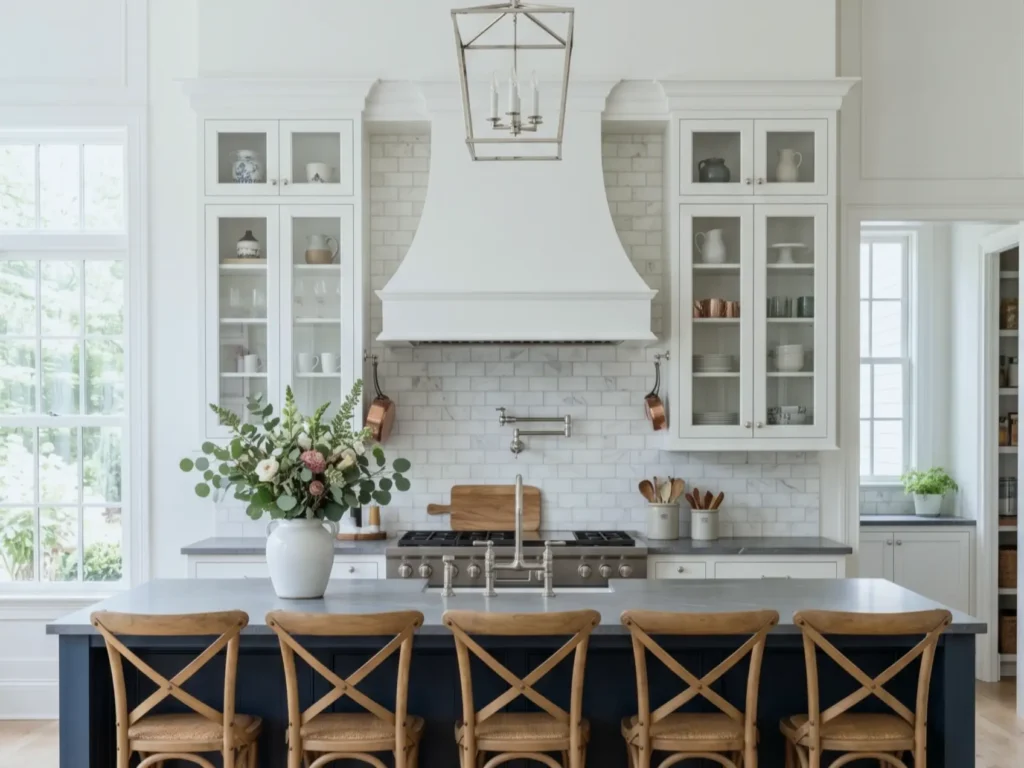

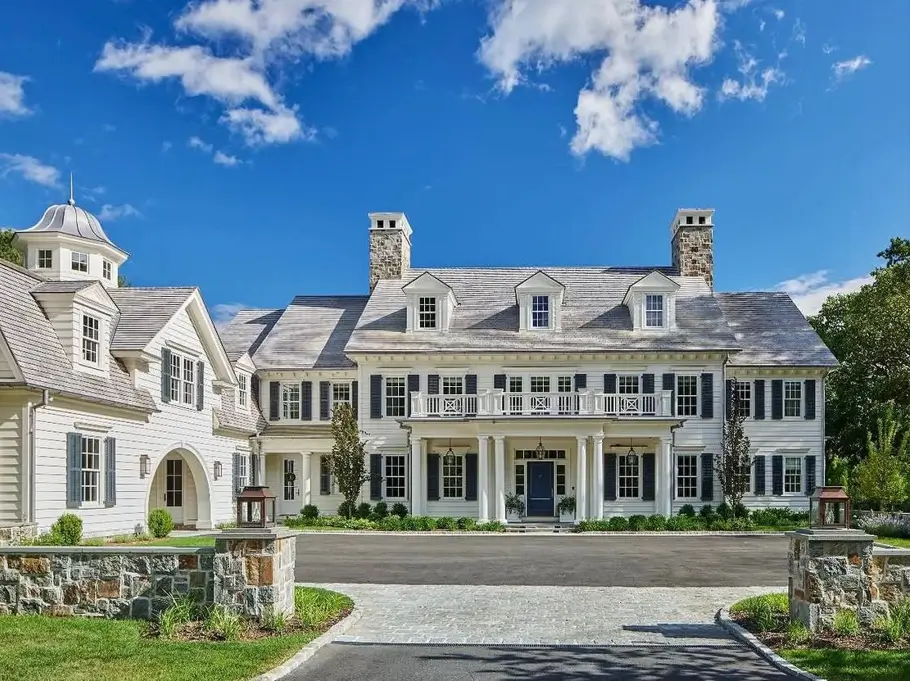
Drive through almost any older neighborhood on the East Coast, and you’ll spot them right away — symmetrical fronts, a centered door, evenly spaced windows on either side. That quiet order is what makes Colonial homes feel so easy to live in. They’ve been around for centuries, yet they still look current on a tree-lined street.
Colonial house design covers more ground than most people realize. You’ll find Georgian Colonials in red brick, Dutch Colonials with gambrel roofs, Spanish Colonials in white stucco, Cape Cods tucked low under steep dormers, and plenty of softer Colonial Revival homes that feel right at home on a quiet suburban street. The shapes stay familiar, but the details — shutters, columns, painted brick, deep porches — are where each home starts to feel personal.
The 45 ideas ahead cover faithful restorations, softer regional variants, and homes that take a more modern turn with the style.
1. Classic White Exterior
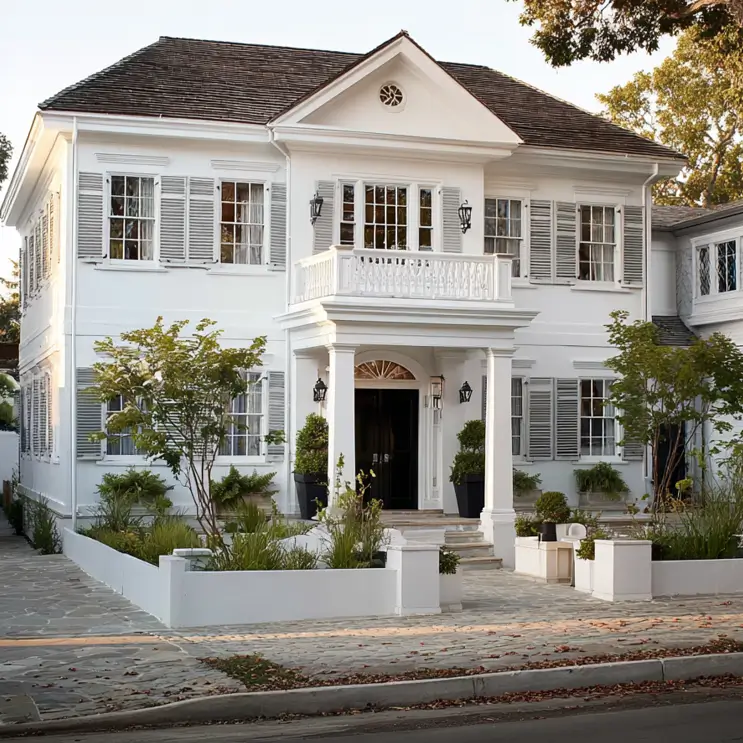
Symmetry is what gives this front its calm. Twin white columns frame a deep portico, louvered shutters line up evenly on either side, and the whole composition feels balanced from the curb. The small second-floor balcony keeps it from reading too formal.
2. Three Dormer Facade
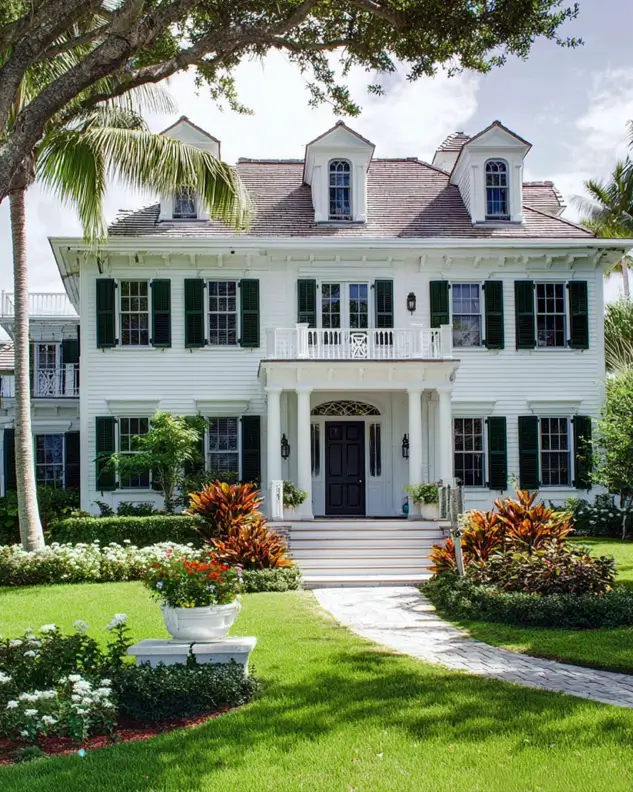
Dormers add real character to what might otherwise feel like a flat roofline, and budgeting for them is worth thinking through early — the cost of installing dormer windows varies widely depending on whether they’re functional or purely aesthetic.
Three matching ones sit above dark green shutters that pop against white clapboard — the kind of high-contrast pairing that ages well. The tropical garden softens the front without competing with the architecture.
3. Covered Front Porch
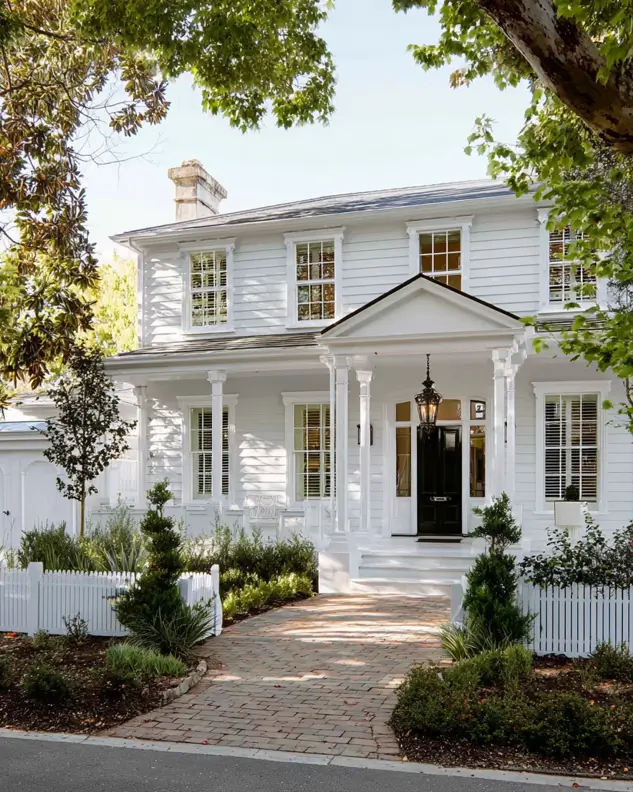
Front porches soften a symmetrical facade and make a home feel approachable from the street. Slim white columns frame a small pediment over the door, with a hanging lantern lighting the entry. For everyday living, a covered porch beats an open stoop every time.
4. Black Shutter Symmetry
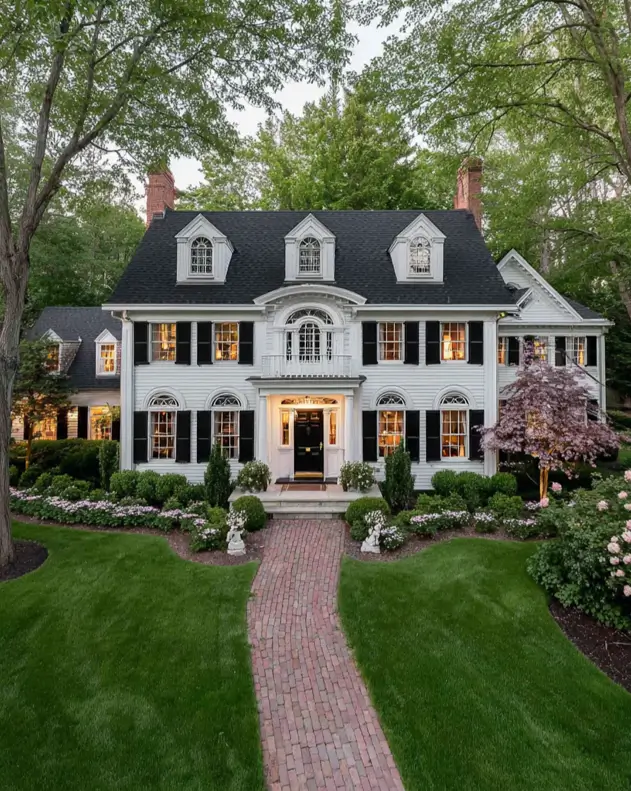
Black shutters against white siding are one of those combinations that refuses to go out of style. The high contrast here is paired with arched window crowns and twin brick chimneys — small moves that add depth without fuss. Grounded, classic, and easy to live with.
Related: White Farmhouse With Black Trim: 34 Ideas for a Timeless Exterior
5. Red Brick Classic
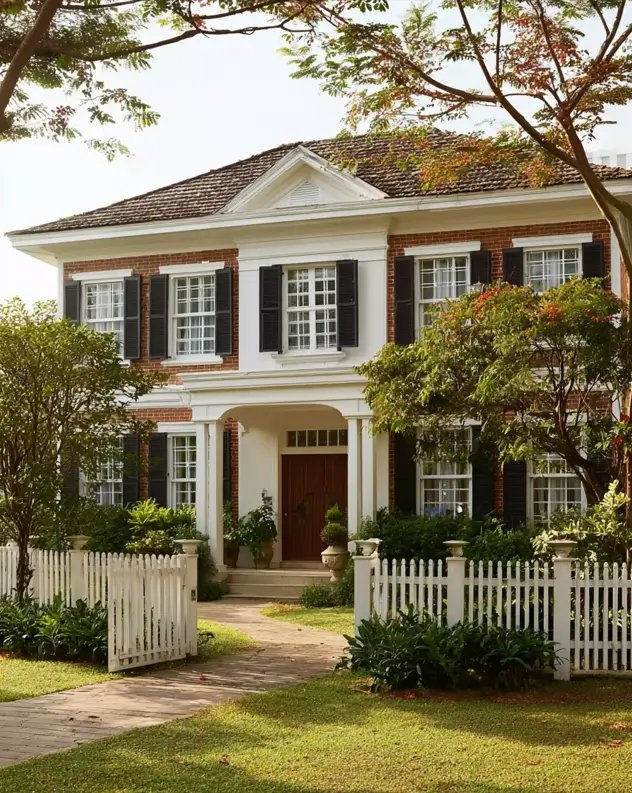
Red brick gives a home a steady, rooted feel that holds up across every season. Crisp white trim, dark shutters, and a pedimented portico frame the front door without trying too hard. Worth borrowing for any traditional facade.
6. Historic Village Charm
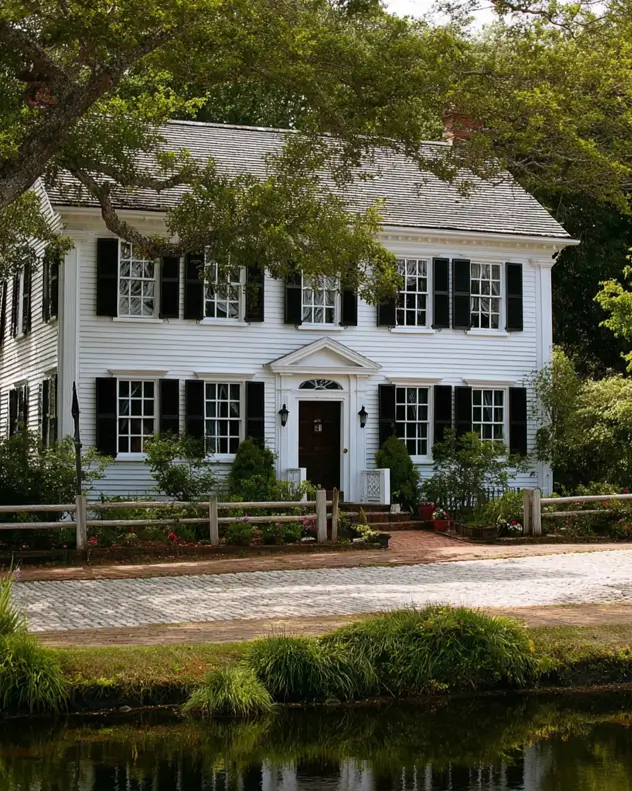
Older Colonials often sit closer to the street than modern builds, with rustic fencing instead of formal landscaping. Weathered shake roofing and a split-rail fence give this one a settled, lived-in feel you can’t fake with new construction. That patina is earned.
7. Decorative Eave Brackets
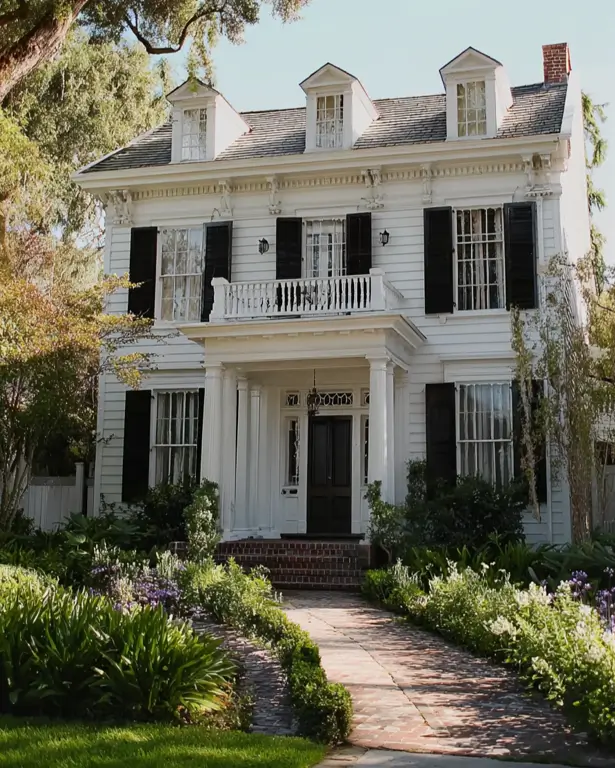
Trim details under the roofline can quietly elevate a traditional facade. Ornate brackets line the eaves here, pairing with classical columns and a small upper balcony for added depth. Mature trees and a soft garden finish the frame.
8. Soft Cream Facade
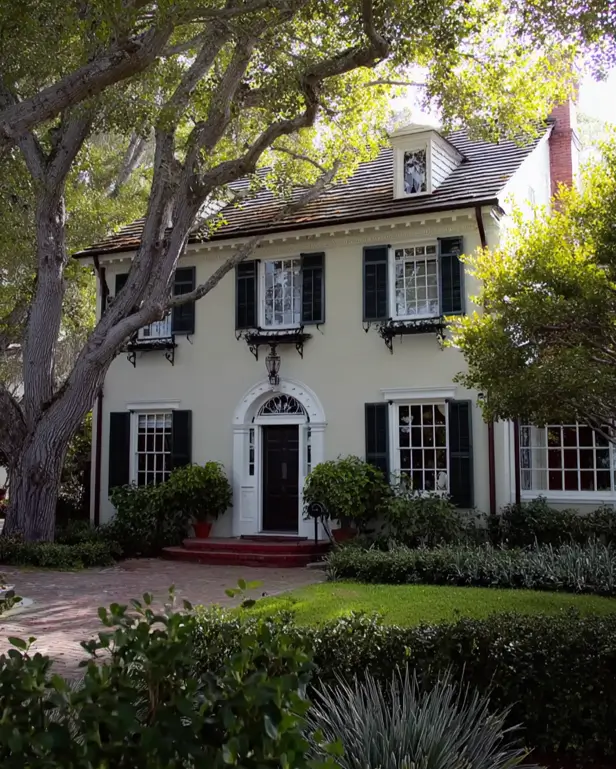
Cream exteriors feel softer and more sun-washed than pure white, especially under mature trees. Dark shutters and an arched fanlight over the door add quiet contrast against the warm walls. A good choice for homes that lean traditional without wanting to shout about it.
Related: 32 Cream and Black House Exterior Ideas for Timeless Curb Appeal
9. Soft Gray Shutters
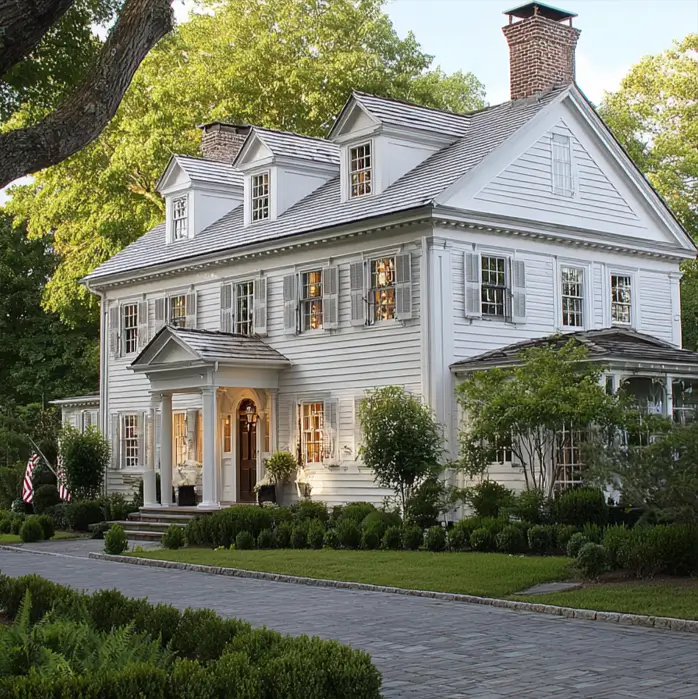
Lighter shutter colors take some of the weight off a large facade. Pale gray louvered panels sit against white siding here, with twin brick chimneys anchoring the roofline. A softer take on the usual black-on-white pairing — and often the better choice for homes that already feel formal.
10. Shutter-Free Facade
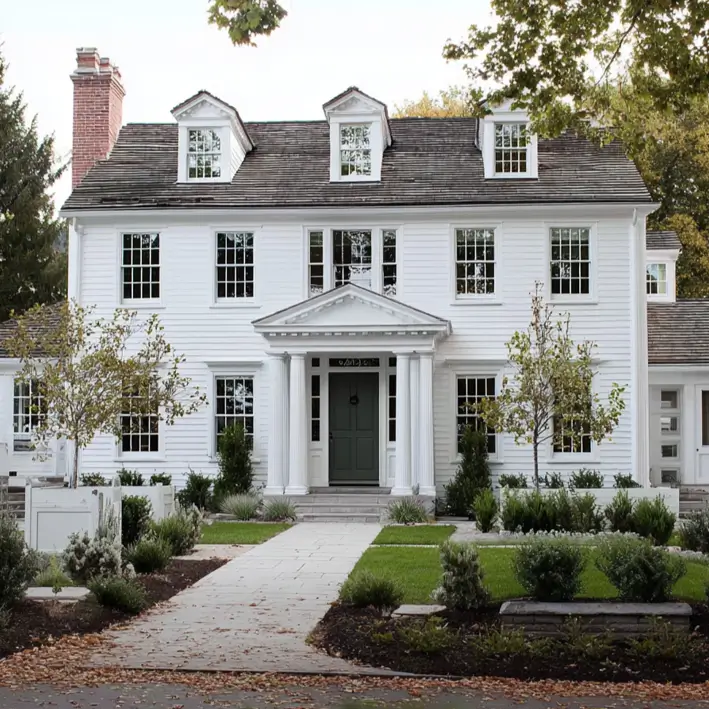
Skipping shutters gives a Colonial facade more breathing room. Rather than dark louvered panels, this home leans on tall windows, a sage green door, and a small pedimented portico. Not every Colonial needs shutters to look like one.
11. Spanish Colonial Style
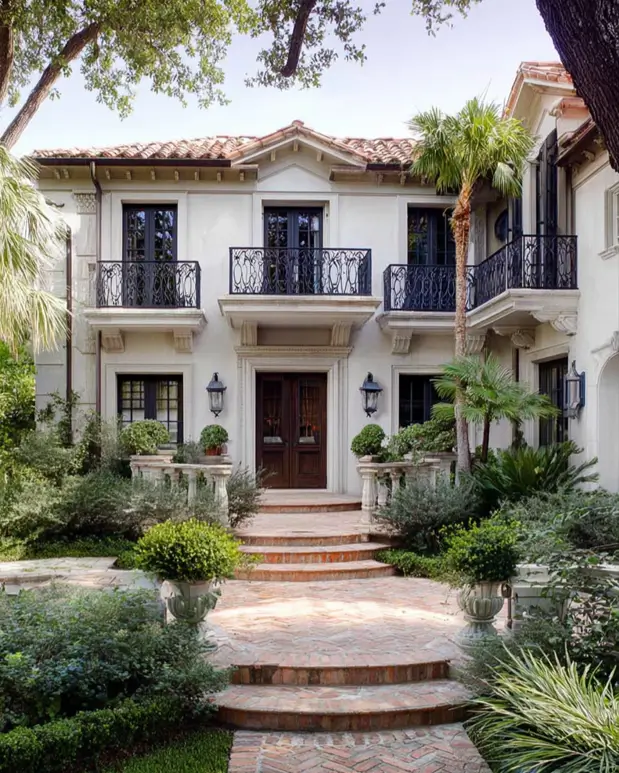
Stucco walls and a clay tile roof shift the whole mood warmer and more relaxed. Iron Juliet balconies, wood double doors, and palm trees complete the look on many Spanish Colonials. The entry here feels layered without being heavy.
12. Dutch Gambrel Roof
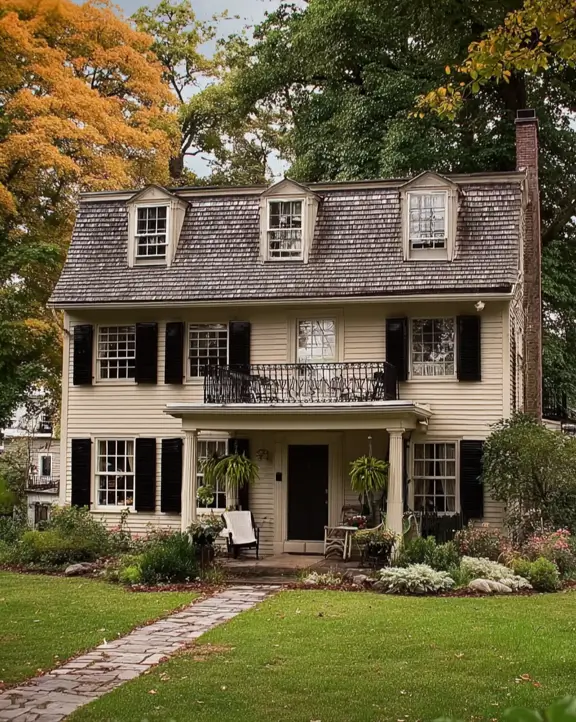
The gambrel roofline sets a Dutch Colonial apart at a glance. The steep lower slope opens up real upstairs living space, with three dormers tucked neatly into the cedar shakes. For families, that extra usable second floor is the whole point of the style.
13. Federal Style Grandeur
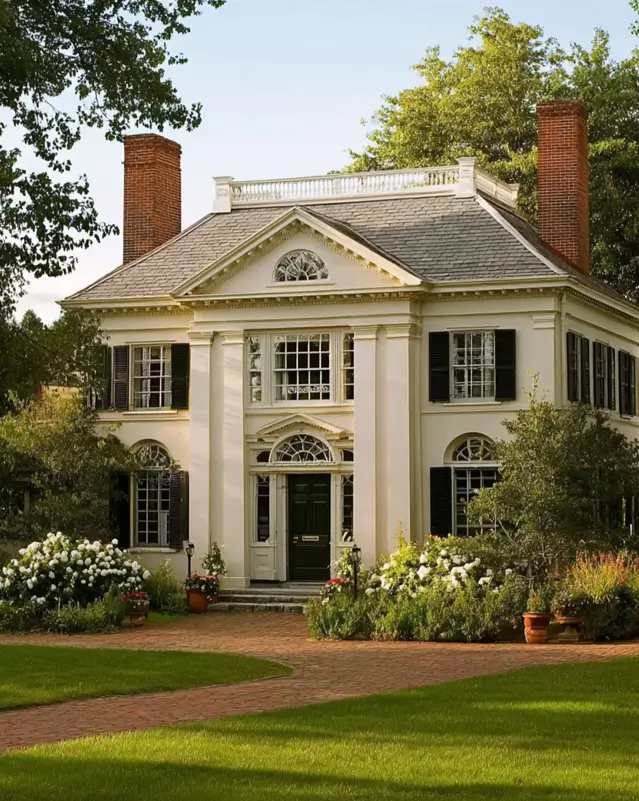
Federal-style homes lean more formal than other Colonials. Bold central pediments, tall brick chimneys at each end, and a Palladian window above the door are the signatures. Full-height columns and a rooftop balustrade push the formality even further.
14. Arched Entry Portico
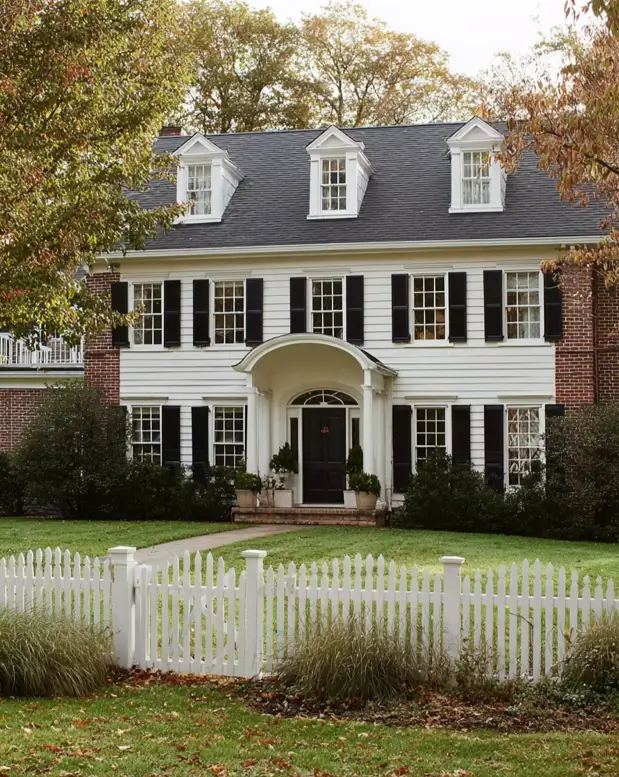
Curved porticos give a Colonial facade a softer focal point than the straight-edged version. A graceful arch frames the front door here, balancing the strict symmetry of black shutters and white clapboard. Autumn trees make the whole front feel especially warm.
15. Curved Brick Portico
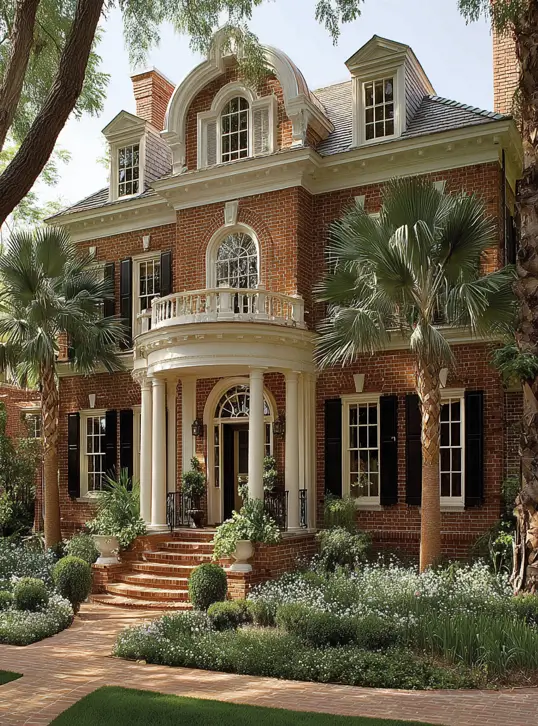
Rounded entry porticos turn a brick facade into something more memorable. Slim columns curve around the front steps, framed by a Palladian window and an eyebrow dormer above. Grand without feeling heavy — a careful balance on a facade this size.
16. Stone Wing Addition
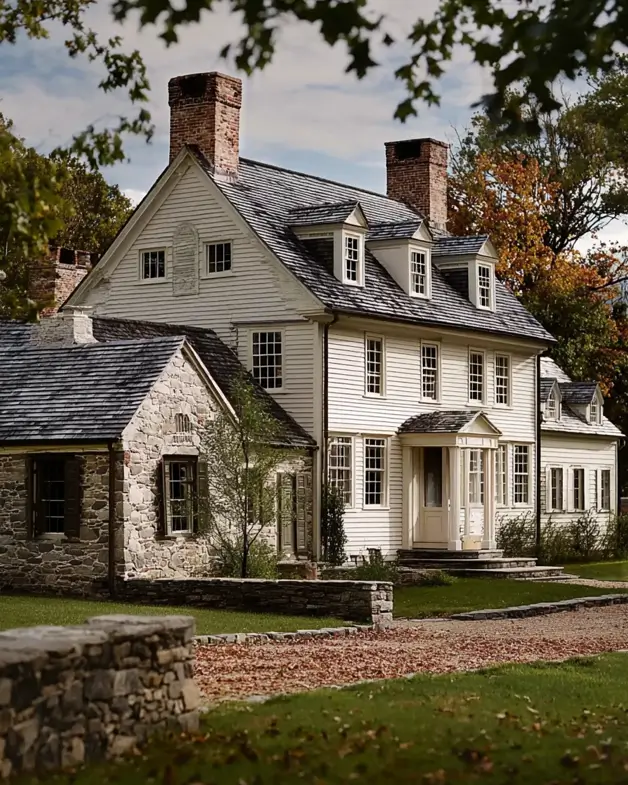
Older Colonials often grew over time, picking up stone wings and side additions as families expanded — a pattern shared with many stone cottage homes across the Northeast. A stone outbuilding sits beside the main clapboard house here, with twin brick chimneys rising above the steep gable roof. The rooted, layered feel is something new builds rarely achieve.
17. Whitewashed Brick Look
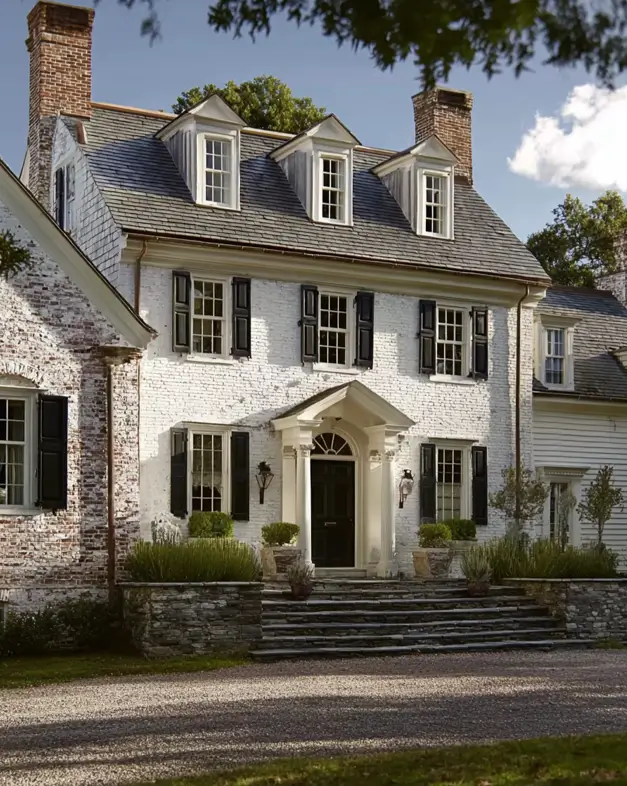
Limewashed brick lets the original red show through, giving an older home a softer, weathered finish. Three pedimented dormers and black shutters keep the look grounded above a stacked stone retaining wall. Worth knowing: limewash is breathable and can be reversed over time, unlike a full paint job.
18. Conservatory Side Wing
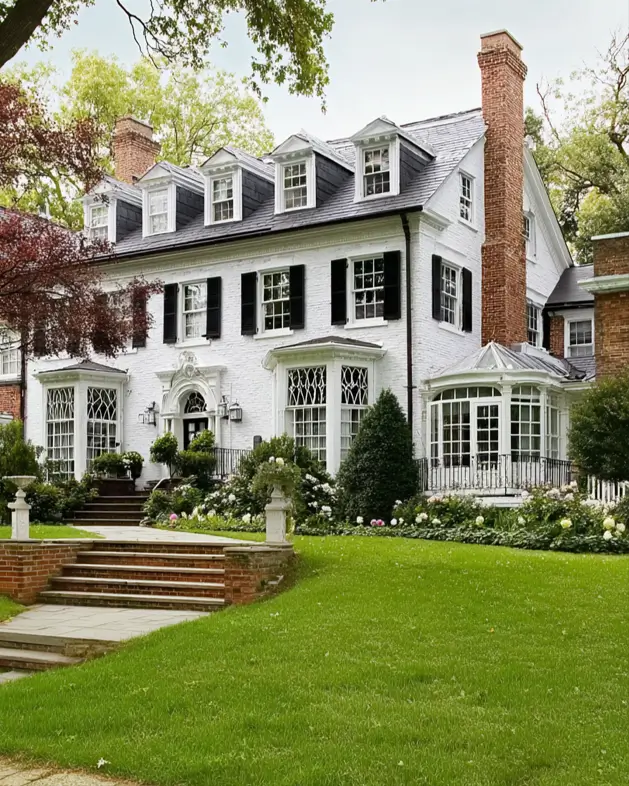
Glassed-in side rooms add light and softness to a heavier brick facade. A conservatory wing balances the formal painted-brick main house here, with leaded windows and an ornate carved entry pediment adding quiet interest. Generous without feeling overscaled.
19. Bay Window Extension
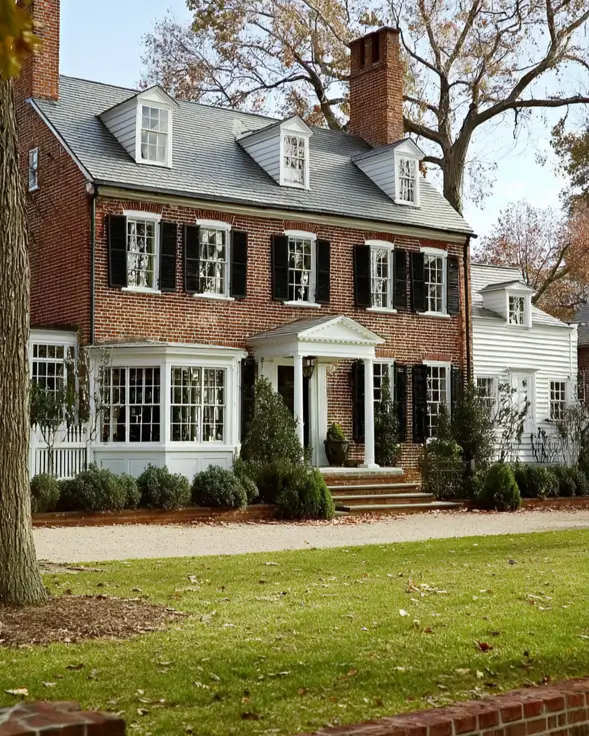
Bay windows bring extra light into the front rooms and break up a flat brick facade. A generous white-paneled bay sits beside the entry here, balanced by a clapboard side wing and three pedimented dormers. The proportions feel lived-in rather than forced.
20. Mustard Yellow Walls
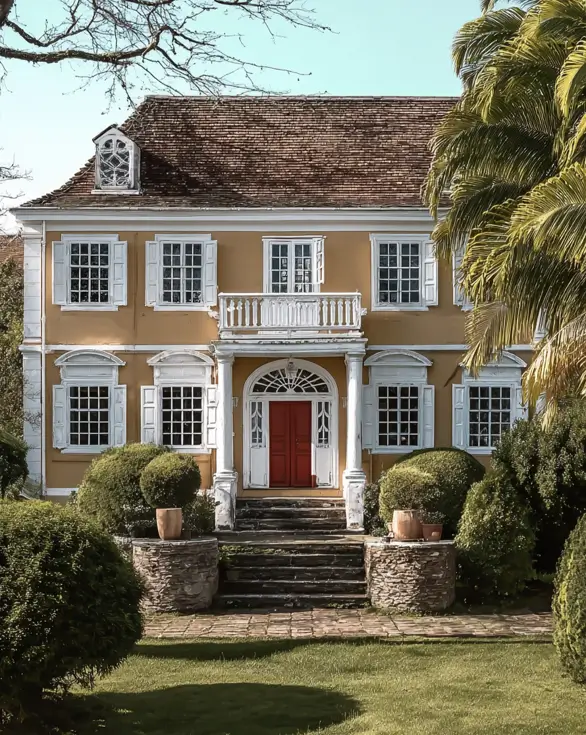
Warm yellow exteriors show up often in French Colonial and Caribbean homes, where bold color suits the climate. Mustard stucco pairs with white batten shutters, a red front door, and a weathered tile roof here. Sun-soaked and confident — a harder palette to pull off in cooler northern light.
21. Coral Brick Facade
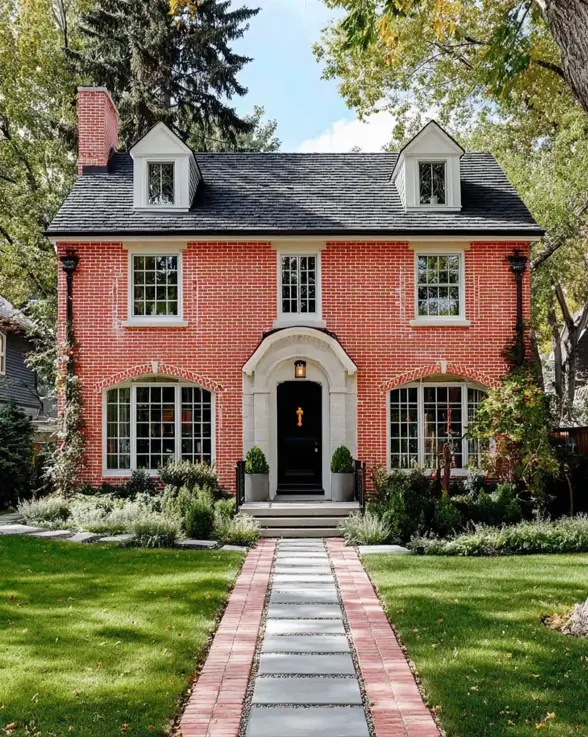
Brighter brick tones lift a Colonial out of its formal mood and into something fresher. Coral-toned brick is paired here with stone-arched windows, a recessed entry, and modern stepping-stone walkways. The whole front feels approachable — less corporate-law-firm, more family home.
22. Cedar Shake Siding
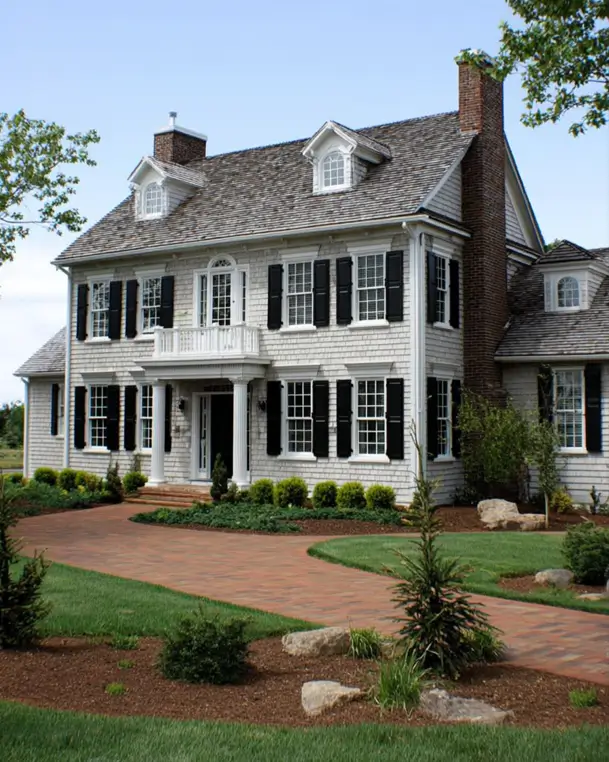
Cedar shakes give a Colonial a softer, more textured look than smooth clapboard, and they weather gracefully over time. Weathered shingles wrap the entire facade here, with a small Juliet balcony tucked above the entry portico.
For homeowners weighing siding alternatives, board and batten siding offers a different textured look with its own character. In coastal settings, the silvering that happens naturally is often the goal.
23. Stone Veranda Facade
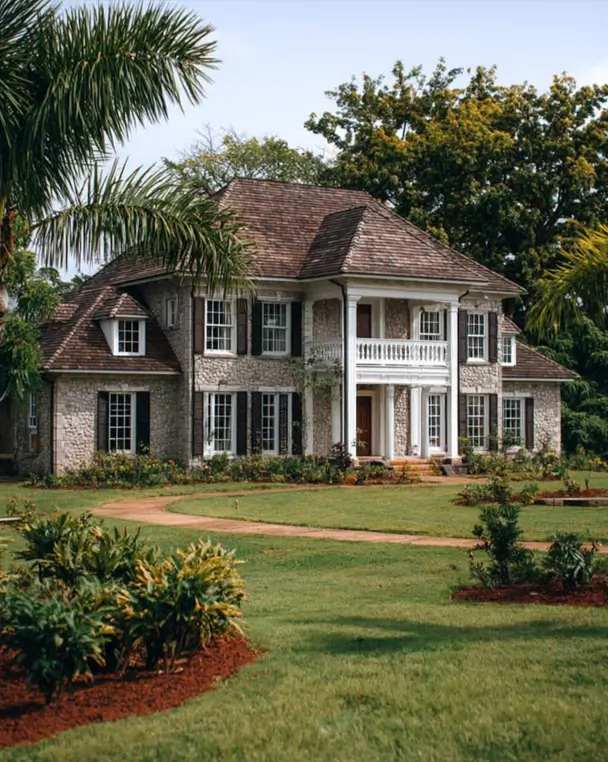
Deep balconies and full-height columns work hard in warmer climates, keeping the front rooms cooler and the entry shaded. A stone-walled facade pairs with brown louvered shutters and a hipped tile roof, framed by tall palms. The composition borrows from classical Colonial cues but adapts for tropical living.
24. Asymmetrical Modern Take
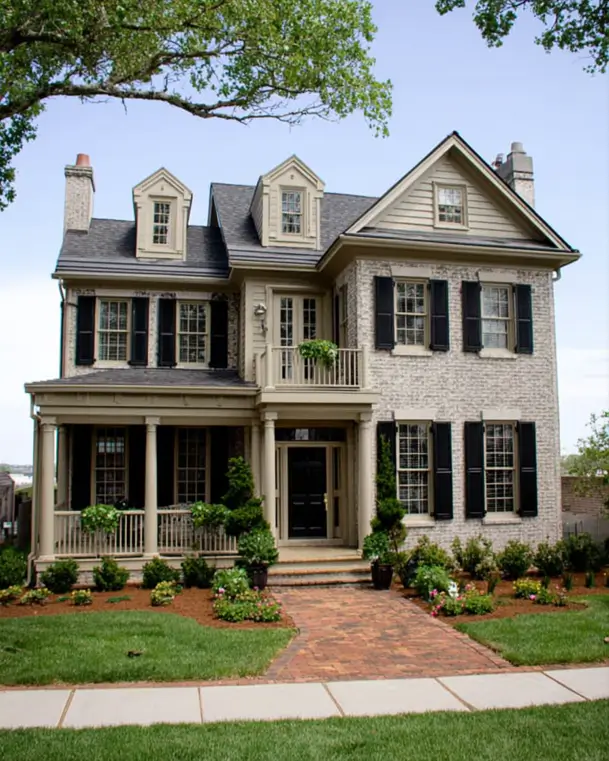
Modern Colonials sometimes break the strict symmetry rule, balancing the front in less expected ways. A side covered porch sits beside a small Juliet balcony here, with painted taupe brick keeping the palette quiet. For narrower lots, this kind of flexibility often works better than forcing full symmetry on a tight footprint.
25. Dark Painted Exterior
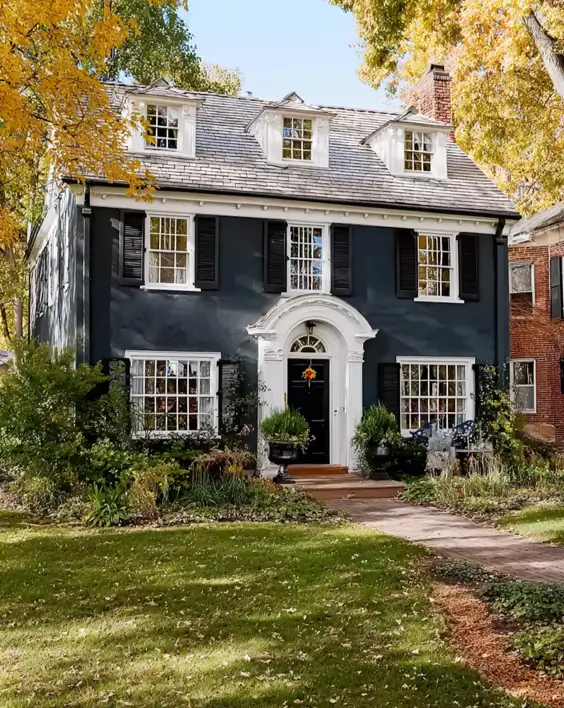
Dark paint colors give a Colonial home a sharper, more modern look without touching its bones. Deep charcoal walls here make the white trim, broken pediment, and small dormers stand out even more. Striking against fall leaves — less forgiving in harsh summer light, which is something to think about before committing.
26. Weathered Island Cottage
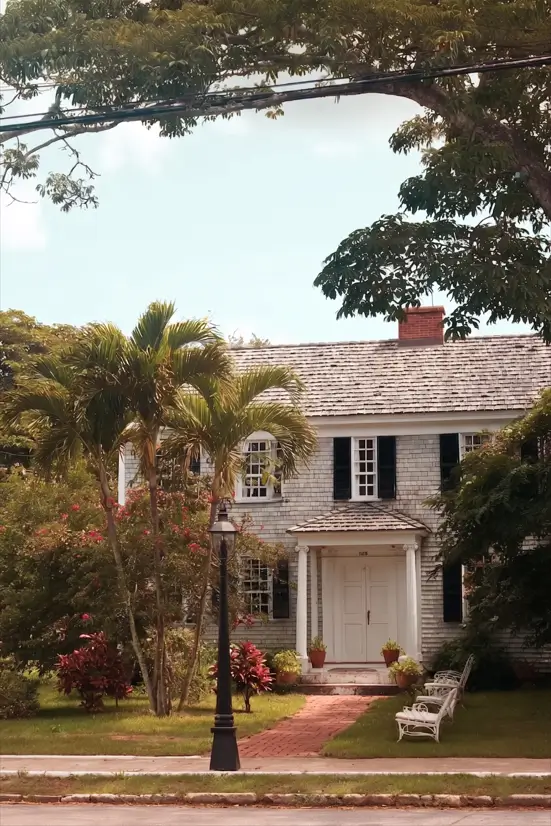
Colonials in salt-air climates lean lighter and more weathered, with shingles that fade beautifully over time. Sun-bleached shake siding, white double doors, and a small shingled entry hood feel right at home among palms. The breezy simplicity is deliberate — ornate detailing doesn’t hold up well in coastal humidity.
27. Sage Green Cottage
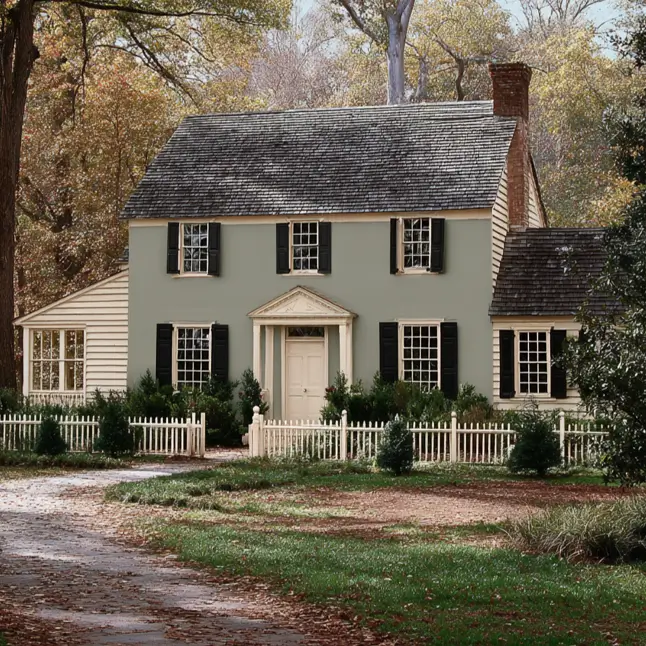
Painted Colonials in soft greens feel rooted in the landscape, especially in wooded settings. Sage walls sit between two lighter cream wings, with black shutters keeping the look classic. Cozy in a story-book way — and a color that reads well year-round, unlike some of the trendier greens.
28. Waterfront Coastal Colonial
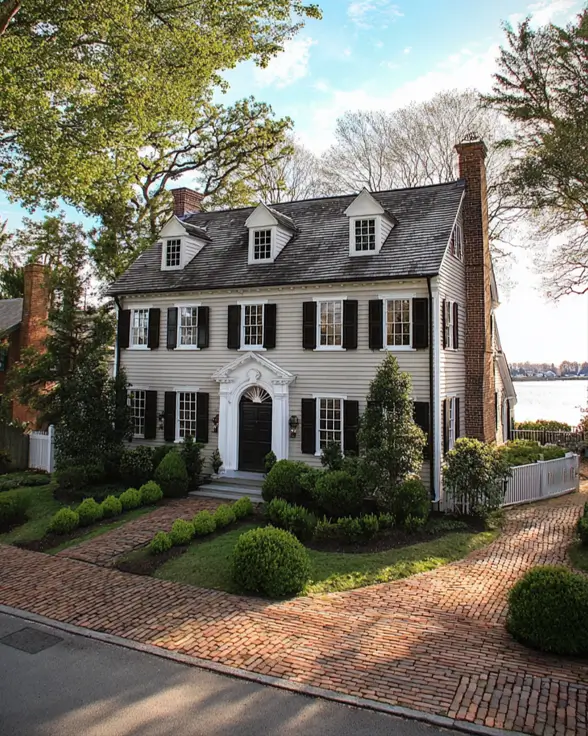
Coastal Colonials often sit on smaller lots and lean vertical to take advantage of the view. Cream clapboard walls and twin chimneys frame an ornate sunburst entry, with a brick driveway curving toward the water. On a shoreline lot, that kind of verticality often makes more sense than sprawling outward.
29. Two-Story Front Portico
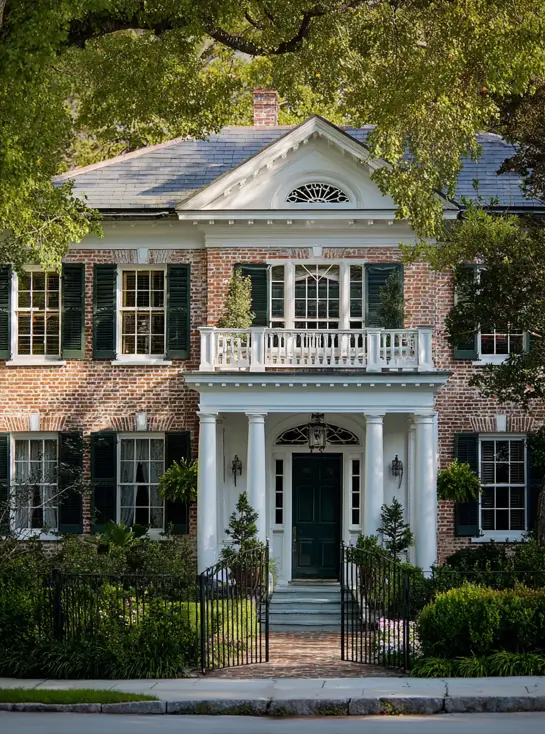
Two-story porticos give a Colonial real grandeur from the curb, especially on a brick facade. Full-height columns support a pediment with a fanlight oculus, paired with a forest green door and matching shutters. The palette reads distinctly Southern — think Charleston, Savannah, or Wilmington.
30. Bold Red Shutters
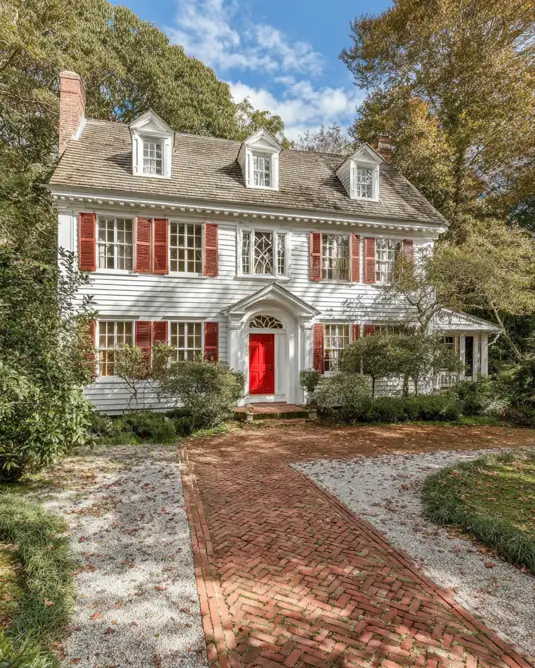
Red shutters are the easiest way to give a white Colonial real personality. Vibrant panels frame the windows here and match the front door, while a herringbone brick drive ties the whole look together. Cheerful without tipping into kitsch — a harder line to walk than it looks.
31. Arcaded Front Walkway
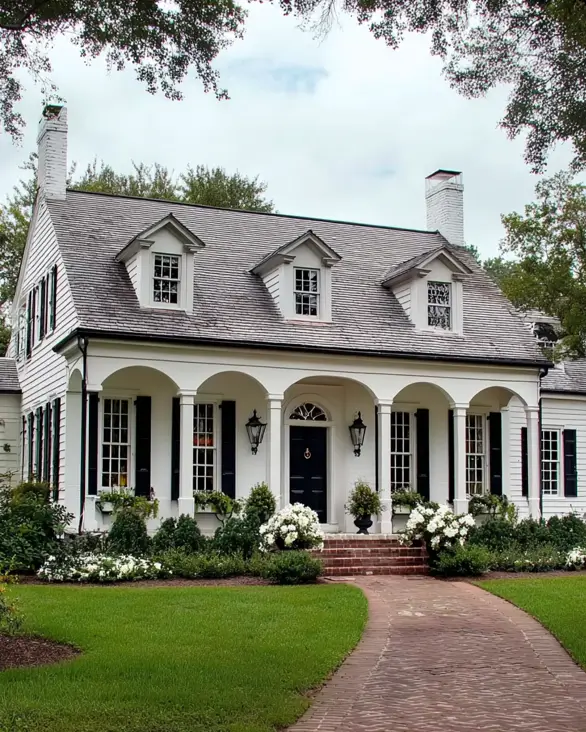
A long arched walkway stretched across the front softens a Colonial’s strict lines without losing its symmetry. White columns and graceful arches frame the entire entry, with flower boxes adding a domestic touch. For wider lots, this kind of generous covered approach is worth the extra structure cost.
32. Blue Gray Shingles
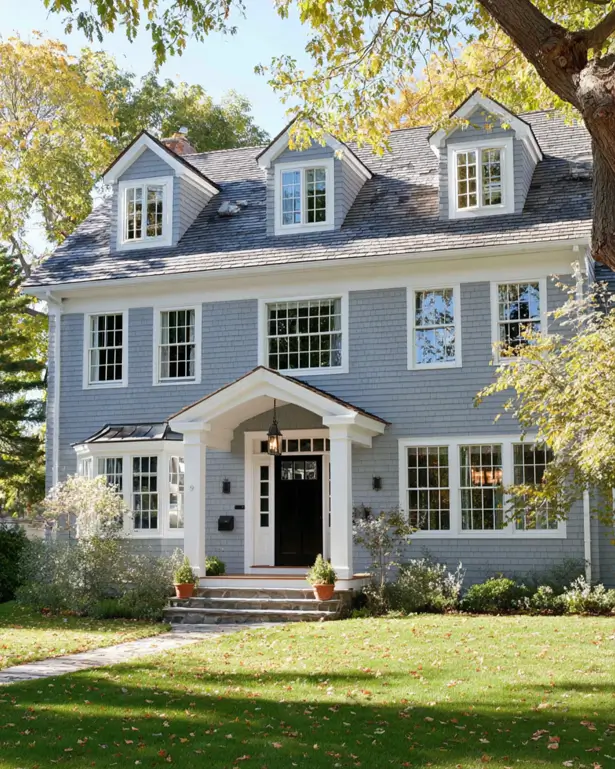
Light blue-gray finishes give a Colonial a softer, more coastal mood while keeping the traditional shape. Painted shingles wrap the facade, balanced by white trim, three gabled dormers, and a small bay window. Quieter than the classic white-with-black palette — and often a better fit for bright coastal sun.
33. Fieldstone Country Estate
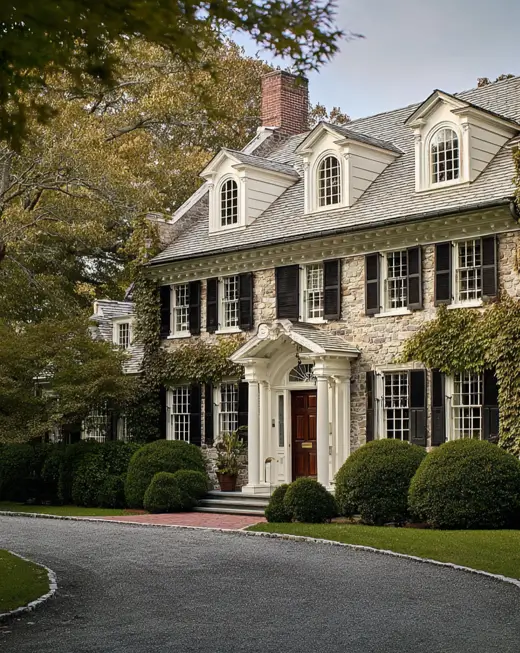
Mixed fieldstone facades give a Colonial a quieter, more rooted look than uniform brick. Natural stone walls pair with three arched-top dormers, a curved entry portico, and trimmed boxwood. Common across Pennsylvania and the Hudson Valley, where local stone has been the go-to material for centuries.
34. Estate Gateway Approach
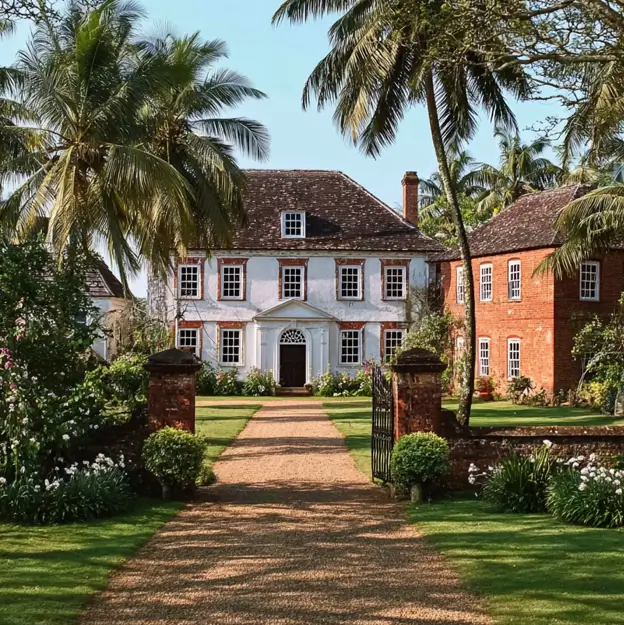
Larger Colonial estates often sit behind brick gateposts and a long gravel drive, with secondary buildings nearby. A painted main house with red brick quoins is paired here with a separate brick outbuilding, both framed by tall palms. The approach does a lot of the work before you even reach the front door.
35. Cape Cod Cottage
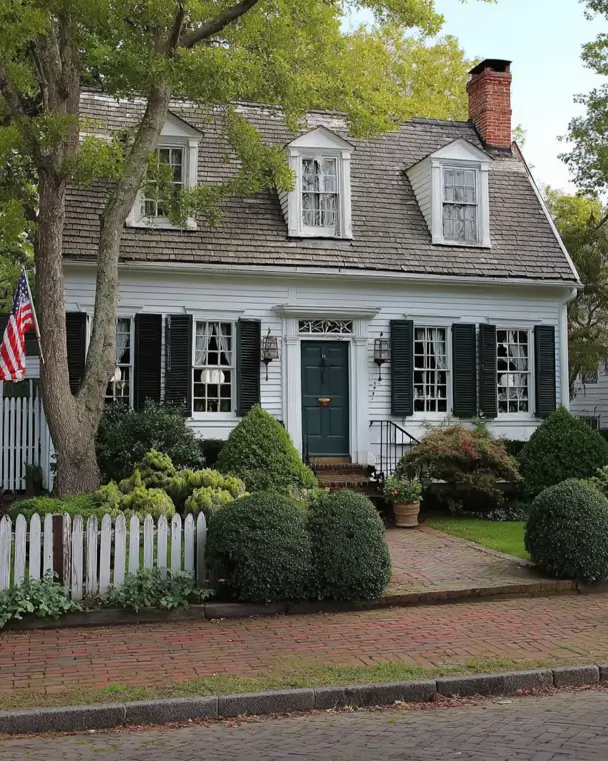
Cape Cod Colonials sit lower and wider than their two-story cousins, with steep dormered roofs holding the upstairs rooms. White clapboard, dark green shutters, and a brick walkway keep the look classic — not far from the feel of traditional cottage exterior ideas from other regions. For smaller lots, the Cape’s compact footprint is often the most practical Colonial option.
36. Two-Tier Veranda Front
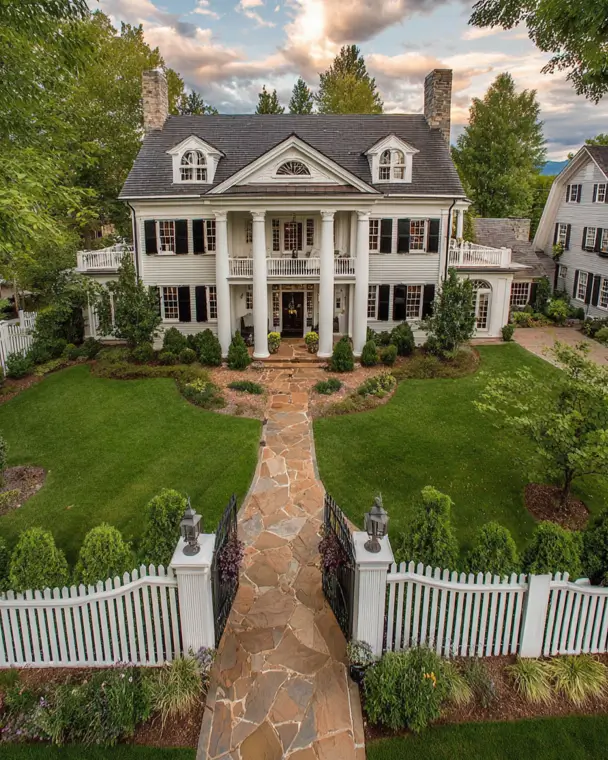
Stacked covered porches double the outdoor living space and add real depth to a Colonial facade. Twin levels of white columns frame the entry here, with stone chimneys anchoring each side. Built for entertaining — and for climates where shaded outdoor rooms earn their keep most of the year.
37. Powder Blue Stucco
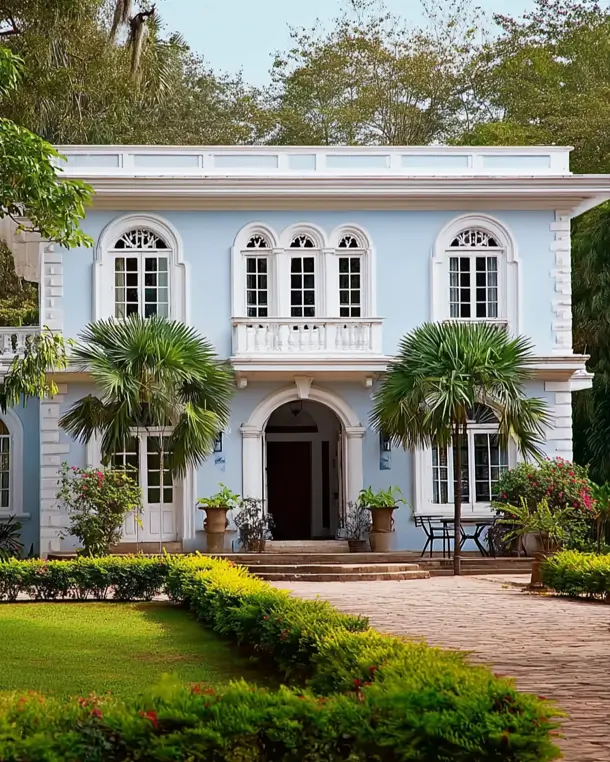
Soft blue exteriors show up across many tropical Colonial variants, where pale colors handle the heat better than dark ones. Powder blue walls pair here with white quoins, a row of arched fanlight windows, and a small balcony above the entry. Calm and breezy — a palette that reads best in strong sunlight.
38. Front Gable Brick
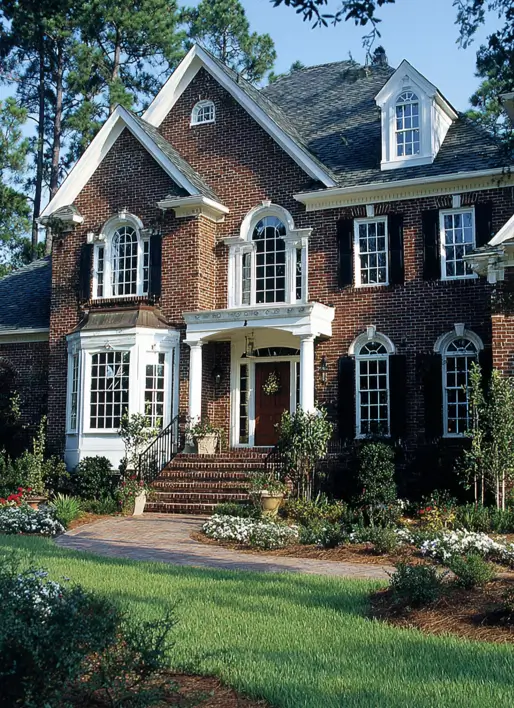
A front-facing gable gives a brick Colonial extra height and a more layered roofline. A steep gable rises here above a tall bay window with copper trim, balanced by Palladian arches across the upper windows. More dynamic than a strictly horizontal cornice — and a good move for homes on sloped lots where height reads well.
39. Evening Glow Facade
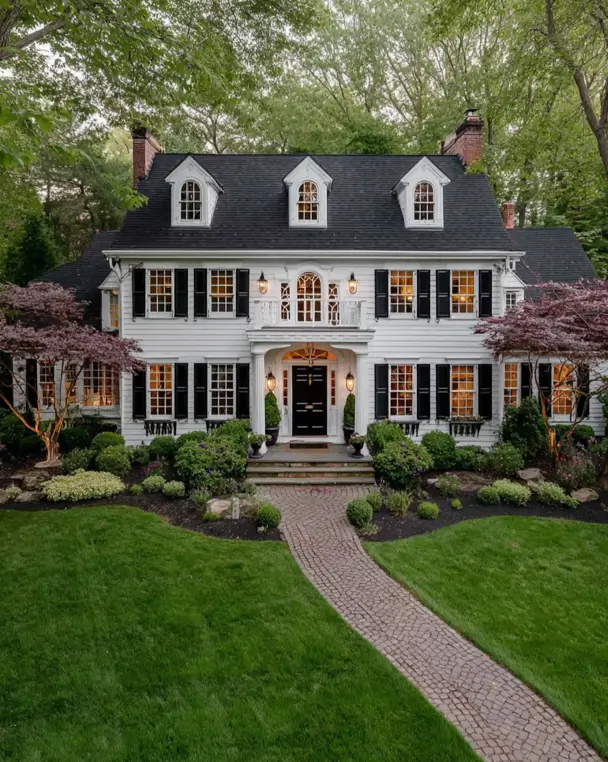
Window light at dusk turns a Colonial into something almost cinematic. Warm interior glow spills out across white clapboard here, framed by a deep gambrel roof and three arched dormers. Worth remembering when planning exterior lighting — the interior glow often does more than the sconces.
40. Slate Gray Bonnet
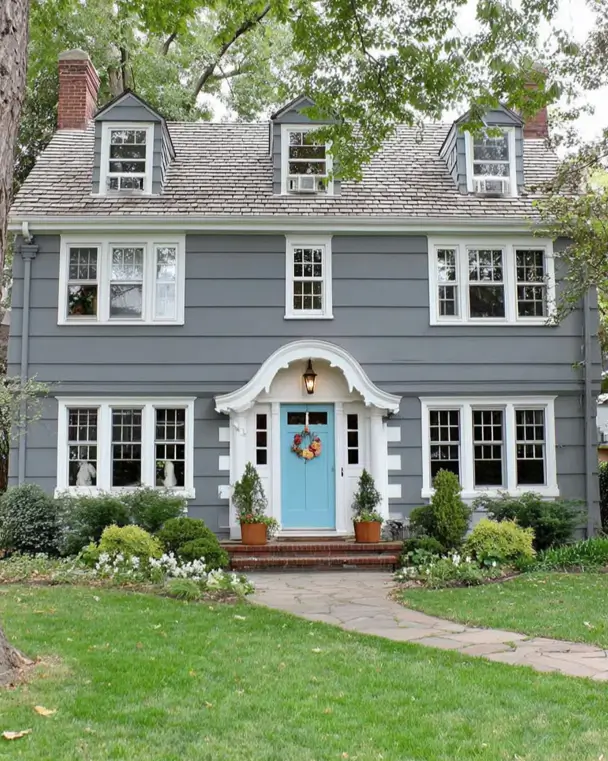
Slate gray Colonials feel modern but stay rooted in tradition through their classic shape. Rather than shutters, this home uses crisp white trim and a curved bonnet hood over a sky blue door. The unexpected pop of color on the door is the whole personality of the front — small move, big impact.
41. Hamptons Shingle Style
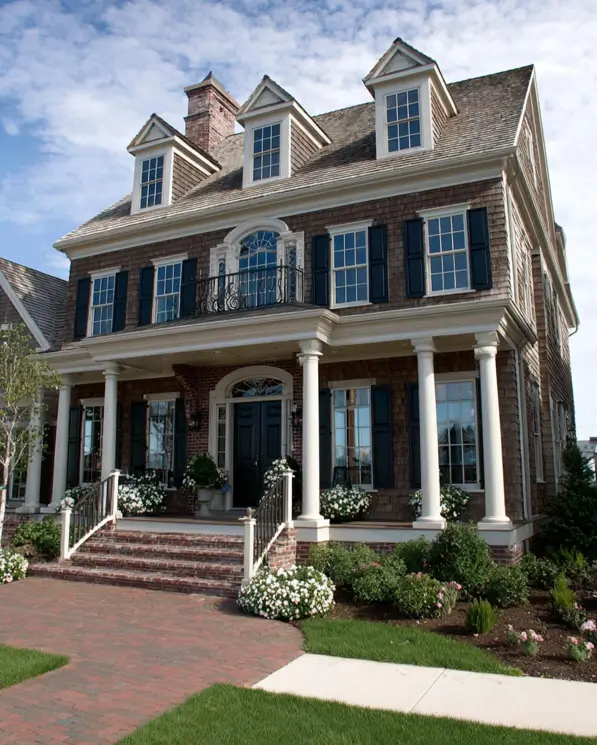
Hamptons-style Colonials lean tall and wide, with natural shingle siding that weathers to a soft brown over the years. A wraparound porch with white columns sits beneath three gabled dormers and a centered Juliet balcony. For coastal builds, natural shakes usually outlast painted siding by decades.
42. Arched Roof Portico
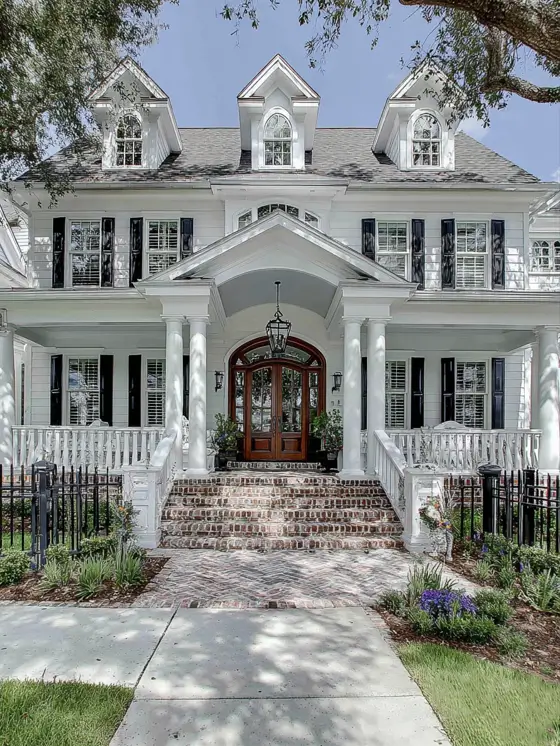
Arched portico roofs give a Colonial entrance softer geometry without losing the formal feel. The curved hood frames double wood doors with an arched transom, set above wide herringbone brick steps. Layered woodwork like this is the kind of detail that separates a carefully built Colonial from a spec home trying to look like one.
43. Oval Window Detail
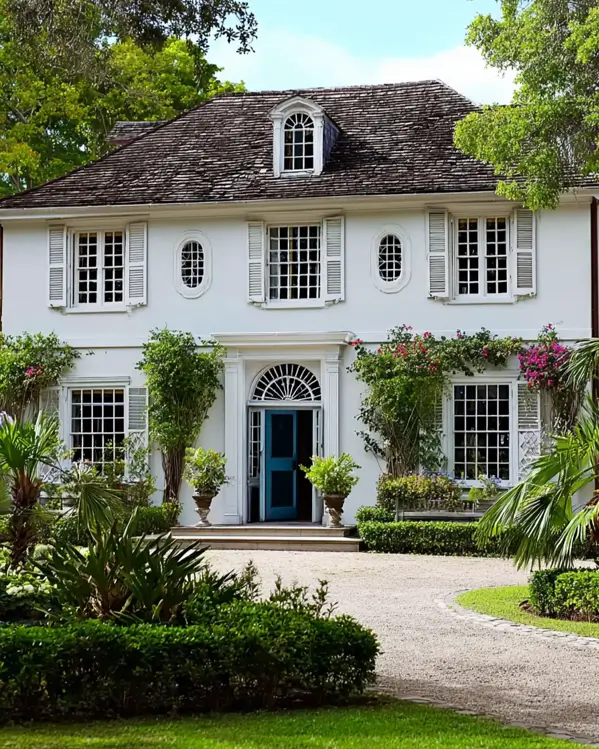
Small oval windows tucked beside the central bay add a touch of unexpected charm to a Colonial facade. White stucco walls hold matching ovals on either side of the entry, with bougainvillea climbing along the front. Those oval windows — sometimes called oeil-de-boeuf — are one of the quickest ways to lift an otherwise plain facade into something memorable.
44. Carved Bracket Portico
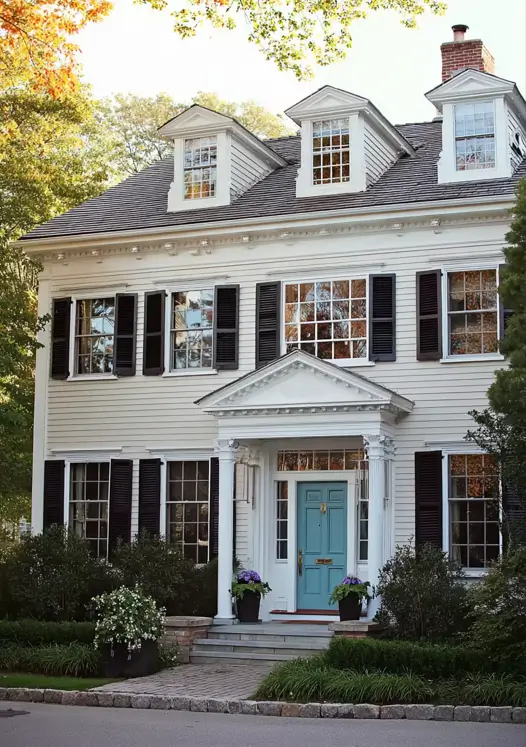
Decorative brackets give a Colonial entry portico more visual weight without adding bulk. Deeply carved corbels support the small pediment here, framing a dusty teal door against soft cream clapboard. Hand-carved details like these are harder to find on new construction — and almost always worth preserving when renovating an older home.
45. Greige with Wings
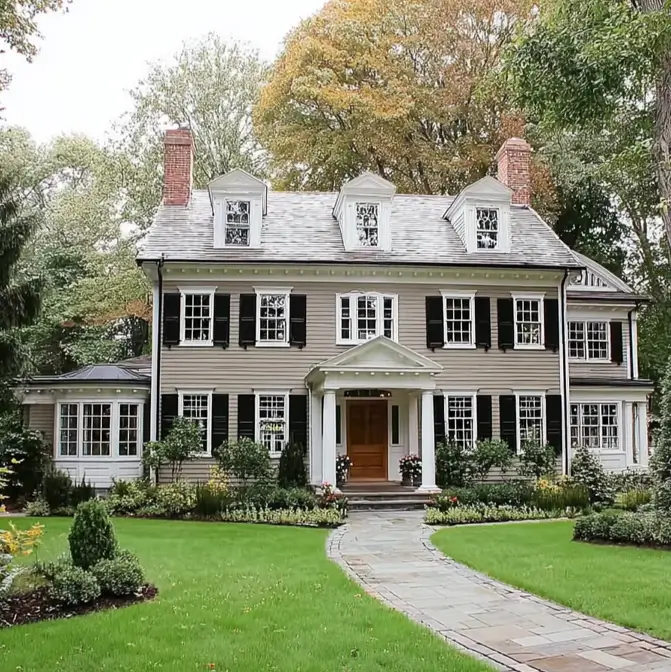
Warm greige tones bridge the gap between cool gray and traditional cream, suiting wooded settings beautifully. Painted clapboard pairs with twin glassed sunrooms, a natural wood door, and a small pedimented portico. The whole composition feels grounded and complete — the kind of facade that’s easy to live with for decades.
Things to Consider Before Choosing a Colonial Style
Colonial homes suit almost any region, but a few practical things are worth thinking through before committing to one.
Climate shapes the choice. Brick holds heat and moisture; clapboard breathes but needs more paint upkeep. Lighter colors and deeper porches earn their keep in hot climates, while steep roofs and compact footprints handle snow and cold better.
Lot size matters. Georgian and Federal Colonials were built for generous lots with balanced side elevations. On narrow urban lots, a Cape Cod or a modern asymmetrical Colonial usually works better than forcing full symmetry onto a tight footprint. For single-story lots, Ranch-style homes are often a more practical alternative.
Maintenance varies widely. Painted clapboard typically needs repainting every 7–10 years. Cedar shakes last 20–30. Brick is low-maintenance but expensive to repair when mortar fails. Real slate roofs last a century; asphalt shingles last a quarter of that.
Renovation versus new build isn’t obvious. Older Colonials bring character and established neighborhoods, but also surprise costs — failing foundations, outdated electrical, lead paint. New Revival builds offer modern systems but sometimes lack the proportions that make older Colonials feel right.
Details decide the budget. Real dentil molding, hand-carved brackets, and proper Palladian windows cost significantly more than their simplified modern equivalents — and the difference shows. Right bones with wrong details often reads as a spec home — the same principle that defines the best Craftsman house exteriors and Tudor-style exteriors where period-accurate details do the real work.
Common Mistakes Worth Avoiding
A few things that tend to go wrong when homeowners renovate or build Colonial-style homes:
Shutters that don’t match the windows. Real shutters close over the window. Decorative shutters that are half the window’s width look wrong, even if most people can’t name why. If shutters are purely decorative, they still need to be sized so they’d cover the window if closed.
Painting brick without thinking it through. Painted brick is close to permanent — removing paint from brick is expensive and often damages the surface. Limewash is a better middle ground for homeowners who want a softer look without committing forever.
Mismatched window grilles. Adding new windows with different divided-light patterns than the originals instantly dates a Colonial renovation. The muntins should match across the facade, even if that means custom work.
Oversized garage doors. Attaching a three-car garage wing to a traditional Colonial often breaks the proportions entirely. Setting the garage back, turning it sideways, or breaking it into separate doors usually keeps the symmetry readable.
Landscape that competes with the architecture. Colonials work best with restrained front landscaping — symmetrical plantings, clipped boxwood, a centered walkway. Busy, layered cottage gardens fight the calm order of the facade.
Related:
- Colonial Interior Design Style: American vs. British (33 Real-Home Ideas)
- Colonial Style Kitchen: 26 Timeless Ideas, Cabinets & Designs
Colonial House Design FAQs
What defines a Colonial house design?
Colonial homes are known for balanced fronts, evenly spaced windows, and a centered front door. The style covers Georgian, Dutch, Spanish, French, Federal, and Cape Cod subtypes — all sharing that clean symmetry and rectangular shape.
What are the most common Colonial house exterior colors?
White is the most familiar Colonial house exterior color, usually paired with black or dark green shutters. Cream, soft gray, sage, and warm greige are also common, along with red brick and natural cedar shake. Spanish and tropical variants often add yellow, coral, or powder blue.
What’s the difference between Georgian and Dutch Colonial styles?
Georgian Colonials have flat or hipped roofs, two full stories, and red brick or clapboard walls. Dutch Colonials are recognizable by their gambrel roofline — the steep double-pitched shape that opens up upstairs living space. Both share symmetrical fronts but read quite differently from the curb. For homeowners comparing other traditional American styles, the modern Craftsman style offers another distinct option.
Is Colonial house style exterior still popular today?
Yes — Colonial house style exterior choices stay popular because they age well and suit most neighborhoods. Newer homes often borrow Colonial cues like symmetrical windows, pedimented porticos, and shutters, paired with softer modern colors. The shape continues to feel current rather than dated, which is also why Mid-Century Modern exteriors and Modern Victorian style homes remain in demand alongside Colonial — all three styles balance heritage with livability.
Which Colonial subtype works best for a smaller home?
Cape Cod Colonials are usually the best fit for smaller lots, thanks to their low-slung profile and dormered upper level. Dutch Colonials and Williamsburg-style cottages also work well at a modest scale without losing the symmetry that defines the style.
What’s the best roof material for a Colonial home?
Real slate and wood shake are the most traditional options and age beautifully, but cost significantly more. Architectural asphalt shingles are the common modern choice — affordable, with a 20–25 year lifespan. In fire-prone regions, synthetic slate and metal roofing keep the look while meeting code.
Are Colonial homes energy-efficient?
Older Colonials usually aren’t, without retrofitting — single-pane windows and minimal insulation are common in pre-1980s builds. Modern Colonial Revival homes can be very efficient, since the compact symmetrical shape helps with heating and cooling. For older Colonials, insulation and storm windows deliver the biggest gains.
How long does a Colonial exterior renovation typically take?
A full exterior renovation usually takes three to six months, depending on scope, weather, and permit timelines. Smaller refreshes — repainting, shutter replacement, landscaping — often wrap in four to eight weeks. Historic restoration work with custom millwork or masonry can take significantly longer.
Further Reading
For homeowners interested in the historical background of Colonial-era architecture, the National Trust for Historic Preservation and Preservation Virginia both publish accessible guides on preserving Colonial-era homes. For modern Colonial Revival inspiration, regional architecture journals and state historic resource surveys are often worth a look.