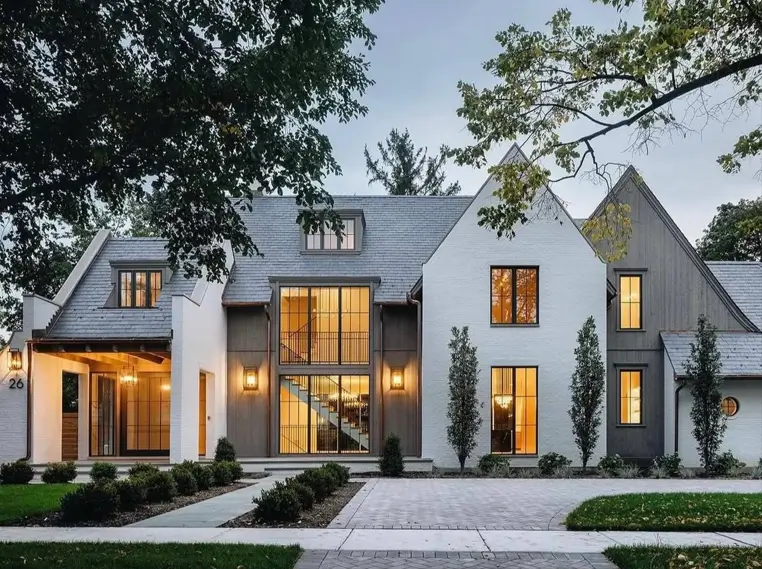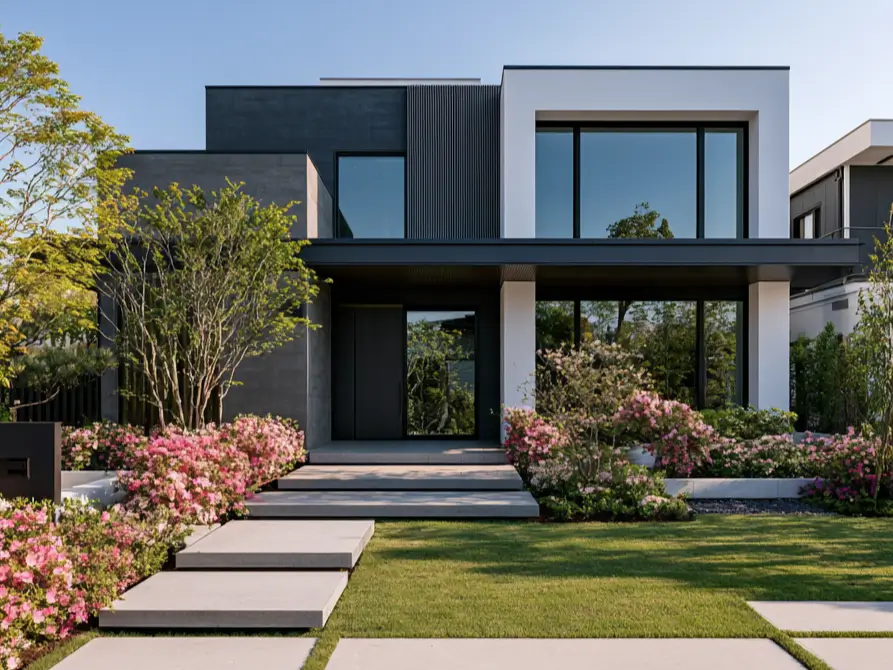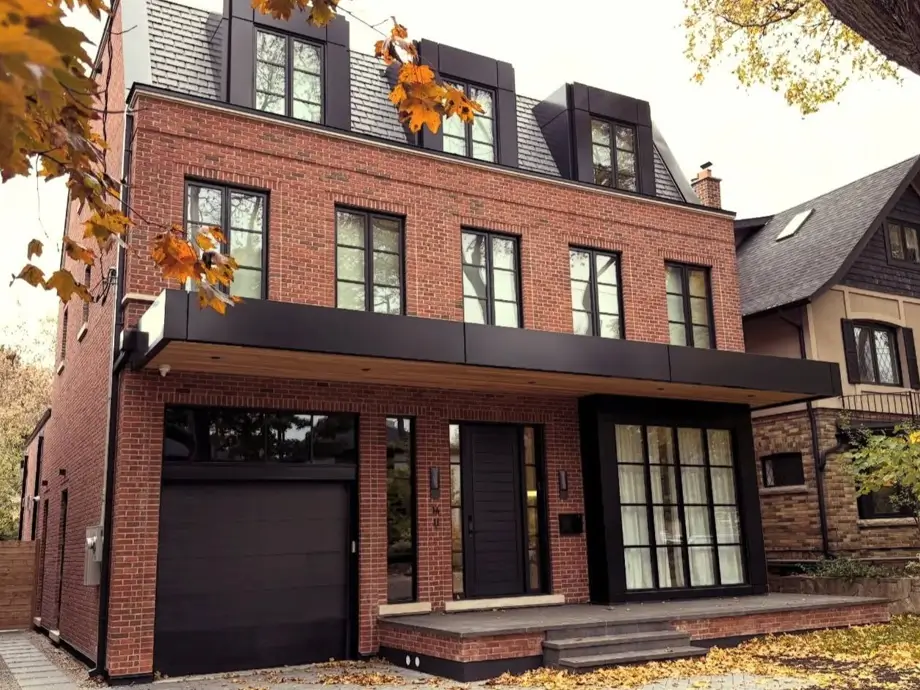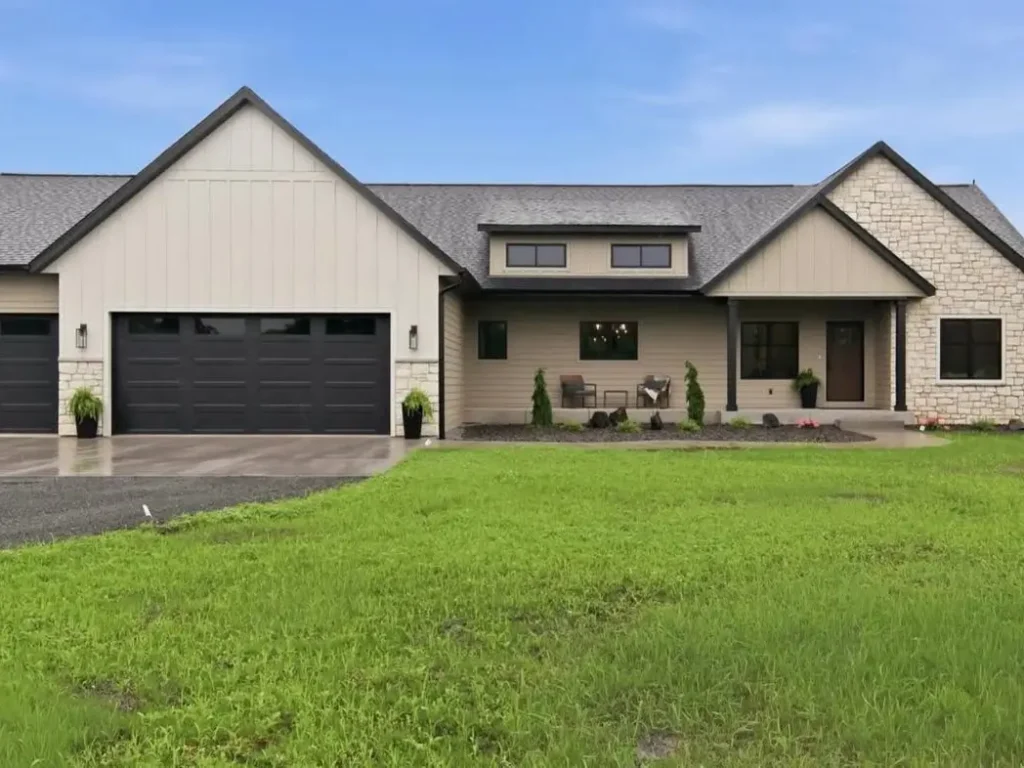

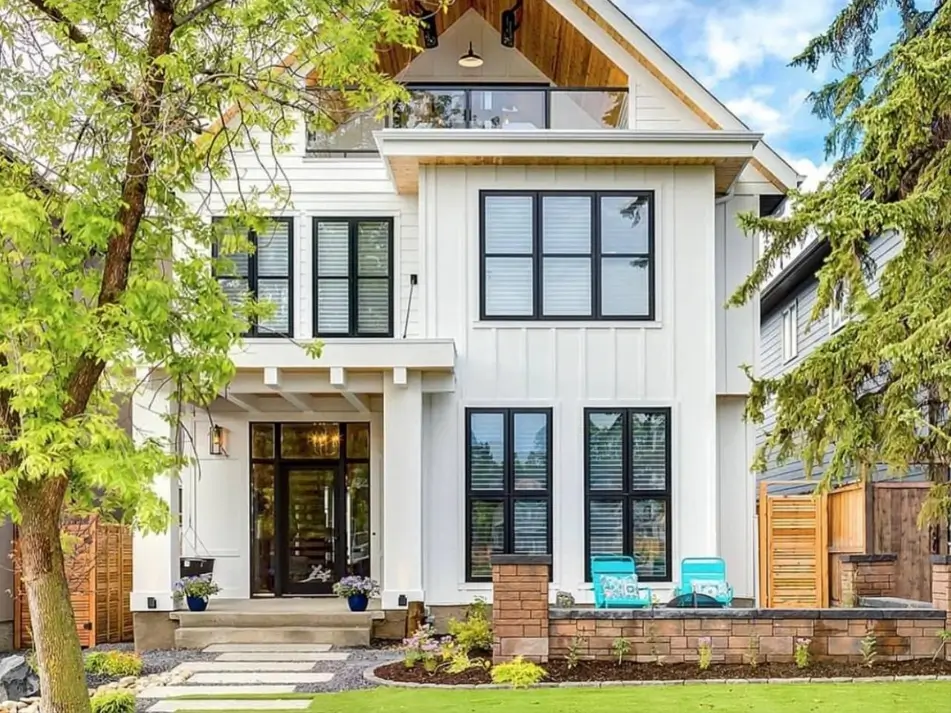
A white house with black trim and wood accents is one of the most enduring exterior combinations in residential design. The white keeps things bright, the black gives windows and rooflines a crisp edge, and the wood — a natural wood front door or a cedar gable — adds the warmth that makes a house feel like a home.
You’ll see this palette everywhere right now, from board and batten farmhouses to sleek new builds with black gutters. A black and white house exterior almost always benefits from a touch of wood.
The real question is where the wood goes and how much to use. The 47 exteriors ahead get the balance right, along with the wood tones that hold their own next to black trim and the paint colors that pull the look together.
KEY TAKEAWAYS
- Medium warm woods — cedar, honey oak, and teak — contrast best against black trim; espresso-dark stains disappear into it.
- The front door, garage door, and porch ceiling deliver the most warmth for the least commitment.
- Soft whites like SW Alabaster with near-blacks like SW Iron Ore keep the contrast crisp without turning harsh.
Why White, Black, and Wood Work Together
White, black, and wood work together because each one does a job the other two can’t: white keeps the house bright, black outlines every window and roofline, and wood brings warmth that paint can’t fake. Take any one away and the balance shifts — a black and white house exterior without wood can feel stern, while white with only wood drifts toward beige.
It’s also a forgiving palette to live with. White siding hides dust better than dark colors, black trim disguises the wear that shows first around windows, and most wood stains look better with a few seasons on them. Nothing about it feels tied to one decade.
Natural Wood Front Doors and Entryways
The entry is where a natural wood front door earns its keep — it’s the first thing guests touch, and one warm door can carry an entire white facade. These eight entries show how far that single move can go.
1. Midcentury Wood Entry
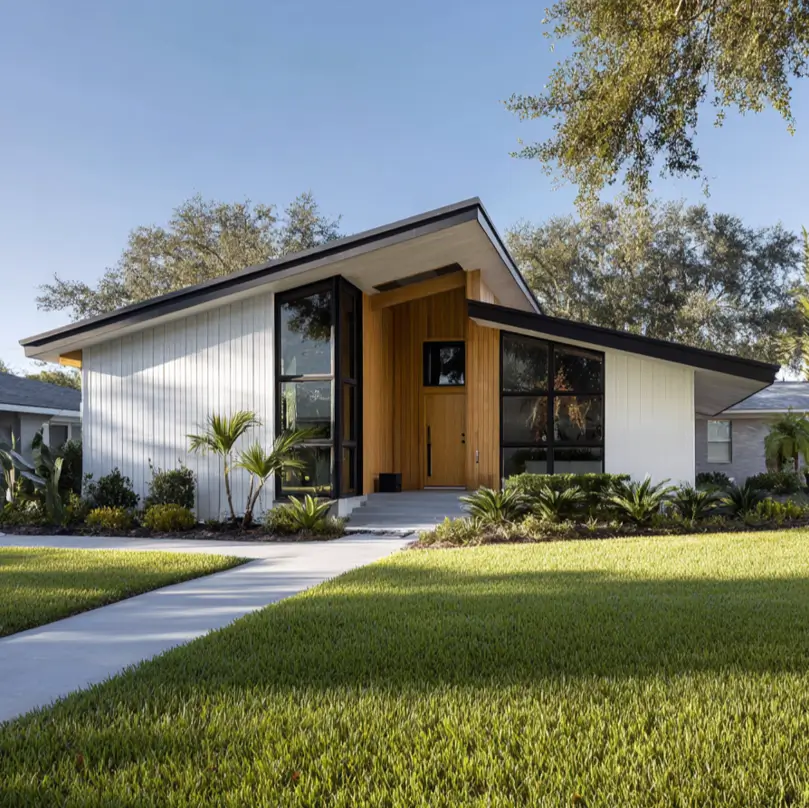
Vertical oak paneling wraps this recessed entry from door to roofline, glowing between two banks of black-framed glass. On this facade, the wood becomes the focal point rather than an accent, drawing you straight up the walk. This look feels effortlessly mid-century modern.
2. Slatted Entry Screen
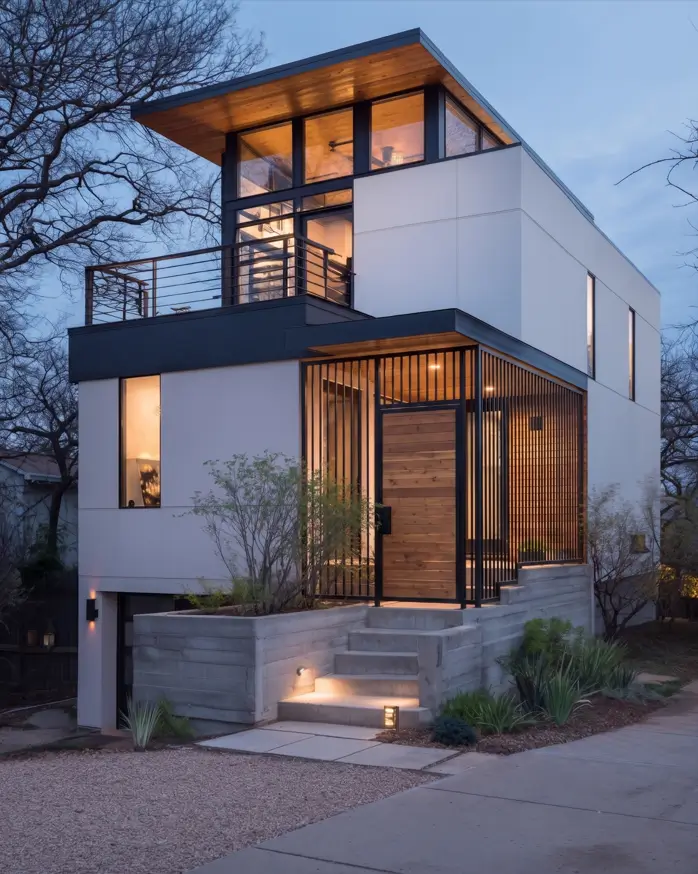
Horizontal cedar planks make up this front door, set behind a screen of slim black steel slats. The screen gives the lit entry privacy without closing it off, so the wood glows through at dusk. We love that layered effect.
3. Arched Oak Door
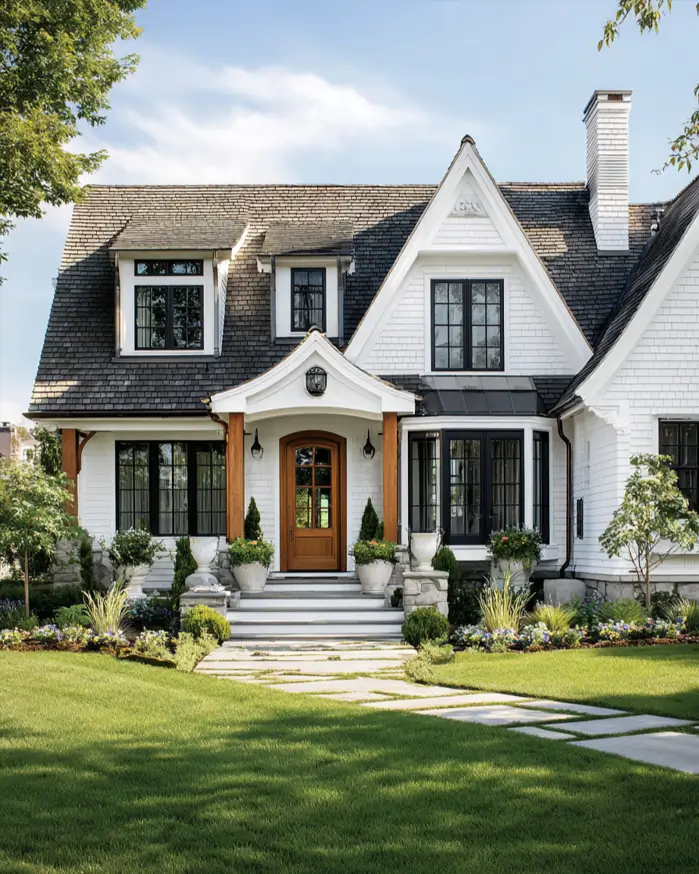
Honey oak fills this arched doorway, flanked by square cedar posts and small matching corbels under the eaves. Against white shingles and black-framed glass, the curve softens an otherwise crisp cottage face. This look feels storybook without going twee.
4. Pale Larch Entry
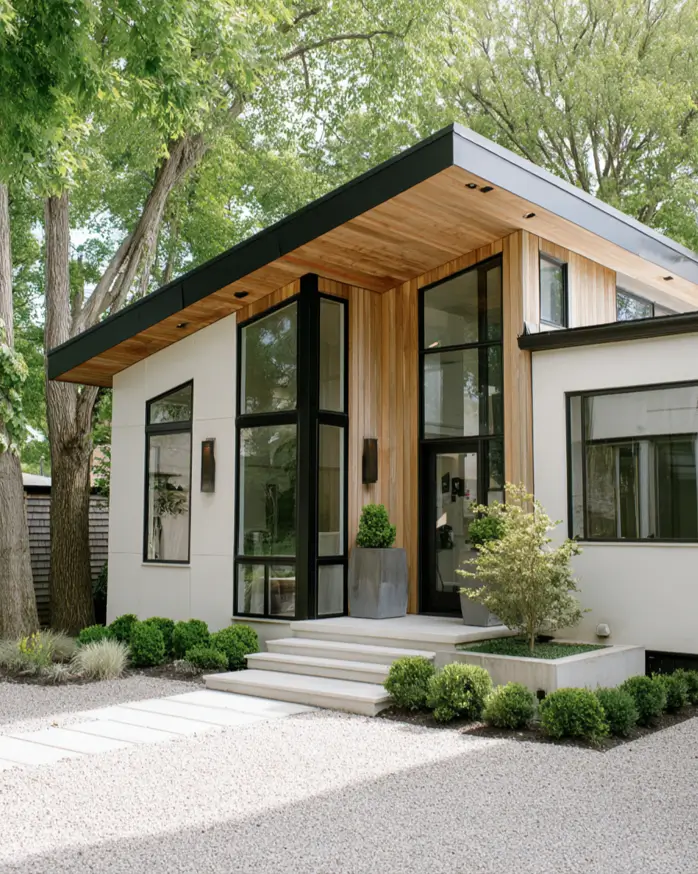
Light larch boards climb this entry wall and spill across the angled soffit above. Because the wood stays pale, the black frames do the contrast work while the facade keeps a soft, Scandinavian calm. We love this gentler take on the palette.
5. Entry Timber Arbor
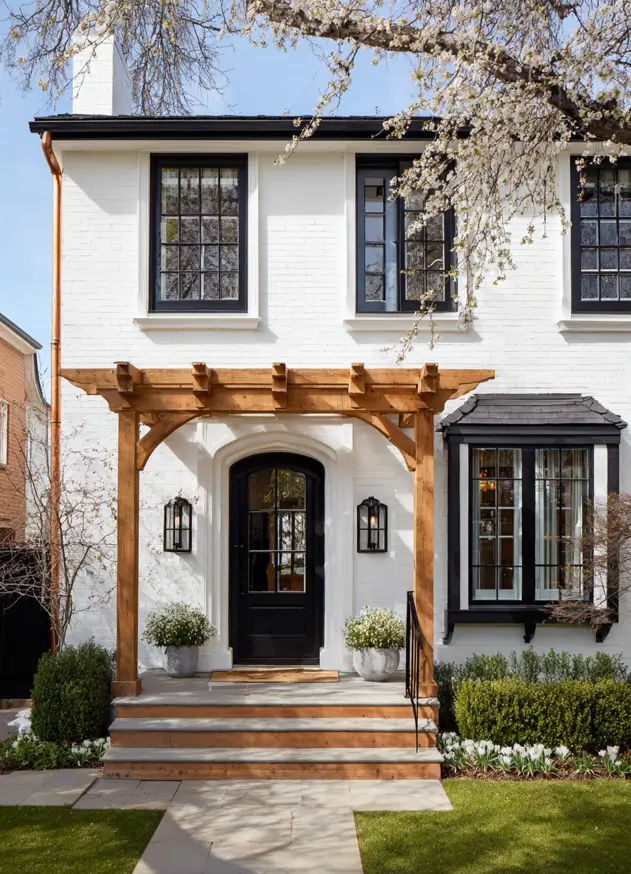
Honey oak beams form this small arbor over the door, notched joinery left visible at every corner. Against the white brick, the frame gives an arched black entry a warm threshold moment. Worth borrowing for the shade it throws over the stoop.
6. Split-Level Stairs
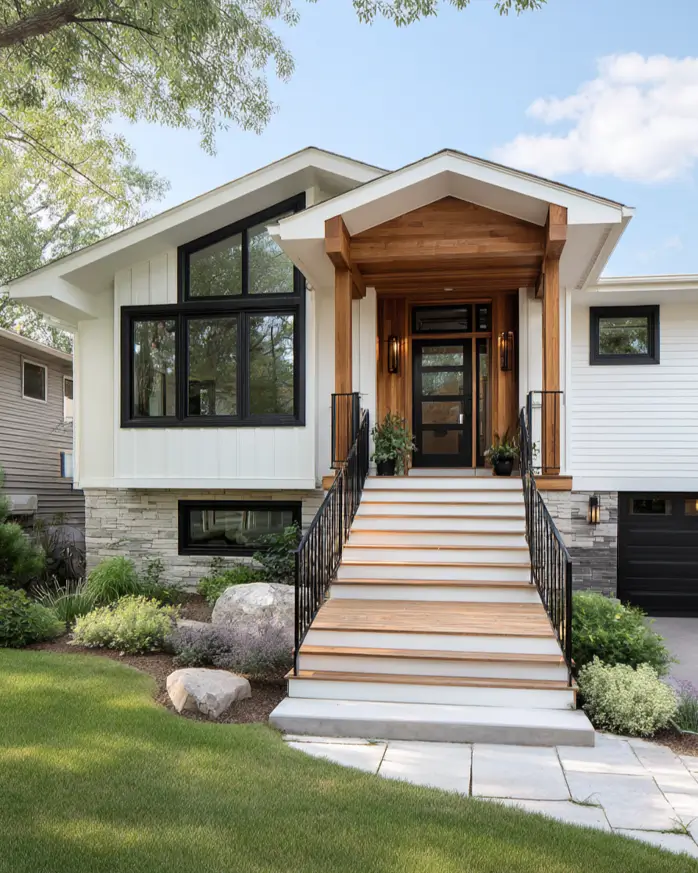
Warm cedar treads climb this split-level’s entry stairs, capped by a matching timber portico at the top. Carrying the wood down the steps pulls the welcome all the way to the sidewalk. Easy to live with every single arrival.
7. Italianate Double Doors
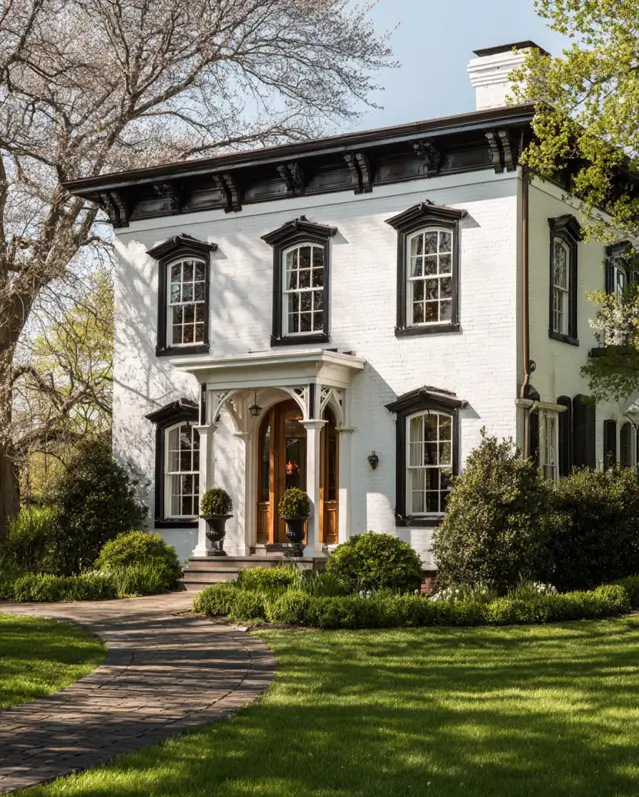
Golden oak double doors sit deep in this arched entry, glowing against white brick and a black corbeled cornice. On a Victorian-era facade, one warm wood moment is enough amid all that ornament. This look feels grand yet genuinely friendly.
8. Oak-Framed Entry Wall
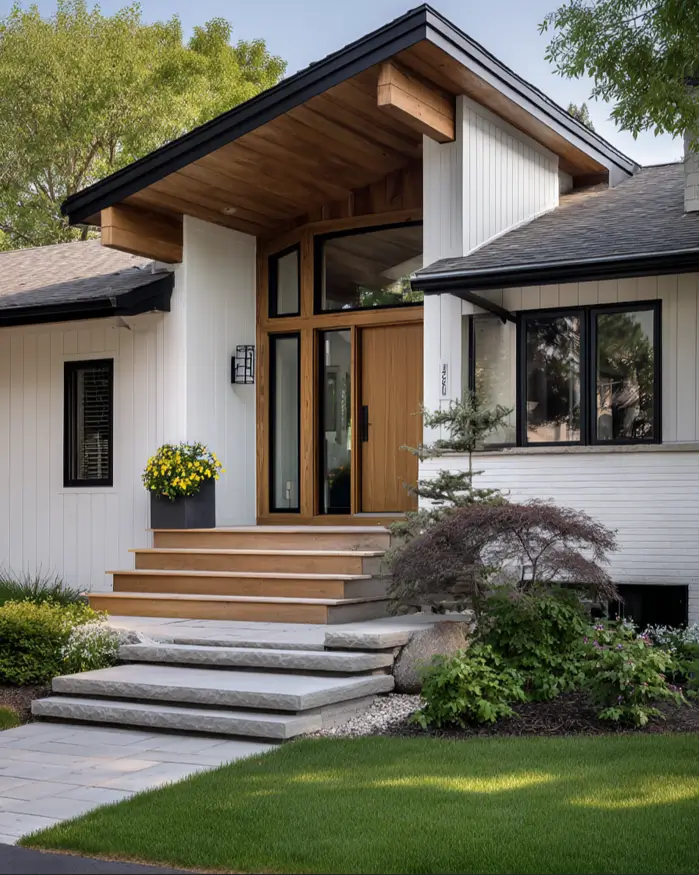
Quarter-sawn oak frames every pane of this entry wall, door and transoms alike, beneath a matching plank ceiling. Wrapping the whole opening in one wood makes the doorway feel furniture-grade. Worth borrowing for a ranch remodel.
White Houses with Cedar Accents
A white house with cedar accents is the most popular version of this look for good reason: cedar’s honey tone sits perfectly between bright white and true black. Gables, dormers, and small trim details are where it shines.
9. Timber-Lined Gable
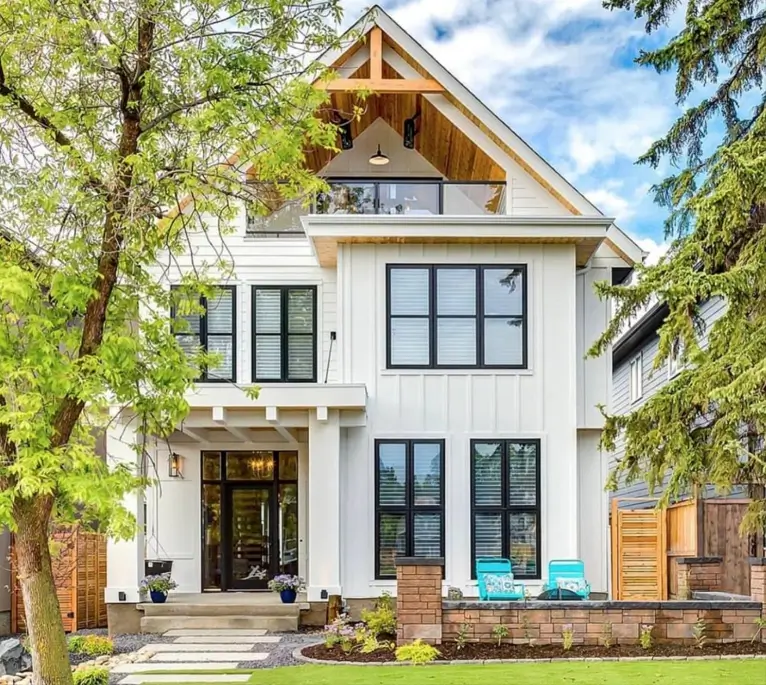
Warm cedar planks line this steep gable, framed by an exposed timber truss at the peak. The wood overhead makes the crisp white facade feel inviting rather than stark. We love how black window grilles keep every line sharp.
10. Cedar-Clad Dormer
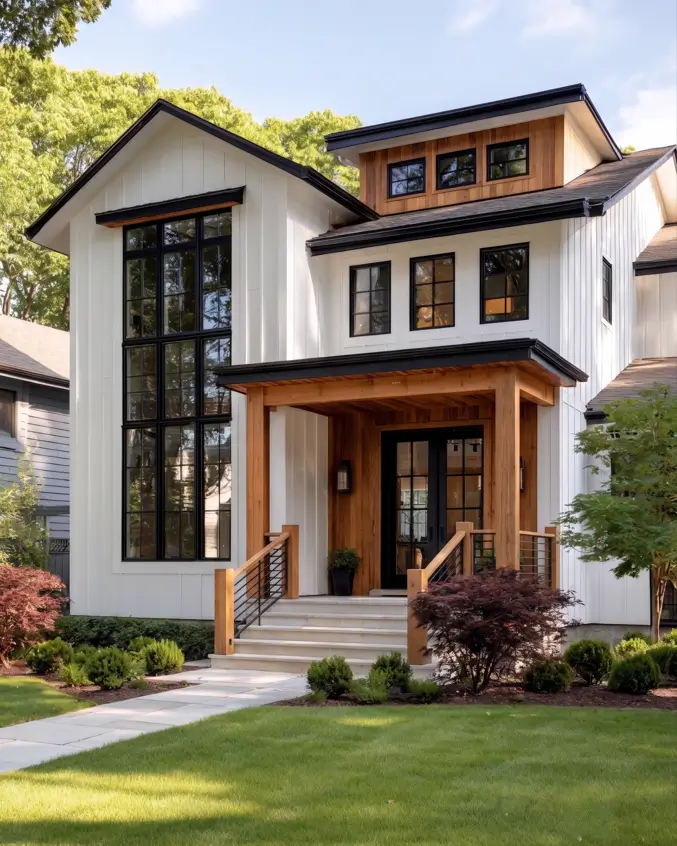
Vertical cedar wraps this shed dormer, repeating below in the entry’s posts, railings, and ceiling. Placing wood at the top and bottom of the facade frames all the white siding between them. Worth borrowing when one accent feels lonely.
11. Slatted Window Screen
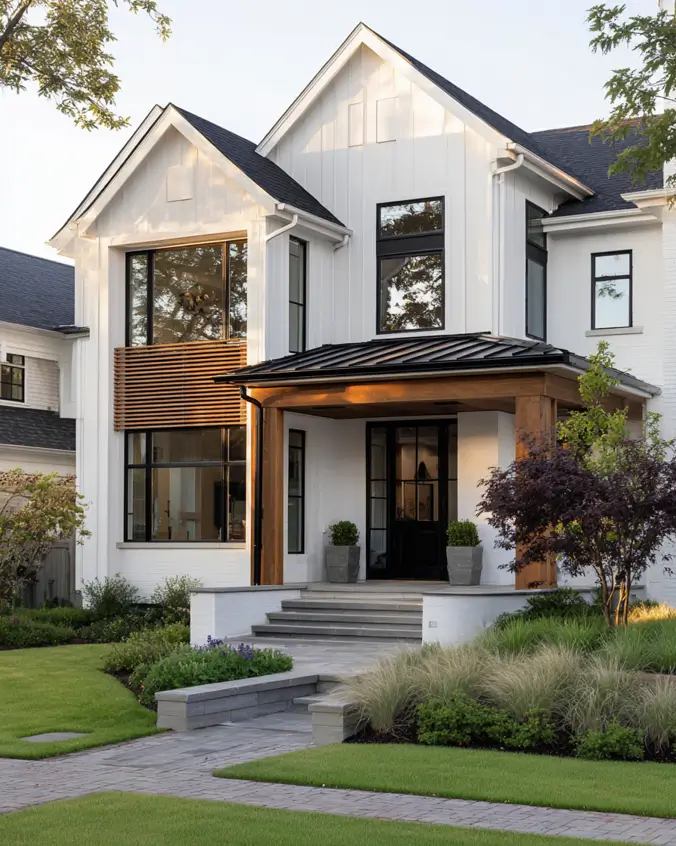
Thin cedar slats hang over this window like a fixed shutter, matching the porch timbers a few feet away. The screen filters afternoon sun while adding texture the flat siding can’t. It’s a smart choice for west-facing glass that runs hot.
12. Glowing Winter Gable
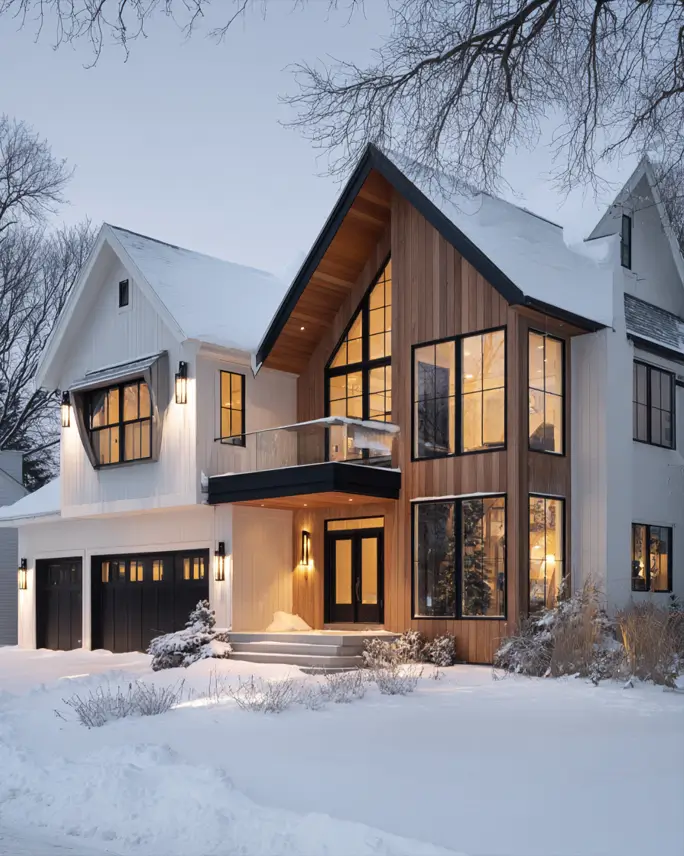
Vertical cedar fills this entry gable from porch to peak, wrapping inside the roof’s underside. On a snowy evening, the lit windows turn the whole wood volume amber against the white wings. Easy to live with through the darkest months.
13. Cedar Roof Brackets
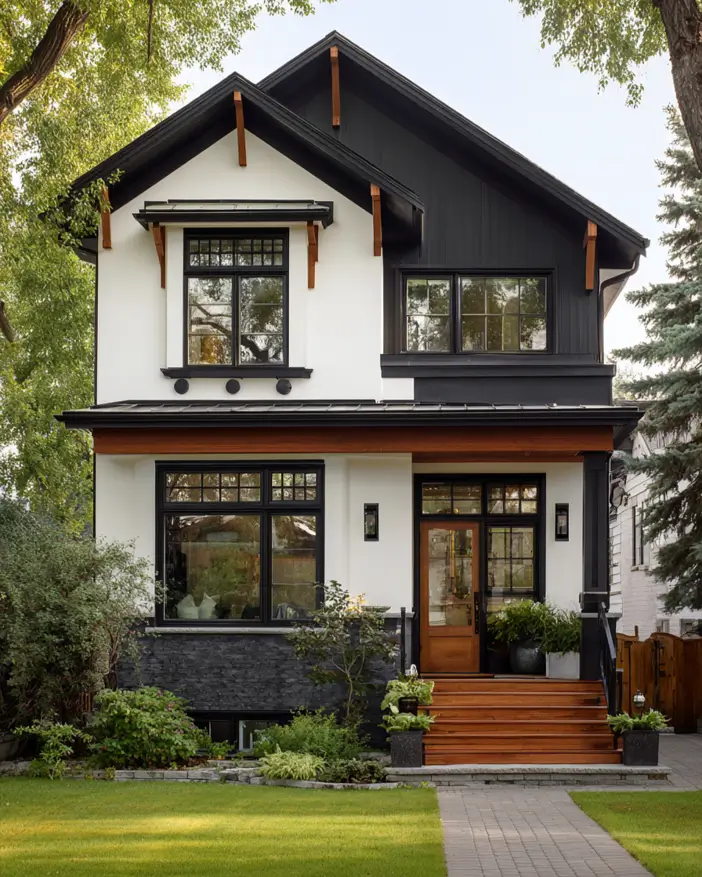
Cedar knee brackets punctuate these gable ends, matched by a wood belt band, door, and stairs below. Small repeated details spread the warmth across the facade without one big wood gesture. Worth borrowing on homes with busy rooflines.
14. Twin Cedar Gables
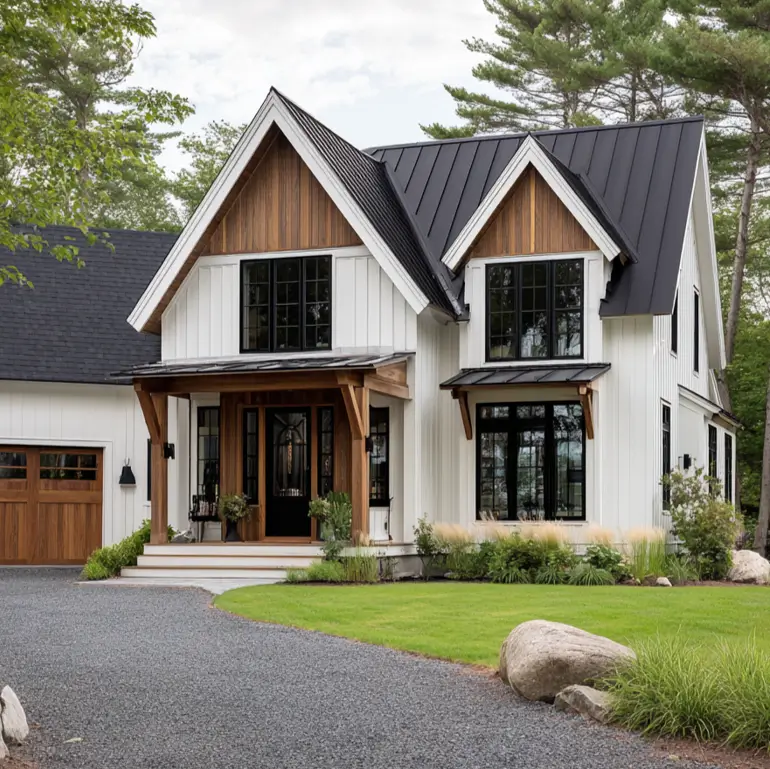
Matching cedar panels crown both gable peaks, repeated in the timber porch and garage door below. Giving each gable the same wood treatment keeps a busy roofline feeling orderly rather than cluttered. This look feels tailored from every approach.
15. Boxed Window Surround
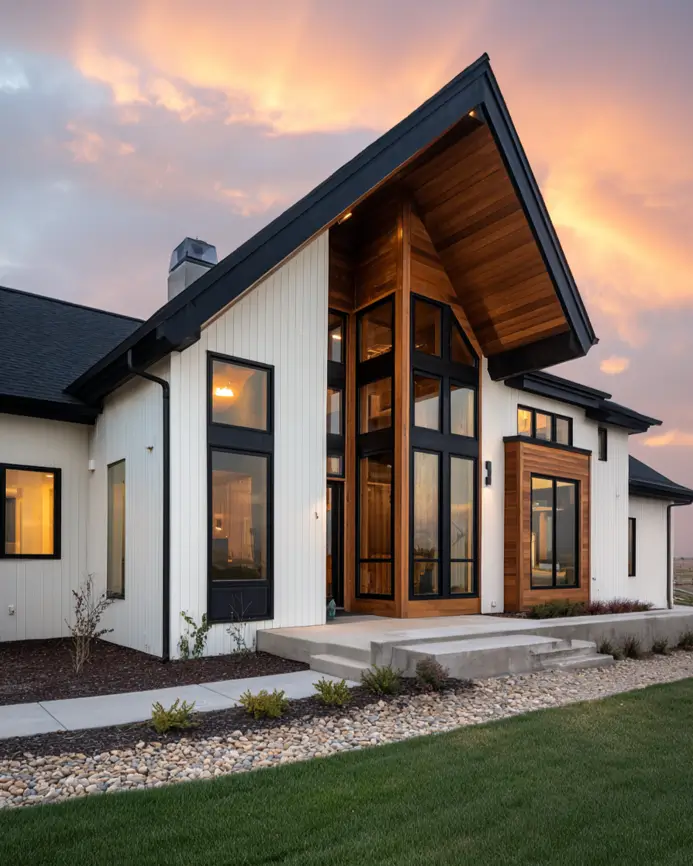
Sapele-toned planks frame this picture window in a deep projecting box, matching the entry wall and soffit nearby. The surround gives one ordinary window real presence on a long white wall. It’s a smart choice when a facade needs rhythm.
16. Oak-Lined Rake
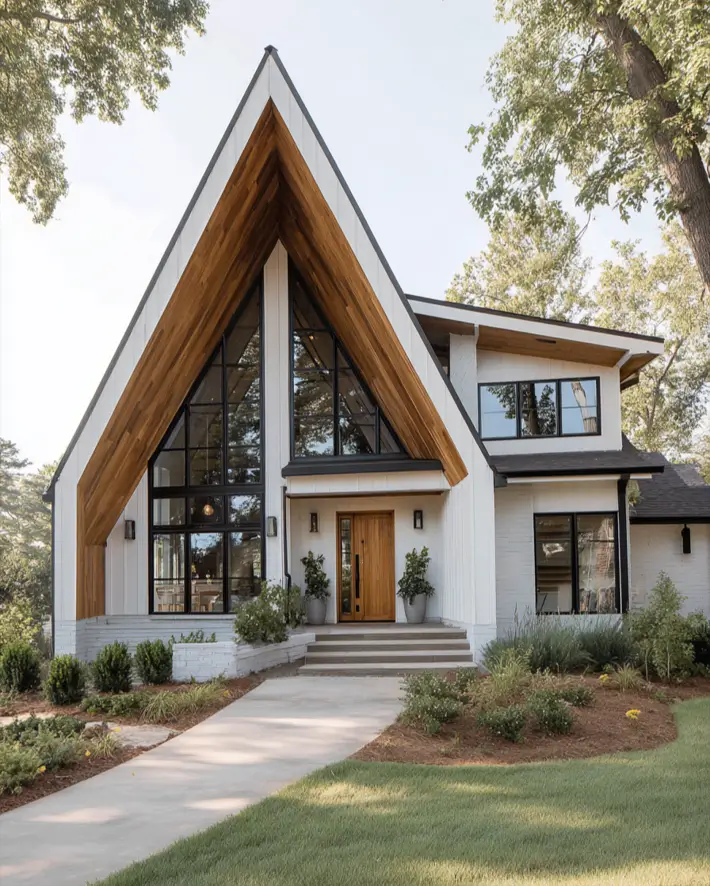
Honey oak boards trace this A-frame’s roof edge, framing the window wall in one continuous chevron. Lining the rake instead of the wall turns the roofline itself into the accent. This look feels like a chapel for everyday living.
17. Gable-Front Feature Bay
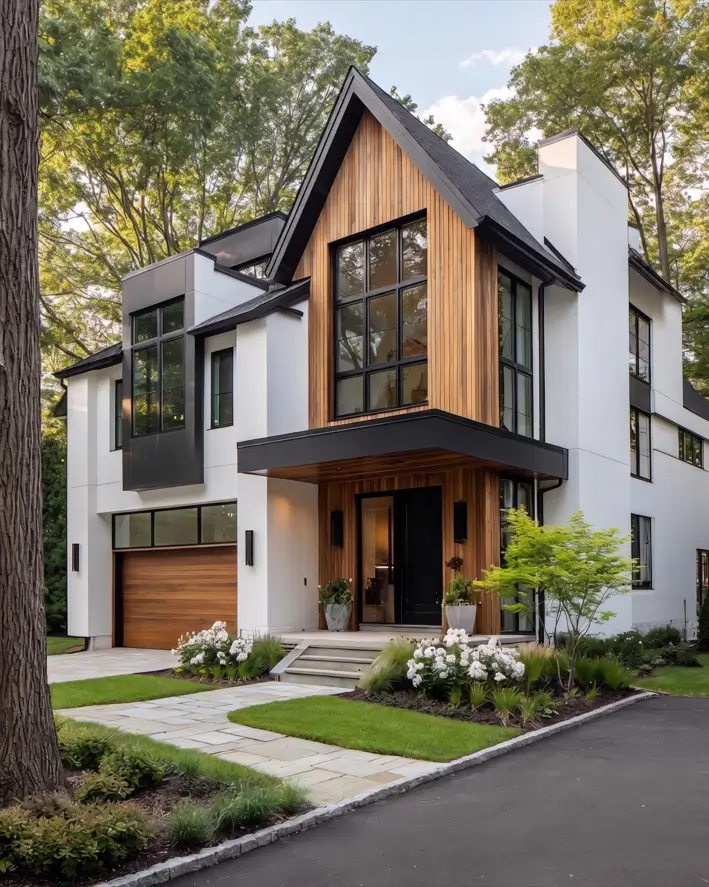
Vertical cedar fills this projecting gable bay, with a large black-gridded window set flush into the grain. Cutting glass directly into the wood makes the whole bay read as one crafted object. We’d point clients here for modern curb appeal.
Farmhouse Porches and Timber Framing
The modern farmhouse exterior with black windows made timber porches famous, but the idea travels well beyond it. Craftsman bungalows, Pueblo portals, and traditional cottages all wear exposed framing beautifully — these seven show the range. (For the pure farmhouse take, our white farmhouse with black trim guide goes deep on that classic.)
18. Cedar-Framed Porch
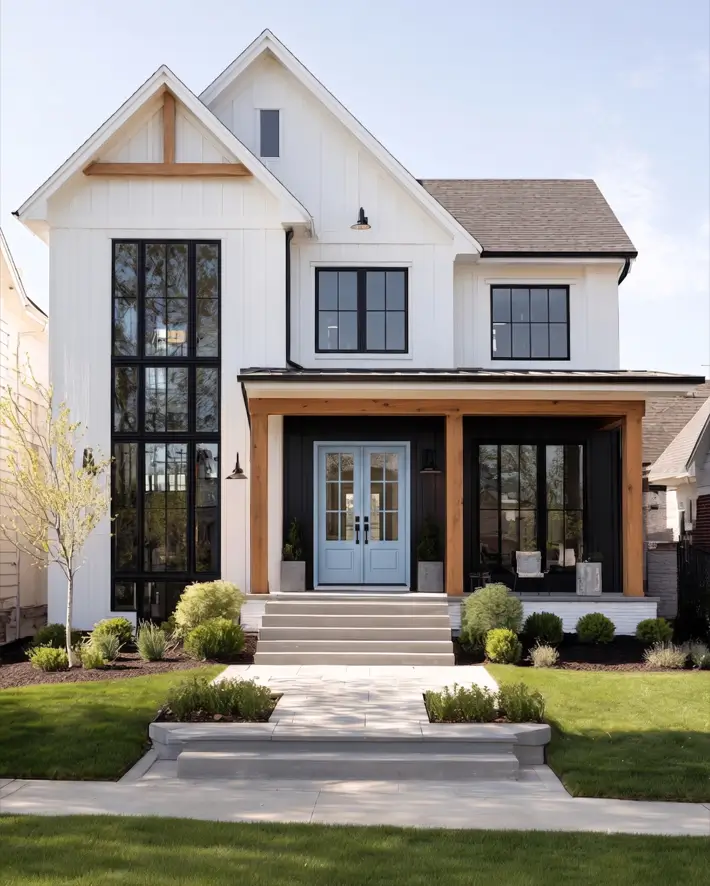
Chunky cedar posts frame this recessed porch, set against black board and batten walls within. The wood outline reads like a warm doorway carved into the white facade. It’s a smart choice for adding depth to a flat front.
19. Arched Porch Warmth
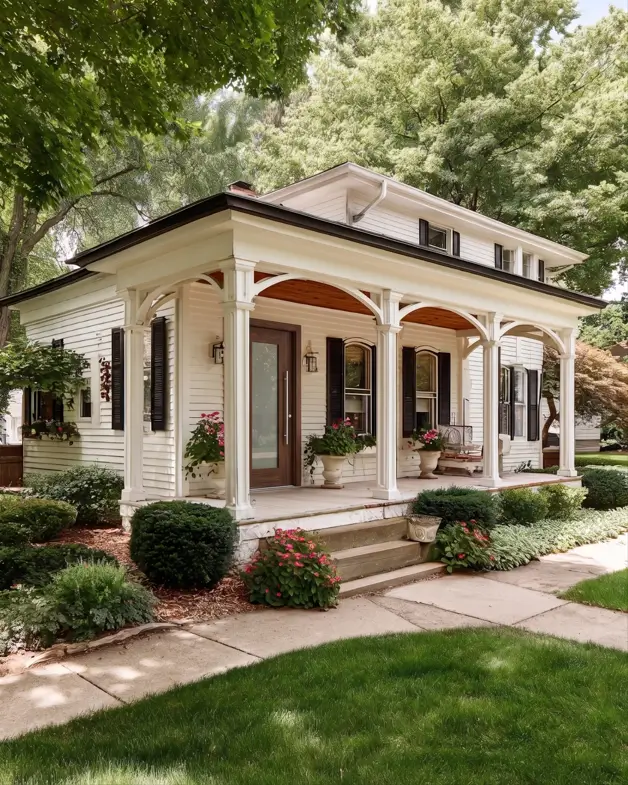
Stained pine boards run along this porch ceiling, framed by white arched columns and black louvered shutters. Paired with the walnut front door, the wood keeps a formal cottage feeling relaxed and welcoming. Easy to live with, decade after decade.
20. Branching Timber Posts
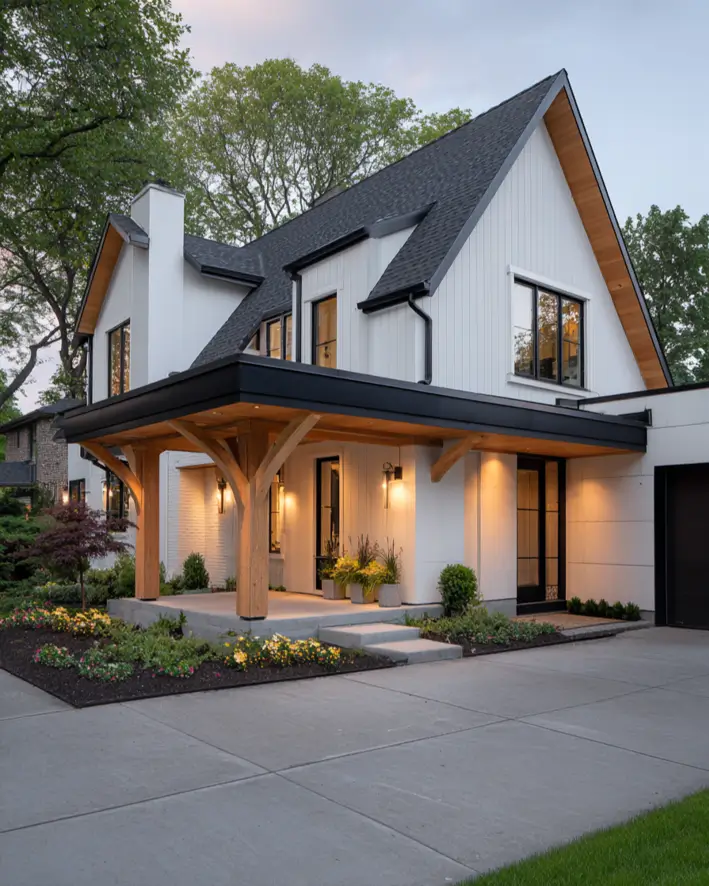
Angled cedar braces fan out from these porch posts, holding up a wide black-banded roof. Overhead, the wood soffit follows the gable line, so the warmth reads from the street. Worth borrowing — it feels like furniture at house scale.
21. Craftsman Porch Truss
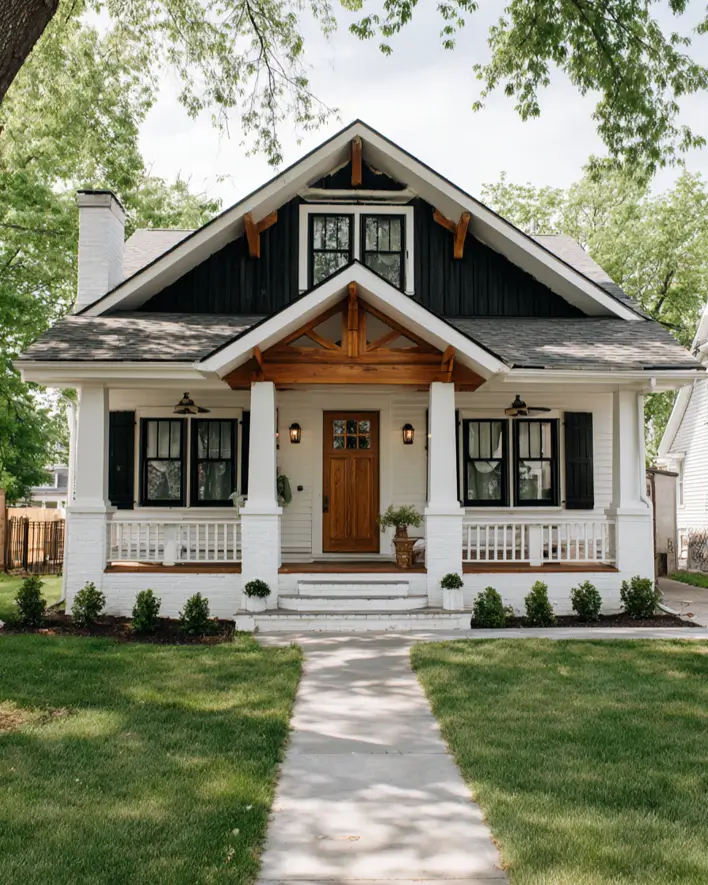
Golden oak timbers form this porch gable’s open truss, echoed by knee braces above. Together with the matching door and porch floor, the wood gives a black-and-white Craftsman bungalow its handmade character. This look feels like a hug from 1925.
22. Limestone and Timber
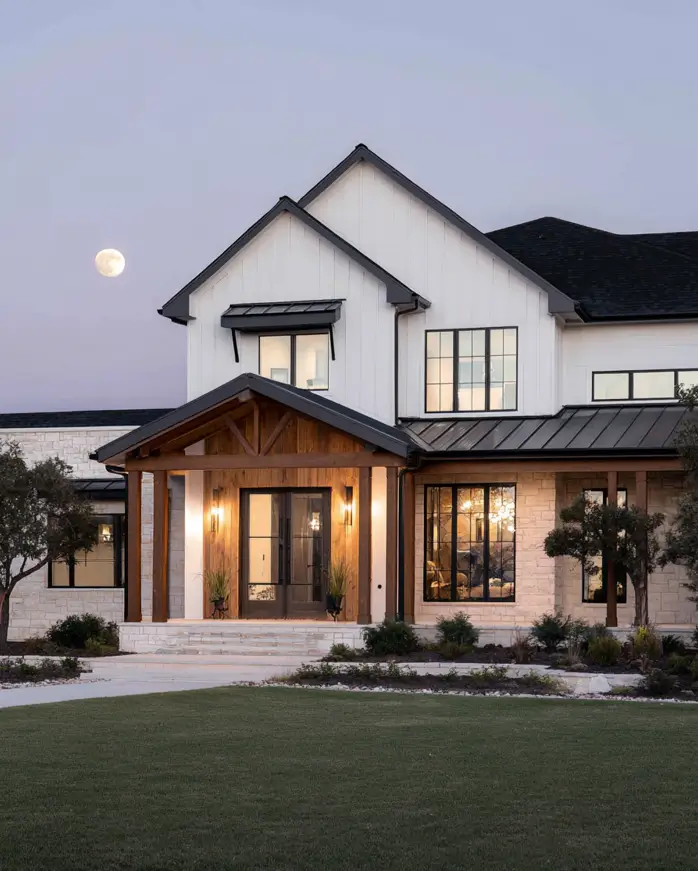
Cedar posts and a king-post truss rest on this pale limestone base, warming a white farmhouse from the ground up. Stone and wood share the same sandy undertone, so the pairing feels inevitable. It’s a smart choice for ranch-country builds.
23. Rustic Beam Portal
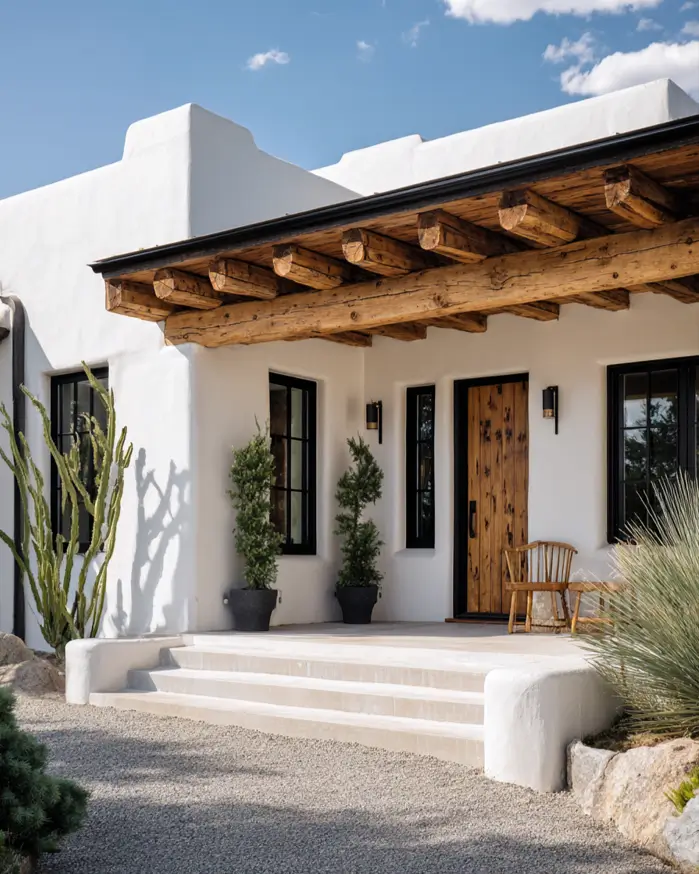
Hand-peeled log beams span this covered portal, their rough ends left exposed above the walk. Against smooth white adobe walls, the raw timber brings centuries-old Southwest tradition into the palette. We love how honest the wood feels here.
24. Two-Tone Wood Pairing
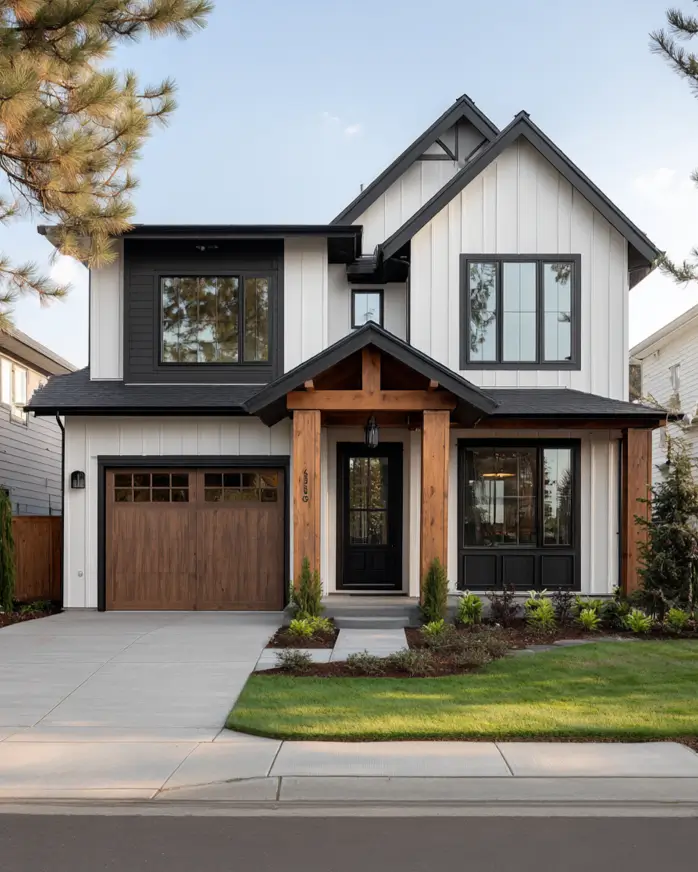
Honey cedar frames this entry while the garage door goes a shade deeper into walnut. Splitting the tones keeps each wood moment distinct instead of matching everything to one stain. Worth borrowing if identical finishes feel too planned.
Wood Garage Doors and Driveways
A white house black trim wood garage door combination solves the hardest facade problem: the garage is often the largest surface facing the street, and one stained door turns it from a blank wall into the main event.
25. Cedar Garage Door
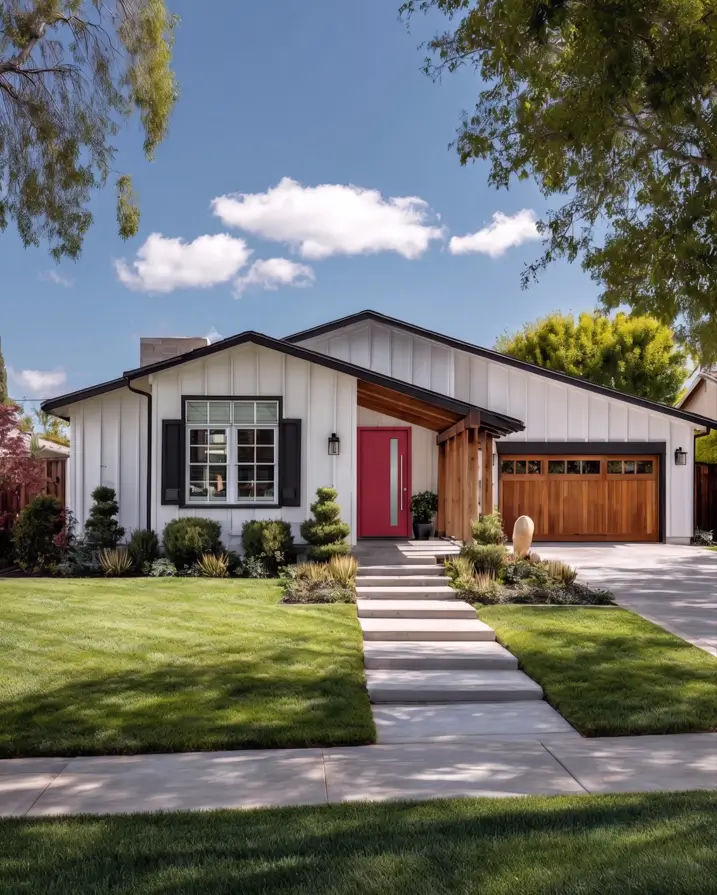
Clear-grain cedar spans this garage door, echoed by rough timber posts at the entry beside it. Matching the two wood moments keeps a low ranch feeling deliberate, letting the red door pop cleanly. It’s a smart choice for street-facing garages.
26. Two-Story Wood Column
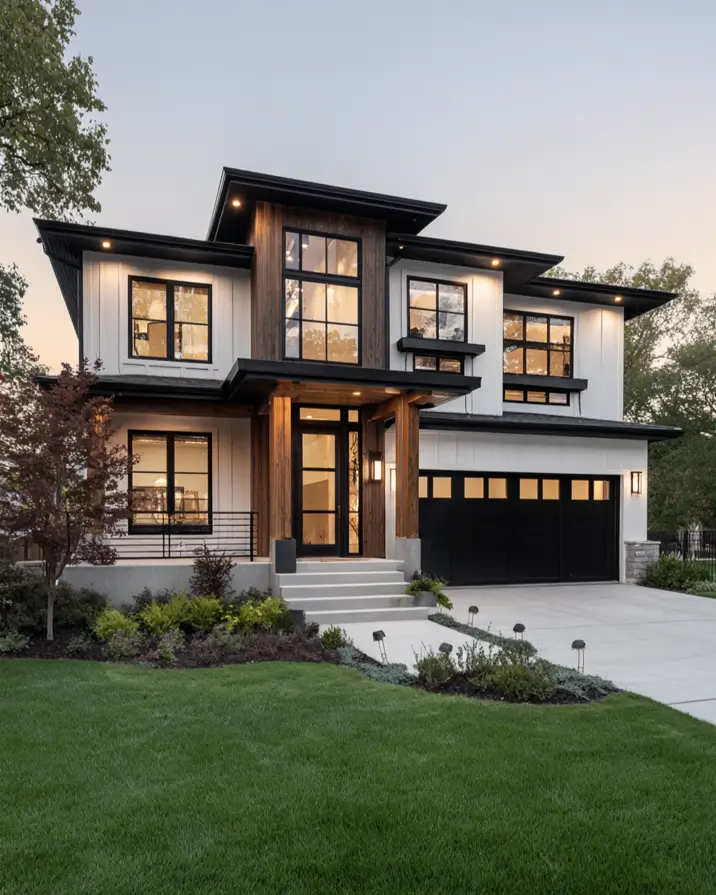
Smoked walnut planks climb this facade from entry canopy to rooftop, stacking the windows into one vertical band. Rather than one accent, the wood becomes the home’s spine, splitting the white wings evenly. We’d copy that trick on any boxy build.
27. Matched Door Trio
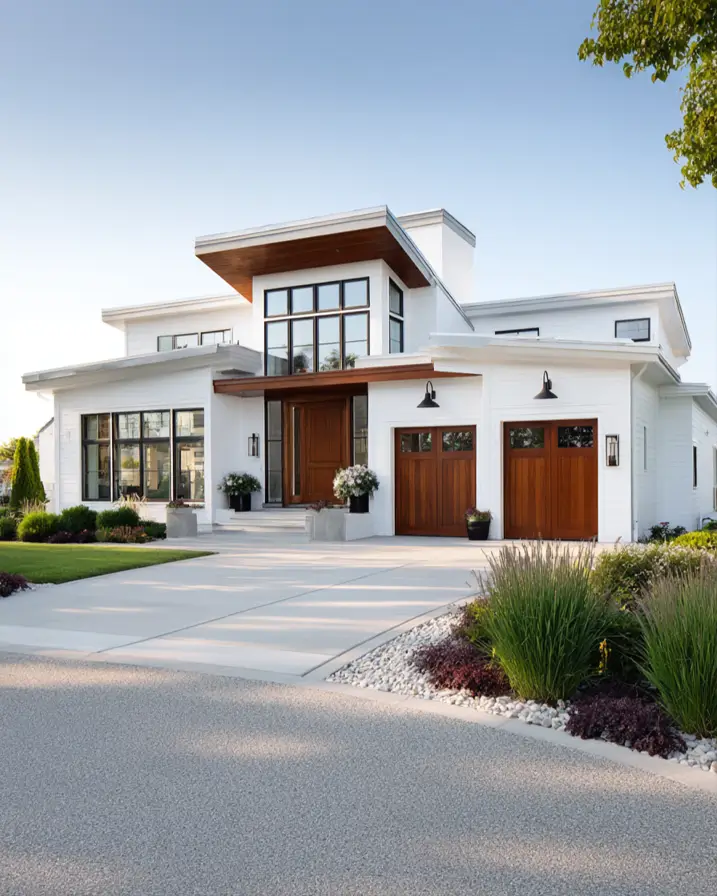
Mahogany carriage-style doors fill both garage bays, matched exactly by the front door between them. Repeating one stain across all three openings makes the entry sequence read as a set. Worth borrowing when the garage faces the street head-on.
28. Timber Carport
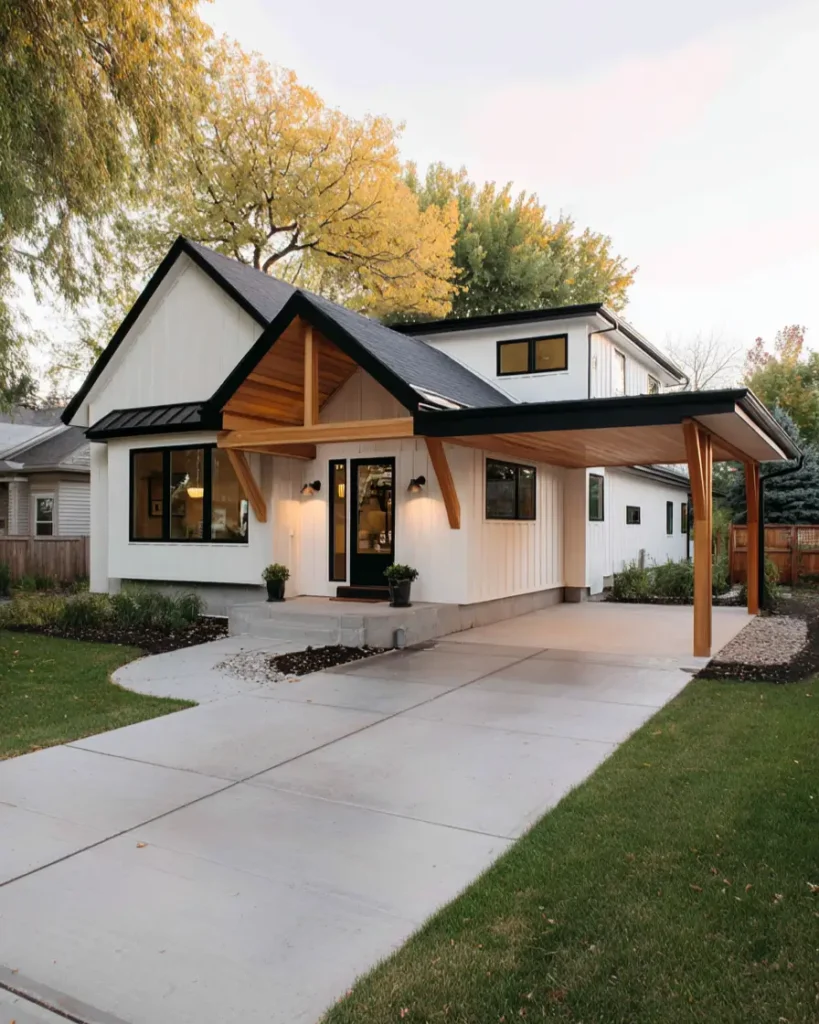
Fir posts and curved braces carry this carport’s roof, matching the entry gable’s exposed framing beside it. Extending the wood structure over the driveway makes even parking feel considered. It’s a smart choice for lots without a garage.
Porches, Pergolas, and Outdoor Living
Black gutters and fascia frame the roofline; wood makes the spaces beneath it worth sitting in. Pergolas, decks, and balconies let the palette follow you outside.
29. Wood-Lined Eaves
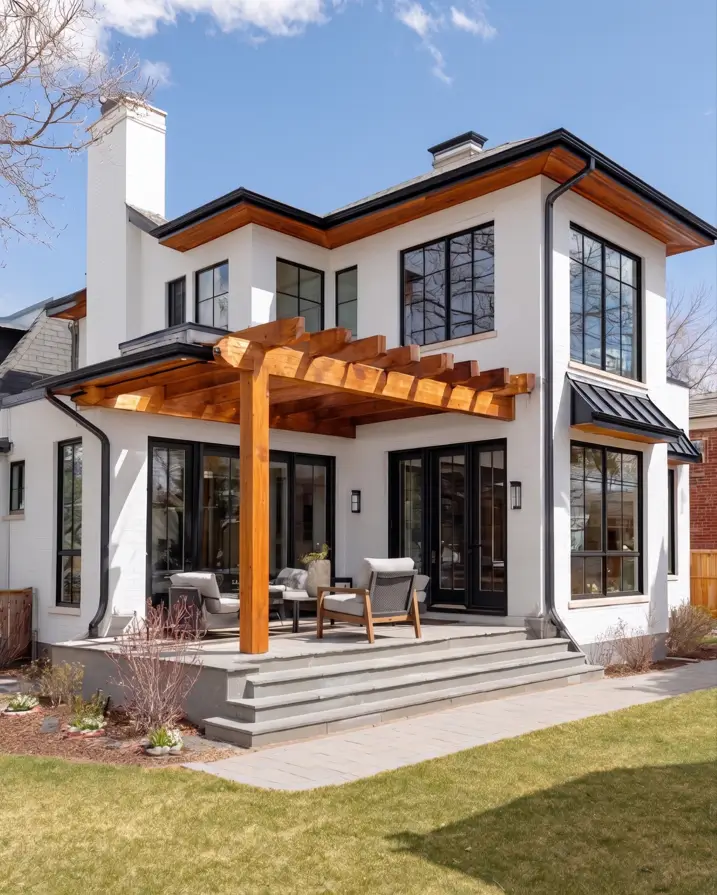
Stained cedar wraps the underside of these deep eaves, matched by a chunky pergola over the back patio. Carrying one wood tone from roofline to ground level ties the two stories together neatly. This look feels custom without a single fussy detail.
30. Matching Wood Fence
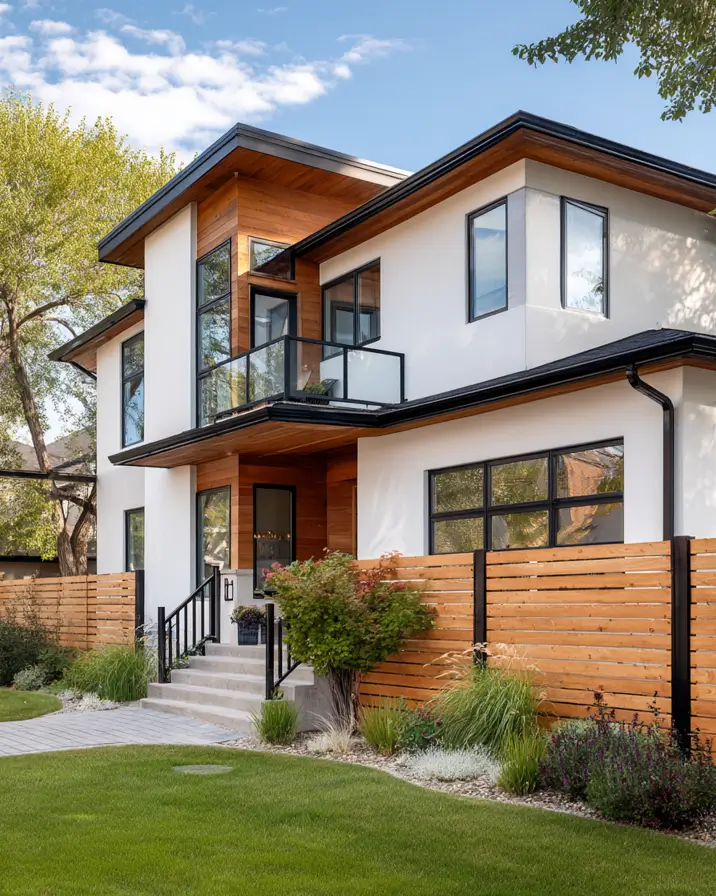
Golden cedar wraps this home’s balcony recess and entry, reappearing in the horizontal privacy fence along the walk. Repeating one wood tone at the fence line pulls the whole yard into the palette. Easy to live with, inside and out.
31. Pergola Dining Room
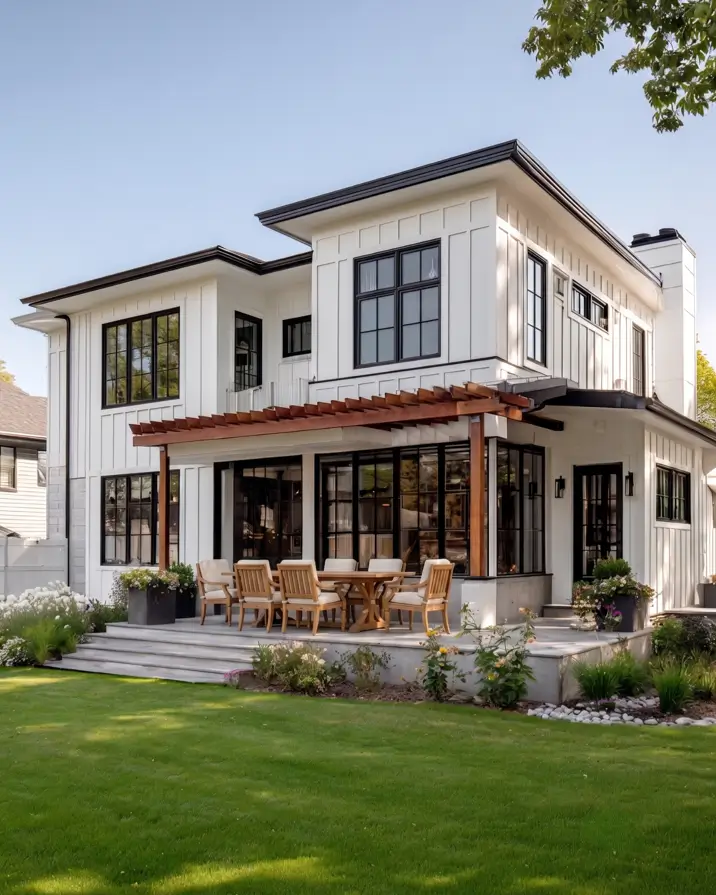
Redwood-toned rafters stretch across this patio, turning the space beneath into an open-air dining room. Matching teak furniture below deepens the warmth against crisp board and batten walls. It’s a smart choice for a backyard that hosts often.
32. Banded Wood Soffits
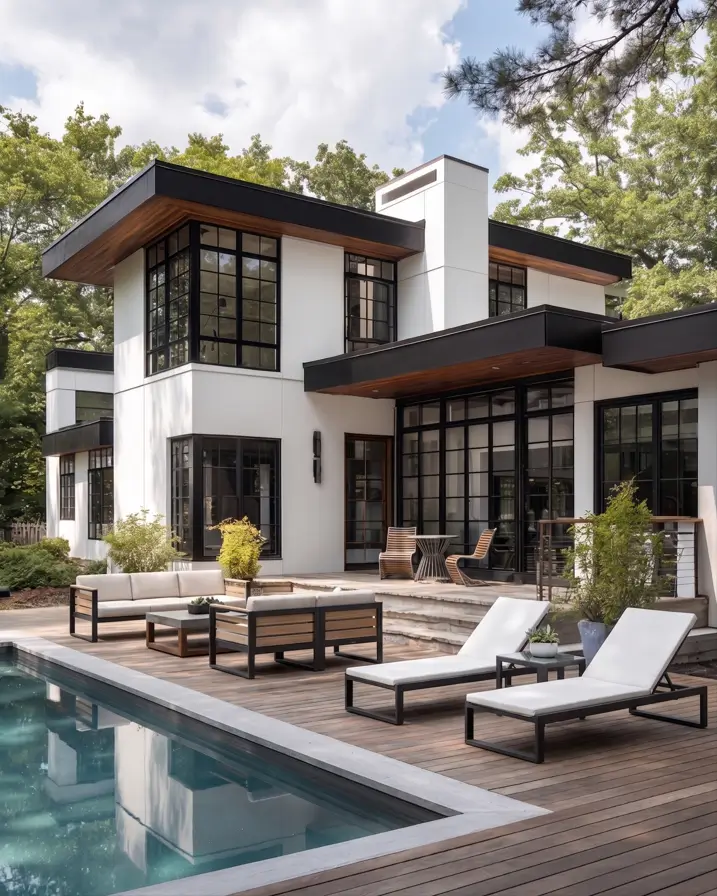
Mahogany-stained soffits line every flat overhang on this home, glowing between the black roof caps and white walls. Wrapping each level in the same band ties a rambling footprint into one composition. Worth borrowing for modern builds with deep eaves.
33. Stacked Cedar Balcony
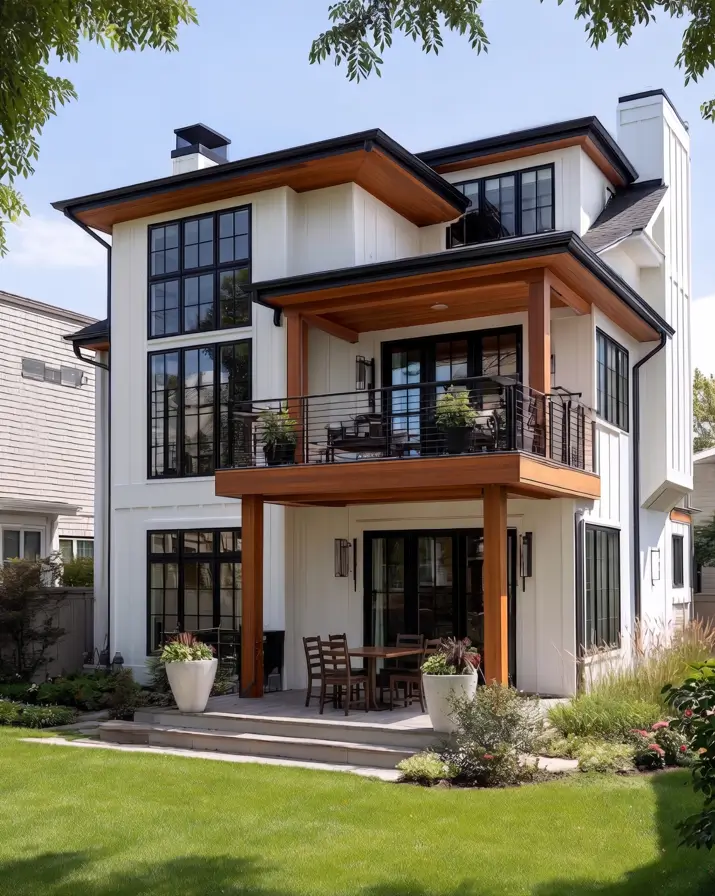
Cedar posts, beams, and decking build this two-story outdoor corner, patio below and balcony above. Stacking both levels in the same wood turns the back of the house into one warm column of living space. Easy to live with year-round.
34. Wood-Wrapped Balcony
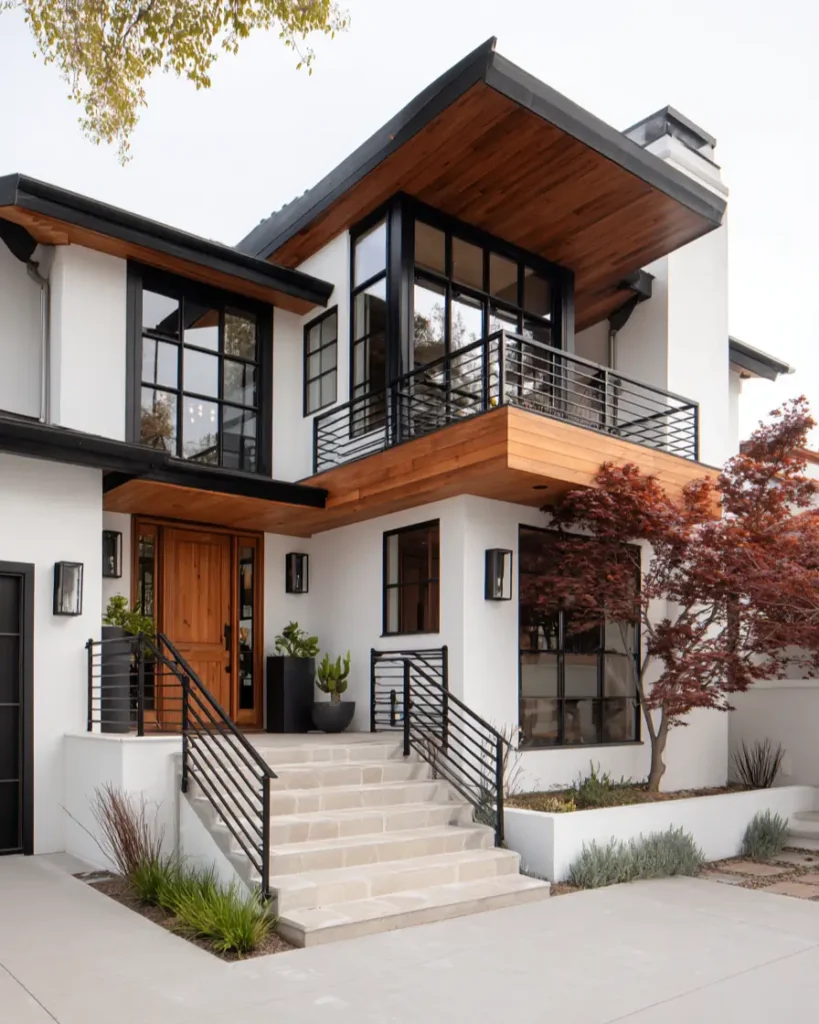
Smooth cedar clads this balcony’s fascia and underside, so the box reads warm from the street. Paired with a knotty alder door at the entry, the wood greets you at both levels. Worth borrowing where a balcony floats overhead.
35. Planter Box Echo
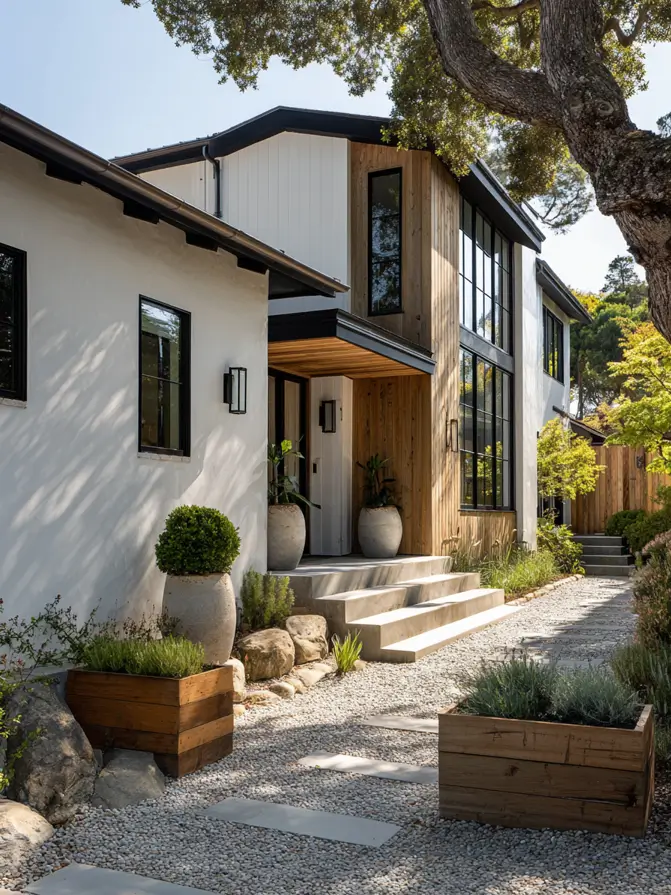
Rough oak planter boxes line this gravel path, matching the vertical cladding on the entry tower ahead. Repeating the wood at knee height leads the eye from garden to door in one unbroken run. We’d steal this for any long approach.
36. Coastal Deck Timbers
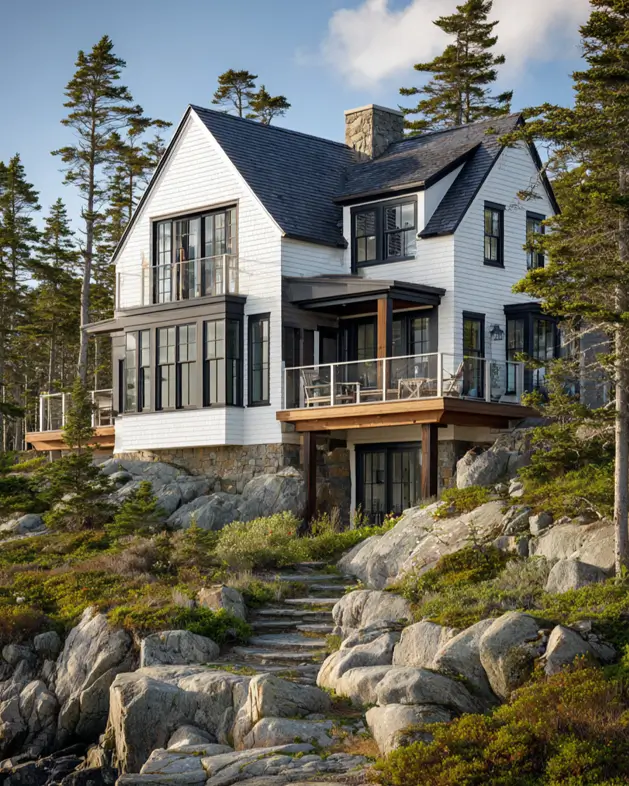
Heavy fir posts and beams carry this deck out over the granite ledge, left unpainted to weather beside white shingles. Salt air will silver the wood slowly, softening the black-trimmed crispness above. This look feels better every year it ages.
37. Floating Teak Canopy
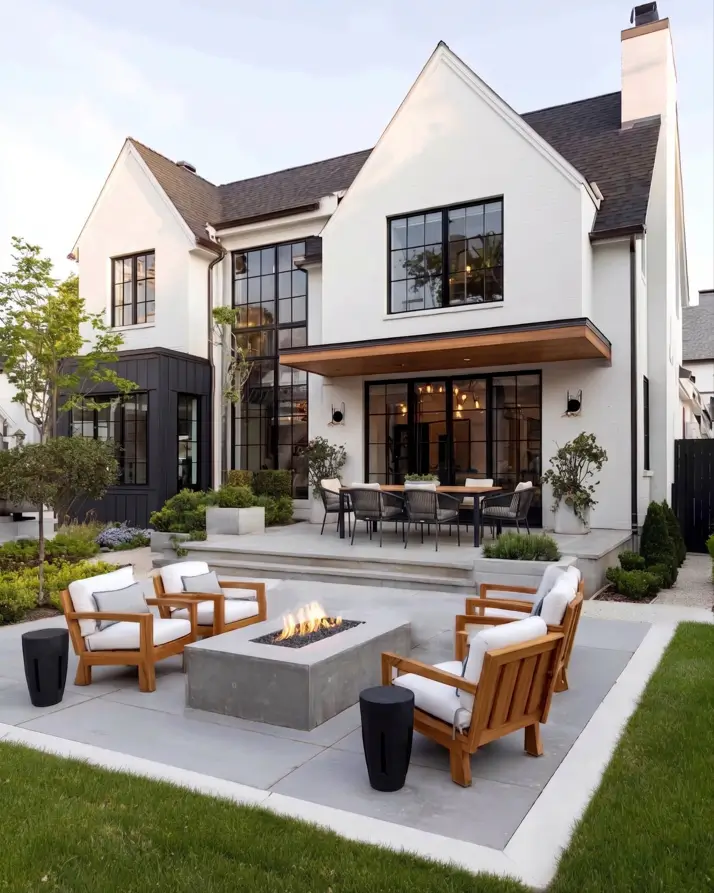
Teak boards line the underside of this cantilevered canopy, hovering shelter over the patio doors without a single post. The warm plane draws the modern Tudor gables down to garden level. We love how it frames evenings by the fire pit.
Bold Wood Statements on Modern White Houses
Sometimes the wood stops being an accent and becomes architecture — full volumes, towers, and ground floors clad in timber against white walls and black steel. These ten go big.
38. Walnut A-Frame
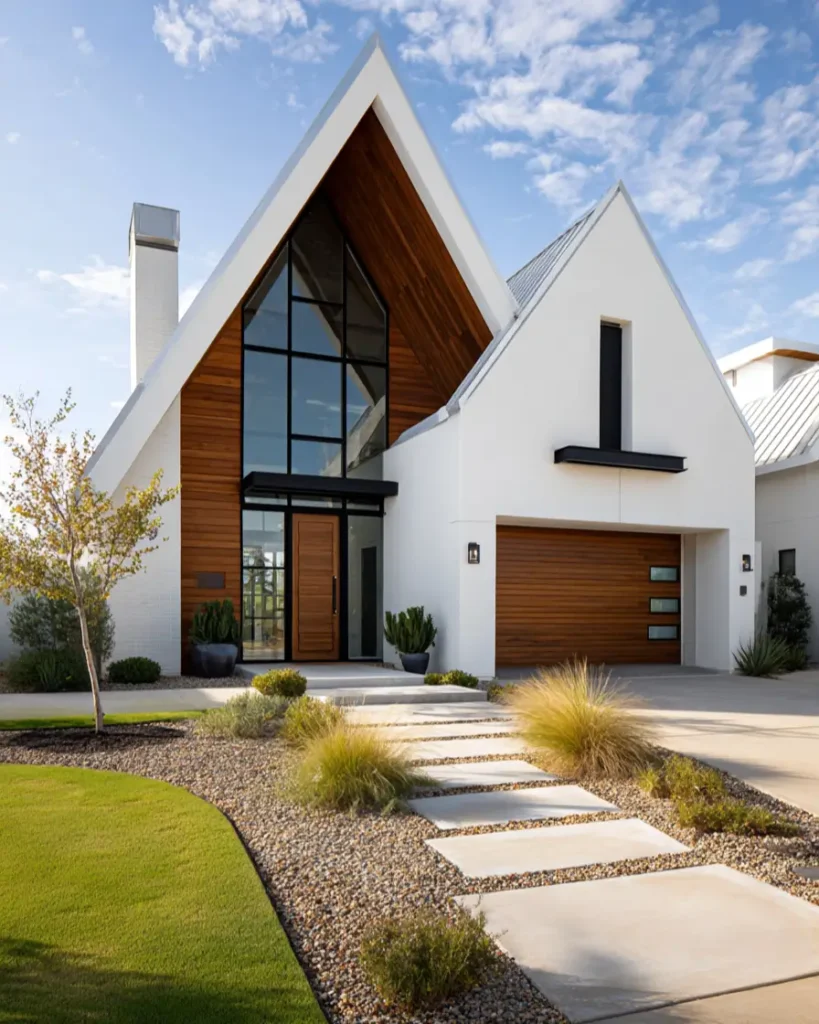
Rich walnut planks fill this dramatic A-frame gable, wrapping down around a matching door and garage below. Against the white stucco, the black-gridded glass wall keeps all that wood feeling architectural rather than rustic. Worth borrowing for a new build.
39. Walnut Corner Volume
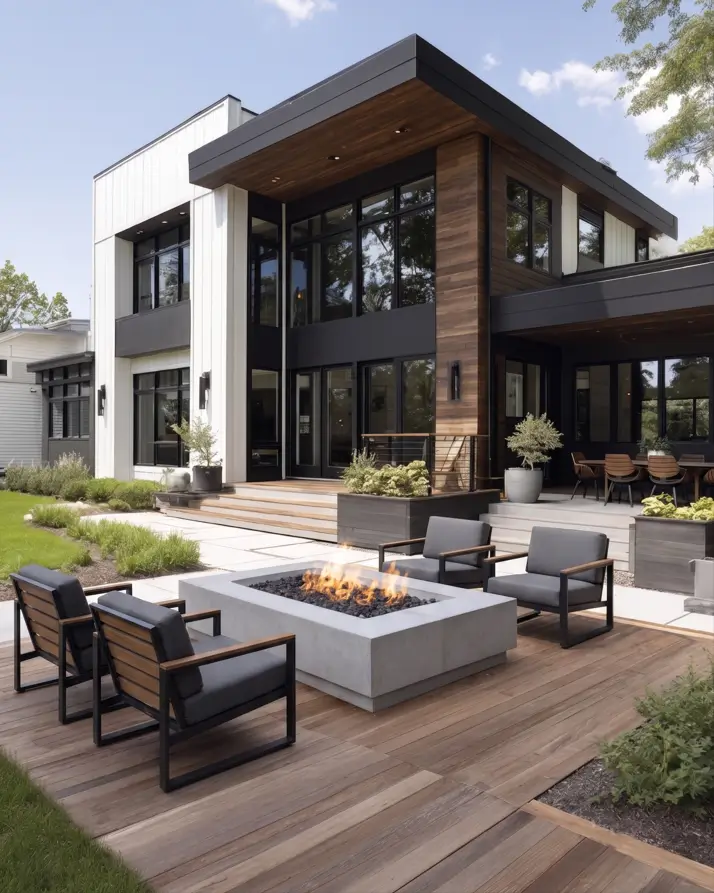
Dark walnut shiplap wraps this home’s entire corner block, from ground level to roofline. Cladding one full volume instead of trim pieces gives the white facade a bold anchor, repeated in the decking below. This look feels confident at any scale.
40. Teak Glass Tower
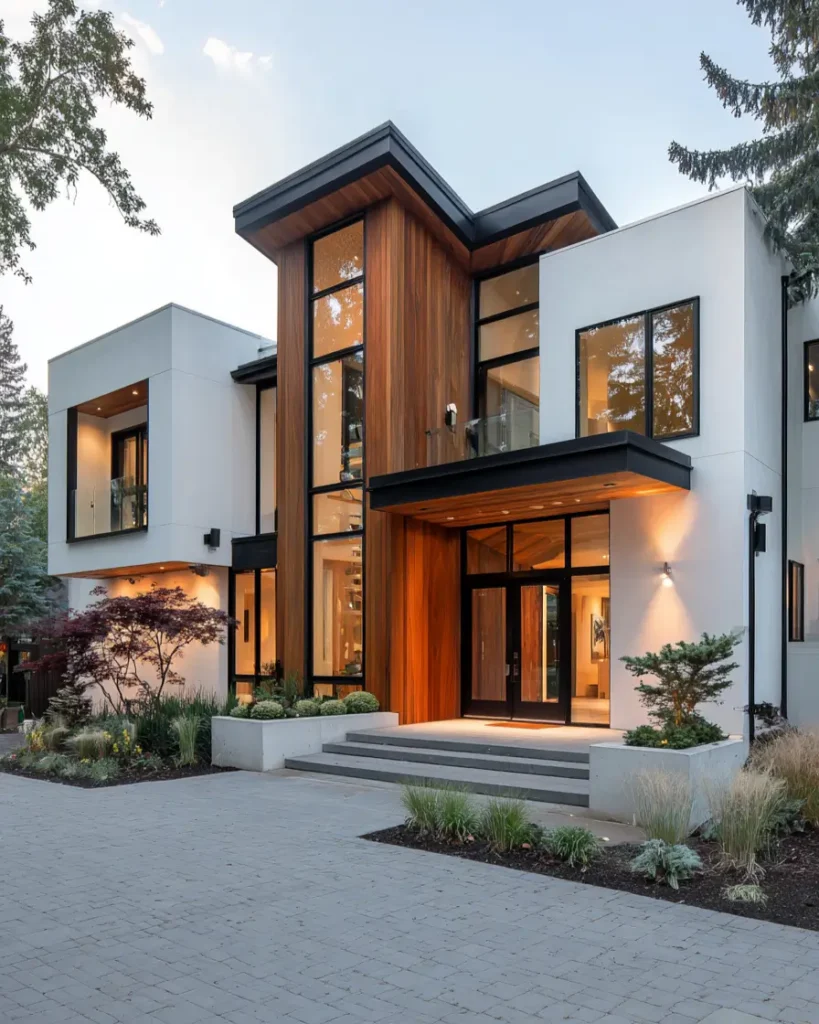
Reddish teak boards climb this entry tower, alternating with stacked windows so the wood and glass share one column. Lit from within at dusk, the grain reads like a lantern between the white volumes. It’s a smart choice for a grand entrance.
41. Desert Teak Slats
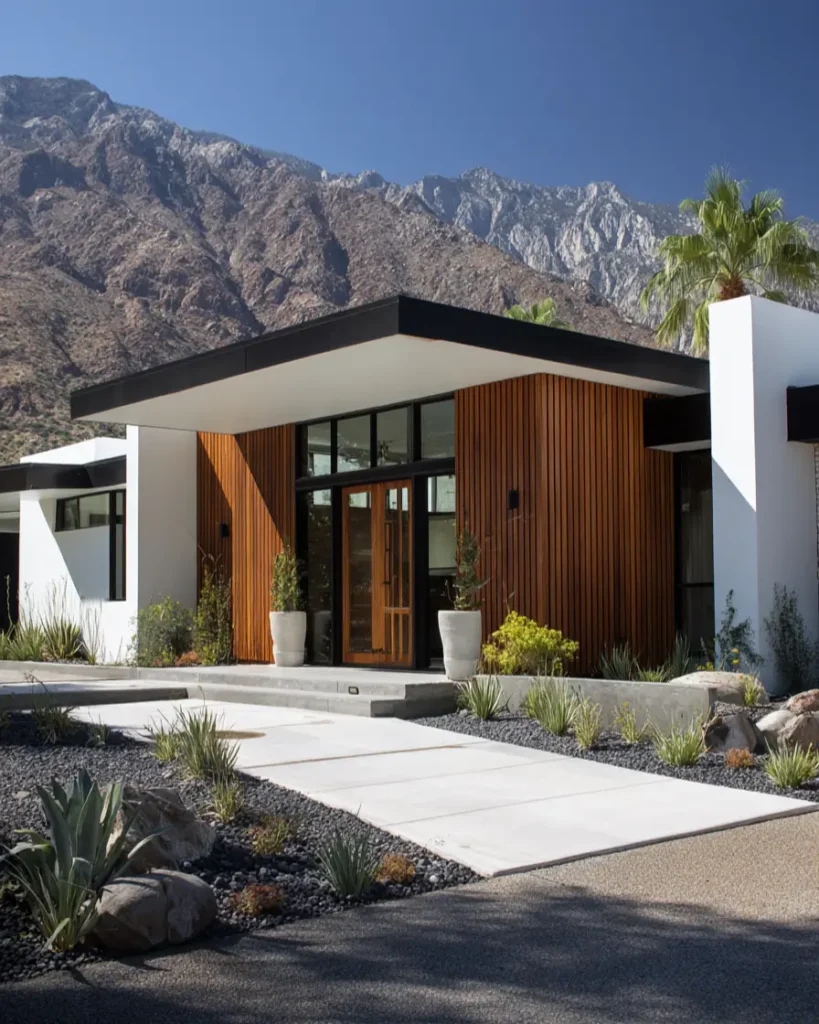
Narrow teak slats ribbon this entry volume, their shadows shifting across the grain through the day. In the desert light, the warm wood keeps white stucco and black steel from feeling severe. Easy to live with on sun-drenched lots.
42. Mixed-Tone Cladding
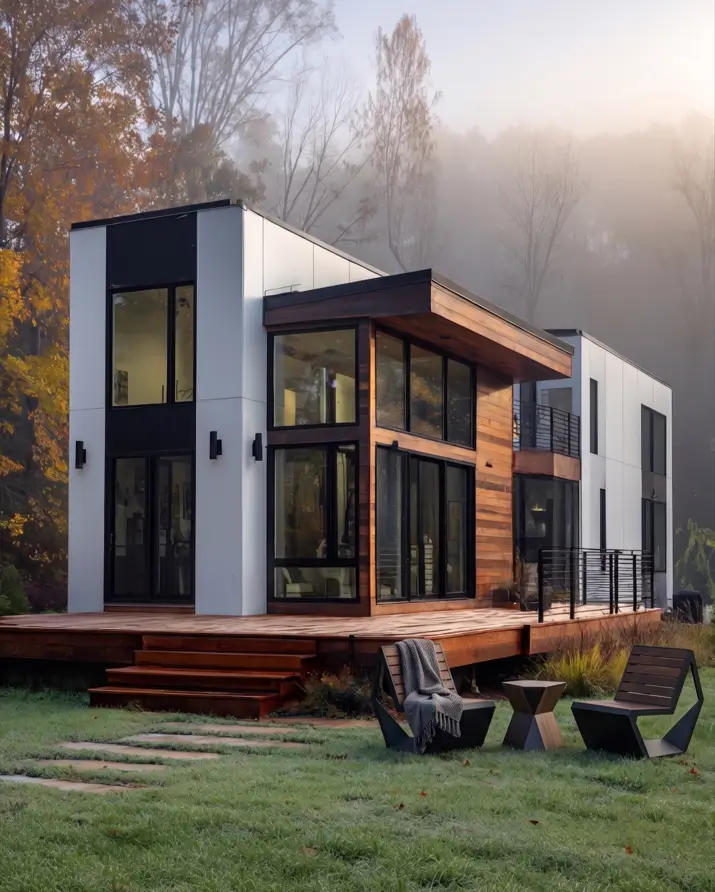
Reclaimed-look boards in honey, amber, and umber clad this projecting bay, no two planks quite alike. The tonal variety adds movement that single-stain siding can’t, especially in flat morning fog. We love wood that shows its history.
43. Cedar Wing Walls
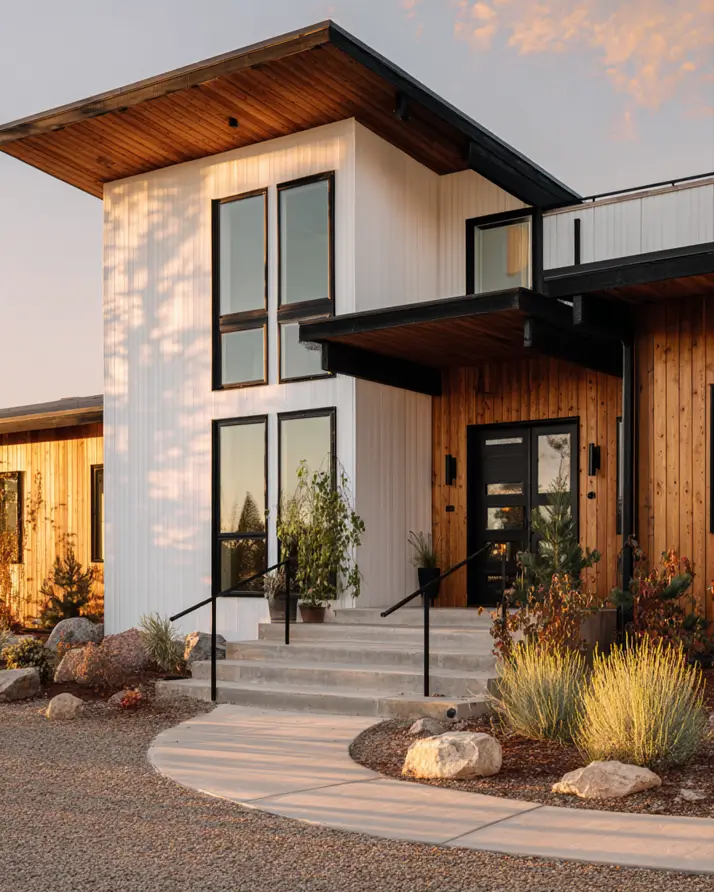
Knotty cedar sheathes both wings of this home, leaving the tall entry tower crisp white between them. Letting the wood run wall-to-wall turns the accents into architecture while the white keeps center stage. This look feels rooted in its high-desert setting.
44. Spanish Cedar Wing
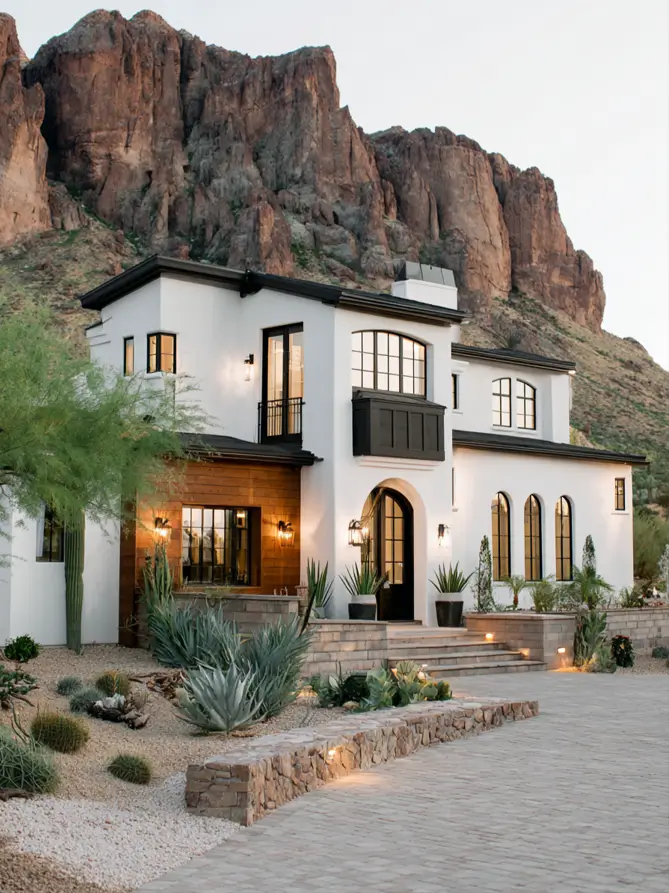
Cedar shiplap wraps this lower wing, breaking up smooth white stucco beneath arched black windows. On a Spanish-style home, the horizontal wood adds a ranch note the stucco tradition usually skips. It’s a smart choice against a desert backdrop.
45. Wood Ground Floor
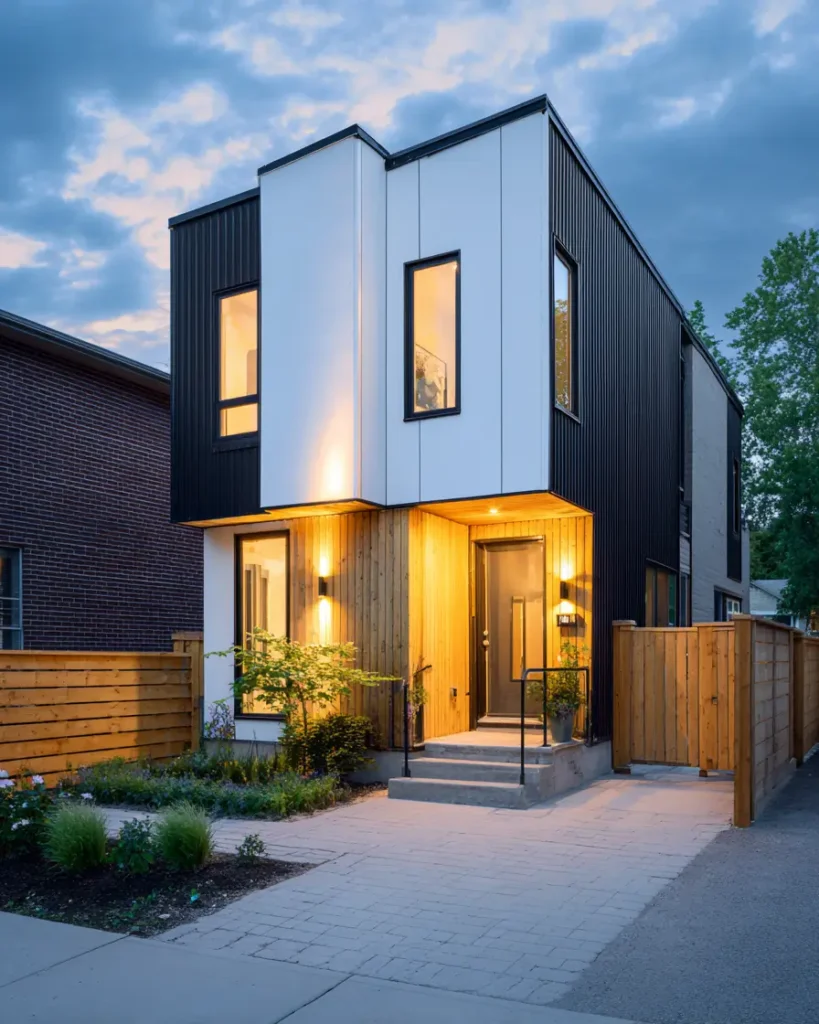
Pale pine boards wrap this home’s entire ground level, with the white and black volumes stacked above. Treating the base as wood grounds a sharp urban infill and warms the walk to the door. Worth borrowing for narrow city lots.
46. Connective Cedar Panels
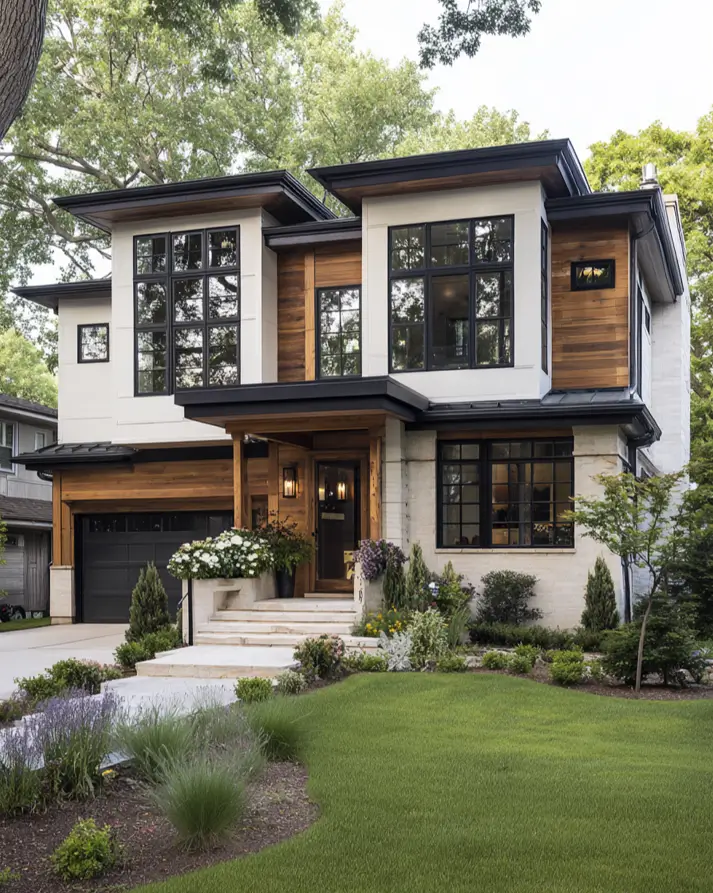
Cedar infill panels link this home’s white volumes, filling the recesses between bays, entry, and garage. Letting the wood live in the joints softens every transition the boxy massing creates. This look feels cohesive from any angle.
47. Carved Cedar Void
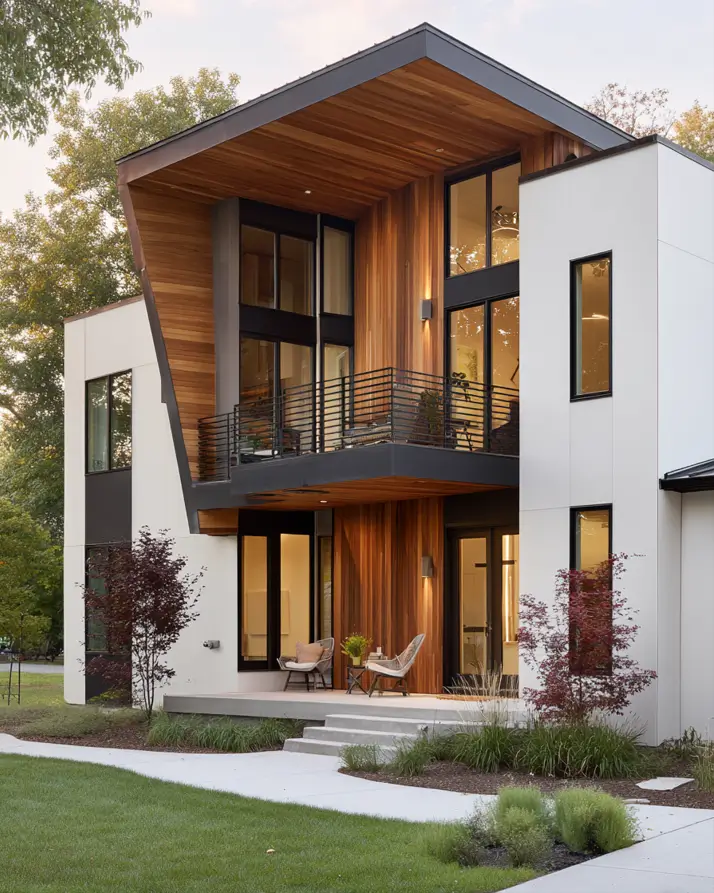
Clear cedar lines this two-story recess, covering every wall and ceiling inside the cut-out. Wrapping the void makes the balcony and porch below glow like the house’s warm interior showing through. Worth borrowing on any flat modern facade.
Choosing the Right Wood Tone Against Black Trim
Medium warm woods — cedar, honey oak, and teak — hold their own best against black trim, while very dark stains tend to disappear into it. Here’s how the common tones behave:
- Cedar, honey oak, and teak — the safest picks; clearly lighter than the trim, so the contrast stays sharp.
- Walnut — works beautifully, but only with white siding directly behind it.
- Espresso and near-black stains — skip them; they vanish into the trim and the palette collapses to two colors.
- Light larch and white oak — calm and Scandinavian; the black does all the contrast work.
- Gray-washed tones — best on coastal homes, where salt air is slowly heading that direction anyway.
Paint Colors That Get This Look Right
Soft whites like Sherwin Williams Alabaster and Benjamin Moore White Dove pair best with near-black trim shades like SW Iron Ore or Tricorn Black. Pure bright whites can feel harsh next to true black, which is why designers usually reach for these gentler pairings. Iron Ore in particular reads black from the street but keeps a touch of charcoal softness up close.
A quick porch test helps here: paint sample boards, lean them against the house, and watch them through a full day. White shifts more than any other exterior color — what looks crisp at noon can turn cold by evening.
Where Wood Accents Earn Their Keep
The front door, garage door, and porch ceiling are the three spots where wood accents give the most impact for the least commitment. A white house with cedar accents at just the entry reads warm from the street without a single board anywhere else, and a stained garage door can carry the palette on homes where the driveway faces forward.
On a modern farmhouse exterior with black windows, the porch ceiling is the sleeper pick. It’s protected from weather, so it stays looking fresh for years, and it glows every evening once the porch lights come on.
Frequently Asked Questions
Is white with black trim going out of style?
No — this palette predates the modern farmhouse trend by more than a century, showing up on Italianate and Colonial homes from the 1800s. Trends change the details around it, but high contrast plus natural wood keeps renewing itself.
Should gutters match the trim or the siding?
Match the gutters to the trim. Black gutters and fascia disappear into the roofline as one clean band, while white gutters chop the edge into stripes. It’s one of the cheapest upgrades with the most visible payoff.
How often does exterior wood need re-staining?
Expect to re-stain exterior wood every three to five years, depending on sun exposure. South- and west-facing wood fades fastest; protected spots like porch ceilings can go a decade untouched.
Bringing the Look Home
Start small: one stained door or a cedar porch ceiling is enough to test whether this palette suits your house, and every idea above scales up from there. If you’re weighing other palettes, our guides to sage green houses with black trim and cream and black house exteriors show how the formula shifts with softer bases.
About the Author: Fah Arinya