
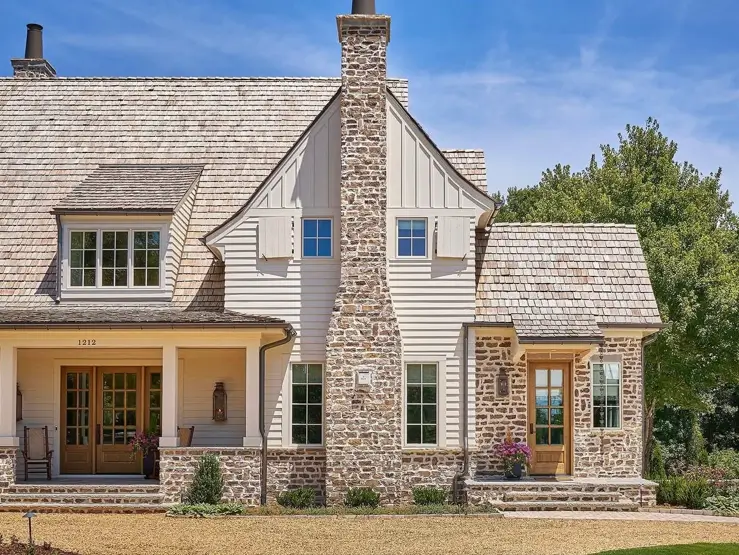
There’s a reason a white farmhouse with stone exterior accents stops people mid-scroll. White siding alone can read a little flat, and stone alone can feel heavy. Together, each one softens the other. The white stays crisp, the stone adds texture, and the whole facade looks like it’s been sitting on that land for a hundred years.
I’ve grouped these ideas by how the stone is actually used, from a simple fieldstone wainscot to a full chimney climbing the gable end. Some lean rustic, with stacked stone and a wraparound porch. Others read as a modern farmhouse with stone exterior details, with cut limestone, board and batten siding, and black window trim under a dark metal roof.
KEY TAKEAWAYS
- Gray stone reads crisp and current against white siding, while beige, blond, and mixed fieldstone feel warmer and more settled.
- A little stone goes a long way. An entry surround, a chimney, or a low foundation band is often all a white farmhouse needs.
- Most newer homes use stone veneer rather than full-thickness stone, and once installed, the two look nearly identical.
White Farmhouse with Stone Exterior Ideas
Stone Chimneys and Fireplaces
A stone chimney is the easiest way to give a white farmhouse a sense of permanence.
1. Fieldstone Chimney Centerpiece
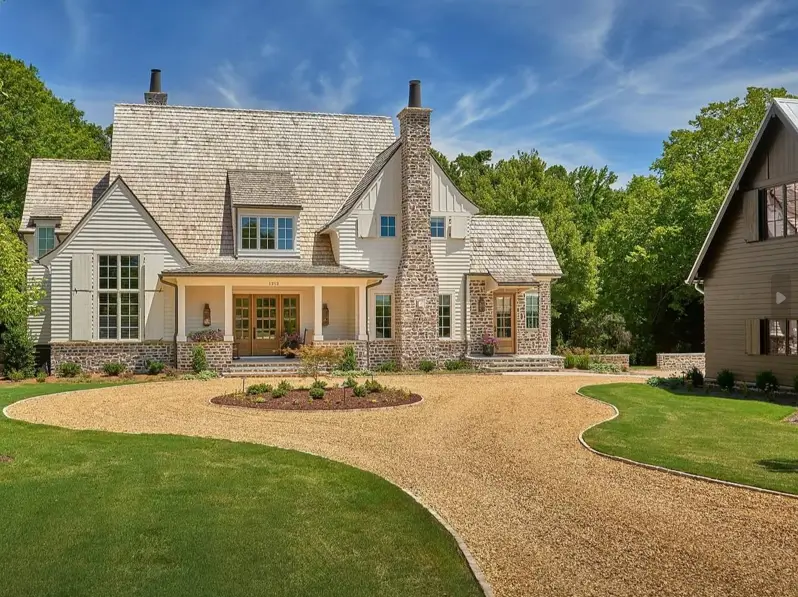
Stacked fieldstone climbs straight past the ridge line, giving this facade its anchor. The same stone repeats along the foundation, so the tall chimney feels connected rather than pasted on. Cedar shake roofing warms the siding. I’d move in tomorrow.
2. Outdoor Fireplace Chimney
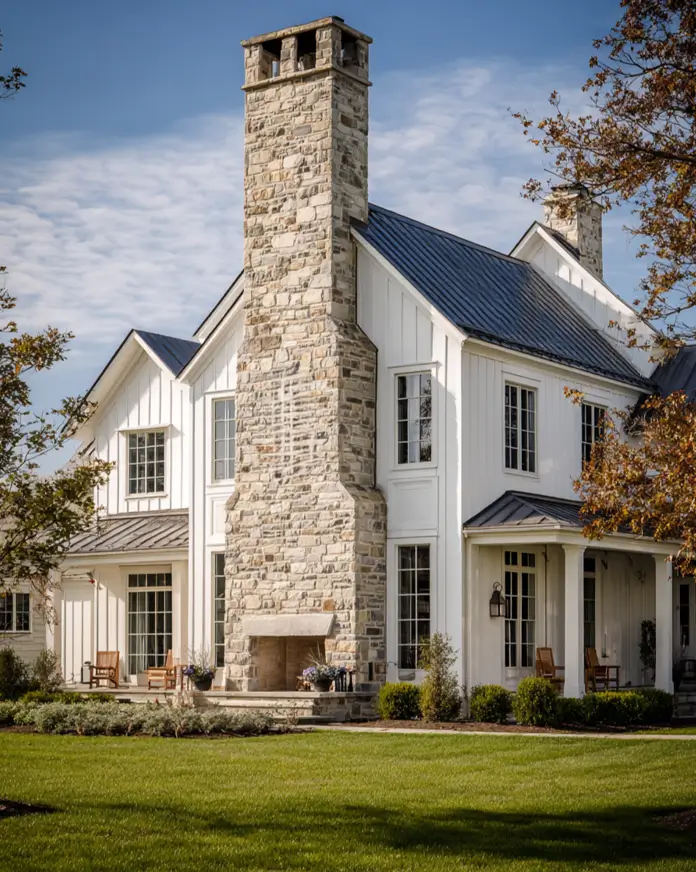
Built into the base of this towering stone chimney is an open patio fireplace, so one flue warms the living room and the back terrace alike. Rocking chairs gather on both sides. The best seat is outside. Fall evenings, sorted.
3. Repeated Stone Accents
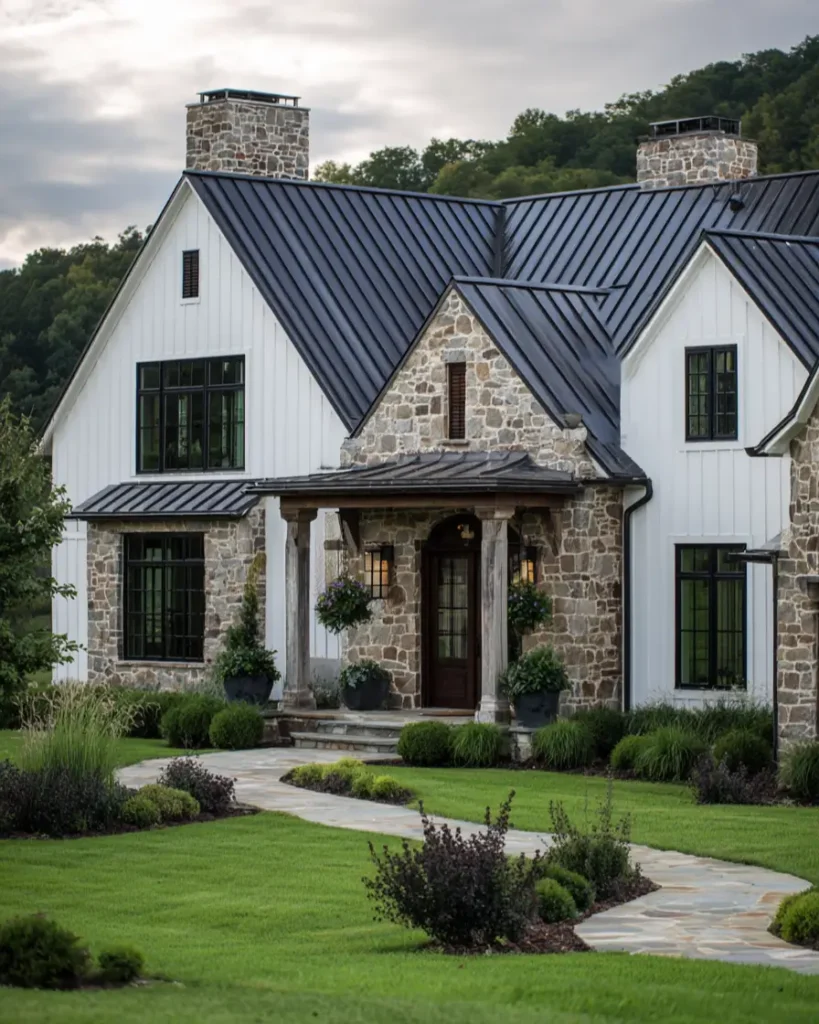
Rubble stone shows up three times: the entry gable, both chimneys, and a low band under the side windows. Repeating one material in small doses ties the wings together better than one grand gesture. Rough porch columns finish the thought.
Stone Entries, Towers, and Gables
Stone around the front door concentrates texture exactly where guests slow down.
4. Stone Entry Gable
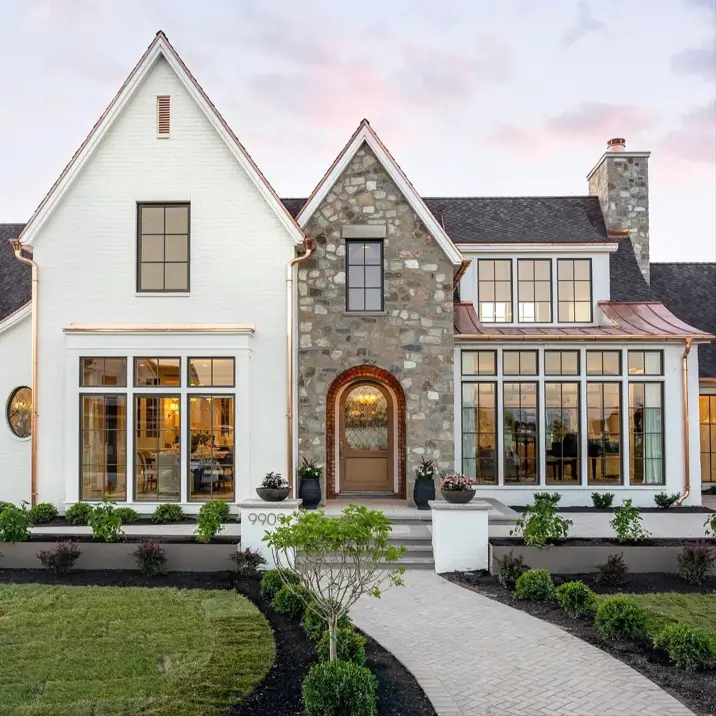
Mixed gray and tan stone wraps the entry gable, framing an arched wood door with a slim brick surround. Copper gutters pick up the stone’s warm tones, so the front feels coordinated without matching. This entry gets me every time.
5. Blond Stone Tower
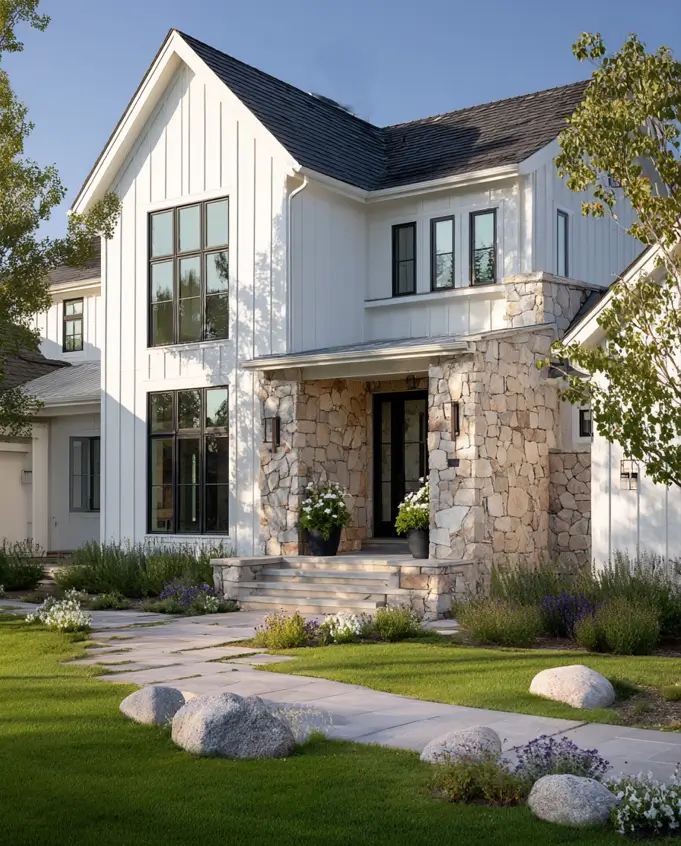
With its sandy blond stone climbing two stories beside the door, this entry feels sunlit even in shade. The tones carry down the stair walls to the lawn’s boulders, so house and garden share one palette. Golden hour lives here.
6. Arched Stone Entry
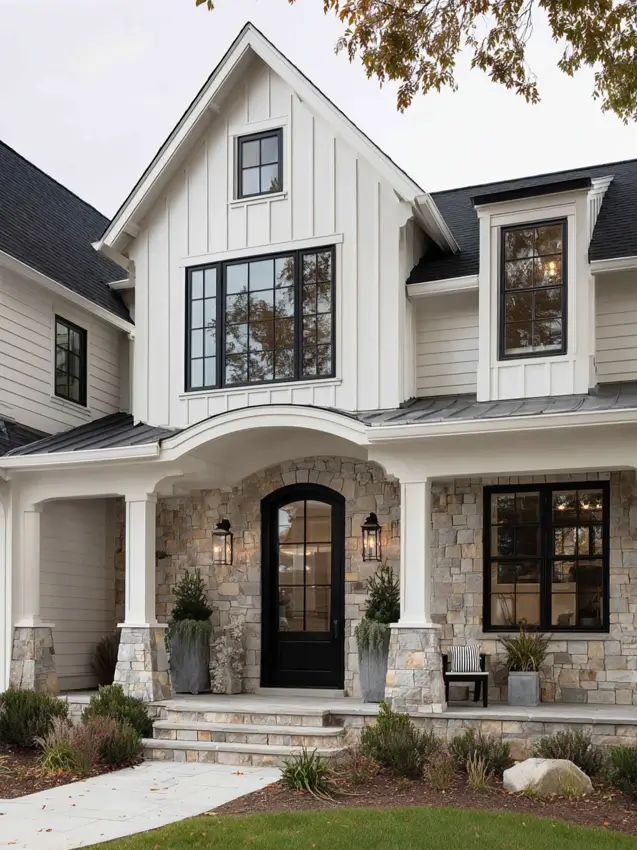
Curves carry this entry. The portico roof bows into a soft arch, the black door repeats the shape below, and squared stone walls hold both steady. That contrast between round and rugged is the whole trick. Effortlessly graceful.
7. Glass and Stone Gable
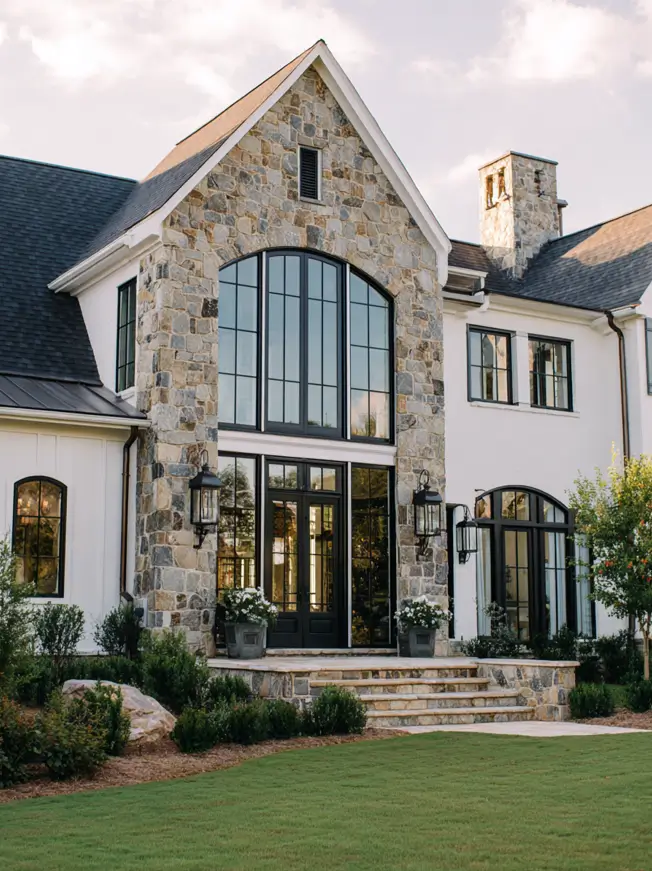
Nearly the whole face of this gable is glass. A two-story arched window wall fills it, so the masonry becomes a thick frame around light, not a solid wall. At dusk it glows like a lantern. Best of both worlds.
8. Limestone Entry Corner
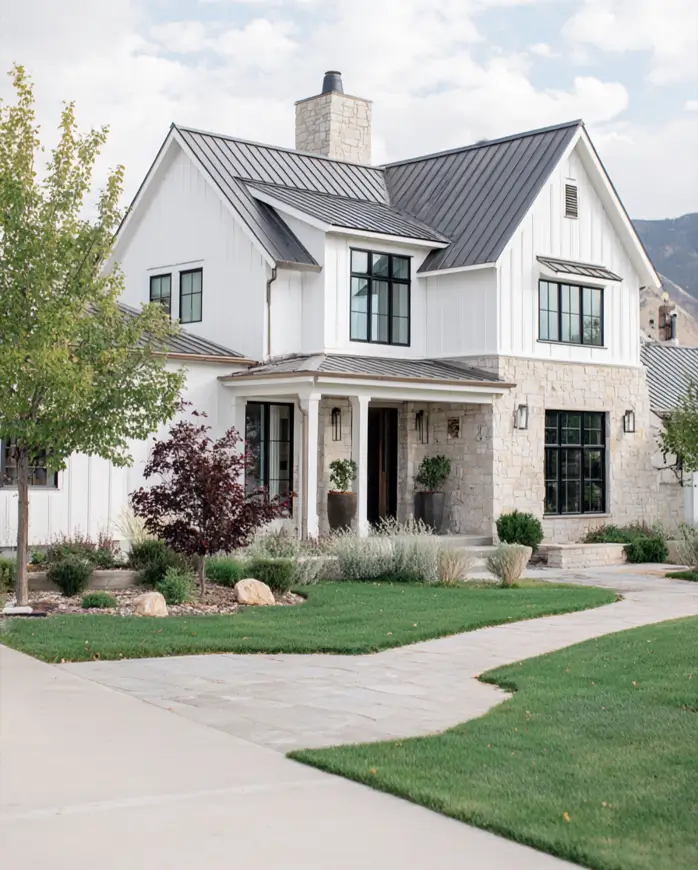
Cream limestone covers just the entry corner and one first-floor wall, and that’s what makes this modern farmhouse with stone exterior work. Black roofing and frames keep the lines sharp, while stone softens where you walk in. Restraint pays off.
9. Sculptural Stone Pylon
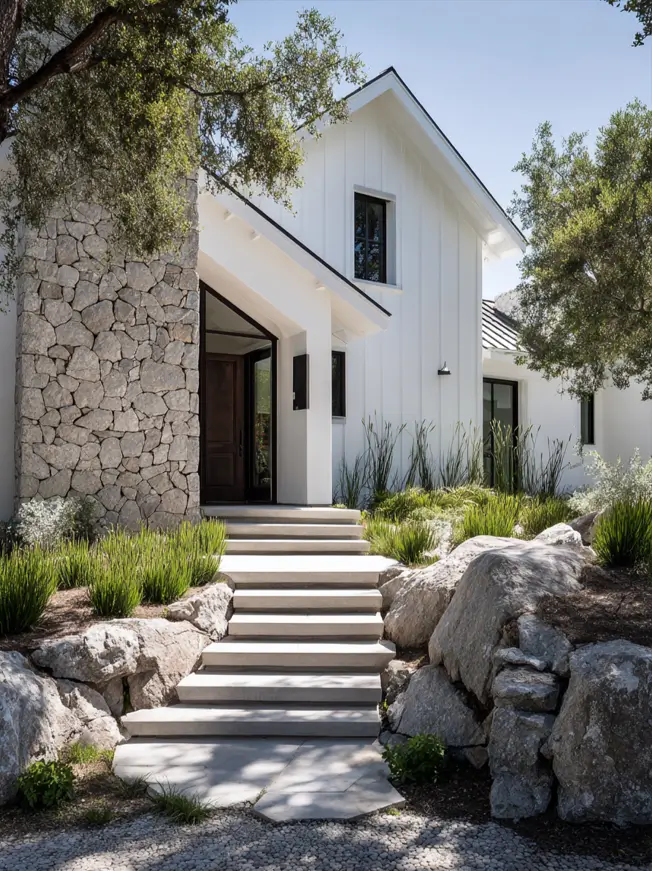
Boulder-scale granite pieces stack into a single tall pylon beside this entry, the only stone on the house. Against clean white siding, that one rugged mass reads like sculpture. Terraced boulders echo it down the hillside. Modern, but never cold.
10. Granite Entry Pavilion
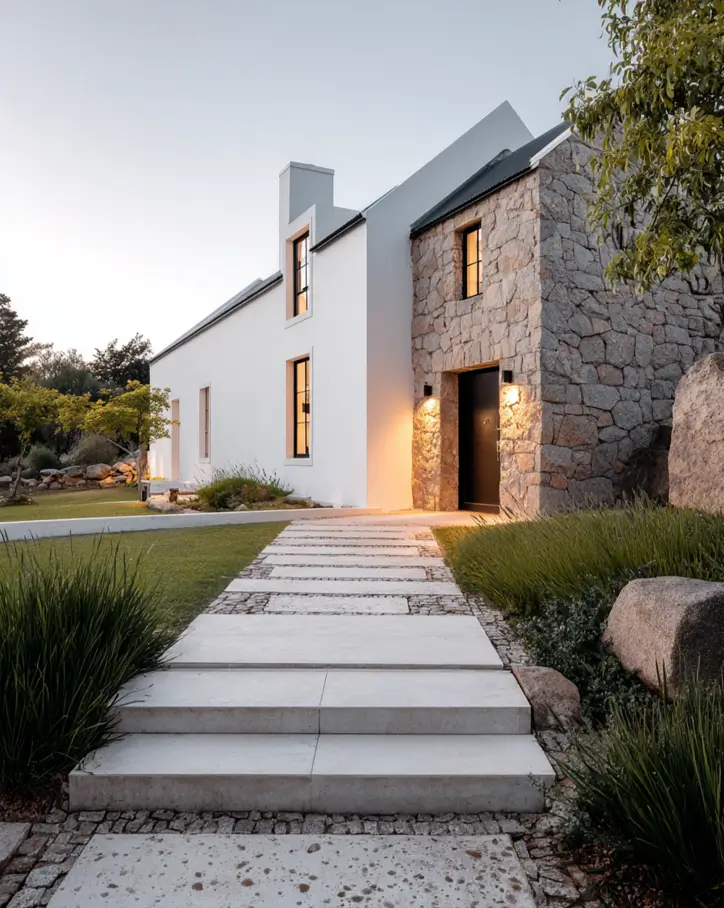
Rough granite forms its own small pavilion at this entry, set against a long wing of smooth white plaster. The stone runs into the natural boulders beside it, so the house seems to begin where the hill ends. Quietly breathtaking.
Stone Wainscots, Bases, and Foundations
Stone along the foundation grounds a white house without covering it.
11. Wraparound Stone Base
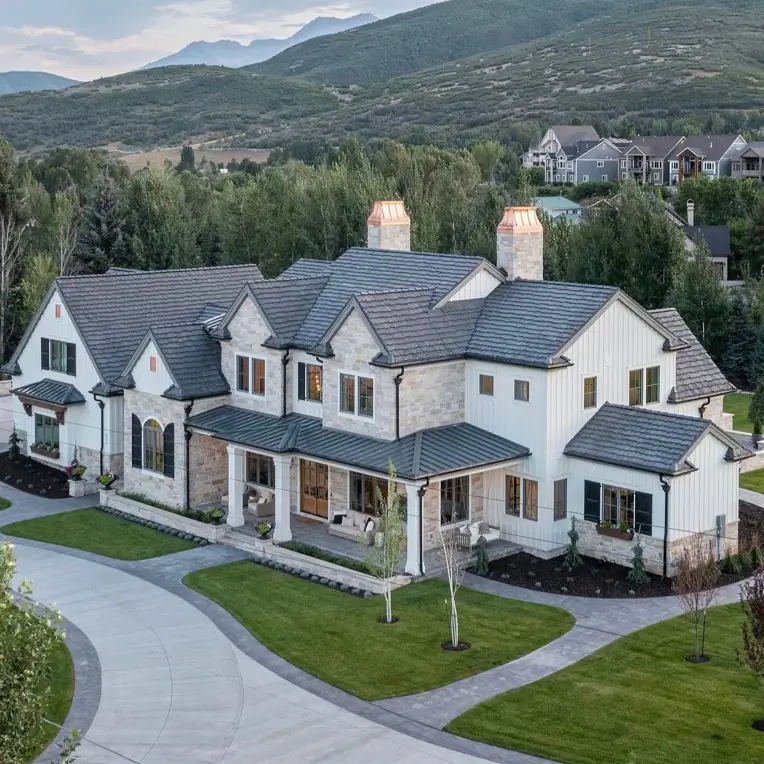
Twin copper-capped stone chimneys rise from a roofline that covers real ground, yet the house holds together. Stone wraps the whole lower story, porch included, and board and batten takes over above. A foundation the hills built.
12. Arched Stone Foundation
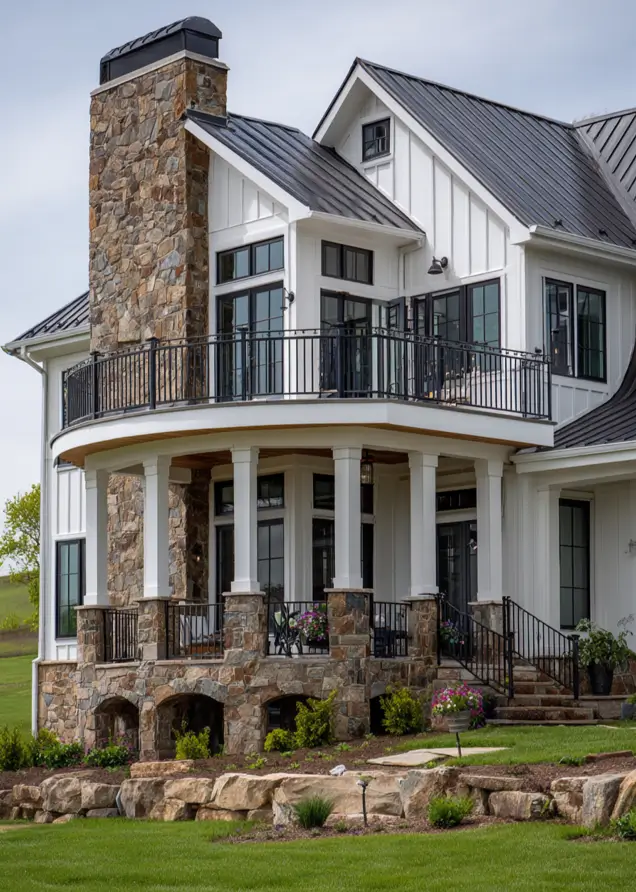
Rounded arches cut into the stone foundation give this hillside farmhouse three shaded bays at ground level. Stone piers above carry white columns, and a curved balcony wraps the corner. Each level gets its own outdoor room. Imagine the evenings.
13. Stone Porch Walls
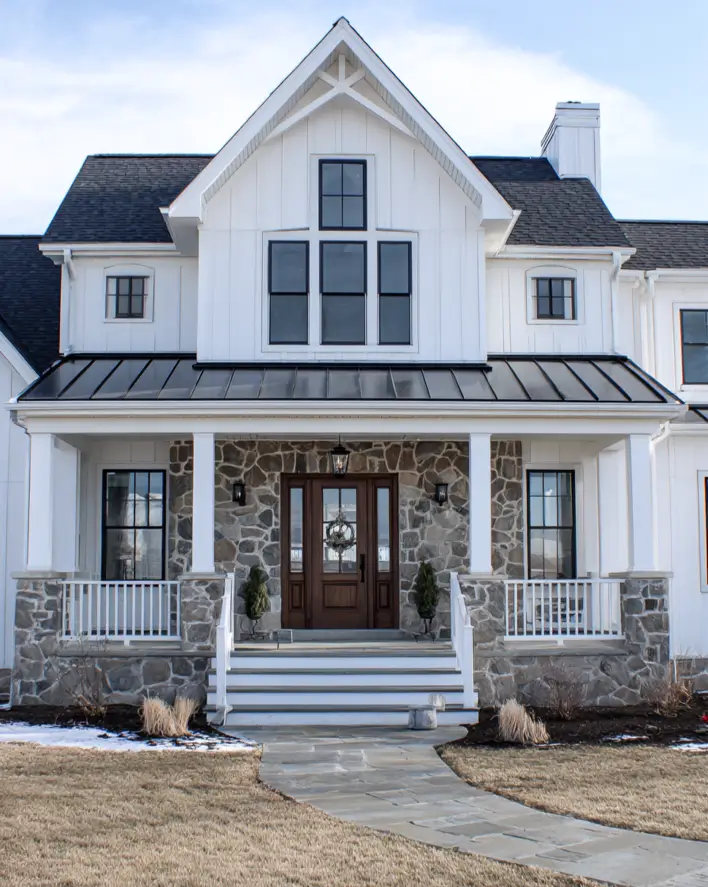
Gray mosaic fieldstone lines this porch’s back wall and skirts its base, with no stone anywhere else. From the street you barely notice it; at the steps it surrounds you. Saving texture for arrival makes a plain front feel generous.
14. Stone at Ground Level
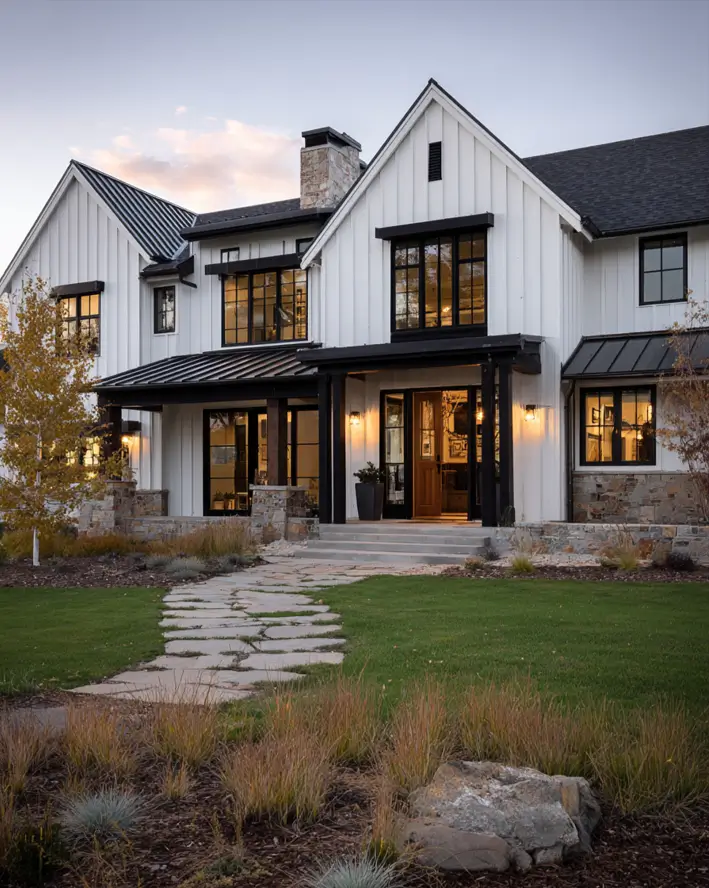
Stone appears only where it touches the ground: post bases, a low wall, and the chimney behind the ridge. Those small doses anchor the dark timber porch without weighing it down. With the windows lit, every bit reads intentional.
15. Uneven Stone Line
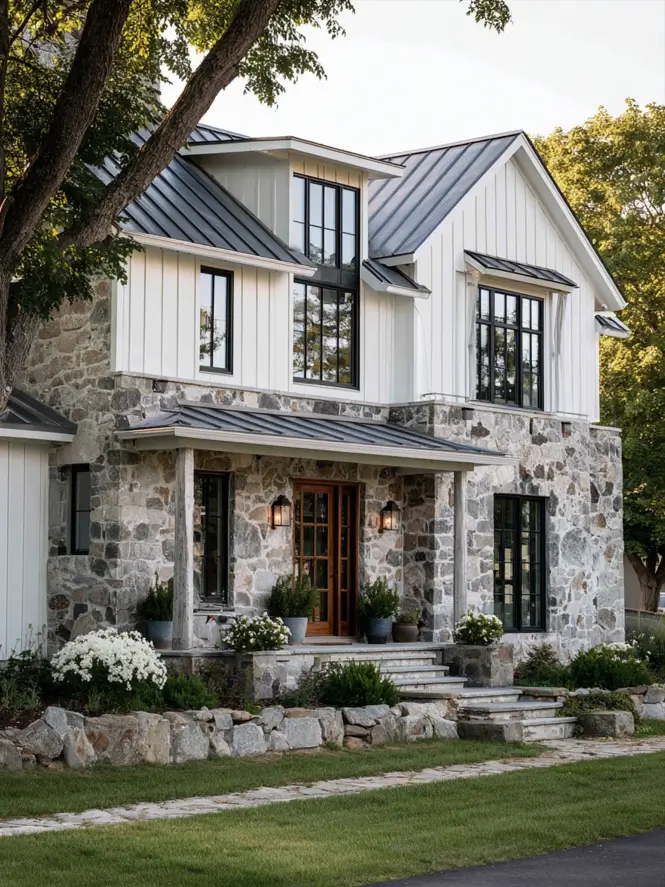
With its stone rising to different heights, this facade skips the expected cutoff. The masonry climbs past the porch roof into a parapet, dips along the side wing, then spills into the garden borders. It grew this way, you’d swear.
Balancing Stone and White Siding
How much stone a farmhouse needs usually comes down to composition, not quantity.
16. Stone Center Bay
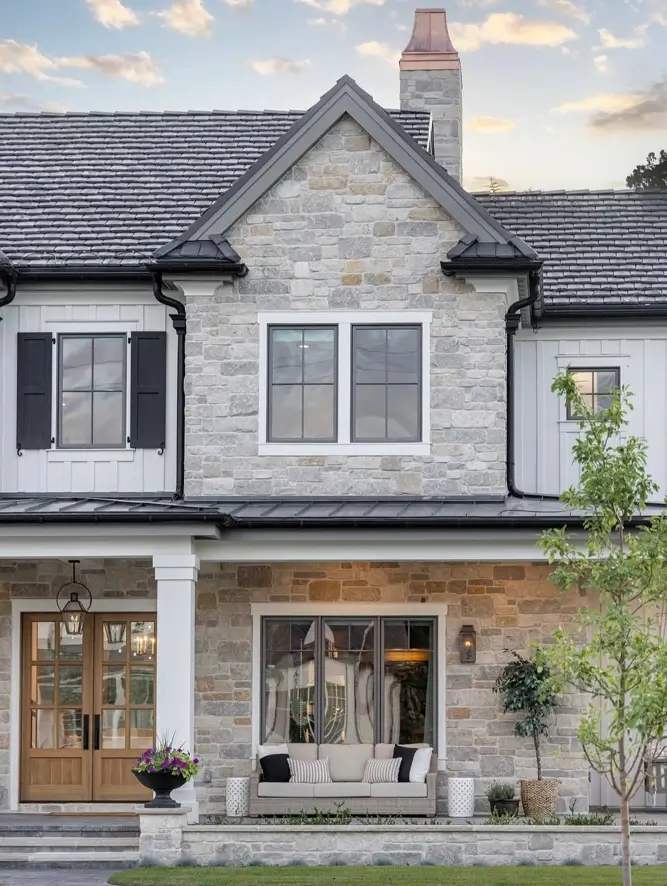
Buff and gray stone runs the height of this center bay, porch wall to gable peak. Board and batten steps back on either side, letting the stone read as the star. Down below, the sofa corner feels sheltered. Pure comfort.
17. Recessed Stone Center
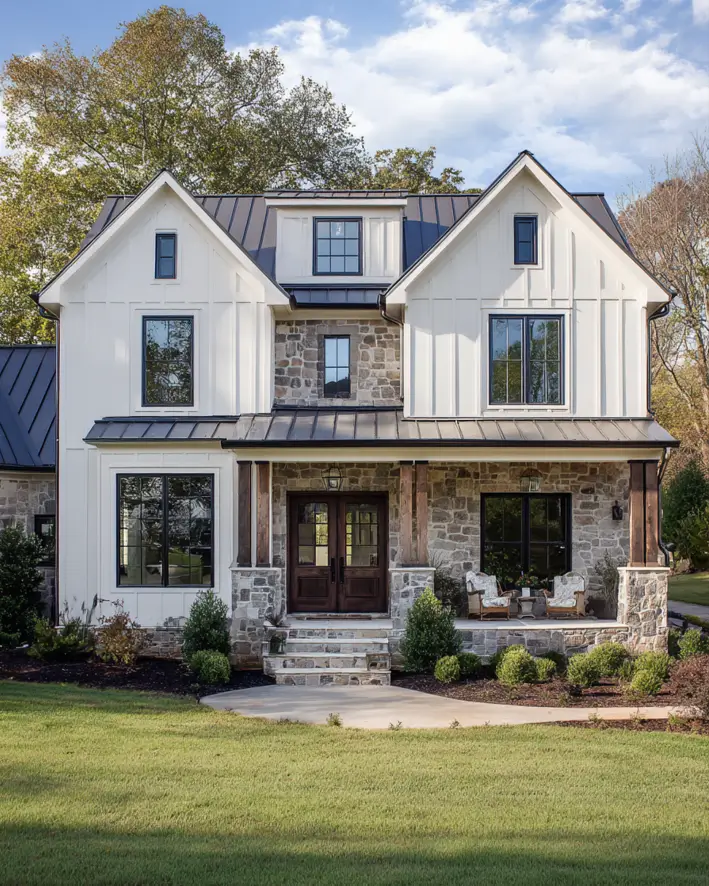
Weathered gray and tan stone fills the recessed middle of this front, while twin white gables step forward around it. That reversal tucks the porch into the coolest, shadiest spot. Cedar posts frame the walnut doors. Come sit a while.
18. Stone Flanking Wings
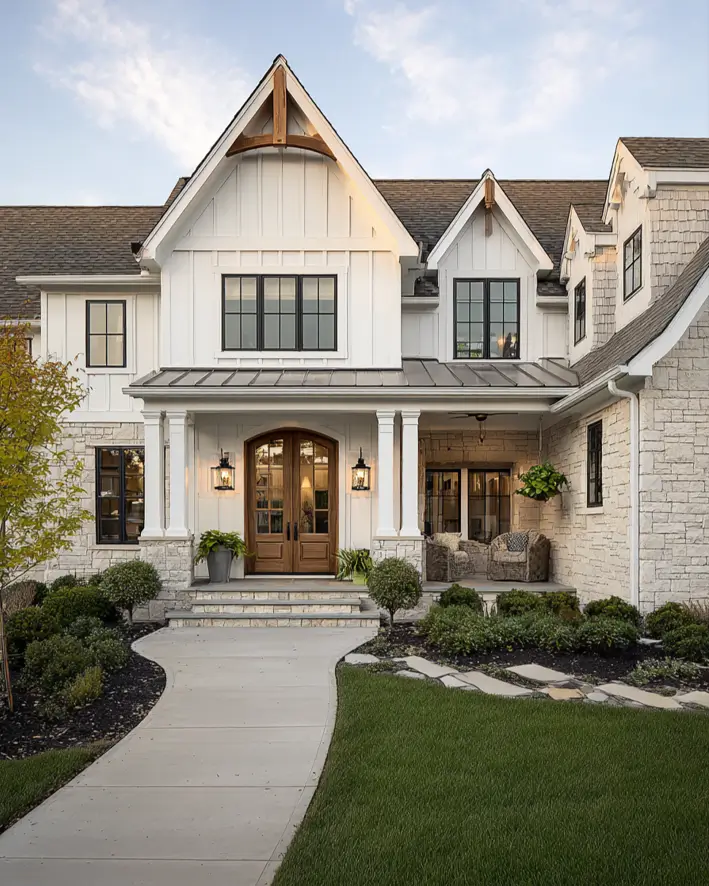
This front flips the usual formula. Siding holds the center while full-height cream stone takes both wings instead of the base. Splitting materials by wing gives the tall entry gable room to stand out. Welcome home, truly.
19. Black Roof Drama
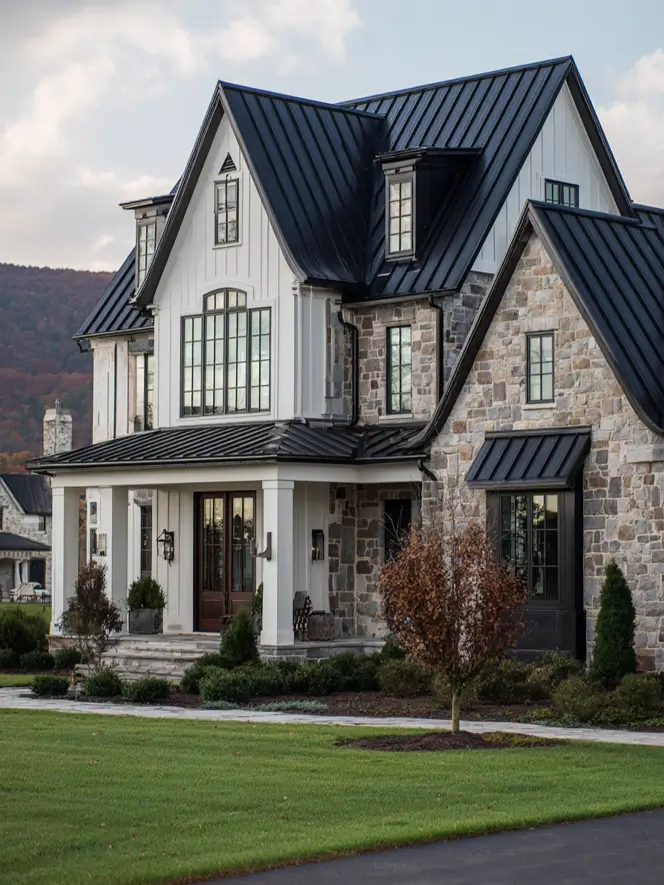
Deep black metal roofs pitch over every gable, changing how the stone reads. Under that dark, the gray and tan stones look moodier, more mountain lodge than farmhouse. White siding on the left keeps it honest. Handsome doesn’t cover it.
20. Shutters on Stone
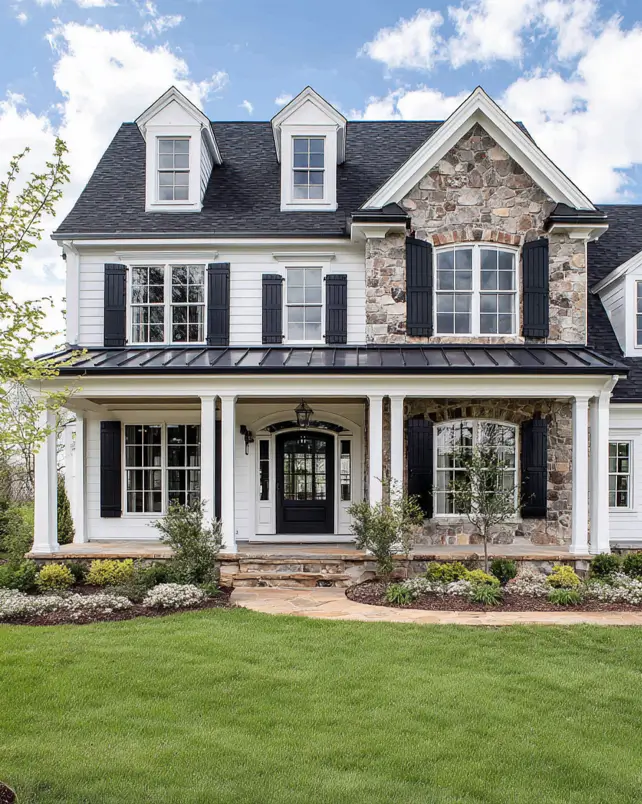
Black shutters sit right on the stone of this colonial wing, and the pairing is sharper than either alone. Dark frames give rounded fieldstones a dressed edge. The porch roof answers in black metal. Traditional, with its collar turned up.
21. Stone-First Cape Cod
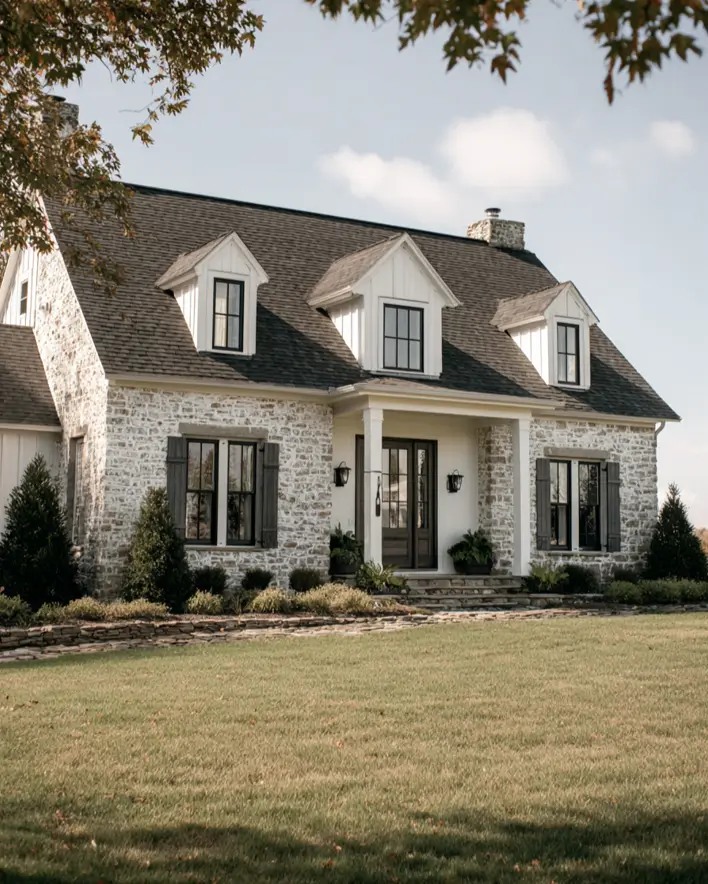
Mortar-washed stone covers this first floor, and the white farmhouse part only shows up in three dormers punching through the roof. Flipping that ratio makes the house feel older than it is. Weathered shutters lean in. Some houses feel settled.
Soft, Tone-on-Tone, and Painted Stone
Pale, limewashed, and painted stone keeps the look calm and lets texture do the talking.
22. Tone-on-Tone Stone
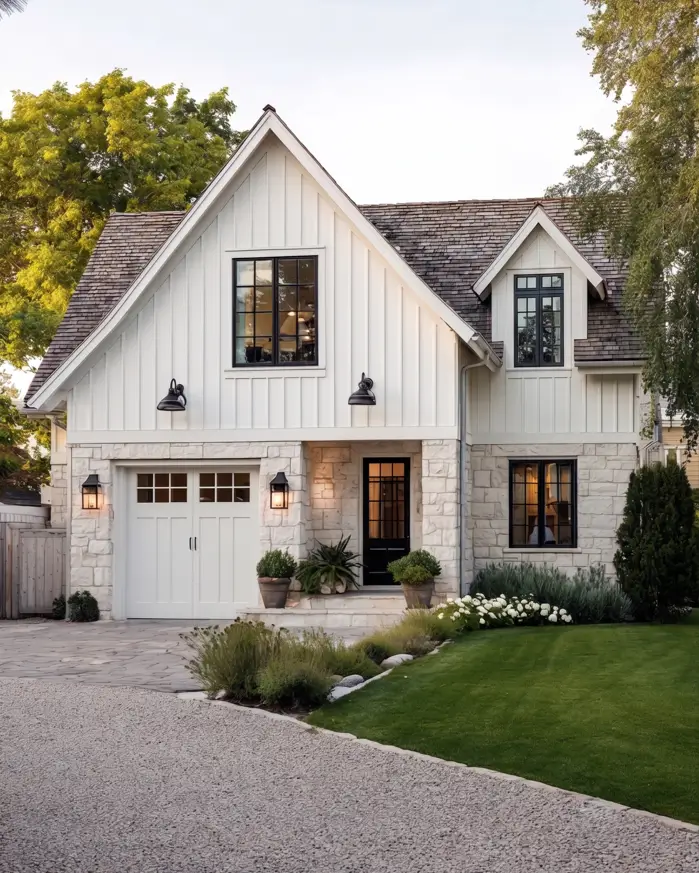
Whitewashed limestone runs the first story in nearly the same shade as the siding above. With color out of the picture, the rough stone faces catch light and give the front its depth. Gooseneck sconces sharpen the edges. Quietly lovely.
23. Taupe and Cream Stone
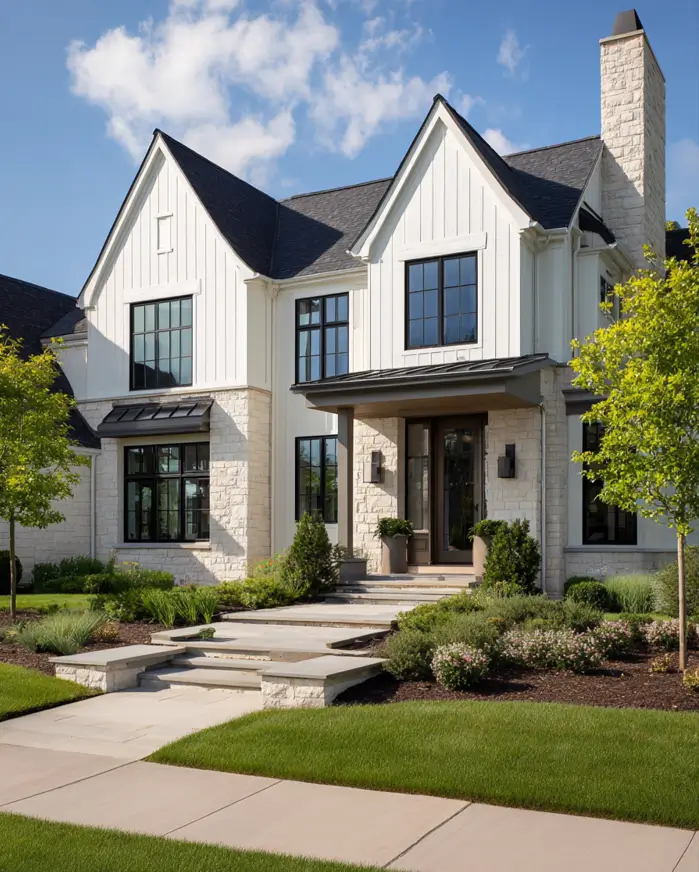
Creamy limestone grounds the base, but the taupe entry canopy ties this front together. That soft greige repeats in the window awnings, bridging bright siding and pale stone. Bluestone steps carry the palette through the garden. Every layer agrees.
24. Limewashed Stone Gable
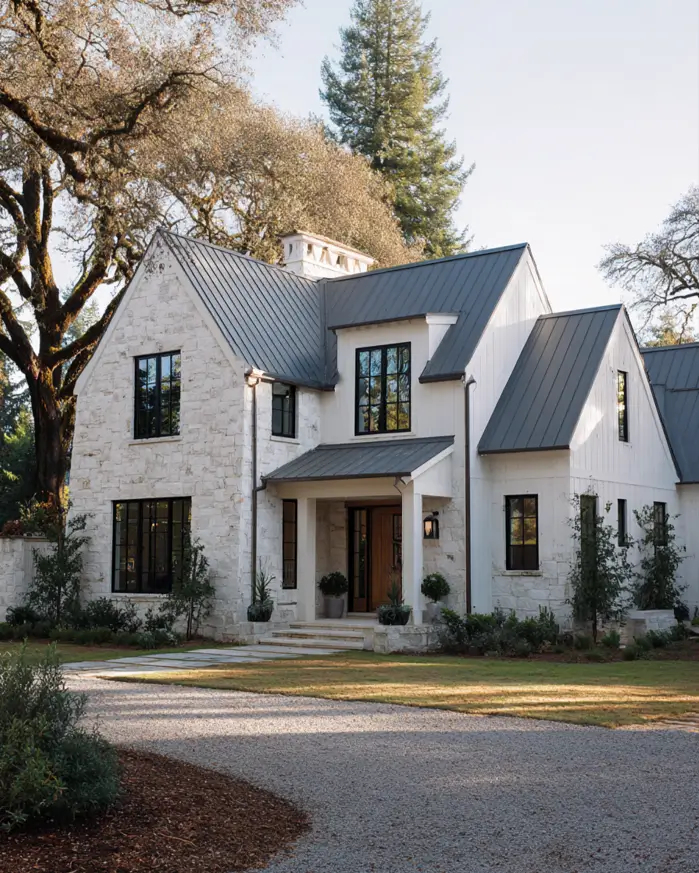
A thin limewash coats the stone on this gable wing, worn in patches so the tan ghosts through. The mottling gives a new build the patina of an old European farmhouse. The charcoal roof keeps it grounded. Age, borrowed gracefully.
25. White Trim on Stone
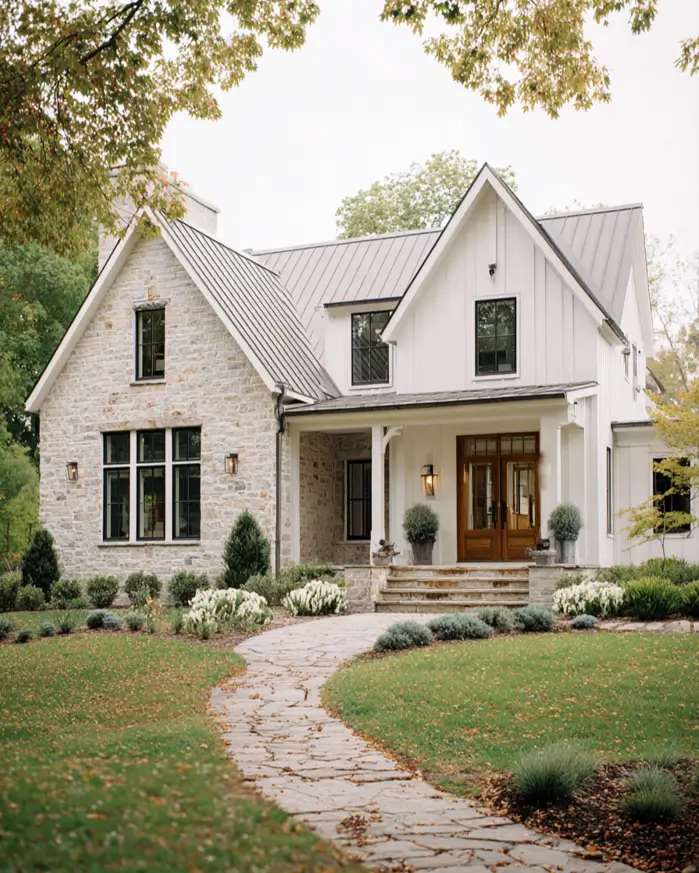
Although this wing is all stone, it never feels heavy, and the white window trim is why. Pale frames lift the gray-blond masonry the way black ones would anchor it. A greige roof keeps the palette gentle. Soft-spoken and sure.
26. Painted Stone Refresh
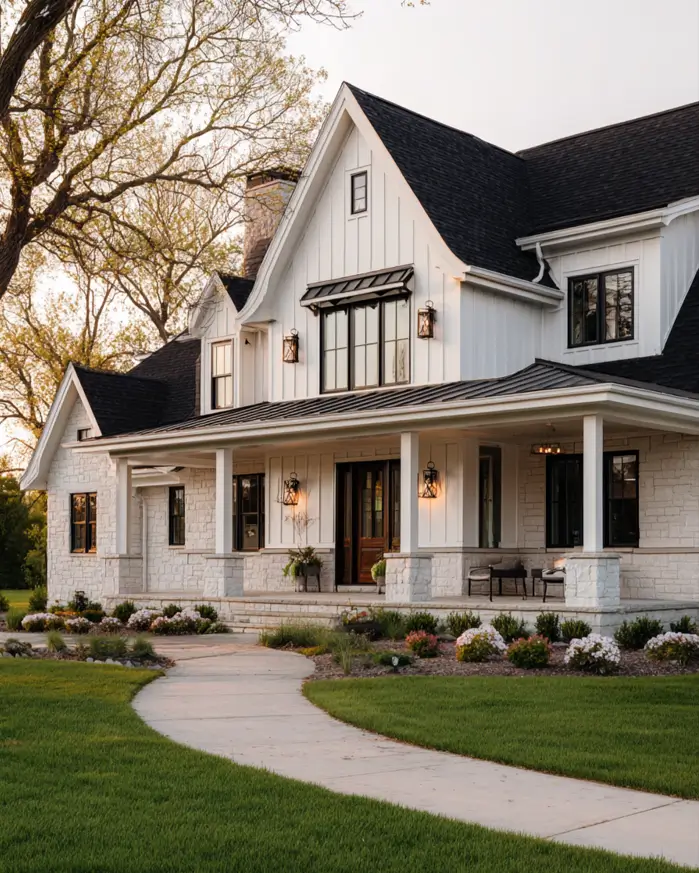
This stone was almost certainly painted, and that’s an idea worth stealing. Soft white over rough-cut masonry keeps the texture but loses the heaviness, so the black roof and walnut door supply the contrast. Dated stone, meet your second act.
Stone with Wood and Warm Accents
Wood and stone are natural partners, and a few warm wood accents change the whole mood of a white farmhouse.
27. Timber and Stone Ranch
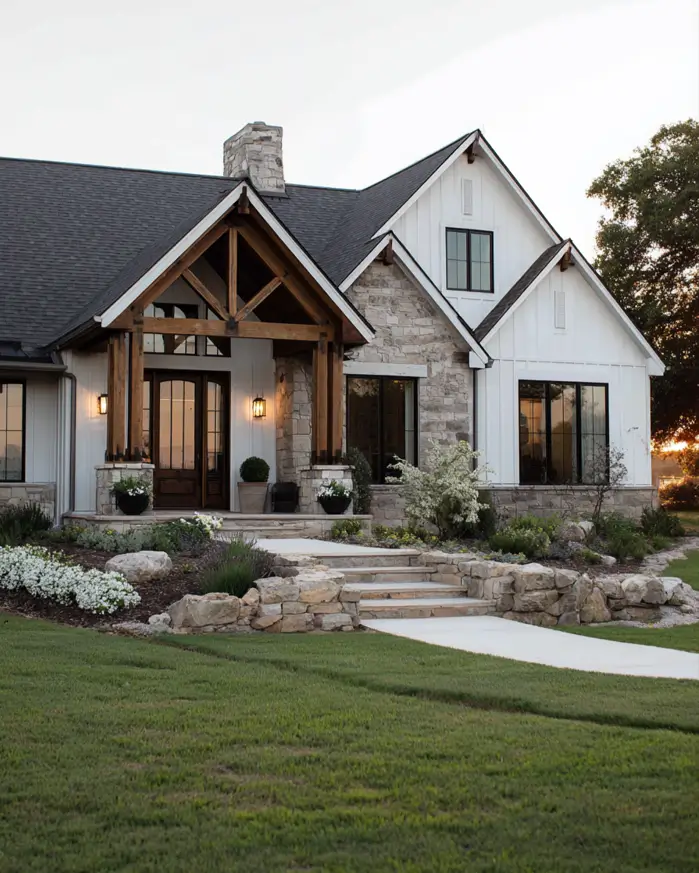
A cedar timber truss carries this entry, and sandy limestone answers from below, piers, wall band, and chimney all in the same soft buff. Keeping the stone low on a single-story ranch stretches the house wider. Sunset suits this place.
28. Wood Ceiling Porch
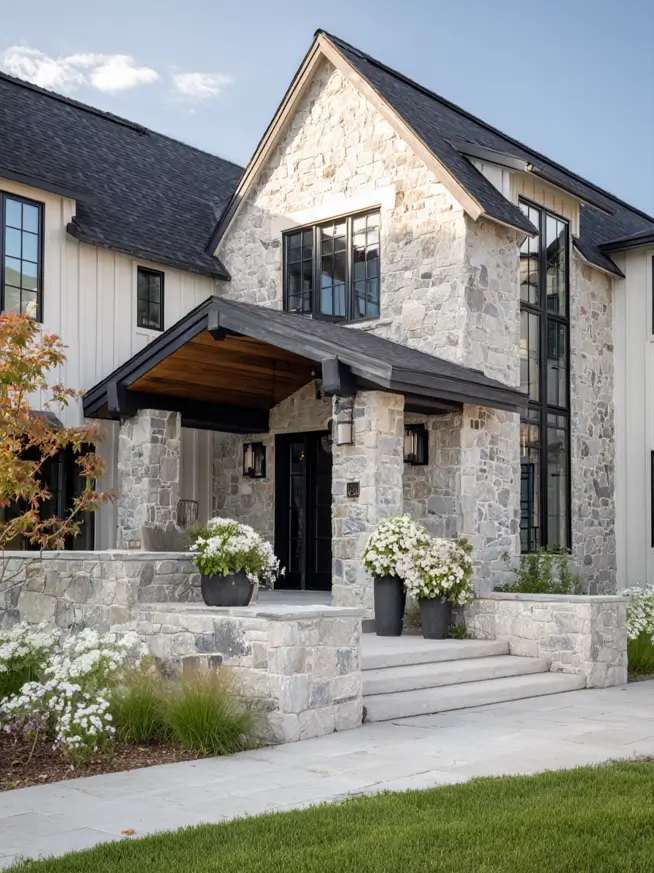
Look up under this porch and the surprise is cedar. A warm plank ceiling sits inside the black-trimmed canopy, one soft glow in an entry built of cool gray stone. Low stone walls become planter beds. Warmth where you pause.
29. River Rock Cottage
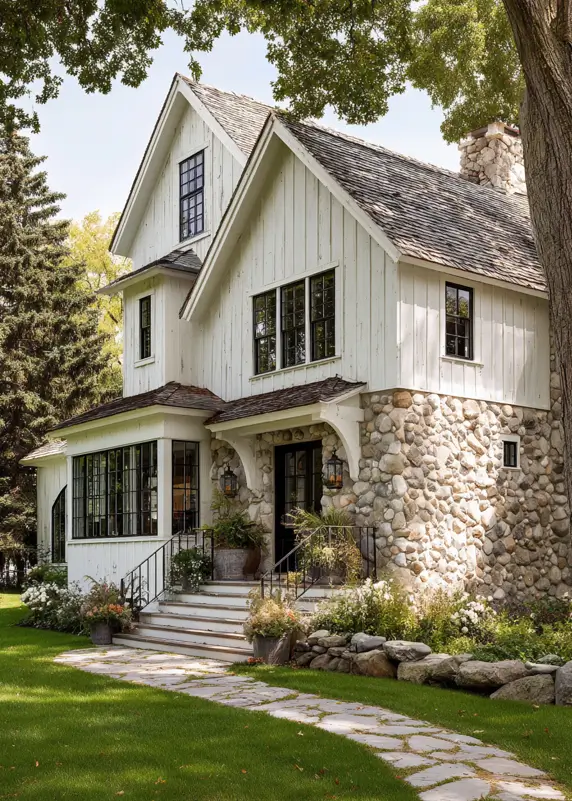
Although this cottage is mostly whitewashed board siding, the river rock steals the show. Smooth rounded stones in tan, gray, and rose climb the entry corner and reappear in the chimney, each worn soft by water upstream. Pure storybook charm.
Modern Farmhouse with Stone Exterior: What Sets It Apart
A modern farmhouse with stone exterior details keeps the stone in one or two deliberate places, pairs it with black window frames and a metal roof, and lets crisp siding carry the rest. That restraint is the whole difference. Traditional farmhouses let stone spread wherever the mason ran out of daylight; modern ones treat it like jewelry.
You’ll often see the stone limited to an entry surround, a chimney, or a low foundation band, with cleaner cuts and tighter mortar joints than the rounded rubble on older homes. I walked a new build last spring where the only stone was a single squared column base, and from the street it still read unmistakably as stone-and-white.
Choosing Stone Colors for a White Farmhouse Exterior
Gray stone reads crisp and current against white siding, beige and buff stone reads warm and settled, and mixed-tone stone with both does the most work of all.
The undertone of your white matters more than the stone catalog does. A cool, bright white sits naturally beside gray and charcoal stone, while the creamy whites behind most off-white farmhouse exteriors, like Alabaster, lean toward tan, blond, and brown blends.
Mixed fieldstone is the forgiving choice because it contains a little of everything, so it flatters nearly any white. One thing I notice on site visits: stone always looks a shade darker installed than it does on the sample board, especially under a porch roof. When in doubt, go one step lighter.
Stone Veneer vs. Natural Stone on a Farmhouse
Stone veneer looks nearly identical to full-thickness natural stone on a finished farmhouse, and most homes built in the last twenty years use veneer. The visible difference comes down to the corners. Full-bed stone turns a corner with deep, staggered returns, while thin veneer can show a slimmer profile where two walls meet.
Natural full stone is common on older homes and on chimneys, where its mass feels right. Veneer works well almost everywhere else, including second stories and gables where heavy stone was never practical.
Many homes feature both without anyone noticing. If a facade in this gallery caught your eye, chances are good it’s veneer, and that isn’t a compromise. It’s simply how this look gets built now.
Related Reading: · Black Farmhouse Exteriors · Modern White Farmhouse Exterior guide · Stone Cottage House Designs · Stone Mansion Designs
FAQs
Is a stone exterior on a farmhouse going out of style?
No. Stone paired with white siding is one of the most enduring exterior combinations, and it predates the modern farmhouse trend by a few centuries. Color fads on doors and roofs come and go, but natural stone tends to outlast all of them.
What siding pairs best with stone on a farmhouse?
Board and batten is the most common partner because its vertical lines balance the horizontal spread of stonework. Traditional lap siding works well too, especially on colonial and Cape Cod forms, where it keeps the stone feeling historic rather than trendy.
Does adding stone increase a home’s curb appeal?
Usually, yes. Stone adds texture and depth that flat siding can’t, and buyers consistently respond to it. Even a small application, like porch piers or a chimney, changes how substantial a white farmhouse feels from the street.
About the Author: Fah Arinya