


True luxury in a modern home is a space for quiet reflection, a principle at the heart of Japanese style house design. The art of zen garden design, known as karesansui or “dry landscape,” is a timeless Japanese discipline rooted in this very principle. This core zen garden design idea is a mindful composition of stone, sand, and select greenery, where each element is placed with profound intention.
This guide is your complete resource for moving from inspiration to execution. We first explore 30 inspiring zen garden ideas, from expansive, classic Japanese zen garden ideas to clever, compact designs for a modern patio. Each example is curated to reveal the core principles of balance, simplicity, and stillness.
Beyond the gallery, we detail the practical steps on how to design a zen garden. We cover the essential elements, from selecting foundational stones to the meditative practice of raking sand, providing the clear, actionable guidance you need to craft your own personal sanctuary.
Our Favorite Zen Garden Design Ideas
1. Classic Viewing Garden
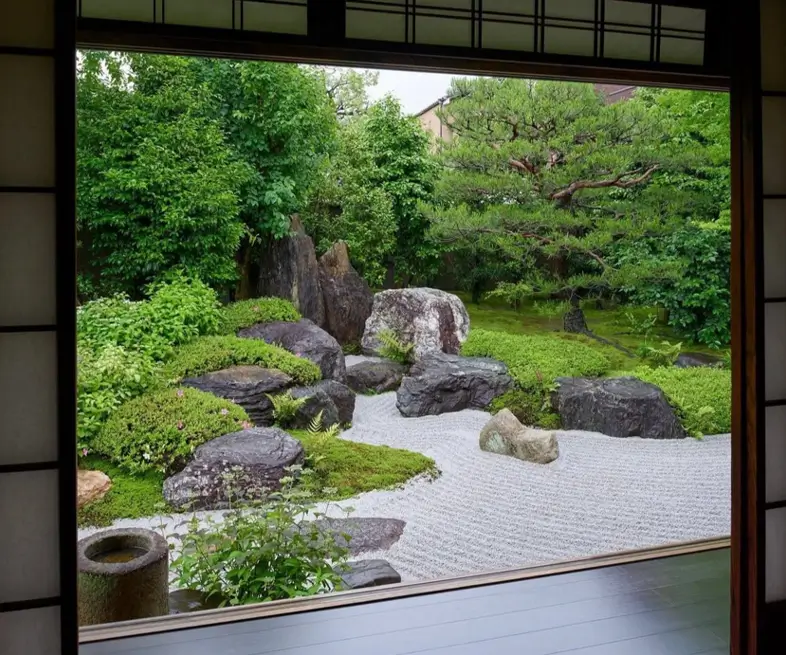
Large, moss-covered stones create a powerful focal point within the meticulously raked sand. This garden is designed to be viewed from the interior, using the building’s architecture to frame the landscape and create a living picture of tranquility. This is a foundational Japanese zen garden idea.
2. Dual-Tone Sand Patterns
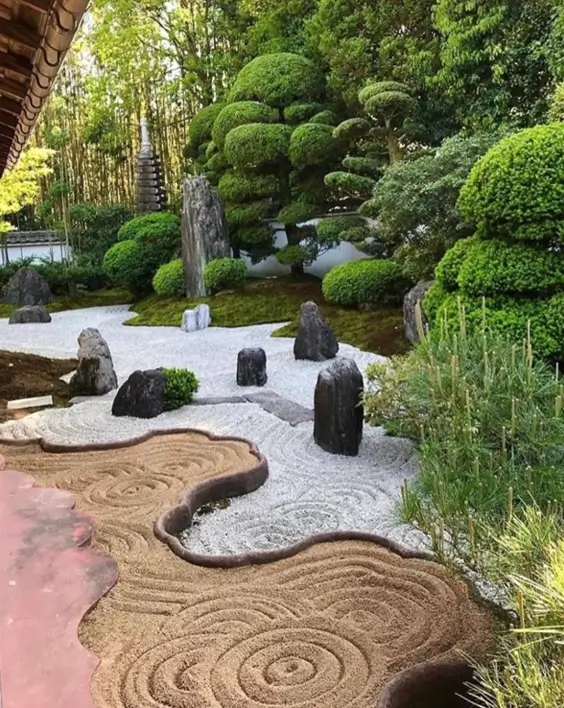
Intricate raked patterns define this garden, using two distinct sand colors to create visual flow. The darker sand emulates rippling water, while the white gravel offers a still, calm contrast. Sculpted pines and vertical stones add height and structure.
3. Framed Moon Gate Entry
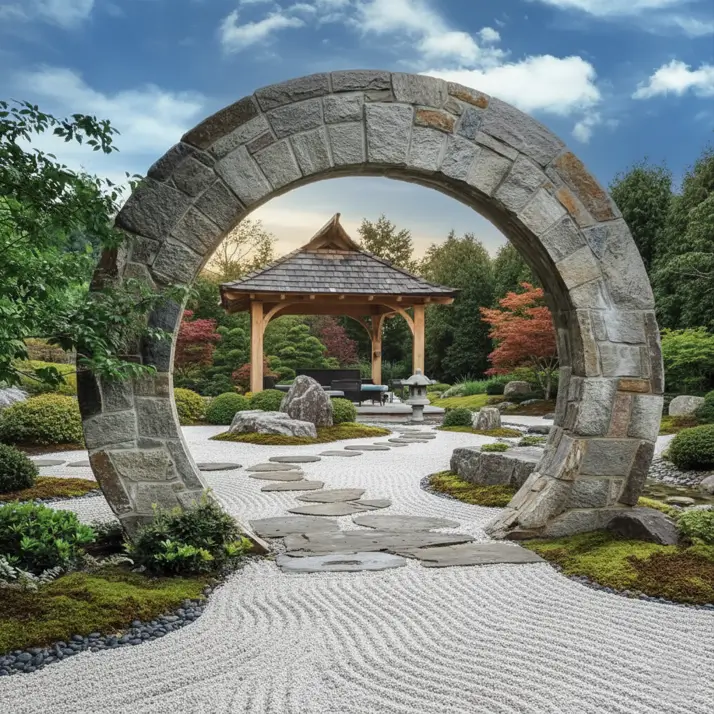
Dramatic circular stone arches, known as moon gates, offer a perfect frame. This architectural element beautifully separates the outer world from the inner zen garden, guiding the eye toward a distant pavilion and along a simple stone path.
4. Mossy Stone Islands
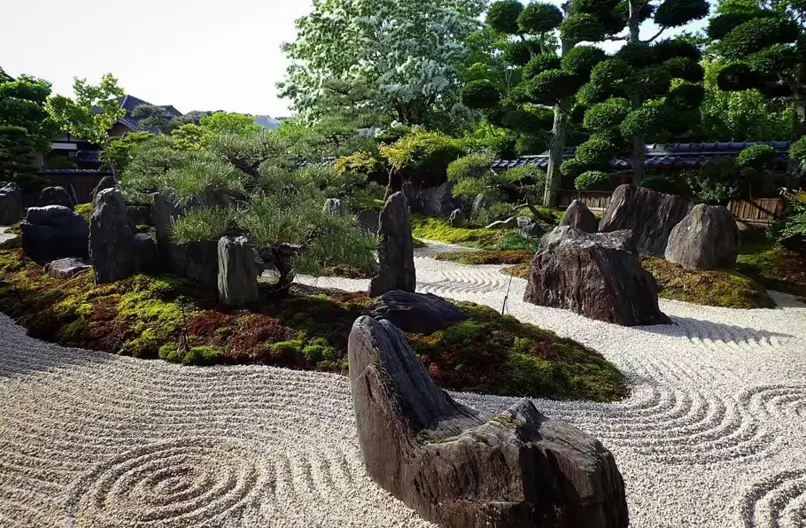
Vertical rock formations emerge from the raked gravel like ancient islands. Each stone grouping, carpeted with rich moss, creates a miniature landscape, inviting contemplation of scale and form. The circular and straight raking patterns suggest water flowing around them. This is a classic zen garden design idea.
5. Meditative Patio Corner
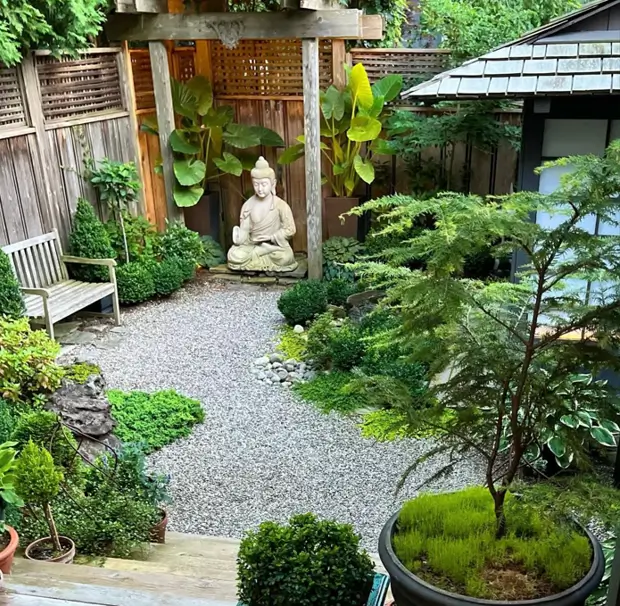
Buddha statues offer an immediacy focal point for a contemplative space. This design uses low-maintenance pea gravel as a base, pairing it with a simple bench and lush, layered greenery. It’s a perfect example of adapting zen garden design principles to a small, enclosed patio.
6. Flowing Gravel River
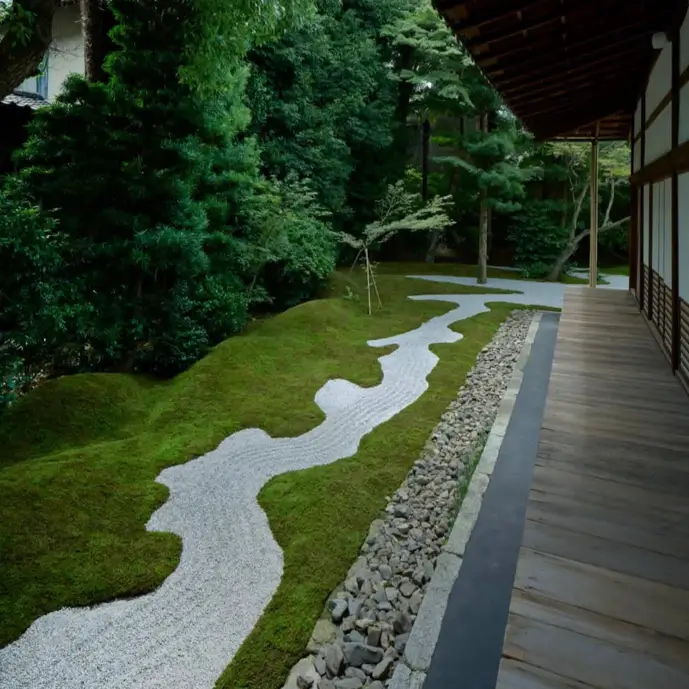
Minimalist design is achieved by tracing a winding river of white gravel through a field of vibrant green moss. This strong, organic line creates a sense of movement and calm, beautifully contrasted by the natural stone border and the simple wooden walkway.
7. Modern Courtyard Retreat
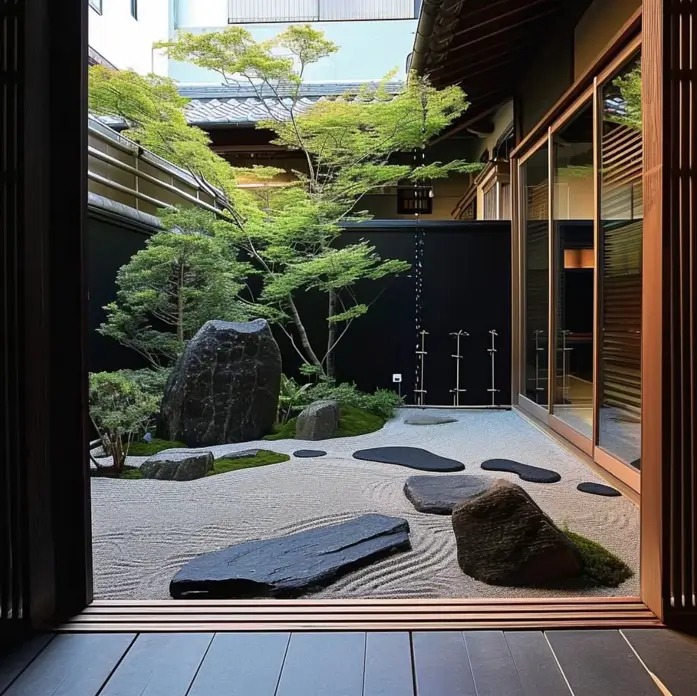
Modern design principles meet traditional elements in this enclosed courtyard. A striking black fence provides a contemporary backdrop, highlighting the organic forms of a Japanese maple and carefully placed stones. Flat, dark stones serve as stepping paths over the raked sand.
8. Modern Deck Integration
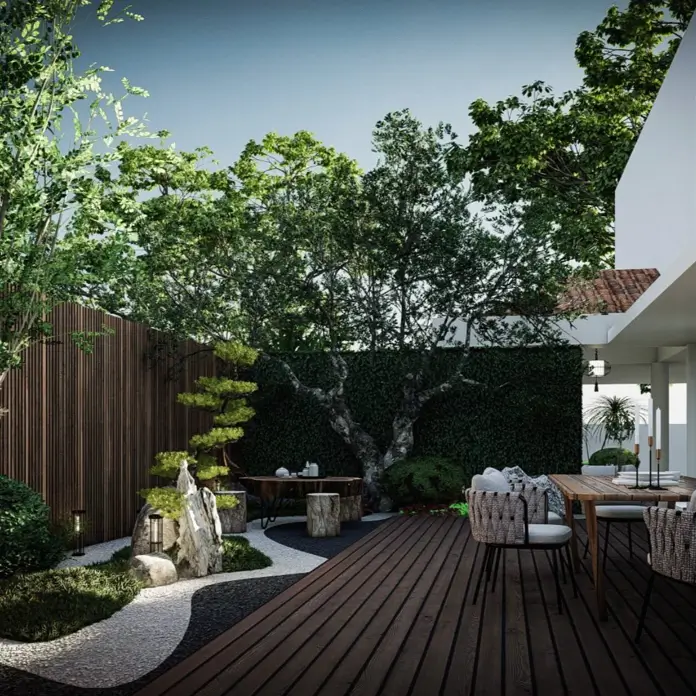
Zen principles can be beautifully integrated into a modern patio. This design pairs a wooden deck with a contrasting path of white gravel. A sculpted pine and a prominent vertical stone anchor the garden, blending the home’s living space with nature.
9. Natural Wabi-Sabi Path
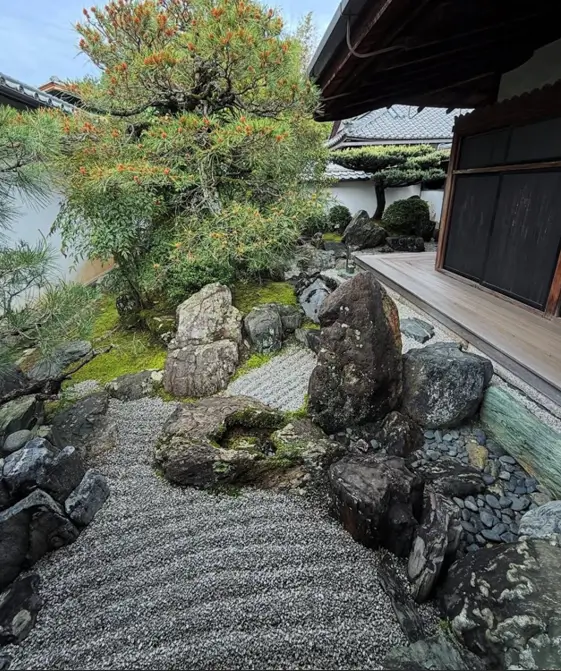
Rough-hewn stones and larger gravel create a textured, naturalistic path. This design embraces wabi-sabi, finding beauty in imperfection and asymmetry. The varied rocks guide movement through the space, bordered by mossy stones and a mature, flowering pine tree.
10. Blended Tea Garden
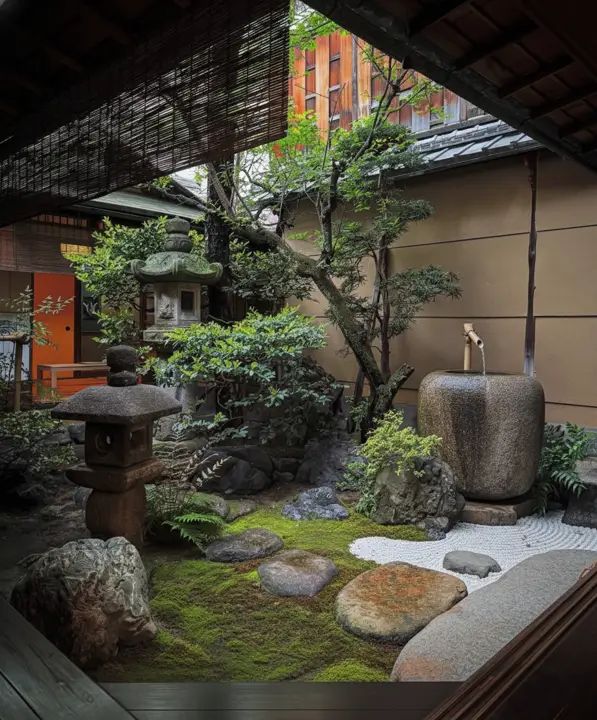
Classic tea garden components add deep symbolism. This courtyard features a stone water basin (tsukubai) and a carved lantern. It artfully combines a mossy, shaded landscape with a small, contrasting patch of white raked sand, blending two traditions.
11. Sculpted Shrub (Karikomi)
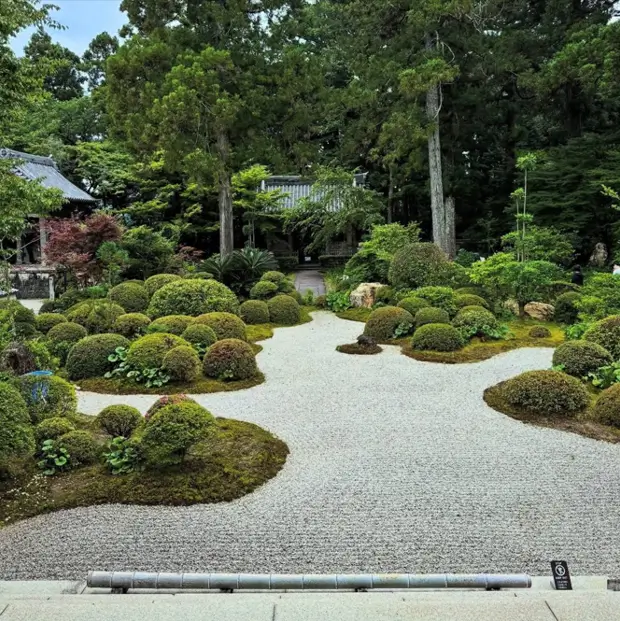
Rounded, tightly clipped azalea bushes (karikomi) float like soft green islands in a wide gravel river. This design technique uses shrubs to mimic the soft forms of moss-covered stones, creating a gentle, rolling landscape that contrasts with the flat, raked gravel.
12. Minimalist Courtyard Path
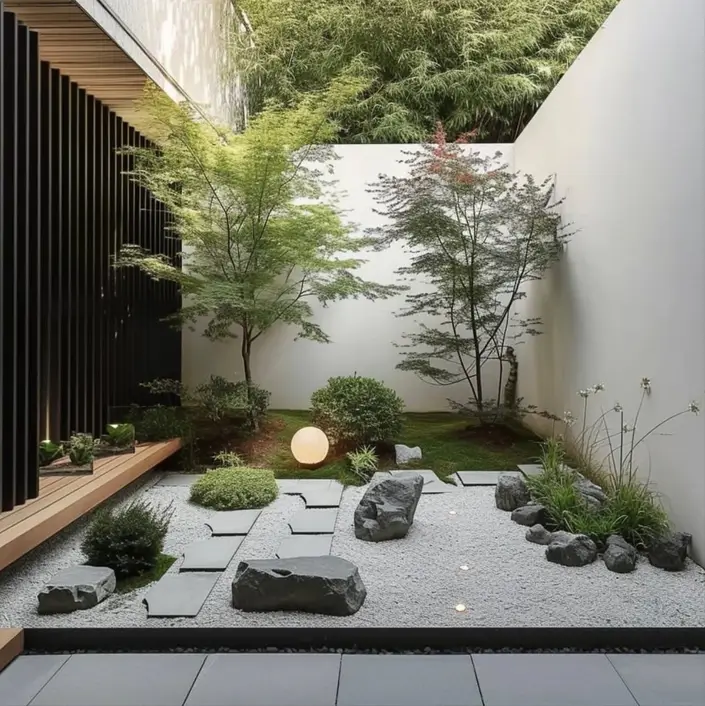
Modern minimalism is expressed through a clean, white-walled courtyard. A simple path of slate pavers cuts across the white gravel, leading the eye to delicate Japanese maples. Subtle uplighting and a glowing orb add ambiance for a serene evening atmosphere.
13. Rhythmic Bamboo Feature
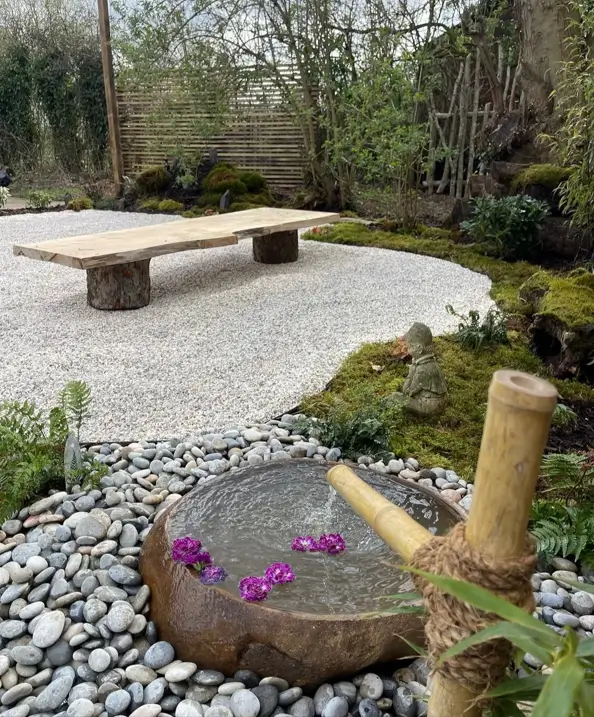
Sound is a key element. This garden uses a traditional bamboo water feature, or shishi-odoshi, to create a gentle, rhythmic sound. It complements the white gravel expanse, mossy banks, and a simple, rustic bench for quiet observation.
14. Borrowed Scenery (Shakkei)
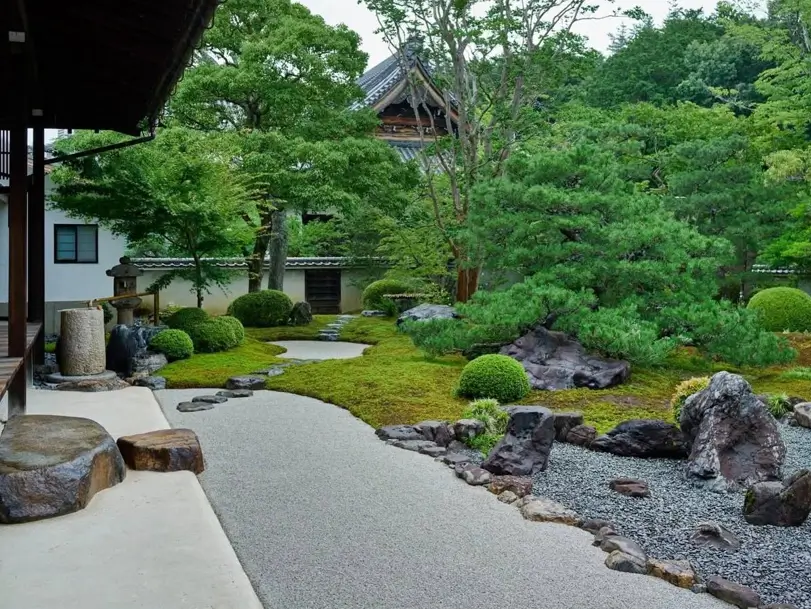
This garden masterfully incorporates the distant trees and temple roof into its own composition. This technique, known as shakkei or “borrowed scenery,” makes the garden feel larger and seamlessly connected to the landscape beyond. The gravel path draws the eye outward.
15. Backyard Contemplation Nook
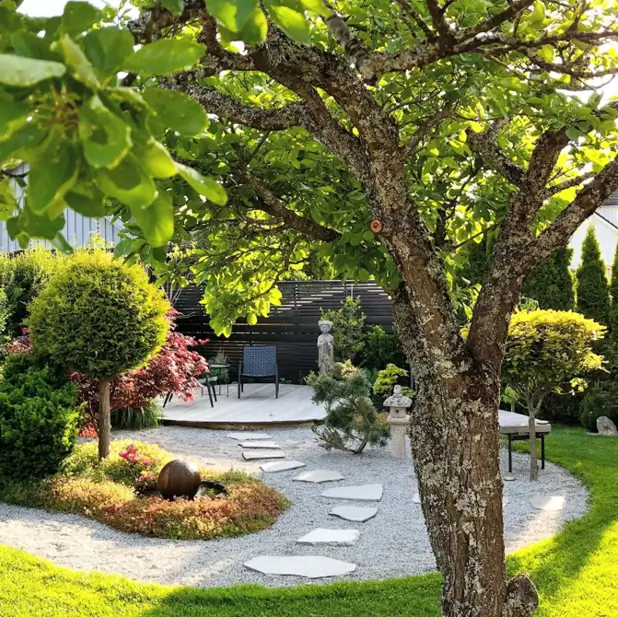
Zen elements create a tranquil nook in a larger backyard. A gravel base is punctuated by a stone path leading to a simple deck. Sculpted topiaries, a small statue, and a stone lantern are thoughtfully placed to create a peaceful, contemplative seating area. This approach is a popular way to build zen garden ideas into a larger landscape.
16. Pergola Viewing Deck
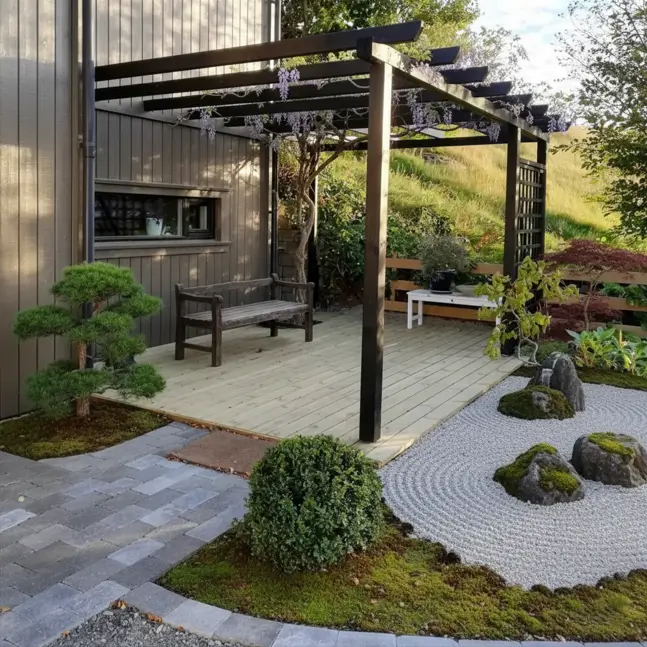
A modern black pergola defines this outdoor room, creating a sheltered space for observation. The wooden deck is set beside a classic karesansui design, featuring mossy stones set in raked white gravel and bordered by sculpted pines and moss beds.
17. Sculptural Atrium Garden
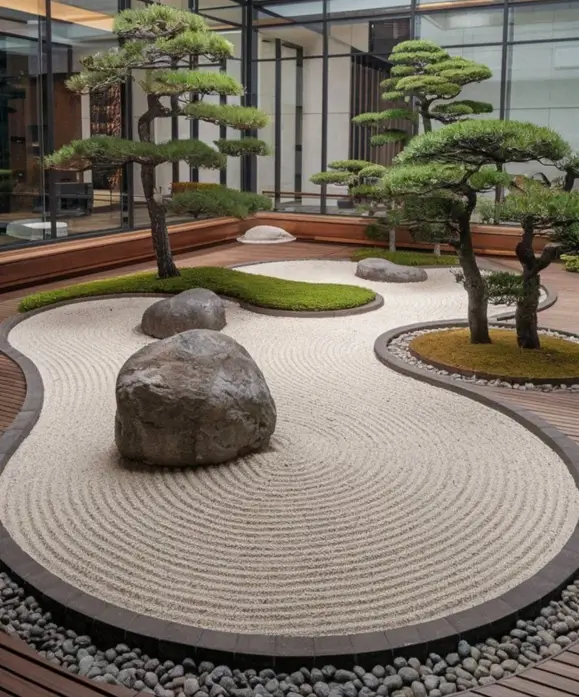
Mature, cloud-pruned pines bring sculptural drama to this interior atrium. The garden uses clean, curving borders to separate the raked sand from wooden decking and moss beds. This creates a high-contrast, artistic composition viewed from all sides. It’s a bold, modern zen garden idea.
18. Raked Sand Entryway
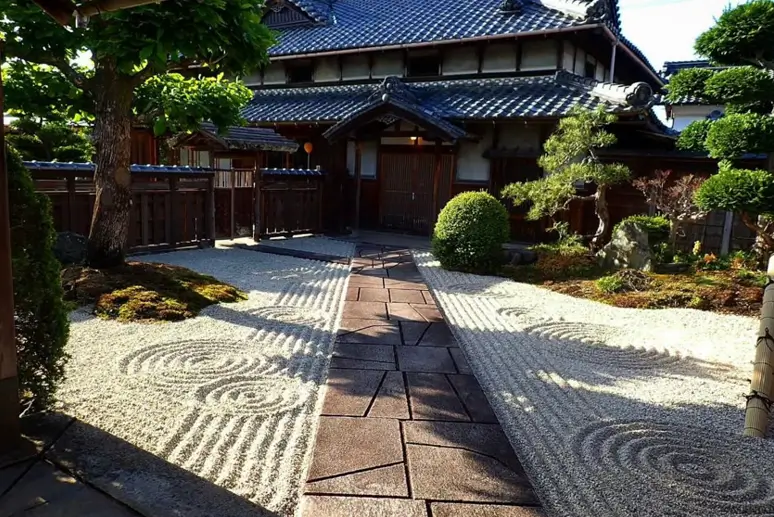
A central stone walkway leads directly to the entrance, flanked on both sides by meticulously raked gravel. Circular ripple patterns (samon) are raked around mossy islands, creating a sense of calm and order for all who arrive.
19. Framed Window View
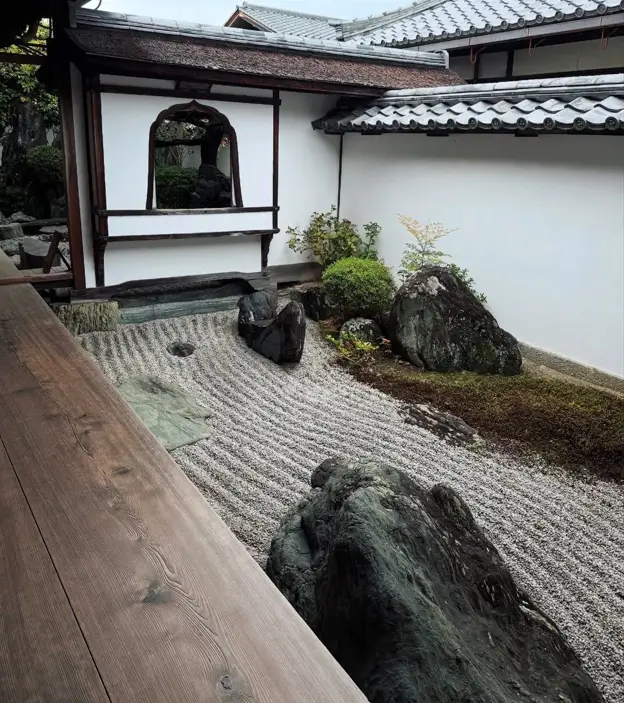
This garden is designed to be viewed like a painting. A unique, bell-shaped window (katomado) in the white wall frames a view into another garden space, while the main courtyard features strong vertical stones set in a bed of raked gravel.
20. Illuminated Gravel Path
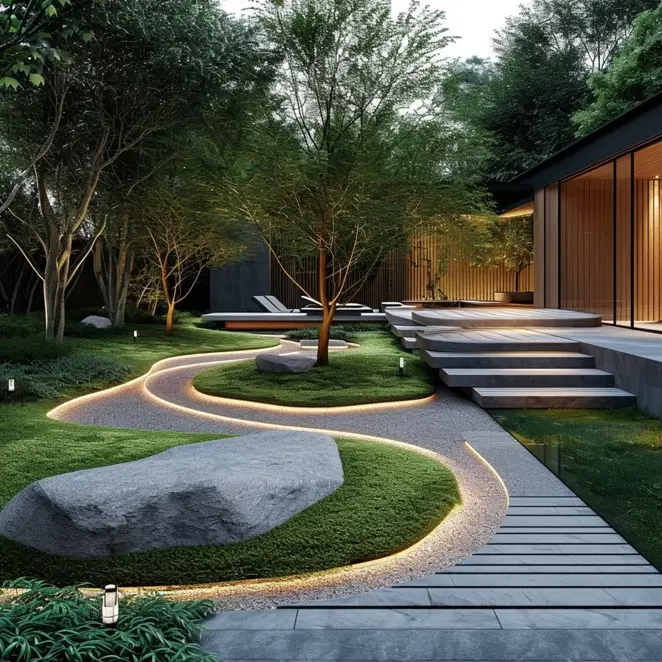
Modern landscape lighting transforms this garden at night. LED strips recessed along the border of a curving gravel path create a dramatic, floating effect. This path flows through beds of soft, low-growing moss, connecting the home to a secluded lounge area.
21. Contemporary Glass Spheres
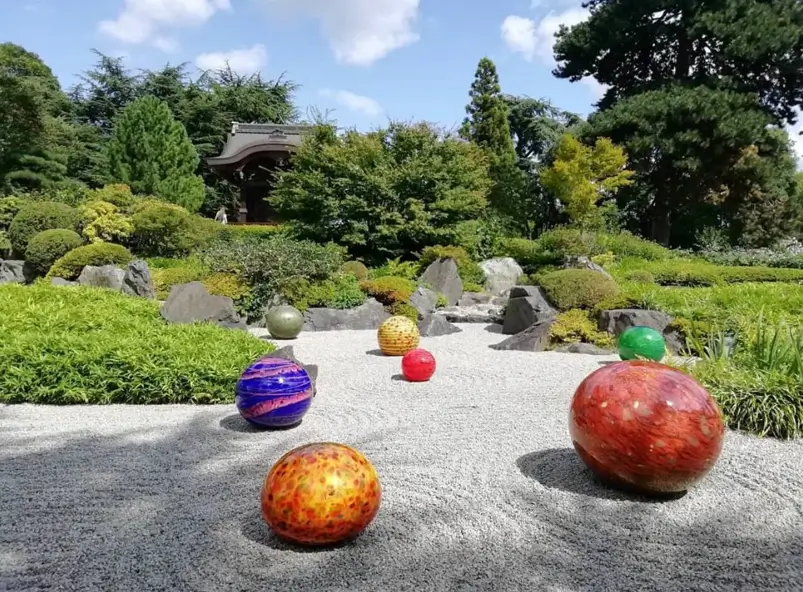
Large, colorful glass spheres add a playful, modern twist to the traditional karesansui. This garden uses the neutral raked gravel as a gallery floor, creating a striking contrast that highlights the vibrant colors and sculptural forms of the art.
22. Modern Poolside Zen
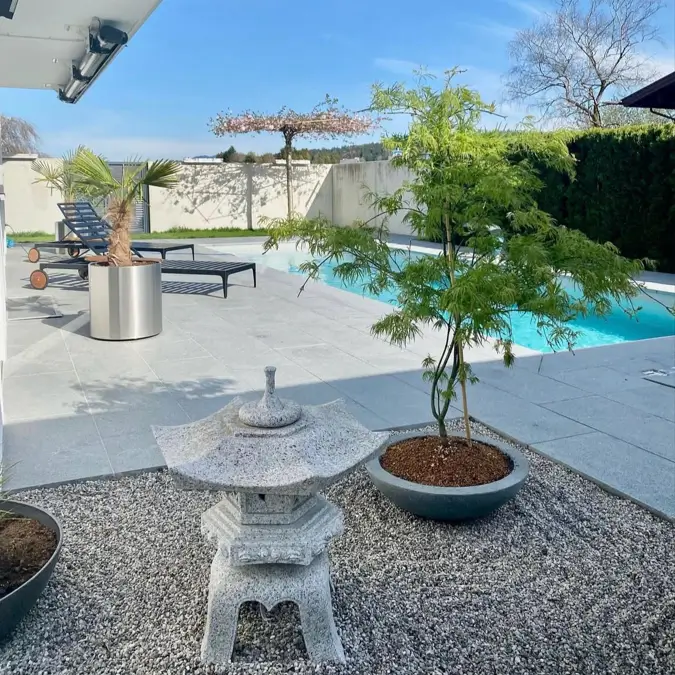
Zen principles can create a calm zone even by a modern pool. This small gravel bed, set with a traditional stone lantern (tōrō) and a potted Japanese maple, carves out a mindful corner. It’s a low-maintenance way to introduce a modern zen garden aesthetic.
23. Minimalist Bamboo Courtyard
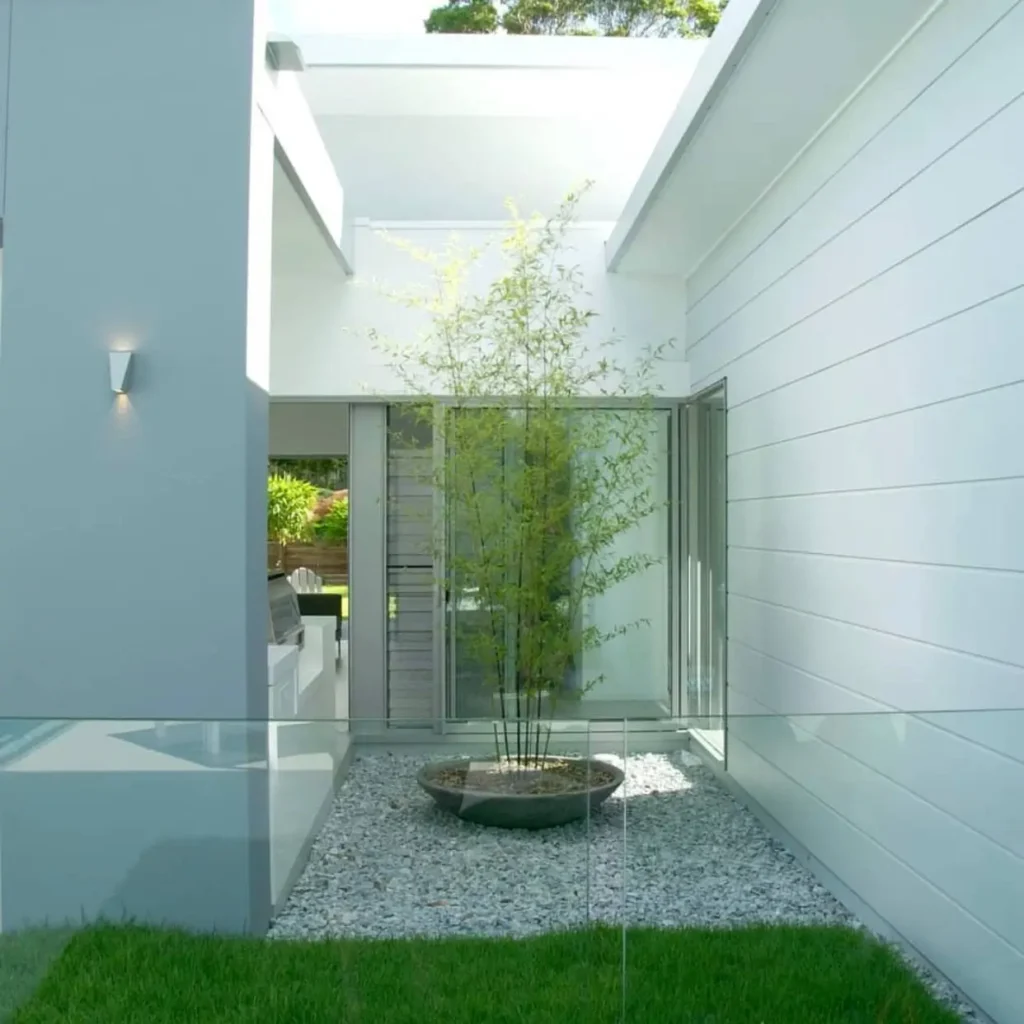
Clean, modern architecture provides a stark frame for this minimalist courtyard. A simple bed of smooth river stones serves as the base for a single, sculptural bamboo plant in a low bowl, creating a serene focal point. This is a simple, elegant zen garden layout for a narrow space.
24. Colorful Azalea Accents
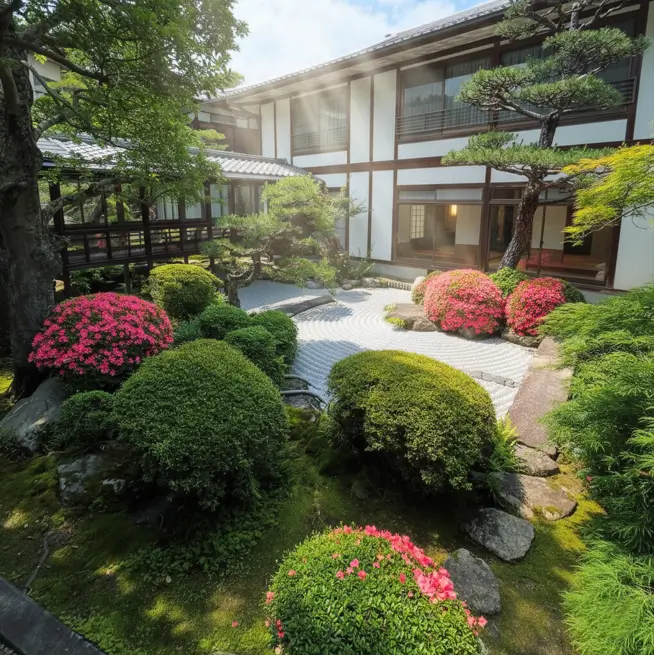
Vibrant pink azaleas offer a striking burst of seasonal color. This design contrasts the soft, mounded forms of the azaleas against the still, raked gravel and the deep greens of sculpted shrubs and moss, balancing tranquility with seasonal vibrancy.
25. Mediterranean Zen Fusion
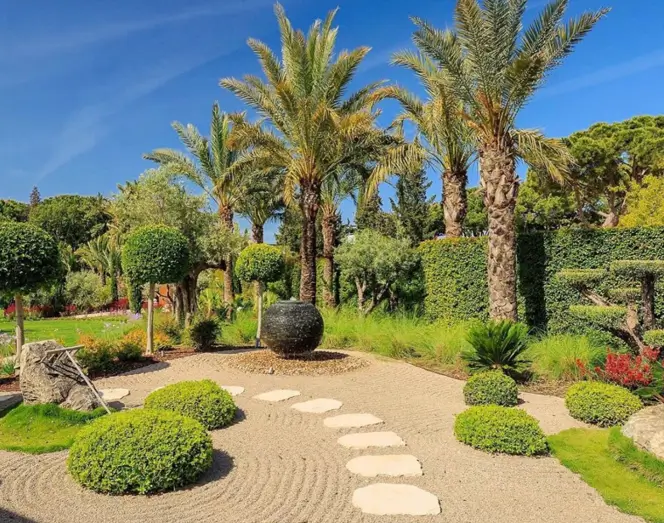
A raked sand path and stepping stones are hallmarks of zen design, used here with a Mediterranean twist. Palm trees, topiary balls, and a central spherical water feature are set against a lush green hedge, blending contemplative design with a warmer climate.
26. Blended Garden Design
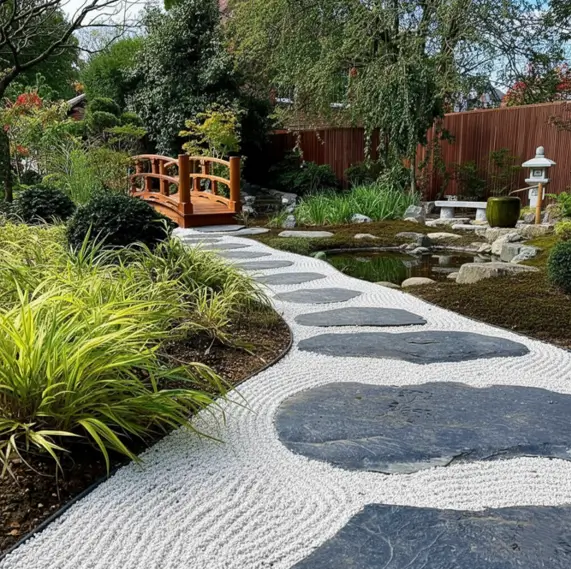
This landscape artfully blends two Japanese traditions. A wide, dry path of raked white gravel with slate stepping stones flows through the garden, leading the eye toward a small pond and an arched wooden bridge, combining karesansui with chisen-teien elements.
27. Dry Moss Landscape
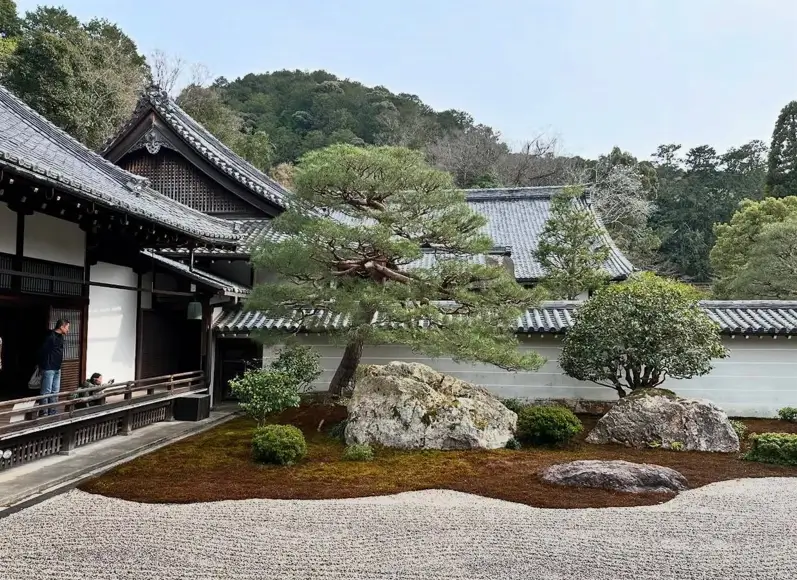
This garden uses a vast expanse of raked gravel to represent the sea, lapping against a “shoreline” of rich, dry moss. Large, weathered stones and a sculptural pine tree are set within the moss, creating a powerful, ancient-feeling landscape. It’s a classic Japanese zen garden idea.
28. Curving Slate Path
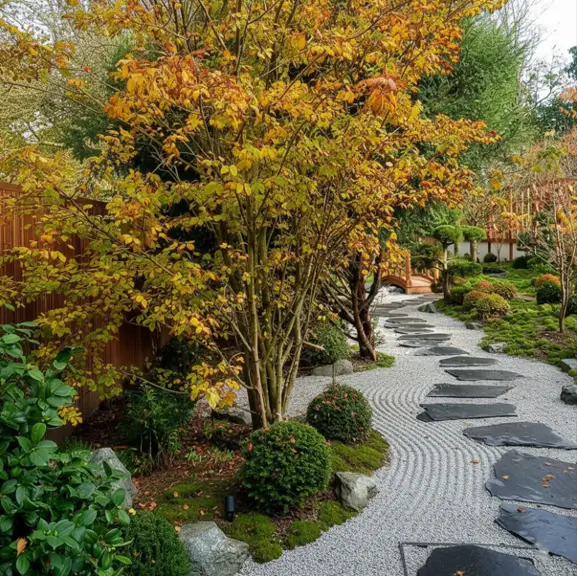
A curving path of dark slate stepping stones creates an elegant flow through this raked gravel garden. The path draws the eye toward the background, while the vibrant yellow autumn leaves of a central tree provide a striking seasonal contrast.
29. Meditative Garden Bed
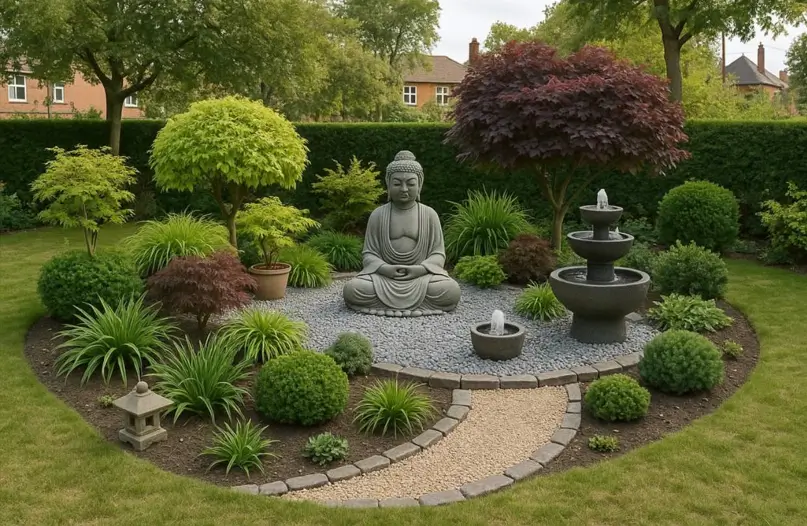
This circular garden bed carves a dedicated meditative space out of a lawn. A central Buddha statue is surrounded by dark gravel, a tiered fountain, and a variety of specimen plants, including Japanese maples. A small stone lantern completes the scene.
30. Complete Dry Landscape
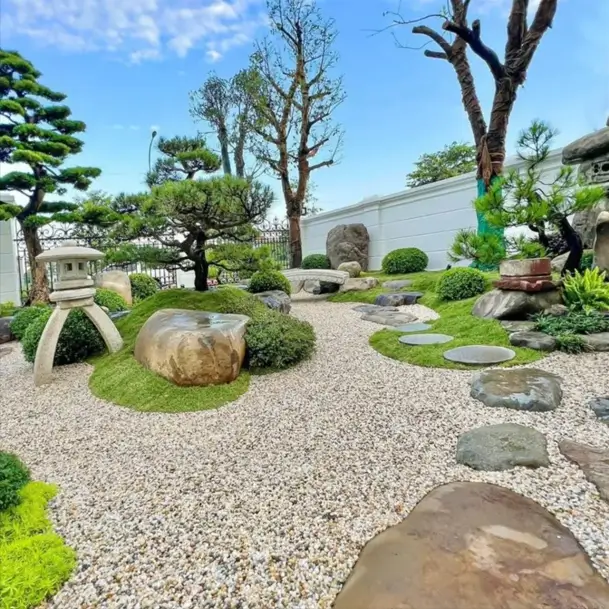
This garden skillfully combines all the classic elements: a gravel base, flat stepping stones, a stone lantern, sculptural pines, and “islands” of moss and smooth boulders. A small stone bridge (ishibashi) completes the composition, creating a balanced and harmonious scene. This is a comprehensive zen garden design idea.
How to Design a Zen Garden: A DIY Guide
Moving from zen garden design ideas to practice is an exercise in minimalism. A zen garden is less about filling a space and more about carefully selecting a few key elements that work in harmony.
The Core Principles of Zen Garden Design
Before you begin, understand the philosophy. Zen gardens are not traditional gardens. They are abstract, stylized landscapes.
- Simplicity (Kanso): The design is uncluttered, eliminating the non-essential. It is about finding beauty in a clean, refined composition.
- Asymmetry (Fukinsei): Balance is achieved not through perfect symmetry, but through the irregular and natural. This creates a more dynamic and compelling visual tension.
- Stillness (Seijaku): The entire composition aims to create a sense of profound calm and tranquility. It is an internal feeling evoked by the garden’s quiet stability.
Choosing Your Authentic Materials and Tools
Part of the zen garden’s discipline is its limited palette. Choosing the right materials is the most important step for an authentic feel.
- Gravel and Sand: The “water” of the garden is not beach sand. The ideal material is crushed granite gravel (shirakawa-suna), typically in a 2-4mm size. Its angular shape holds raked patterns better than smooth pebbles. Light grey or white is traditional.
A Note From the Designer: In my seven years of on-site work, I’ve found the biggest mistake clients make is using beach sand. It’s too soft. You must use crushed granite, as its angular shape is the only way to get those clean, sharp raking lines.
- Stones and Boulders: These are the “islands” or “mountains.” Select stones with character and variation. You will want a mix: tall vertical stones, low reclining stones, and flat stepping stones (tobi-ishi). Their placement forms the garden’s core structure.
- The Zen Rake: A specialized wooden rake (hoki) is used to create the patterns in the gravel. These rakes have different widths and tine (tooth) patterns to create various line styles.
A Step-by-Step Guide for Your DIY Zen Garden
- Choose Your Location: Select a space that is relatively flat and, ideally, visible from a window or patio where you can quietly observe it. Even a small, contained frame on a balcony can work. This is a key first step for any zen garden layout.
- Plan Your Composition: Sketch your idea. Decide where the main “islands” (large stones) will go and how the “water” (gravel) will flow around them.
- Select and Place Stones: Stones are the “bones” of the garden, and central to all Japanese zen garden ideas. They form the primary structures. They should be varied in size and shape and are often grouped in odd numbers like three, five, or seven. Bury them partially so they appear to emerge naturally from the earth.
- Add Sand or Gravel: Install a border and a weed barrier, then fill the area with a 2- to 3-inch layer of crushed gravel or coarse zen garden sand. White or light grey granite is traditional.
- Rake the Meditative Patterns (Samon): This is the final, meditative act. Use a specialized wooden zen rake (hoki) to create the samon, or patterns. Straight, linear lines represent a still, tranquil sea. Curving, concentric circles suggest ripples flowing around the stone “islands”.
- Add Plants and Accents Sparingly: If you add plants, choose wisely. Moss is perfect for groundcover. A single Japanese maple or sculpted pine can add verticality. Finally, place zen garden elements like a stone lantern or basin to complete the scene.
Small Zen Garden Ideas for Balconies and Backyards
The principles of karesansui are about scale and intention, not size. Whether it’s a small corner for a backyard zen garden or a container on a patio, you can still create a contemplative space.
- Balcony or Patio: Use a deep, contained planter box or a defined frame on your patio. A long, narrow trough can become a “gravel river,” while a square box can host a simple composition of one or two stones and raked sand.
- Indoor & Tabletop: The tradition of bonseki involves creating miniature landscapes on a black lacquer tray. You can apply the same principles of serenity to your Japanese kitchen. A modern tabletop zen garden uses the same concept, offering a small, tactile way to practice mindfulness, composition, and the act of raking.
FAQs
What are the main elements of a zen garden?
The core zen garden elements are stone, gravel (or zen garden sand), and minimal plants. These components are used to create a stylized, abstract landscape. Stones represent mountains or islands, while the raked gravel symbolizes the sea or flowing water.
What is the purpose of a zen garden?
The primary purpose is to create a serene environment for mindfulness, meditation, and quiet reflection. Many zen garden ideas are designed specifically as meditation garden spaces to calm the mind, reduce stress, and encourage a focus on the present moment.
What is the difference between a zen garden and a Japanese garden?
This is a key distinction. A “zen garden” (karesansui) is a specific type of Japanese garden. It is the minimalist, dry landscape style that uses raked gravel to symbolize water. “Japanese garden” is a broad term that also includes other styles, like lush stroll gardens with ponds, bridges, and teahouses. Many Japanese zen garden ideas are of this karesansui type. This is also different from a simple rock garden, which is primarily a horticultural display of alpine plants.
Can you have plants or flowers in a zen garden design?
Yes, but they are used with intention and restraint. Moss is the most common plant, used as a groundcover to represent land. Sculpted pines and Japanese maples add structure. While not typical, colorful flowers like the azaleas seen in some designs can be used as fleeting seasonal accents.
How do I maintain a zen garden?
Maintenance is considered a mindful practice. It primarily involves keeping the gravel free of leaves or debris. The raked patterns will also need to be refreshed periodically to keep them sharp. Any plants, like pines or shrubs, will require occasional pruning. Planning for this simple upkeep is a key part of how to design a zen garden.
Your Personal Sanctuary
Whether you have a sprawling yard or a small urban balcony, these zen garden design ideas offer a path to a personal sanctuary, much like designing a serene Japanese bedroom.
The process of designing a zen garden is itself a mindful practice, a way of finding balance and cultivating profound quiet, one carefully chosen stone at a time.

