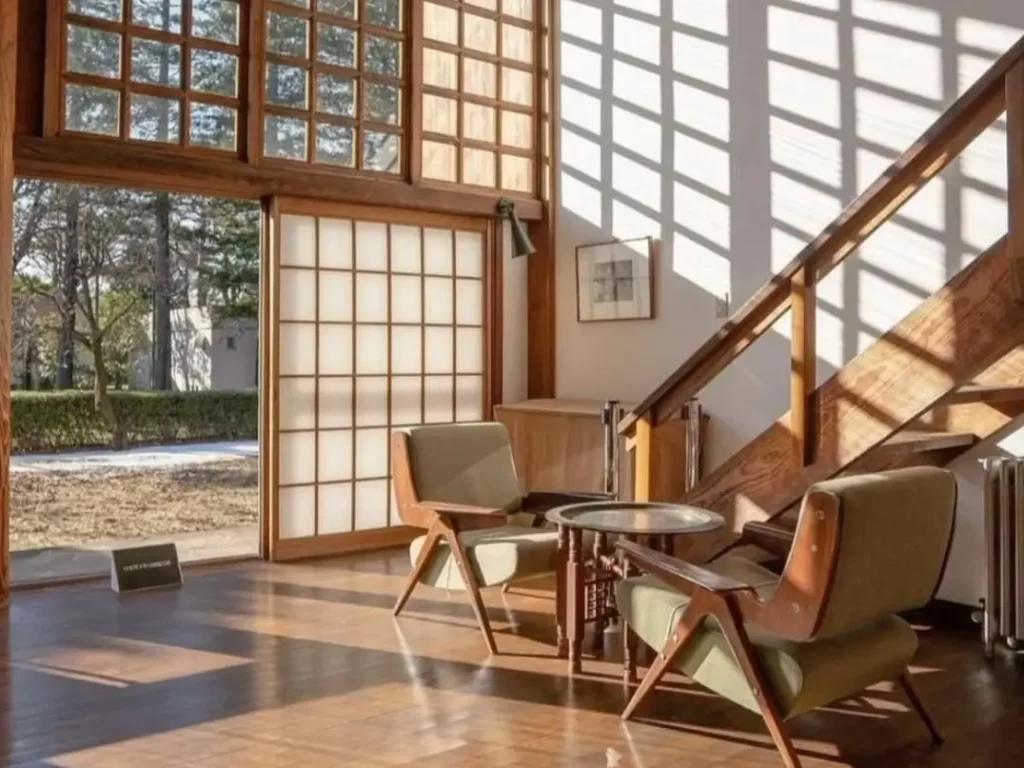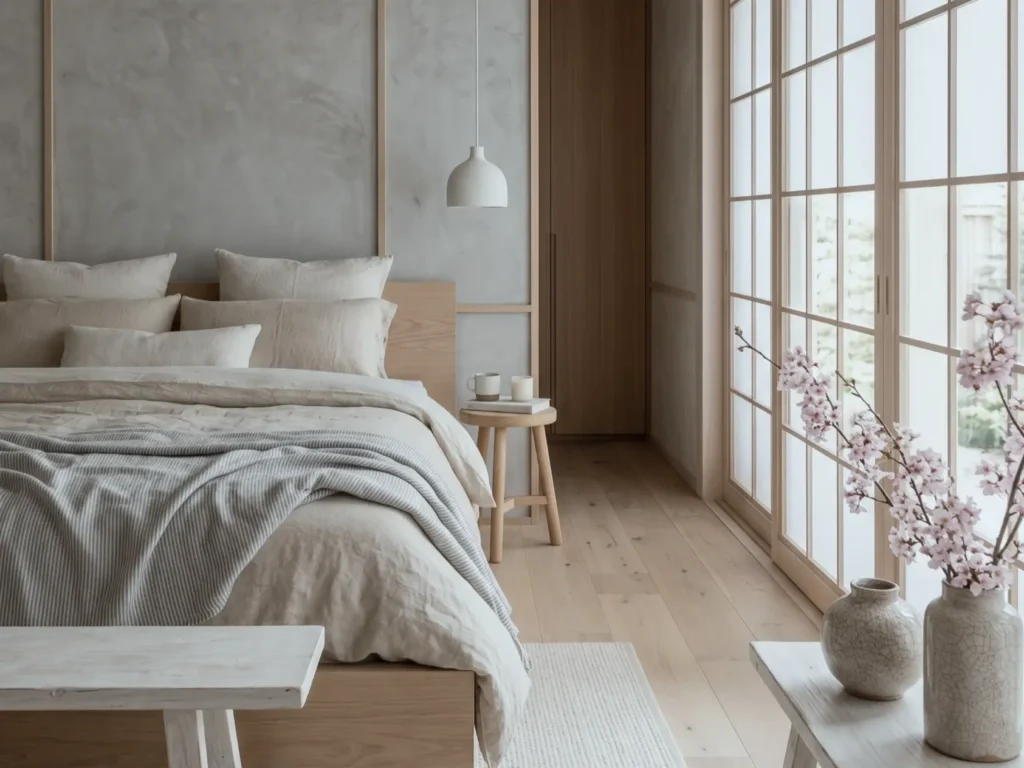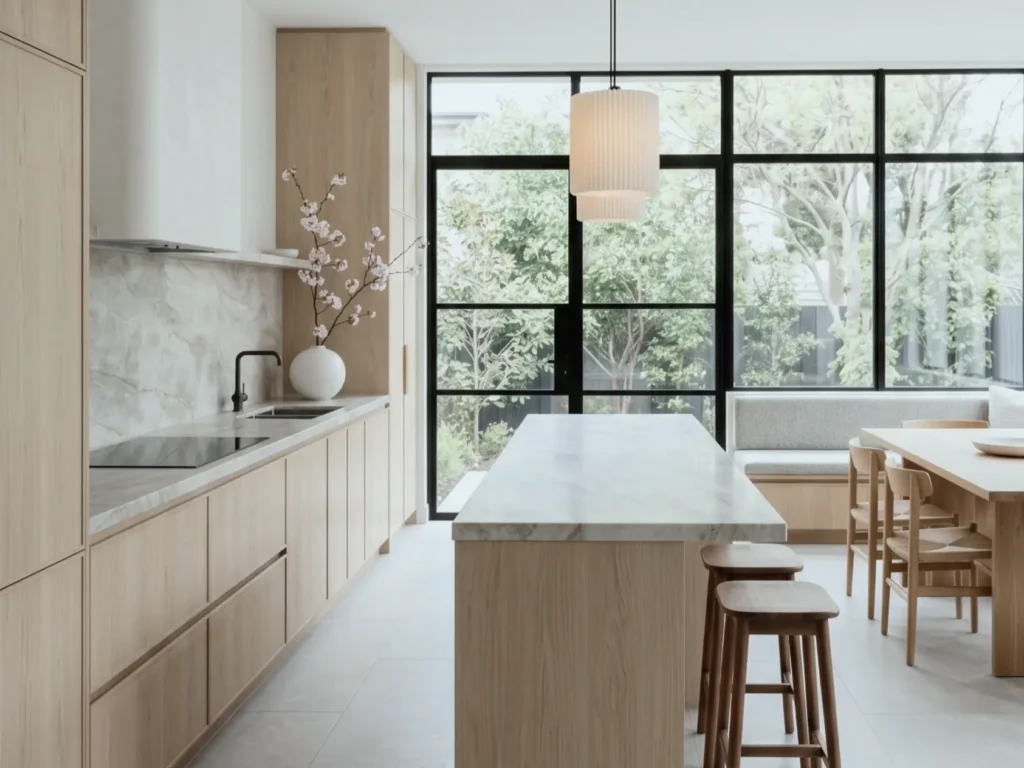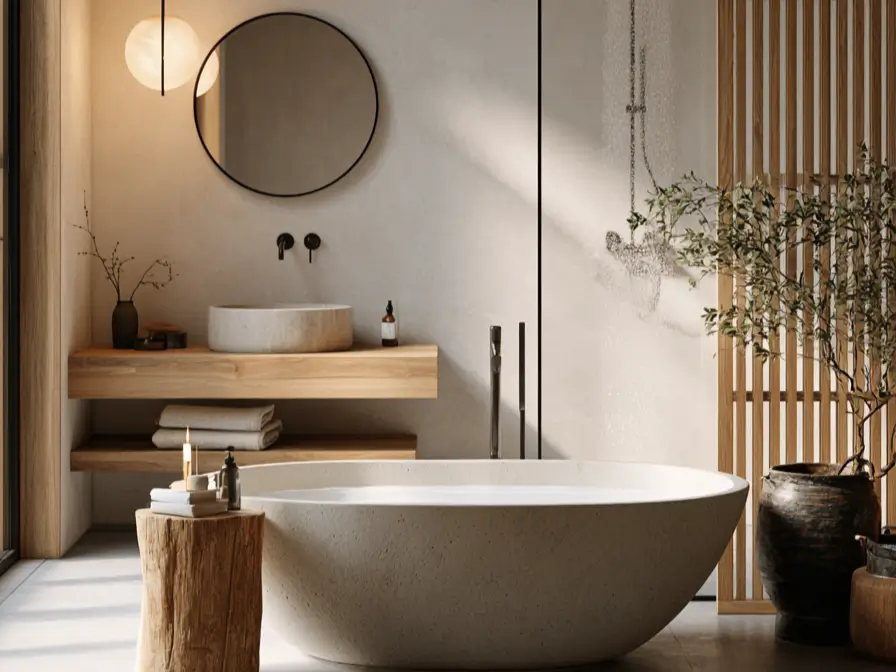

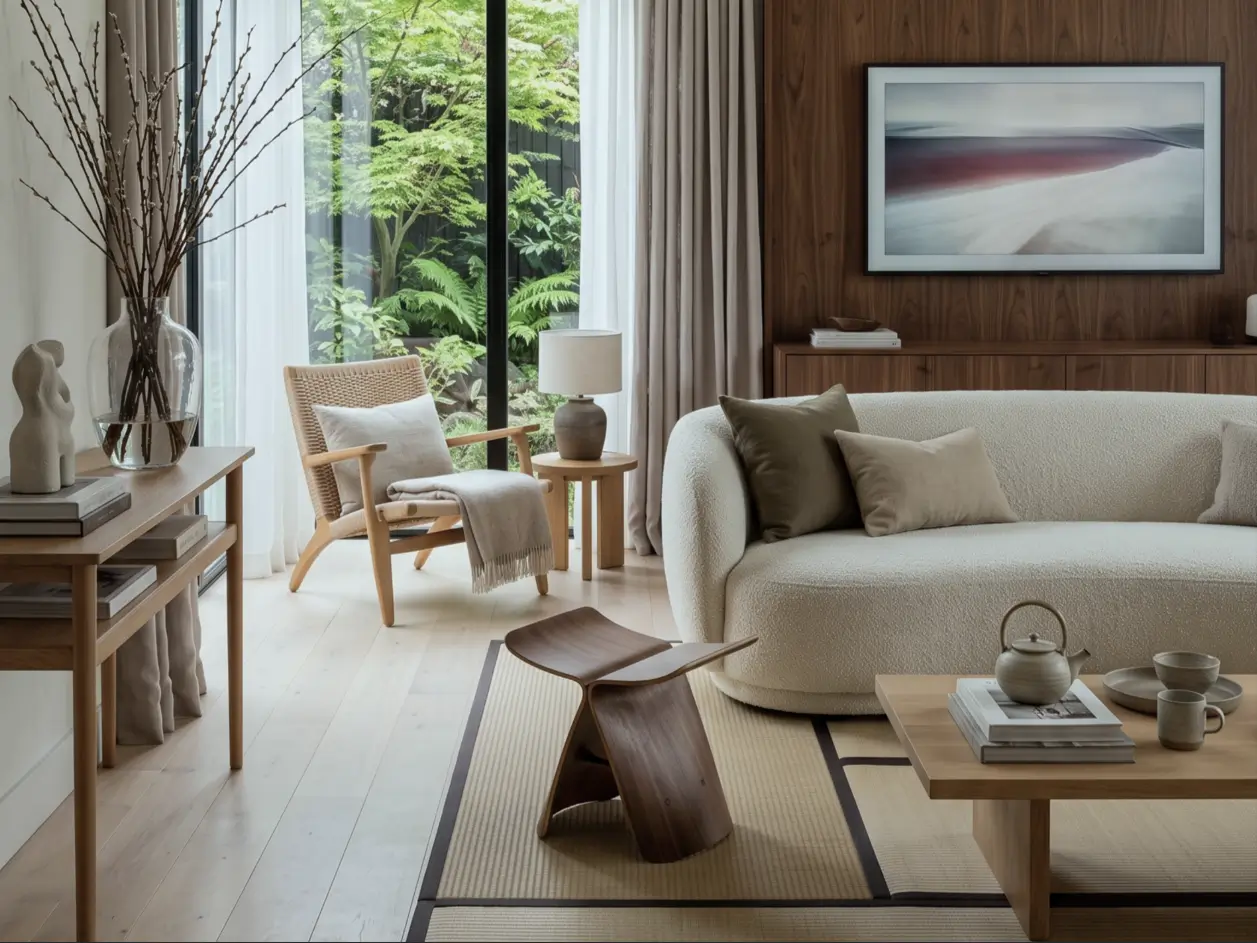
A Japandi style living room blends Japanese minimalism with Scandinavian comfort, creating a space that feels calm without ever feeling cold. You’ll notice it right away. The light sits softly on wood and linen, nothing competes for attention, and the room feels settled rather than staged.
The appeal comes down to warmth. This is minimalism you can actually live in, not the stark, empty kind. Most Japandi living room ideas rely on a few natural materials, oak and rattan and a little stone, held together by neutral tones that never tip into harsh.
The Japanese side brings a wabi-sabi appreciation for imperfect, lived-in beauty. The Scandinavian side brings the comfort that makes you want to stay — the same balance that defines Japandi style homes throughout the house.
It’s a look that holds up in real homes, from bright apartments to small condos where every piece has to earn its place. In the rooms I’ve worked on over the years, the most convincingly Japandi ones are rarely the most expensive. They’re the most patient. Get a few choices right, and the style stops feeling like something you’re chasing and starts feeling like a room you simply live in well.
Japandi Living Room: Key Takeaways
- Warm minimalism, not cold. Keep it uncluttered, but always soft and comfortable.
- Natural materials lead. Wood, linen, rattan, stone, and handmade ceramics do the work.
- Muted, tonal palette. Warm neutrals with small charcoal or terracotta accents.
- Low furniture, real storage. Sit close to the ground and hide the clutter.
- Leave room to breathe. A few good pieces with space around them beat a full shelf.
What Is a Japandi Style Living Room?
A Japandi style living room blends Japanese minimalism with Scandinavian warmth to create a calm, uncluttered space that still feels comfortable to live in. The name is a simple mash-up of Japan and Scandi, but the fit runs deeper than the word. Both traditions love natural materials, clean lines, and rooms that hold only what matters.
What sets it apart from plain minimalism is warmth. You’ll often see the Japanese side as low furniture, wabi-sabi imperfection, and a respect for craft, while the Scandinavian side brings soft textiles and pale wood. In the homes I’ve worked on, the rooms that read as truly Japandi are never the emptiest ones. They’re the most considered, where every piece has a reason to be there.
The Two Traditions Behind the Look
Japanese design leans on wabi-sabi, the idea that beauty lives in imperfection and age. It shows up as handmade ceramics, natural grain, and the calm restraint of Japanese home interior design. Scandinavian design leans on hygge, the feeling of warmth and ease.
It shows up as soft wool, pale wood, and rooms built for long, dark winters. Japandi takes the calm of one and the cosiness of the other, and lands somewhere gently in between.
Japandi Living Room Ideas That Actually Work
The best Japandi living room ideas come down to a few reliable moves: low furniture, natural materials, a muted palette, and plenty of room to breathe. You don’t need all of them at once. A single well-chosen change often does more than a full redesign. The gallery below walks through 39 rooms worth borrowing from, each one showing a different way the style comes together in a real home.
1. Grounded Floor Seating
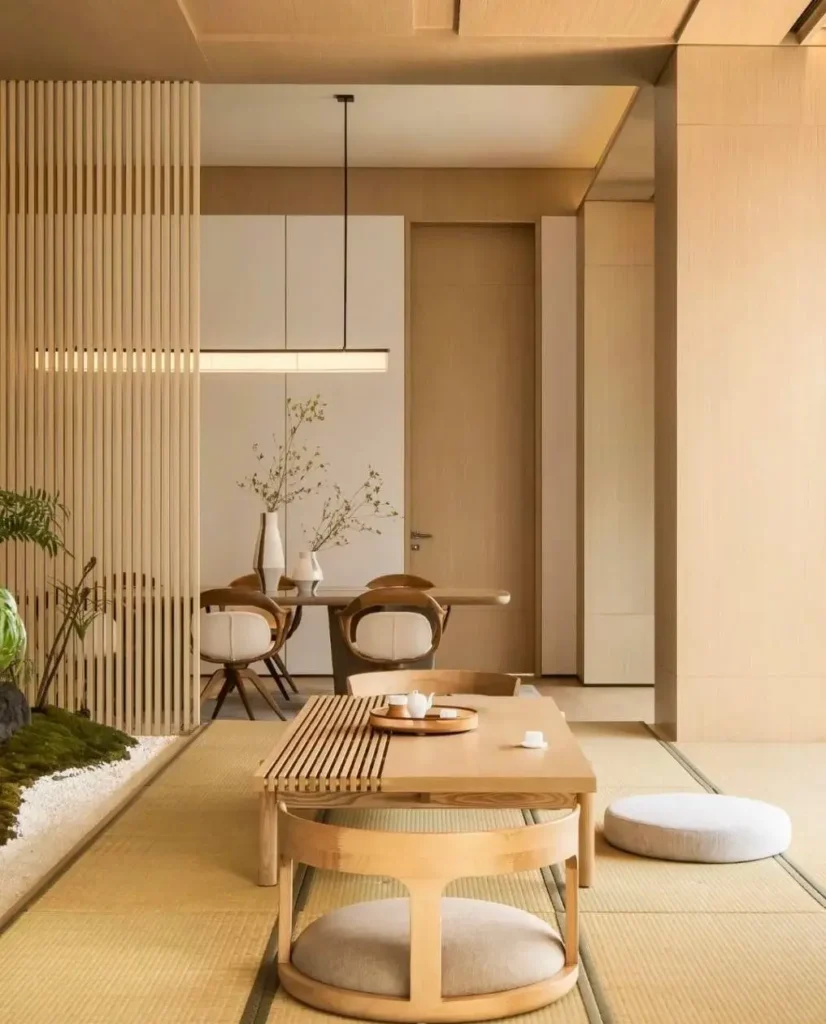
On tatami mats, a slatted wood table sits low with round cushions pulled around it, a slim run of moss and stone alongside. Seating this close to the floor makes the room feel calm and open. It’s a smart choice.
2. Quiet Black Accents
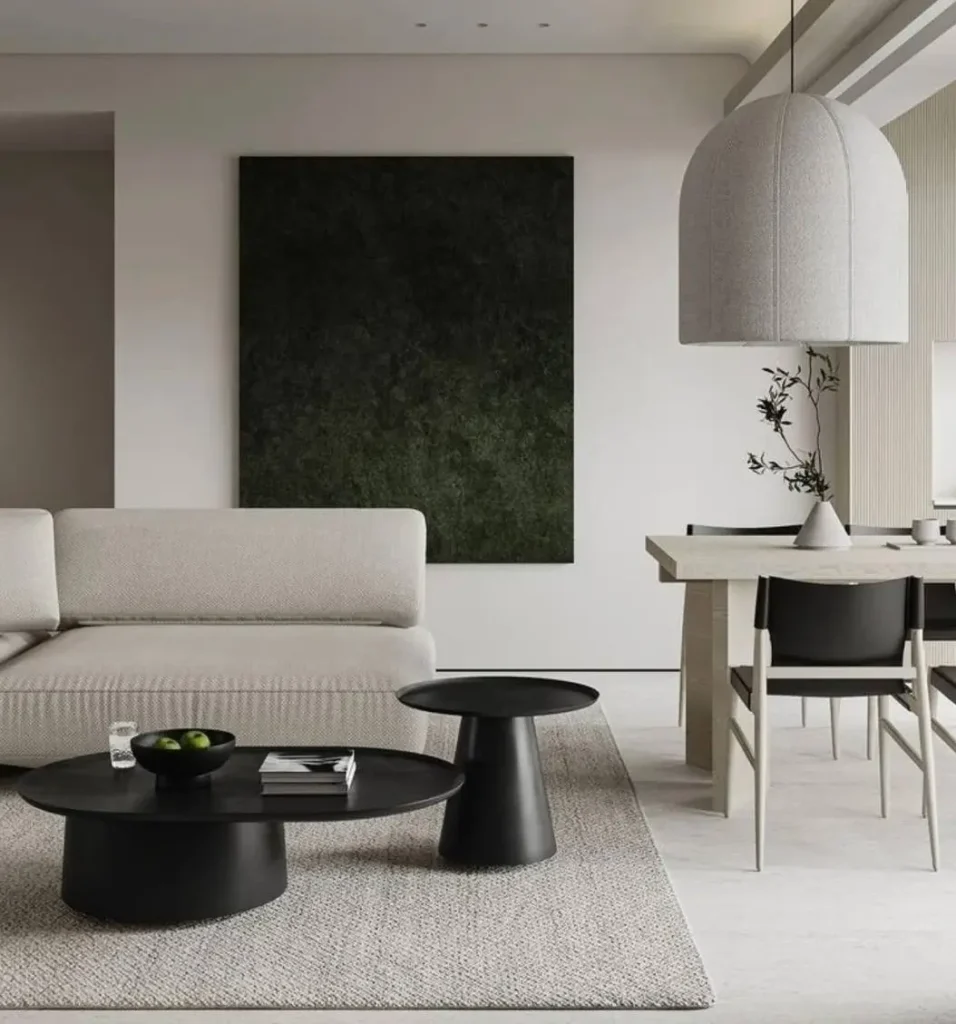
Two round black tables sit low against a soft linen sofa and pale oak, the dark tones kept to just a few pieces. Used sparingly like this, black adds weight to a room without breaking the calm. This look feels grounded.
3. Weathered Wabi-Sabi Textures
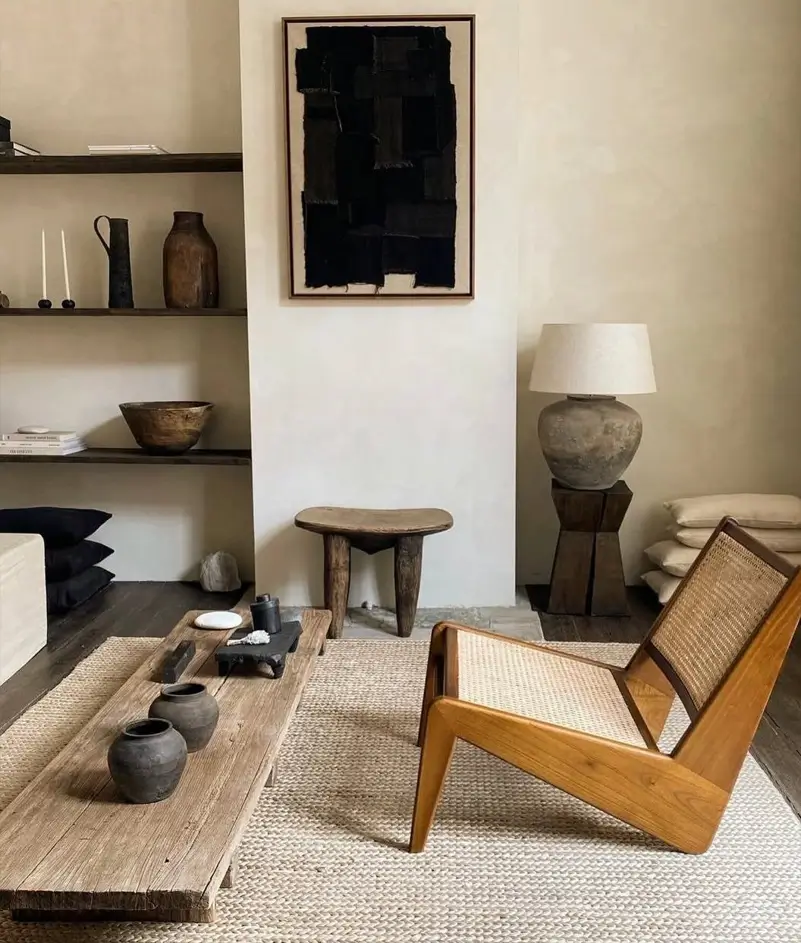
Rough-hewn wood, dark hand-thrown pots, and a cane lounge chair fill this room with age and quiet imperfection. Wabi-sabi like this celebrates the marks time leaves, so nothing needs to look new or matched. Worth borrowing.
4. Small-Space Storage
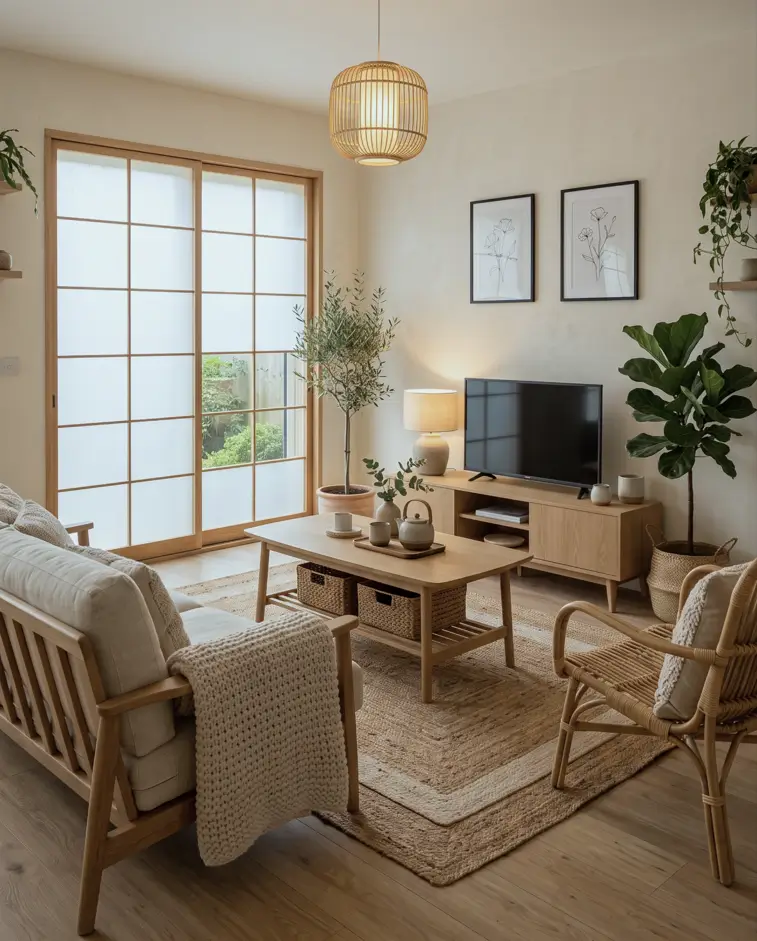
Woven baskets tucked under an oak coffee table keep a small living room tidy without adding bulk. In tighter rooms, hidden storage like this does the quiet work that keeps the calm intact. It’s easy to live with.
5. Paper Lantern Glow
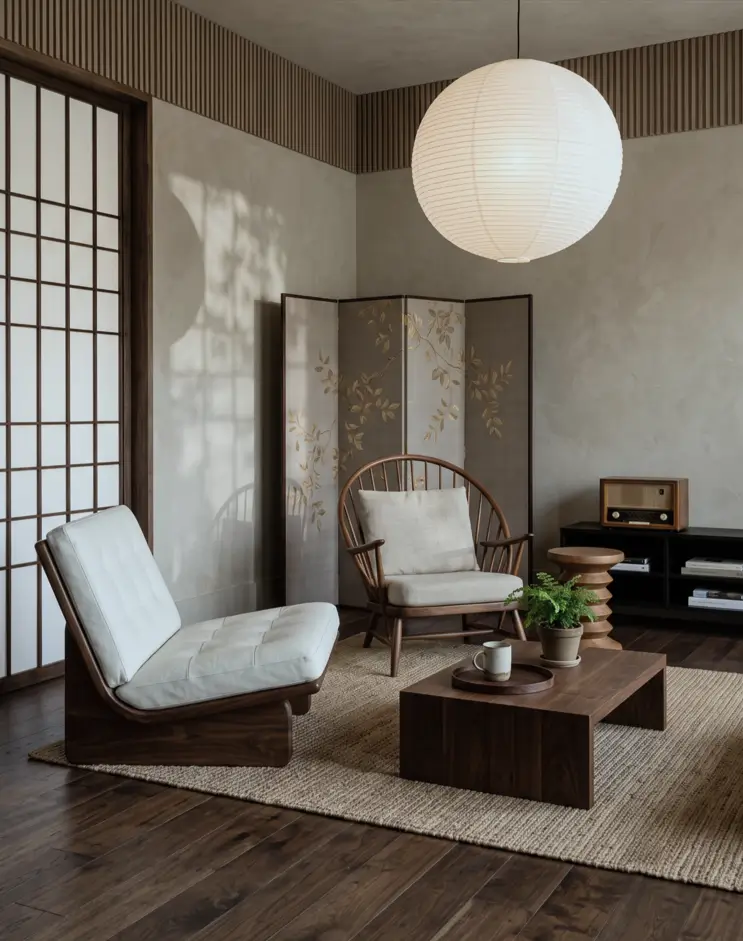
Hanging low over the seating, a round paper lantern throws soft, even light across the walnut and stone below. Diffused lighting like this warms a room far more gently than a bright ceiling fixture. This look feels serene.
6. Walnut Feature Wall
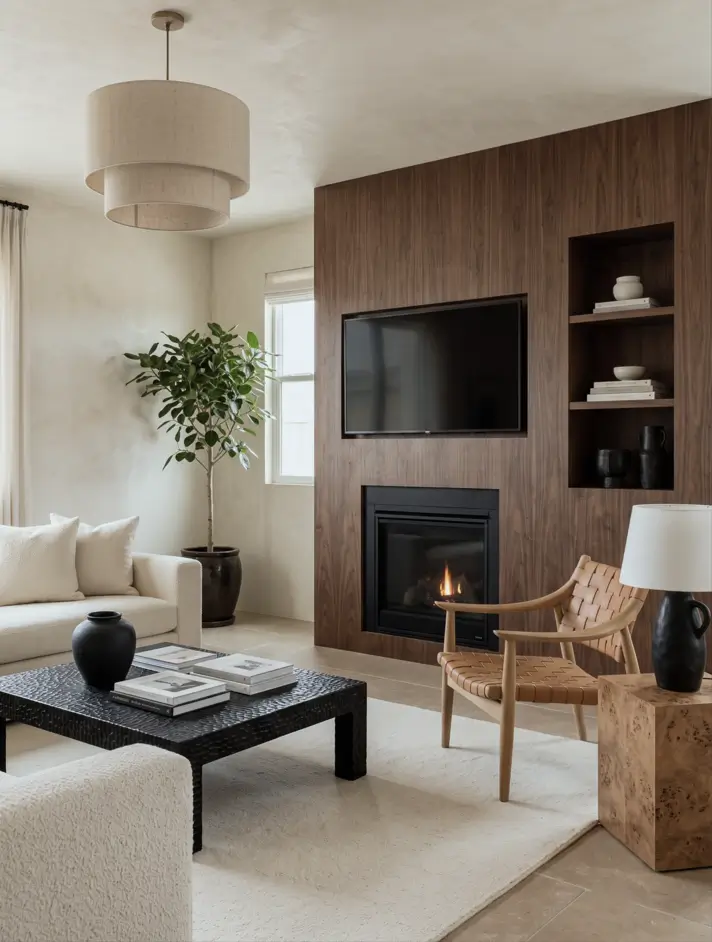
Wrapping the fireplace and TV, a warm walnut wall anchors this room and hides the screen in plain sight. Wood paneling like this grounds a space and softens the black glass far better than a bare white wall. Worth the investment.
7. Layered Light Control
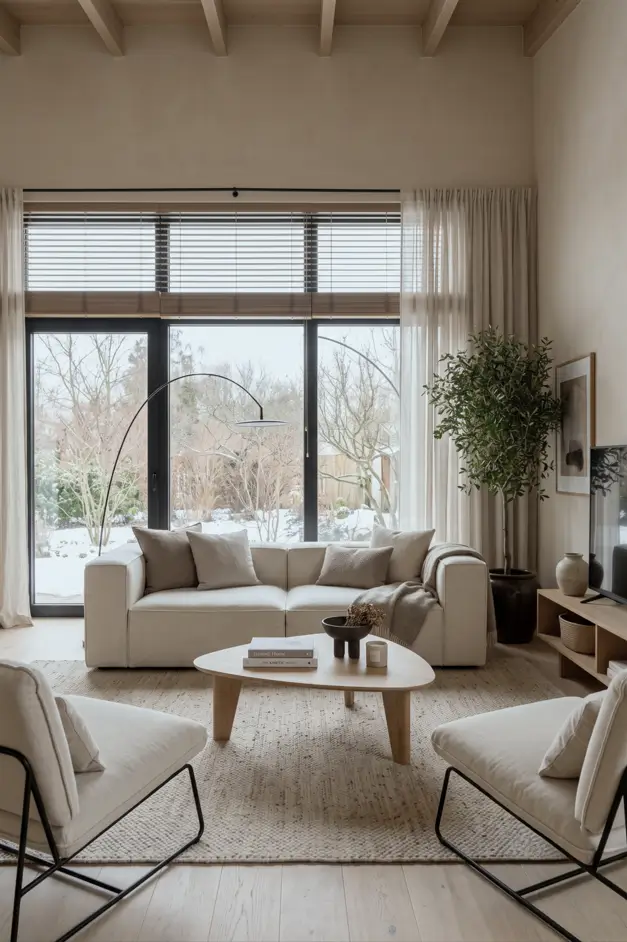
Sheer linen curtains hang over wood blinds at this wall of windows, so daylight can be softened or let in fully. Layering window treatments this way keeps a bright room feeling calm through a snowy afternoon. Easy to live with.
8. Lit Display Niche
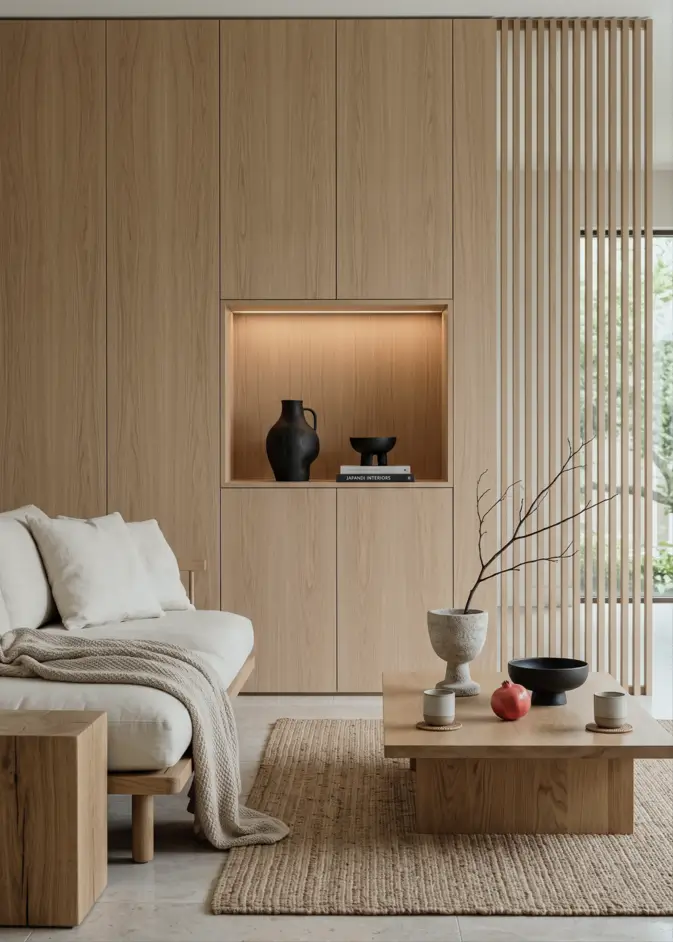
Set into the oak joinery, a recessed niche glows softly around a black jug and a small bowl. Built-in lighting like this turns a few quiet objects into a focal point without cluttering the wall. Worth trying at home.
9. Legless Tatami Chairs
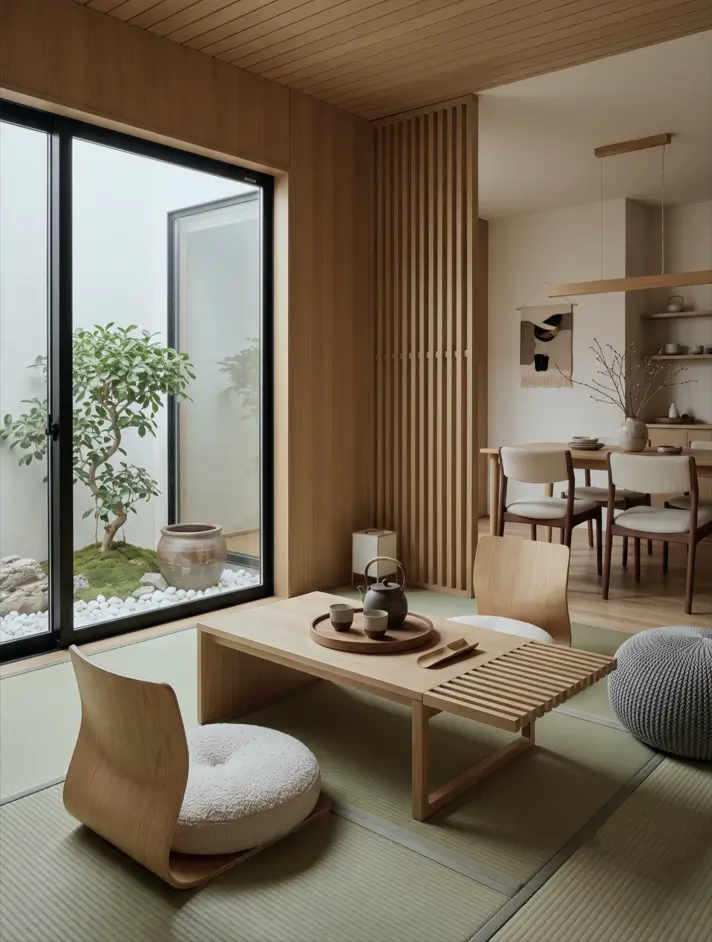
Two curved floor chairs sit at a low oak table on soft tatami, a tea set waiting on a round tray beside a small zen garden. Legless seating like this brings you close to the ground, the way traditional Japanese rooms do. We love the calm here.
Related: 34 Japanese Living Room Ideas That Master Tranquil Design
10. Concrete Meets Warm Wood
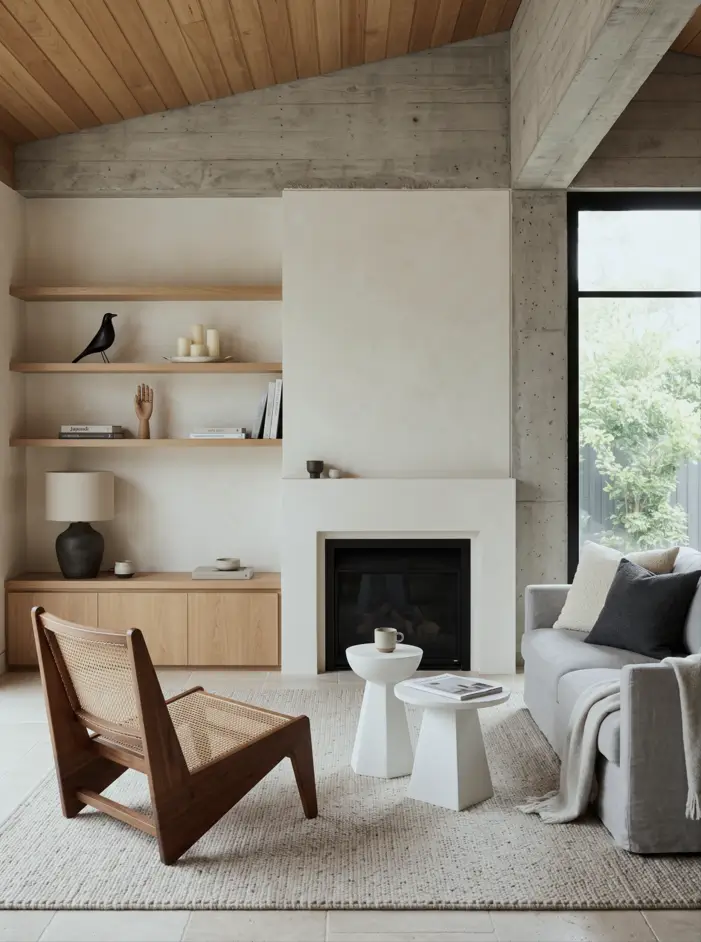
Raw concrete and a warm wood-plank ceiling meet above a plaster fireplace, hard and soft materials sharing one wall. Pairing rough concrete with wood keeps a room from feeling cold, a balance Japandi handles unusually well. This pairing feels calm.
11. Styled Open Shelving
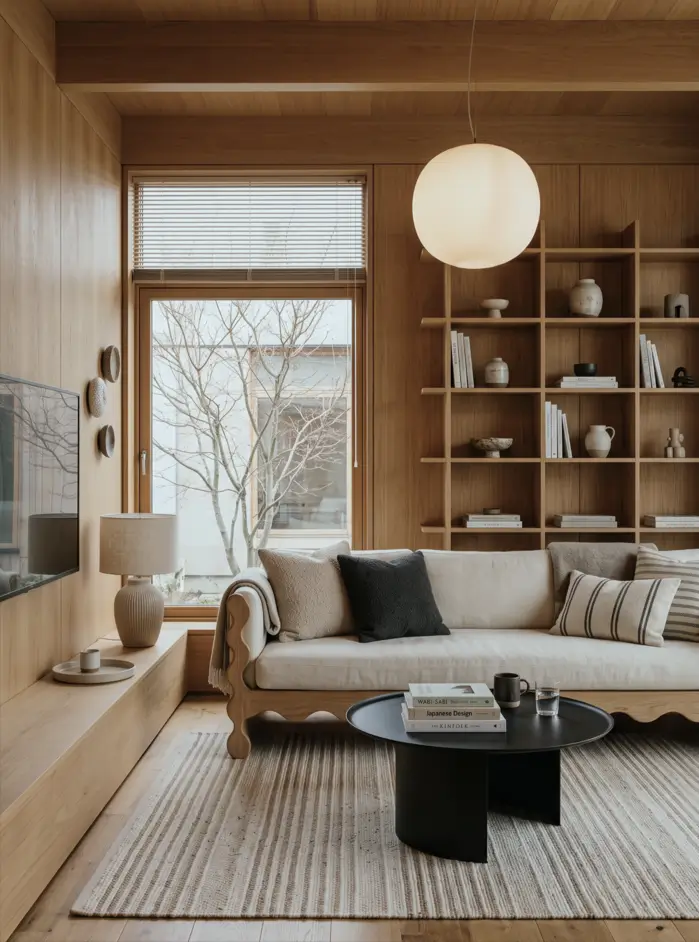
Filling the wall behind the sofa, a grid of oak shelves holds books, ceramics, and a little breathing room between each piece. Open shelving styled loosely like this adds personality while keeping the room calm. Instead of packing it, leave gaps.
12. Soft Curved Sofa
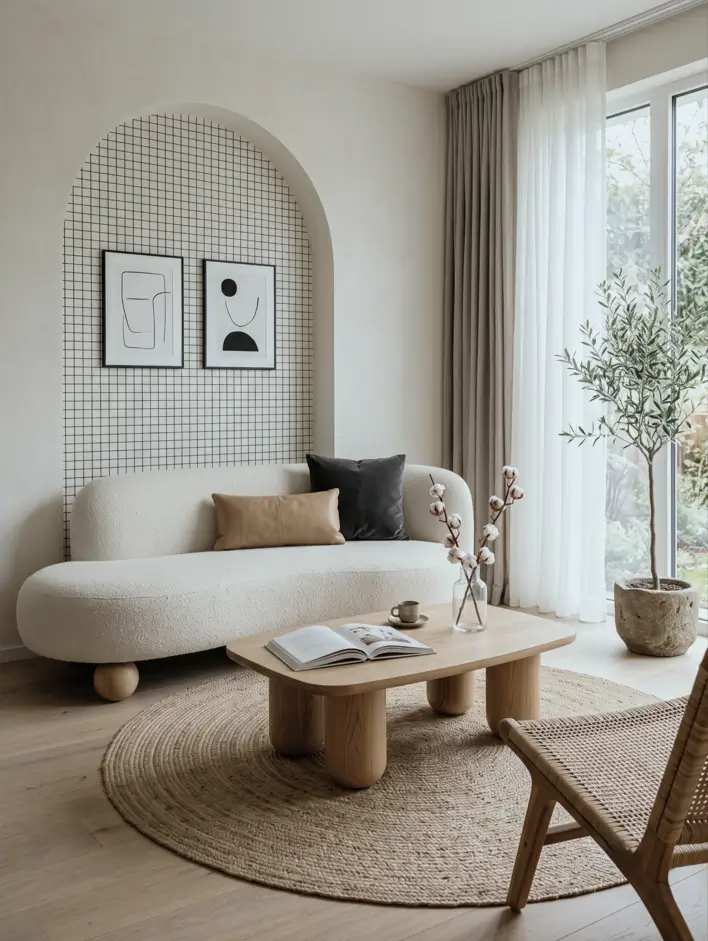
Curving gently against a pale arched wall, this bouclé sofa rests on small wooden ball feet. Rounded furniture like this eases the clean lines Japandi is known for, keeping a room calm rather than rigid. This shape feels welcoming.
13. Shoji Screen Light
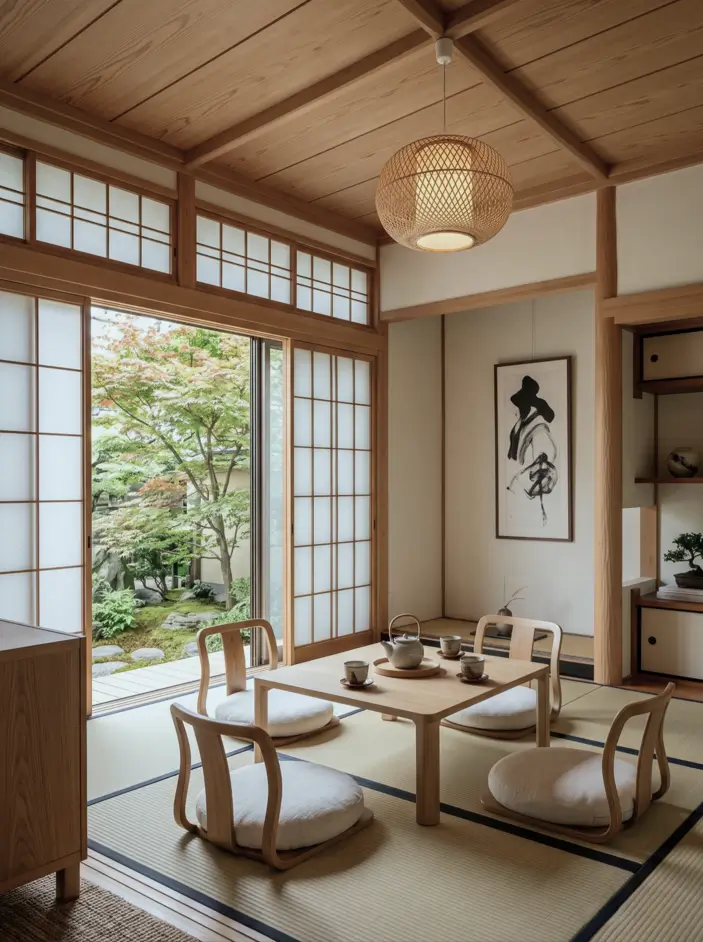
Shoji screens run the length of this wall, their paper panels turning bright garden light into a soft, even glow. Sliding screens like these filter the sun and open onto the maple garden when you want the view. Worth borrowing here.
14. Open-Plan Room Divider
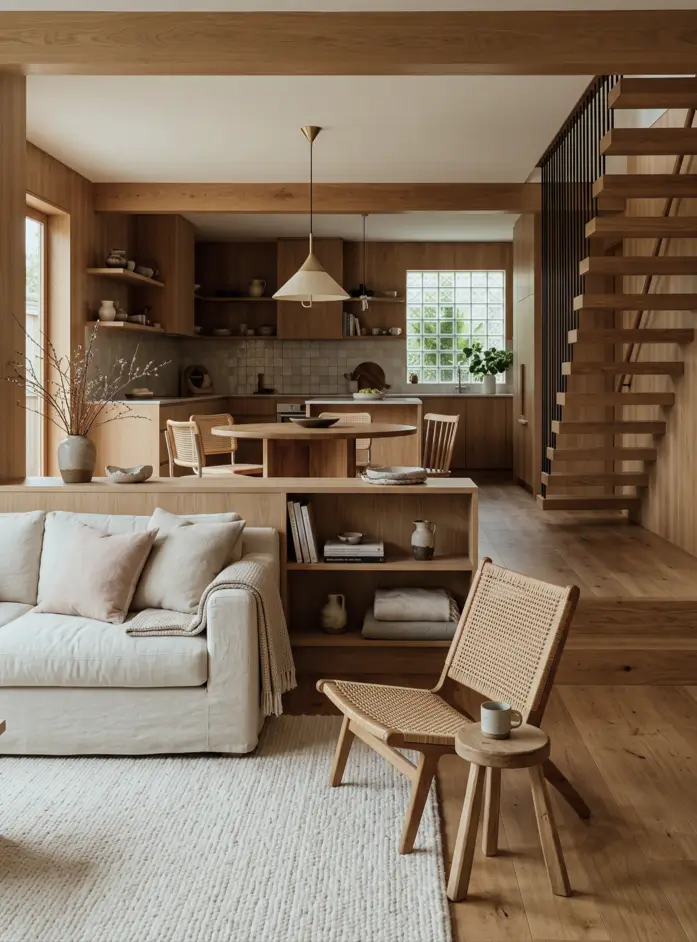
Backing the sofa, a low oak bookshelf quietly separates the living area from the kitchen without closing either off. A half-height divider like this defines the space and adds storage, which open-plan homes always seem to need. A hardworking piece.
Related: Modern Open Kitchen Designs: 22 Ideas to Inspire Your Dream Space
15. Cane-Front Cabinetry
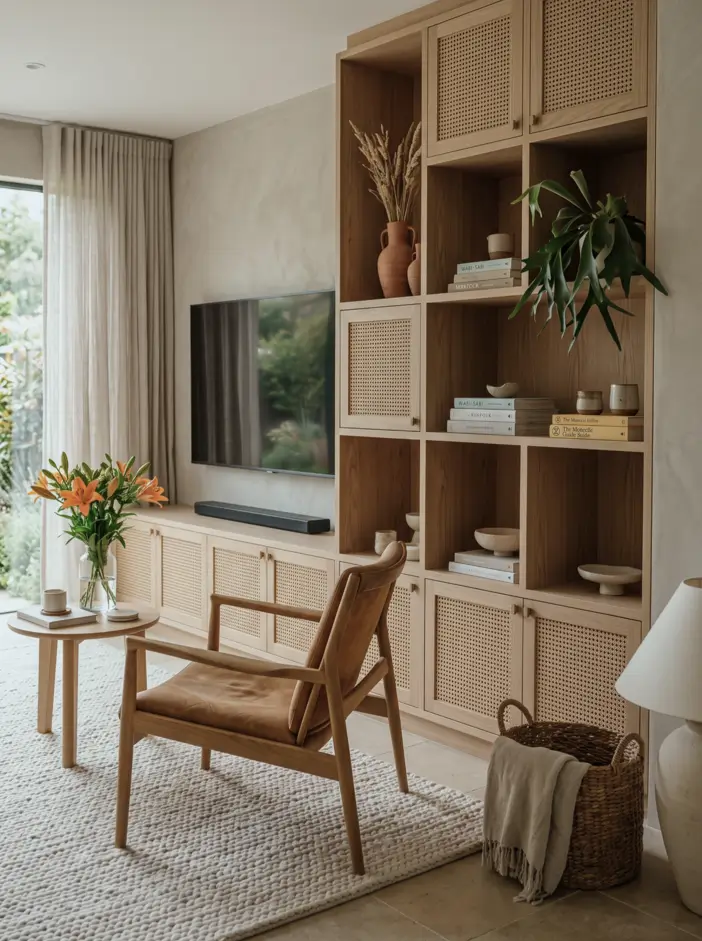
Cane webbing fronts this floor-to-ceiling oak cabinetry, softening a big storage wall and letting it breathe. Rattan panels like these hide clutter while adding gentle texture, and they quietly tame the TV beside them. Easy to live with.
16. Terracotta Tile Wall
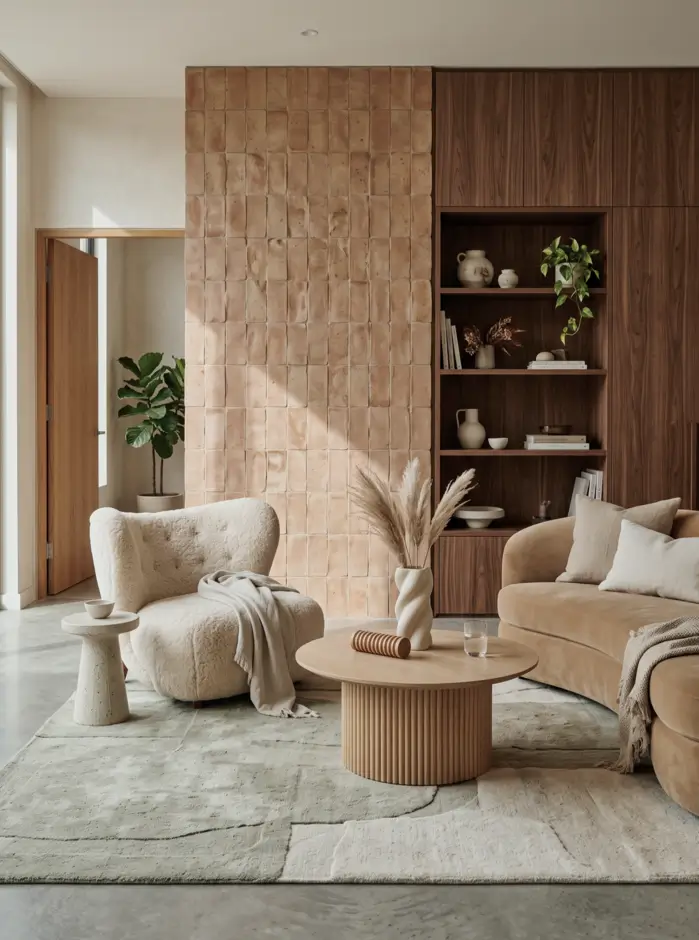
Handmade terracotta tiles climb this feature wall, their uneven glaze catching light in a way flat paint never could. An earthy tiled wall like this warms the whole room and pairs beautifully with walnut and bouclé. A detail worth stealing.
17. Sculptural Wood Stool
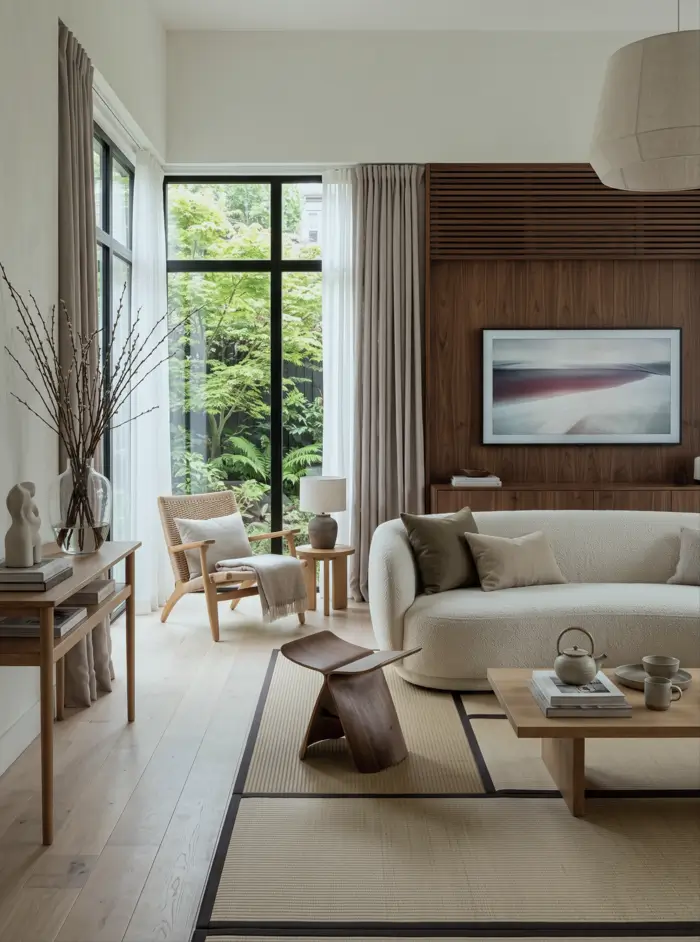
Sitting low on the rug, a curved plywood butterfly stool doubles as sculpture and a spot to rest a cup. A sculptural piece like this earns its keep, adding a quiet focal point without crowding the floor. One to seek out.
18. Sculptural Bouclé Chair
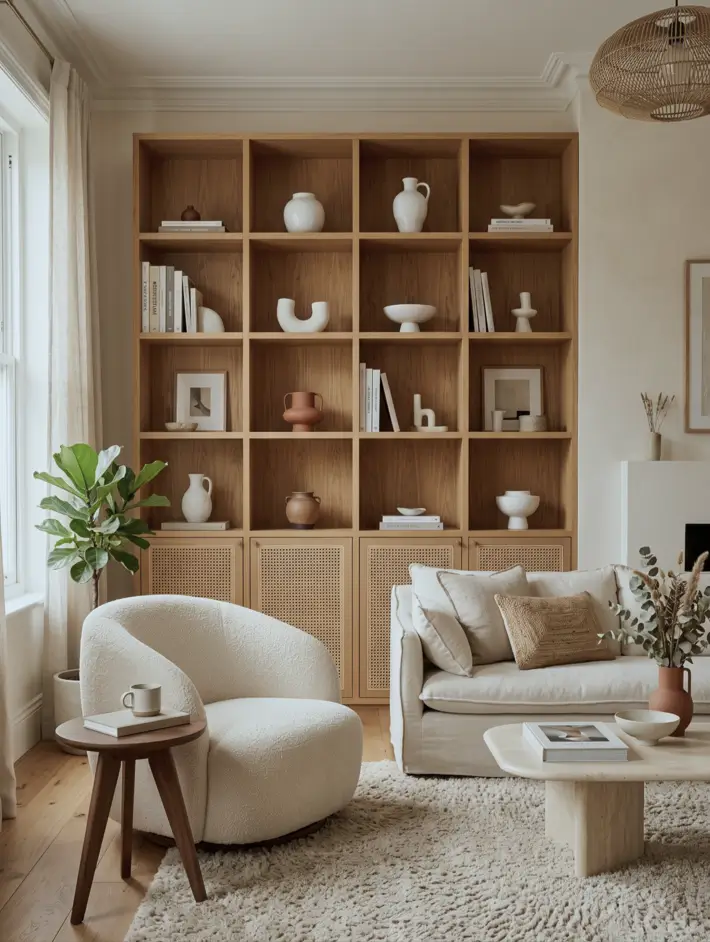
Curving into the corner, a round bouclé swivel chair invites you to sink in beside the bookshelf. A soft, sculptural seat like this balances all the straight lines nearby and makes a reading spot feel genuinely inviting. Hard to walk past.
19. Pared-Back Seating Group
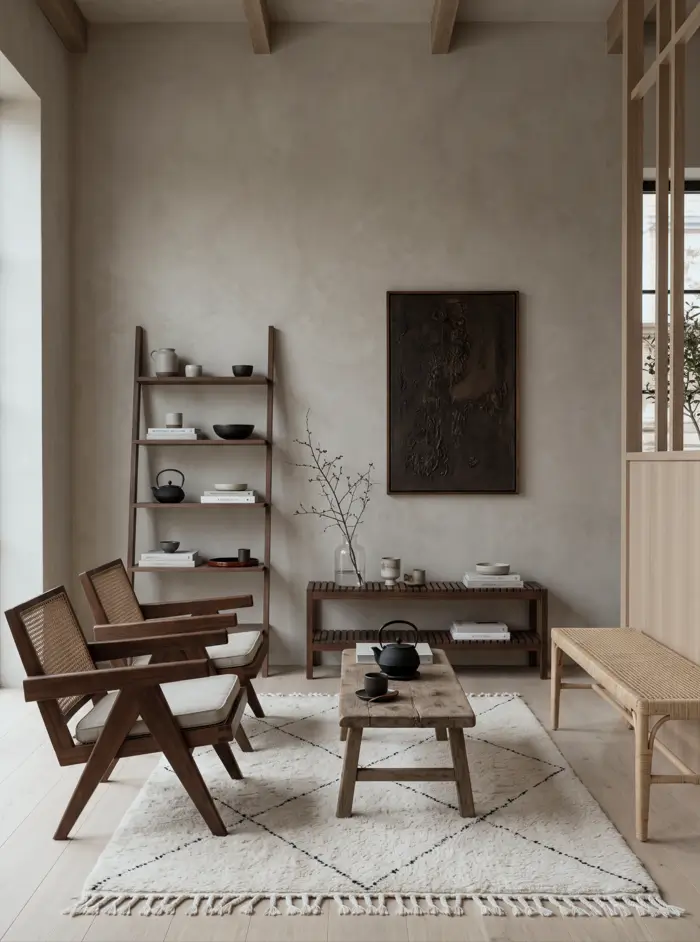
Two cane lounge chairs and a rustic wood bench sit on a Berber rug, open floor left around them. Keeping a seating group this spare lets each piece stand on its own, the restraint Japandi does well. Room to breathe.
20. Two-Chair Conversation Nook
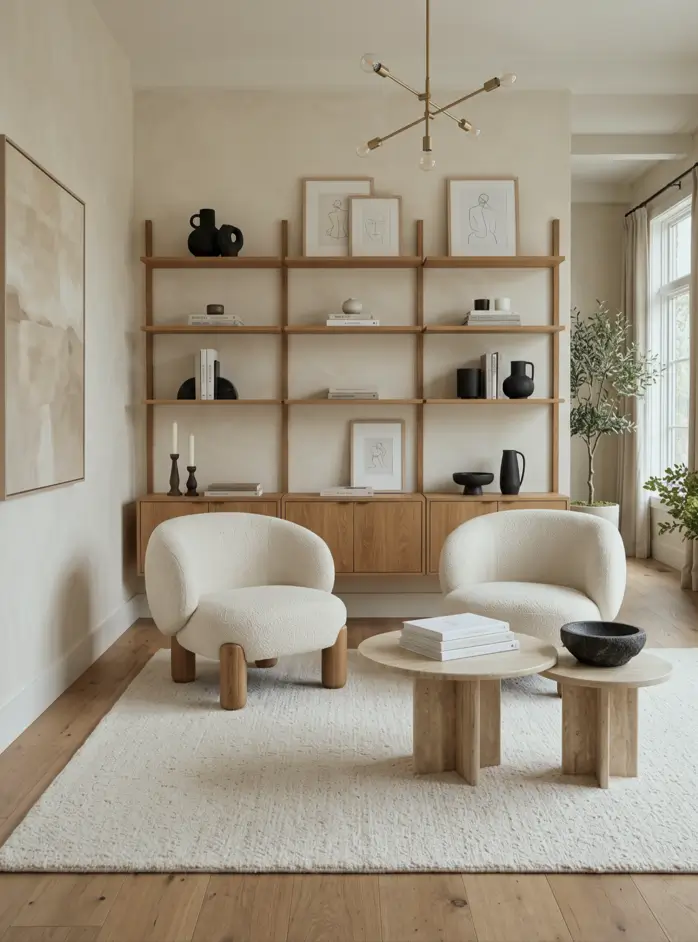
Set facing each other over a low travertine table, two bouclé chairs make a small nook built for talking, not television. Facing seats like these turn a quiet corner into a proper gathering spot, no sofa needed. A lovely way to sit.
21. Clerestory Wood Ceiling
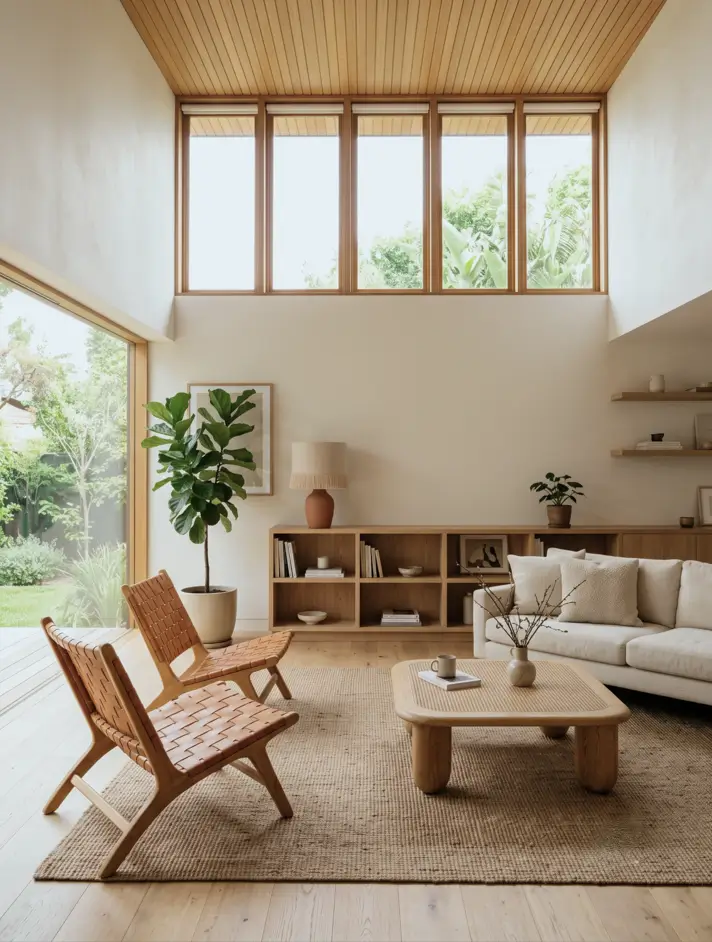
High clerestory windows run beneath a warm wood-plank ceiling, pulling daylight deep into the room from above eye level. Windows set up high like these brighten a space while keeping walls free for art and shelving. A clever bit of design.
22. Sofa Framing the View
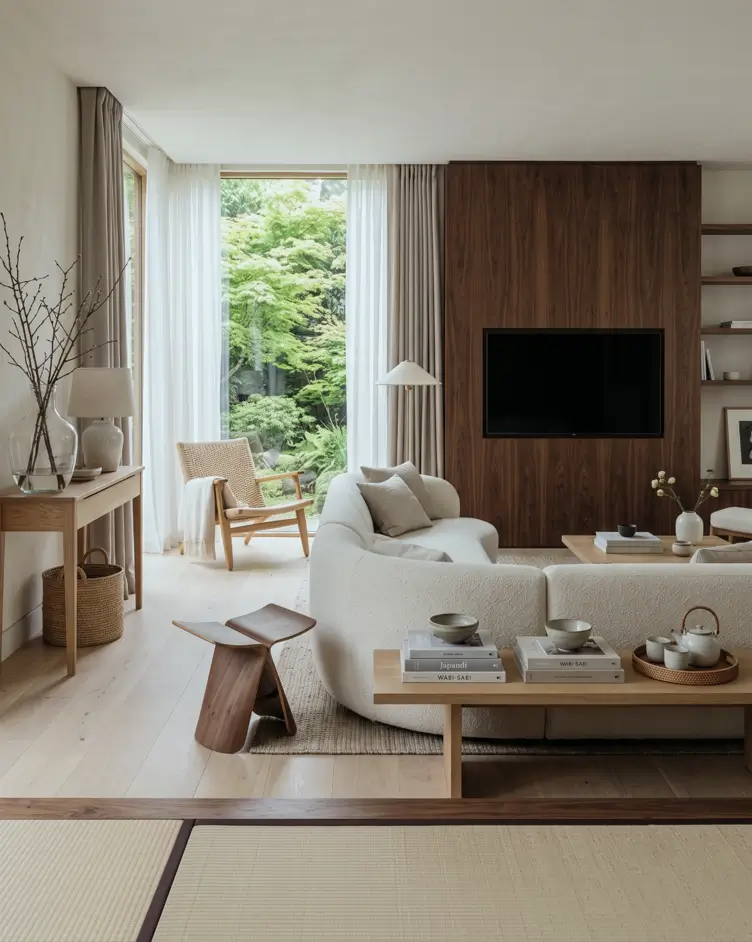
Curved to face the garden windows, this bouclé sofa makes the maple outside the room’s focal point, not the TV. Facing seating toward a view pulls greenery indoors and quietly softens the screen beside it. A calming way to arrange a room.
23. Floor-to-Ceiling Pole Shelving
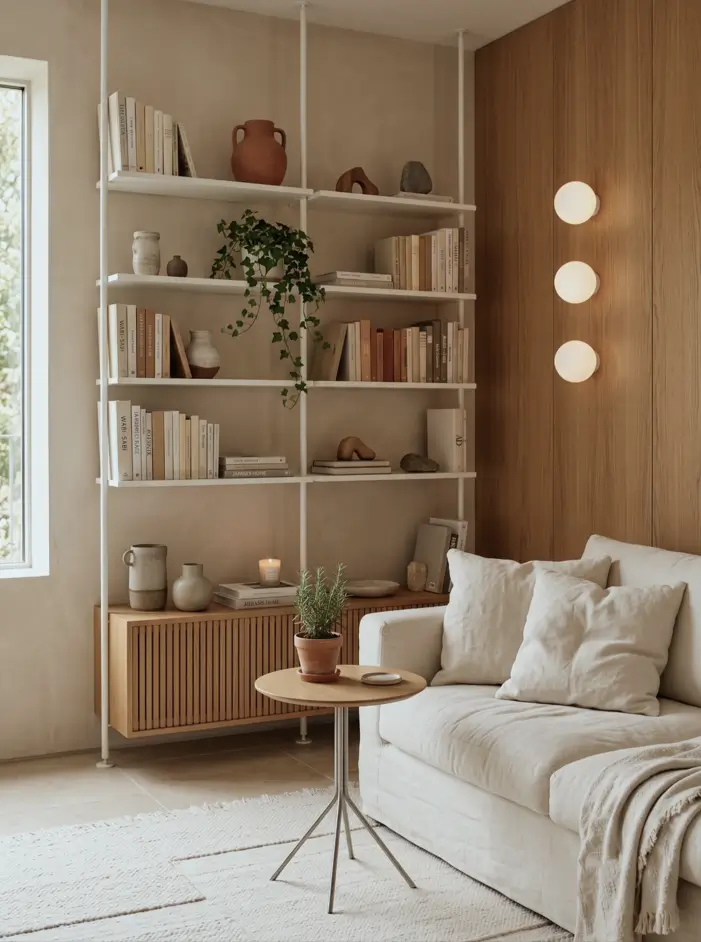
Slim white poles run floor to ceiling here, carrying open shelves without needing a solid wall behind them. A pole system like this holds a real library while staying airy, which suits smaller rooms especially well. A neat space-saver.
24. Herringbone Wood Floor
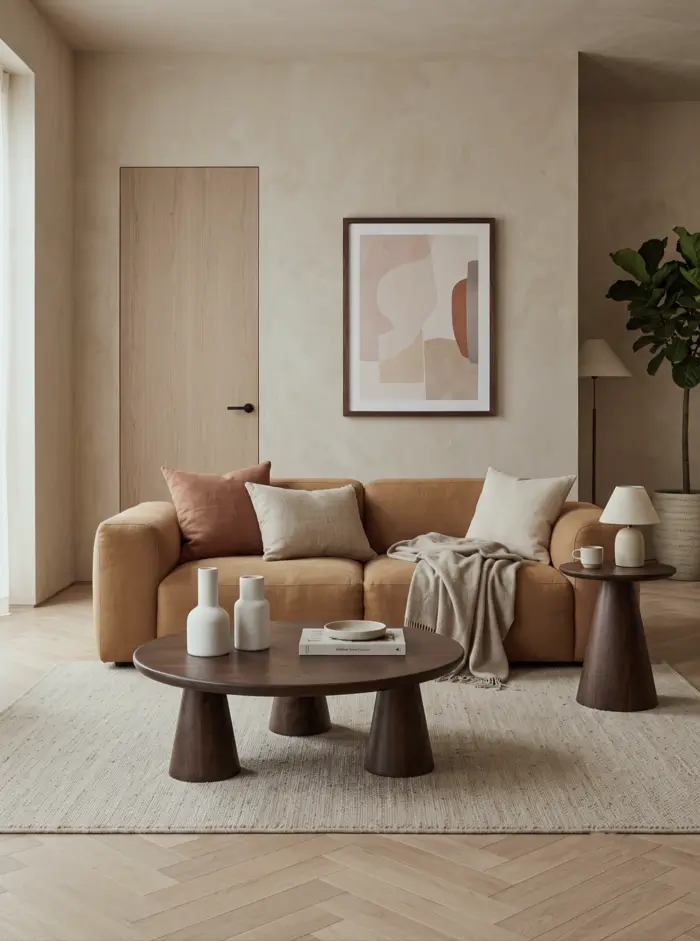
Laid in a soft herringbone, the pale oak floor adds gentle pattern underfoot without pulling focus from the calm room above it. A wood floor like this brings warmth and quiet movement, grounding the neutral palette beautifully. A timeless base to build on.
25. Muted Indigo Accent
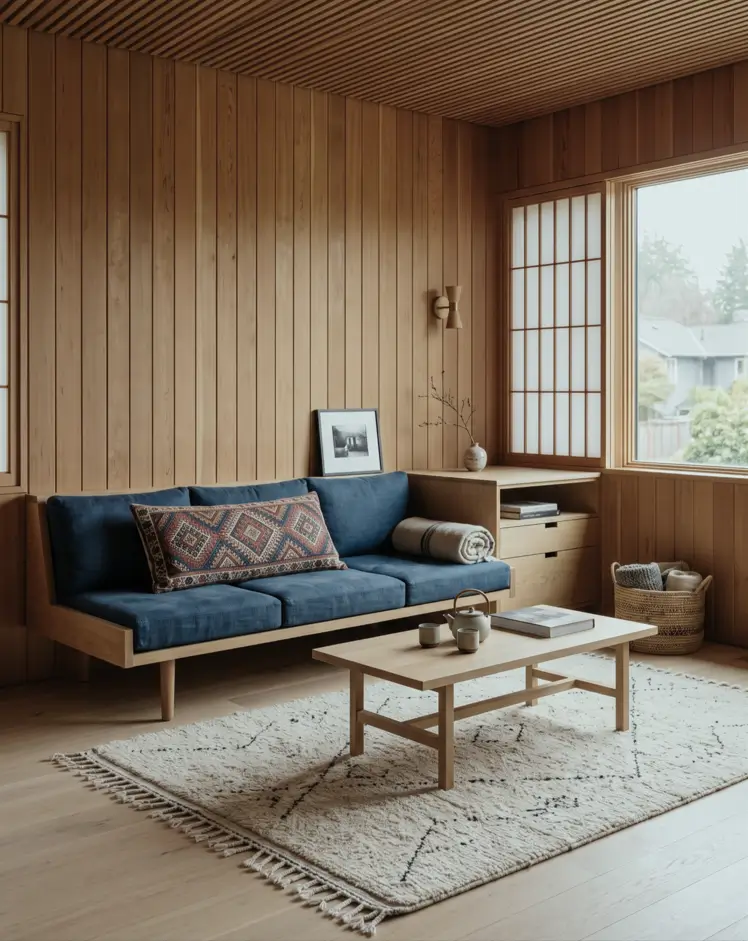
Deep indigo cushions rest on this oak daybed, the one cool note in a room otherwise wrapped in warm wood. A muted colour like this adds quiet depth without breaking the calm, especially when everything around it stays soft and natural. A restful bit of contrast.
26. Dark-Backed Shelving
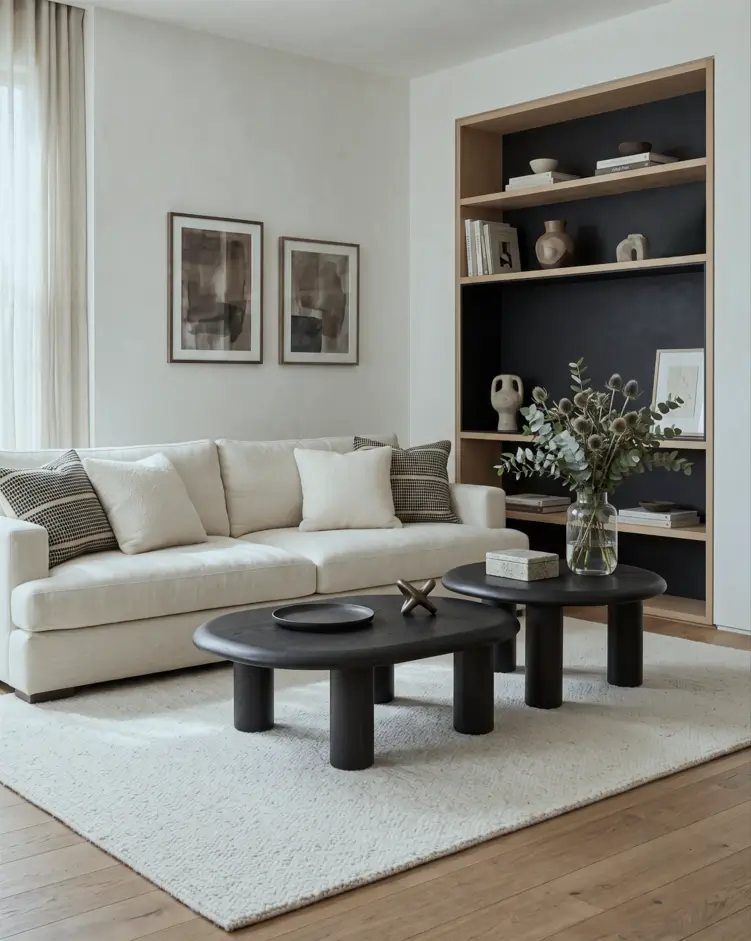
Painting the back of this oak niche a deep charcoal makes the pale ceramics and books on it stand out sharply. A dark backdrop like this gives open shelving real depth, turning everyday objects into a quiet display. A simple trick with big impact.
27. Tonal Cream Palette
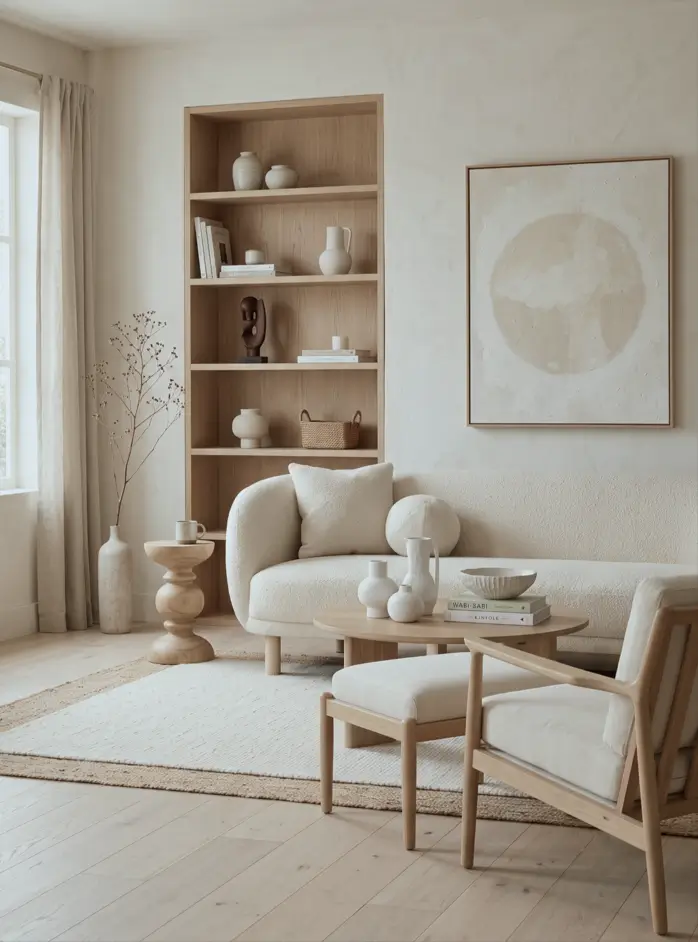
Almost everything here sits within a whisper of cream, from the bouclé sofa to the limewash walls and pale ceramics. Keeping to one soft tone like this makes a room feel serene and spacious, letting texture do the work instead of colour. Calm, top to bottom.
28. A Spot for Tea
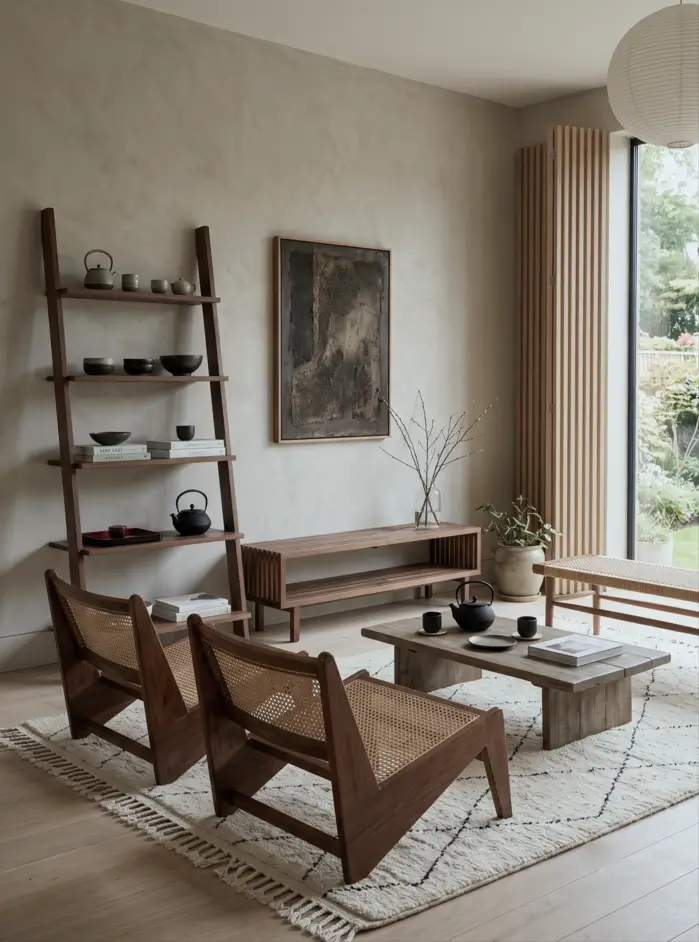
Set low between two cane chairs, a rustic wood table holds a cast-iron pot and cups, ready for a slow afternoon. Building a room around a small ritual like tea gives it a real centre, the kind of quiet purpose Japandi loves. A lovely way to gather.
29. Rustic Aged Pieces
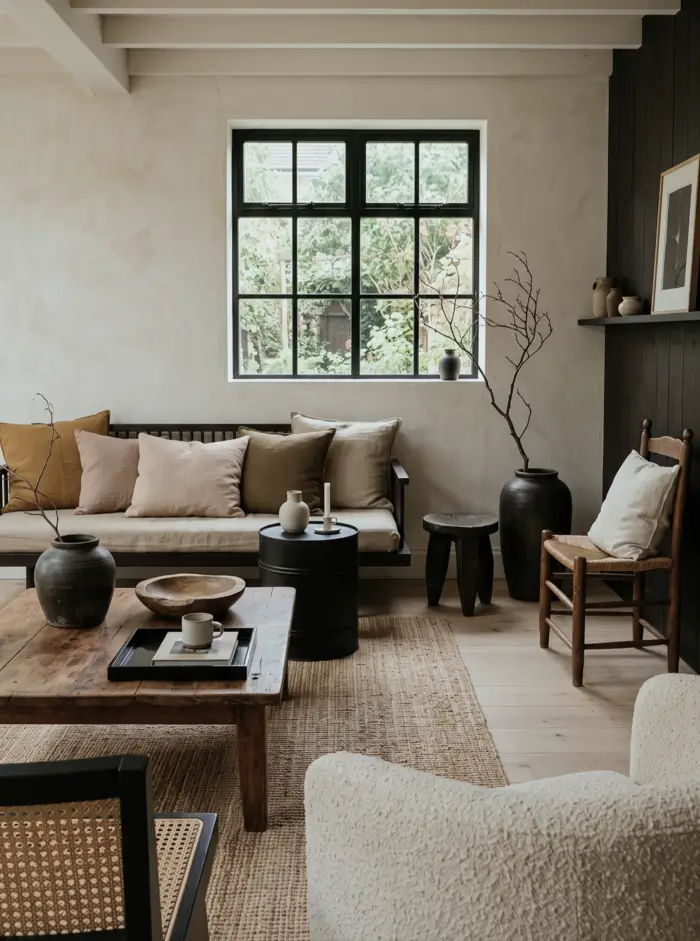
Weathered pottery, a reclaimed-wood table, and an old rush-seat chair bring years of wear into this calm room. Mixing genuinely old pieces like these adds soul to Japandi, keeping the minimalism warm instead of showroom-perfect. Character you can’t fake.
30. Folding Linen Screen
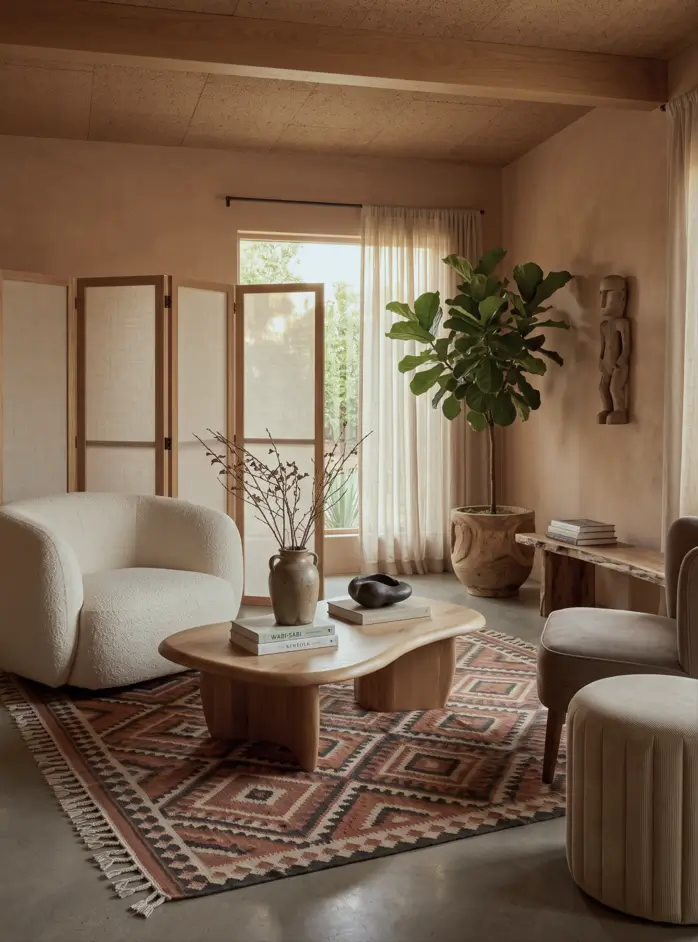
Standing in the corner, a folding screen of linen panels softens the light and hints at a divide without walling anything off. A moveable screen like this shapes a room gently and can tuck away whenever you want the space back. A flexible favourite.
31. Arched Reeded-Glass Door
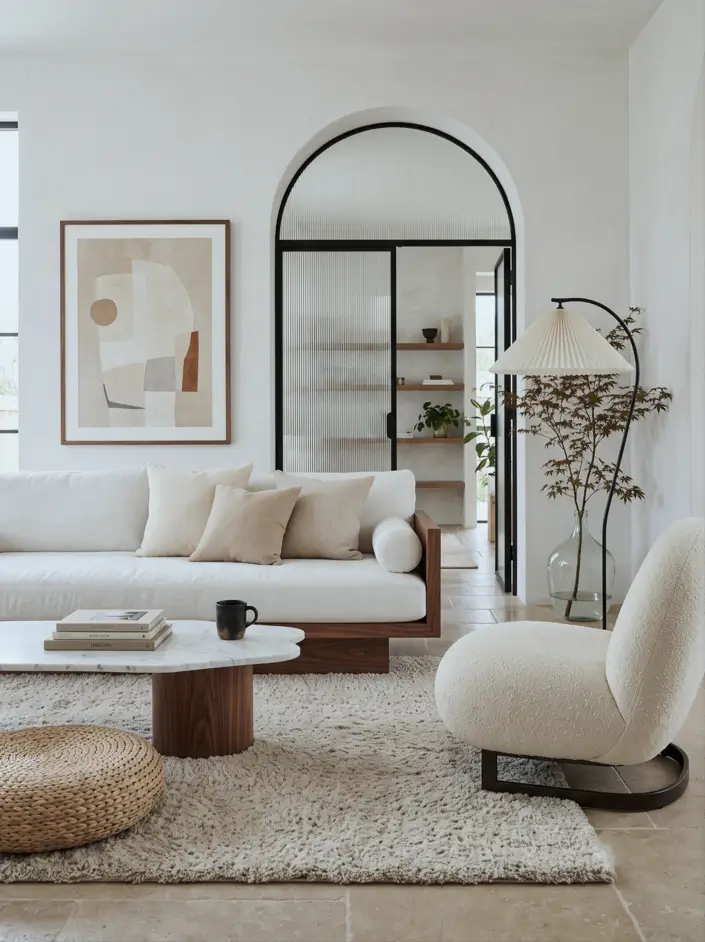
Framed in slim black, an arched sliding door of reeded glass lets light pass between rooms while keeping each one its own. Fluted glass like this softens the view through and adds a quiet architectural curve. A beautiful way to divide space.
32. All-in-One Joinery Wall
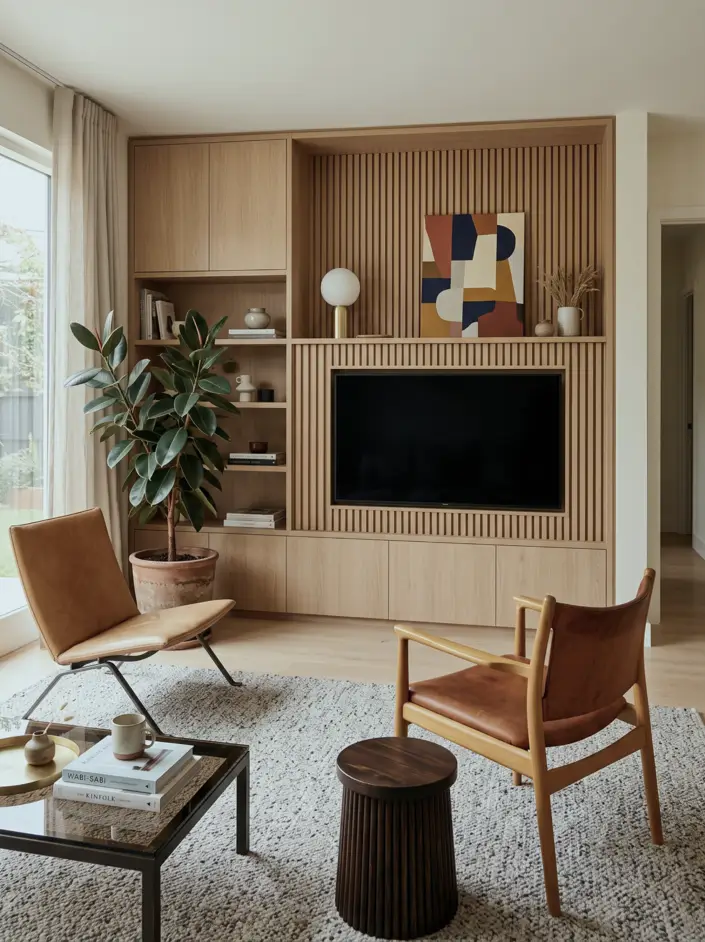
One run of oak joinery here holds the TV, closed cabinets, and open shelves together in a single calm wall. Building storage and screen into one unit like this keeps a living room tidy and stops the TV from dominating. A clever, seamless fix.
33. Modular Sectional Comfort
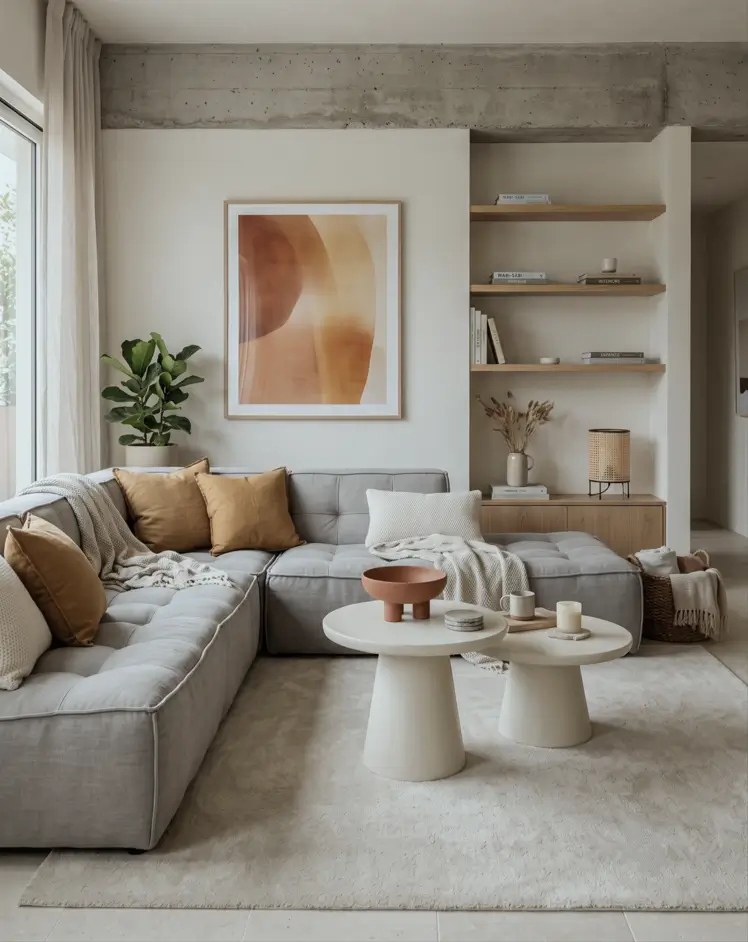
Low and deep, this grey modular sectional stretches into an L with a built-in ottoman for feet or extra seats. A sofa like this suits real family life, its pieces shifting to fit the room or the moment. Comfort without the clutter.
34. Light Across a Bare Wall
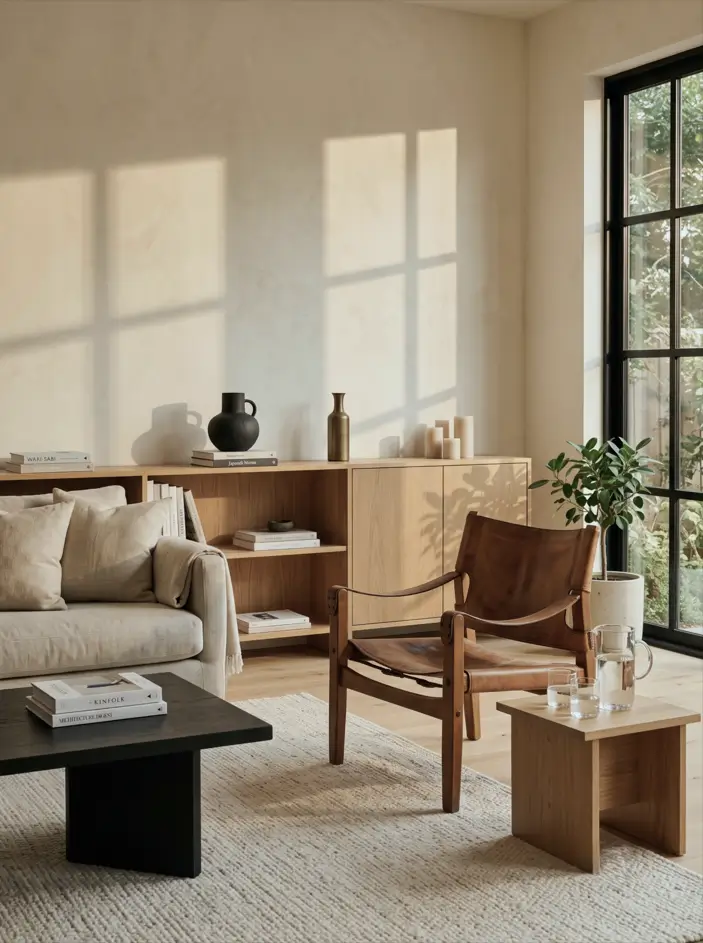
Soft window light falls in panes across this limewash wall, shifting slowly as the day moves. Leaving a wall mostly bare like this lets natural light become the decoration, something Japandi rooms often do on purpose. Worth leaving well alone.
35. Living Room Open to the Kitchen
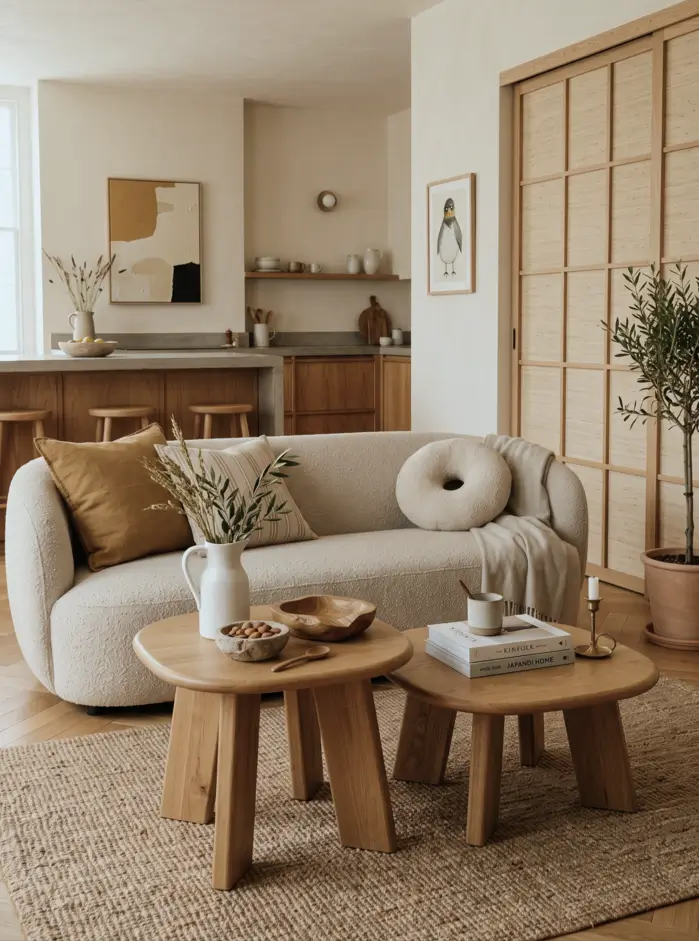
Set just ahead of the kitchen island, this bouclé sofa lets the living and cooking areas share one warm, easy space. Opening a living room to the kitchen like this keeps everyone together, which is why so many homes now favour it. Sociable and calm at once.
36. Tiered Paper Lanterns
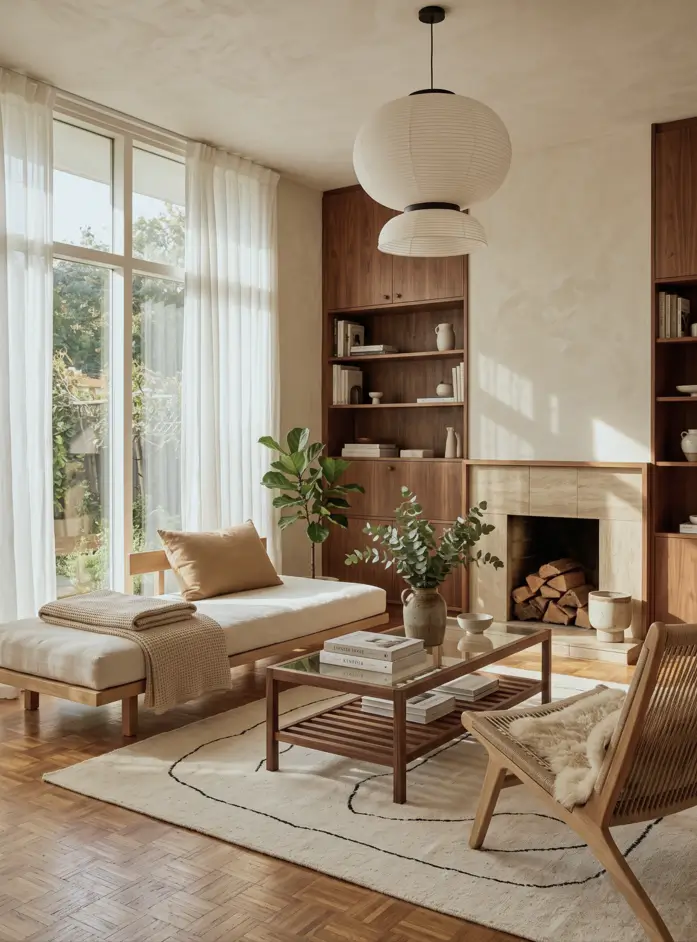
Hanging in two soft tiers, these Noguchi-style paper lanterns glow like a small moon above the seating. Sculptural lighting like this doubles as a focal point, giving a high-ceilinged room presence without any hard edges. A gentle way to fill the height.
37. Black as an Anchor
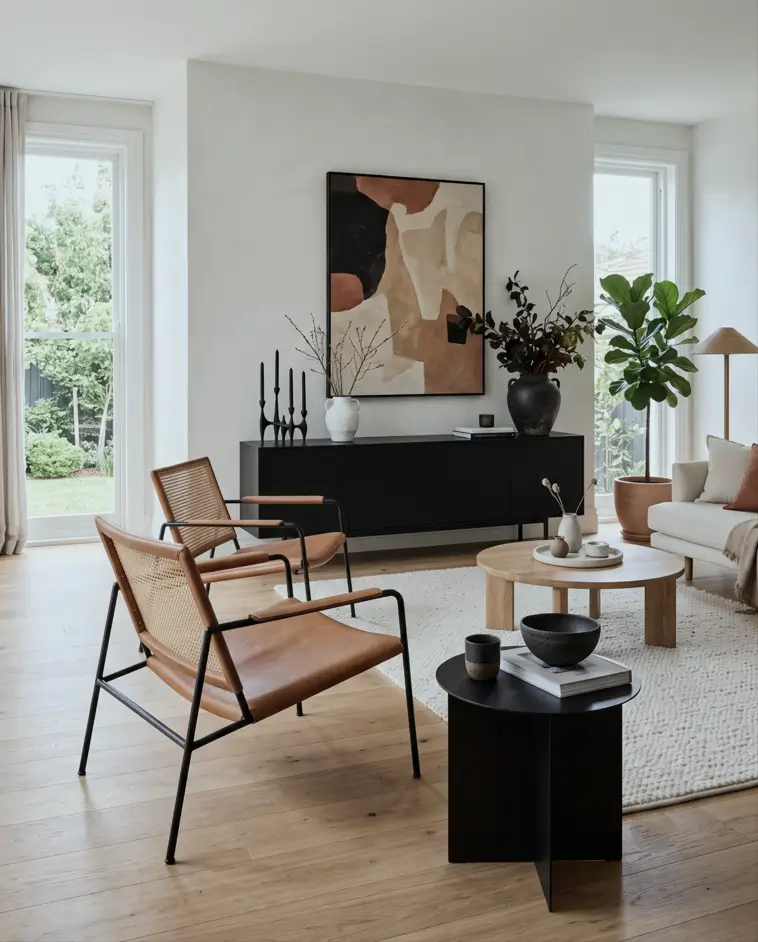
A long black sideboard grounds this bright room, echoed by the chair frames and a small side table. Used with a sure hand like this, black gives a pale Japandi space weight and structure without ever feeling heavy. A confident, grounding choice.
38. Exposed Timber Trusses
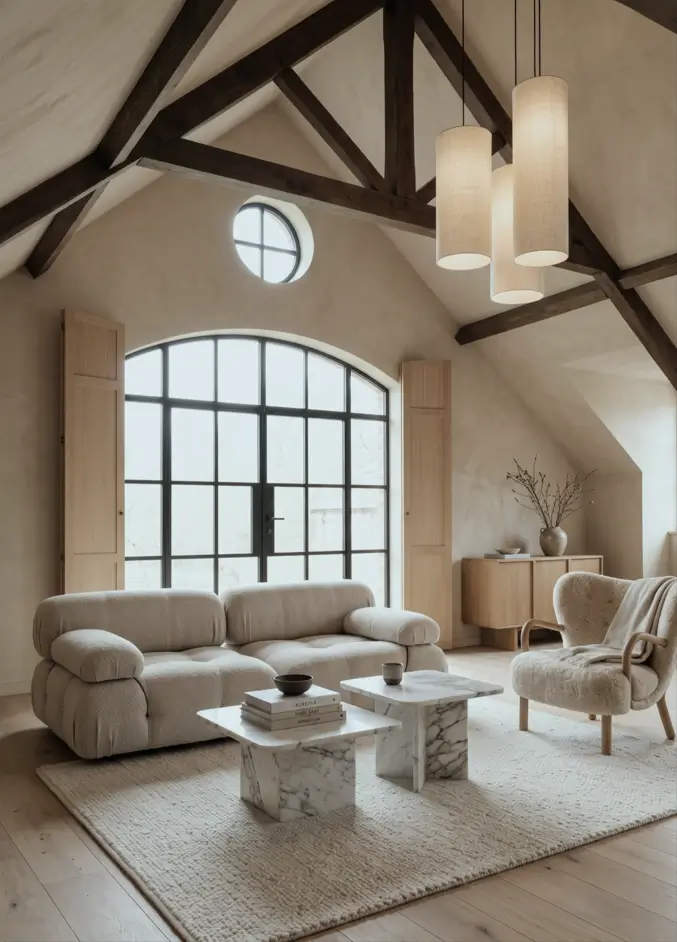
Dark timber trusses cross the vaulted ceiling here, giving the calm room below real height and character. Leaving old beams exposed like this brings age and structure to a space, a natural fit for Japandi’s love of honest materials. Worth showing off, not hiding.
39. Solid Stone Coffee Table
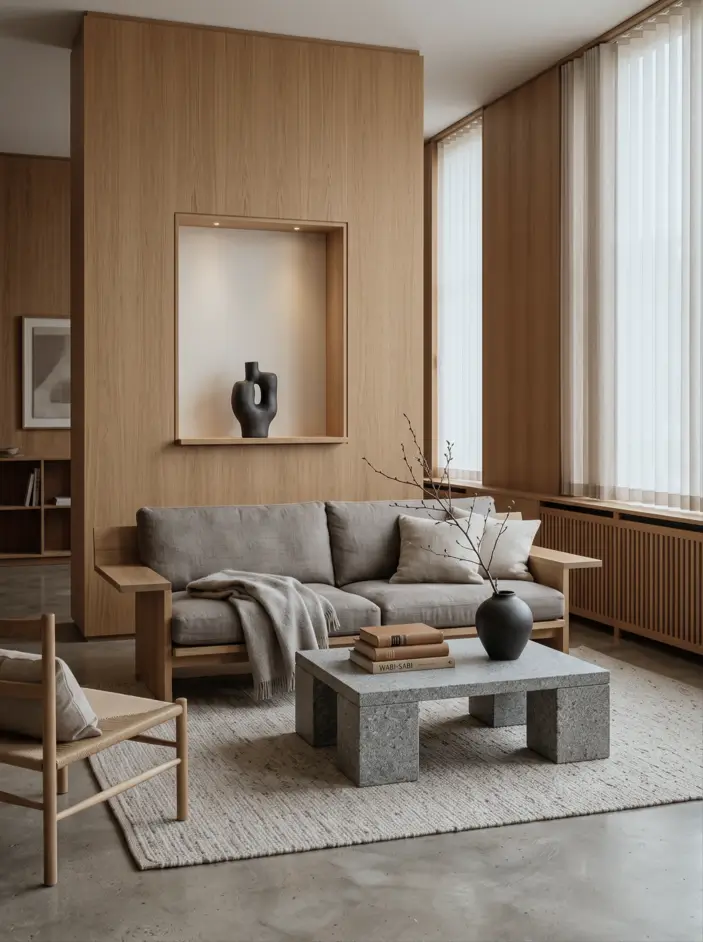
Squared and heavy, this granite coffee table brings raw stone right into the centre of the room. A solid stone piece like this adds quiet weight and a cool, natural texture against all the surrounding wood. Grounding in every sense.
Japandi Living Room Decor and Natural Materials
Japandi living room decor relies on natural materials, so wood, linen, rattan, stone, and ceramics do most of the work — the same palette that carries a Japandi style bedroom.
Mix wood tones rather than matching them, layer in linen and wool for softness, and add a few handmade ceramics. The one habit worth keeping: leave breathing room around the objects you love. A hand-thrown bowl reads as beautiful with space around it, and as clutter without.
Choosing Japandi Living Room Furniture
Japandi living room furniture sits low, keeps clean lines, and favours natural materials over anything glossy or ornate. A low-profile sofa in linen or wool usually anchors the room, paired with a cane chair or a solid oak table that each earn their place rather than fill a gap.
Mixing light and dark woods keeps things from feeling flat: pale oak underfoot, a little walnut in the furniture, the same move that warms up a Japandi kitchen. And because clutter is what breaks the calm, I always steer people toward pieces that hide storage, a coffee table with a drawer or a bench with baskets beneath, since one piece doing two jobs is worth more than two doing one.
The Japandi Living Room Color Palette
The Japandi living room color palette is built on warm, muted neutrals: soft white, beige, oatmeal, warm grey, and earthy browns, the foundation of most neutral living room decor. Small contrast keeps it from feeling bland, usually a little charcoal in a lamp or frame, with muted greens and terracotta as gentle accents pulled from nature.
The palettes I’ve watched hold up best over the years are always the restrained ones, where texture does the heavy lifting instead of colour.
Ideas for a Small Japandi Living Room
A small Japandi living room works especially well, because the style’s restraint is exactly what compact spaces need. Minimalism reads as calm here, not sparse — much like a warm Scandinavian living room — so a tight, tonal palette and a few natural materials go a long way.
Keep furniture low and choose pieces with legs, since a bit of visible floor makes a room feel larger. Lean on hidden storage, a coffee table with a drawer or baskets under a bench — smart moves in any small apartment — and let light move freely with sheers instead of heavy drapes.
In the smaller homes I’ve worked on, the biggest change is almost always restraint: taking a few things out tends to make a room feel bigger than anything you could add.
Common Japandi Living Room Mistakes to Avoid
The most common Japandi mistake is confusing minimalism with emptiness, which leaves a room feeling cold instead of calm. The warmth is the whole point.
A few other slips come up again and again:
- Skipping texture. Without linen, wool, wood grain, and a little imperfection, the neutral palette falls flat.
- Buying a matching set. It reads as a showroom, not a home that came together over time.
- Cool, blue-white lighting. Warm, diffused light does far more for this look than a bright ceiling fixture.
- Styling it to death. A room with no sign of life feels staged rather than lived in.
The best Japandi spaces I’ve stood in always have a sign of real life somewhere, a book left open, a mug on the table. That small imperfection is the wabi-sabi heart of the whole style, and it’s the thing most worth protecting.
YOU MIGHT ALSO LIKE:
Frequently Asked Questions
How is a Japandi living room different from Scandinavian or minimalist style?
A Japandi living room keeps minimalism’s clean lines but adds more warmth and craft. Scandinavian rooms lean bright and cosy with pale wood and crisp white, while Japandi brings in darker woods, earthier tones, and the wabi-sabi love of imperfection. That makes it feel more grounded, and far less cold than plain minimalism.
Are Japandi living rooms still popular?
Yes, and largely because Japandi isn’t really a trend. It’s built on timeless ideas, natural materials, calm palettes, living with less, that have held up in Japanese and Scandinavian homes for generations. A well-done Japandi room tends to age slowly and quietly, which is much of its appeal.
What plants work best in a Japandi living room?
Simple, sculptural ones: an olive tree, a fiddle-leaf fig, or a single trailing pothos. The idea is one or two green notes, not a jungle. Even a few bare branches in a ceramic vase can carry a whole room.
Can you create a Japandi living room on a budget?
Yes, and Japandi suits a smaller budget better than most looks, because it rewards buying less. Start by decluttering and keeping only what earns its place, then add a few natural pieces slowly. Second-hand wood furniture, a jute rug, and a couple of handmade ceramics get you most of the way there.
About the Author: Naraphon Kanyawee