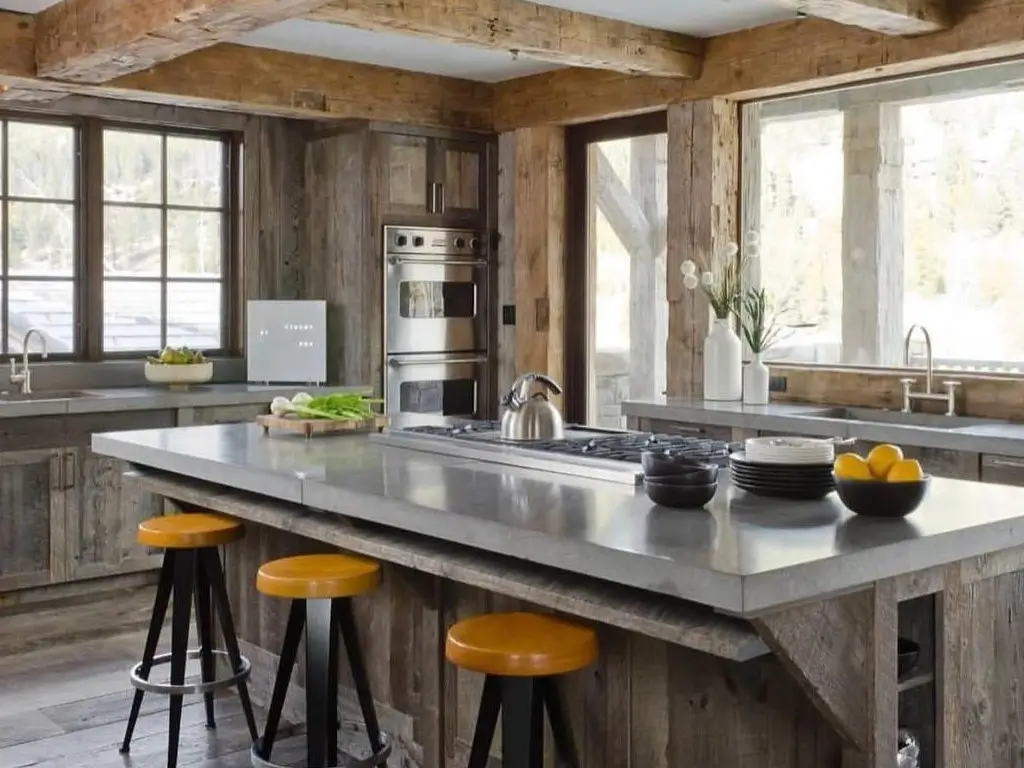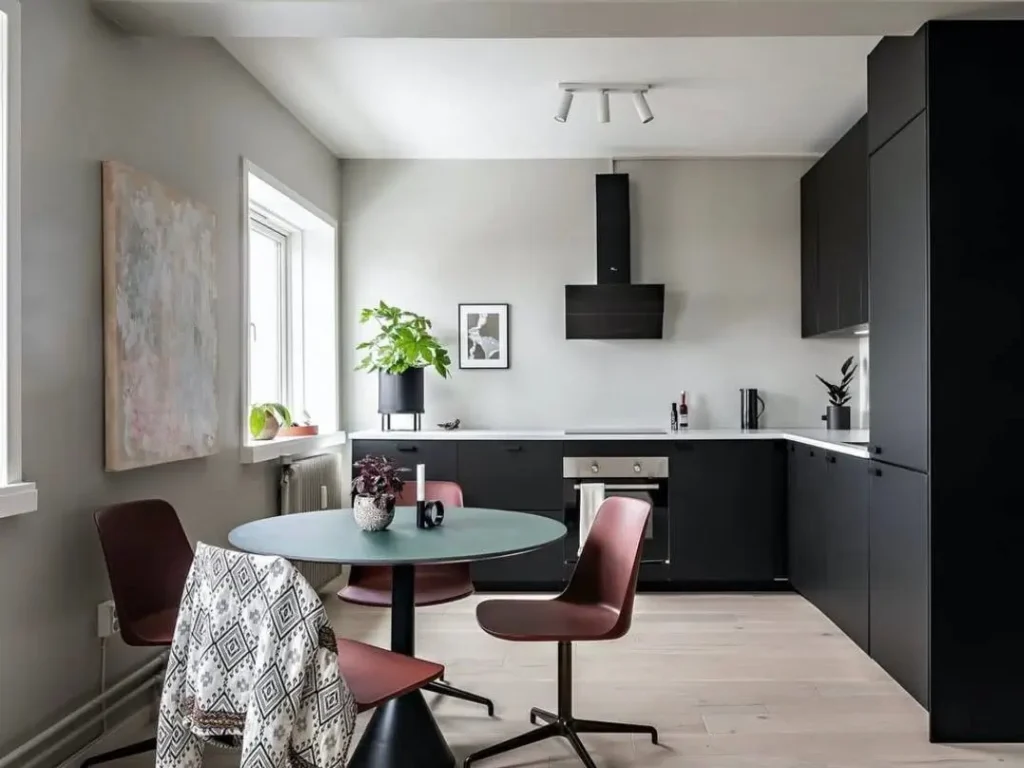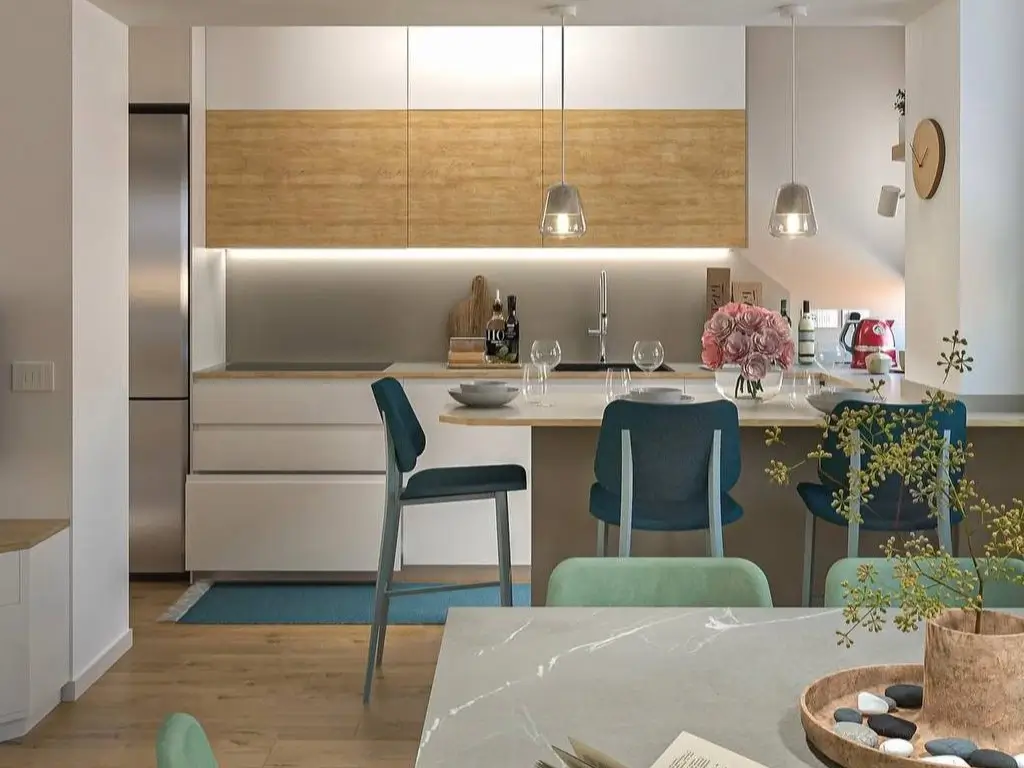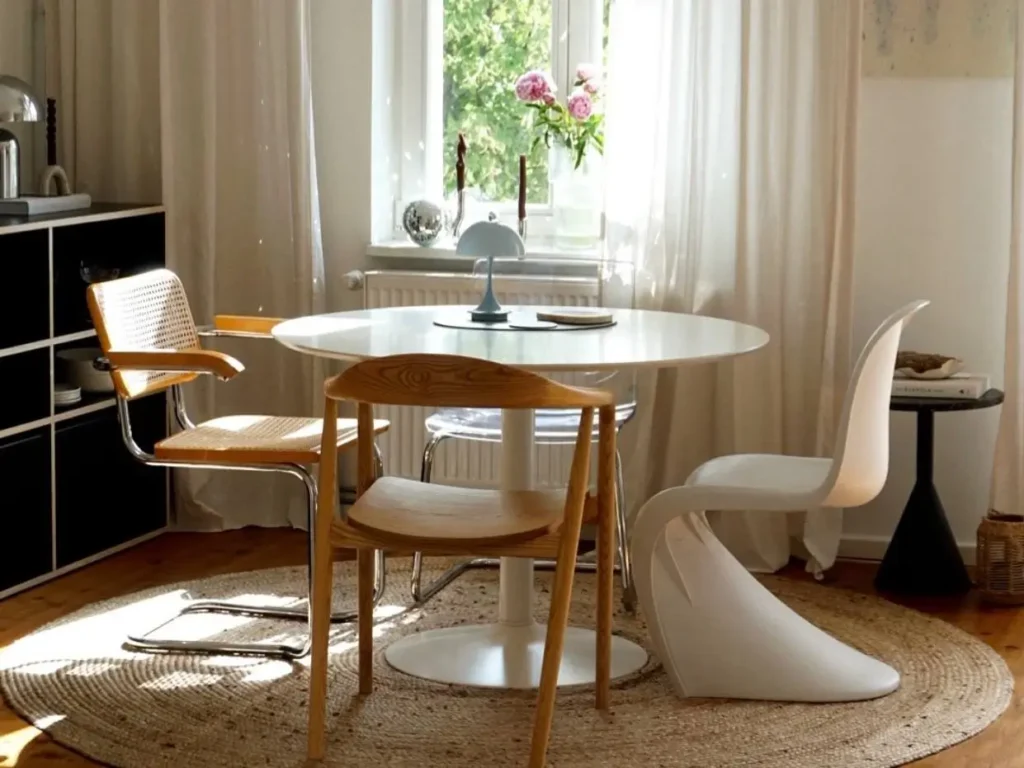

A kitchen tells you pretty quickly whether its colors are working. You walk in, and it either feels calm and put-together or a little off, even if you can’t say why. Most of the time, it comes down to the pairing. The best kitchen color combination ideas aren’t about chasing a trend — they’re about two or three colors that sit comfortably together and still look good on an ordinary Tuesday morning.
After years on job sites and in finished homes, I’ve noticed the kitchens people love most are rarely the boldest ones. They’re the balanced ones. A warm white softened by natural wood, a deep navy grounded by a pale countertop. The kitchen color schemes that age well tend to lean on warm neutrals and one quiet anchor color, rather than a dozen competing shades. That’s usually the difference between a kitchen that feels current and one that feels finished.
You’ll see all kinds of pairings below, from soft sage greens to inky blues and easy white-and-wood combinations. Some are timeless. A few are having a real moment right now. The goal is to help you find the one that suits your light, your cabinets, and the way you actually live in the room.
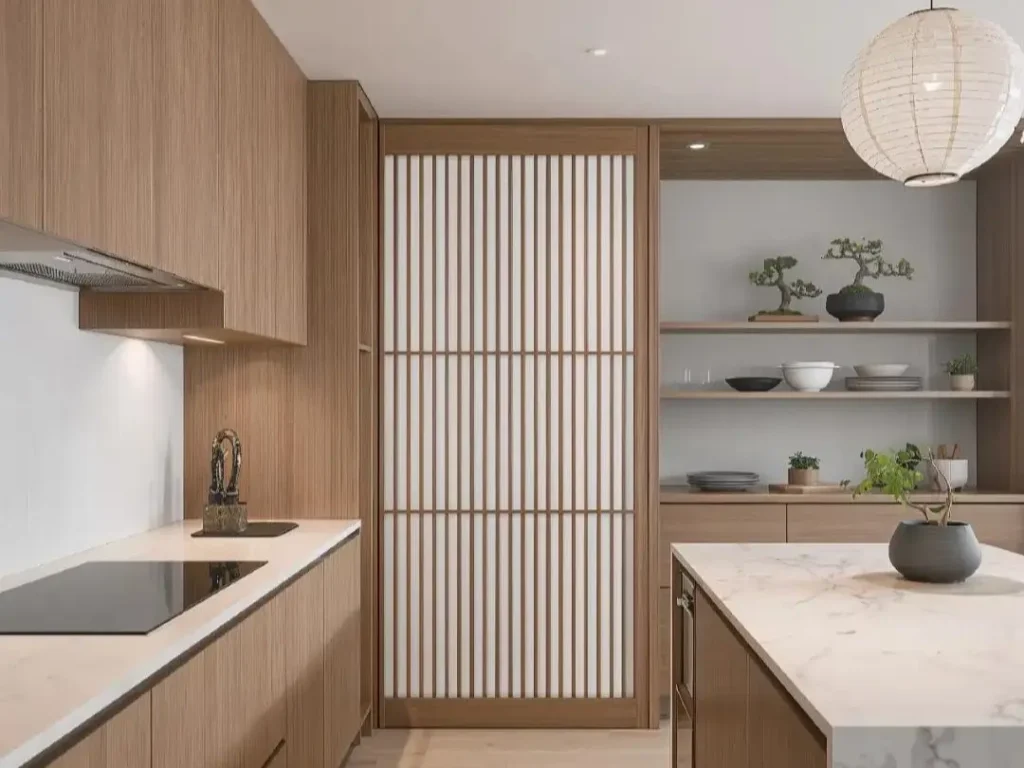
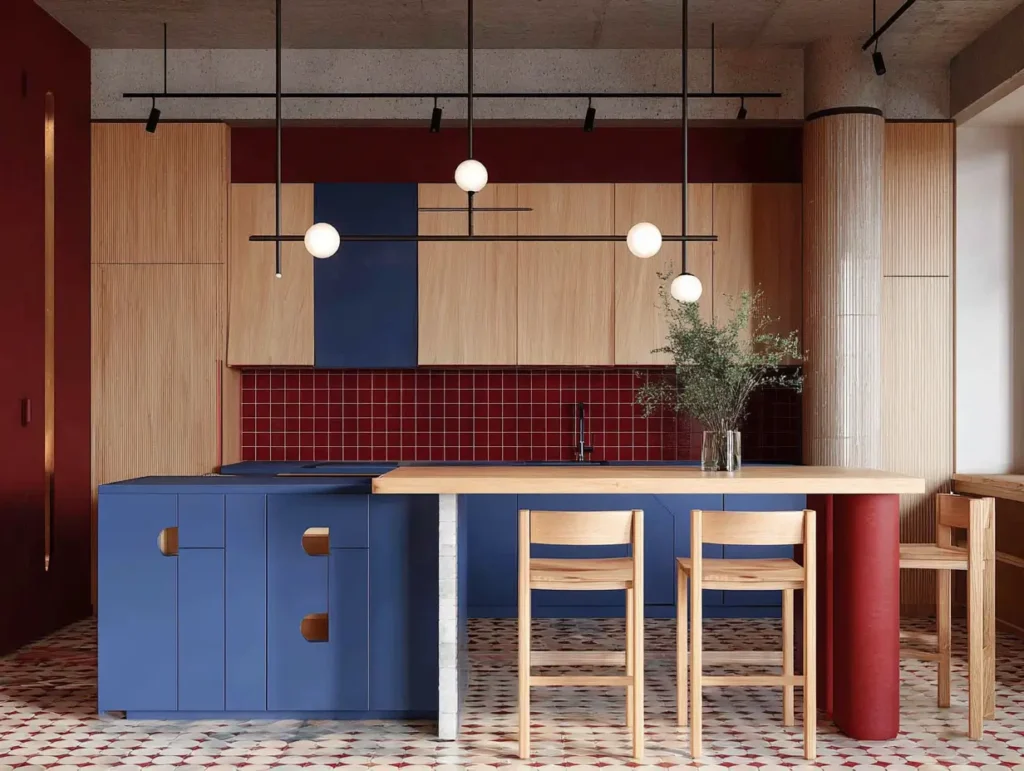
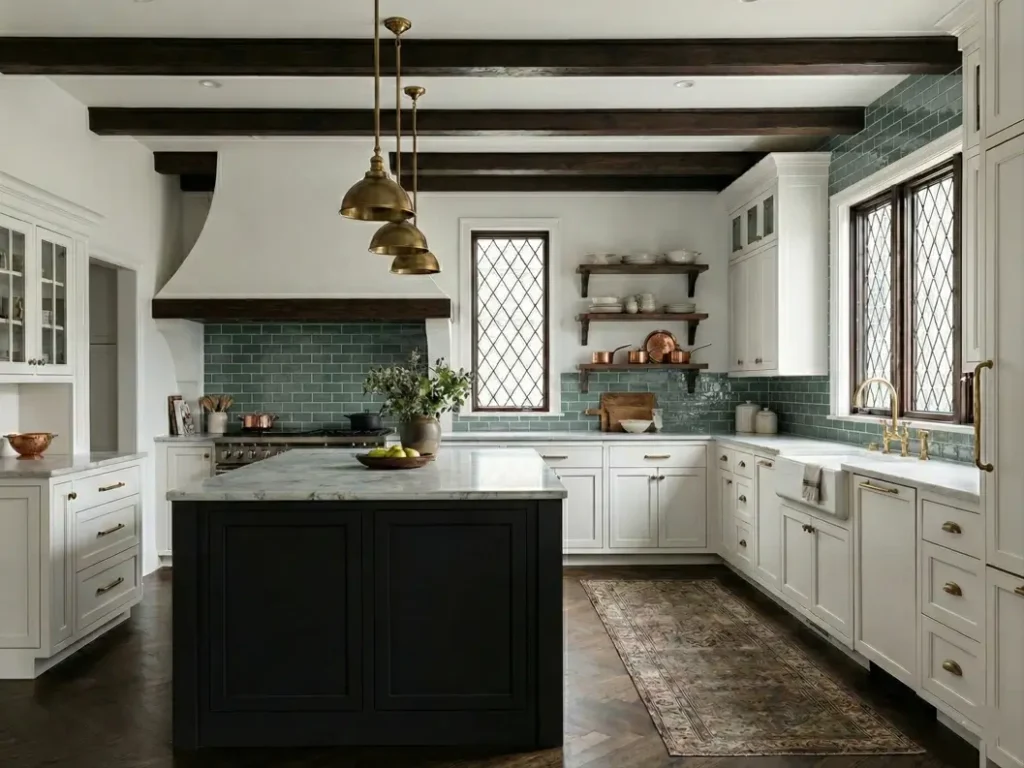
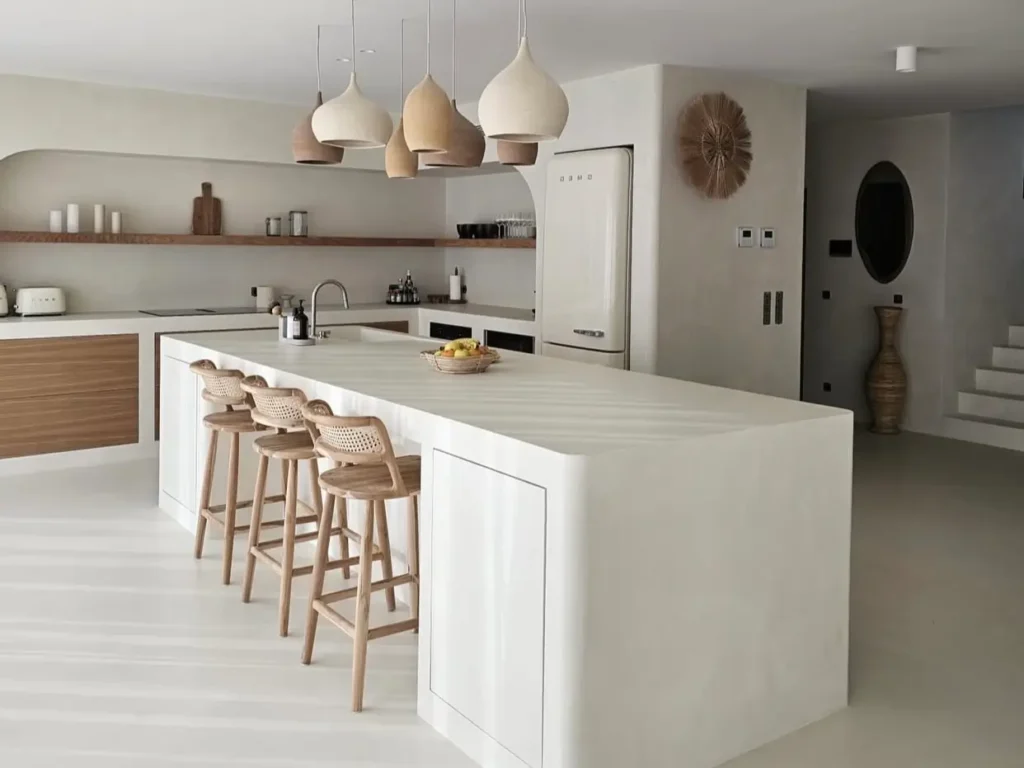
There’s one quiet rule I keep coming back to on a job. Let one color lead, let a second support it, and save anything bold for a small third touch. Most of the kitchens below follow that without making a show of it — a warm neutral carrying the room, a deeper color giving it character, maybe a clay or a brass to finish.
It also helps to keep warm with warm and cool with cool: a creamy white sits happily next to oak, while a crisp white wants a cooler partner like grey or navy. Get those undertones matched and almost any pairing starts to look intentional.
1. Navy and Sage
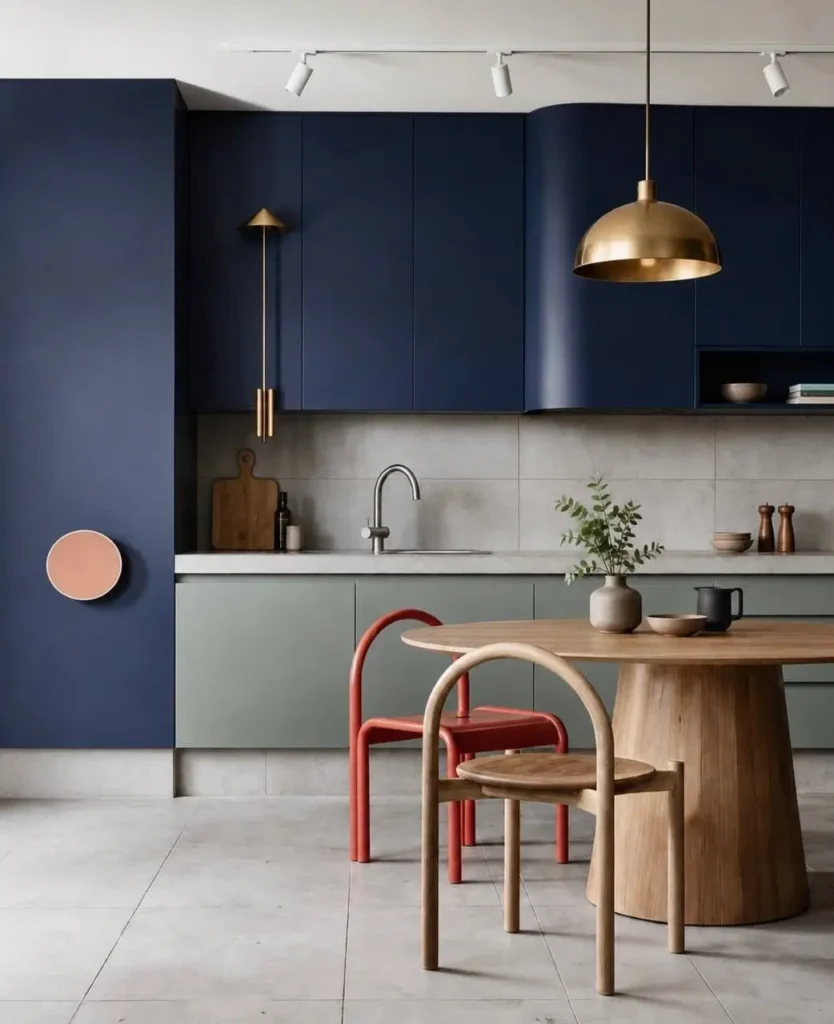
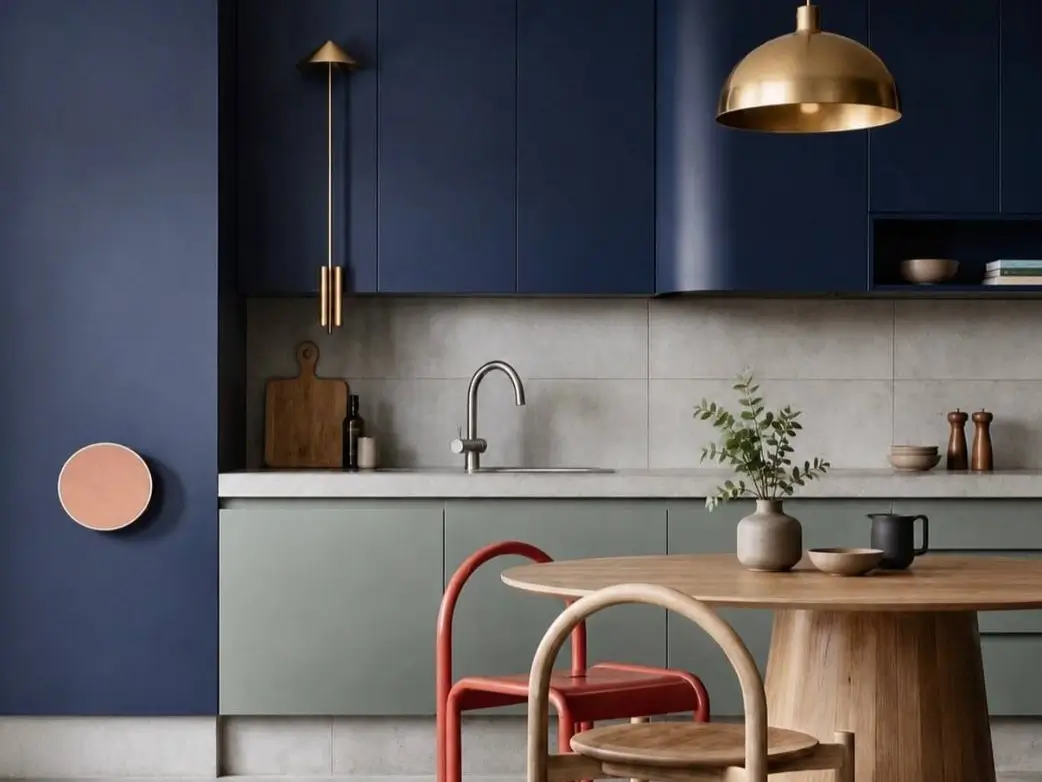
Navy and sage make an easy pair because one feels deep while the other stays soft. Here, dark navy uppers sit above pale green lowers, with brass fittings and a grey stone counter between them. It’s a smart choice.
2. Walnut and Cream
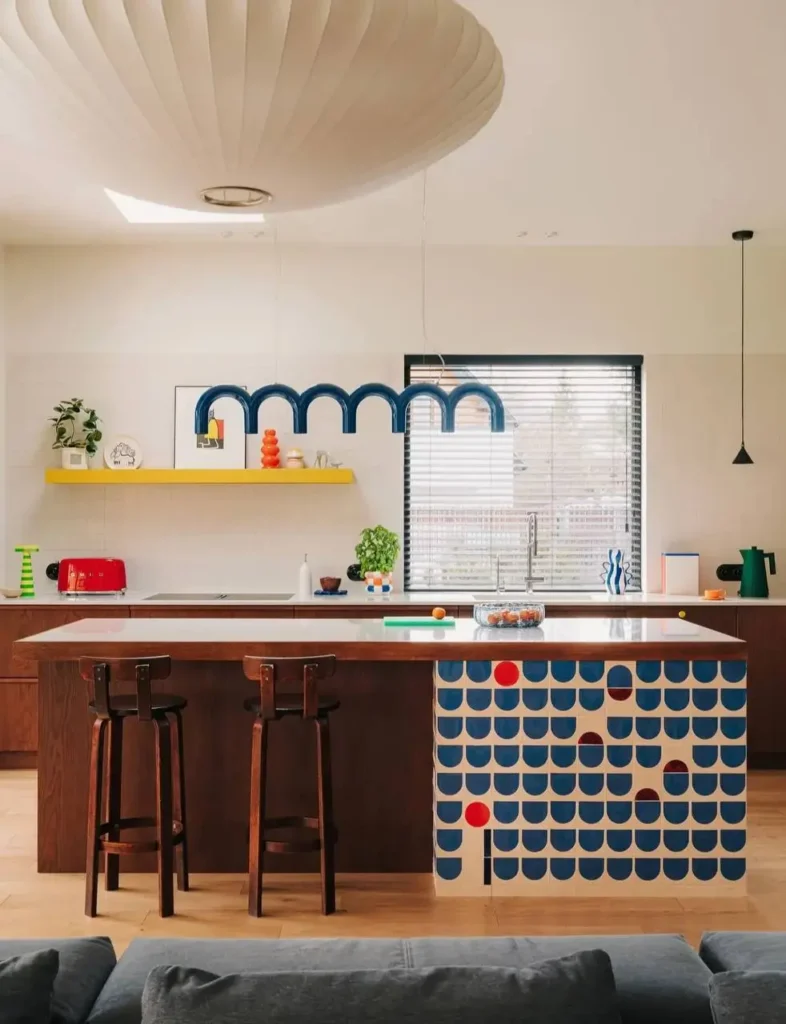
Rather than painting everything one shade, this kitchen keeps the walls and counters soft cream and lets warm walnut cabinets carry the color. A blue-and-red tiled island and yellow shelf add the playful touches. This look feels relaxed and personal.
3. Cobalt and White
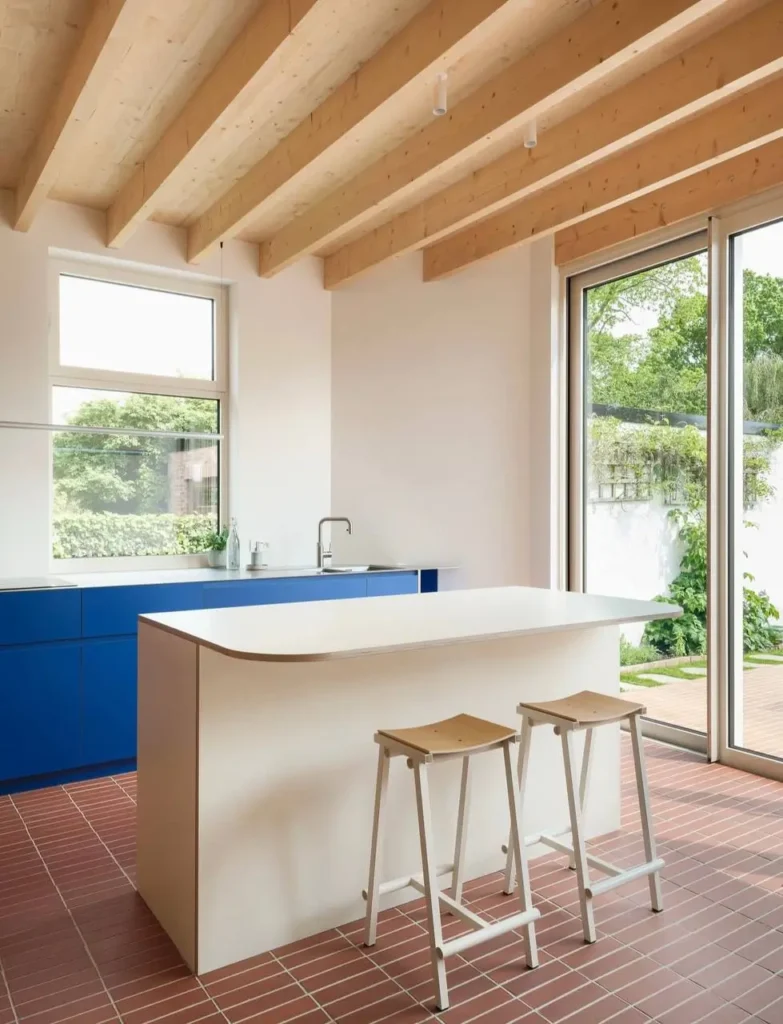
In this home, bright cobalt lower cabinets sit against a crisp white island and pale walls, with terracotta floor tiles and exposed wood beams warming the room. The blue stays bold without taking over. We love how clean it feels.
4. Powder Blue and Cream
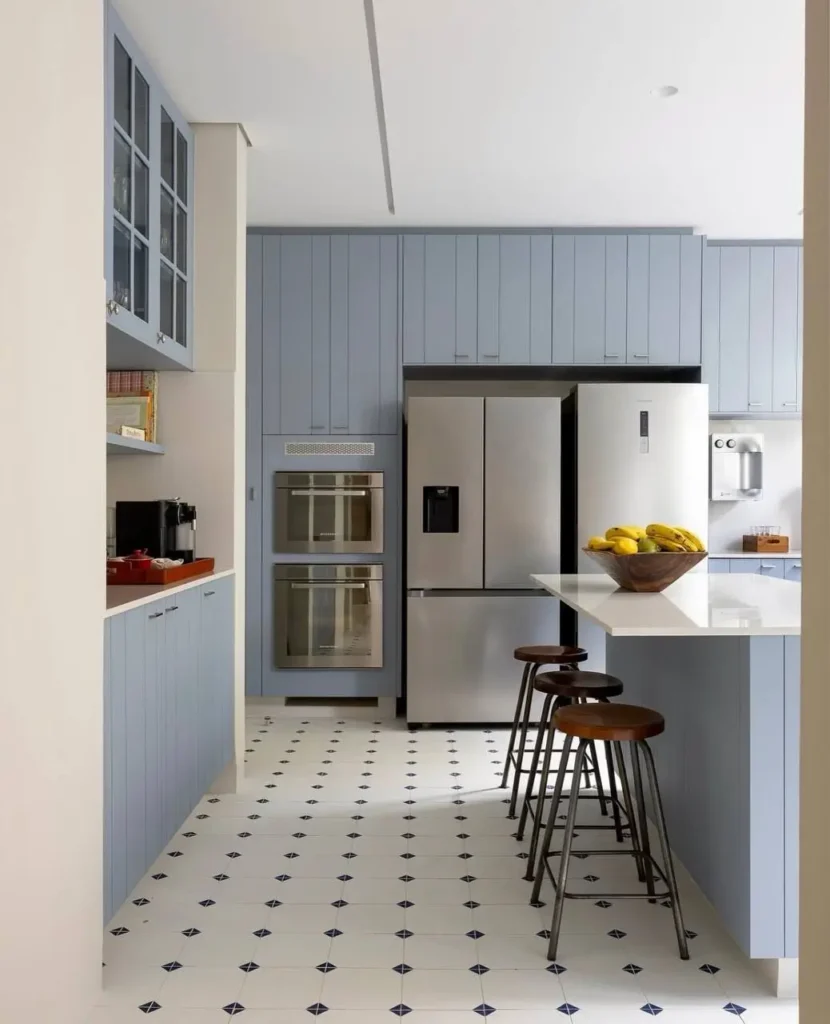
Paired with soft cream walls, these powder blue cabinets feel calm rather than cold. The white quartz counters and patterned floor tiles keep things light, while warm wood stools add a little grounding. Easy to live with.
5. White and Walnut
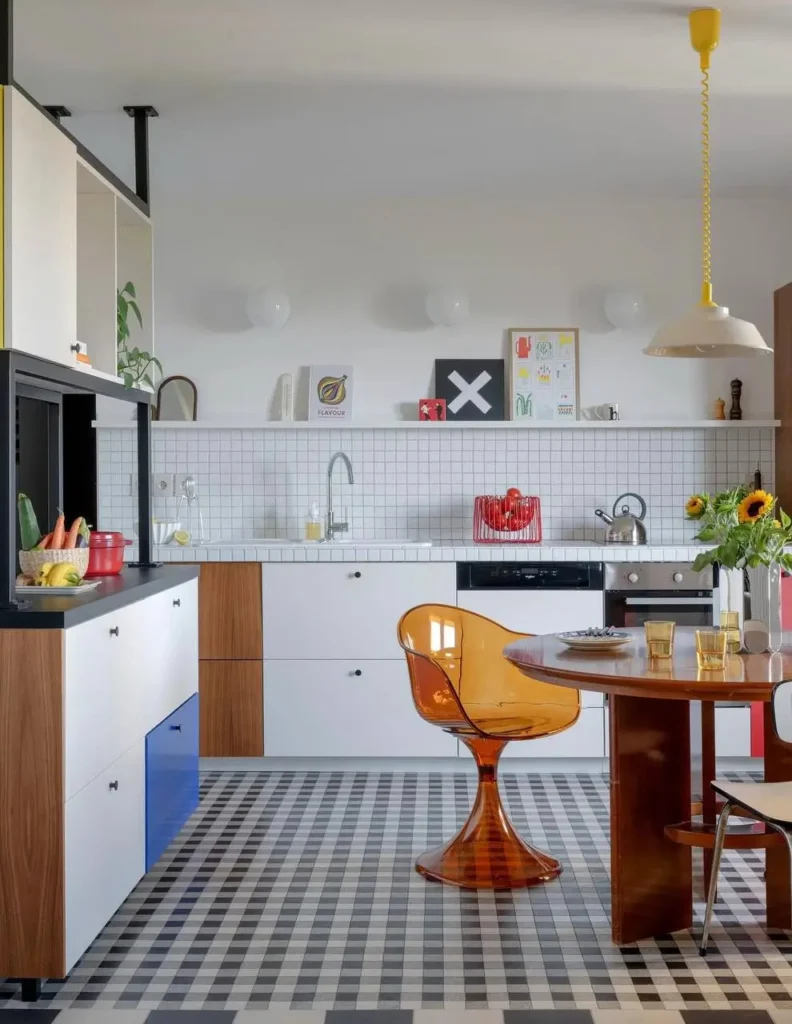
White cabinet fronts mix with warm walnut surrounds here, brightened by a single cobalt blue drawer. The white-tiled backsplash and checkerboard floor keep things lively, while pops of red and orange add to the fun. A genuinely easy mix.
6. Teal and Wood
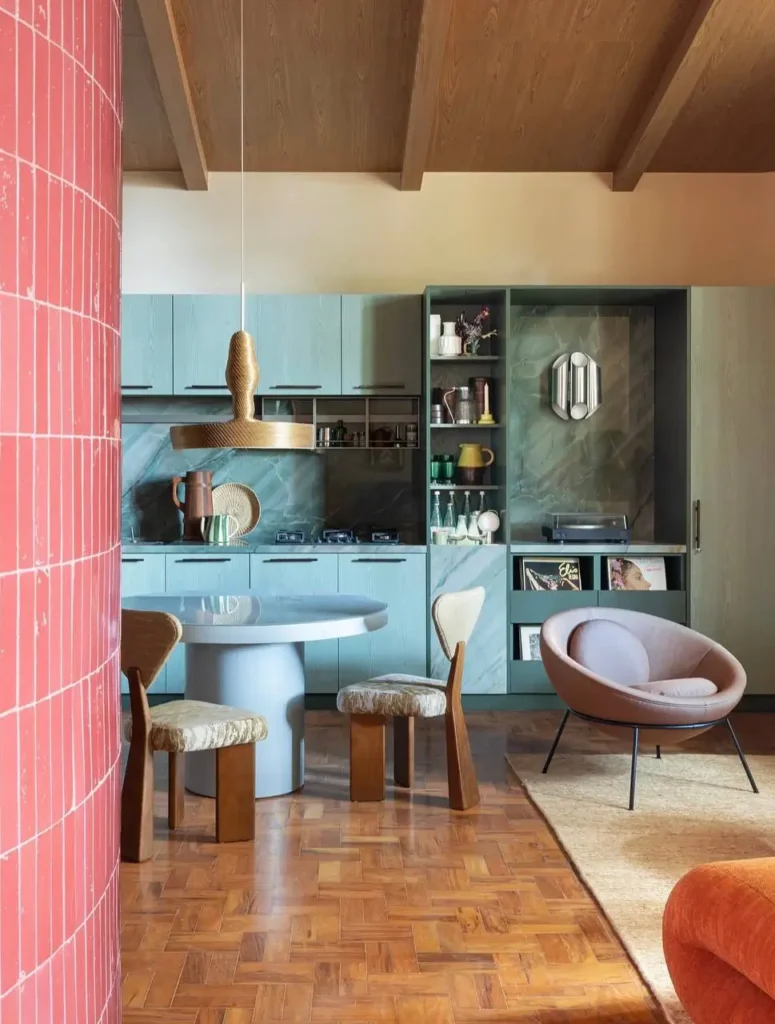
Soft teal cabinets sit beneath a warm timber ceiling, with green marble shelving and a coral pink tiled column adding contrast. The blue-green wood grain keeps the look calm, while the natural wood overhead warms it through. Worth borrowing.
7. Oak and Terracotta
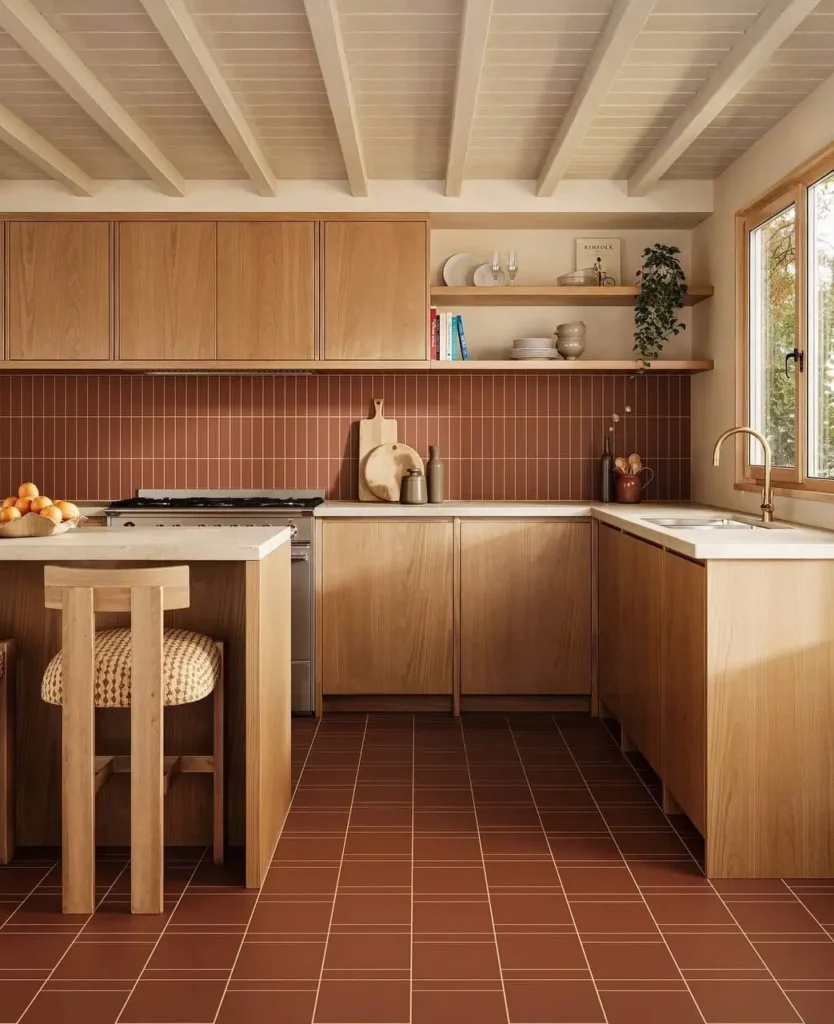
Rather than adding a bold cabinet color, this kitchen pairs warm oak with rich terracotta tile on the backsplash and floor. The pale stone counters and cream beamed ceiling keep it from feeling heavy. The whole room glows in late afternoon light, the kind that makes you want to sit a while.
8. Oak and Pink
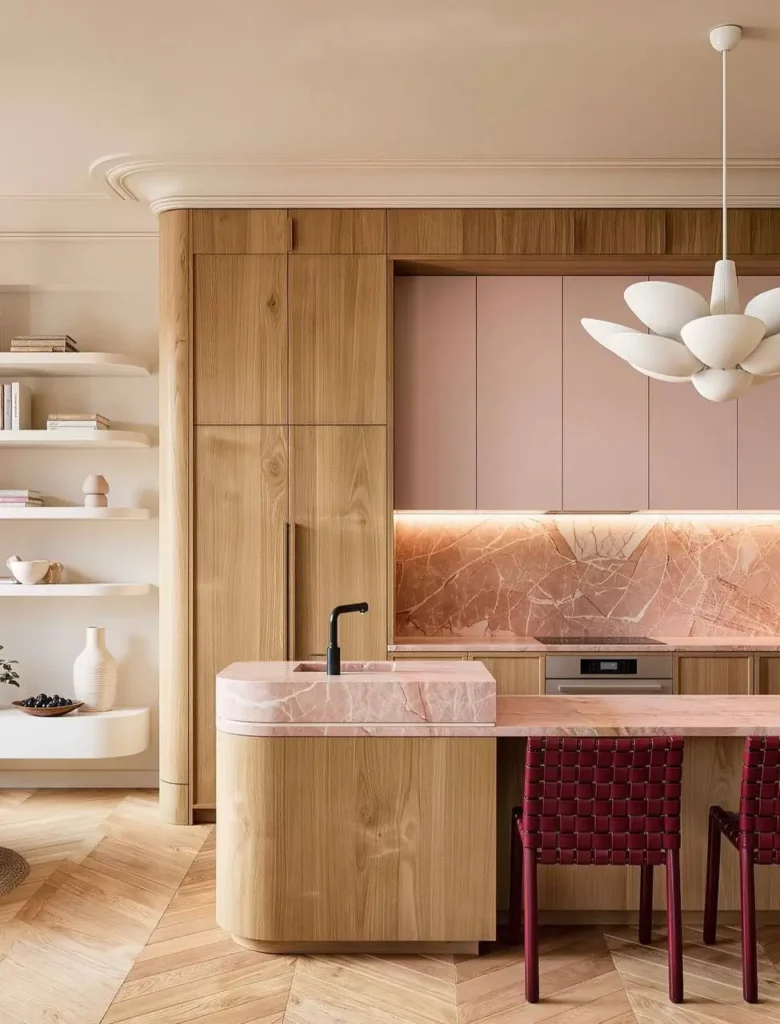
Soft pink upper cabinets and a rosy marble counter give this oak kitchen a gentle, sunlit glow. Deep burgundy chairs add a richer note, while pale parquet keeps the floor light. The pink and wood feel surprisingly natural together — softer than you’d expect, and quietly grown-up.
9. Sage and Walnut
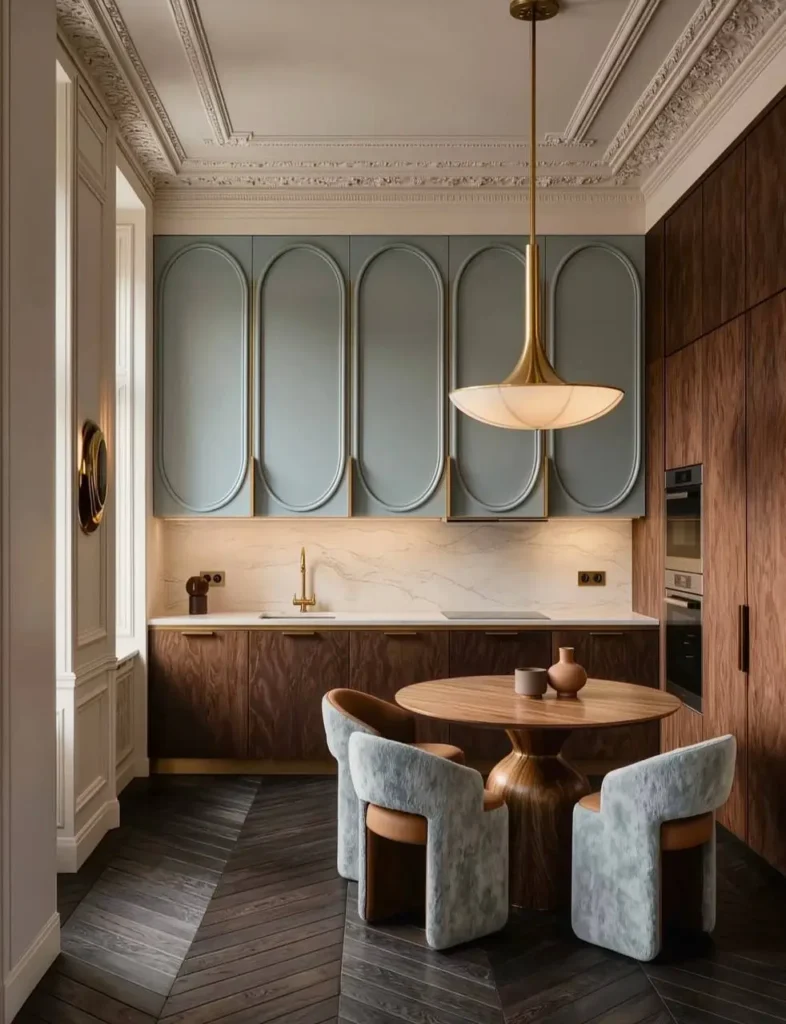
Rounded cabinet doors in a chalky sage green run along the top of this kitchen, their arched panelling catching the light. Below, walnut takes over — deep and grained, warming everything the green keeps cool. Brass taps and a marble backsplash bridge the gap. The whole thing feels tailored.
10. Greige and Olive
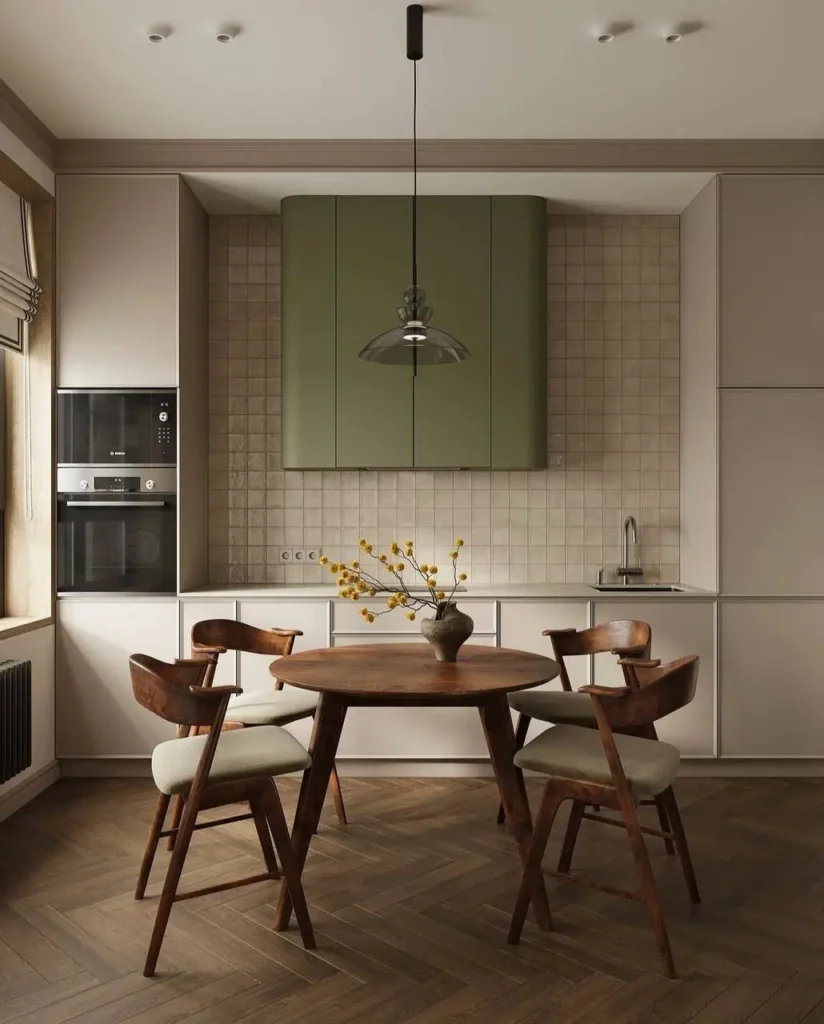
A soft greige runs across most of this kitchen, so the eye lands straight on the olive-green hood cabinet floating at its center. Beige square tiling fills the wall behind it, and the warm walnut table and chairs pull everything toward earthy. Calm, with one quiet focal point.
11. Wood and Sky Blue
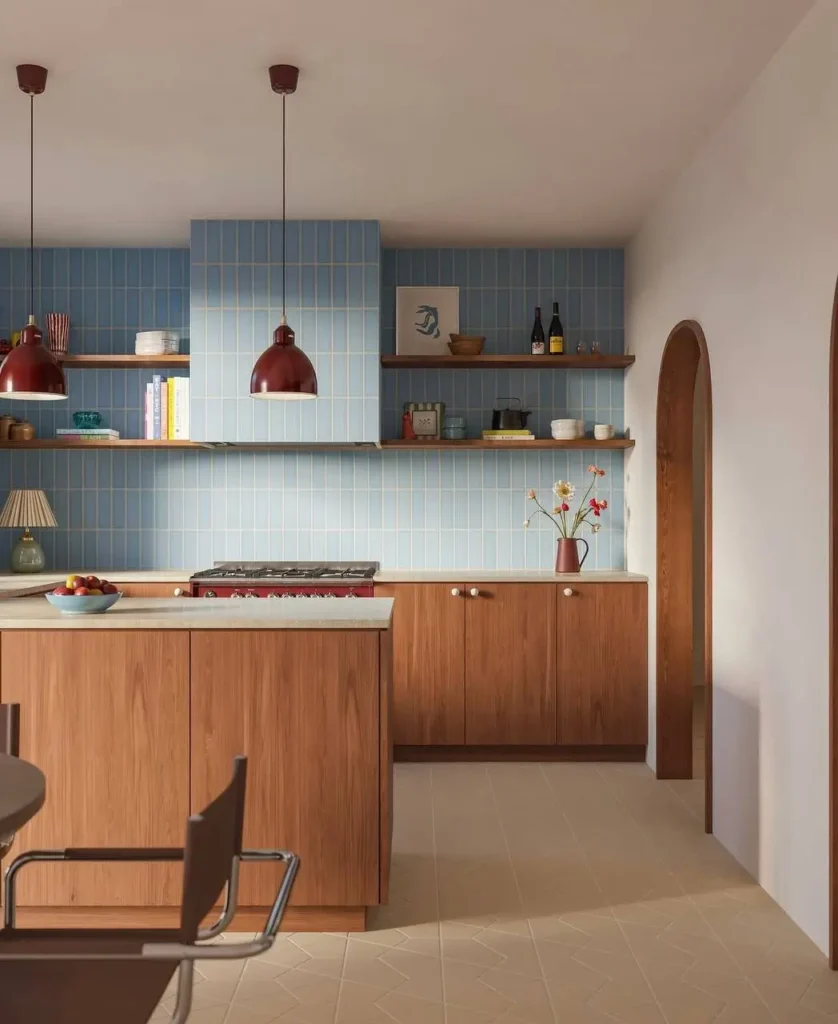
What carries this kitchen is the wall of pale blue tile, run vertically and stretched right up the chimney breast. Warm teak cabinets and open walnut shelves sit against it, and oxblood-red pendants add a punchy contrast overhead. The blue keeps it airy, the wood keeps it grounded. A lovely balance.
12. Oak and Burgundy
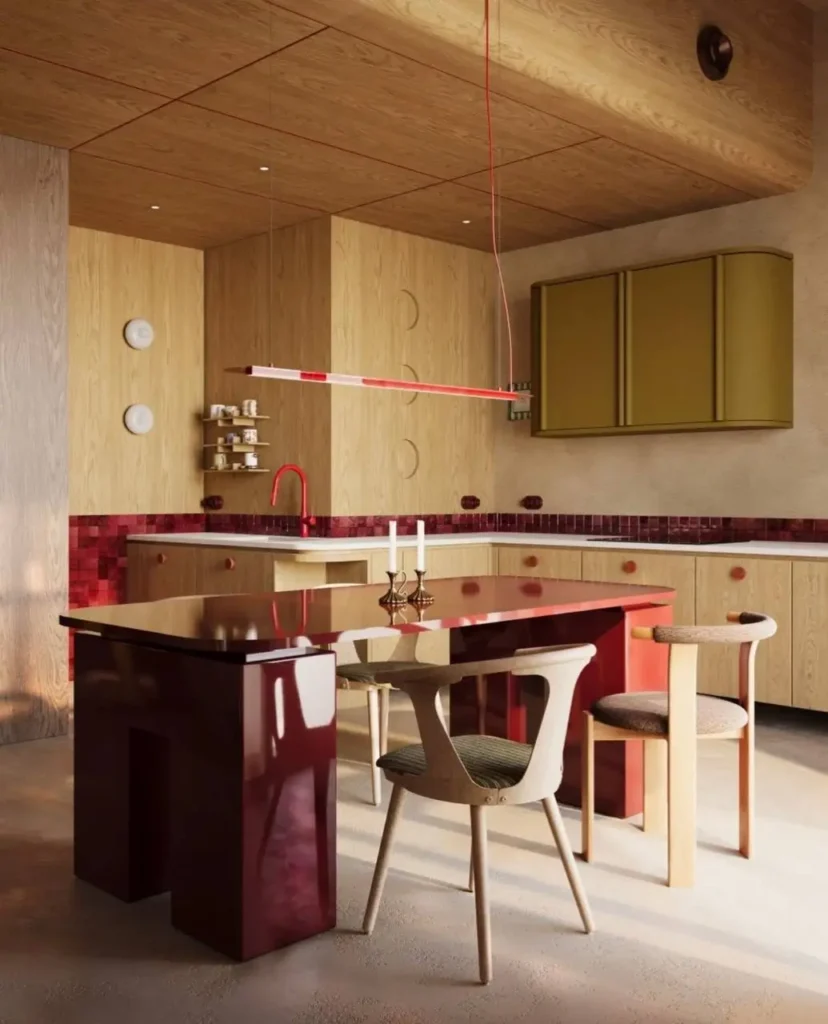
The high-gloss burgundy island is the centerpiece here, picked up by a band of deep red mosaic tile along the counter. Light oak cabinets and a matching wood ceiling soften all that intensity, while a mustard-gold wall cabinet adds one more warm note. Bold, but it holds together.
13. White and Forest Green
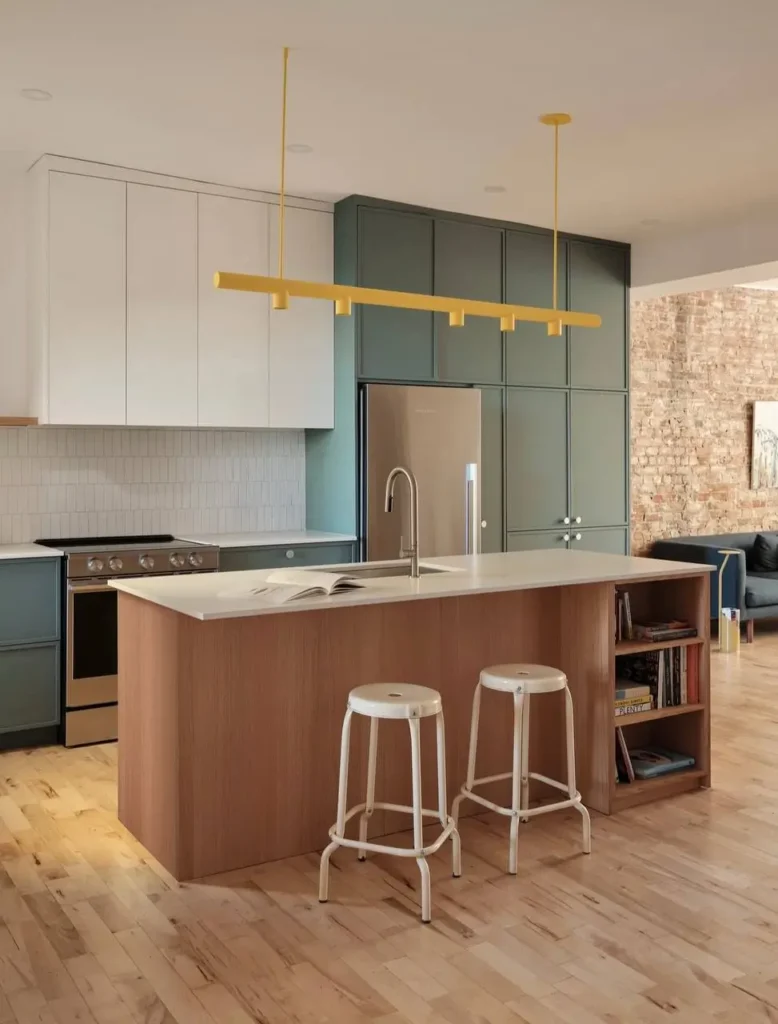
This kitchen splits its run cleanly: crisp white cabinetry on one side, deep forest green on the other, meeting around the refrigerator. A warm wood island sits in the middle to bridge them, and a yellow linear pendant throws in an unexpected pop. Exposed brick keeps it relaxed.
14. Beige and Cobalt
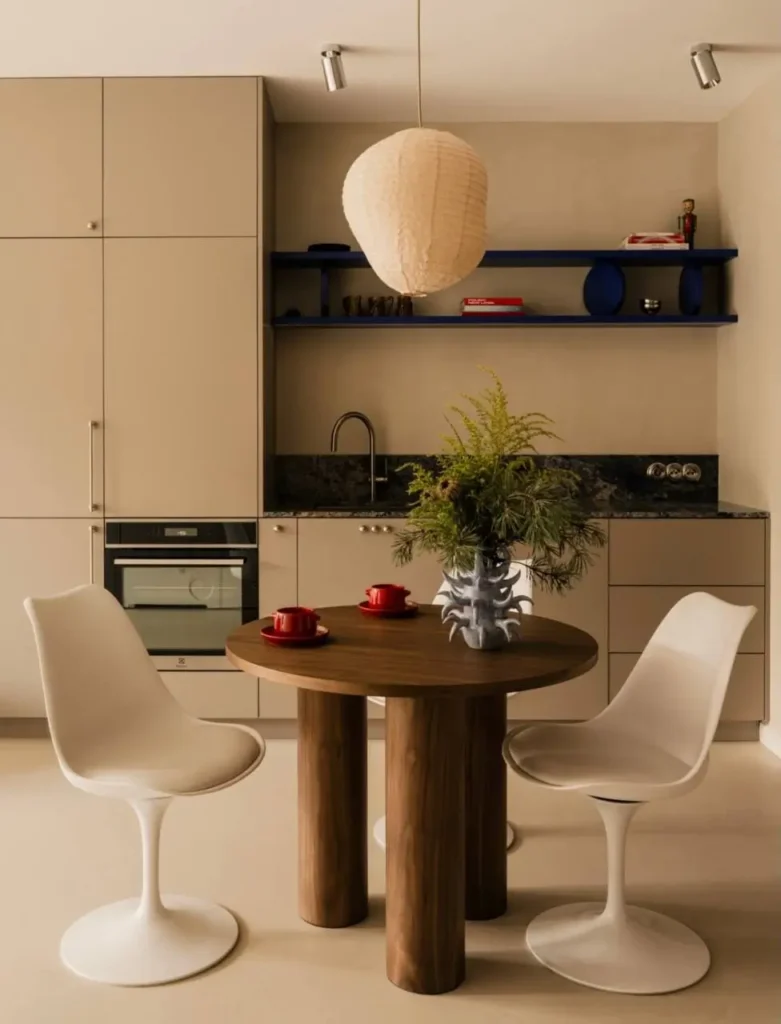
A wall of warm beige cabinetry keeps this small kitchen soft and seamless, broken by two bold cobalt-blue floating shelves. A dark granite counter grounds the base, and red accents on the table add a little spark. The blue does a lot with very little. Smart in a compact space.
15. Pink and Green
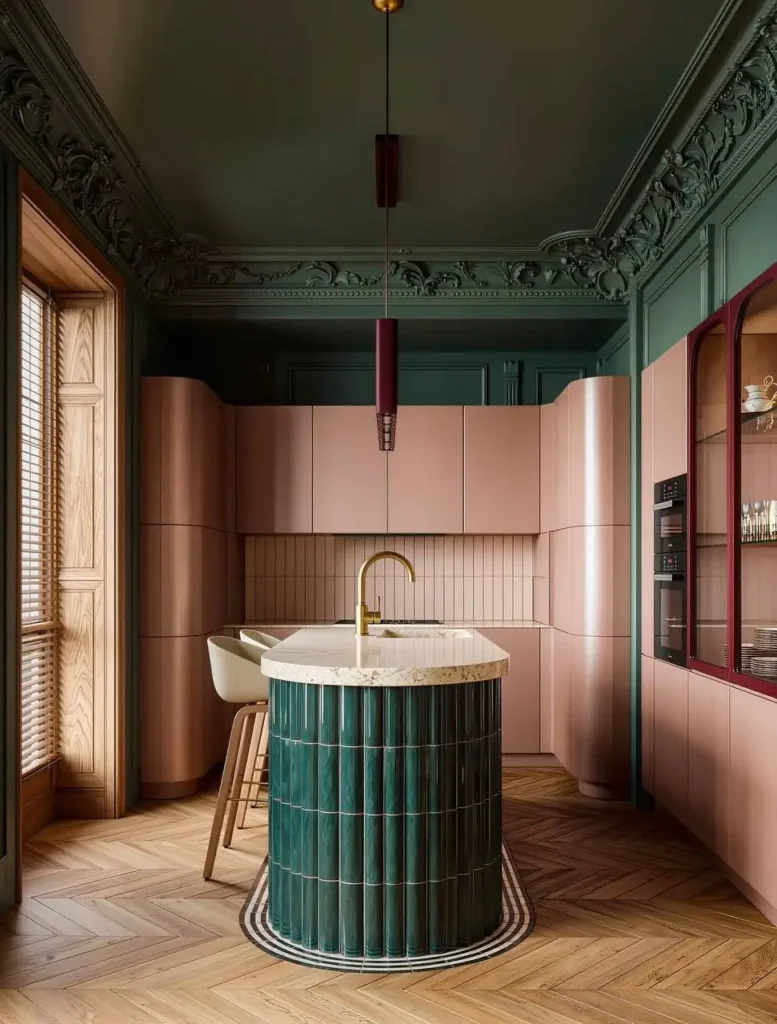
Blush-pink cabinets wrap this kitchen in a soft, rounded glow, set against deep forest-green walls and an ornate matching ceiling. A green tiled island anchors the center, its cream stone top echoing the pink. The pairing reads bold and romantic at once. A real showstopper.
16. White and Light Oak
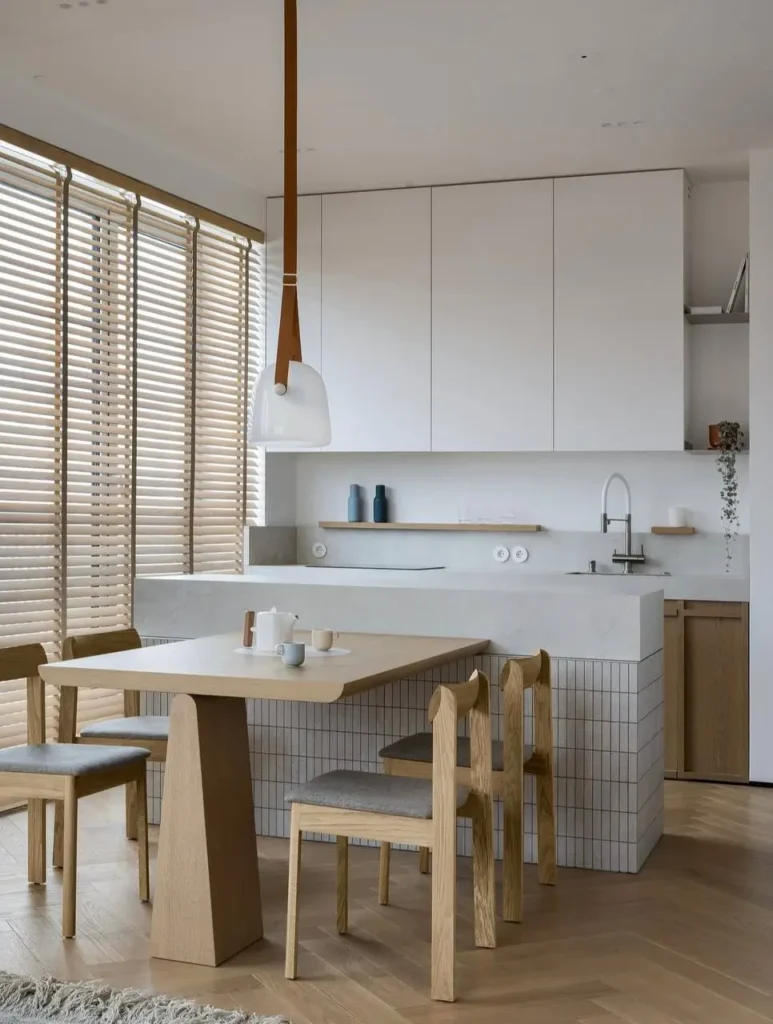
Crisp white cabinets keep this kitchen bright and clean, paired with pale oak base units and a grey tiled island. The soft Scandi palette feels calm and uncluttered, warmed by oak chairs and herringbone flooring. Blue bottles add the only real color. Easy on the eye.
Two-Tone Kitchen Cabinets
Two-tone kitchen cabinets put one color on the upper cabinets and a different one below, or split the color between the island and the surrounding run. It’s one of the easiest ways to bring color in without committing to it everywhere.
It works best with the lighter shade up top and the deeper one below — the room reads taller, and the darker lowers hide the scuffs that gather near the floor, the spot I always check first in a lived-in kitchen.
The island is the other natural place for a second color, and a low-risk one: a deep green island in a cream kitchen feels considered rather than loud, and it’s a single piece to repaint if you tire of it.
Color Combinations for Small Kitchens
For small kitchens, the safest color combinations keep most of the room light and save any deeper color for a single accent. Pale walls and cabinets reflect daylight and blur the edges of a room, so the space feels bigger than it is.
In the smaller flats I’ve worked on, the kitchens that felt biggest stayed almost entirely neutral, then lifted with one colorful touch — cobalt shelves, a clay backsplash, a single painted unit. Light wood helps too, warming a pale scheme; run it floor-to-ceiling on one wall and it draws the eye up.
What sinks a small kitchen is too many competing colors at once: one quiet base and one confident accent always wears better.
Modern Kitchen Color Combinations
Modern kitchen color combinations lean on clean contrast — a crisp neutral paired with one strong, confident color, usually on flat, handleless cabinets. The look is simple, but the choices are getting braver.
The cool grays of the last decade are giving way to warmer, moodier pairings: deep green with pale wood, navy with brass, soft black grounded by oak. Surfaces stay smooth, so one rich color carries real weight.
Metal and stone count as color here too — in many newer homes the “color” is really the marble, a veined slab doing the work a painted wall used to. A wood floor or brass hardware keeps it all from feeling cold.
What Colors Go With Wood Cabinets
Wood cabinets pair most easily with soft, warm colors — creams, off-whites, sage greens, and muted blues all sit comfortably against natural timber. The trick is matching the warmth: golden oak loves warm neutrals, while a cooler, greyed wood can take a crisper white.
So many of these kitchen color combination ideas lean on wood for a reason — it reads as a neutral while still carrying real color, so it grounds a deep green, softens a blush pink, and warms even a near-black cabinet.
The one pairing to watch is wood against a cool blue-grey white, where the wood can look orange; a greyer wood keeps the peace. When in doubt, hold a cabinet door next to a timber sample in your own kitchen light for a day — undertones shift more than people expect between a showroom and a real room.
How to Choose a Combination That Won’t Date
The kitchen color combinations that age best lean on natural, warm tones rather than whatever color is peaking that year. A scheme built around wood, soft neutrals, and one grounded color usually still looks right a decade later.
The cool gray-and-white kitchen is the cautionary tale: fresh for years, now reading flat and sterile, and quietly on its way out. What’s replacing it — warm creams, deep greens, inky blues — feels close to nature rather than to a trend forecast, a shift echoed in recent Color of the Year picks leaning toward grounded, earthy tones.
Light matters too, since the same green looks gorgeous in a sunny room and gloomy in a north-facing one. And if a bold color worries you, keep it to the easy-to-change pieces — an island, a backsplash, a single wall — and let the permanent surfaces stay calm.
Frequently Asked Questions
What is the most popular kitchen color combination right now?
Warm neutrals paired with natural wood are the most popular kitchen color combination right now — cream, greige, and off-white cabinets teamed with oak or walnut. Deeper pairings like green-and-wood and navy-and-brass are close behind, as people move away from the cool grays of recent years toward warmer, more lived-in rooms.
How many colors should a kitchen have?
Most well-balanced kitchens stick to two or three colors: one main shade across the bulk of the cabinets, a second supporting tone, and sometimes a small third as an accent. A handy guide is to let one color fill most of the room, a second take roughly a third, and a bold accent just a touch. More than three competing colors usually starts to feel busy.
Which kitchen color combinations are going out of style?
The cool gray-and-white kitchen is the combination most on its way out — bright white cabinets with gray accents and white tile can read cold and sterile, and homeowners are choosing warmer, more layered palettes instead. If you already have one, a stained wood island and brass or timber touches warm it up without a full redo.
About the Author: Naraphon Kanyawee