

Choosing the right wall and ceiling materials can make a home easier to live with day to day.
In many homes, gypsum board quietly shapes how rooms look and feel. It shows up overhead as a gypsum board ceiling, along walls as a gypsum board wall, and around lighting details, often without drawing much attention to itself. At first glance, it can even look a bit like cement, which is why many people confuse the two visually.
I see gypsum board on site almost every day. It’s one of those wall and ceiling materials that feels simple when you look at it, but once a home is finished, it plays a big role in keeping spaces clean, calm, and comfortable.
What Gypsum Board Looks Like Once It’s Part of a Home
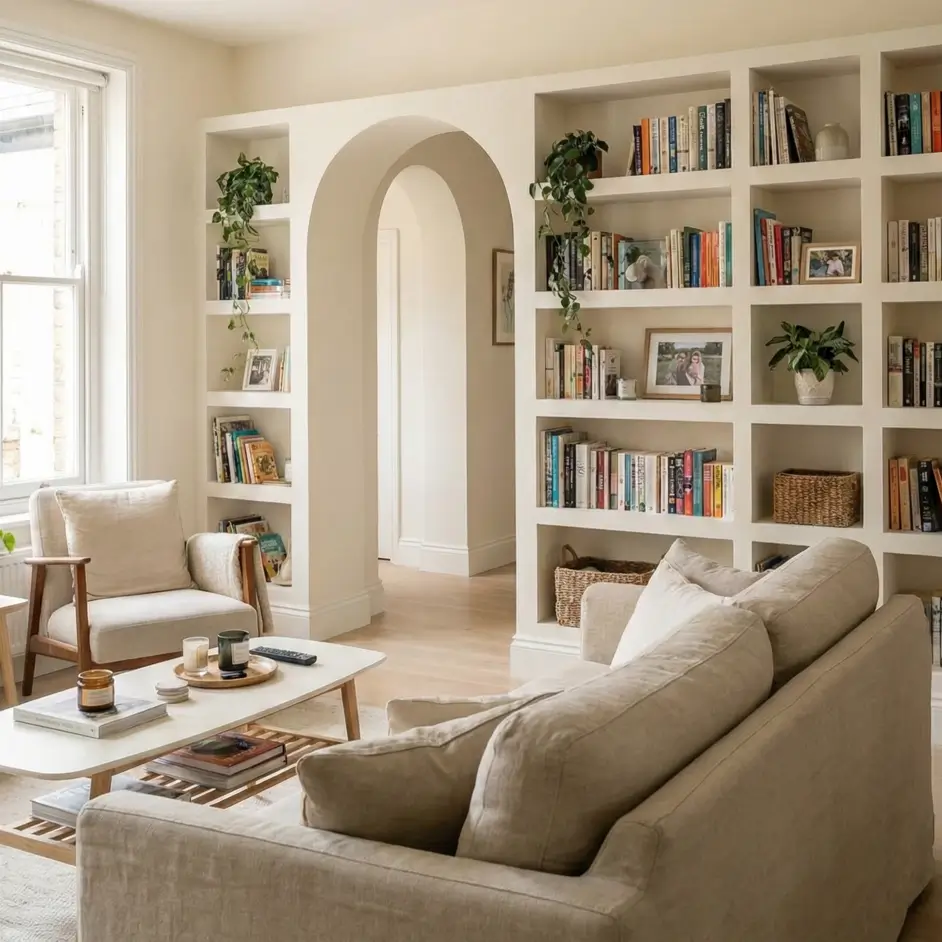
Gypsum board is the smooth, finished surface you’ll usually see on walls, ceilings, and partitions in many homes, as described by the Gypsum Association.
Whether it’s used as a gypsum board wall or across a full gypsum board ceiling, it often feels lighter and softer than concrete, and in many homes, more even and predictable than traditional plaster. Once it’s painted, it tends to fade into the background, especially in minimalist homes.
You’ll often notice it shaping clean ceiling edges, gentle curves, recessed lighting details, or flat wall surfaces. Compared to heavier wall finishes, it keeps spaces feeling lighter and more open, which is one reason it shows up so often in everyday homes, especially in apartments where weight and thickness matter.
Why Gypsum Board Is So Common in Everyday Homes
Walk into most modern homes and you’ll notice gypsum board almost immediately, even if you don’t realize it.
When people compare gypsum board uses with heavier wall systems like concrete or masonry, including those used in container homes, it tends to stand out for everyday living:
- It feels lighter than solid walls
- It fits comfortably in both small and large spaces
- It keeps ceilings and walls looking neat and even
- It often helps rooms feel a bit quieter and more comfortable
- It is often more budget-friendly than heavier alternatives
In practice, these gypsum board uses help homes feel calmer and more finished, without the disruption or weight of heavy construction. This often makes a noticeable difference in renovation projects or compact homes where keeping things simple helps the space feel easier to live in.
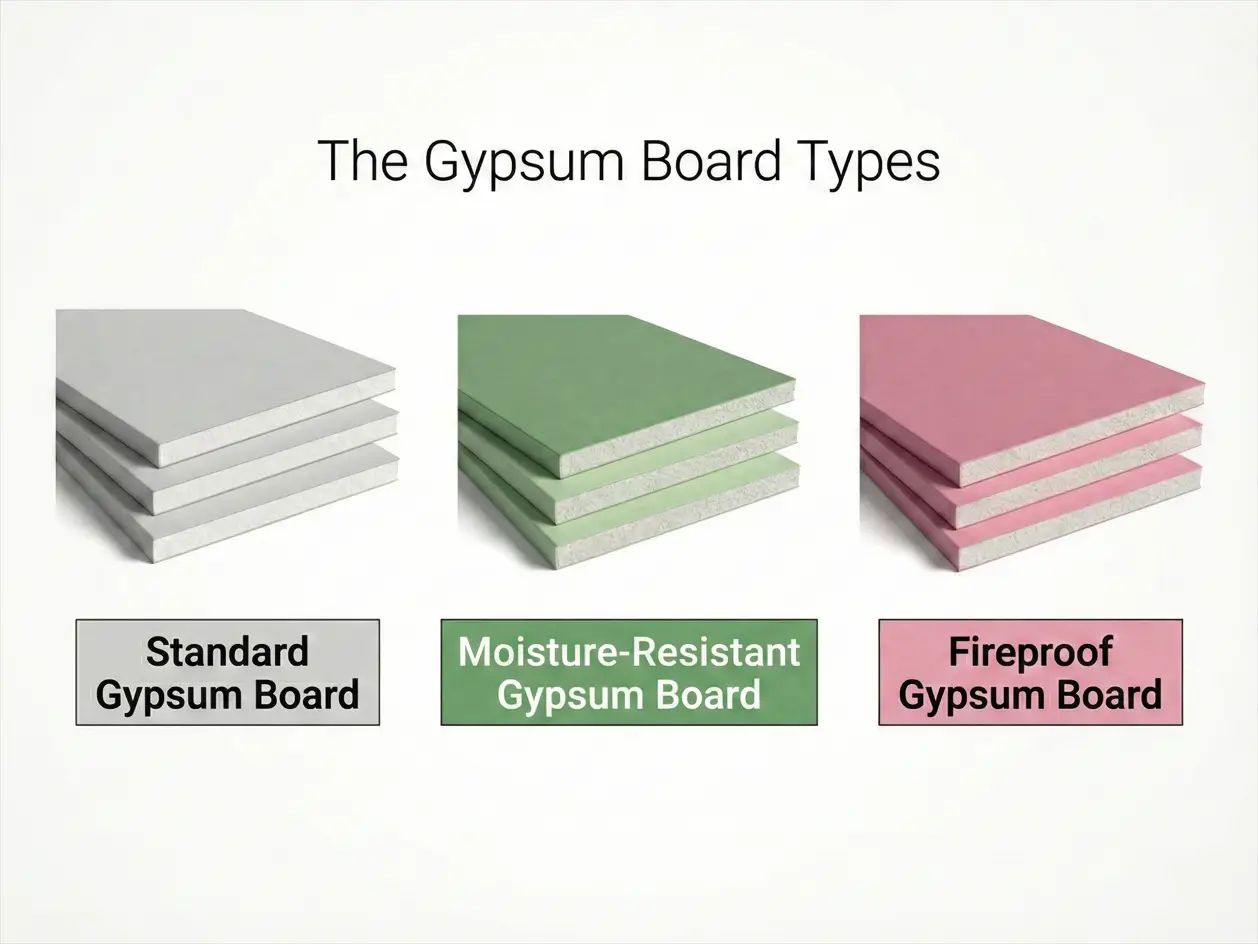
The Gypsum Board Types You’ll Most Often See at Home
Gypsum board types are easy to spot once you know what to look for. You’ll usually see different drywall types used in different parts of the house, depending on how that space is lived in day to day.
Standard Gypsum Board in Everyday Living Spaces
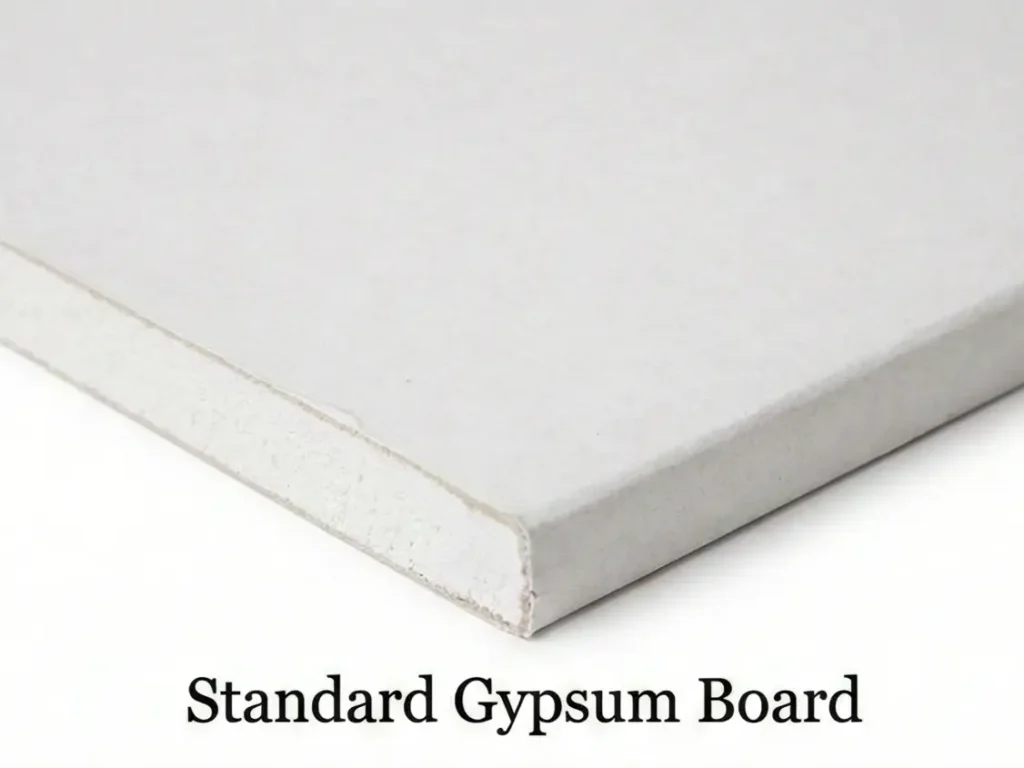
This is the type you’ll see most often. Among common gypsum board types, it’s widely used in living rooms, bedrooms, hallways, and other dry areas.
Once painted, standard gypsum board tends to disappear visually. Walls feel smooth, ceilings look clean, and the space feels simple and settled, especially in rooms meant for everyday living. Over time, it usually repaints well, especially when surfaces are in good condition, which is one reason it’s so common in homes that get refreshed every few years.
Moisture‑Resistant Gypsum Board in Bathrooms and Kitchens
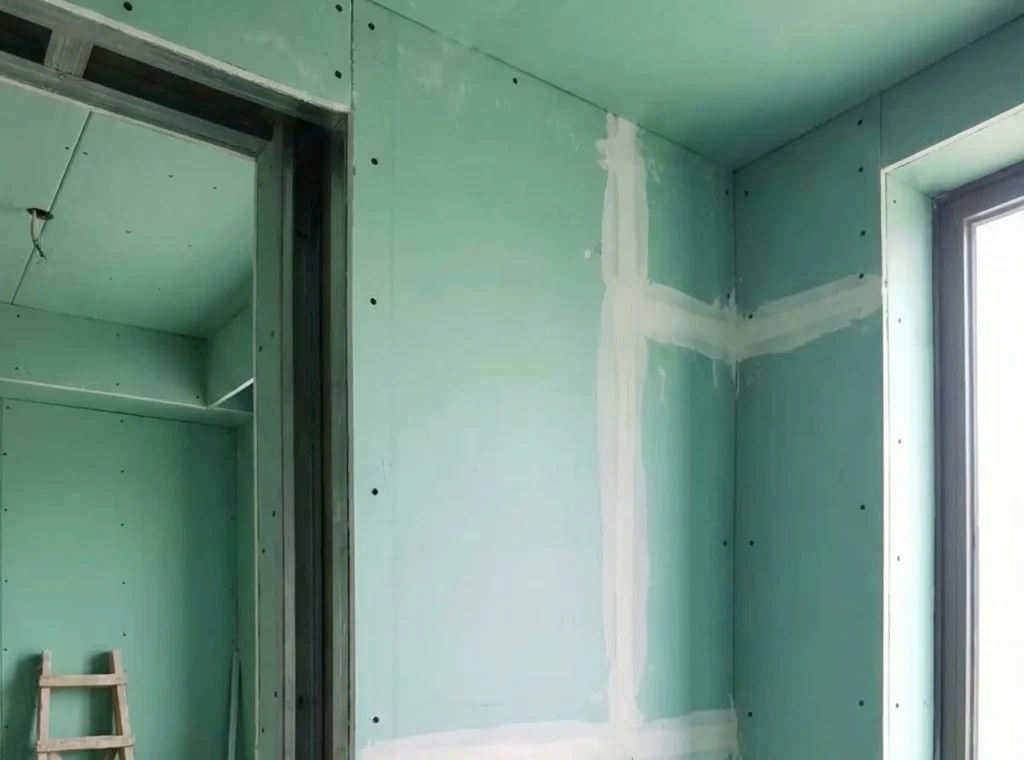
This moisture resistant gypsum board is easy to spot by its green color. It usually shows up in parts of the home where humidity builds up.
You’ll often find this drywall type in:
In these spaces, moisture resistant gypsum board tends to hold up better over time, especially in homes that feel warm or steamy. One thing to keep in mind is that it’s moisture resistant, not fully waterproof, so finishes still play a big role in how it looks and ages.
Fire‑Resistant Gypsum Board Around Heat‑Heavy Rooms
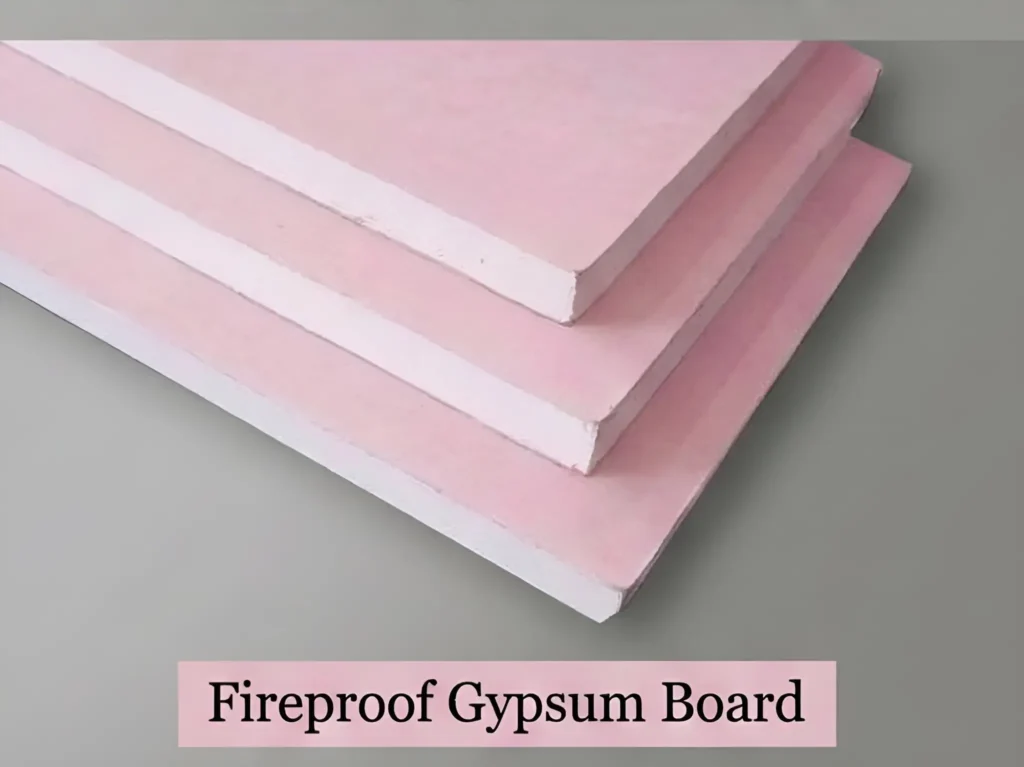
Fire resistant gypsum board is usually pink and tends to appear in areas that deal with more heat.
It’s commonly used in:
- Kitchens
- Service or utility areas
- Electrical rooms
- Fire‑rated walls and ceilings
In everyday life, this drywall type often goes unnoticed. Most people only realize it’s there when they think about safety, which is why it’s often chosen for areas where heat is part of daily use.
How Different Gypsum Board Types Feel in Daily Living
Compared to standard gypsum board, moisture‑resistant and fire‑resistant options tend to feel more specific to their spaces. In dry rooms, standard boards keep things light and simple. In damp or heat‑prone areas, other gypsum board types tend to age more gracefully and feel better suited to how those rooms are used.
In many homes, mixing drywall types throughout the house often makes things work better over time, especially in smaller layouts where each room has a clear role.
1) Living With It: Sound and Durability
In everyday homes, gypsum board tends to handle daily noise reasonably well. Normal conversations, footsteps, and household sounds feel contained enough for most spaces, especially when doors are closed and rooms are laid out with some separation.
In places where quiet matters more, like home offices, bedrooms, or media rooms, people often notice the difference when walls feel a bit more solid or layered. These spaces tend to feel calmer and more private, even without anything visibly changing.
Durability is another part of daily living. Over time, walls may pick up small dents, nail holes, or marks from furniture and everyday use. One thing many homeowners appreciate is that these spots are usually easy to touch up, helping walls feel fresh again without a full redo.
2) How It Compares to Plaster and Brick
Compared to traditional plaster or brick walls, and even some concrete house designs, gypsum board tends to feel lighter and more flexible in everyday life. Rooms often feel a bit warmer and less rigid, especially in homes that have been renovated or refreshed.
Plaster and masonry can feel solid and timeless, particularly in older homes, but they’re usually less forgiving when changes are needed. Gypsum board, on the other hand, fits more easily into spaces that evolve over time, making updates, lighting changes, or layout tweaks feel more manageable.
For many homes, this balance of comfort and flexibility is what makes gypsum board a familiar and practical choice.
A Few Things People Often Notice Over Time
Gypsum board works well in many homes, but gypsum board uses are not always one‑size‑fits‑all.
- Moisture‑resistant boards still need thoughtful finishes in wet areas
- Fire‑resistant boards are common in certain rooms, but not always necessary everywhere
- How a room is used often matters more than what the room is called
These small considerations tend to matter more over time than they do on day one, particularly in older homes or renovations.
Why Gypsum Board Fits Naturally Into Modern Homes
Across many wall and ceiling materials, gypsum board remains a popular choice in many homes because it helps walls and ceilings feel clean, calm, and modern. Lighting details sit more neatly, surfaces feel soft and even, and rooms tend to feel easier to live with overall.
In many homes, including Japandi-style homes, it’s not something you notice right away. But once it’s there, gypsum board quietly helps the entire space feel finished and balanced.
A Quick Summary for Real Homes
- Standard Gypsum Board (White/Grey): Common in living rooms, bedrooms, and dry areas
- Moisture‑Resistant Gypsum Board (Green): Often used in bathrooms, kitchens, and humid spaces
- Fire‑Resistant Gypsum Board (Pink): Found in kitchens and areas where heat is more common
FAQs
Is drywall the same thing as gypsum board?
In most homes, yes. Drywall is simply the name people commonly use for gypsum board.
What are the most common gypsum board uses in homes?
Gypsum board uses often include walls, ceilings, and partitions in both private and shared living spaces, similar to other interior sheet materials used in homes.
Does gypsum board feel different from concrete walls?
It usually feels lighter and softer, especially once painted and finished.
Is moisture‑resistant gypsum board necessary in every bathroom?
In many homes, it’s a good fit for humid spaces, especially where steam builds up.
Do different gypsum board types look different once finished?
Once painted, they usually look the same. The difference tends to show up over time in how they hold up.
Is fire‑resistant gypsum board used in every home?
Not always. It’s more common in certain rooms or layouts where heat is part of daily use.
