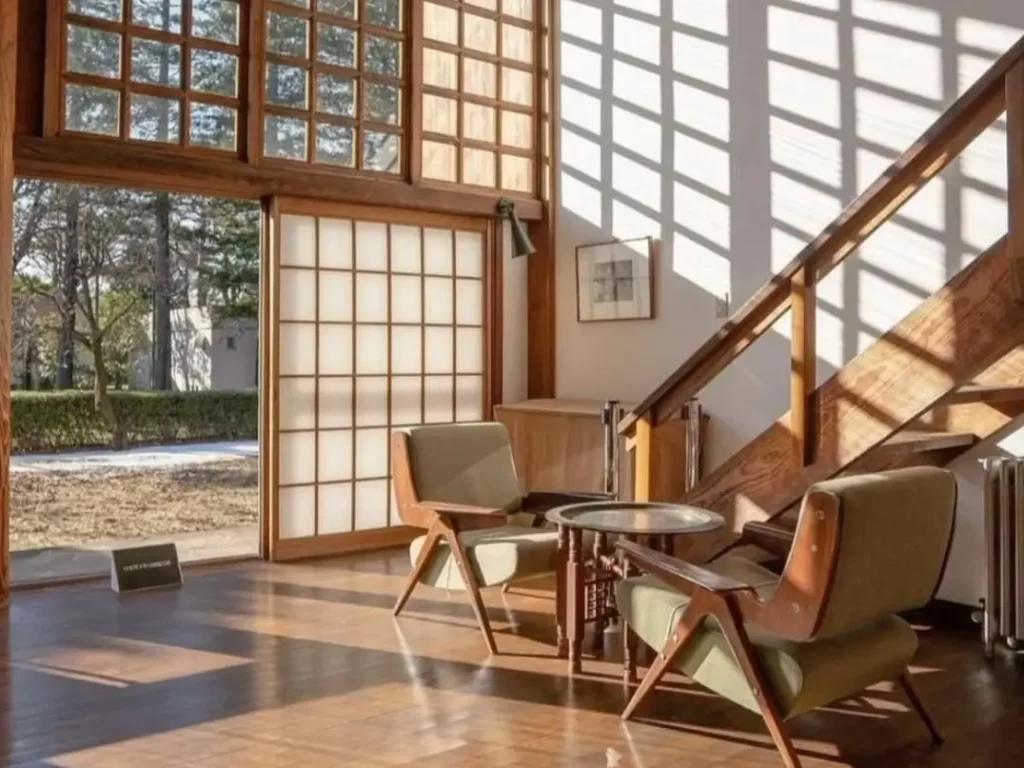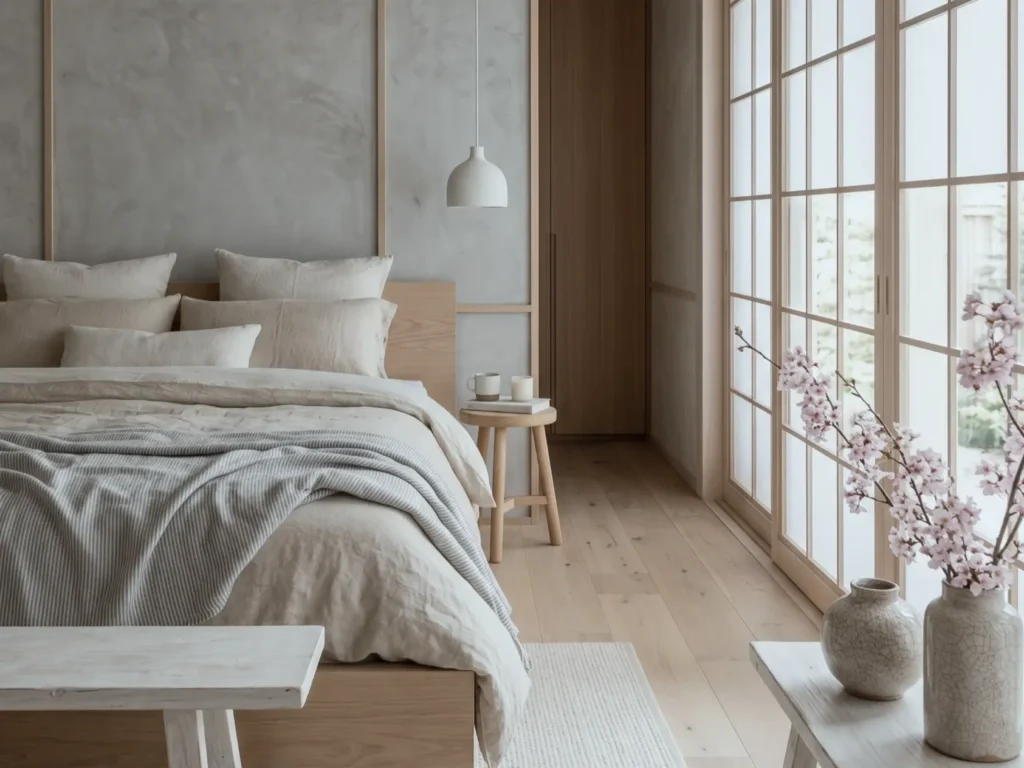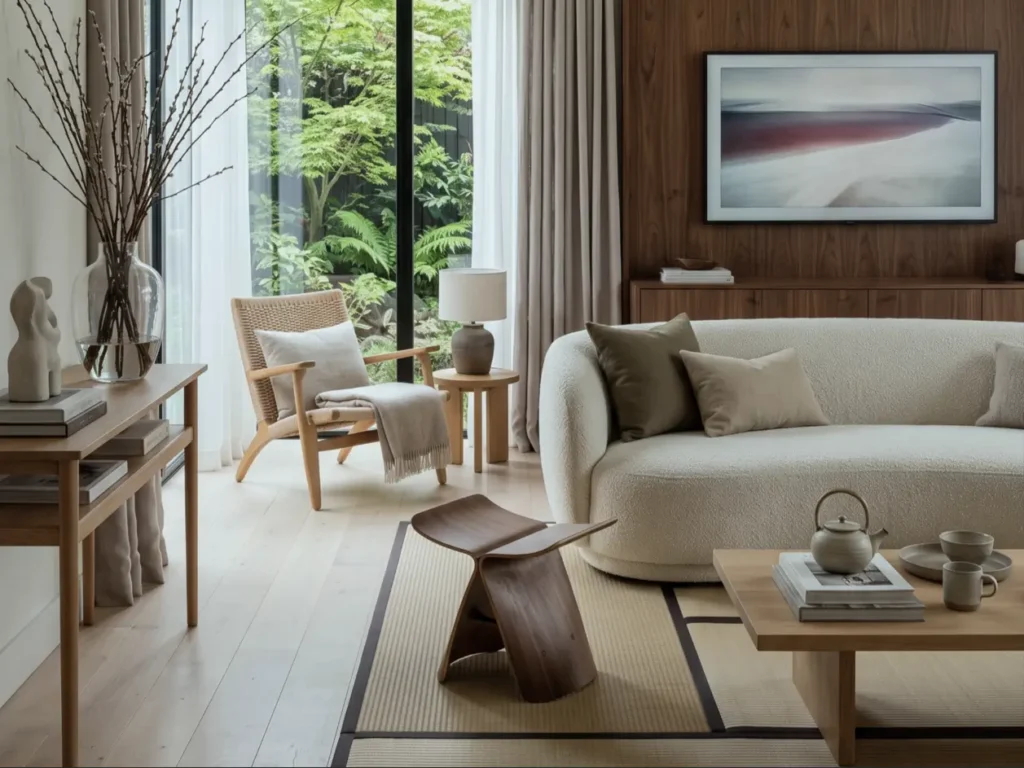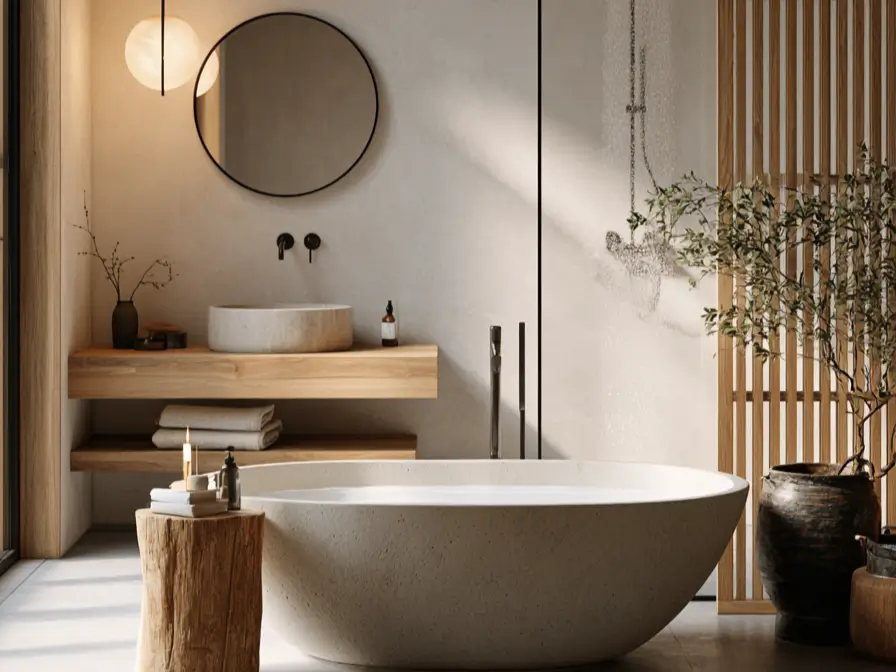

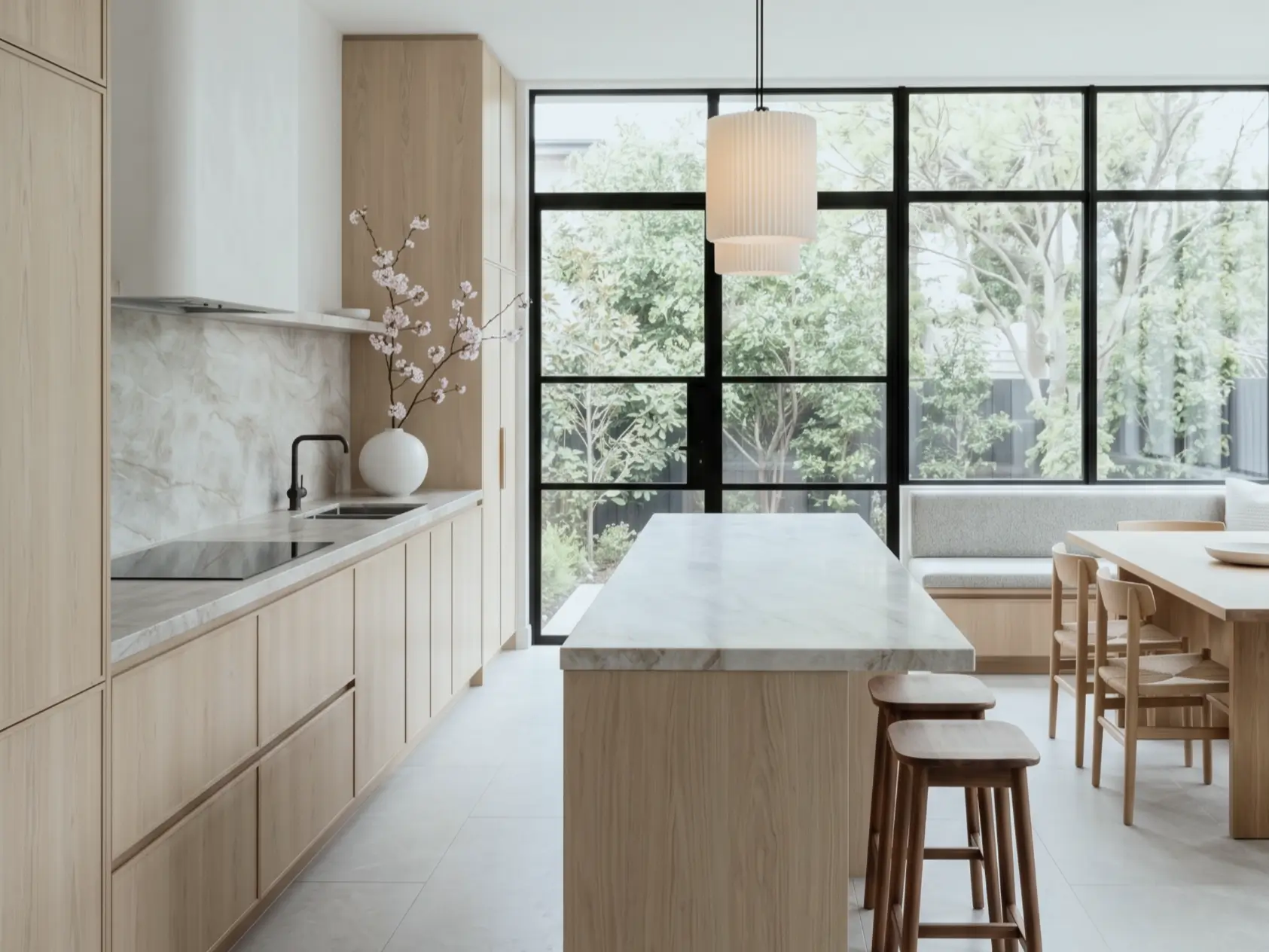
Most kitchens ask for your attention. A Japandi kitchen does the opposite — it lets you breathe. The counters stay clear, the wood is warm and soft, and nothing shouts. After seven years of designing kitchens, this is the look I return to whenever a client wants calm without the cold — the same feeling I chase in a Japandi style bedroom, just applied to a room that has to work much harder.
Japandi is what happens when Japanese simplicity meets Scandinavian warmth, a pairing often called warm minimalism. A Japandi style kitchen keeps the clean lines of minimalism but softens them with natural wood, texture, and a touch of imperfection. That last part matters more than people expect — it’s the line between a space that feels serene and one that feels empty, and where many Japandi kitchens go wrong.
What I love is how easy these rooms are to live in. Open shelving holds a few favorite pieces and nothing more, with the Japanese idea of wabi-sabi running underneath — a quiet fondness for things that age and look made by hand. Below, I’ll walk you through what makes the look work, where it falls apart, and how to bring the same calm into your own kitchen.
Key Takeaways
- A Japandi kitchen blends Japanese minimalism with Scandinavian warmth — clean lines, natural wood, and a calm, neutral palette.
- The look hinges on warm minimalism: texture, not decoration, is what keeps it from feeling cold.
- Core ingredients are handleless oak or walnut cabinets, muted nature-drawn colors, stone or terrazzo surfaces, and a few handmade pieces.
- It suits any size, and small kitchens especially, since the style already asks you to live with less.
- Avoid high-gloss surfaces, heavy contrast, and cluttered counters — the three things that break the calm fastest.
What Is a Japandi Style Kitchen?
A Japandi style kitchen blends Japanese simplicity with Scandinavian warmth — clean lines and a calm, neutral palette, softened by natural wood and gentle texture. The name fuses “Japanese” and “Scandinavian,” and the look sits right where those two sensibilities meet — the same balance that runs through Japandi style homes everywhere, not just the kitchen: simple, but never cold.
In practice, it’s a kitchen that holds back. Counters stay clear, cabinets are flat and handleless, and the materials are honest ones — oak, stone, linen — often left a little imperfect on purpose.
The Japandi kitchens that work best always have a few handmade pieces, like a chipped favorite mug, that keep the room from feeling like a showroom. That’s the wabi-sabi touch underneath it all, the same one behind a Japanese inspired kitchen: a fondness for things that show their age.
Key Characteristics of a Japandi Kitchen
A few things show up in nearly every Japandi kitchen I’ve designed or admired:
- Natural materials — oak, walnut, ash, stone, linen, and ceramic, used honestly.
- Handleless, flat-front cabinets in natural wood or a soft, muted paint.
- A neutral palette drawn from nature — beige, sand, stone, warm grey, and wood tones.
- Clear counters and hidden storage, so the everyday clutter stays out of sight.
- Soft, matte finishes over anything high-gloss or reflective.
- A few imperfect, handmade pieces — the wabi-sabi touch that adds soul.
What Makes a Japandi Kitchen Feel Warm Instead of Cold?
The warmth in a Japandi kitchen comes from natural texture, not from adding more things. This is the part people often get wrong: they treat it like a plain minimalist kitchen, strip everything back, paint it all in soft neutrals, and end up with a room that feels more like a clinic than a home. The fix is never more decoration — it’s more texture in what you already have.
Wood does most of the work — a run of oak or walnut with the grain left visible brings the warmth the Danes call hygge, the kind no styling can fake. Honed stone helps too — a matte finish absorbs light rather than bouncing it back. Then the soft, quiet layers: a linen tea towel, a woven stool seat, a sprig of greenery by the window.
One thing I always tell clients: leave room for a little life. A bowl of lemons on the counter, a wooden board leaning against the splashback. The calm comes from restraint; the warmth comes from the small signs that someone actually cooks here.
Japandi Kitchen Cabinets
Japandi kitchen cabinets are simple, flat-fronted, and almost always handleless. Slab or minimalist shaker doors in natural wood or soft muted paint, with push-to-open catches or slim recessed pulls — the goal is an unbroken, quiet surface.
Oak is the most common choice; its pale grain reads calm in almost any light, while walnut brings a deeper warmth when you want the room grounded. In the kitchens I’ve worked on, going handleless is the single change that does the most — the moment the hardware comes off, the whole wall goes quiet.
Japandi Kitchen Colors
The Japandi kitchen palette is built on soft, muted neutrals drawn from nature, with gentle accent tones used sparingly for depth. The core Japandi kitchen colors are:
- Beige and cream — the warm, easy base most Japandi kitchens start from.
- Sand and taupe — slightly deeper neutrals that add quiet warmth.
- Stone and warm grey — cool-leaning tones that keep the room calm and grounded.
- Natural wood — oak, ash, and walnut, doing as much color work as the paint.
- Soft accents — muted sage, soft clay, charcoal, or indigo, in small doses only.
Light Japandi vs. Dark Japandi
Most Japandi kitchens lean one of two ways, and which suits you mostly comes down to how much natural light the room gets:
- Light Japandi — pale and airy, with white walls, blond oak, and off-white stone. It leans Scandinavian, and it’s the one I reach for in small or single-window kitchens that need to feel larger.
- Dark Japandi — moodier and more enveloping, with walnut, deep stone, and sometimes charred wood. It leans Japanese, and it rewards a larger, sun-filled room that can carry the depth.
If you want a little color either way, take it from nature and keep it soft.
Japandi Kitchen Ideas and Design Inspiration
These 31 Japandi kitchen ideas show how the look comes together — from cabinets and color to small-space layouts. Each one is a kitchen I’d happily stand in, and most lean on the same quiet ingredients that define good Japandi kitchen design: natural wood, soft stone, clean lines, and just enough life on the counters.
1. Woven Cane Cabinets
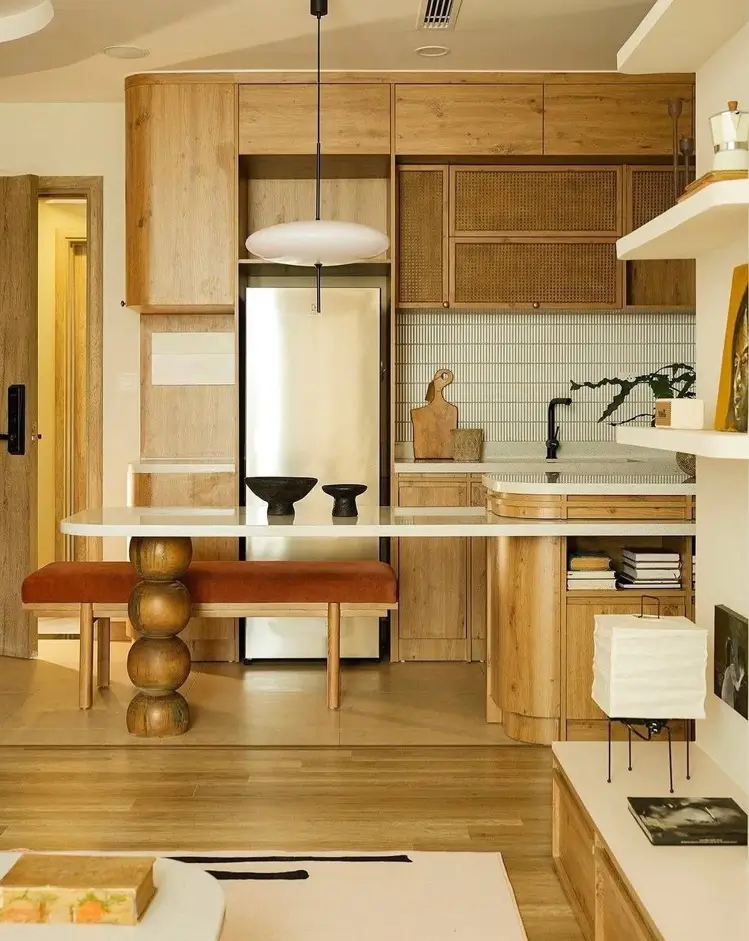
Cane-front cabinets are a quiet way to add texture without breaking the calm. Here, the woven panels sit above warm oak and a slim ribbed backsplash, softened by a sculptural bench and a paper lantern. The mix feels collected, not styled. I love it.
2. Wall-To-Wall Oak
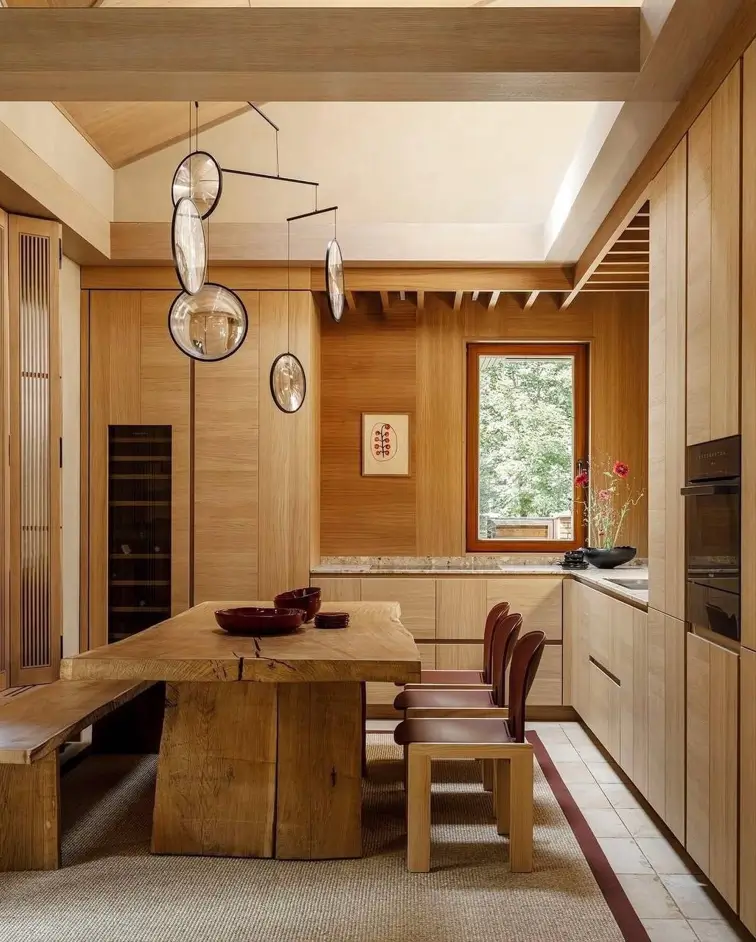
Wrapping a kitchen in a single wood tone makes the whole room feel quiet and continuous. In this home, handleless oak cabinets run from floor to ceiling, broken only by a window to the trees and a live-edge table that grounds the space. Easy to live with.
3. Arched Open Shelving
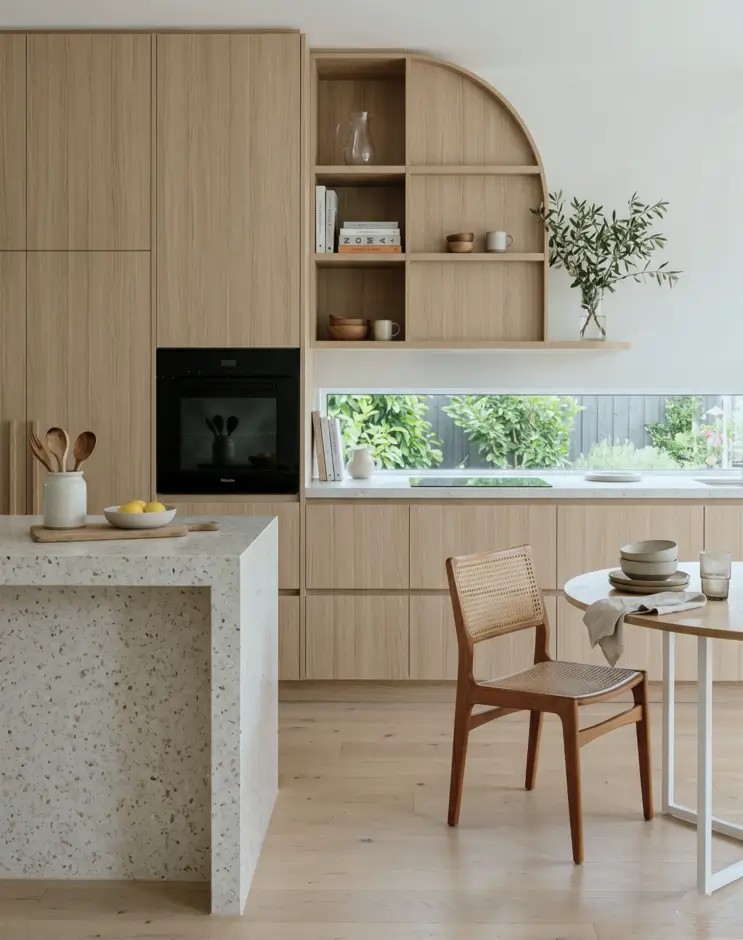
Curved shelving softens the straight lines a minimalist kitchen leans on. An arched oak unit holds a few books, ceramics, and a sprig of olive, while a speckled terrazzo island brings gentle texture below. The result feels calm but never bare. Worth borrowing.
4. Fluted Wood Hood
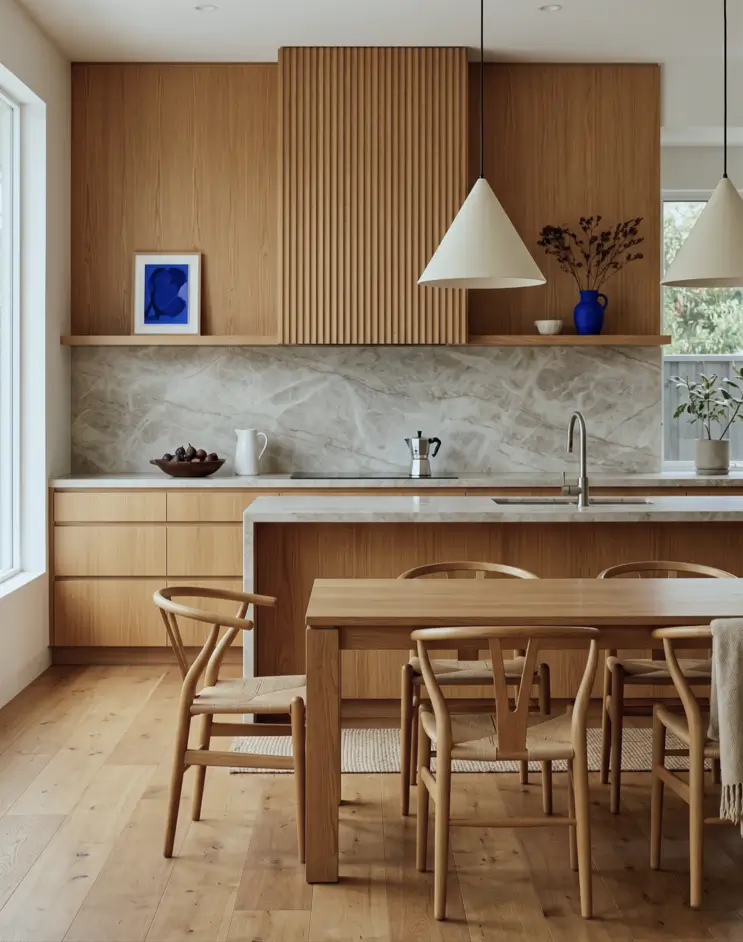
Vertical fluting on a range hood adds rhythm to a flat wood wall without breaking the calm. In this home, the slatted oak panel anchors a kitchen of wishbone chairs and veined stone, while a lone cobalt vase lifts the neutral palette. This look feels effortless.
5. Wood-Clad Ceiling
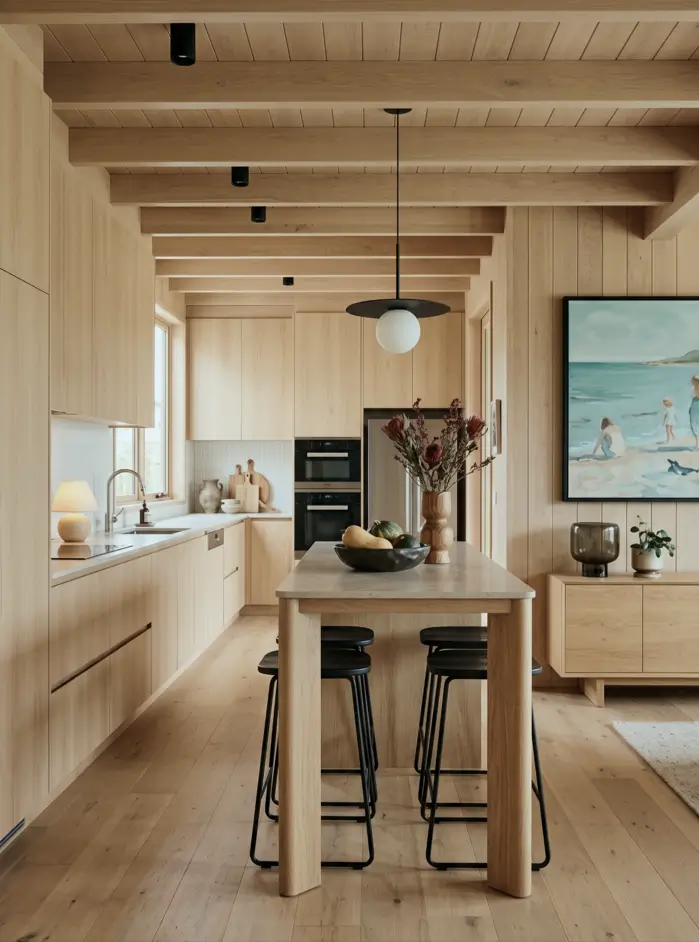
Carrying wood up onto the ceiling makes a kitchen feel wrapped and grounded. Pale oak runs across the beams and planks overhead, matched by handleless cabinets below, while black stools and a globe pendant add just enough weight. It’s a smart choice.
6. Two-Tone Cabinetry
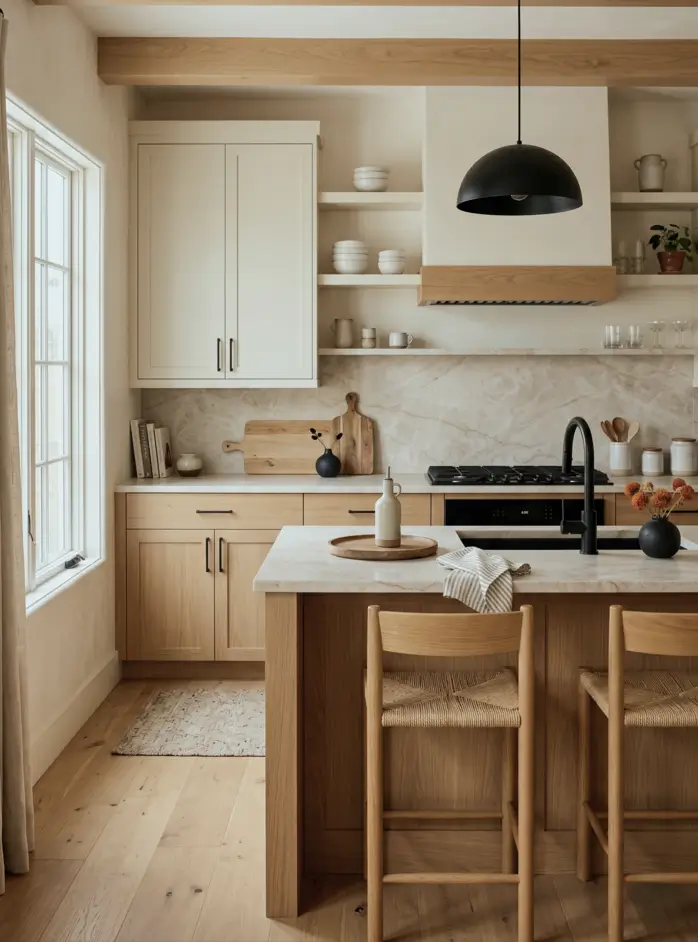
Pairing two soft tones keeps a kitchen from feeling flat. Oak shaker base cabinets sit below cream uppers, with a plaster hood, marble backsplash, and matte black fittings tying it together. Layered, warm, and quietly grounded by the woven stools. Worth borrowing.
7. Fluted Stone Island
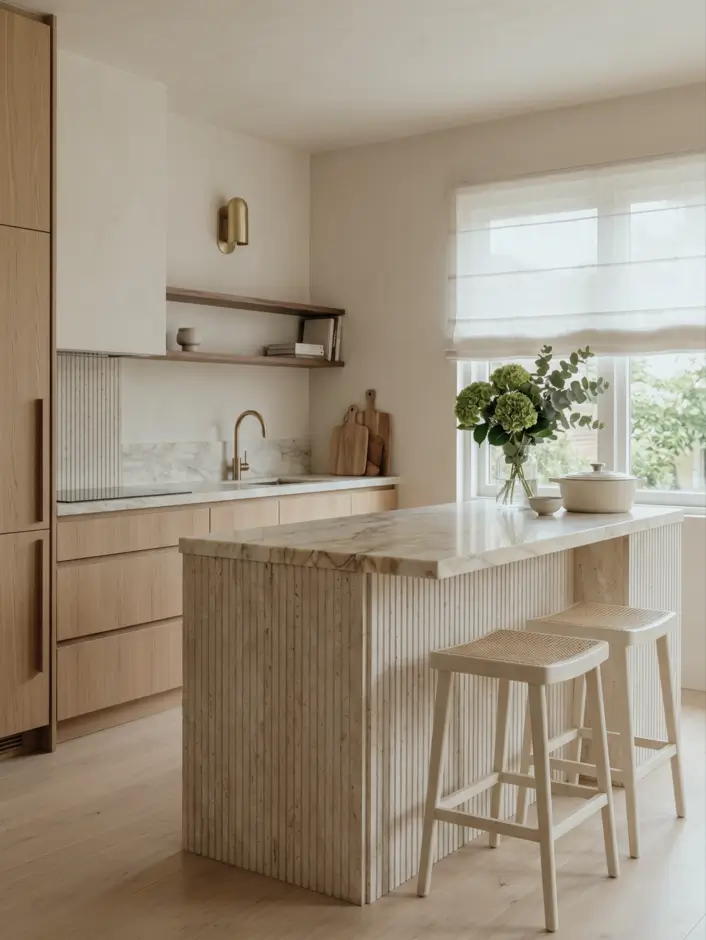
Ribbing a stone island gives a minimalist kitchen texture you can almost feel from across the room. Here, fluted travertine meets a marble top, paired with pale oak cabinets, cane stools, and warm brass. Soft, light-filled, and quietly tactile. Hard to beat.
8. Small Galley Kitchen
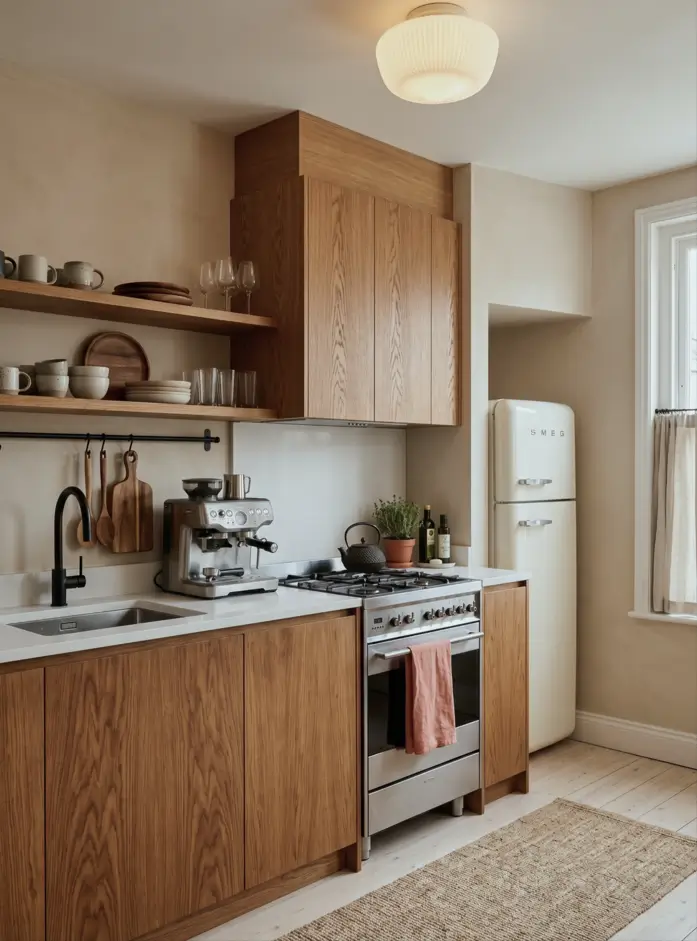
Tight footprints suit Japandi well, since the style already favors less. In this home, warm oak runs along a single wall, open shelves hold a few mugs and bowls, and a jute runner softens the floor. Proof the look works small. Easy to live with.
9. Garden View Windows
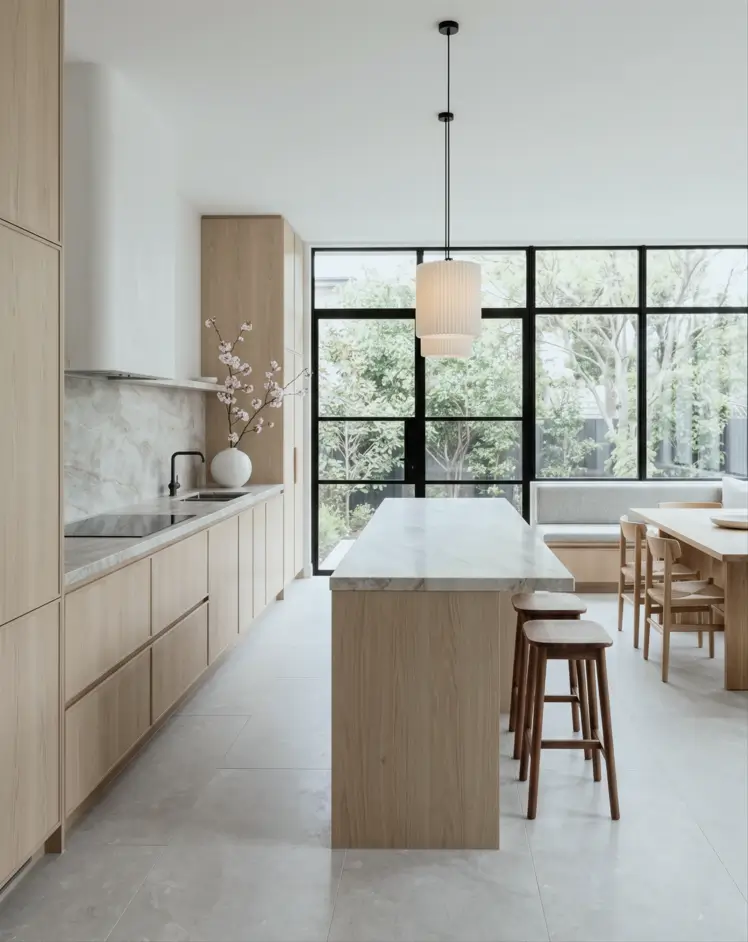
Framing the garden brings the outdoors into the heart of a Japandi kitchen. Notice how black-steel windows open onto trees behind a pale oak island and marble worktop, with a sprig of blossom softening the corner. Light pours in and the room breathes — almost a Zen garden view pulled indoors. This look feels serene.
10. Dark Stone Counters
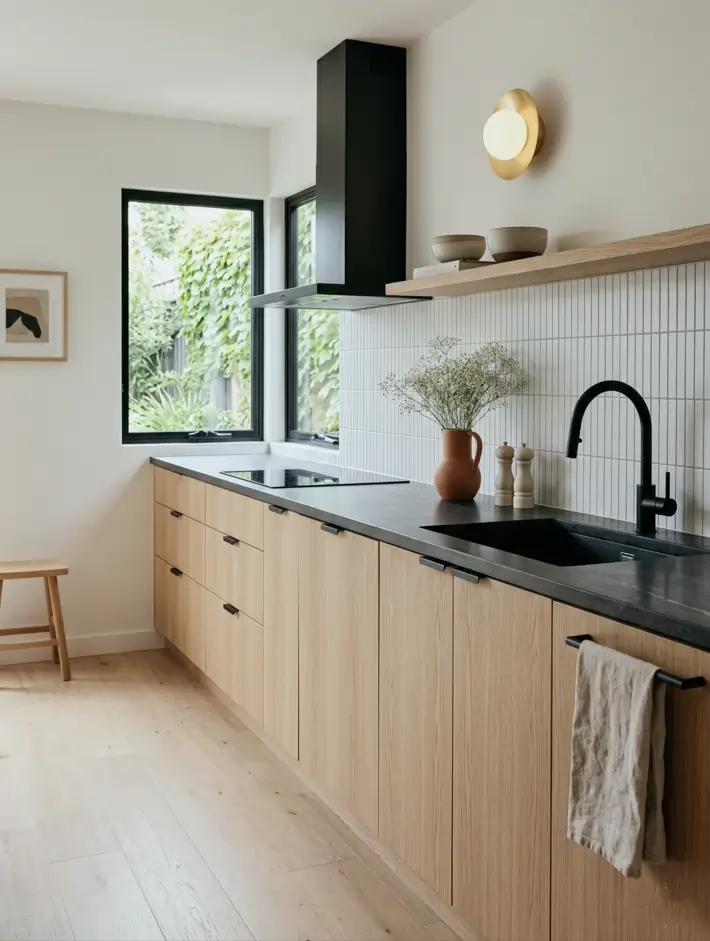
Grounding pale wood with a dark counter gives the room quiet depth. Oak cabinets meet a charcoal stone worktop and a matte black tap, lifted by white stacked tile and a terracotta jug. The contrast feels calm, not stark. It’s a smart choice.
11. Walk-In Pantry
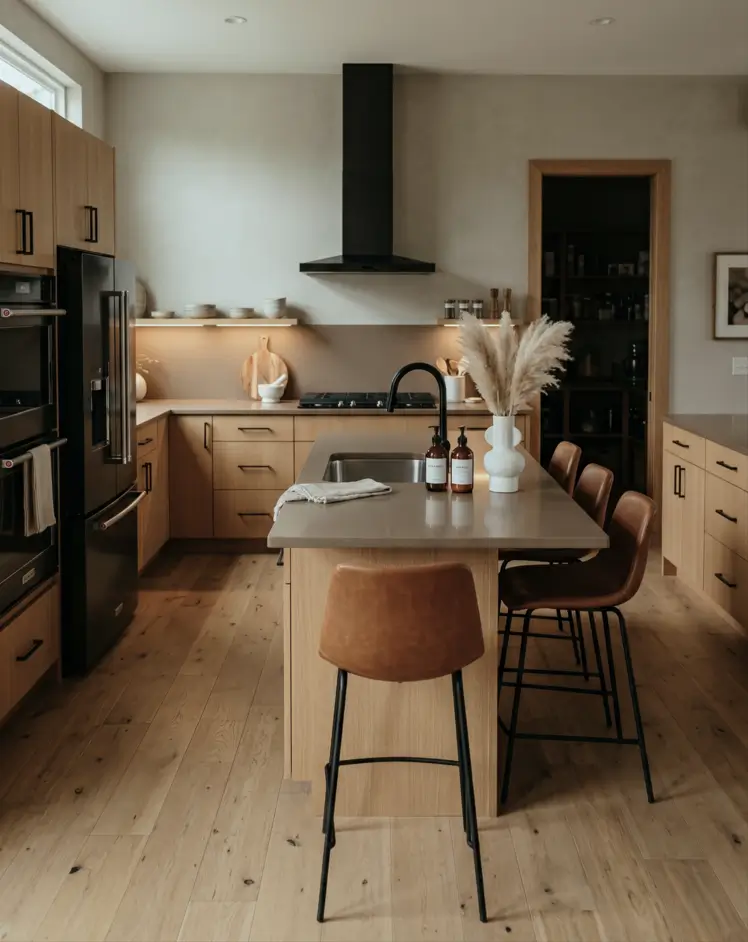
Tucking storage behind a doorway keeps the kitchen calm and clutter-free. Here, a walk-in pantry sits off to the side, letting the oak island and clear counters stay the focus, while leather stools and black appliances add quiet warmth and weight. I’d take it.
12. Speckled Terrazzo Counter
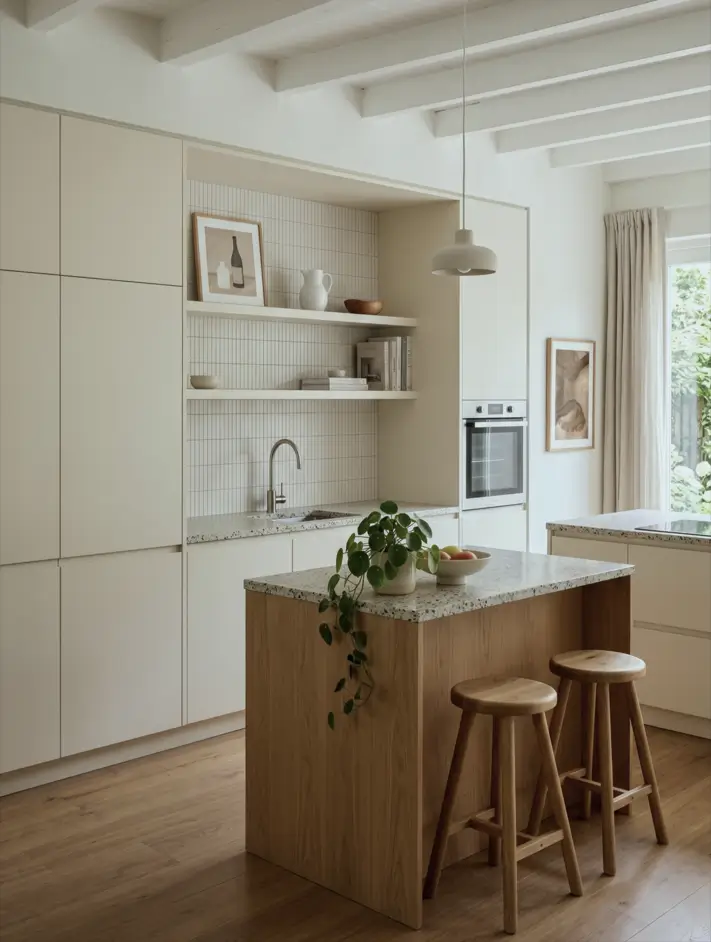
Speckled terrazzo adds gentle pattern without disturbing the calm. Here, it tops an oak island against cream cabinets and a grid-tiled wall, while a trailing plant and round stools keep the room feeling soft and lived-in. Worth borrowing.
13. Curved Island Edge
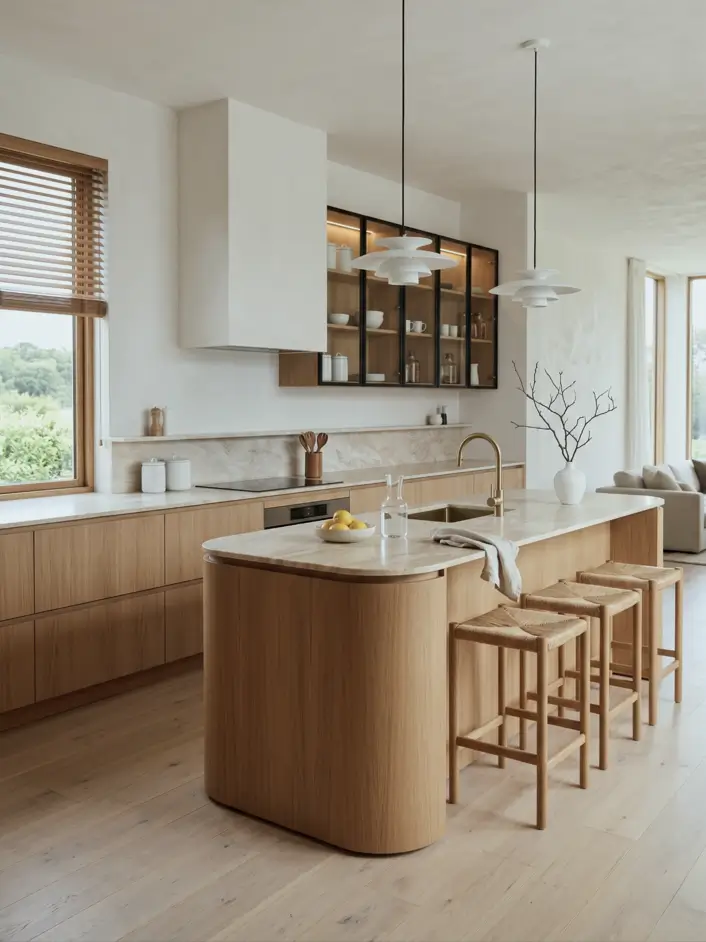
Rounding the end of an island softens how you move through a kitchen. A pale oak island curves gently at one end beneath a stone top, paired with woven stools, a brass tap, and glass-front cabinets that keep everything light. This look feels considered.
14. Dark Wood Cabinets
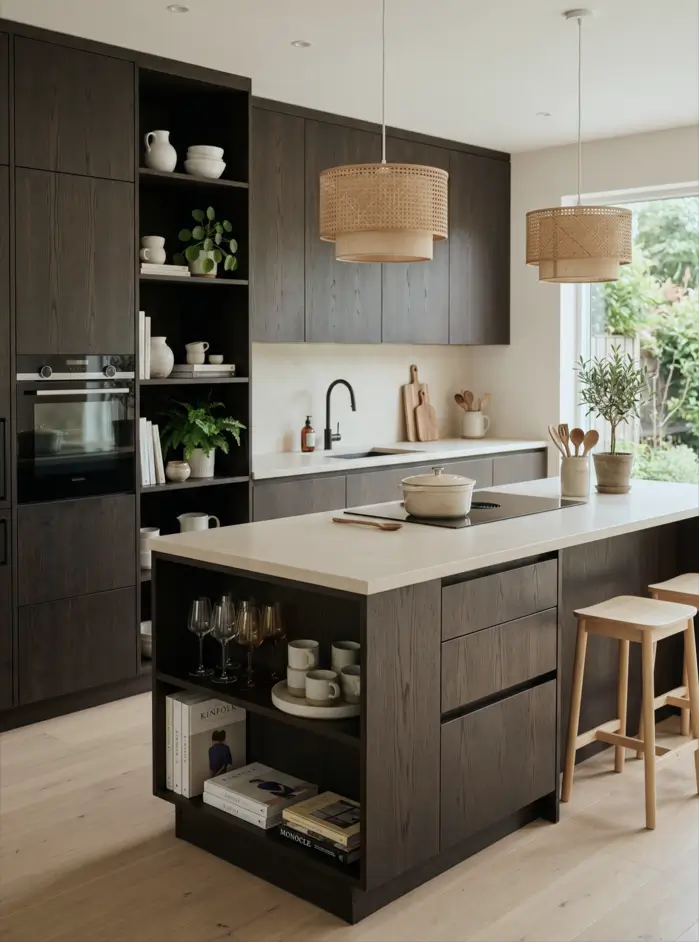
Deep-stained wood gives the room a moodier, grounded feel. Dark oak cabinets meet pale stone counters and rattan pendants, with open shelves holding ceramics and books. Light floors and blond stools keep the room warm rather than weighty. Easy to live with.
15. Trailing Indoor Plants
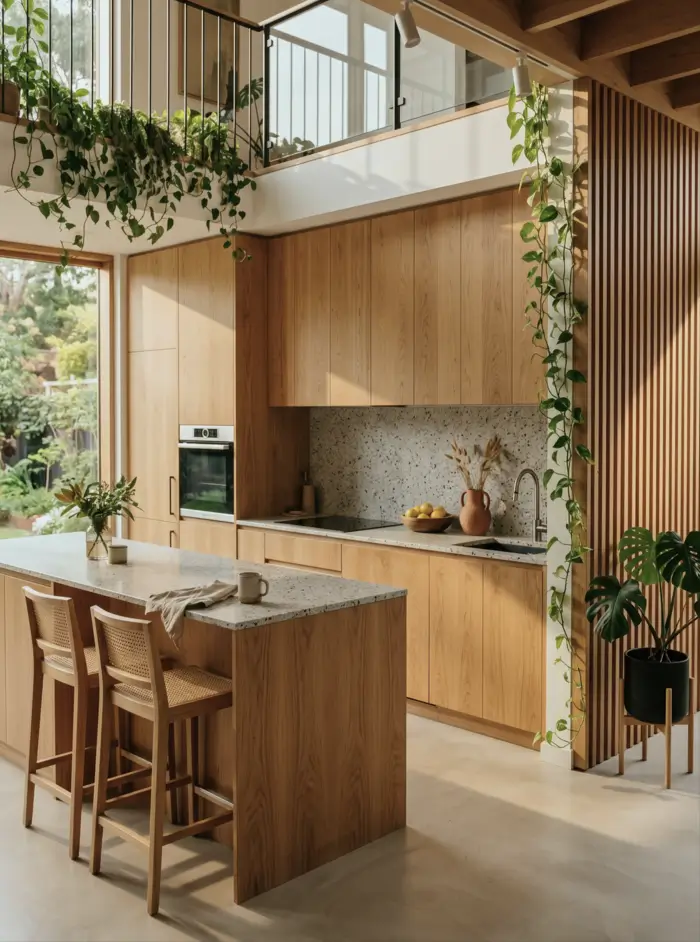
Greenery is what keeps a Japandi kitchen from feeling too quiet. Here, pothos trails from a mezzanine above warm oak cabinets and a terrazzo island, while a slatted screen filters the light. The plants soften every hard line. A look worth keeping.
16. Round Dining Table
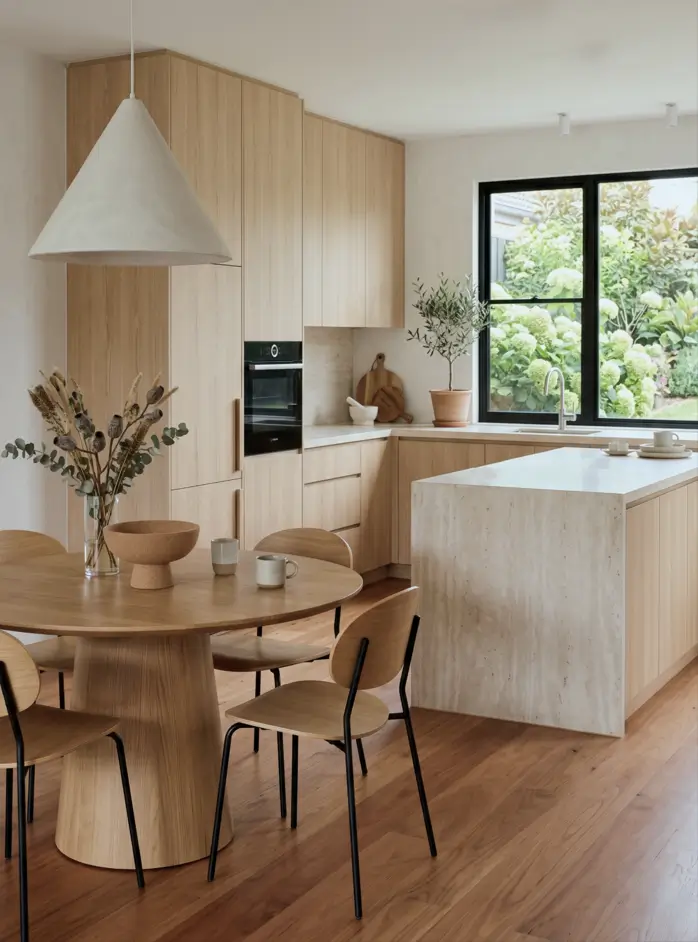
Pairing a round table with a kitchen softens the room and makes it more sociable, a natural move in an open-plan kitchen. A pedestal oak table sits beside a travertine island and pale cabinets, lit by an oversized plaster pendant. The curves keep everything feeling gentle and open. A quiet kind of beautiful.
17. Rounded Shelf Niche
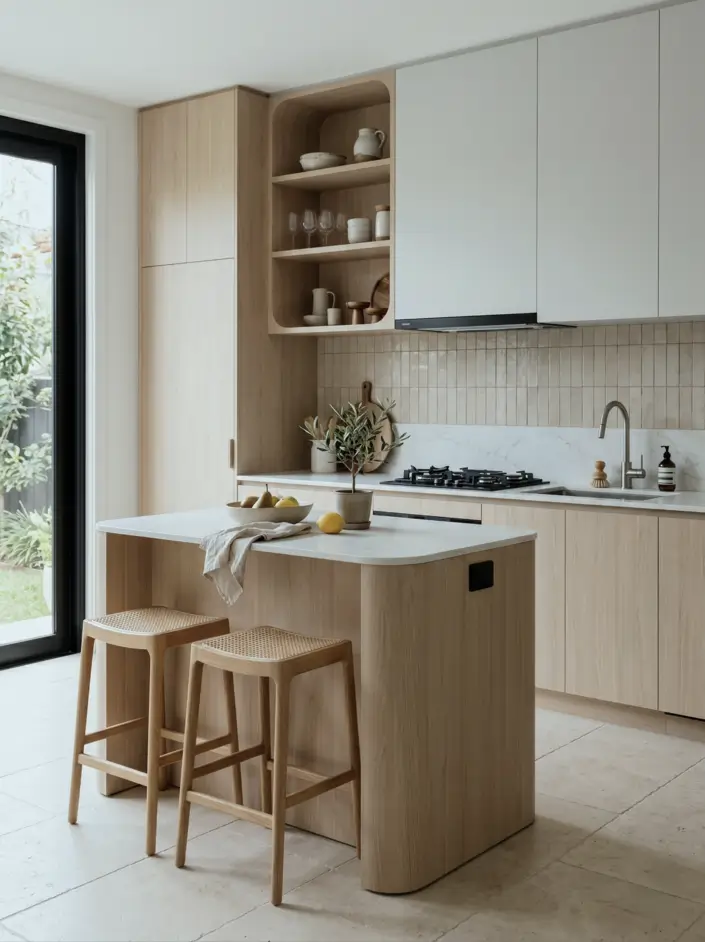
Carving a curved niche into cabinetry gives open shelving a softer, built-in feel. Here, a rounded recess holds glassware and ceramics beside pale oak and white uppers, while a compact island keeps the small footprint working hard. Gentle and quietly clever. One to bookmark.
18. Warm Walnut Tones
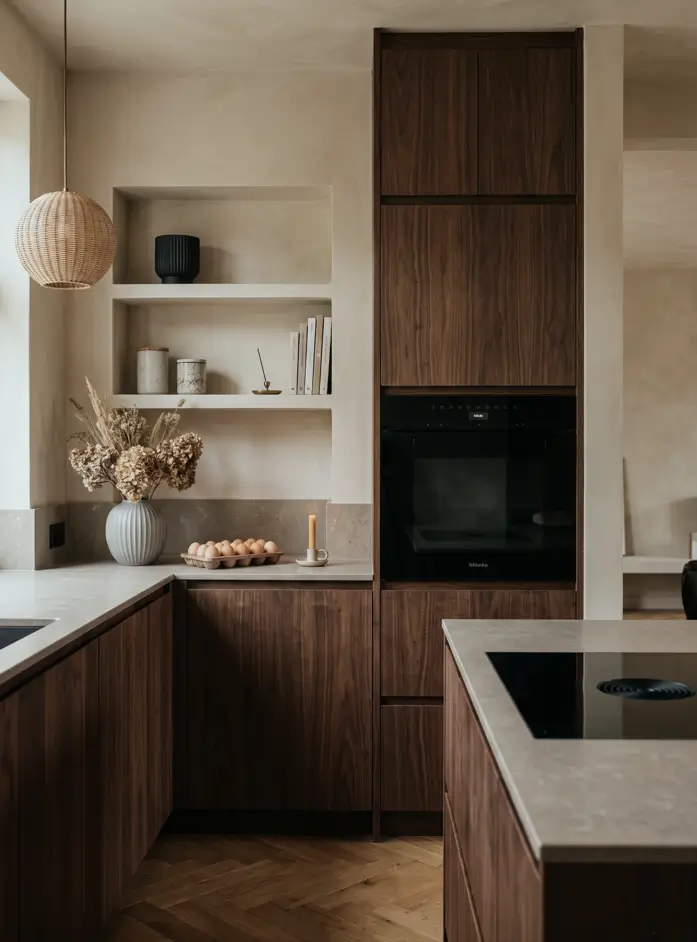
Walnut brings a deeper warmth than oak, giving the room quiet richness. Dark-grained cabinets meet soft plaster walls and stone counters, with a recessed niche holding ceramics and books. Dried blooms and a rattan pendant keep it grounded. Hard not to love.
19. Marble Waterfall Island
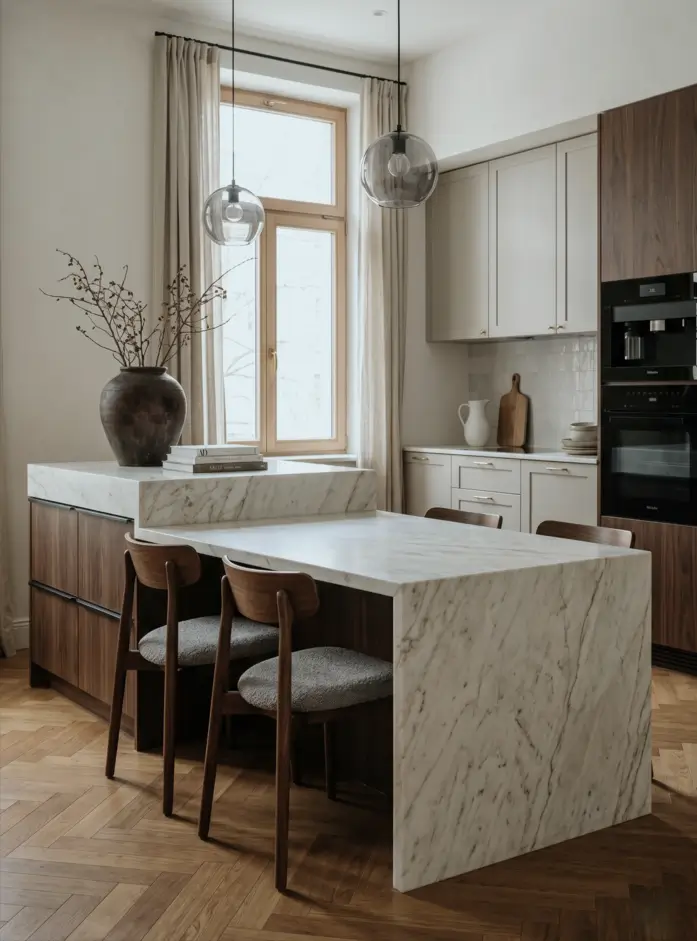
A waterfall island, where the stone runs down the sides to the floor, anchors a Japandi kitchen. Veined marble folds over walnut cabinets and a built-in table, lit by smoked-glass globes. Sculptural, calm, and easy to gather around. A timeless pairing.
20. Built-In Wine Storage
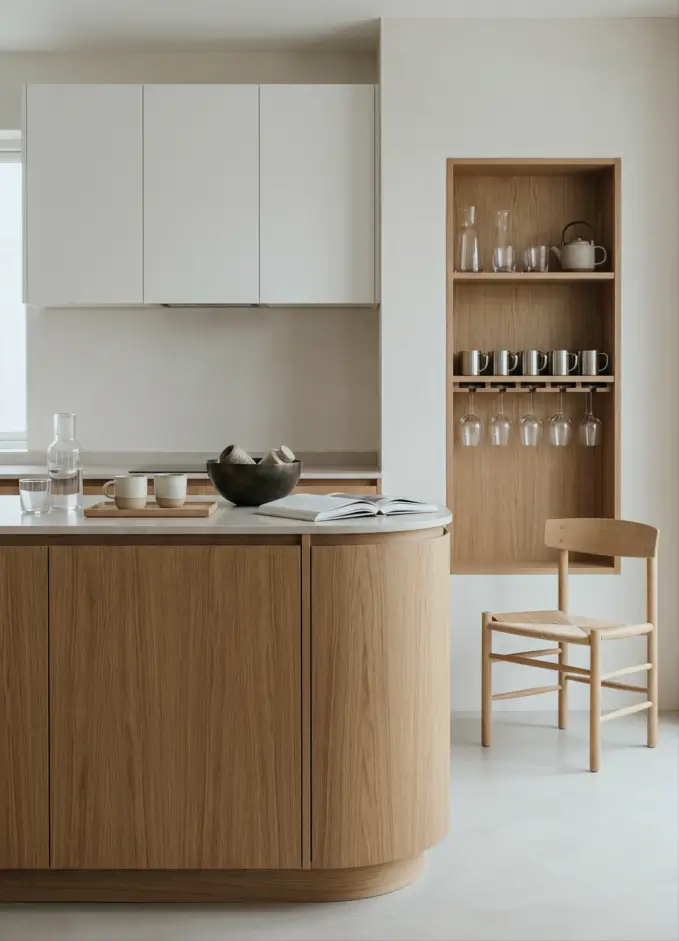
A recessed oak niche turns everyday glassware into a quiet display. Here, stemware hangs below shelves of carafes and mugs, set into a wall beside a curved island and a single paper-cord chair. Tidy, warm, and built right into the architecture. A detail worth stealing.
21. Soft Greige Cabinets
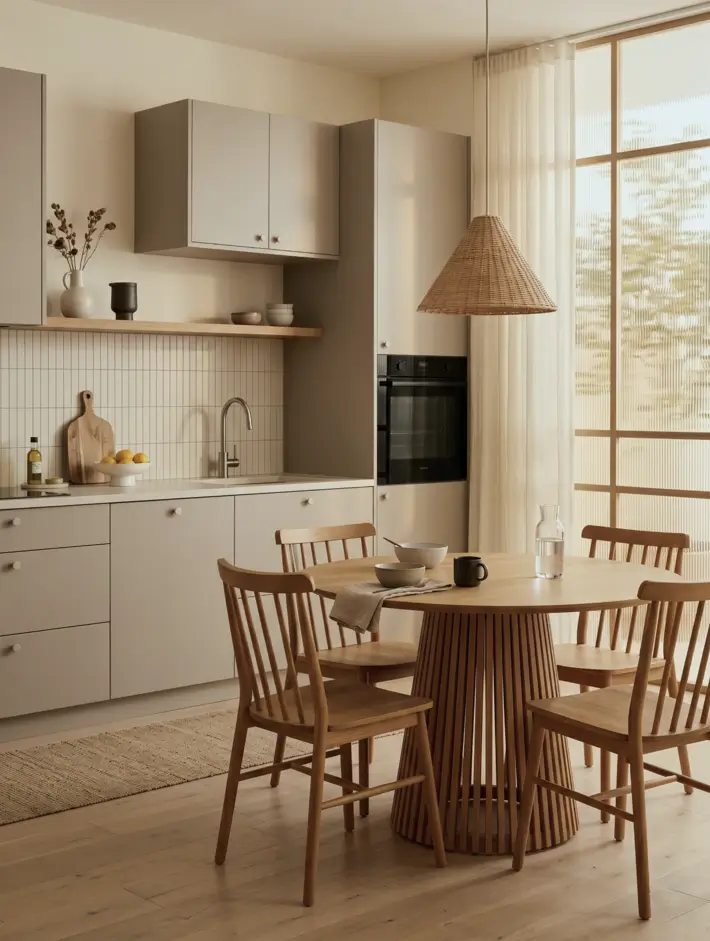
Greige sits between grey and beige, giving the room warmth without leaning cool. Soft greige fronts pair with white stacked tile and an oak shelf, while a slatted table and rattan pendant warm the dining side. Mellow and quietly inviting. A gentle, grounded look.
22. Sage Green Backsplash
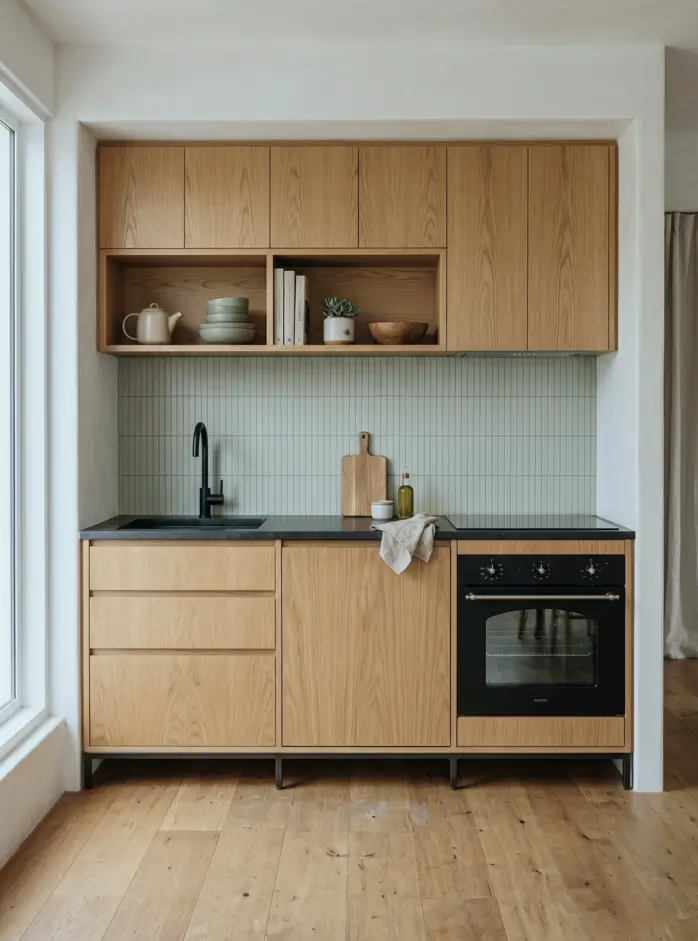
Sage green brings color to the room while staying soft and nature-led. Here, a slim stacked-tile splash in muted green sits between oak cabinets and dark stone, echoed by green ceramics on the shelf above. Calm, fresh, and never loud. Color done quietly.
23. Vaulted Wood Ceiling
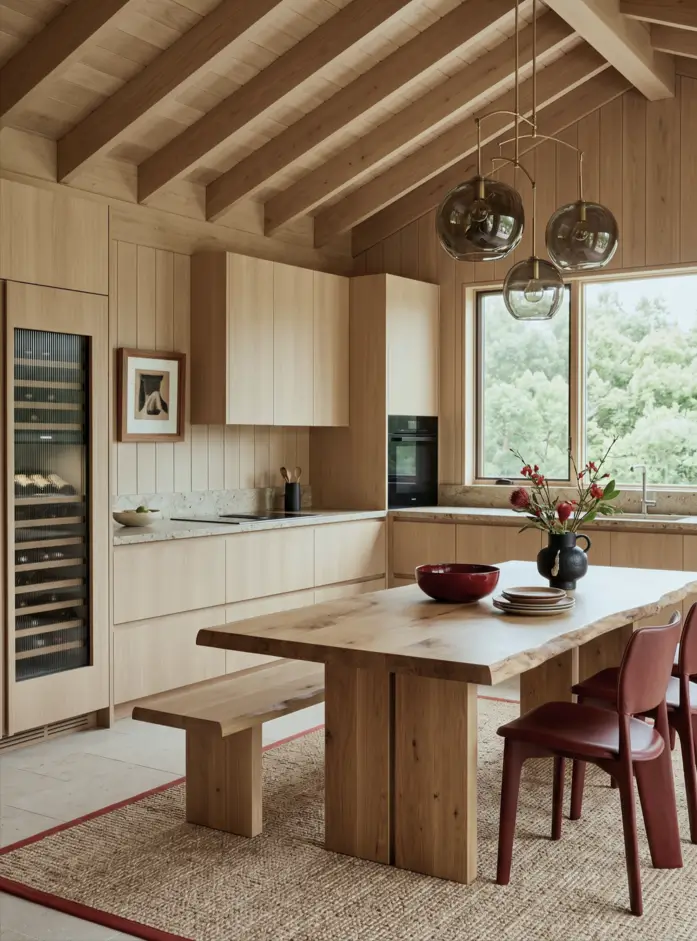
A vaulted ceiling lined in timber gives the room height and a quiet sense of shelter. Here, exposed beams rise above pale oak cabinets and a live-edge table, while burgundy chairs add warmth. The wood overhead makes the whole room feel held. Beautifully done.
24. Terracotta Tile Island
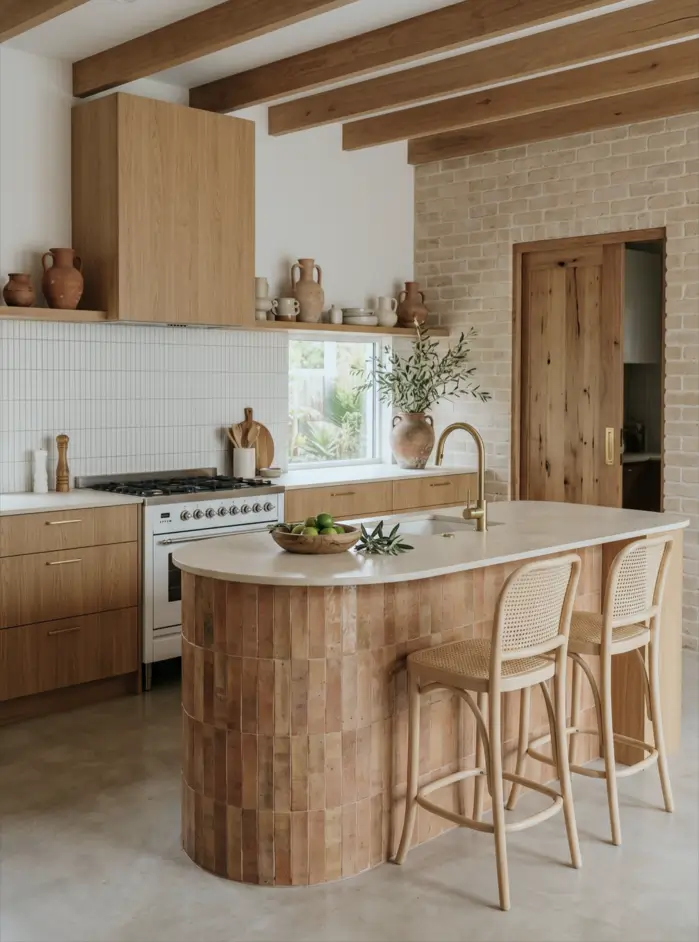
Wrapping an island in terracotta tile brings earthy warmth to the room. A curved tiled base meets a pale stone top and oak cabinets, with cane stools and olive branches softening the edges. The clay tones keep it grounded and sun-warmed. A warm, earthy touch.
25. Travertine Backsplash
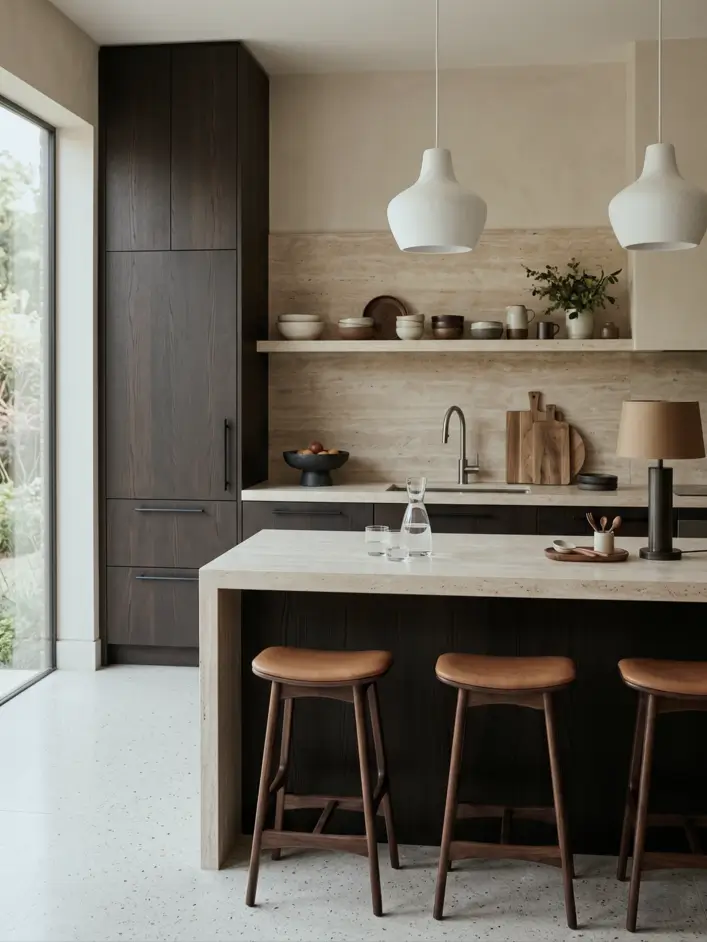
Running travertine up the wall gives the room soft, natural texture from counter to shelf. Here, the warm stone meets dark oak cabinets and leather stools, with ceramics lined along a floating ledge. The grain catches the light and quiets the room. A lovely finish.
26. Tonal Neutral Palette
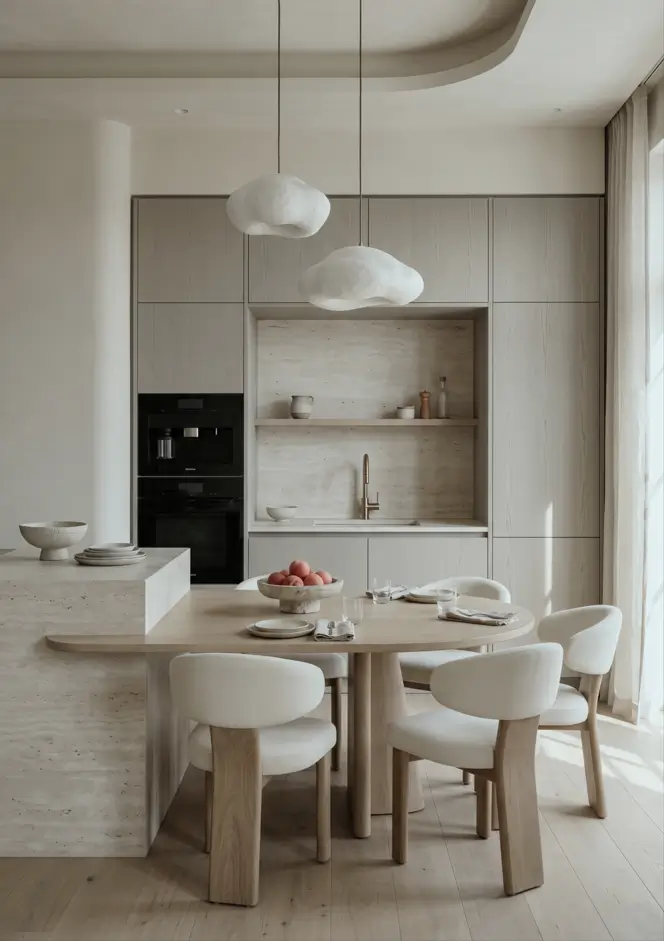
Keeping everything in one soft register makes the room feel deeply restful. Whitewashed oak cabinets, a travertine island, and bouclé chairs all sit within a hair of each other in tone, broken only by black appliances. Calm layered on calm. Quietly elegant.
27. Plaster Range Hood
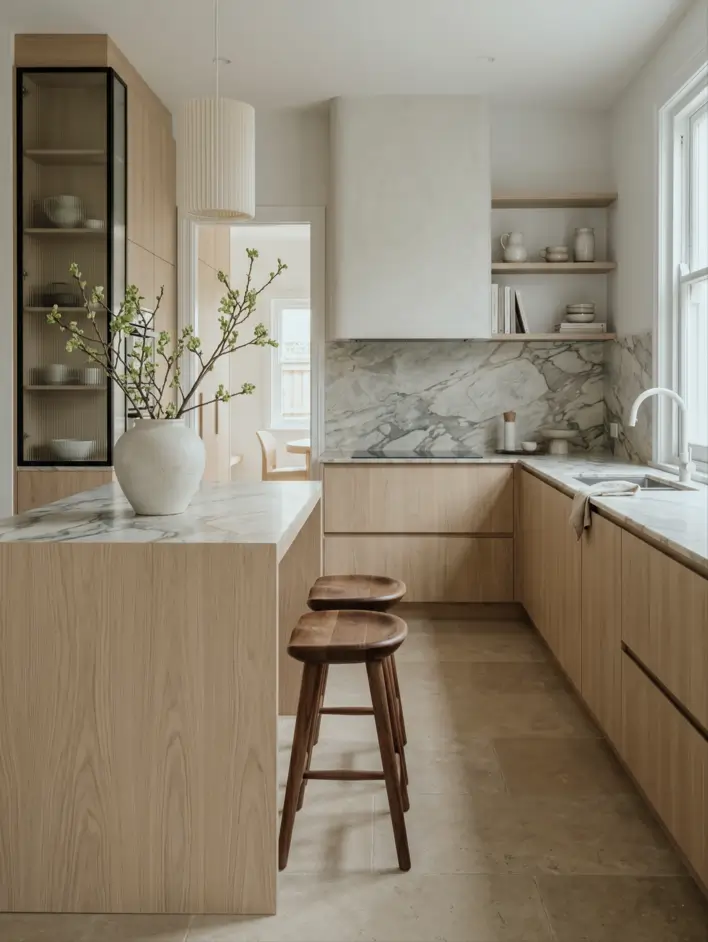
A smooth plaster hood gives the room a soft, sculptural focal point with no hardware on show. Here, the rounded hood rises above a marble splash and pale oak cabinets, its matte surface keeping the room quiet. Walnut stools warm the base. A serene centerpiece.
28. Fluted Island Base
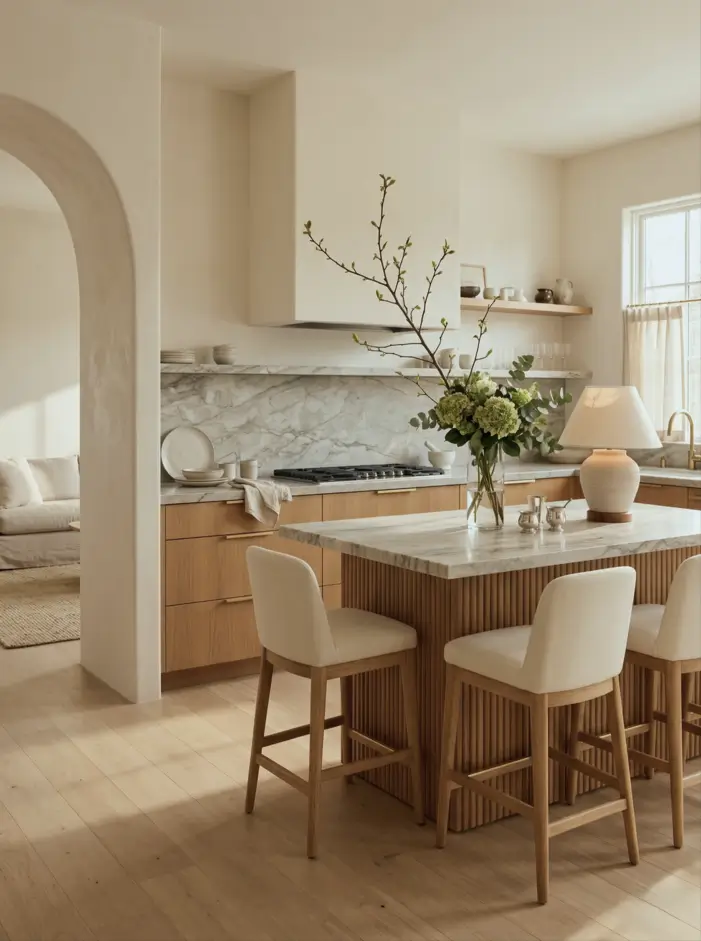
Vertical reeding on an island base adds quiet rhythm while keeping the lines clean. Here, a fluted oak island sits under a marble top, paired with upholstered stools, brass pulls, and a plaster hood. The grooves catch the afternoon light beautifully. A soft, refined detail.
29. Walnut And White Mix
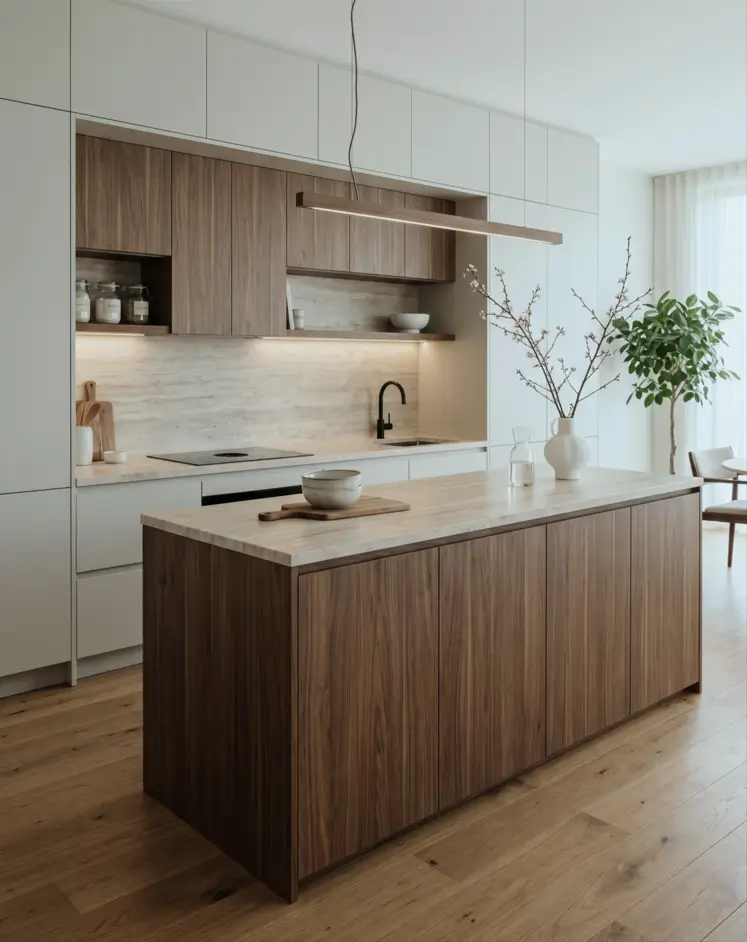
Setting walnut against crisp white keeps the room warm but bright. Set against pale uppers, rich walnut cabinets and island sit framed by pale upper units, with a travertine splash and a slim linear pendant overhead. The contrast feels balanced, never stark. A confident pairing.
30. Lit Display Niches
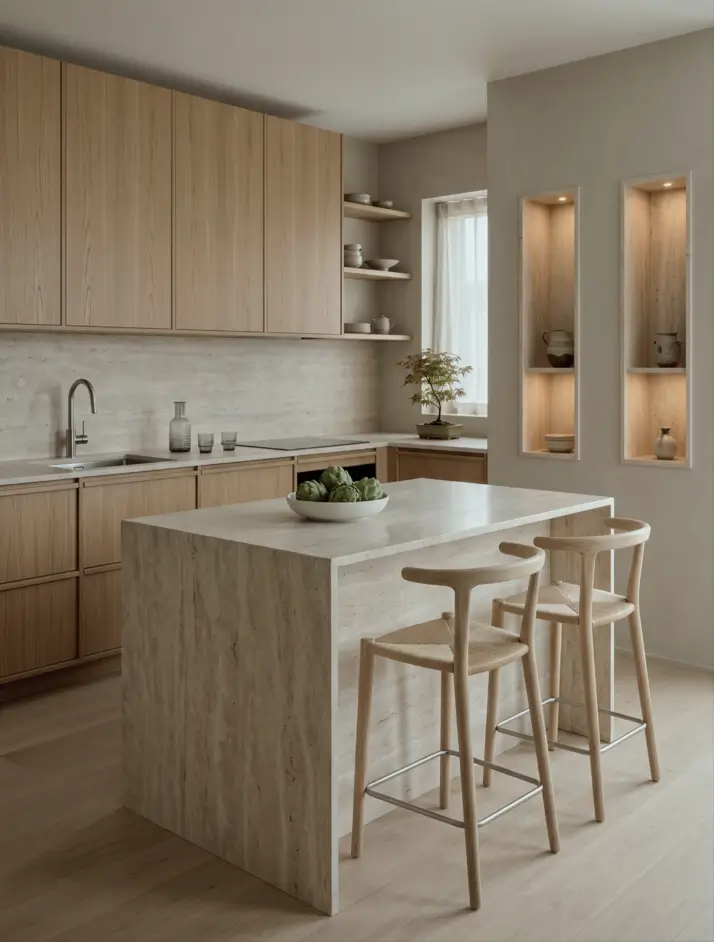
Recessed niches lit from within turn a few ceramics into quiet focal points. Here, two travertine-lined alcoves glow softly beside pale oak cabinets and a stone island, with a Japanese maple adding a living note. Storage becomes something to look at. A thoughtful finishing touch.
31. Slatted Wood Ceiling
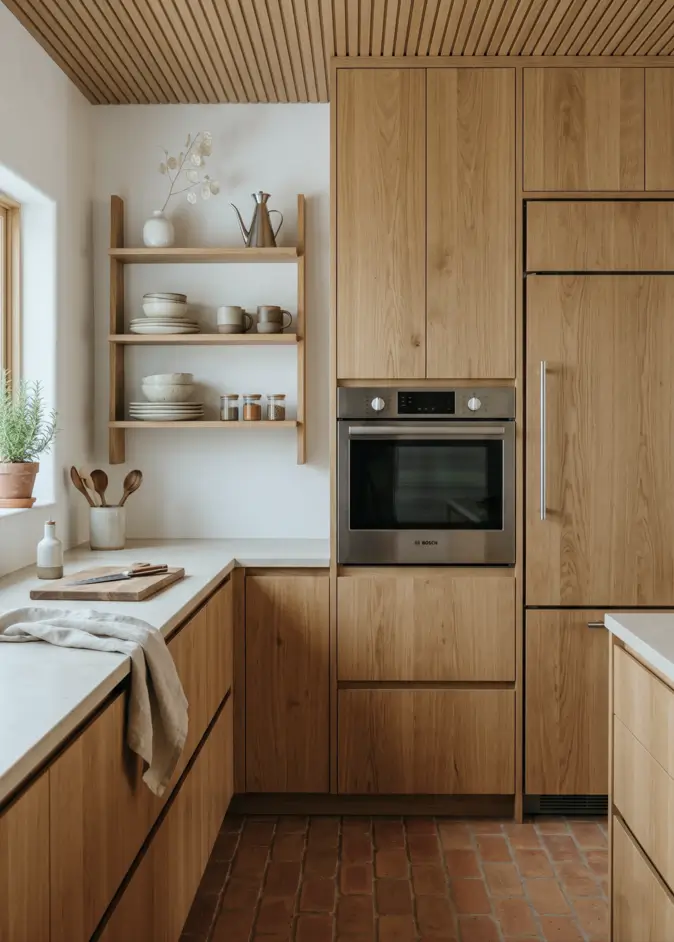
A slatted timber ceiling brings warmth and gentle rhythm to the top of the room. Here, oak battens run overhead above matching cabinets and a pale stone counter, while open shelves hold simple stoneware. The lines draw the eye up. A warm overhead detail.
Japandi Kitchen Mistakes That Break the Calm
The fastest way to break a Japandi kitchen is to let it tip into one of two extremes: too sterile, or too cluttered. A few specific things tend to do the damage:
- High-gloss surfaces — lacquered cabinets and polished quartz feel hard and clinical, the opposite of the soft, matte calm the style wants.
- Exposed stainless steel — large reflective appliances pull the eye to utility; panel over the fridge and dishwasher where you can.
- Heavy contrast — a little dark-against-light grounds a room, but too much turns it busy and breaks the quiet.
- Cluttered counters — the silent killer, since Japandi depends on clear surfaces.
The honest truth is that this style asks for a little discipline. I’ve watched beautiful Japandi kitchens slowly lose their calm simply because the surfaces filled up over a year of normal life. Keep editing, keep a few things put away, and the room keeps its breathing space.
RELATED:
- Japandi Style Living Room: Where Japanese Calm Meets Scandinavian Warmth
- 38 Japandi Style Bathroom Ideas for a Quietly Beautiful Space
Frequently Asked Questions
Is the Japandi kitchen still in style in 2026?
Yes, the Japandi kitchen remains one of the most popular looks in 2026, and it’s holding steady rather than fading. It isn’t really a trend — it’s a pared-back, natural-materials approach that ages well. Because the palette and materials are timeless, the look tends to stay current for years rather than dating in a season.
What’s the difference between a Japandi and a minimalist kitchen?
A minimalist kitchen strips a space to its essentials; a Japandi kitchen does the same but adds warmth back through natural materials and texture. Pure minimalism can feel cool and impersonal, while Japandi softens its clean lines with wood, stone, linen, and a few handmade pieces — so it feels lived-in rather than stark.
How do I make a small kitchen look Japandi?
For a small Japandi kitchen, keep the palette light, the cabinets handleless, and the counters as clear as possible. Pale oak or off-white fronts with no visible hardware make a tight room read larger. Lean on hidden storage, add a little open shelving for a few ceramics, and let in as much natural light as you can.
About the Author: Naraphon Kanyawee