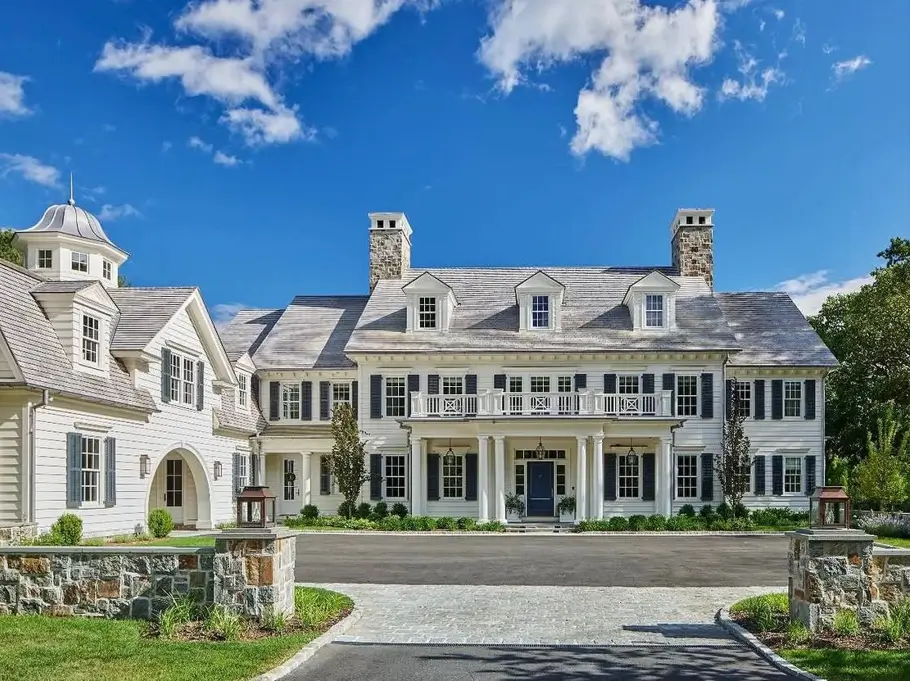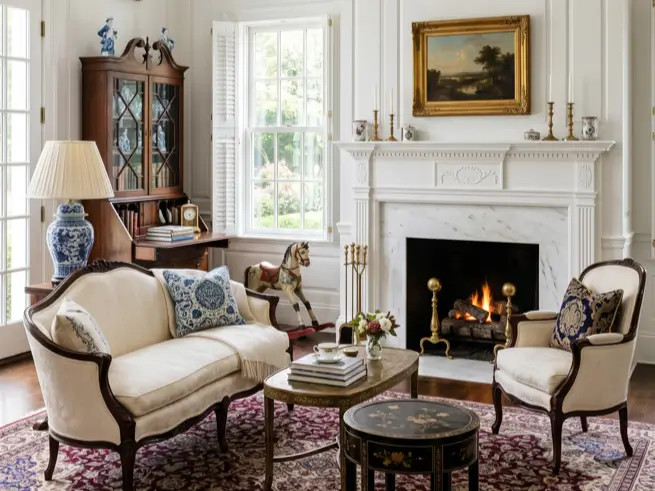

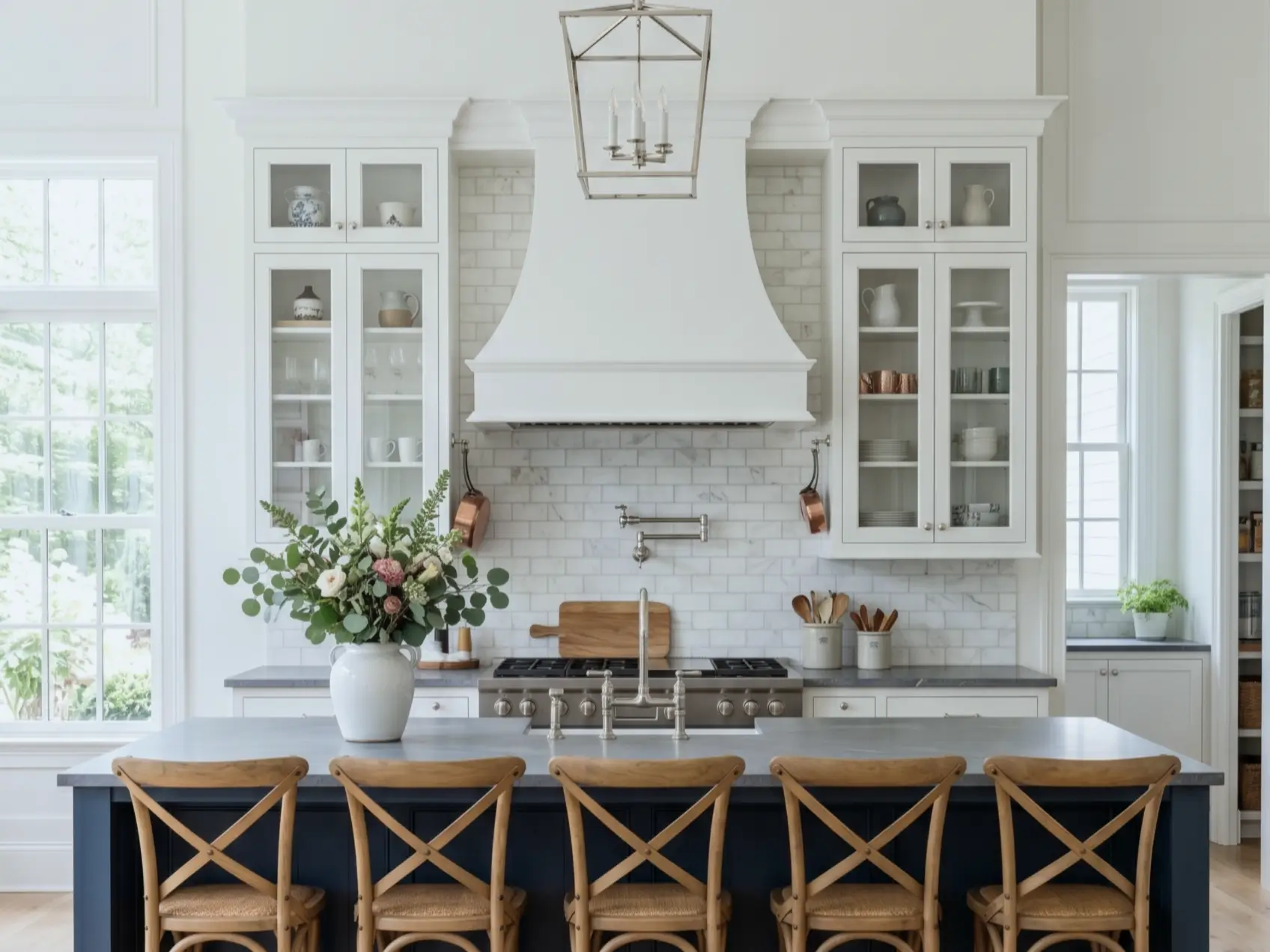
There’s a particular feeling I get walking into a colonial style kitchen, and it usually hits before I’ve noticed any single detail. The room feels steady — warm wood, a little formality, surfaces that look like they’ve been worked on for years. These kitchens were built around family meals and long mornings, and you can still sense that even in a brand-new build dressed up in the style.
What draws most people in, I’ve found, is the honesty of it: raised-panel cabinets, a butcher block counter softened by use, and small touches of brass that catch the light. Over seven years of designing homes, I’ve watched colonial style kitchen ideas come back around again and again.
The look is flexible, too — it can lean rustic and farmhouse or feel polished and quietly grand — and below I’ll walk you through what defines it and the details worth borrowing.
Key Takeaways
- Colonial style kitchens are built on natural materials and quiet symmetry — raised-panel or Shaker cabinets, wood and stone counters, and warm brass hardware.
- The look splits into four branches — American, British, Dutch, and Spanish Colonial — so knowing which one you’re drawn to makes every other choice easier.
- It’s a forgiving style to ease into: a muted paint, an aged-brass swap, or a shelf of blue-and-white china pulls a kitchen toward colonial without a full renovation.
What Is a Colonial Style Kitchen?
A colonial style kitchen is a warm, traditional kitchen built on early American design, with raised-panel wood cabinets, a muted, warm neutral palette, and honest materials like wood and stone. The look goes back to the kitchens of the 17th and 18th centuries, when a kitchen was the busiest room in the house and everything in it had a job to do.
You’ll often see these kitchens in older East Coast homes, though the style suits a new build just as well — and it carries the same calm, collected feel as the broader colonial interior design style found in the rest of the house.
What defines it is a quiet sense of order — symmetrical cabinets, real materials, nothing that shouts. In the ones I’ve designed, there’s always a calm to the room, the kind that makes you want to put the kettle on and stay a while.
26 Colonial Style Kitchen Ideas
These colonial style kitchen ideas show the range of the look, from rustic farmhouse to polished and formal, and across every regional branch of the style. You can read them by feature — cabinets, counters, hoods, islands, and the small finishing details — or simply scroll for the rooms that feel most like yours. Each one is a single idea worth borrowing.
1. Statement Metal Hood
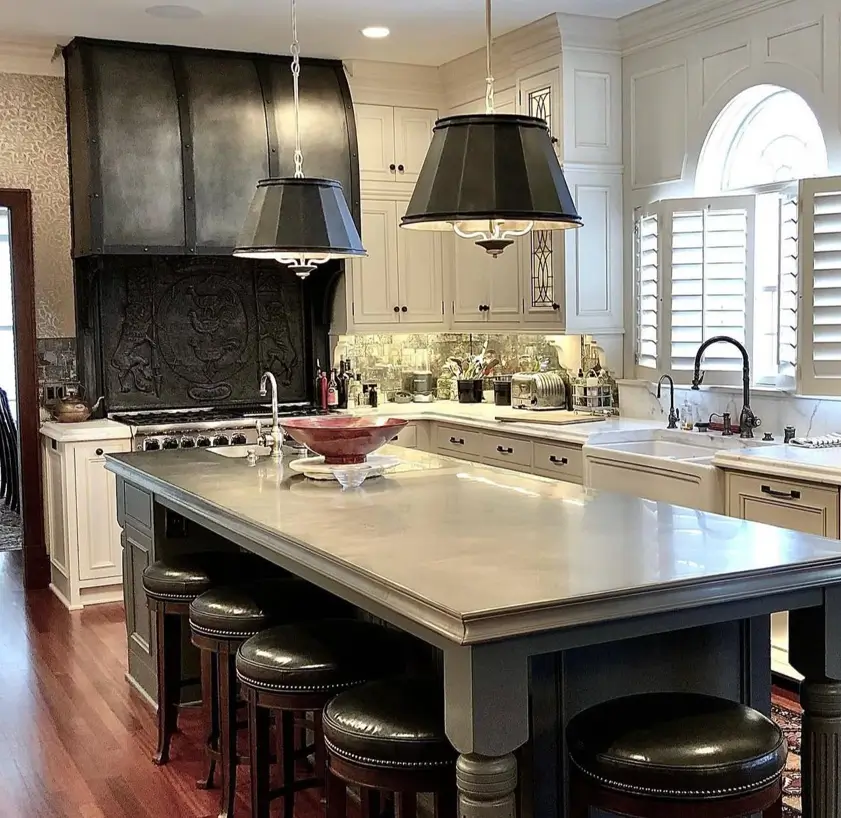
On this range wall, a hand-worked metal hood becomes the anchor the whole kitchen leans on. The embossed black panel behind the stove, paired with cream raised-panel cabinets and oil-rubbed bronze pulls, gives the room real period weight. It’s the kind of piece I’ll build a whole kitchen around.
2. Carved Wood Island
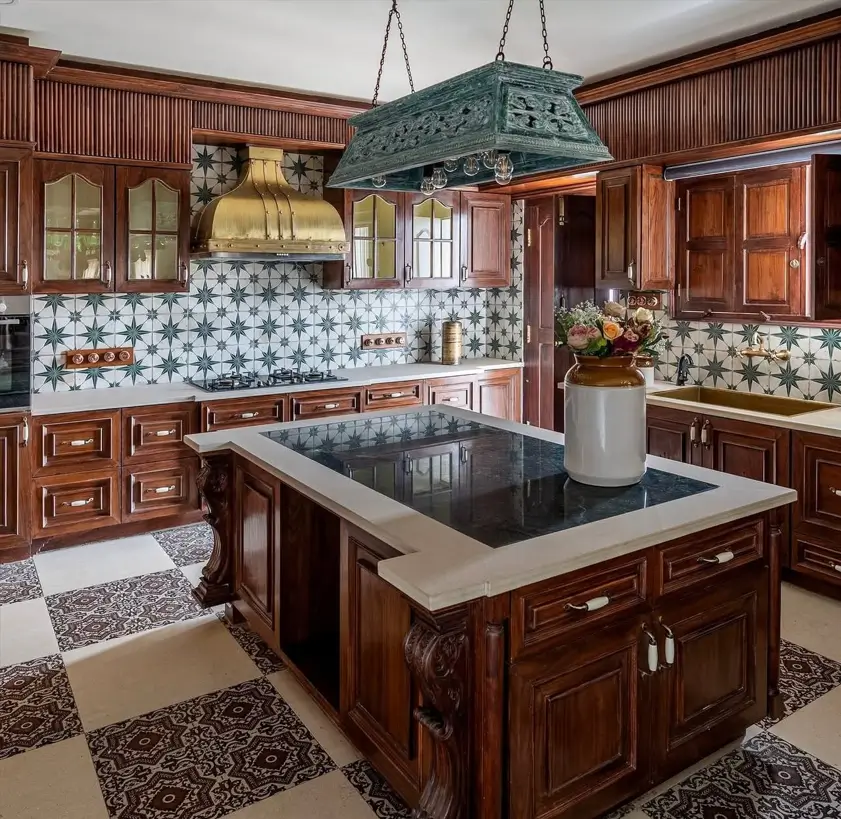
Rather than a plain block, this island leans into deep carved wood with scrolled corbels at each corner. Set against star-patterned cement tile and a verdigris pendant, the dark mahogany tones feel rich without going heavy. This look feels warm and unmistakably Spanish Colonial.
3. Arched Plank Door
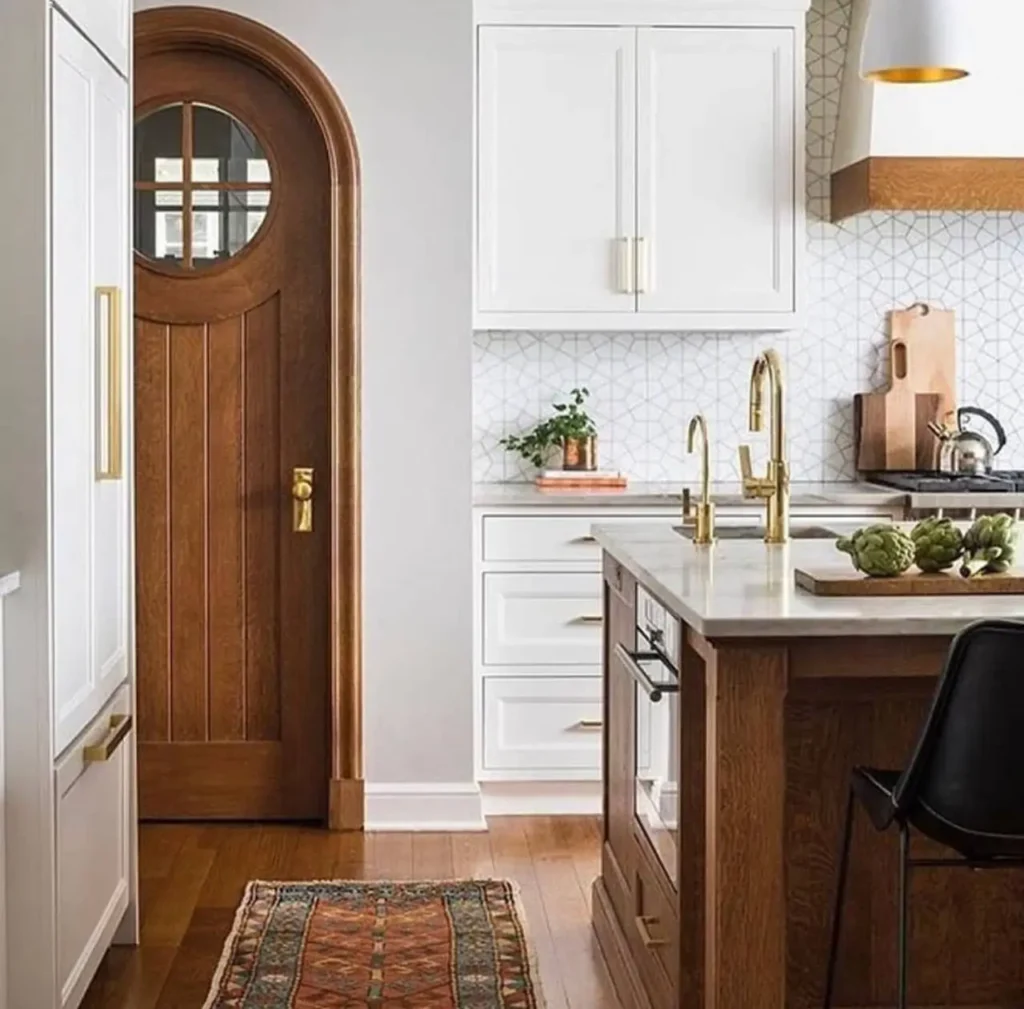
Paired with crisp white cabinets, an arched wood door with a round paned window pulls the whole room back toward its colonial roots. The warm oak tone and beadboard panels feel handmade, a quiet nod to history beside the brass faucets and marble island. Worth borrowing.
4. Sage Beadboard Walls
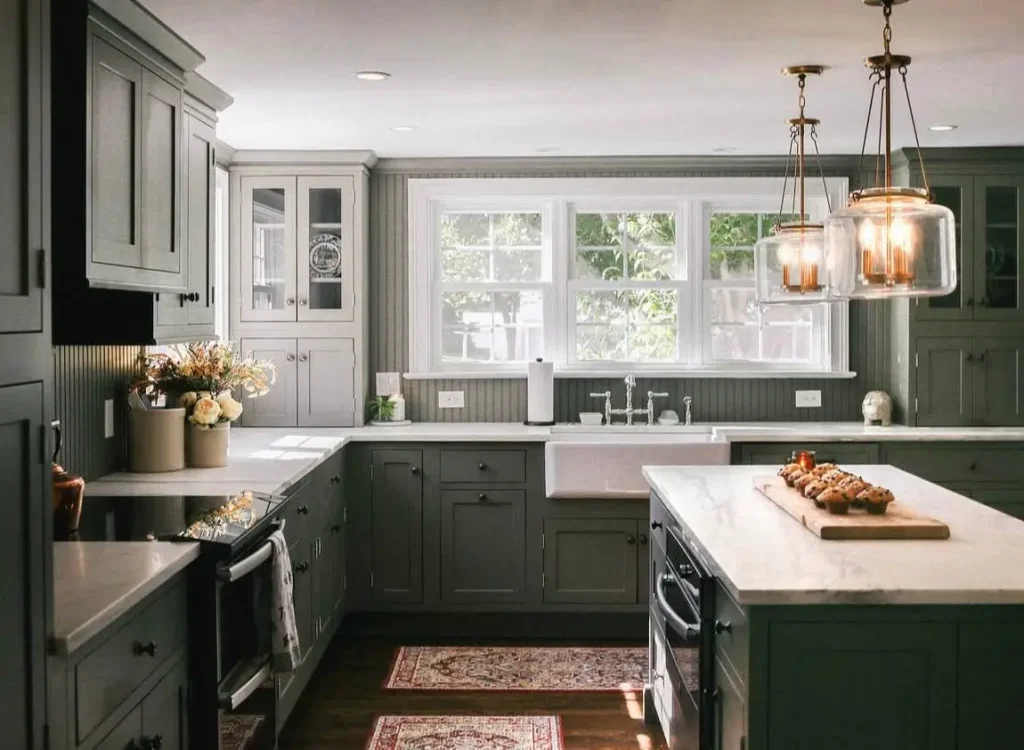
Instead of plain drywall, beadboard runs behind the counters and ties the whole sage palette together. The muted green Shaker cabinets, paired with a farmhouse sink and marble tops, give the room a soft, grounded calm. It’s a smart choice for a colonial kitchen that feels easy and current.
5. Blue-and-White China
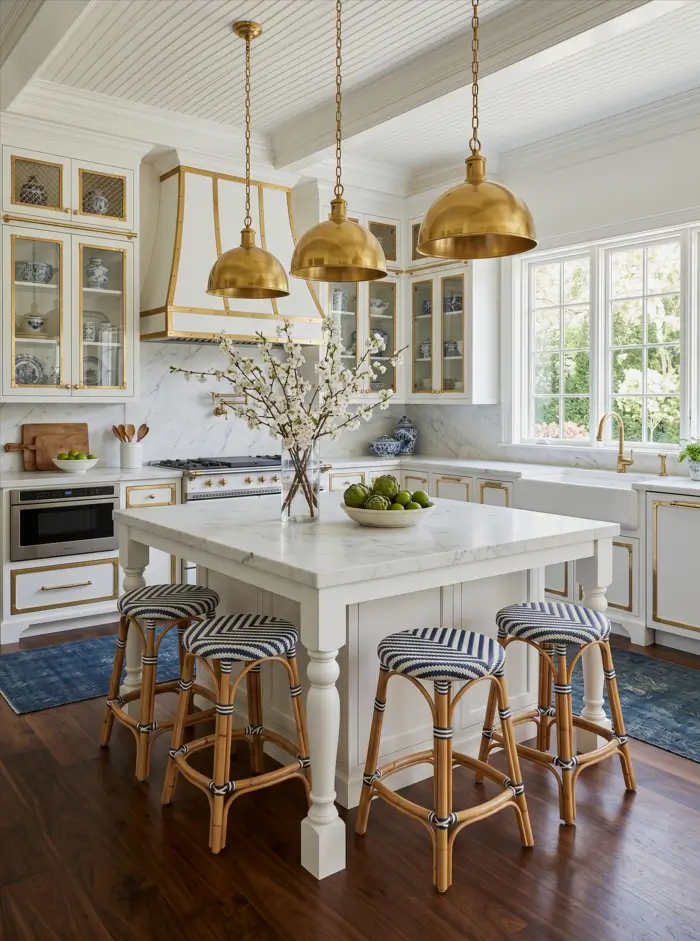
Here, glass-front cabinets stacked with blue-and-white china set the whole tone, a classic British Colonial touch. Against creamy cabinetry, a brass-banded hood, and marble counters, the collected porcelain feels gathered over time rather than bought in a set. The result is gracious and quietly grand.
6. Exposed Ceiling Beams
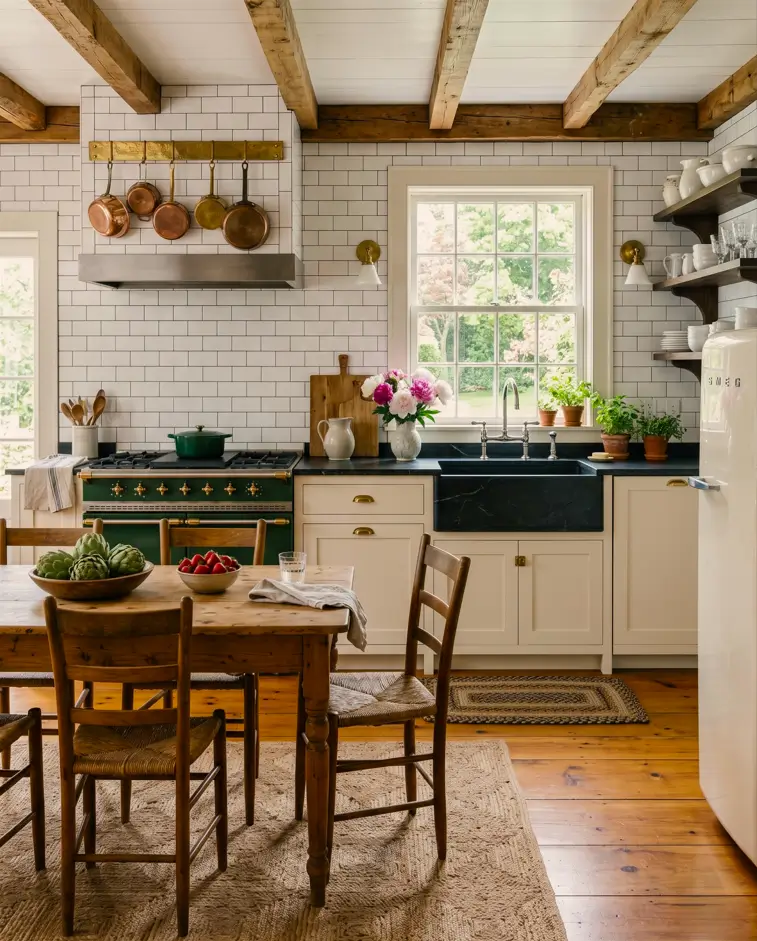
On the ceiling, hand-hewn beams carry more period character than any single finish in the room. Above cream Shaker cabinets, a soapstone farmhouse sink, and a brass pot rail hung with copper, the rough timber feels original to the house. Easy to live with, and full of history.
7. Two-Tone Cabinets
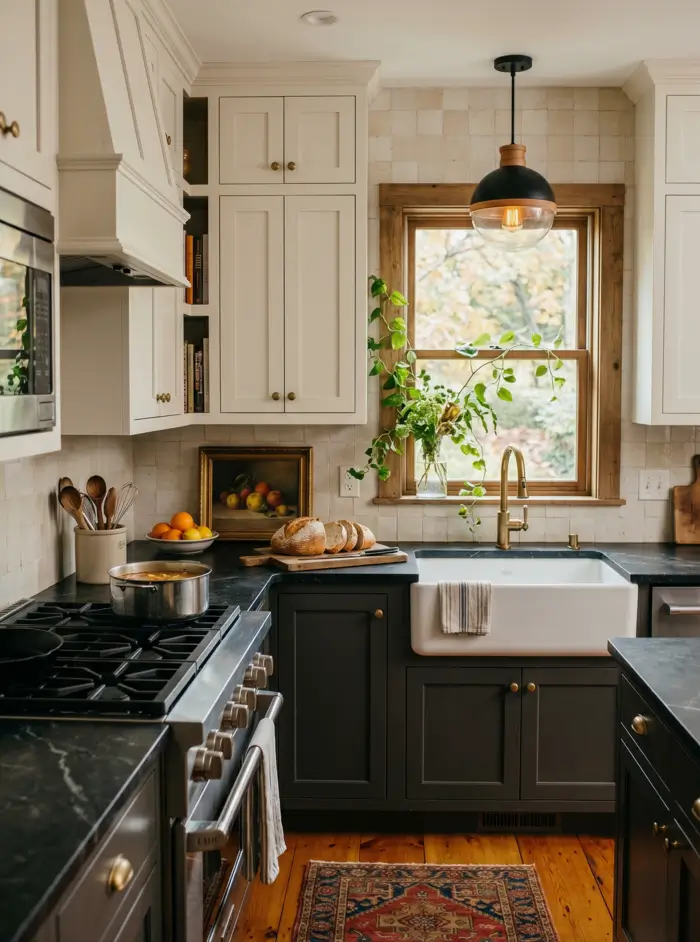
Rather than one color throughout, this kitchen pairs cream Shaker uppers with deep charcoal lowers. The split keeps the small footprint from feeling heavy, while a built-in wood hood, brass knobs, and an apron sink hold the colonial line. A clever move when space is tight.
8. Brass-Banded Hood
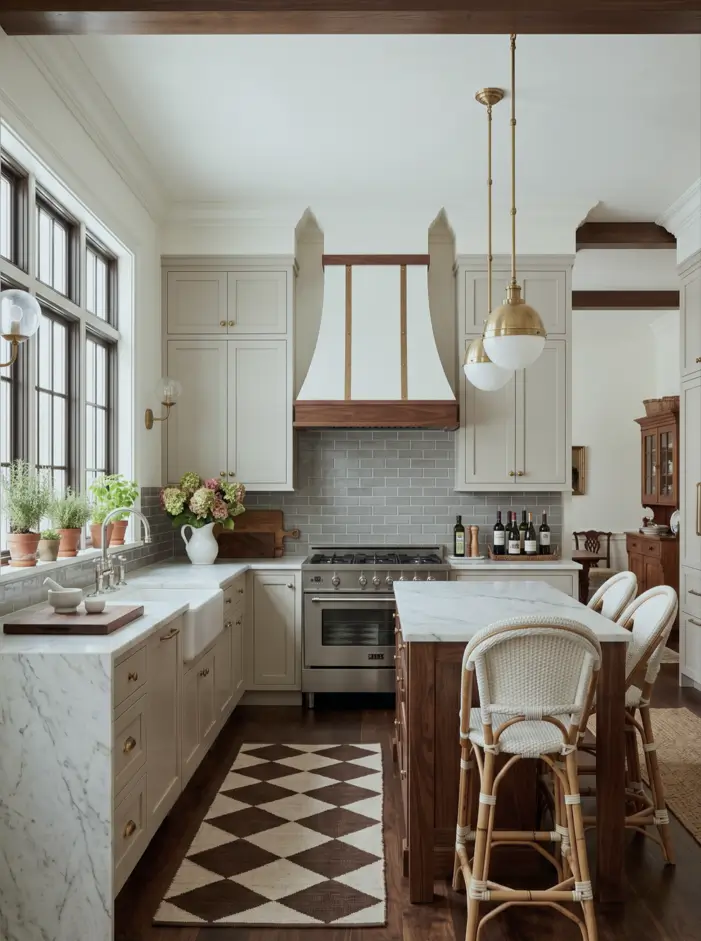
Centered over the range, a tall plaster hood wrapped in brass straps and walnut trim becomes the room’s quiet showpiece. Set against cream cabinets, marble counters, and exposed beams, it bridges old and new with ease. It reads polished without losing its colonial warmth.
A painted island or cabinet is one of the easiest ways to bring color into a colonial kitchen, and the next several rooms show how well deep blues and warm greens wear.
9. Deep Navy Cabinets
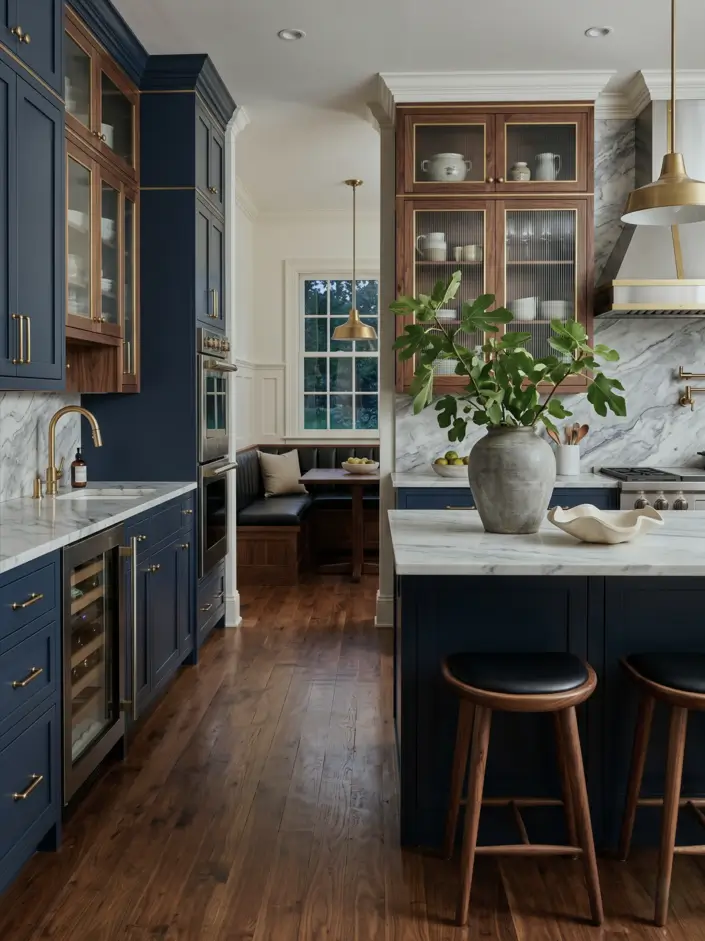
In this home, deep navy cabinets give the colonial palette a richer, more current footing. Crowned with walnut glass-front uppers, marble counters, and brass fixtures, the dark blue reads classic rather than trendy. Navy pairs especially well with warm wood and aged brass.
10. Symmetrical Range Wall
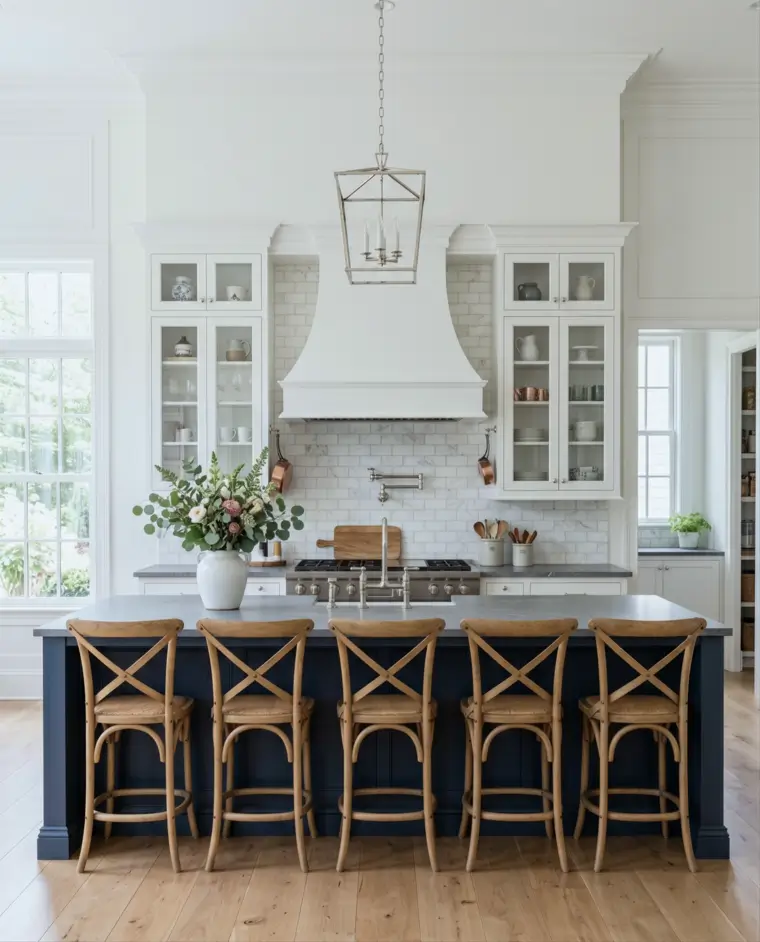
Centered and mirrored, this range wall shows off the balance colonial kitchens are known for. A tall plaster hood sits between matching glass-front cabinets, with a marble backsplash and lantern pendant holding the center line. Symmetry like this makes a large kitchen feel calm and orderly.
11. Butcher Block Island
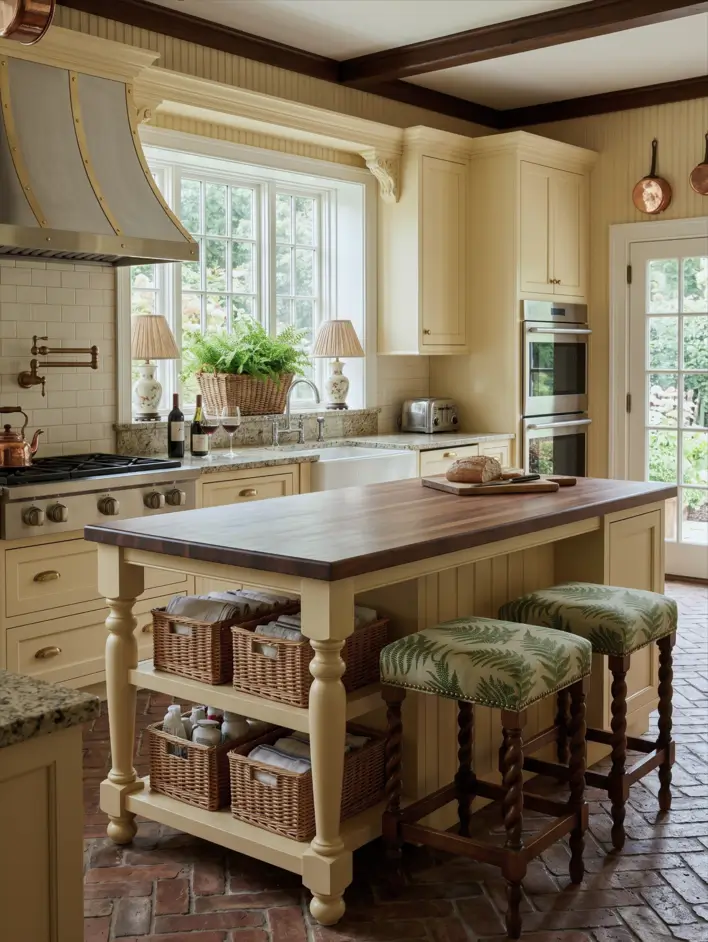
Topped with thick walnut butcher block, this turned-leg island brings the warmth colonial kitchens are loved for. Below the cream cabinets and dark ceiling beams, the open shelves stacked with baskets keep everything within reach. Butcher block like this only looks better with years of use.
12. Open Shelf Island
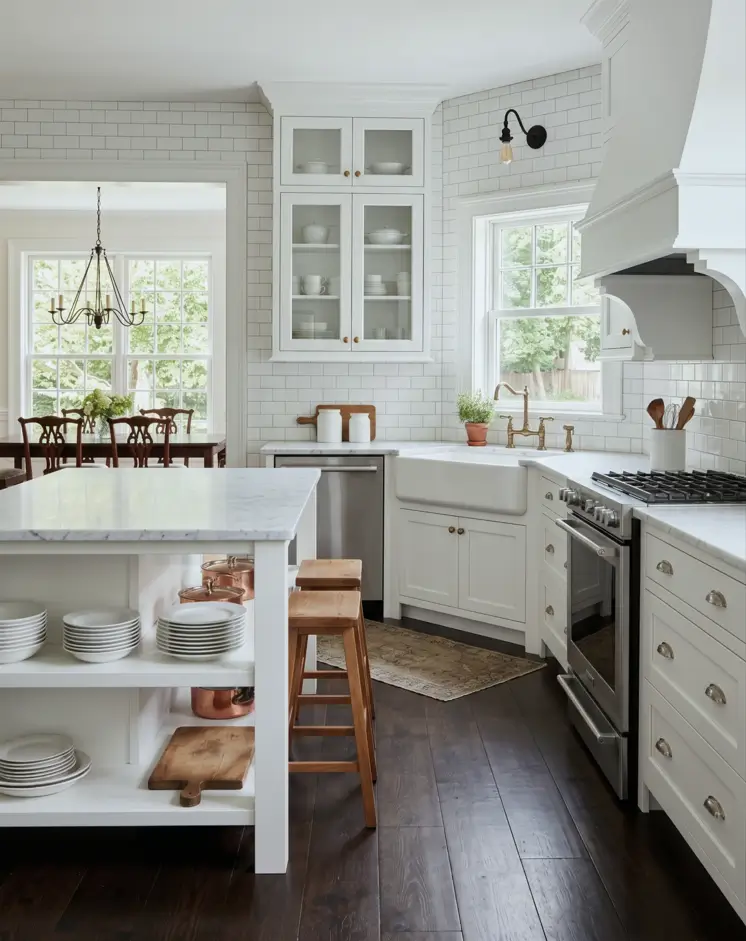
Built with open shelves on its working side, this island keeps everyday white china and copper pots in easy reach. Set against cream cabinets, subway tile, and a tall plaster hood, the stacked dishware feels collected and lived-in. It’s one of my favorite ways to make an island earn its keep.
13. Antique Plate Rack
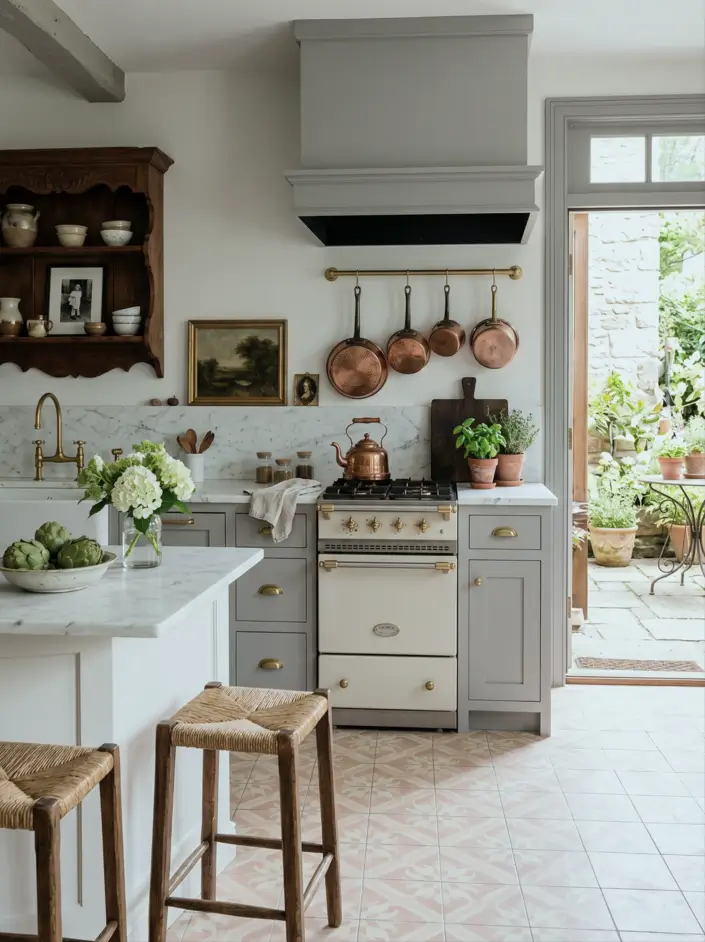
Mounted on the wall, a carved wood plate rack holds pottery and framed art the way a colonial dresser once did. Above grey Shaker cabinets and marble counters, the dark antique wood adds age and warmth to the room. The effect is gathered over generations.
14. Soapstone Counters
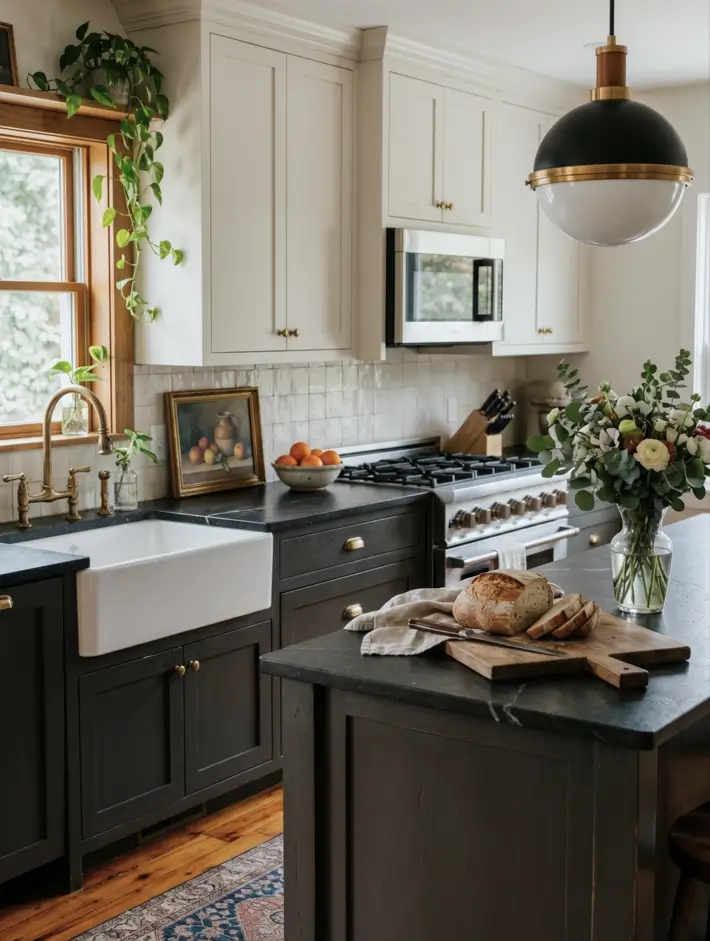
Dark soapstone counters give this kitchen the honest, hard-working surface colonial homes always favored. Against cream uppers, charcoal lower cabinets, and a white apron sink, the matte black stone feels quietly old-world. Soapstone wears in beautifully and only deepens with time.
15. Terracotta Tile Floor
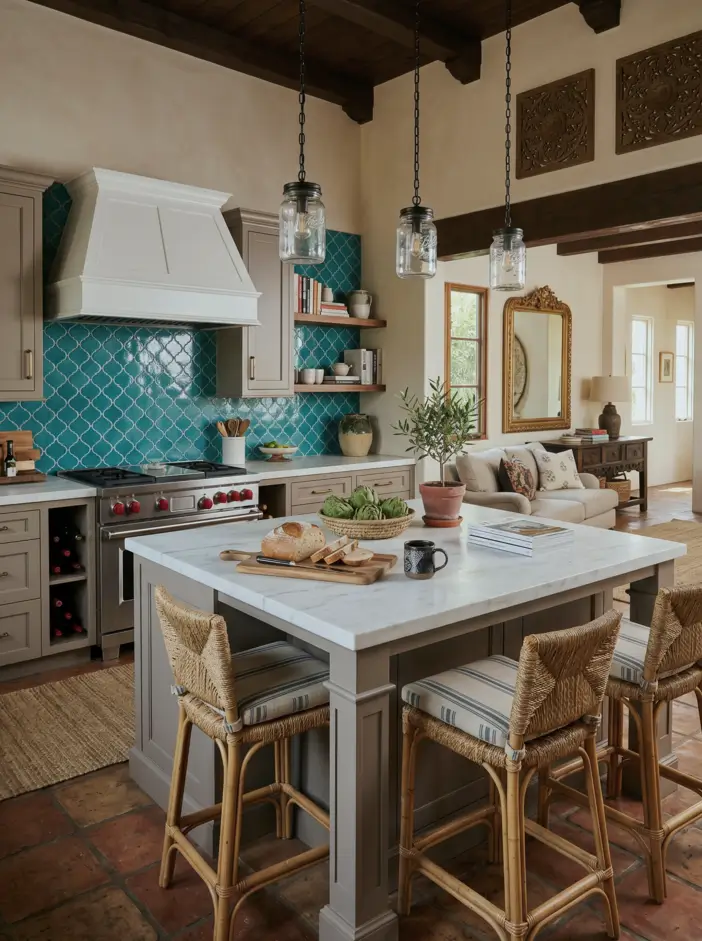
Underfoot, warm terracotta saltillo tile sets the tone for this Spanish Colonial kitchen. Paired with a turquoise arabesque backsplash, dark beamed ceilings, and a plaster hood, the clay floor brings sun-warmed color and age. Terracotta grows richer with daily wear.
16. Green Shaker Cabinets
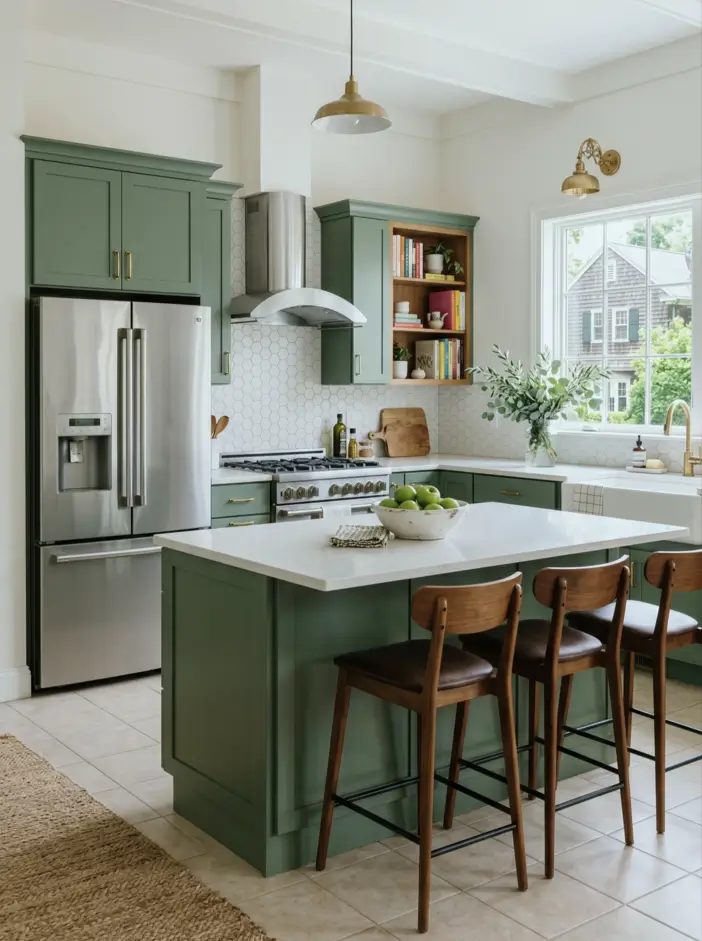
Painted a soft sage green, these Shaker cabinets give a modern colonial kitchen its quiet, garden-touched calm. Warm brass pulls, an apron sink, and an open wood bookshelf keep the look grounded in tradition. Green pairs especially well with brass and natural wood.
17. Glass-Front Uppers
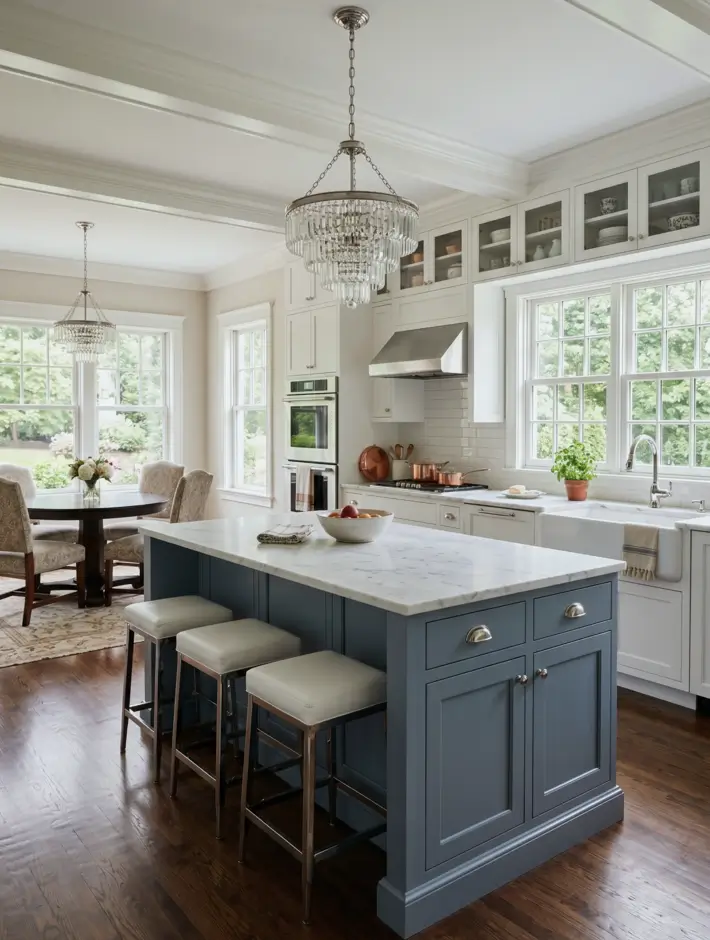
Lining the top of the wall, glass-front upper cabinets show off stacked china and quiet collections the way colonial homes always did. Above cream cabinets, marble counters, and a slate-blue island, the glass keeps a tall room feeling open. Worth borrowing for display and light alike.
18. Dark Wood Cabinetry
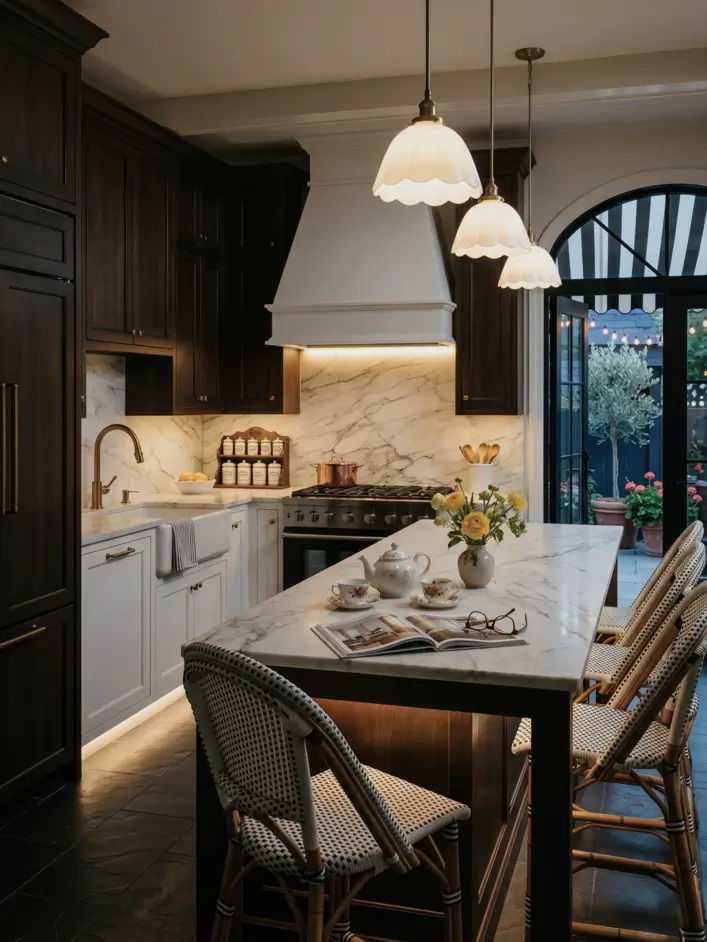
Stained a deep walnut brown, this cabinetry brings the formal, grounded feel older colonial kitchens were built on. Set against a marble slab backsplash, a plaster hood, and aged brass fixtures, the dark wood reads rich rather than heavy. Dark cabinets like these feel timeless after dark.
19. Coffered Ceiling
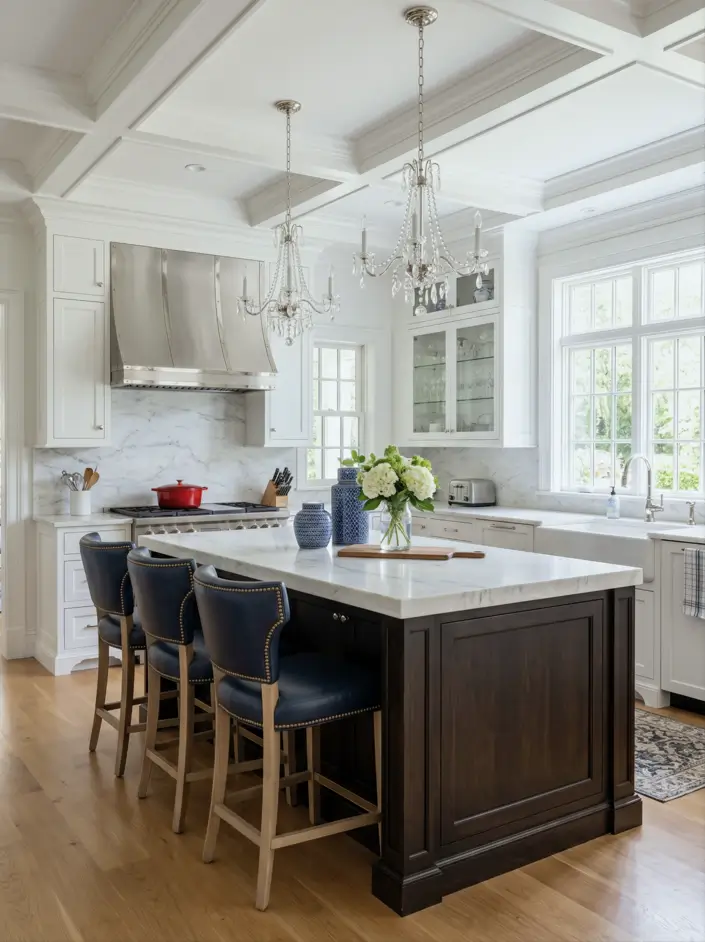
Overhead, a coffered ceiling frames the room in deep molding and gives this colonial kitchen its formal, architectural backbone. Below it, white cabinets, a marble backsplash, and a dark walnut island keep the balance classic. A coffered ceiling makes a grand room feel finished and calm.
20. Navy Island Anchor
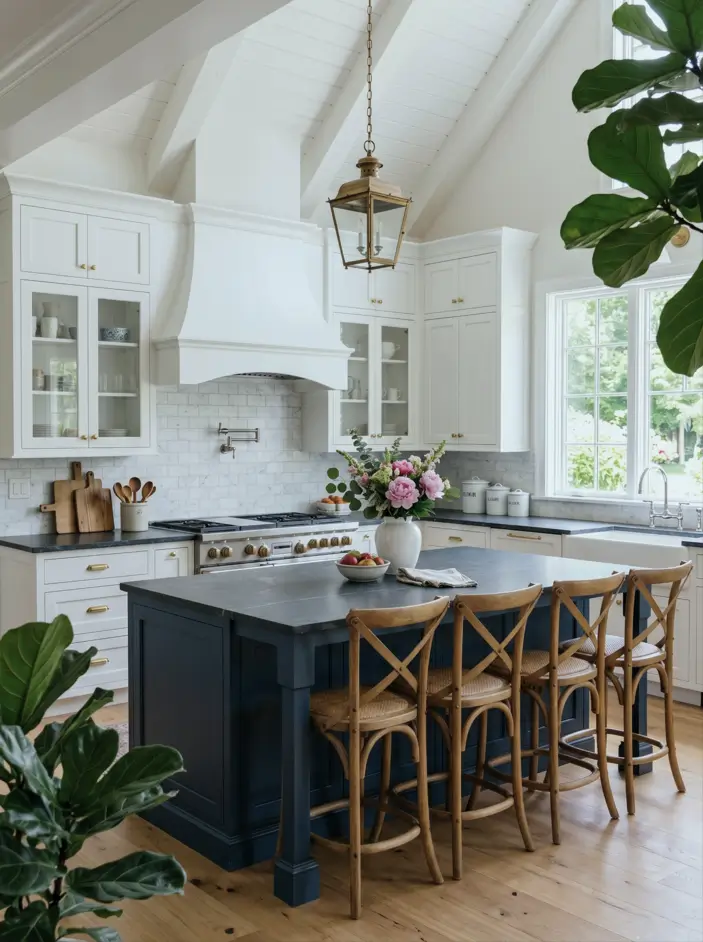
Set at the center, a deep navy island anchors this bright colonial kitchen against its cream cabinets and pale marble. Topped with honed soapstone and lined with X-back stools, it gives the open room a clear gathering spot. Navy and cream is a pairing that never tires.
The smallest details often do the most work. These last few rooms show how hardware, sinks, and display pieces finish the look.
21. Brass Bridge Faucet
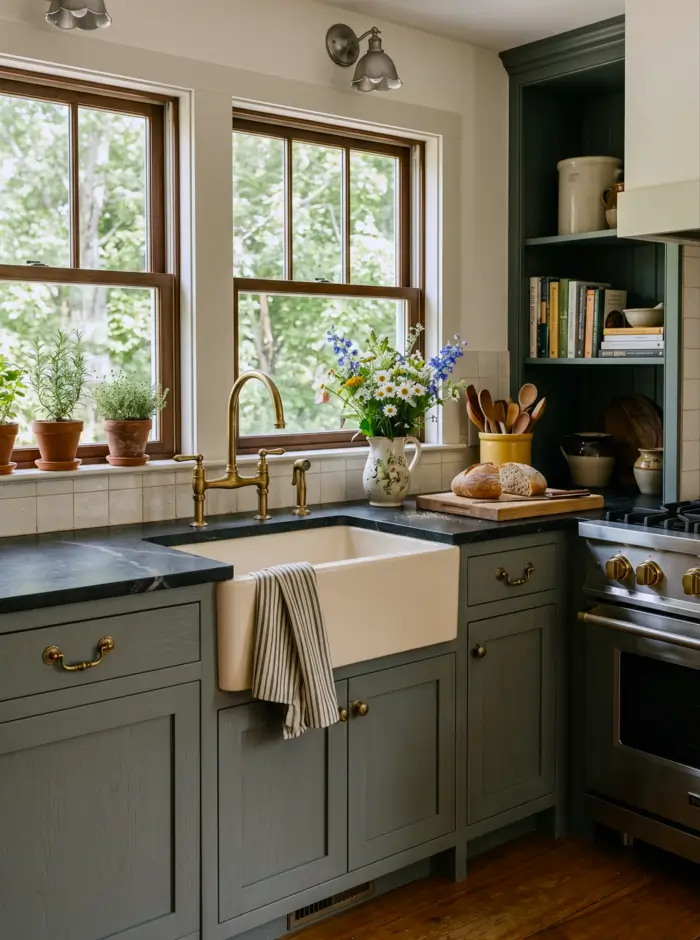
Above the apron sink, an unlacquered brass bridge faucet brings the kind of old-world detail colonial kitchens wear so well. Against green-grey Shaker cabinets and dark soapstone, the warm metal ages naturally over time. Unlacquered brass softens and improves with every wash.
22. Copper Farmhouse Sink
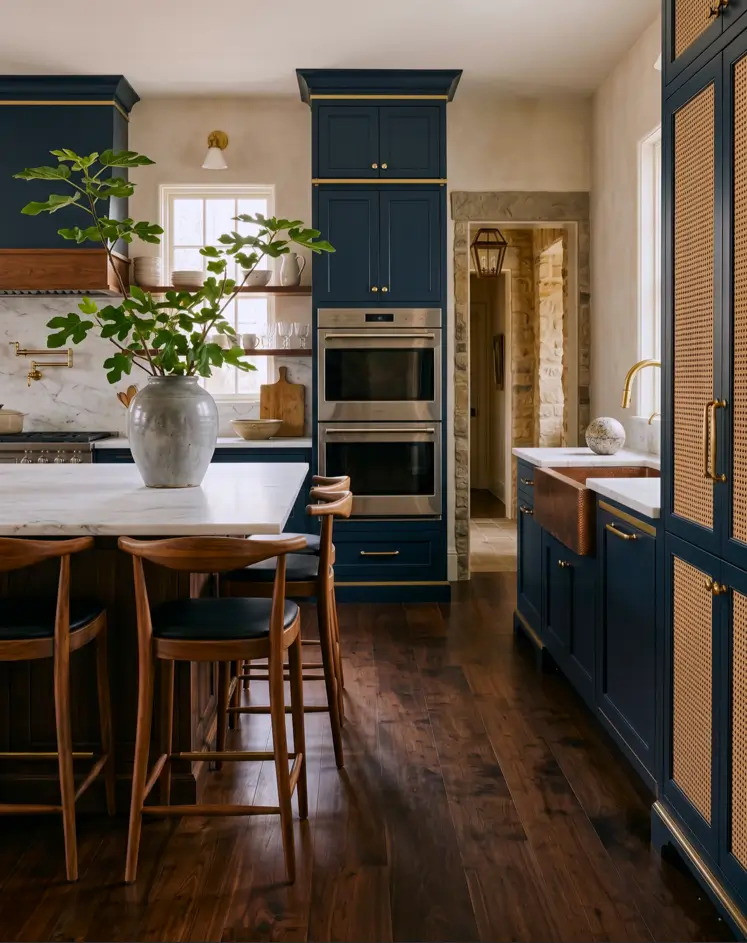
Set into the navy run, a hammered copper apron sink brings warmth and a touch of old-world craft to the room. Against marble counters, brass fixtures, and walnut shelves, the aged copper feels both rustic and refined. Copper like this develops a living patina you can’t fake.
23. Floral Wallpaper Accent
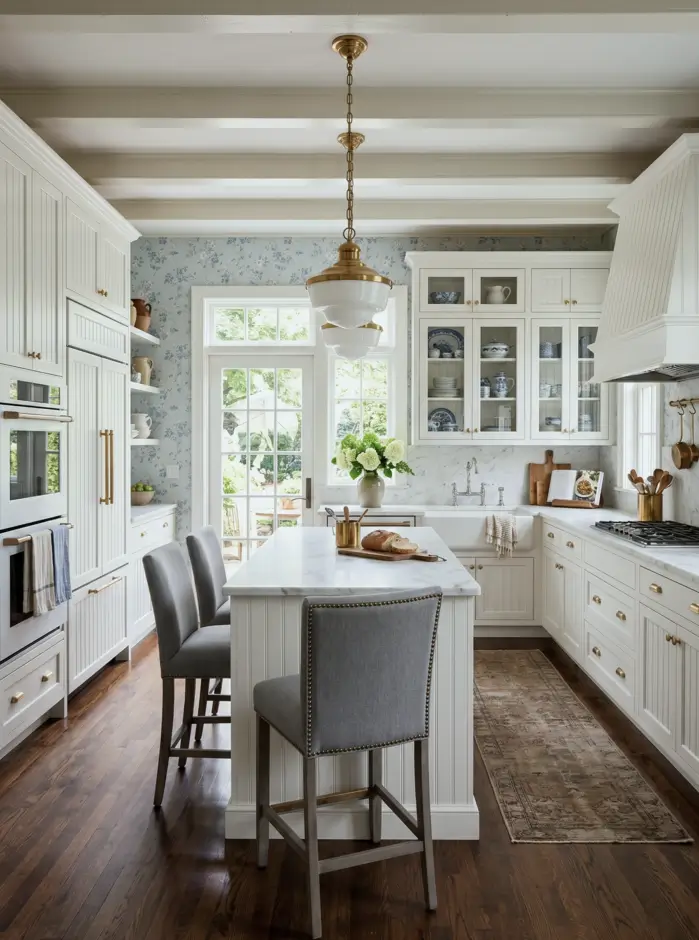
On one wall, soft blue floral wallpaper brings the pattern and old-world charm colonial kitchens have always welcomed. Paired with cream beadboard cabinets, blue-and-white china, and marble counters, the print warms the room without crowding it. A little pattern gives a kitchen real personality.
24. Open Display Shelving
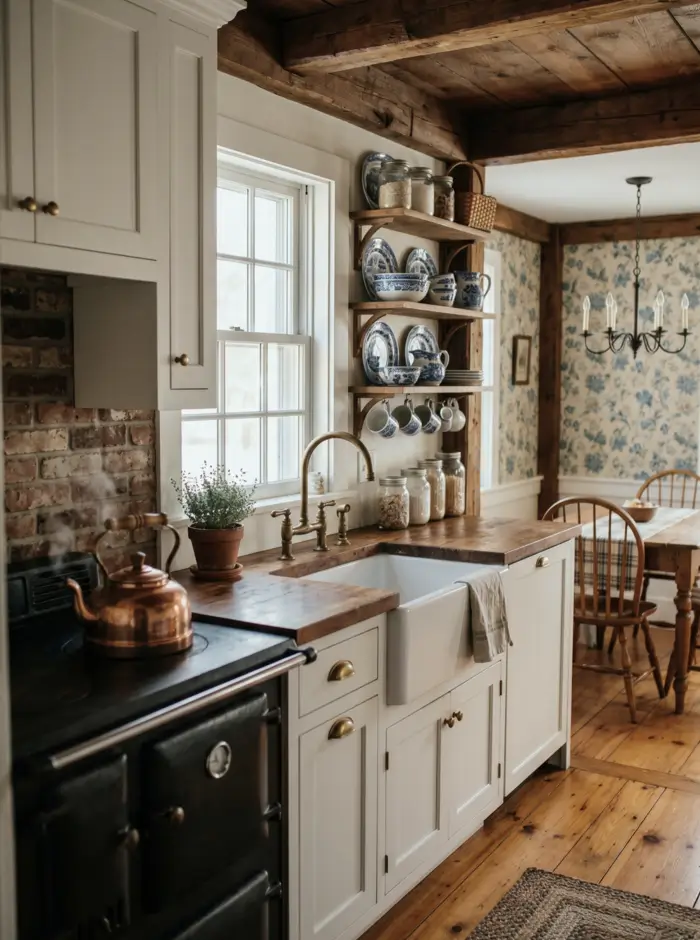
Mounted by the window, open wood shelves hold blue-and-white china and mason jars the way a colonial larder once did. Above butcher block counters and a fireclay sink, the everyday pieces stay close and on show. Open shelving like this keeps a working kitchen feeling honest and warm.
25. Brass Riveted Hood
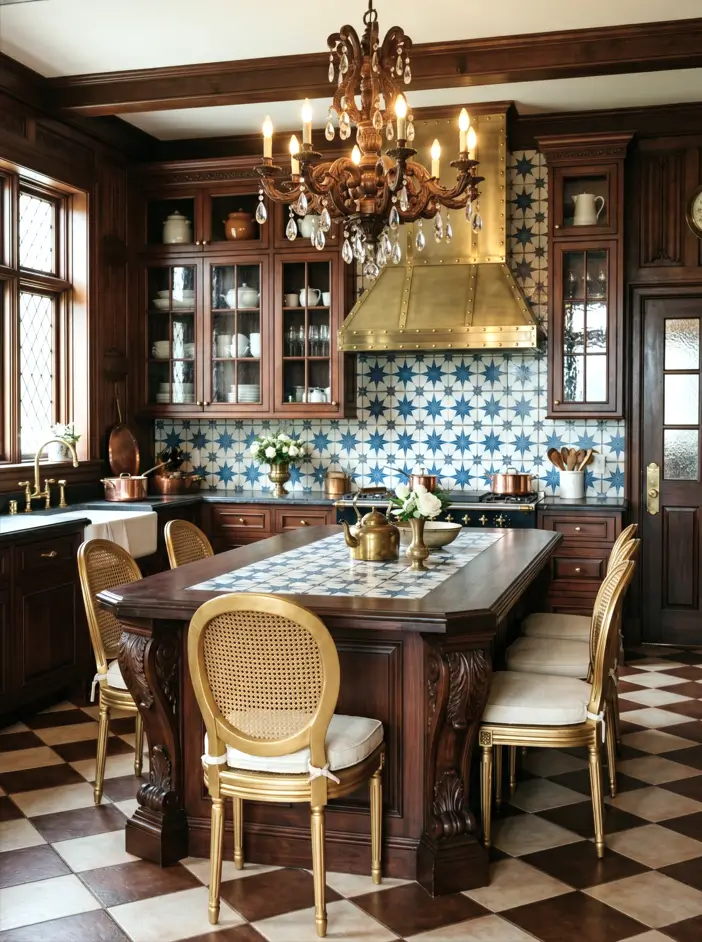
Rising over the range, a riveted brass hood gives this formal colonial kitchen its glowing centerpiece. Framed by star-patterned blue tile, mahogany cabinets, and a coffered wood ceiling, the warm metal carries real old-world grandeur. A statement hood like this sets the tone for the whole room.
26. Built-In Plate Rack
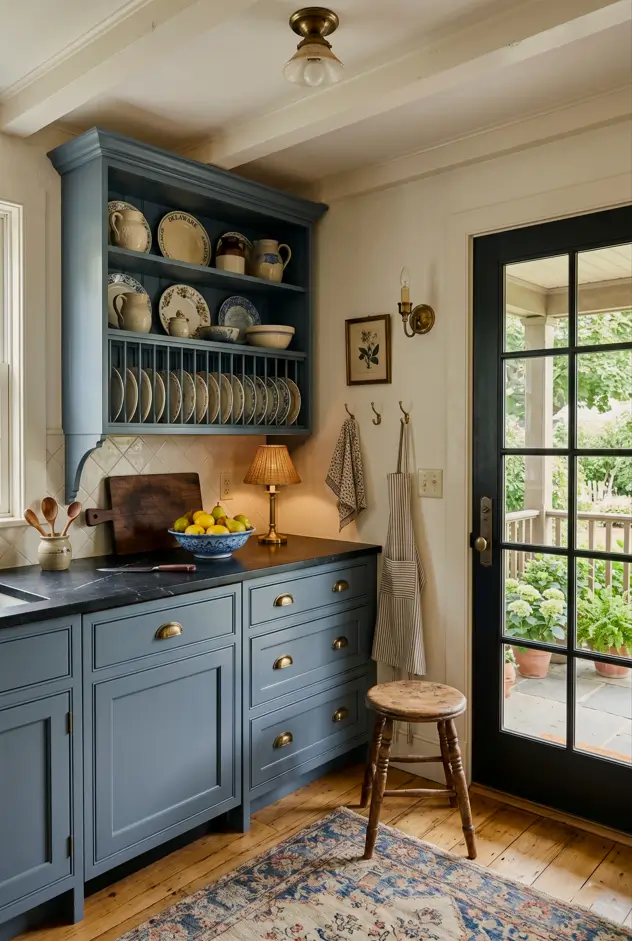
Set into the cabinetry, a fluted plate rack stacked with transferware turns everyday dishes into the room’s quiet display. Above slate-blue cabinets and soapstone counters, the built-in dresser holds crocks and pitchers the colonial way. A plate rack like this is as useful as it is charming.
The Colonial Sub-Styles: American, British, Dutch, and Spanish
Colonial style isn’t one single look — it splits into four main branches: American, British, Dutch, and Spanish Colonial. Each one was shaped by the settlers who brought it, and knowing the difference makes it much easier to pin down the kitchen you actually want.
American Colonial is the most familiar: cream or wood cabinets, raised-panel doors, brass hardware, muted colors, and a balanced, symmetrical layout. It’s the classic New England farmhouse-meets-formal look, grounded in wood and stone.
British Colonial leans more polished and gracious, with darker woods, glass-front cabinets full of blue-and-white china, rattan and caned details, and a touch of imported, well-traveled elegance. It feels collected and a little grand.
Dutch Colonial is the cozy, practical cousin, born in the gambrel-roofed homes of early Dutch settlers. You’ll often see exposed wood beams, open shelving stacked with dishes, and an earthy palette of muted green, soft grey, and warm white, lifted with the odd accent of Dutch-pottery blue. It carries the same honest materials with a softer, homier edge.
Spanish Colonial brings the most color and texture: dark beamed ceilings, terracotta or saltillo tile floors, patterned cement or arabesque tile, plaster hoods, and carved wood. It’s sun-warmed and rustic where the others are cool and trim.
Most kitchens I work on borrow from one branch and lean on a detail or two from another, and that’s perfectly normal. Pinning down which branch you’re drawn to first makes every choice after it easier.
Colonial Style Kitchen Cabinets
Colonial style kitchen cabinets are usually raised-panel or Shaker-style, made of solid wood, and finished in muted paint or a natural wood tone. The raised-panel door is the one most people picture: a framed center panel that catches a little shadow and reads as traditional at a glance.
It’s common to find glass-front uppers stacked with everyday china, and many kitchens pair painted lower cabinets with a wood or glass upper run to keep a tall room from feeling heavy.
Hardware is almost always brass, pewter, or oil-rubbed bronze, in cup pulls and simple knobs. When a client wants the look on a budget, the swap I reach for first is the hardware — the brass dulls and softens with handling over the years, and honestly that’s when it looks best.
Modern Colonial Kitchen Ideas
A modern colonial kitchen keeps the period bones — raised-panel cabinets, brass, natural materials — and pairs them with open layouts, cleaner lines, and updated appliances. The goal is the warmth of the old style without the dark, closed-in feel — the same balance behind other old-world kitchen looks brought up to date.
You’ll often see this done with painted cabinets in navy or sage, marble counters, a streamlined plaster or brass-banded hood, and the open, light-filled layout modern kitchens lean on. The traditional details stay; the heaviness goes.
This is the version most of my clients ask for now, because it suits how families actually cook and gather while still feeling like the room has a past.
Colonial Style Kitchen Design: Cabinets, Counters, and Colors
Good colonial style kitchen design comes down to natural materials, traditional millwork, and a muted, historic palette.
Counters are usually butcher block, soapstone, or marble, often with a stone slab standing in for the backsplash. Subway tile, marble, or patterned cement tile suit the style too — the patterned tile especially in Spanish Colonial rooms.
Floors are typically wide-plank hardwood, with brick or terracotta in older homes, and lighting stays traditional with lantern pendants, schoolhouse globes, and simple brass.
The colors stay natural — creams, soft whites, warm wood, and historic shades like sage green, slate blue, and deep navy, many of them the same kitchen color combinations that wear well in any style. They’re easy to live with because they don’t tire, and a navy island still looks right ten years on.
How to Get the Colonial Look
The easiest way to get the colonial look is to start with a few classic swaps rather than a full renovation. A handful of small changes can shift the whole feel of a room.
A good first move is the hardware. Trading shiny modern knobs for aged brass, pewter, or oil-rubbed bronze pulls changes a kitchen’s character in an afternoon.
From there, bring in a natural material or two — a butcher block counter, a stone slab behind the range, or a wood-topped island — and add a glass-front cabinet or open shelf for everyday china. A muted paint like cream, sage, or navy finishes the cabinets.
If the budget is tight, these are also the touches that give the most character for the least: paint, hardware, open shelving, and a single wood counter.
Is a Colonial Kitchen Right for You?
A colonial kitchen suits anyone who wants warmth, history, and a room that feels settled rather than trendy. It works beautifully in older homes, where the bones are often already there, and just as well in a new build that needs a little soul.
The style shines in open, family-centered kitchens, where the gathered, lived-in feel has room to breathe. It takes a bit more care if you love a bright, minimal look, since colonial leans warm and layered rather than sparse.
And the natural materials it favors, like wood counters and soapstone, ask for a little upkeep in exchange for the way they age. For most people who want a kitchen with real character, that’s a trade worth making.
Frequently Asked Questions
What’s the difference between a colonial kitchen and a farmhouse kitchen?
A colonial kitchen is more formal and symmetrical, with raised-panel cabinets and historic colors, while a farmhouse kitchen is more rustic and casual. The two overlap — both love apron sinks, wood, and open shelving — but colonial leans traditional and a little grand, where farmhouse leans relaxed and worn-in.
Are colonial style kitchens still popular?
Yes, colonial kitchens are still popular, especially in their modern form. The current take keeps the warm cabinets, brass, and natural materials but opens the layout and lightens the palette, which suits how people cook and gather today. The classic bones are part of why the look never really dates.
What flooring works best in a colonial kitchen?
Hardwood is the best flooring for a colonial kitchen, ideally wide-plank in a warm or dark tone. Brick and terracotta tile also suit the style, especially in Spanish Colonial and older farmhouse-leaning kitchens. All three age beautifully and only gain character with years of use.
Where to Begin
If you’re drawn to the colonial look, start small and let the room fill in. Pick one change that speaks to you — the brass hardware, a wood counter, a shelf of blue-and-white china — and build from there. These kitchens were never decorated all at once, and yours doesn’t have to be either. The slow, gathered approach is exactly what gives a colonial kitchen its warmth.
About the Author: Naraphon Kanyawee