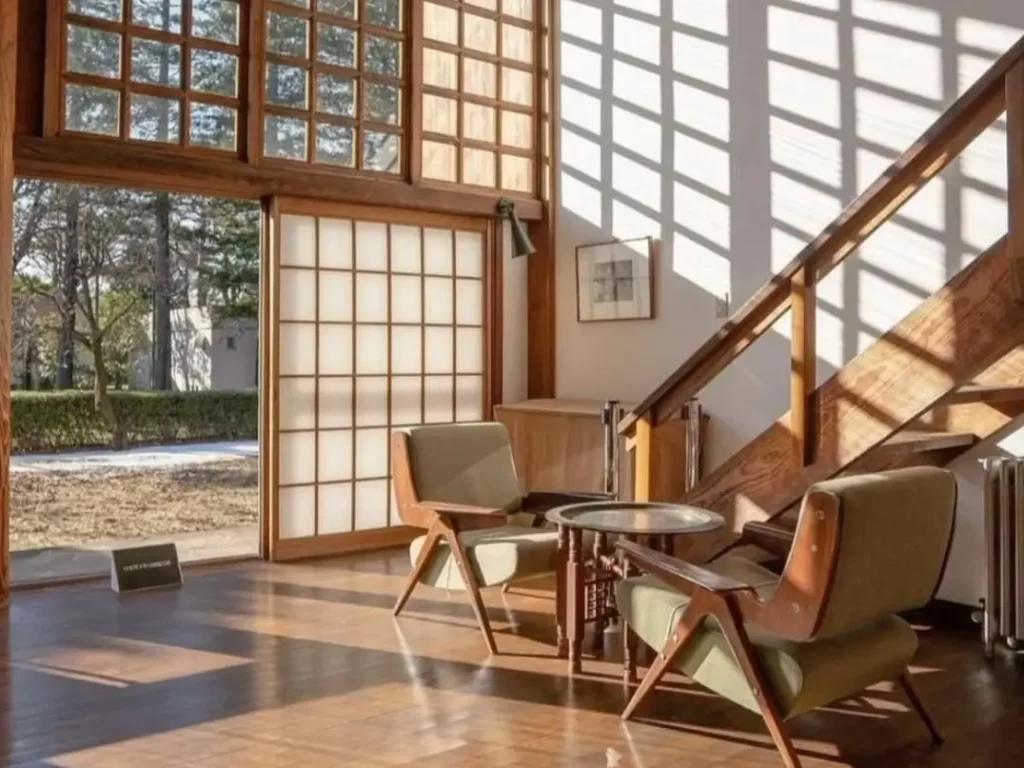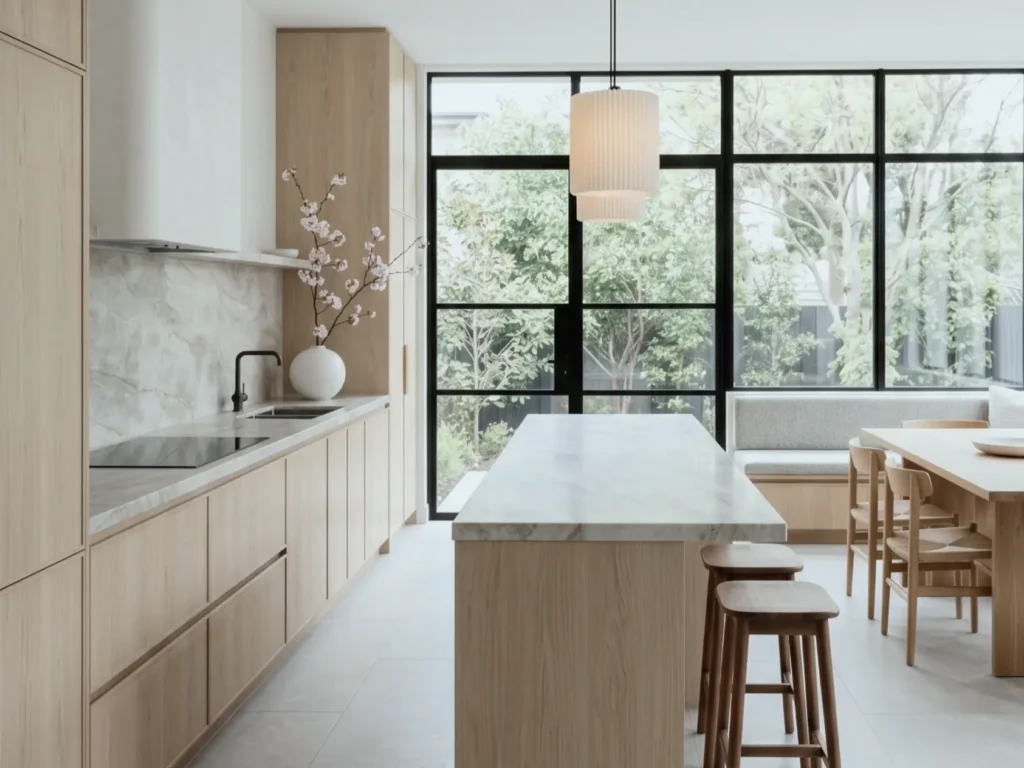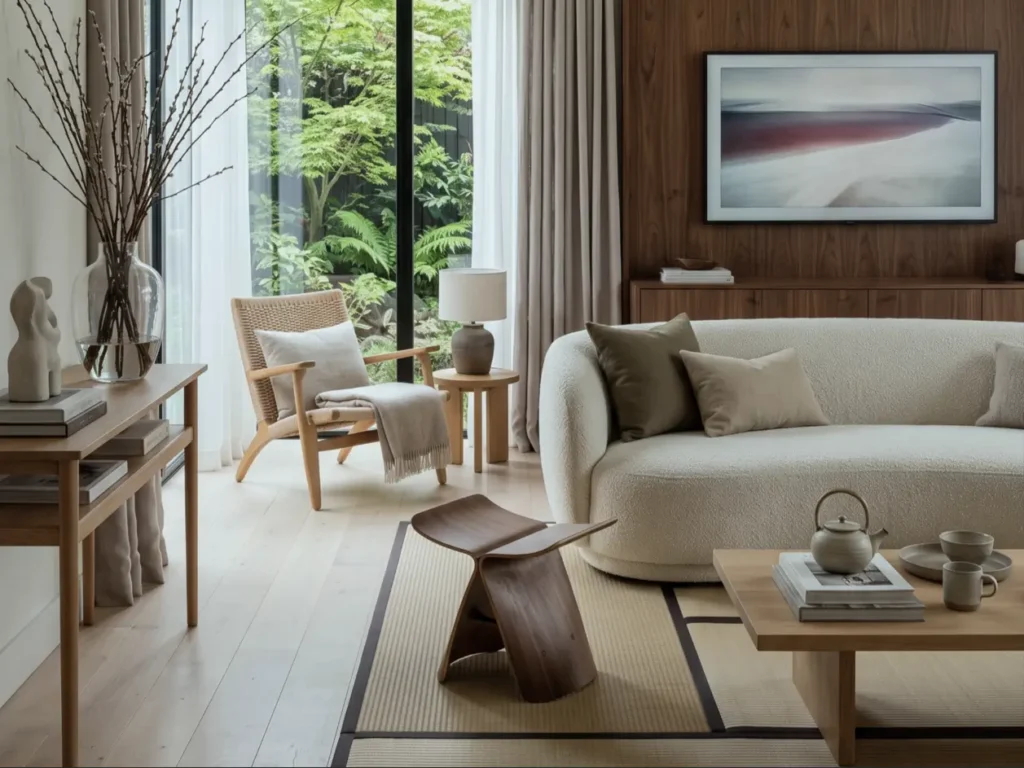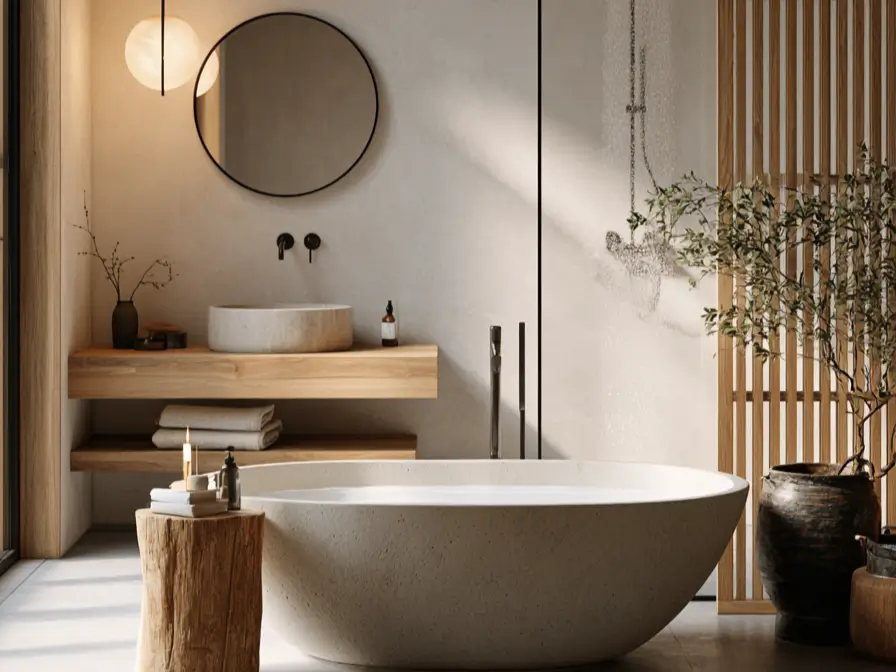

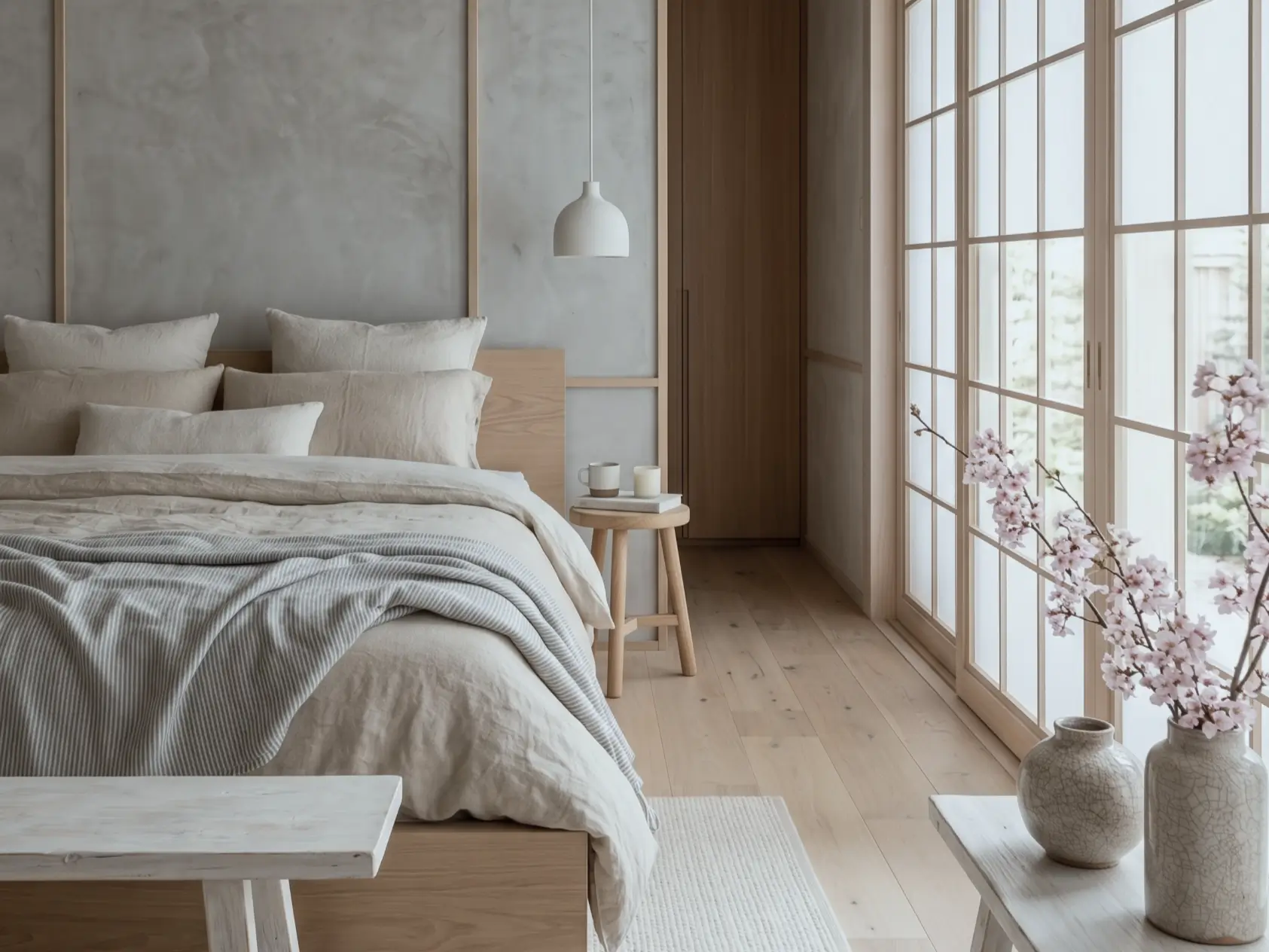
A Japandi style bedroom is what happens when Japanese minimalism and Scandinavian warmth meet in one room and agree to share — the quiet of one, the comfort of the other. I’ve designed a fair number of these spaces, and what people notice first is never a single object. It’s the calm. The room settles you before you’ve sat down.
What makes it work is restraint, but the warm kind. You’ll often see a low oak bed, a few natural materials left to speak for themselves, and an earthy palette drawn from wabi-sabi and Danish hygge. Nothing tries to impress you. It just lets you breathe.
Japandi Bedroom: Key Takeaways
- Japandi blends Japanese minimalism with Scandinavian warmth — calm, but never cold.
- Build it on a low wooden bed, an earthy neutral palette, and natural materials like oak, linen, and rattan.
- The most common mistake is stripping the room too bare; warmth and a little imperfection are the whole point
What Is a Japandi Style Bedroom?
A Japandi style bedroom blends Japanese minimalism with Scandinavian warmth, so the room feels pared-back and genuinely cosy at the same time.
It borrows the quiet and restraint of one and the soft, lived-in comfort of the other — the same balance that defines Japandi style homes throughout the house, not just the bedroom. You’ll often see a low wooden bed, a neutral palette, and just a few natural pieces given room to breathe.
The thing I notice most when I walk into one of these rooms is the quiet. Nothing is shouting for attention, so your shoulders drop almost before you’ve registered why. Good Japandi bedroom design is really just that feeling, made on purpose.
The Wabi-Sabi and Hygge Roots Behind the Style
The two ideas underneath Japanese-Scandinavian design are old ones. There’s wabi-sabi, the Japanese love of imperfection and things a little worn, and there’s hygge, the Danish sense of being warm and at ease at home. Put them together and the room stops trying to impress you.
That’s why a Japandi bedroom never feels staged. A slightly rumpled linen throw, a ceramic with an uneven glaze, a branch that isn’t quite symmetrical — these are the details that give the style its soul.
The Scandinavian side keeps everything light and functional; the Japanese side — drawn from the same roots as a traditional Japanese bedroom — adds the calm, the restraint, and the quiet respect for craft.
33 Japandi Bedroom Ideas, Grouped by Mood
The best Japandi bedroom ideas work when you stop collecting and start editing. Good Japandi bedroom design isn’t about filling a room — it’s about choosing a few things you love and letting them breathe. To make these easy to browse, I’ve grouped all 33 rooms by mood — from light and airy to dark and refined — so you can head straight for the feeling you’re after.
Light and Airy Japandi Bedrooms
Light Japandi bedrooms lean on pale oak, white linen, and soft daylight to feel open and calm. They’re the easiest version of the style to live with, and a good place to start if you’re nervous about going too dark or too bare.
1. Quiet Oak Calm
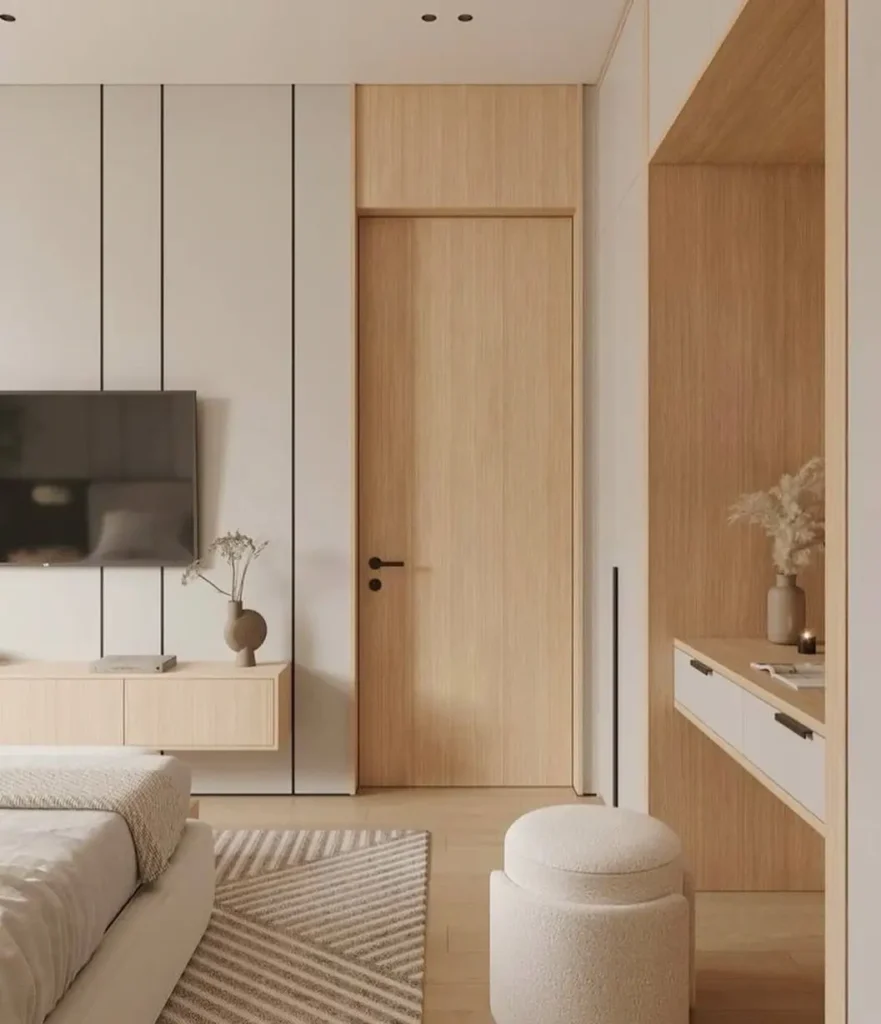
Wood does most of the talking here, and it keeps the room warm without a single bold colour. Light oak runs across the door, the floating console, and the wardrobe, tied together by a soft striped rug and a boucle stool. I love how the dried stems and pale ceramics add life without clutter — it feels lived-in, never staged.
2. Soft Shoji Light
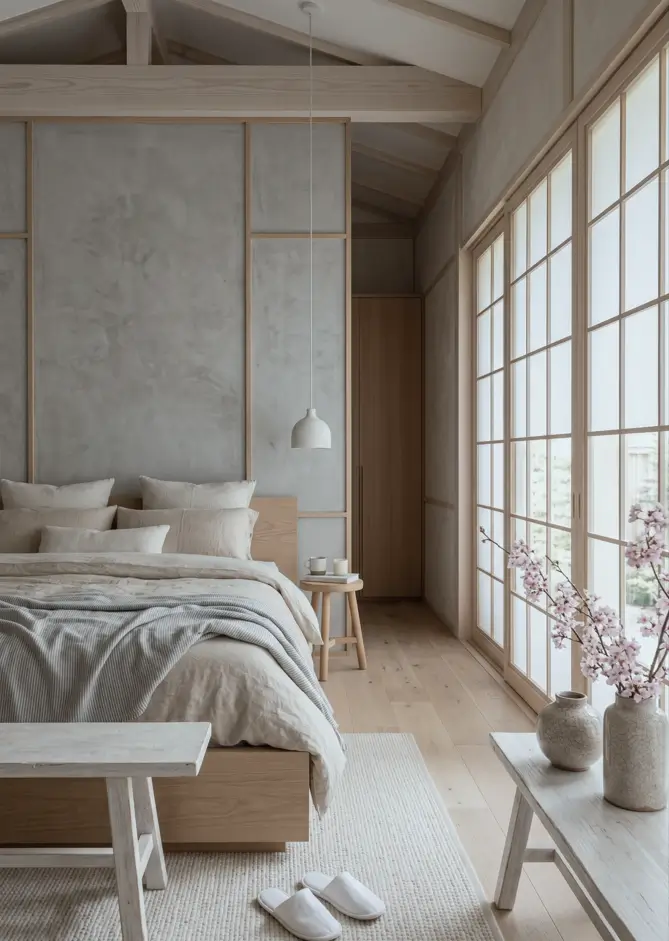
Paired with timber beams overhead, the shoji-style screens flood this room with the gentlest daylight. A low oak bed, layered linen bedding, and a rough wood bench keep everything calm and tactile, while crackle-glaze vases and cherry blossom branches add a quiet seasonal note. Worth borrowing for any room craving more natural light.
3. Bright and Breezy
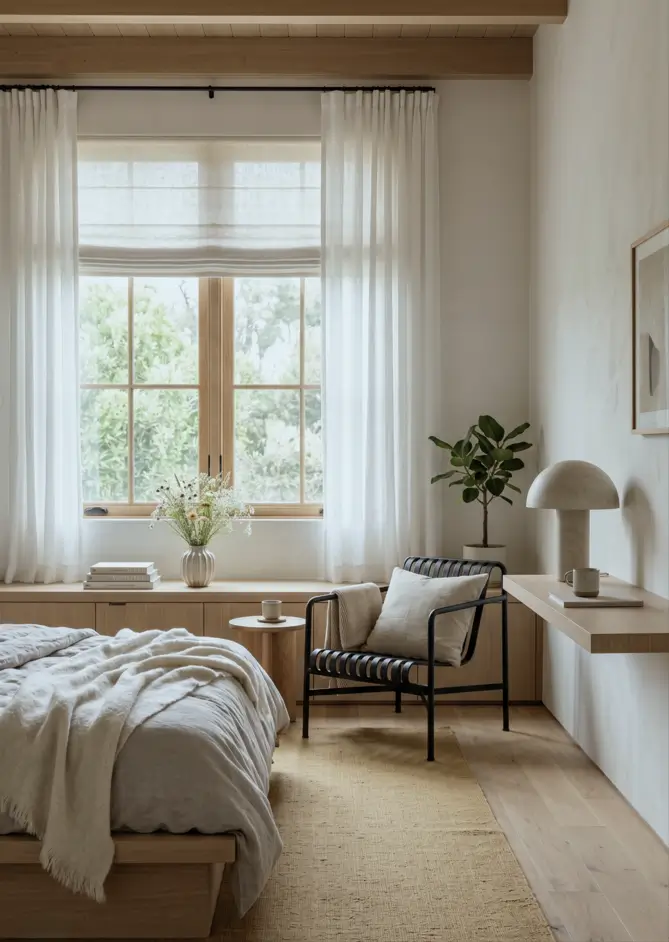
Here, light does the heavy lifting. Sheer linen curtains and a Roman shade soften the daylight, while pale oak cabinetry, a floating desk, and a mushroom stone lamp keep things airy. A black strap chair and fiddle-leaf fig add quiet contrast. We love how open and unforced the whole room feels.
4. Soft Layered White
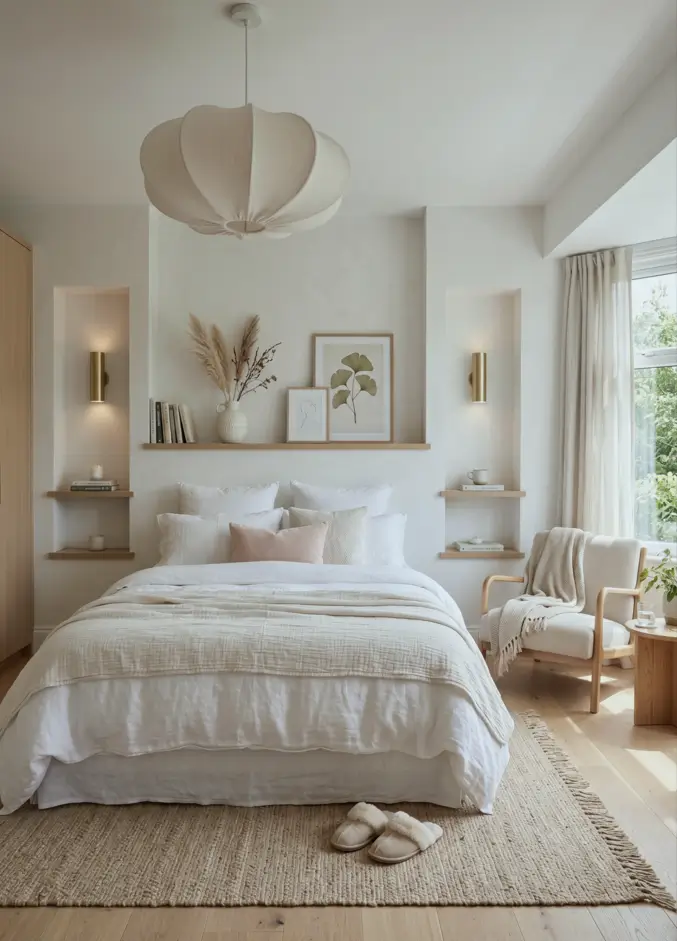
A near-white room still feels warm here, never clinical. Layered linen and muslin bedding, a jute rug, and a floating oak ledge of dried pampas and botanical prints keep things soft and grounded. The bentwood chair and gauzy pendant add gentle shape. Worth borrowing for a small room you want to feel bigger.
5. Soft Grey Master
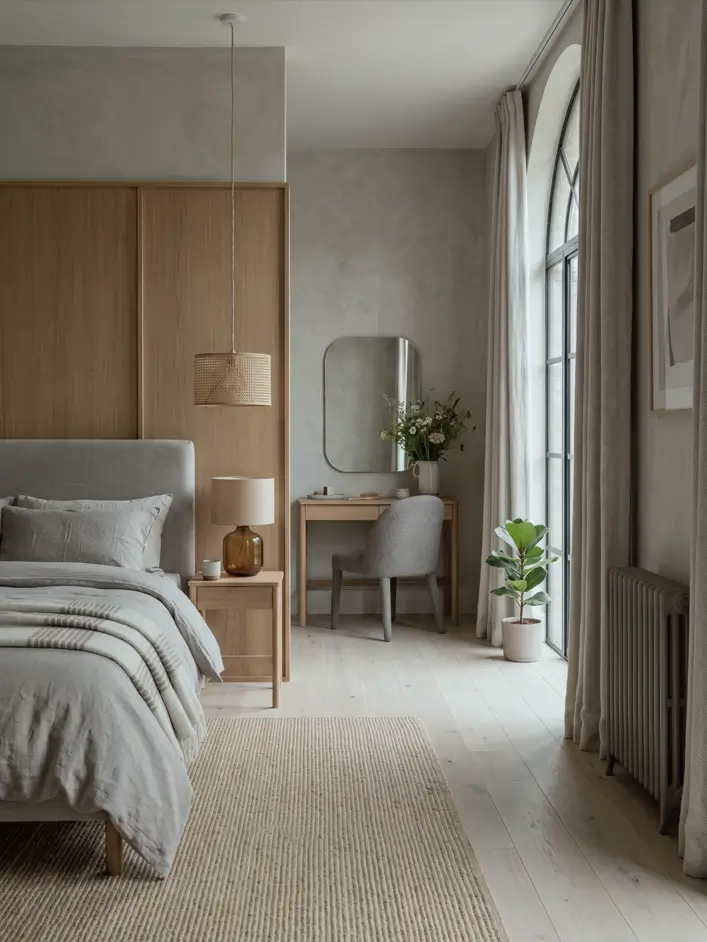
Notice how grey keeps this big room feeling calm rather than cold. An oak headboard panel and matching nightstand warm up the linen bedding, while a tidy vanity corner with a boucle chair and rounded mirror makes the space work harder. The fiddle-leaf fig adds a living note. Restful and timeless.
6. Soft Sage Workspace
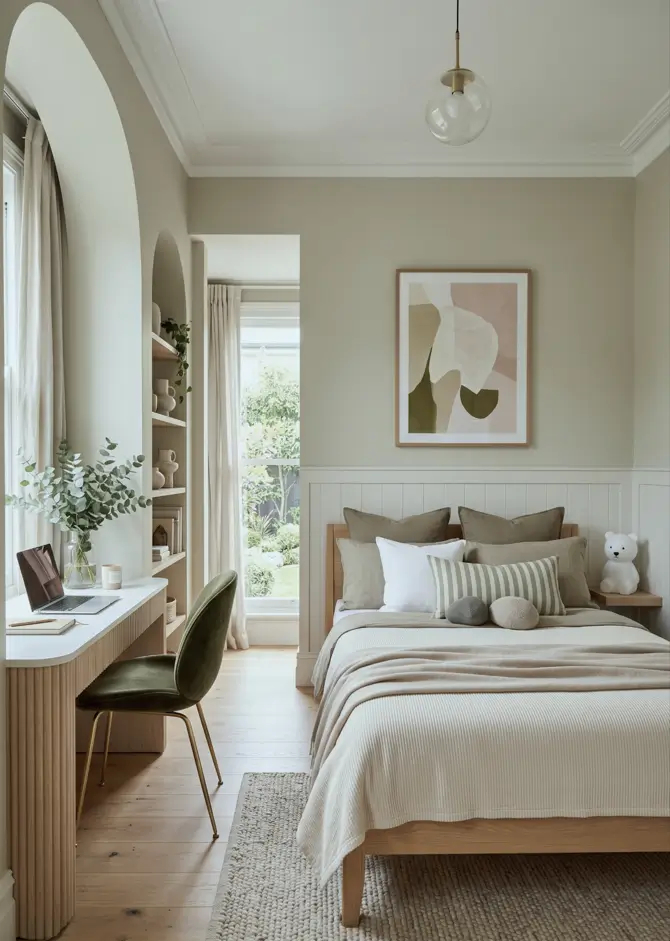
Sage green keeps this room calm while still feeling fresh. An oak bed and fluted desk tucked into an arched niche make a tidy sleep-and-study corner, softened by oatmeal linen, a jute rug, and eucalyptus. The olive velvet chair adds a quiet pop. Easy to live with for a child’s or guest room.
7. Paper Lantern Symmetry
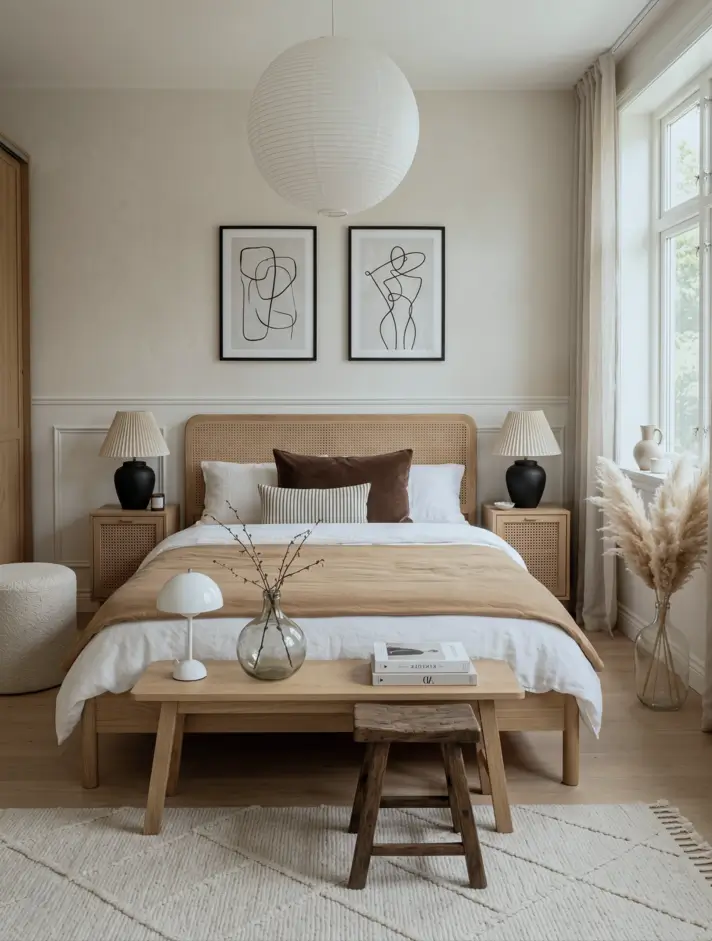
Beneath a soft panelled wall, this room balances Scandinavian symmetry with a true Japanese touch. A caned oak bed sits between matching black lamps, while a Noguchi-style paper lantern glows overhead — one of Japandi’s most authentic pieces. Line-art prints and a rustic stool keep it personal. A keeper for a calm, collected bedroom.
Warm and Earthy Japandi Bedrooms
Warm Japandi bedrooms bring in deeper wood tones, terracotta, and tactile texture for a grounded, cocooning feel. Here, the style leans into the direction it’s been moving lately — the version that feels most like a hug at the end of the day.
8. Grounded in Wood
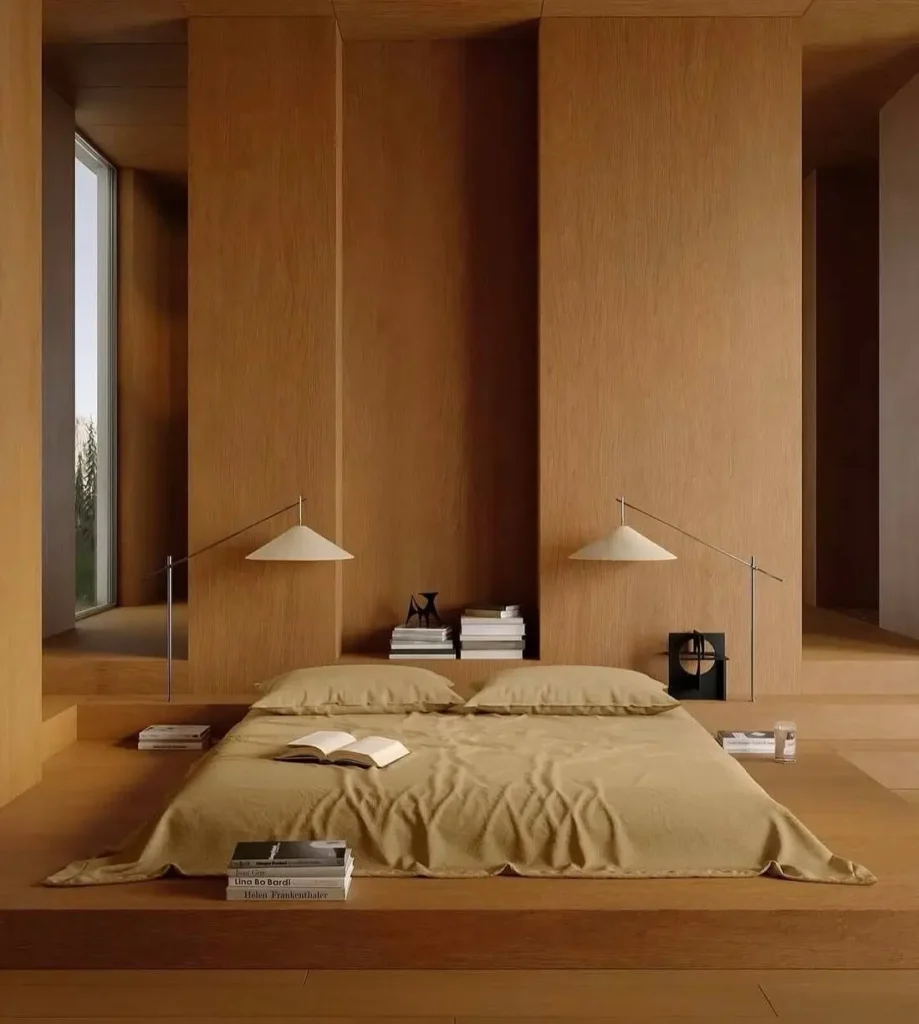
Set low to the floor, this bed turns the whole room into one calm wooden envelope. Warm oak wraps every wall, and a mustard linen throw and twin cone lamps keep it soft and human. Stacked art books and a single sculptural object are the only decor. Easy to live with, hard to ever leave.
9. Caned Headboard Glow
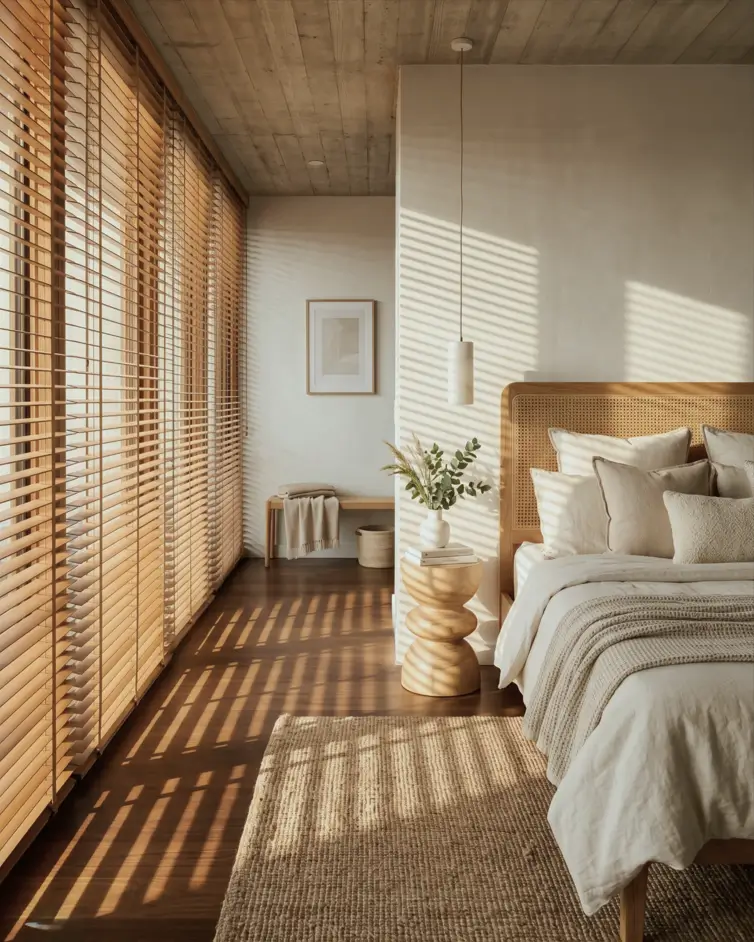
Rather than reaching for colour, this room earns its warmth from light and texture alone. A caned oak headboard, waffle-weave throw, and jute rug sit under wood blinds that scatter soft striped sunlight across the floor. The turned-wood side table and single eucalyptus stem finish it. This look feels unhurried in the best way.
10. Blush and Sage
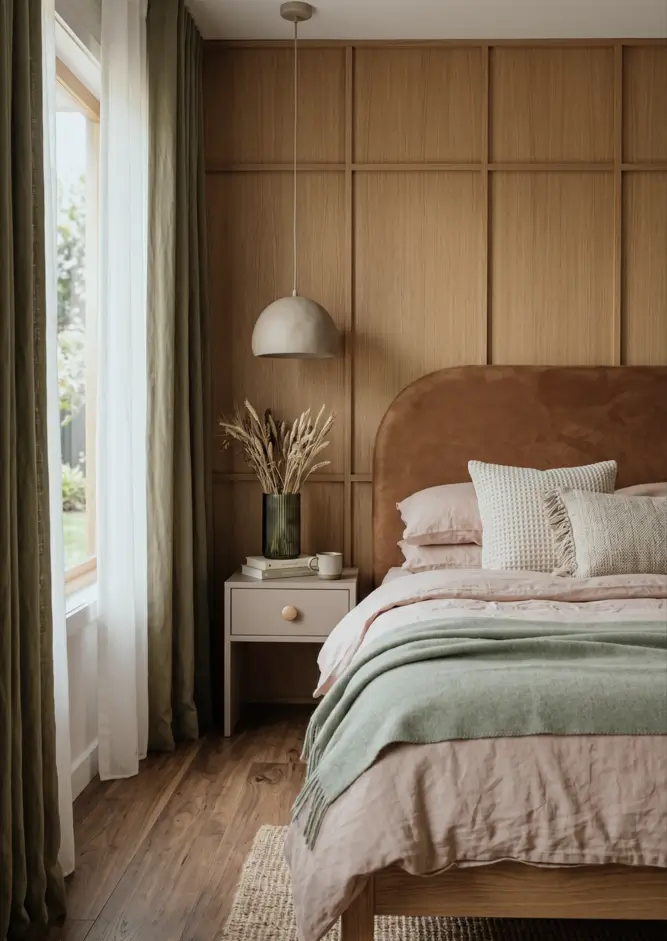
Soft colour still belongs in Japandi, and this room shows how. Muted blush bedding and a sage wool throw warm up an oak panel wall and arched suede headboard, while dried wheat and a ceramic pendant keep it grounded. Worth borrowing if pure beige feels too cool for you.
11. Earthy Wabi-Sabi Corner
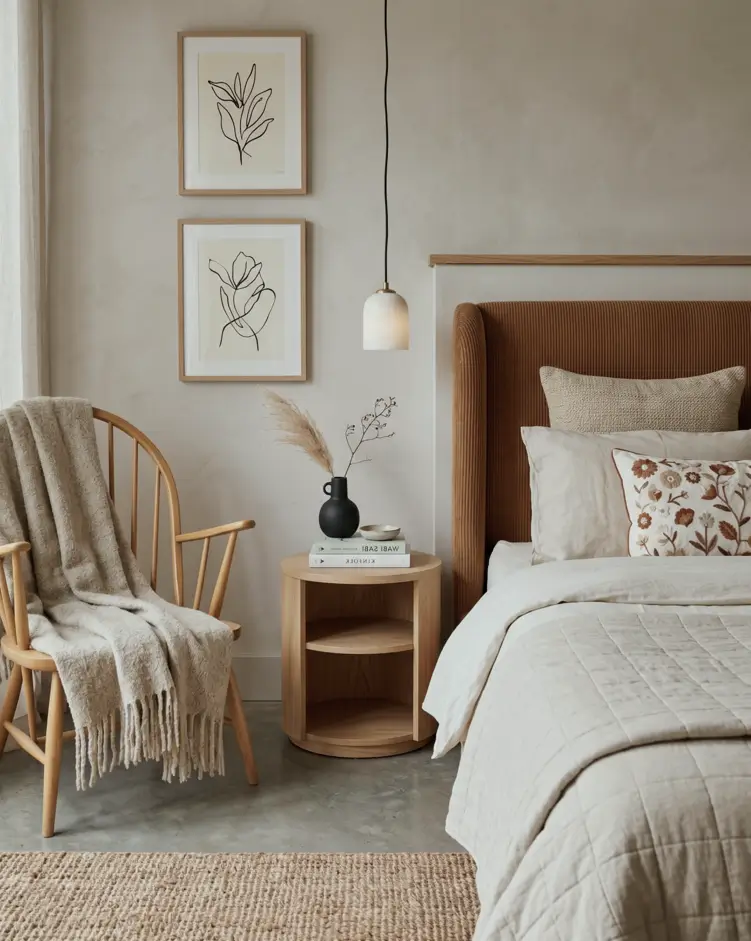
This corner skips the showroom look and leans fully into wabi-sabi calm. A terracotta corduroy headboard warms the plaster wall, while an oak spindle chair, round nightstand, and dried stems in a black vase feel quietly collected over time. We love how the line-art prints keep it personal without trying too hard.
12. Raw Linen Layers
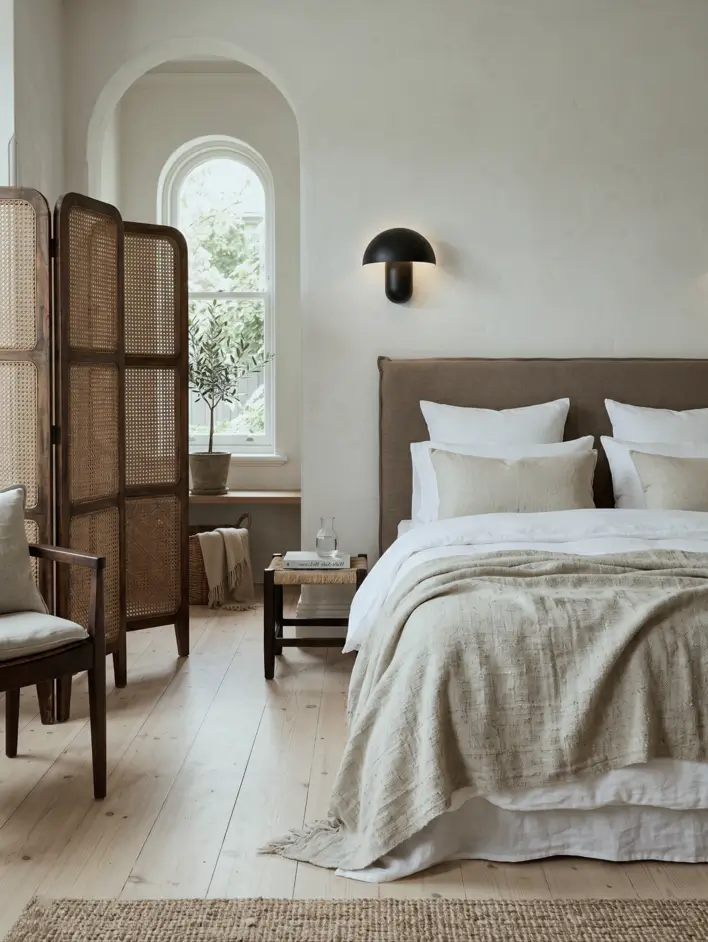
Tucked beside an arched window, this room shows how much warmth raw texture can carry. Layered linen bedding in white and oat sits against a soft upholstered headboard, while a caned folding screen and woven stool add quiet pattern. A potted olive tree keeps it alive. Easy to live with, year after year.
13. Arched Plaster Niches
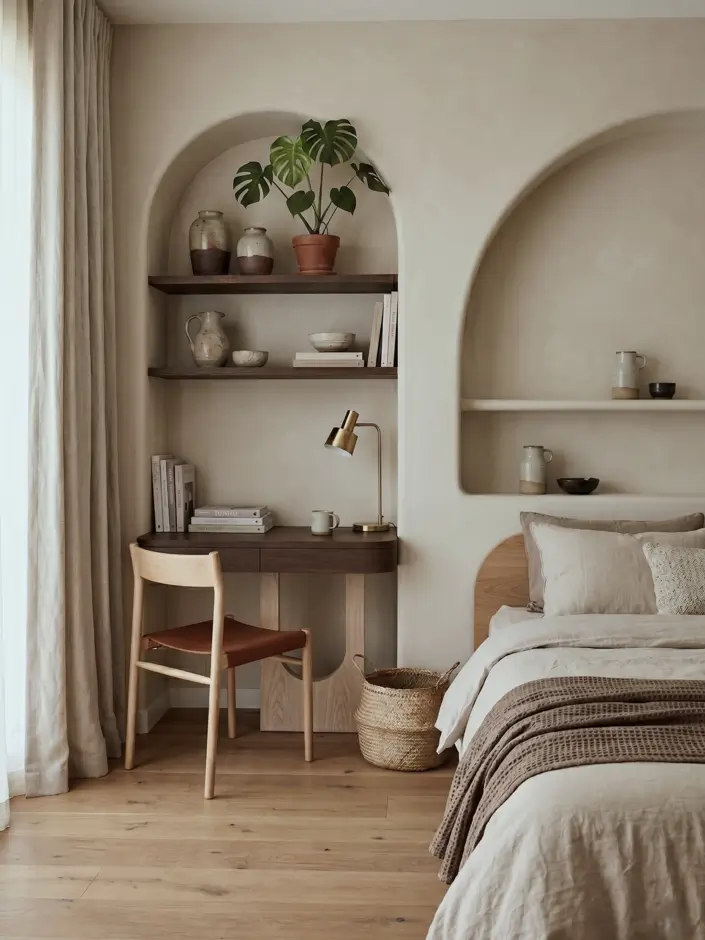
Tucked into a soft plaster wall, these arched niches turn storage into something sculptural. A built-in walnut desk, oak chair, and brass lamp create a quiet workspace, while handmade ceramics and a monstera fill the shelves without crowding them. Layered oatmeal linen finishes the bed. Hard to improve on for a small multitasking room.
14. Slat Wall Statement
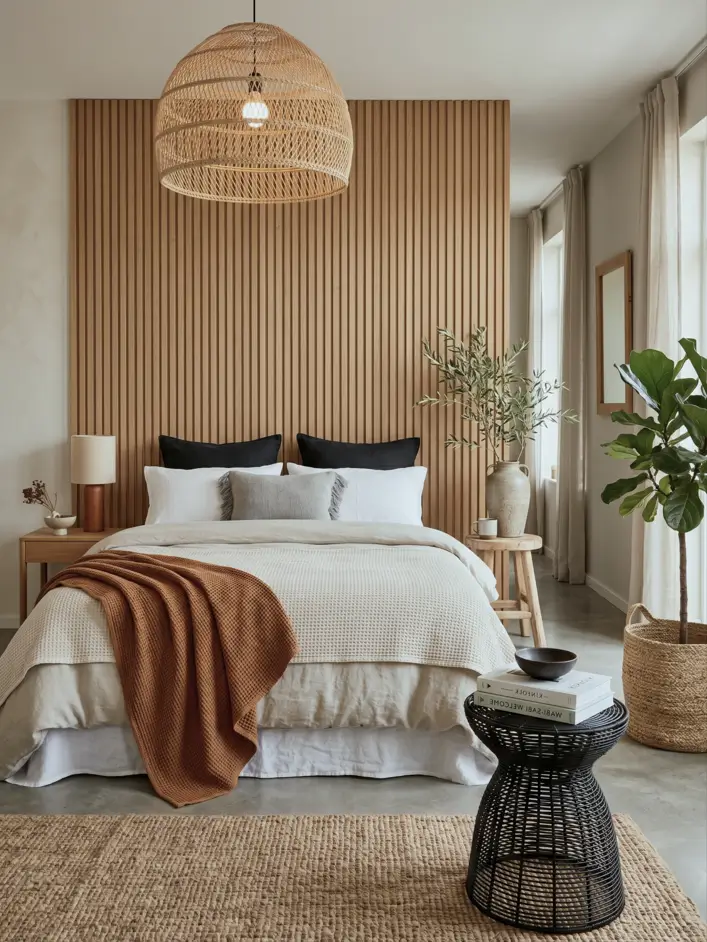
Set against a full oak slat wall, this room shows how one strong texture can anchor everything. Layered white linen and a terracotta waffle throw keep the bed soft, while black accent pillows and a rattan dome pendant add quiet weight. Olive branches finish it. Hard to improve on as a headboard moment.
15. Walnut Bedside Calm
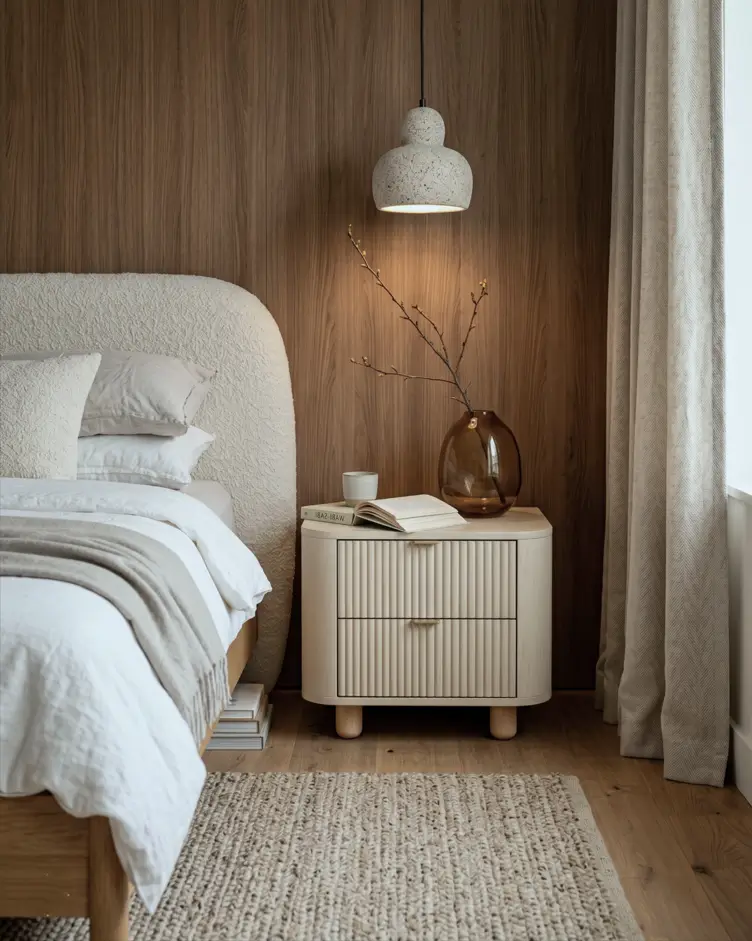
A rich walnut wall makes even a small corner feel deep and restful. A curved boucle headboard and fluted oak nightstand soften the dark wood, while a speckled ceramic pendant and budding branch in amber glass add a slow, seasonal touch. We love how warm and unhurried it reads.
16. Mediterranean Calm
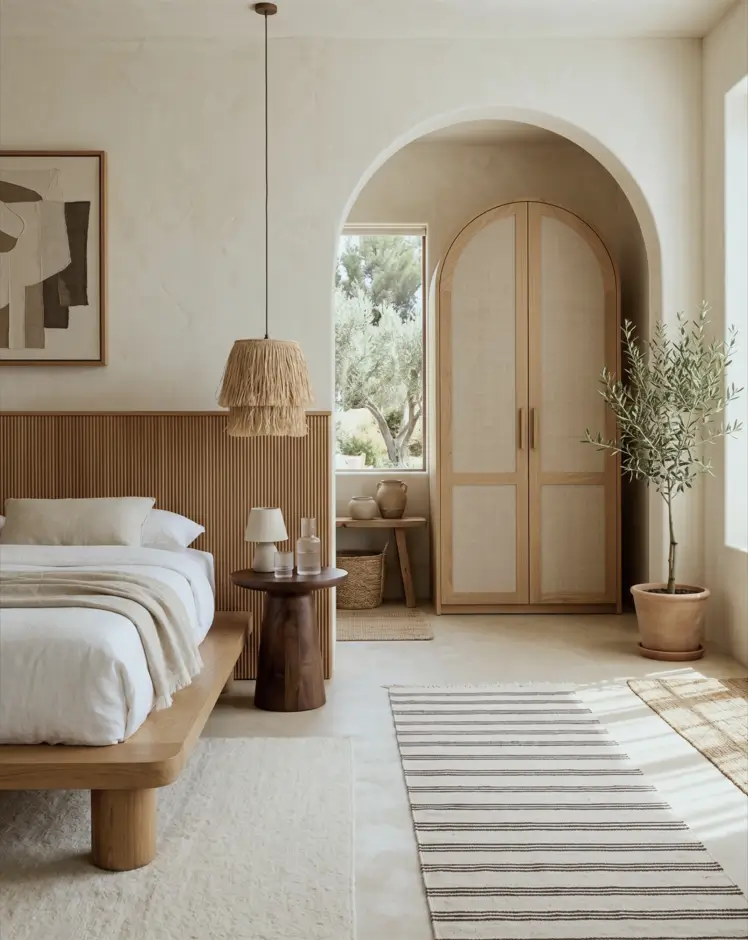
This room blends Japandi restraint with a sun-warmed Mediterranean ease. A low platform bed and walnut pedestal table keep it grounded, while a raffia pendant, olive tree, and arched doorway add gentle holiday calm against soft plaster and an oak slat half-wall. Striped flatweave rugs finish it. Restful and timeless.
17. Warm Wood Sanctuary
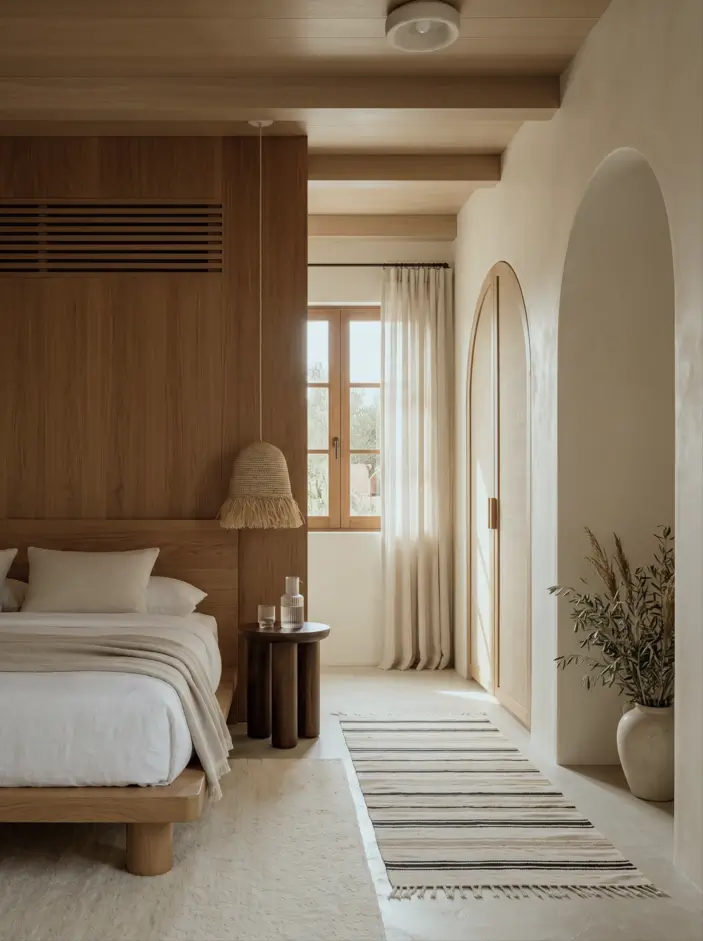
Step inside and warm oak wraps the whole sleeping wall, turning the bed into a quiet retreat. A low platform frame, walnut pedestal table, and raffia pendant keep it soft, while an arched cane wardrobe and sheer curtains brighten the far corner. Olive branches add a living note. Quietly does the job.
Dark and Refined Japandi Bedrooms
Dark Japandi bedrooms prove the style handles moody wood and charcoal beautifully, as long as the palette stays disciplined. These rooms feel cocooning and a little grown-up — ideal for north-facing spaces or anyone who finds all-white a bit too crisp.
18. Warm Dusk Tones

In this home, contrast carries the calm. A dark fluted wardrobe anchors one side while a tan leather bed and oak headboard panel keep things soft and grounded. The little marble side table and single pendant catch the low evening light beautifully. This look feels like a quiet hotel suite you never want to check out of.
19. Charcoal and Cream
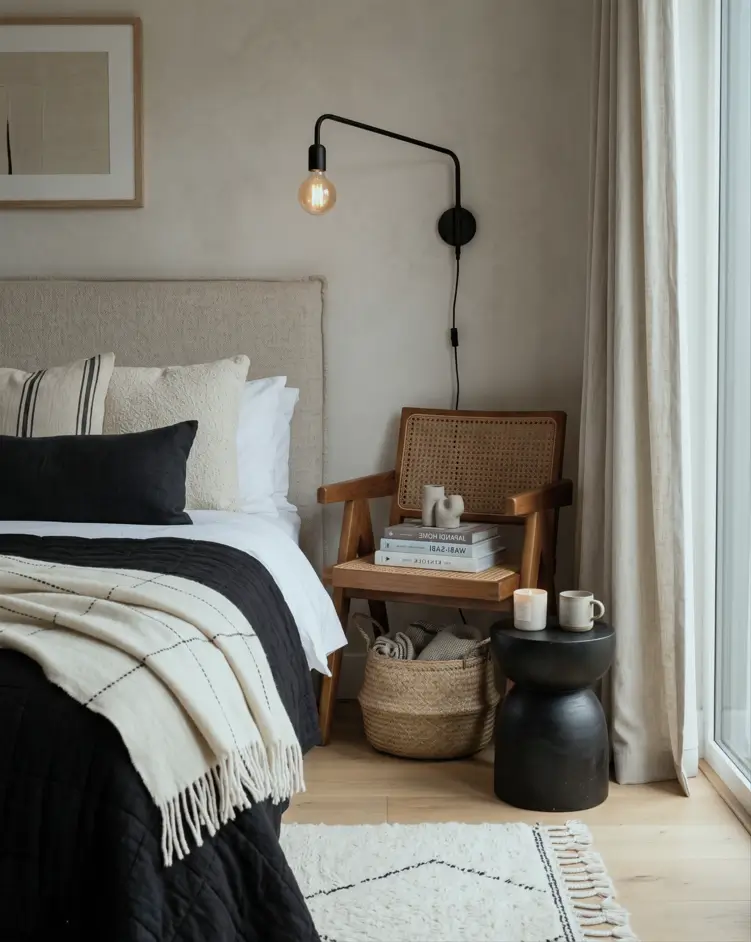
Against a soft plaster wall, this room shows how black earns its place in Japandi. A charcoal quilt, windowpane throw, and turned-wood stool add weight without noise, balanced by a linen headboard and a caned chair standing in as a nightstand. The seagrass basket keeps it grounded. Calm done right.
20. Moody Dark Wood
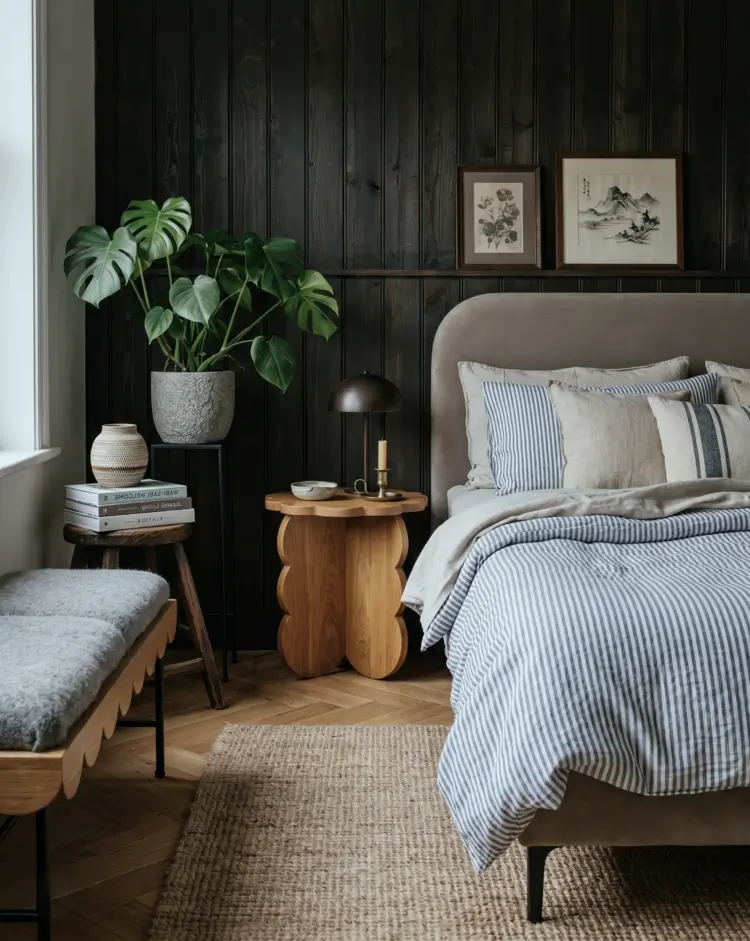
Japandi handles dark beautifully, and this room proves it. A stained plank wall sets a quiet, cocooning mood, lifted by blue-striped linen, an oak side table, and a leafy monstera. The small sumi-e mountain print is the perfect Japanese note. A keeper for north-facing rooms that need depth.
21. Oak Wainscot Warmth
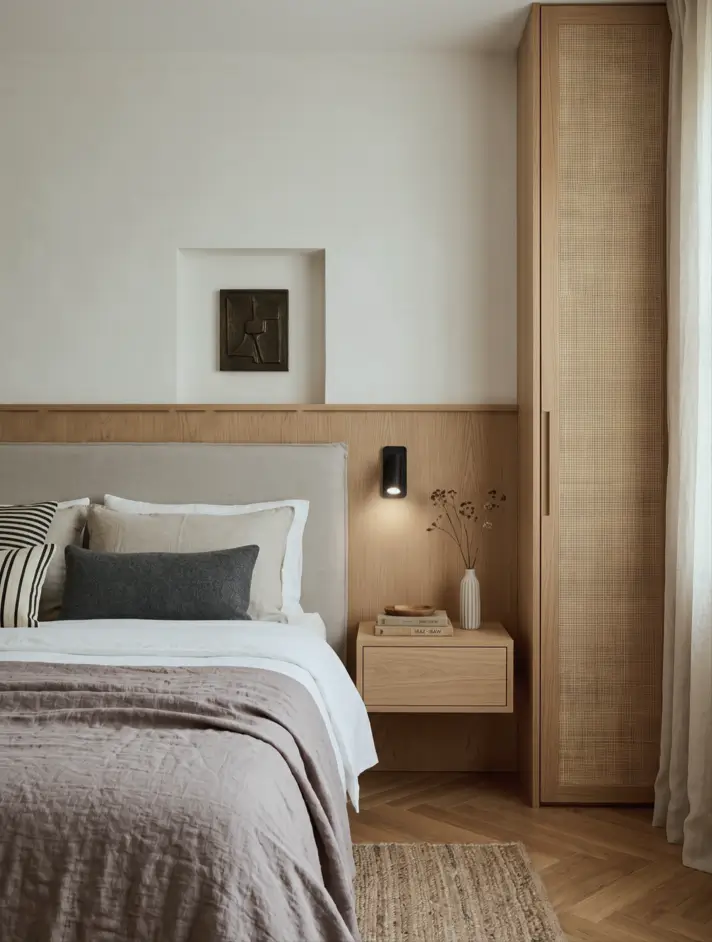
An oak wainscot wall makes this room feel solid and quietly tailored. A caned wardrobe and floating nightstand add storage without bulk, while dusty mauve linen warms up the grey headboard and pillows. The recessed niche frames a single bronze relief beautifully. It’s a smart choice when you want calm with a little structure.
22. Black and Oak Minimal

Instead of softening every edge, this room leans into clean contrast. Charcoal linen and a black disc sconce read crisp and modern, while a pale oak slat panel, platform bed, and round jute rug keep it warm underneath. The single wabi-sabi book is the only clutter. A keeper for anyone who likes calm with an edge.
23. Dark Canopy Frame
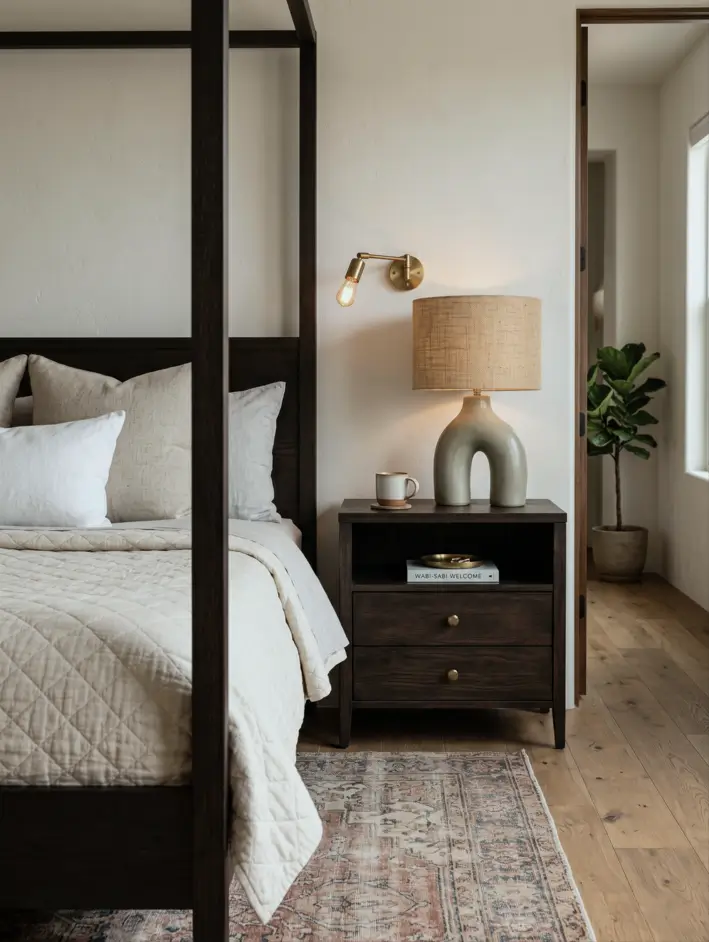
A slim espresso four-poster shows Japandi can lean dark and grounded. A sage arch-form ceramic lamp and brass sconce warm the espresso nightstand, while cream quilted linen and a faded vintage rug soften the frame. This look feels calm but quietly substantial.
24. Sculptural Felt Glow
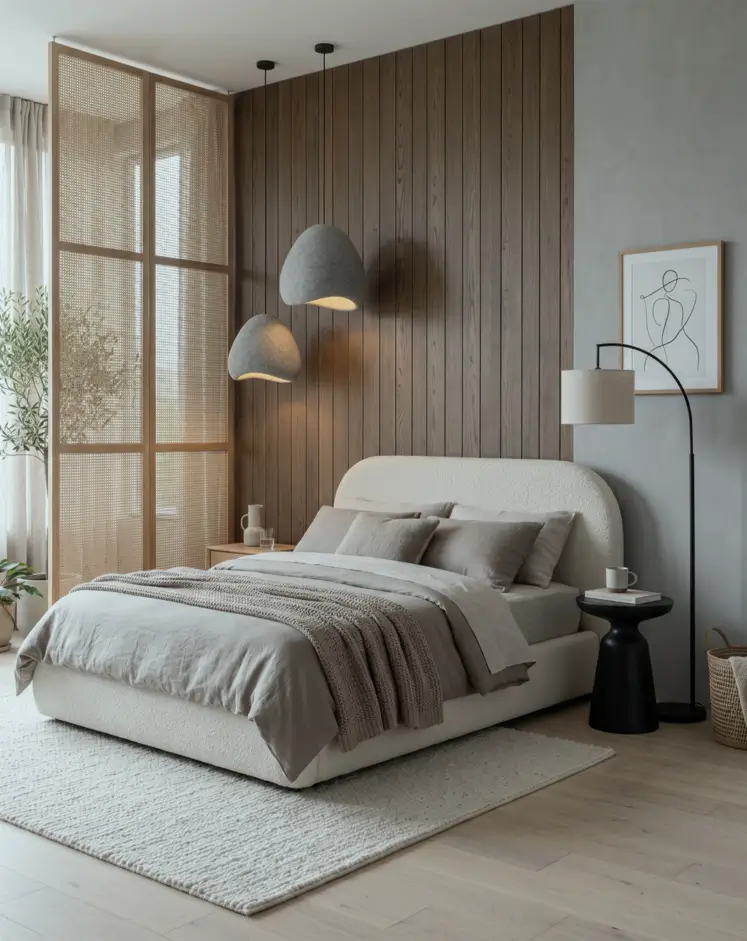
Soft sculptural lighting changes the whole mood here. Two felt pebble shades glow against a walnut plank wall, while a curved boucle bed and chunky knit throw keep things warm. A caned screen and black arc lamp add gentle structure. I love how calm yet quietly designed it feels.
Authentically Japanese-Leaning Bedrooms
The most authentic Japandi bedrooms borrow real elements from Japanese house design — shoji screens, tatami, paper lanterns, and quiet motifs. If you want the look to feel earned rather than borrowed, these are the details that do it.
25. Tatami Window Nook
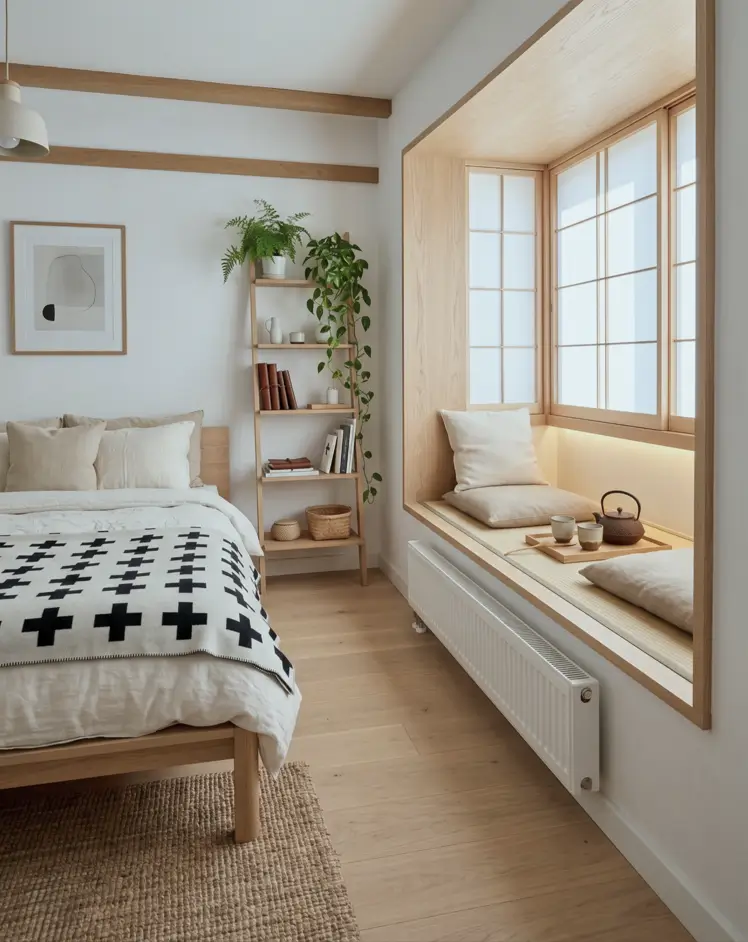
Built into a window nook, this room earns its calm from a single quiet idea. The tatami seat, shoji screens, and floor cushions create a tea corner that pulls double duty in a compact space, the way traditional Japanese rooms have long set aside a small raised area for tea. A Scandi cross-pattern throw adds graphic contrast. It’s a smart choice when every square foot has to work.
26. Built-In Oak Platform
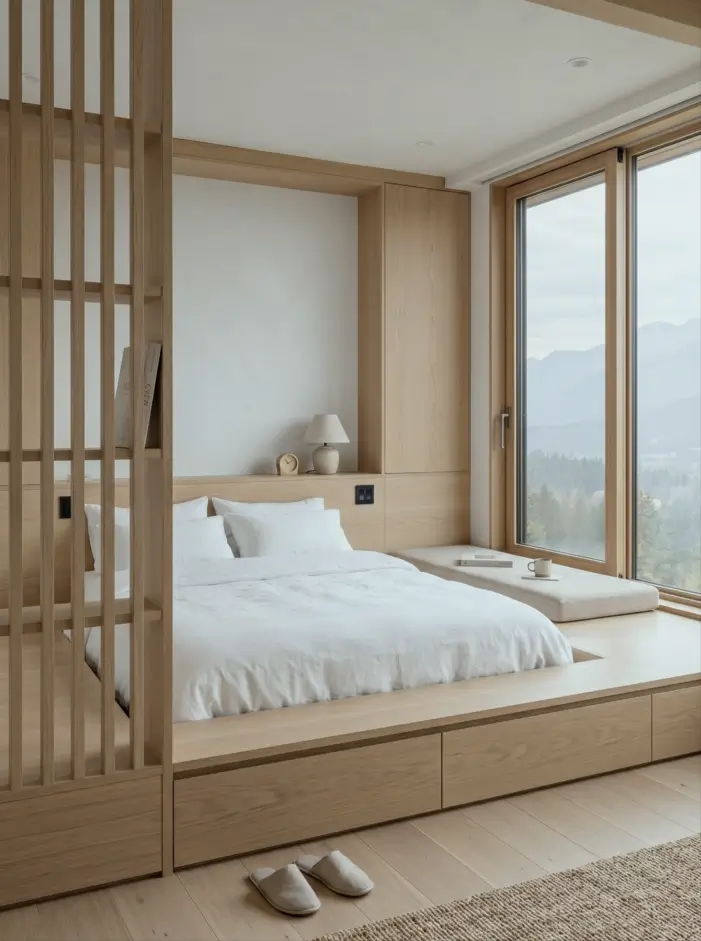
The bed becomes part of the architecture itself here. A built-in oak platform with hidden storage drawers raises the mattress beside a window seat framing the mountains, while a slatted divider gently separates the space. White linen and a single ceramic lamp keep it serene. It’s a smart choice for a clutter-free room.
27. Koi Motif Suite
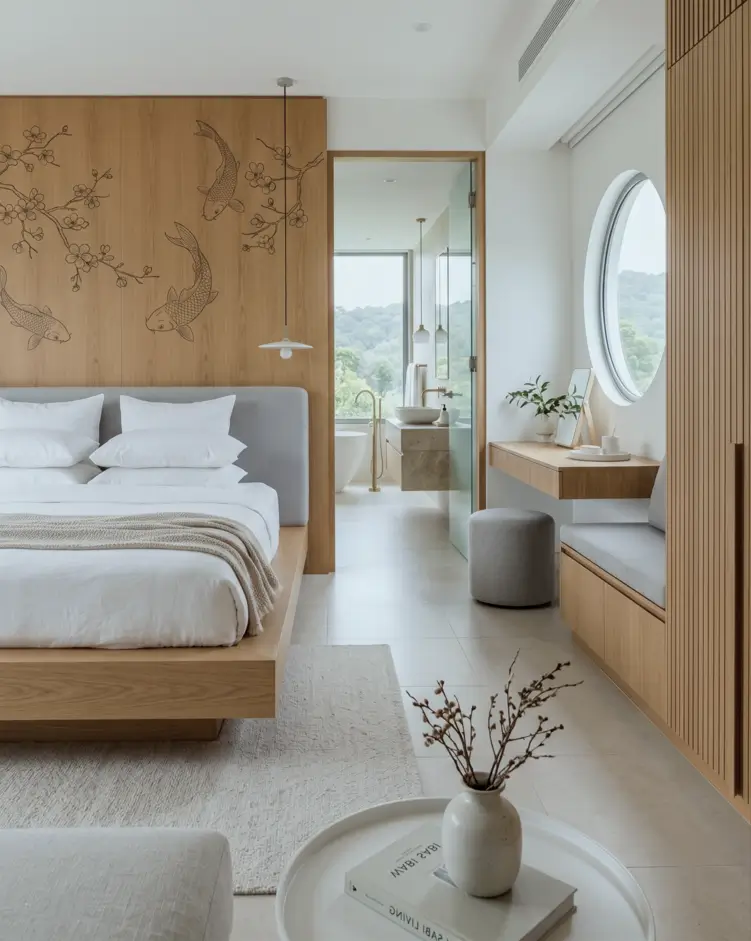
A single etched koi motif gives the oak wall a quiet Japanese soul. A low platform bed and grey headboard anchor the suite, while a built-in window seat and round porthole window open it up. The ensuite sits just beyond. Restful and timeless, with a calm spa feeling throughout.
Small Japandi Bedroom Ideas
Small Japandi bedrooms work hard with built-in storage, floating furniture, and a pale palette that keeps a tight room feeling open. Instead of fighting the lack of space, the style leans into it — many of the same small cozy bedroom tricks apply, and restraint is the whole point.
28. Smart Compact Corner
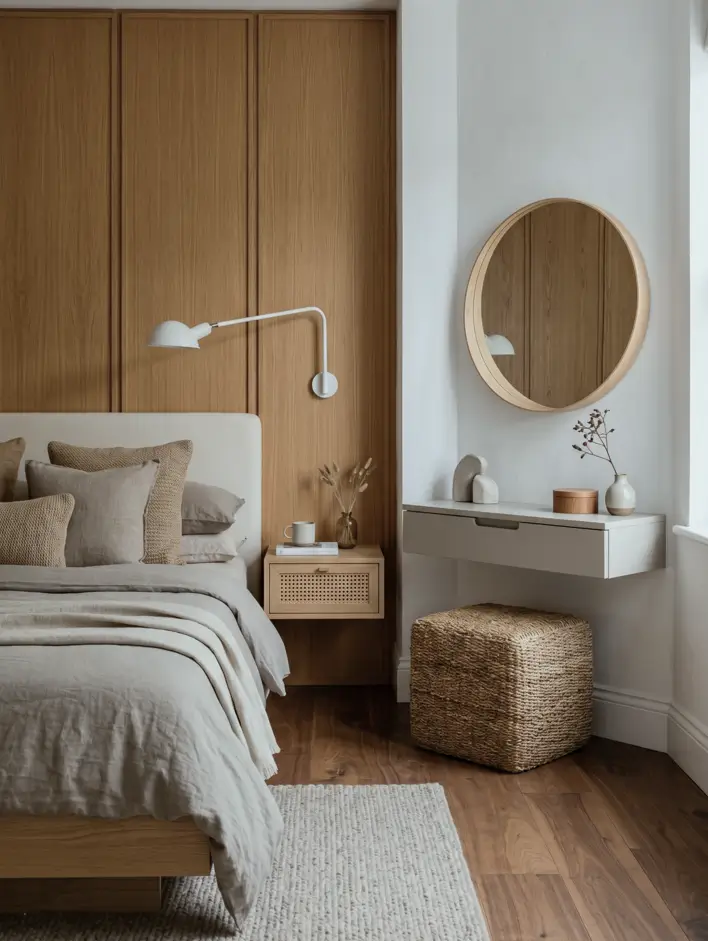
Low to the floor and tight to the wall, this setup makes a small room work hard. A caned floating nightstand and slim wall-mounted vanity save precious floor space, while an oak panel wall and layered oat linen keep it warm. The round mirror bounces light around. Quietly does the job, beautifully.
29. Compact City Calm
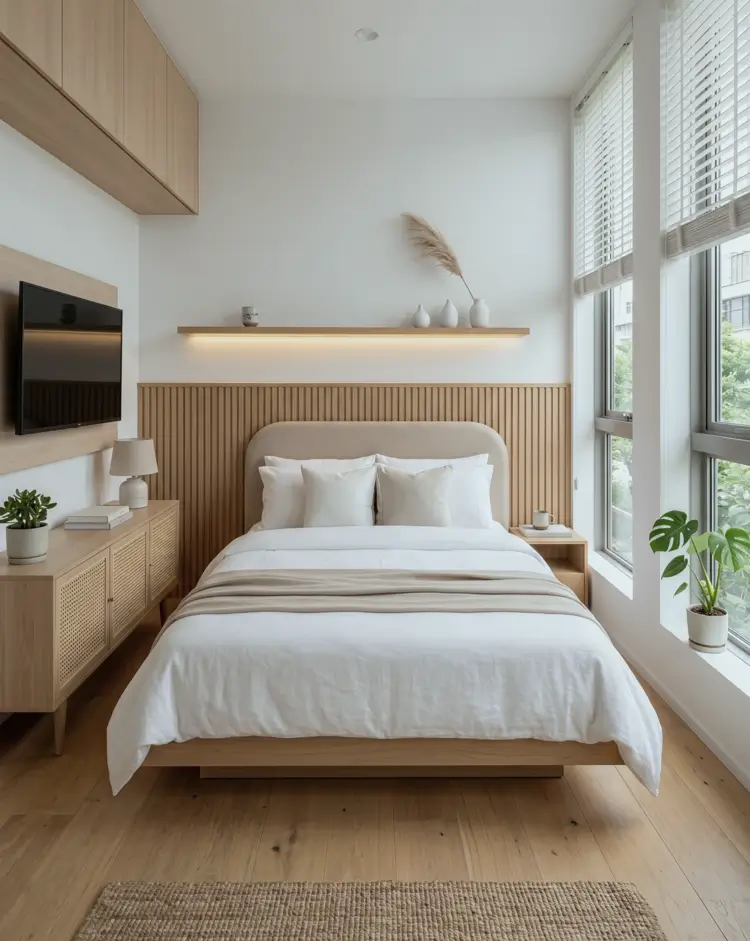
Made for a narrow room, this compact bedroom makes every inch count. Overhead cabinets, a caned sideboard, and a slim built-in nightstand handle storage, while an oak slat half-wall and backlit shelf keep it warm and calm. White linen opens it up. Quietly does the job in a small apartment.
Related: 30 Cozy Small Apartment Decor Ideas: The Ultimate Guide
Japandi Master Bedroom Design
A Japandi master bedroom scales the calm up — more room to breathe, a dressing corner, and a few grounding natural pieces. The trick at this size is resisting the urge to fill the extra space; the empty floor is part of the luxury.
30. Leather and Greenery
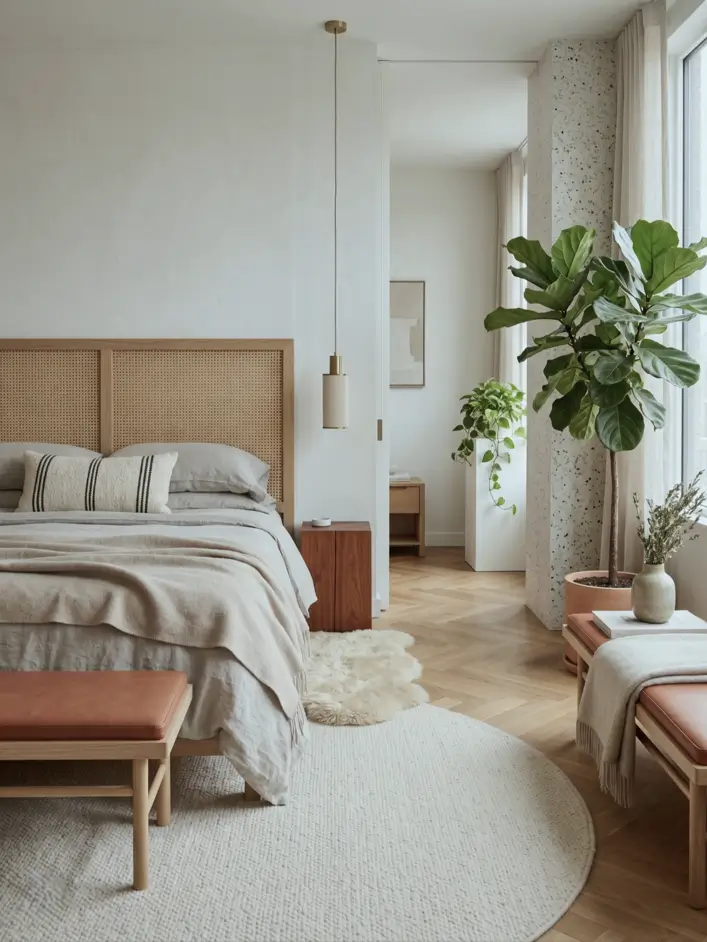
A few living things do all the styling in this room. A caned oak headboard and walnut nightstand keep the bed grounded, while tan leather benches add warmth and a fiddle-leaf fig brings the room to life. The herringbone floor and round wool rug soften everything. Hard to improve on for a calm master.
31. Greenery and Grey
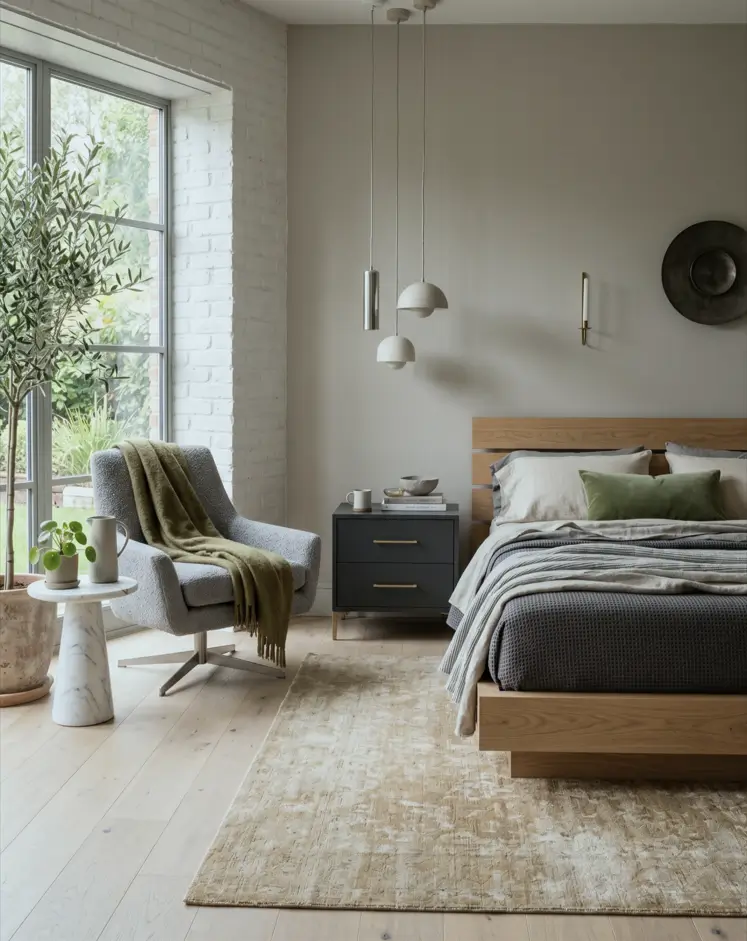
Paired with a painted brick wall, this master leans cool and composed without losing warmth. An oak slat headboard and platform bed soften the grey linen, while a boucle swivel chair, olive accent pillow, and potted olive tree bring in life. Cluster pendants finish the corner. Calm done right, on a larger scale.
32. Refined Hotel Calm
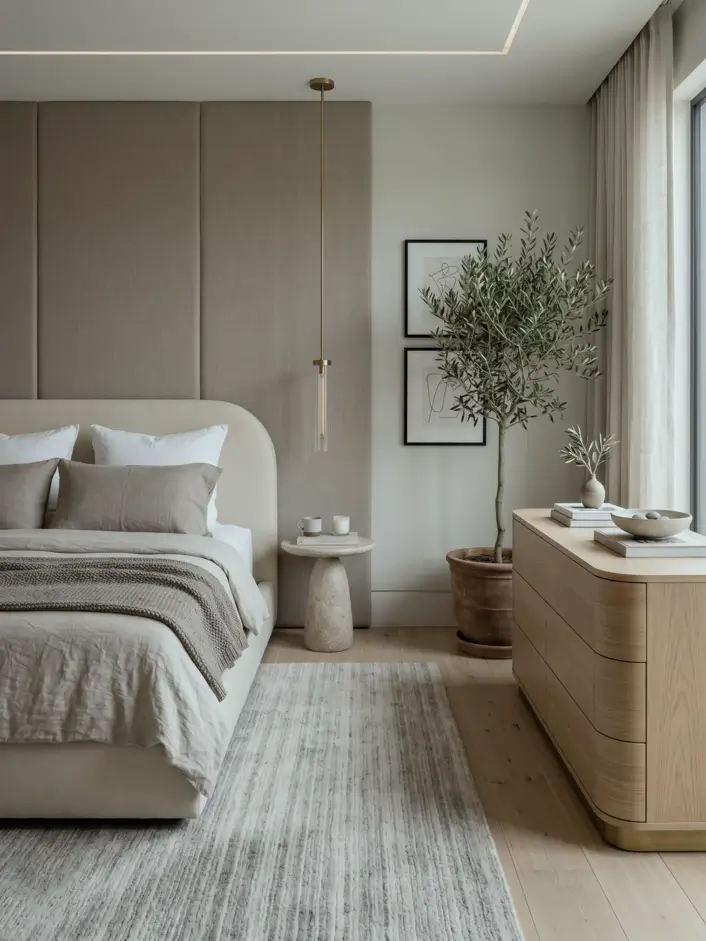
The curved oak dresser does most of the talking, but the whole room feels quietly luxurious. A fabric panel wall and rounded headboard soften the space, while a terrazzo side table and slim brass pendant add polish. The olive tree keeps it natural. Hard to beat for a hotel-calm master.
Architectural and Built-In Japandi Bedrooms
Some Japandi bedrooms build the calm right into the architecture — platform beds, slatted dividers, and concrete-and-oak contrast that does the decorating for you. These take more planning, but they age beautifully because the style is structural, not styled-on.
33. Concrete Meets Oak
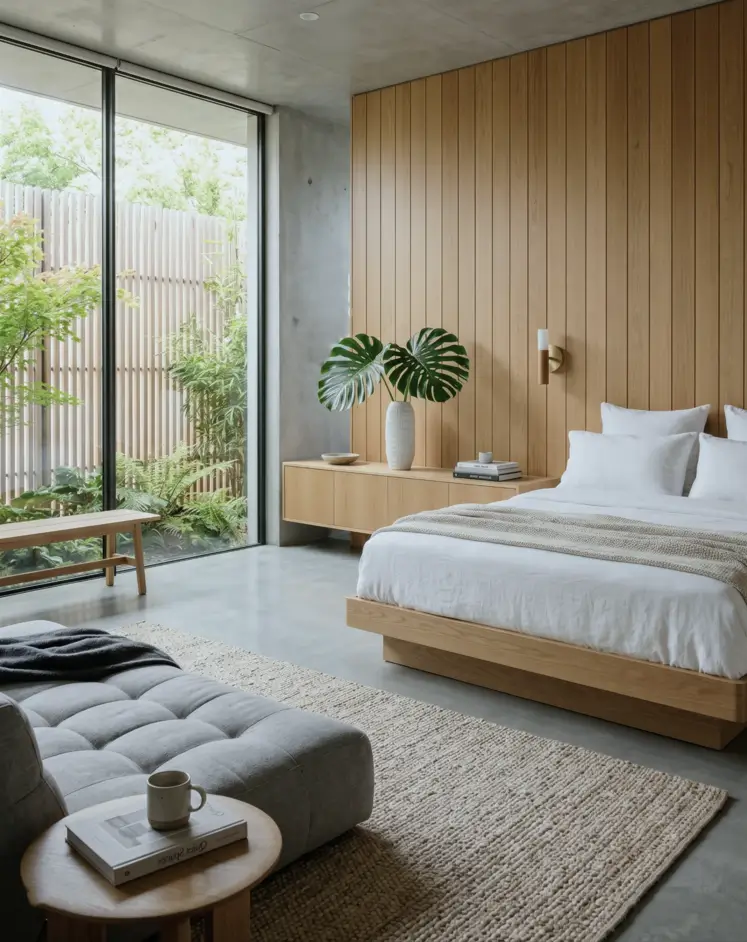
A warm oak plank wall instantly softens all that raw concrete. A low oak platform bed and floating console keep the room grounded, while floor-to-ceiling glass pulls a green maple garden — almost a Zen garden view — right into the space. The grey daybed adds a quiet lounge corner. Calm done right, with real architecture behind it.
How Do You Choose a Japandi Bedroom Color Palette?
A Japandi bedroom colour palette stays soft and earthy, built from warm whites, oatmeal, clay, soft greys, and muted greens pulled straight from nature. Nothing is bright, and nothing is stark. The colours sit close together, so the room reads as calm rather than busy.
If you want specific Japandi bedroom colours to start from, these are the ones I reach for most:
- Warm white and greige for walls — soft enough to feel cosy, never clinical.
- Oatmeal, sand, and clay through bedding and textiles, for gentle warmth.
- Muted sage and olive as a quiet nod to nature, used sparingly.
- Walnut and charcoal in small doses, for grounding depth.
Warm neutrals do most of the work. From there, a little depth helps — a clay throw, a sage cushion, a walnut side table — so the room feels grounded instead of washed out. The Scandinavian side keeps things light; the Japanese side adds the darker, quieter notes.
One thing worth knowing: these tones shift through the day. A wall that looks soft beige at breakfast can turn a gentle grey by evening. It’s part of the charm, and it’s why I always test a colour on the actual wall before committing.
Japandi Bedroom Decor and Natural Materials
Japandi bedroom decor comes down to restraint — a few natural, handmade pieces that each earn their place, with everything else left out. The bed usually sits low and close to the floor, which gives the room that grounded, settled feeling.
Around it, less is more: a single ceramic lamp, a stack of books, a handmade vase — and the right lighting does a lot of the quiet work. Where most styles add, Japandi takes away.
My favourite detail is the simplest one. A single branch in a vase — olive, cherry, or just a few budding stems — does more for a Japandi bedroom than a full arrangement ever could. It brings the room to life and still leaves all that lovely empty space alone.
The Best Natural Materials for a Japandi Bedroom
Natural materials carry the whole Japandi look, and the best ones are the ones you’ll want to touch:
- Light oak and walnut — warmth through the bed, floor, and storage.
- Linen and cotton — soft bedding and curtains that improve with every wash.
- Rattan and cane — gentle pattern in headboards and screens.
- Ceramic and stone — quiet, handmade weight in a lamp base, vase, or bowl.
So much of Japandi is about how a surface feels under your hand, which is why real materials matter. They age well — softening and gaining character over years, where fake versions only look tired.
Choosing Japandi Bedroom Furniture
The right Japandi bedroom furniture is low, simple, and built to last — a few honest pieces over a roomful of filler. Start with the bed, since it sets the tone: a low platform or close-to-the-floor frame in oak or walnut grounds the whole room.
From there, a slim nightstand, one clean-lined storage piece, a caned or boucle headboard, and a single chair or bench are usually all you need.
What I tell clients is to count the legs in the room, then reduce them. Floating nightstands, built-in platforms, and wall-mounted shelves keep the floor clear — and a clear floor is half of what makes these rooms feel so calm.
4 Common Japandi Bedroom Mistakes (and How to Fix Them)
The most common Japandi bedroom mistake is treating it like cold minimalism and stripping the room so bare it stops feeling warm. The good news is that all four of the usual missteps are easy to fix once you know what to look for.
1. Stripping the room too bare
The whole point of Japandi is balance. Pull out every soft and personal thing and you’re left with a showroom, not a bedroom. The fix is to add back texture — a chunky throw, a soft rug, a linen cushion — until the room feels human again.
2. Matching everything too perfectly
Identical lamps, identical nightstands, everything centred — it kills the quiet, slightly imperfect feeling the style depends on. Let one or two things be a little different, a little off-centre, a little collected-over-time.
3. Relying on fake materials
Laminate “wood” and plastic that mimics ceramic read flat next to the real thing, because so much of Japandi is about how a surface feels. A few genuine pieces always beat a roomful of imitations.
4. Over-decorating
I’ve watched people add one more cushion, one more vase, one more print, until the calm they were chasing quietly disappears. When a Japandi room isn’t working, the fix is almost always to remove something, not add it.
RELATED:
- Japandi Kitchen: The Calm, Warm Look I Keep Coming Back To
- Japandi Style Living Room: Where Japanese Calm Meets Scandinavian Warmth
- 38 Japandi Style Bathroom Ideas for a Quietly Beautiful Space
Japandi Bedroom FAQs
Is Japandi still a good choice in 2026?
Japandi still feels current because it was never really a trend — it’s built on two design traditions that have lasted for generations. The look has softened lately toward warmer woods and earthier tones, but the calm, natural foundation hasn’t moved. It tends to age well, which is more than most styles can claim.
What’s the difference between Japandi and minimalism?
Minimalism is about having less; Japandi is about having less and feeling warm. A minimalist room can read cool and a little hard, while a Japandi bedroom keeps the clean lines but adds soft linen, natural wood, and handmade texture. You get the calm of an uncluttered space without the chill.
What flooring works best in a Japandi bedroom?
Natural wood flooring suits a Japandi bedroom best — light oak for a Scandinavian feel, or a warmer walnut for a more Japanese mood. A pale jute or wool rug layered on top adds softness underfoot and quietly anchors the bed. The aim is warmth and texture down low, never anything glossy or high-shine.
A Japandi style bedroom isn’t really about following a set of rules. It’s about slowing down, choosing a few things you genuinely love, and giving them room to breathe. Get that balance right, and you end up with a room that feels calm the moment you walk in — and honestly, a little hard to leave.
About the Author: Naraphon Kanyawee